Key Takeaways
- Enterprise tokenization creates a shared, tamper-resistant data layer across supply chains, reducing blind spots and manual reconciliation.
- BASF’s cotton traceability model shows how blockchain improves product-level visibility, sustainability validation, and operational trust.
- Hybrid blockchain and cloud architecture supports scale, privacy, and real-time integration with enterprise systems.
- Tokenized ESG data strengthens reporting accuracy, climate accountability, and supplier incentive programs.
- Enterprise tokenization also improves liquidity, lowers fraud risk, and reduces audit and compliance costs.
Traditional supply chains are essentially “black boxes” where trust is replaced by expensive, slow-moving audits. In 2026, relying on a spreadsheet to prove ESG compliance isn’t just risky, it’s a financial liability.
The shift toward enterprise tokenization solutions isn’t about some long-term future vision. It’s about solving the $1.6 trillion problem of supply chain opacity right now. By turning physical assets into programmable data, we move from guessing to validating.
- Every bale of cotton or ton of copper gets a digital twin that carries its own CO2 footprint, water usage, and tax history. If the data doesn’t match the math, the shipment doesn’t move.
- Companies like BASF aren’t doing this for PR. They are using Amazon Managed Blockchain to reclaim the estimated 30% of time wasted on manual reconciliation and data disputes between intermediaries.
- Tokenization allows for instant-pay logic. When a farmer hits a sustainability milestone verified by an IoT sensor, the smart contract triggers a payment immediately, no 90-day wait, no paperwork, just code.
When all these adoptions are in the market, why sit back and depend on traditional technology? Update your tokenization platform servers and grow in the institutional industrial market space.
How Does Enterprise Tokenization Create a Trusted Data Layer Across Supply Chains?
Supply chains fail because they rely on asynchronous data. When one stakeholder updates an Excel sheet and another logs into a legacy ERP, the “truth” is always 48 hours behind.
Enterprise tokenization solves this by moving the record from the database to the asset itself. Using a Digital Twin (typically an ERC-3643 or Solana Token Extension in 2026), the asset becomes a self-contained ledger.
If a cotton bale hasn’t passed its chemical residue test, the token is programmatically locked, and it literally cannot be sold or moved in the system.
1. BASF’s cotton value chain use case
BASF isn’t just tracking boxes; they are managing a high-velocity commodity market where the “hidden costs” of ESG are now being priced in.
The Economic Scale (2026 Benchmarks):
- Production Volume: Global output remains at ~125M+ bales, but the regulatory cost of unverified cotton has spiked due to new EU and US import transparency laws.
- The Resource Drain: A single T-shirt still costs the planet 2,700 liters of water. In a tokenized model, that water “debt” is attached to the token metadata, allowing brands to offset it in real-time.
- The CO2 Liability: With fast fashion generating 10% of global emissions, BASF uses blockchain to turn “carbon footprints” into “carbon data-packets” that auditors can verify in seconds, not months.
2. How the trusted data layer in supply chain tokenization works?
A well-designed supply chain tokenization system typically includes:
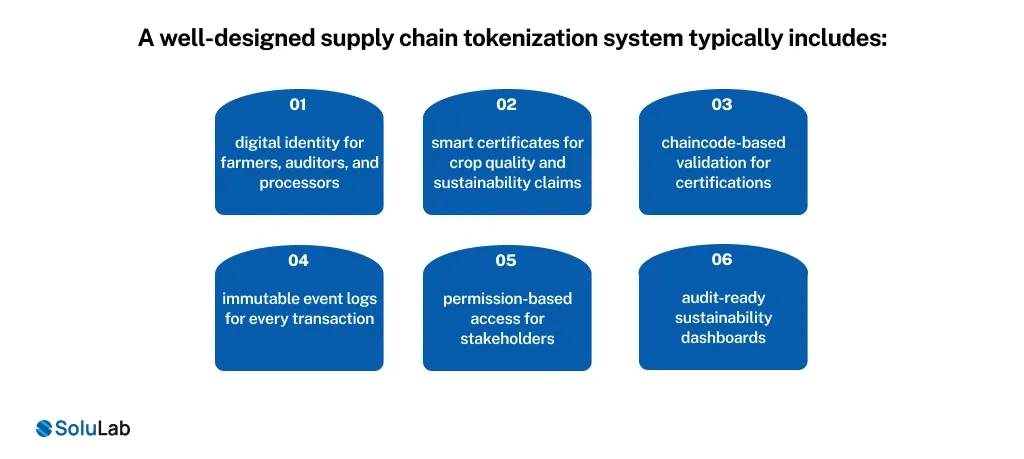
This creates:
- lower documentation fraud
- faster compliance reviews
- better dispute resolution
- stronger buyer trust
In 2026, leading enterprises are also moving toward dynamic NFTs and live metadata updates through IoT sensors. That means water usage, soil health, emissions, and quality scores can update continuously rather than being manually uploaded later.
This is what makes blockchain-based supply chain transparency commercially valuable, not just technically attractive.
Does Enterprise Tokenization Depend on Hybrid Blockchain Or Cloud-Native Architecture?
For enterprise-scale operations, tokenization is not just about blockchain. It is about architecture that works with existing ERP, finance, and compliance systems.
That is why most successful enterprise blockchain tokenization programs now follow a hybrid model.
1. Why hybrid tokenization architecture works?
A hybrid stack combines:
- permissioned blockchain for trust and auditability
- cloud infrastructure for scale and integrations
- middleware for syncing legacy systems
- analytics layers for executive reporting
BASF’s architecture is a strong benchmark.
| Architecture Layer | BASF Approach | Business Value |
| Blockchain trust layer | Amazon Managed Blockchain | Immutable supply chain records |
| Identity layer | Fabric CA + AWS Secrets Manager | Verified farmer and validator access |
| Integration layer | AWS Fargate block listeners | Real-time sync with business systems |
| Analytics layer | Amazon OpenSearch | Faster audits and ESG dashboards |
| Smart logic layer | Smart certificates and token rules | Automated sustainability validation |
2. Hidden ROI beyond traceability
A mature enterprise tokenization platform improves more than reporting:
2.1. Working capital unlock
Traditional agricultural assets remain illiquid until final sale.
With tokenized warehouse receipts and proof-of-reserve models:
- Suppliers can access faster collateralized financing
- Loan cycles can be reduced from 15–30 days to under 48 hours
- Some pilots have shown 31.3% faster disbursement
2.2. Audit and operational efficiency
Manual supply chain verification is expensive.
Tokenized systems can:
- Reduce document reconciliation effort
- lower third-party audit dependence
- Cut supplier transaction costs by up to 65%
2.3. Risk reduction
Tokenized logistics records reduce fraud exposure.
Benefits include:
- lower shipment disputes
- stronger proof of quality
- improved insurer confidence
Some blockchain-led workflows have shown roughly 15% lower fraud rates in trace-heavy processes.
This is why supply chain tokenization services are now viewed as operational infrastructure rather than innovation pilots.
How Does Enterprise Tokenization Improve ESG Reporting, Incentives, and Supply Chain Efficiency?
ESG reporting often fails because enterprise data is delayed, unverifiable, or incomplete.
ESG tokenization changes that by making environmental and operational claims part of the asset record itself.
1. How Tokenization Improve ESG Compliance?
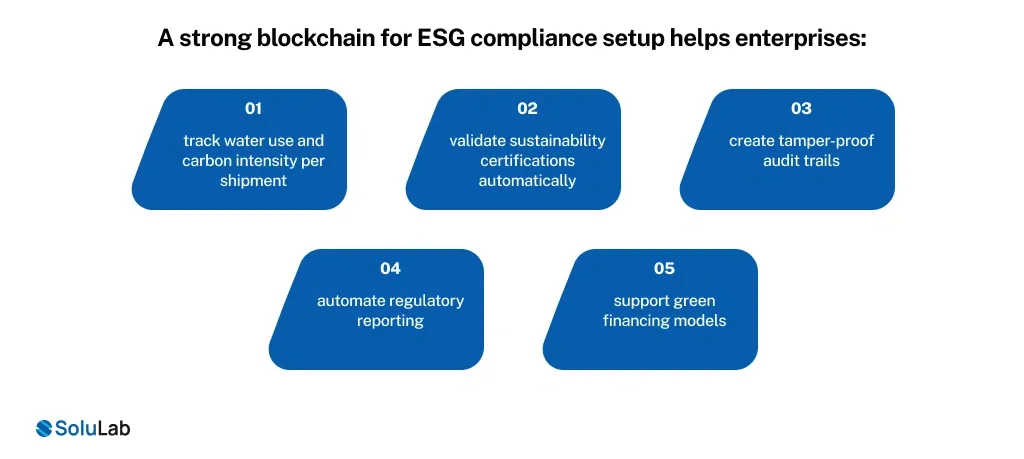
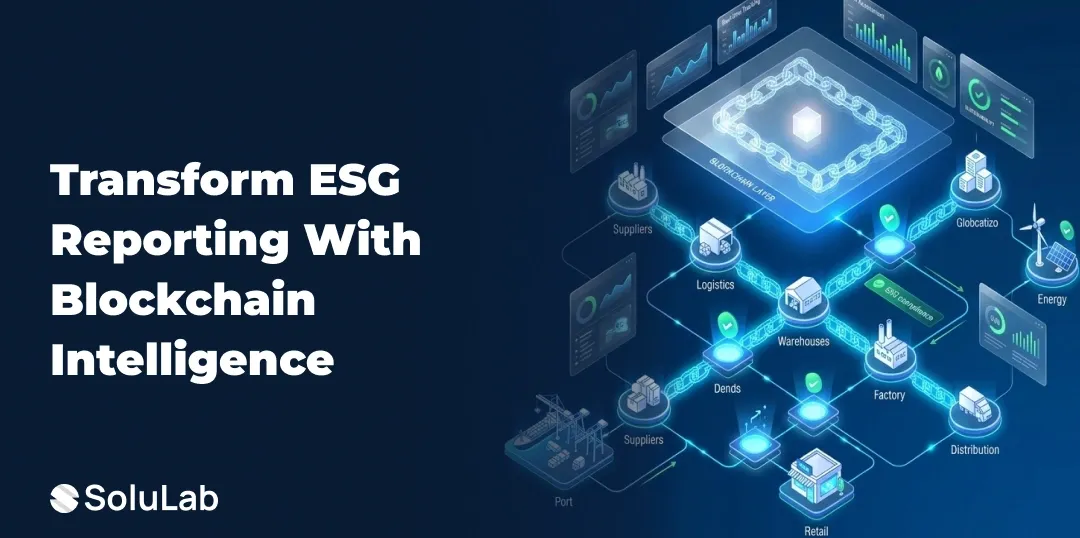
For BASF, this means sustainability data can move with the cotton through every supply chain stage. That improves retailer trust and downstream accountability.
2. How global regulations can be dissolved with technical fixes?
Beyond internal reporting, tokenization platform development is also helping enterprises align with fast-changing regional compliance frameworks. This is becoming increasingly important as governments tighten supply chain disclosure rules.
Let’s also see how tokenization works across countries and reduce compliance risk:
| Region | Regulatory Trigger | The Tokenized Fix |
| European Union | Digital Product Passport (DPP) | Mandatory for textiles in 2026. Every item needs a “Green Ledger” showing its CO2 footprint and recyclability. |
| UAE (Dubai) | VARA ARVA Framework | Classifies Real-World Assets (RWAs) as “Asset-Referenced Virtual Assets,” allowing for Shariah-compliant green financing. |
| South Korea | Electronic Securities Act | Legalizes fractional ownership of “yield assets” (like a harvest), turning agricultural output into tradeable security tokens. |
| USA | SEC/CFTC Taxonomy | Categorizes supply chain tokens as “Digital Tools” (not securities), providing a safe harbor for enterprise data tracking. |
2. Better incentives for sustainable behavior
The biggest shift is economic.
Tokenization makes it easier to reward farmers and suppliers for better sustainability practices.
- Using Dynamic NFTs (dNFTs), the token’s metadata updates automatically as it passes through the supply chain.
- By tokenizing a cotton crop early, farmers in regions like the UAE or Brazil can access Green Yield Tokens.
- Firms save up to 40% on audit overhead because the blockchain development provides a “Ready-to-Print” audit trail for regulators like HMRC or the SEC.
Examples include:
- carbon-linked rewards for regenerative farming
- quality-based smart payouts
- verified premium pricing for sustainable batches
Enterprises with tokenized climate data can also benefit from:
- lower insurance premiums
- reduced compliance penalties
- faster access to carbon-linked markets
In 2026, premium verified sustainable commodities can command 15% to 25% higher pricing in selective markets when provenance and environmental claims are reliably proven.
That is why climate accountability blockchain is becoming a business lever, not just a reporting tool.

How SoluLab Delivers Enterprise Tokenization Systems Built for Scale and Compliance?
Building effective enterprise tokenization solutions requires more than smart contracts. Enterprises need systems that fit real operational complexity.
At SoluLab, we build tokenization systems that align with business outcomes across supply chains, commodities, ESG workflows, and real-world assets.
1. SoluLab’s enterprise tokenization approach
As a top enterprise blockchain development company, SoluLab helps enterprises with:
- tokenization strategy and use case discovery
- private and hybrid blockchain architecture
- ERP and legacy system integrations
- token standards like ERC-3643 and permissioned asset models
- proof-of-reserve and audit frameworks
- IoT and Oracle integrations for live sustainability data
- dashboards for executives, auditors, and partners
2. What enterprises gain
With the right tokenization for a supply chain traceability strategy, enterprises can:
- improve trust across fragmented networks
- reduce audit and compliance costs
- unlock faster working capital cycles
- improve ESG credibility
- create new incentive and liquidity models
BASF’s model shows that tokenization is no longer a future concept. It is already solving traceability, climate accountability, and operational efficiency at scale.
For enterprises facing supply chain complexity, sustainability pressure, and rising compliance costs, tokenization is becoming one of the clearest paths to smarter growth.
FAQs
Deepika is a content writer who blends storytelling with strategic thinking. She explores topics across digital innovation, emerging tech, and the evolving blockchain industry. She enjoys breaking down complex ideas into simple, engaging narratives in the growing global markets.