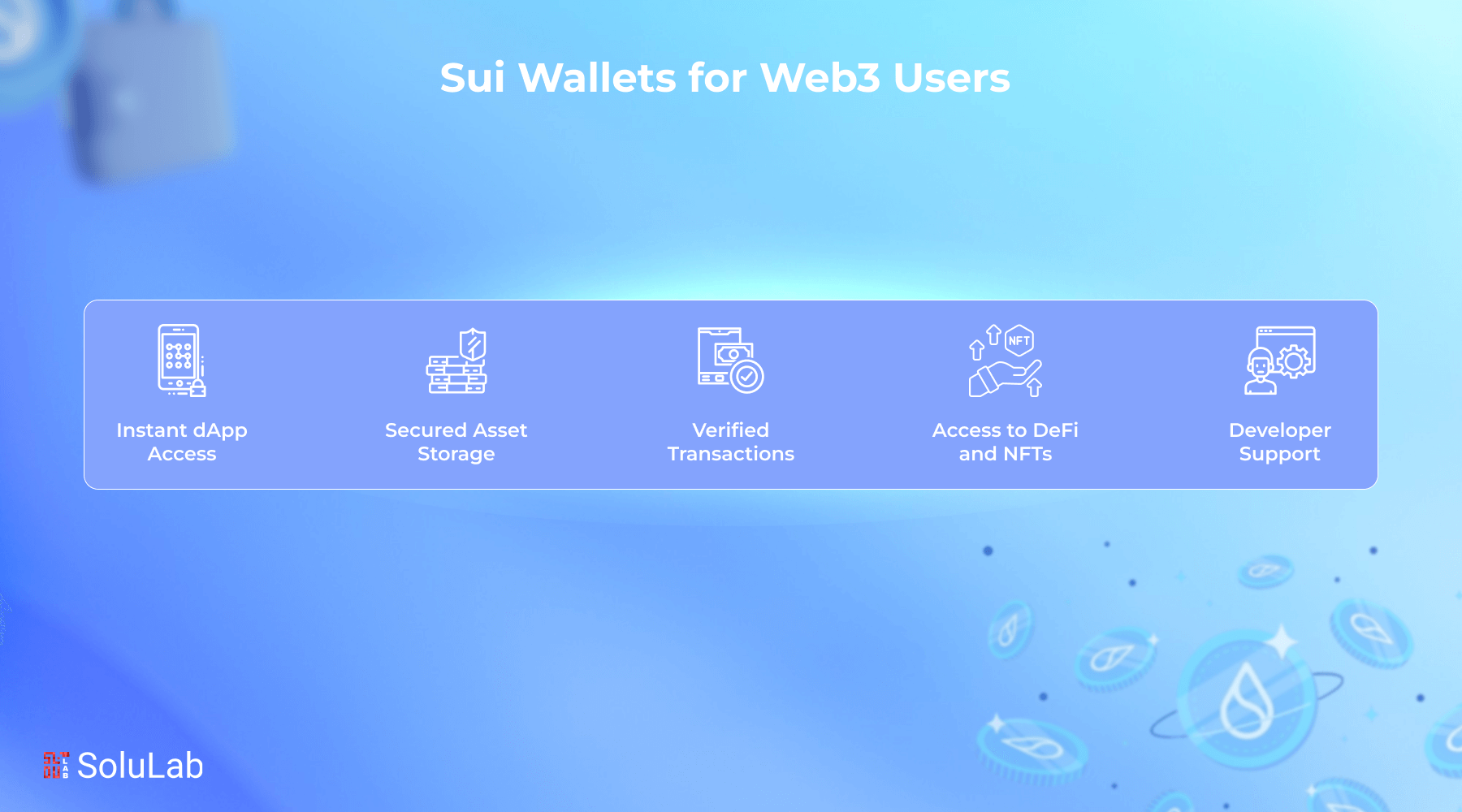
Web3 stopped being a buzzword a while ago. It is slowly turning into the plumbing of the next internet, and people want quicker, safer, less fiddly ways to hold what they own on it. That is exactly why Sui wallets keep climbing the list of tools Web3 users actually reach for.
| According to recent research, SUI has a market valuation of about $7.2 billion, a 24-hour trading volume of $900.25 million, and a price that varies about $2.25 as of March 2025. |
Sui-based wallets are more than a place to park tokens. Think of them as the front door: DeFi without the hassle, NFT trades in a single click, and fees that do not sting. For ordinary users, that adds up to something that simply feels quicker and cheaper. So what is behind the pull? Let’s go through it piece by piece.
What are Sui Wallets?
A Sui wallet is a cryptocurrency wallet built for one chain only: Sui. You use it to store, manage, and trade Sui tokens and NFTs. Developers can also plug it straight into their dApps, which is how you get into the apps and features running on the Sui network in the first place.
Under the hood, every Sui wallet holds three pieces of data you should understand:
- Public Key or Wallet Address
This is the string of letters and numbers other people use to send crypto to you. Nothing more mysterious than that. It works the way a street address does for a parcel: you hand it out, and things arrive.
- Passphrase
Your passphrase is a security key made of 12 English words. Lose your device, and this is what gets you back in. Without it, recovery is not happening.
- Private Key
The private key is another alphanumeric string, and it is the one that actually opens the account. Picture the PIN on your bank card. Same idea, higher stakes.

The Wallet Extension
If you build on Sui, the browser extension is the tool you will have open all day. It lets you simulate on-chain transactions, watch a dApp flow run in real time, and wire smart contract capabilities into your frontend. Most Sui extensions also ship with a developer mode, support for testnets and other special networks, and standard APIs for signing and sending transactions.
The payoff is speed. You iterate, you debug, you ship user-facing apps on Sui without a lot of ceremony. And as more people use Sui apps, the extension turns into the quiet bridge between those users and the decentralized finance ecosystem: secure, convenient, and tucked into one small plugin.
How Sui Wallet Addresses Work and Why They Matter?
On the Sui blockchain, your wallet address is a unique identifier. It lets you send, receive, and manage digital assets securely. But calling it an account number undersells it. Because it sits on Sui’s object-centric design, your interactions across Sui apps run faster and with less overhead. Pick the best Sui wallet for your needs and that address will behave reliably whether you are trading NFTs or moving funds through DeFi.
Key Points Regarding Sui Wallet Address:
Unique Identity
Each address is tied to your crypto identity. That link is what lets you deal with dApps, tokens, and smart contracts safely.
Object-Centric Structure
Here is where Sui breaks from the usual account-based model. The wallet works with Sui’s object-based architecture, so every asset is its own trackable thing, which helps both scale and visibility.
Fast and Low-Cost Transactions
Sui can push a high number of transactions per second (TPS). Your address rides on that, so transfers clear quickly and cheaply.
Secure Key Management
The Sui wallet app gives you your address and looks after your private keys, usually backed up with a seed phrase or biometric lock.
Full Ecosystem Compatibility
One address, every Sui platform. Games, DeFi protocols, and NFT marketplaces all accept it.
Easy Onboarding and Usage
The Sui wallet app and Ethos are two of the most popular picks for a simple reason: creating and managing an address takes no technical know-how at all.
So, an address is not just somewhere funds land. It is how you get into a corner of Web3 that keeps shifting under your feet. Choose the wallet well and the whole experience stays safe, smooth, and ready for whatever comes next.
Read Our Blog Post: Custodial vs. Non-Custodial Wallets
Why Sui Wallet is Gaining Traction From Web3 Users?
Sui Wallet was built around one goal: a smooth, safe experience that keeps up with a fast chain. Developer, investor, or someone buying their first token, it covers the basics of managing digital assets without making you work for it. As Sui grows, more of its users treat Sui Wallet as the default for DeFi, NFTs, and a range of Web3 apps.
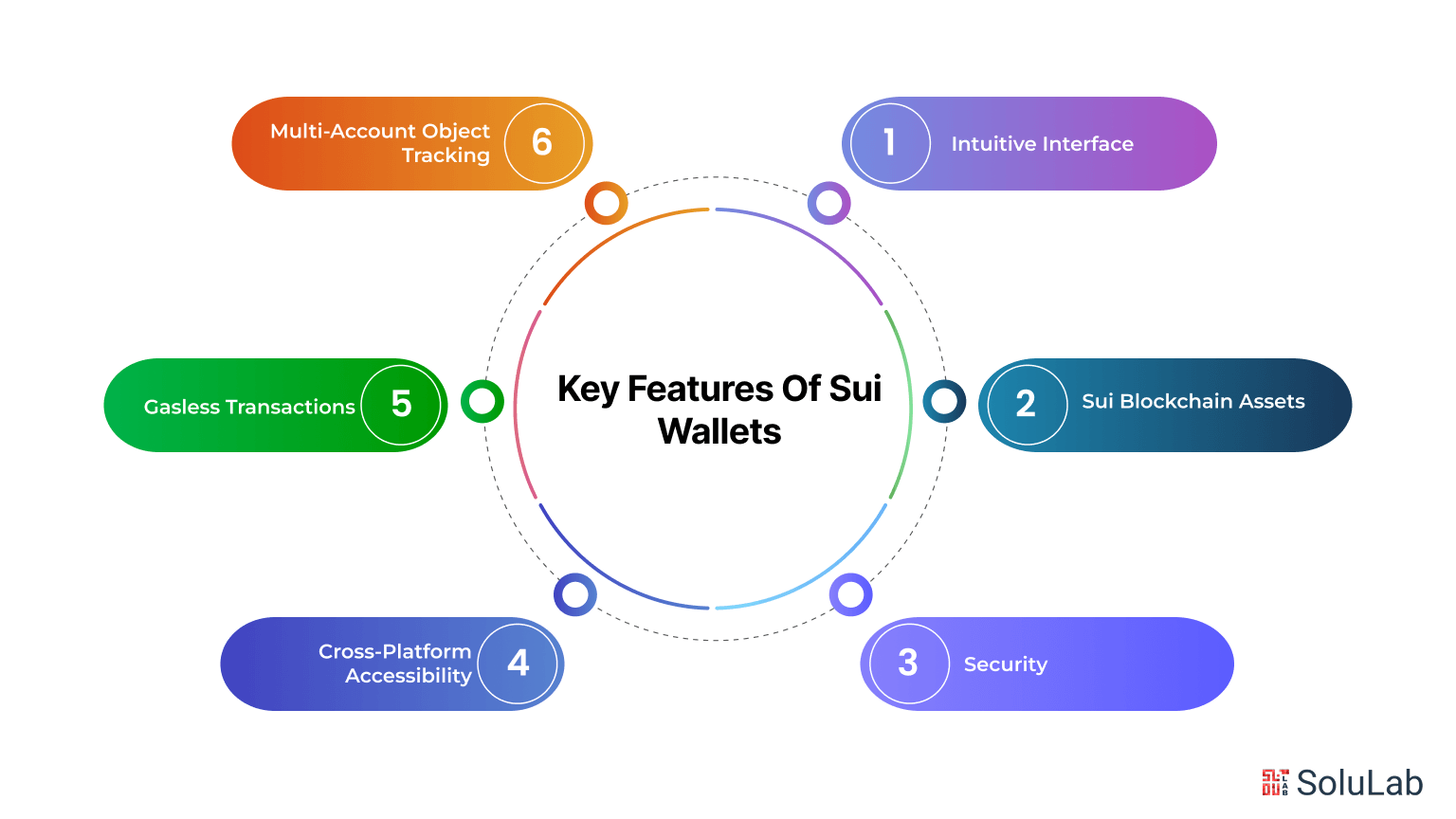
Here are some of the key features of Sui Wallet:
1. Intuitive Interface
Clean layout. Obvious buttons. Beginners find their tokens fast, and experienced users are not slowed down by hand-holding.
2. Sui Blockchain Assets
Because it was made only for the Sui network, the wallet handles SUI tokens and Sui NFTs natively. No third-party bridge, no conversion step.
3. Security
Your private keys stay on your device, encrypted. On top of that you get seed phrase recovery and, where supported, biometric login.
4. Cross-Platform Accessibility
It runs as a browser extension and as a Sui Wallet mobile app, so you can check your assets on a laptop in the morning and on your phone at night.
5. Gasless Transactions
This one is still on the roadmap. Planned updates aim to support sponsored or gasless transactions, and honestly, removing that friction matters a lot if Sui wants mainstream users.
6. Multi-Account Object Tracking
Sui treats everything as an object. The wallet takes advantage of that, keeping tabs on each NFT, token, and digital item tied to each of your accounts.
Light, safe, and flexible, Sui Wallet keeps improving and has a strong claim to being the best wallet for Sui. It gives you what you need to take full part in the Sui ecosystem, on desktop or mobile.
Best Practices for Your Sui Wallet Security
When you create a Sui wallet you get two keys, one public and one private. The private one is the master key to your money. Protect it badly and nothing else about the wallet matters. These are the habits worth building from day one:
Don’t Share Your Private Key
Share your public key with anyone you like. Your private key? Nobody. It proves who you are, signs your transactions, and is the thing that makes your assets yours.
Be Alert Against Scams
No legitimate service will ever ask for your private key, and that includes the Sui wallet mobile app. If a pop-up or a friendly message asks for it, it is phishing. Close it.
Utilize Cold Storage
Keep your private keys offline. A hardware wallet works, so does an encrypted USB drive, and so does good old paper stored somewhere safe. Offline keys cannot be pulled out by an online breach.
Create Secure Backups
One backup is not enough. Store copies of your keys in a few separate, secure places. You can also keep a QR code version for quicker access, but only generate it with an app you trust.
Multi-Factor Authentication (2FA)
Switch on two-factor authentication wherever it is offered. Want another layer? A hardware key such as a YubiKey adds one.
Safeguard Your Devices
Your wallet is only as safe as the machine it runs on. Use trusted antivirus software, strong passwords, and install updates when they arrive, not three months later.
Review and Test Consistently
Check your backups and settings every so often. And before a big transfer, send a tiny test amount first. It takes a minute and can save you a lot.
Multi-Signature Wallets
For shared wallets or team treasuries, Sui supports multi-signature setups. No single person can move the funds alone.
Effective Security Practices
Turn on auto-lock. Do not reuse the same keys across a pile of devices. And skip public Wi-Fi when you open your wallet, however tempting the café connection is.
Stick to these habits and your keys and funds stay protected, which means you can use your Sui blockchain development wallet without that low hum of worry.
Top 5 Sui Wallets to Watch Out for in 2025
Sui has a wide spread of Web3 apps worth trying. None of them work until you have a wallet, though. With one, you can buy, sell, send, and receive SUI, NFTs, and the other tokens that live on the network.
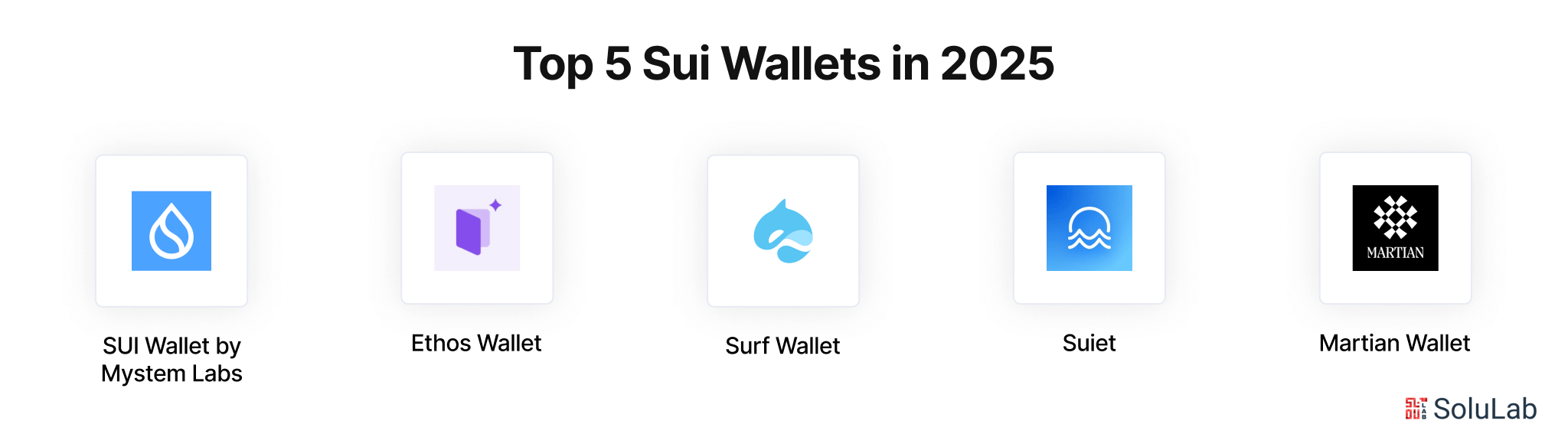
With Sui’s Mainnet nearing its first birthday, a handful of wallets have pulled ahead in the Sui ecosystem. Here are the five we would keep an eye on in 2025:
1. Sui Wallet by Mysten Labs
This is the official one, made by the same team that built the Sui blockchain, and plenty of people call it the best wallet for Sui. It works smoothly with every Sui dApp, stores private keys safely, and has an interface that suits a first-timer as well as a power user.
2. Ethos Wallet
Ethos keeps picking up users thanks to tidy mobile and web apps with built-in NFT support and features geared toward decentralized finance. People like it because it is simple and you are set up in minutes. If you want a safe, lightweight Sui wallet, it is an easy pick.
3. Surf Wallet
Care about privacy and control? Surf is built for you. It offers top multi-wallet, works with testnets for Sui blockchain development, and lets advanced users tune their transaction settings.
4. Suiet
Suiet is lean and quick. As a browser extension it gives you object tracking, token management, and a friendly interface, which is why both Web3 newcomers and developers end up using it.
5. Martian Wallet
Martian started life on Aptos and now supports Sui in beta. If you juggle assets across several chains, its multichain setup is the draw, and it still covers the basics of storing and sending Sui tokens.
The Key Takeaway
Simple, secure, fast. That combination is why Sui wallets are becoming a standard tool for Web3 users in 2025. Clear interfaces, native Sui token support, and easy hookups to dApps mean the better wallets let you actually take part in the decentralized economy instead of watching from the side.
At SoluLab, we help businesses build serious applications on the Sui blockchain. As a leading Sui blockchain development company, we recently built The Mobyii mobile wallet app, made to take the pain out of digital payments: paying utility bills, depositing and withdrawing with no fuss, and shopping without cash.
Got an idea for the next wallet or dApp on Sui? Tell us about it. SoluLab can help you turn it into something people use. Let’s Talk!
FAQs
Shipra Garg is a tech-focused content strategist and copywriter specializing in Web3, blockchain, and artificial intelligence. She has worked with startups and enterprise teams to craft high-conversion content that bridges deep tech with business impact. Her work translates complex innovations into clear, credible, and engaging narratives that drive growth and build trust in emerging tech markets.