
Nobody needs an introduction to the initial coin offering. Of all the Blockchain development services out there, it’s probably the best known. It started life as a speculative, slightly wild way to raise money, and it has since grown into one of the most popular routes a founder can take.
Yes, plenty of ICOs failed. The model survived anyway.
So where does the ICO market stand today?
The sums companies raise through initial coin offerings (ICOs) keep climbing. So does the list of Blockchain businesses that figured out how to create an ICO and then used it to fund themselves.
What follows is a line-by-line look at where the money goes. The point is simple: give you better tools for estimating costs, so the ICO launch budget you walk into a boardroom with is one you can defend. We’ll start with the total cost to launch an ICO and then break it down piece by piece.
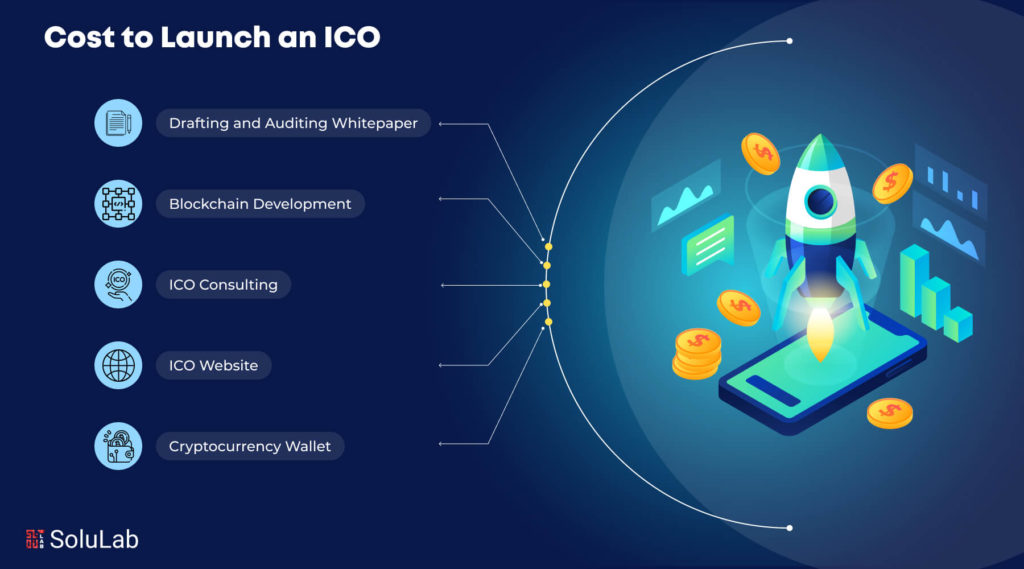
ICO Cost Demarcation by Service
Launching an initial coin offering (ICO) is hard work. But once you see which parts drive the bill, the financial calls get a lot easier. A dedicated team of blockchain app development specialists can walk you through those expenses, and they can also help with the legal groundwork a successful initial coin offering (ICO) depends on.
1. ICO Consulting
ICO Consulting gets skipped because it seems obvious. For a lot of founders, that’s the mistake that sinks the business. Skip this one service, and the whole procedure can fall apart.
If you’re an entrepreneur getting ready for an initial coin offering (ICO), there’s a long list of things to weigh. Most of them you only discover once you sit down with a firm that actually provides ICO services.
Those conversations teach you a lot. You come out of them better prepared and more confident about initial coin offerings (ICOs), and you walk into the Blockchain business knowing the field instead of guessing at it.
Here’s what else ICO Companies usually bundle under the ICO consulting umbrella:
- ICO Planning
- Drafting and Auditing White Papers
- Creating Tokens and Marketing
- Website Development
- ICO Listing Process
- Post Launch Activities
At the low end, this part of the initial coin offerings cost runs between $8,000 and $15,000.
2. Drafting and Auditing Whitepapers
A good whitepaper goes a long way toward deciding whether an ICO works, and what it costs to launch. You can’t start an initial coin offering without one. Write it with real depth and it tells potential investors what the project is, why it matters, and how far it reaches.
Think of it as your argument on paper. It shows the proposal is viable, names the problems it solves, and explains how the sector you plan to decentralize gains from blockchain technology.
Expect to pay somewhere between $8,000 and $20,000 to have an ICO whitepaper drafted and audited.
3. Blockchain Development
Next comes the Blockchain solution itself. That covers Token Creation, ICO Smart Contracts, and MVP development. The token (or cryptocurrency) is non-negotiable: it’s what investors get back for putting in fiat or crypto. An MVP gives everyone a clear picture of the Blockchain ecosystem’s functionality. And money spent on Smart Contract development is money spent protecting investors, because the contract keeps token distribution transparent and trustworthy. Hire a blockchain development firm with a real reputation here. You want the whole setup secure, able to scale, and hard to hack.
This is usually the most expensive stage of ICO development, and the one that matters most. For this piece, the cost of launching an ICO usually lands between $15,000 and $50,000, depending on how complex and wide-ranging the Blockchain solutions are.

4. ICO Website
In the fundraising side of a successful ICO launch, few things carry more weight than the website you use to launch and then promote your initial coin offering. It holds your concept, your product, your whitepaper. It’s also the first place an investor goes to check you out.
Plenty of founders run the whole fundraise and token distribution straight from the site. That raises the stakes. The design has to feel smooth and simple to use, and the ICO development work behind it has to lock the site down against hackers and get it ready for a rush of incoming funds.
Building and designing a solid initial coin offering (ICO) website starts at roughly $15,000 to $25,000. Want an exact number? An experienced ICO development business can quote you based on what you actually need.
Read Also: How Much Will Blockchain Development Cost in 2025?
5. Cryptocurrency Wallet
A cryptocurrency wallet isn’t mandatory. Still, it helps your investors a great deal, since it keeps all their coins in one spot. They get a convenient place to see how much crypto they hold at a glance, and how much they can afford to put in.
It’s an add-on, but it makes your product look more valuable to investors. Budget anywhere from $15,000 up to $60,000.
Here’s how much does it cost to launch an ICO, laid out by the big decision points:
| ICO Services | Estimated Cost |
| ICO Consultation | $8,000 to $15,000 |
| Drafting and Auditing White Papers | $8,000 to $20,000 |
| Blockchain Development | $15,000 to $50,000 |
| ICO Website | $15,000 to $25,000 |
| Cryptocurrency Wallet | $15,000 to $60,000 |
How ICO Works?
An Initial Coin Offering (ICO) is how a blockchain-based project raises capital: it issues its own cryptocurrency or token and sells it. The typical sequence looks like this:
1. Idea and Whitepaper Creation
- Conceptualization: It all starts when a project team lands on an idea or solution built on blockchain.
- Whitepaper: The team writes a full whitepaper covering the project’s goals, the technical side, tokenomics (token economics), and the problem it sets out to fix. It also names the team members and lays out the timeline and how much funding is needed.
2. Preparation and Pre-ICO
- Team Formation: Pull together developers, advisors, legal experts, and marketers.
- Marketing and Community Building: Get the word out on social media and in forums.
- Pre-ICO/Private Sale: Early investors get tokens at a discount.
Related: Top 10 ICO Development Companies
3. ICO Launch
- Announcement: Pick the ICO start and end dates, then make them public.
- Token Sale: Sell the tokens, usually for established coins such as Bitcoin or Ethereum.
- Smart Contract: A smart contract runs the token sale automatically, which keeps it transparent and secure.
4. Post-ICO
- Token Distribution: Once the sale closes, tokens go out to investors.
- Exchange Listing: Get the tokens listed on crypto exchanges so people can trade them.
- Project Development: Spend the money you raised building the project, following the roadmap.
- Regular Updates: Keep the community and investors in the loop, and keep doing it.
5. Regulatory Compliance
- Legal Considerations: Stay on the right side of the applicable rules, KYC (Know Your Customer) and AML (Anti-Money Laundering) checks included.
How to Launch an ICO?
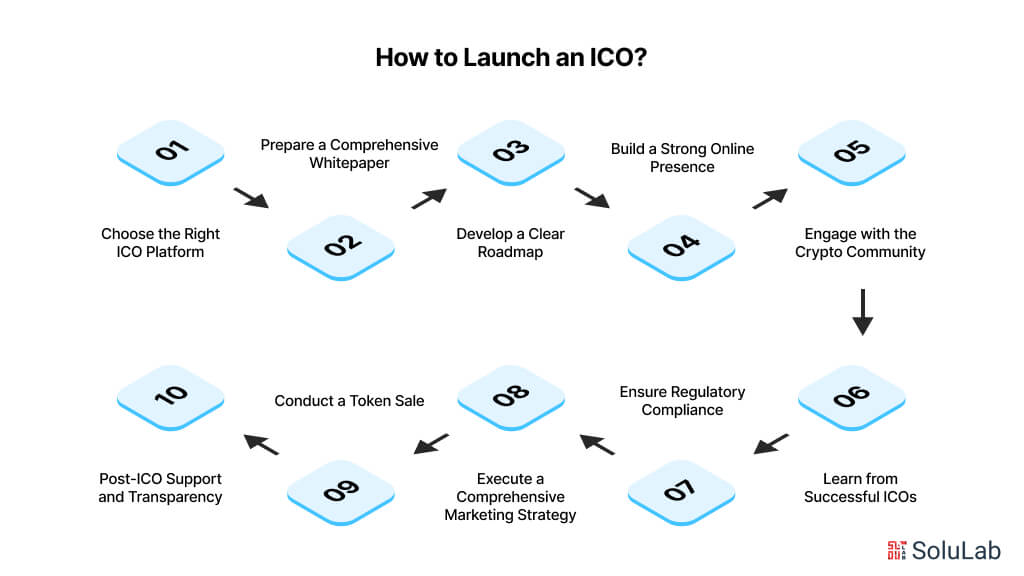
The crypto market is crowded, so a launch that works takes a handful of deliberate steps. Start with ICO platforms. They supply the infrastructure that hosts and runs your token sale, which makes picking one a big decision. Look hard at the user base, the security setup, and how well the platform handles regulation.
The short version of how to launch an ICO:
- Choose the Right ICO Platform: Pick a platform with a good reputation from the most successful ICOs that fits your project. Security, user base, and regulatory compliance should all factor in.
- Prepare a Comprehensive Whitepaper: Write a detailed whitepaper that spells out your goals, the tech framework, tokenomics (token economics), and what your team brings.
- Develop a Clear Roadmap: Map the key milestones, the development phases, and the dates you expect to hit them.
- Build a Strong Online Presence: Show up where investors look: social media channels, crypto forums, industry publications. That’s how you draw in backers and grow community support.
- Engage with the Crypto Community: Join discussions, post in forums, and go to relevant events. Being visible is half of being credible.
- Learn from Successful ICOs: Look at ICOs that worked and study how they handled transparency, community engagement, and investor relations.
- Ensure Regulatory Compliance: Work through the regulatory rules with care. Follow local laws on securities and cryptocurrencies so you don’t end up in legal trouble.
- Execute a Comprehensive Marketing Strategy: Run a focused marketing plan (digital campaigns, PR, partnerships) that actually reaches investors around the world.
- Conduct a Token Sale: Open the sale with clear terms and conditions. Put the distribution plan, pricing mechanics, and investor protections in the smart contracts.
- Post-ICO Support and Transparency: Keep investors updated, stay open about how the project is going, and give enough post-ICO support that trust and credibility hold up over time.
Where to Launch an ICO?
Where you run the token sale matters. A lot. The platform you pick shapes how well the ICO does and how credible it looks. These are the factors worth weighing:
1. ICO Platforms: Some ICO platforms exist specifically to launch and manage token sales. Ethereum, Binance Launchpad, and Polkadot all offer solid infrastructure and a big pool of investors. Each one has its own features, security protocols, and community backing, so the right pick comes down to what your project needs.
2. Investor Access: Go where the investors are, and where they’re active. A platform with a long history of successful ICOs and a large user base makes it easier to pull people toward your project.
3. Security Measures: Check that the platform takes security seriously, protecting you and your investors from cyber threats and fraud. Good signs: smart contract auditing, KYC/AML compliance, and escrow services.
4. Regulatory Compliance: Look at the regulatory environment the platform works in and make sure you stay within the relevant laws. A platform that holds itself to regulatory standards lowers your legal risk. Investors notice that too.
5. Token Liquidity and Exchange Listings: Think past the sale. Pick a platform that helps your token stay liquid after the ICO, since getting listed on major cryptocurrency exchanges can push up both market liquidity and trading volume by a wide margin.
6. Community and Marketing Support: Some platforms help you promote the ICO with community and marketing support. If they encourage community engagement and hand you marketing resources, you’ll get seen by more potential investors.
7. Technical Capabilities: Kick the tires on the tech. How does it scale? How fast are transactions? Does it work with other blockchain networks? The answers decide whether your project runs smoothly and lasts.
Get the platform right and you get visibility, investors, and a cleaner compliance story. Do the research. Do the due diligence. Then choose the one that matches your goals and values, because that choice sets up everything the launch does after it.
Challenges Associated with Launching a Successful ICO
- Justifying Investors’ Benefits
The first big hurdle is persuading investors of the ICO benefits. Serious money only shows up when you can explain how your token works inside the economy and how your blockchain solution fixes real problems. That takes a lot of groundwork. Your plans for the cryptocurrency and the wider project have to be realistic, and they have to be worth something outside a pitch deck. Getting there isn’t simple. It takes careful preparation before you bring a decentralized solution to market.
- Proving Your Brand’s Authenticity
Then there are the fakes. Scams and shady businesses have flooded the ICO market, and investors have grown wary of anything new as a result. Proving you’re legitimate against that backdrop is tough. Our experienced ICO developers have worked out a few ways to show clients’ ICOs are the real thing:
- We never promise the cryptocurrency’s value will double in a short time.
- We make sure the ICO website shows a knowledgeable, open team whose blockchain expertise can be checked.
- We build thorough, detailed whitepapers and websites.
- We avoid proposing open-source code, and we make sure repositories on Source forge or GitHub are complete and well documented.
- Securing the Entire ICO Process
Whatever the market does, security and fraud will shape where ICOs go next. Today’s hackers are smart. You need a highly skilled development team just to keep the risk down. Here are some of the measures we put in place to protect the ICO process:
- Two-factor authentication
- Repeated checks of the smart contract’s code and its terms and conditions, both before and after the ICO goes live
- SSL encryption on the website, no exceptions
That’s part of how our team at SoluLab, a reputed blockchain development company, keeps your ICO process 100% secure and the risk of attack as low as possible.

Conclusion
Add it all up and launching an ICO costs somewhere between $40,000 and $200,000. Where you land in that range depends on the variables above. One thing doesn’t vary, though. Strong whitepapers, a dependable cryptocurrency wallet, and an ICO website that actually works all come from working with blockchain experts who know the job inside out.
SoluLab is a leading ICO development company with a team that focuses on cryptocurrency projects. Our expert blockchain developers were early movers in crypto, and they bring deep experience and modern solutions to custom project needs. We stay with you through the whole ICO process: first concept, whitepaper, token development, and secure smart contract deployment. Your project gets a solid base, held to high standards of security and transparency. SoluLab has a track record of successful ICO launches, and we know where the hard parts of the cryptocurrency world are. Get in touch today and start your ICO on firm footing.
FAQs
Shipra Garg is a tech-focused content strategist and copywriter specializing in Web3, blockchain, and artificial intelligence. She has worked with startups and enterprise teams to craft high-conversion content that bridges deep tech with business impact. Her work translates complex innovations into clear, credible, and engaging narratives that drive growth and build trust in emerging tech markets.