A mobile app used to be a nice extra. Not anymore. For a two-person startup or a company with a head office and a board, the app is now often the first place a customer actually talks to you, and that makes it a growth channel, not a gadget.
So you want to build one in Australia. Good. Read the numbers below before you sign anything. The right partner and a planning team that asks hard questions early will do more for your budget than any discount, and there are more affordable ways to get a solid app out the door here than most founders expect.
A Simple Overview of App Development Costs in Australia
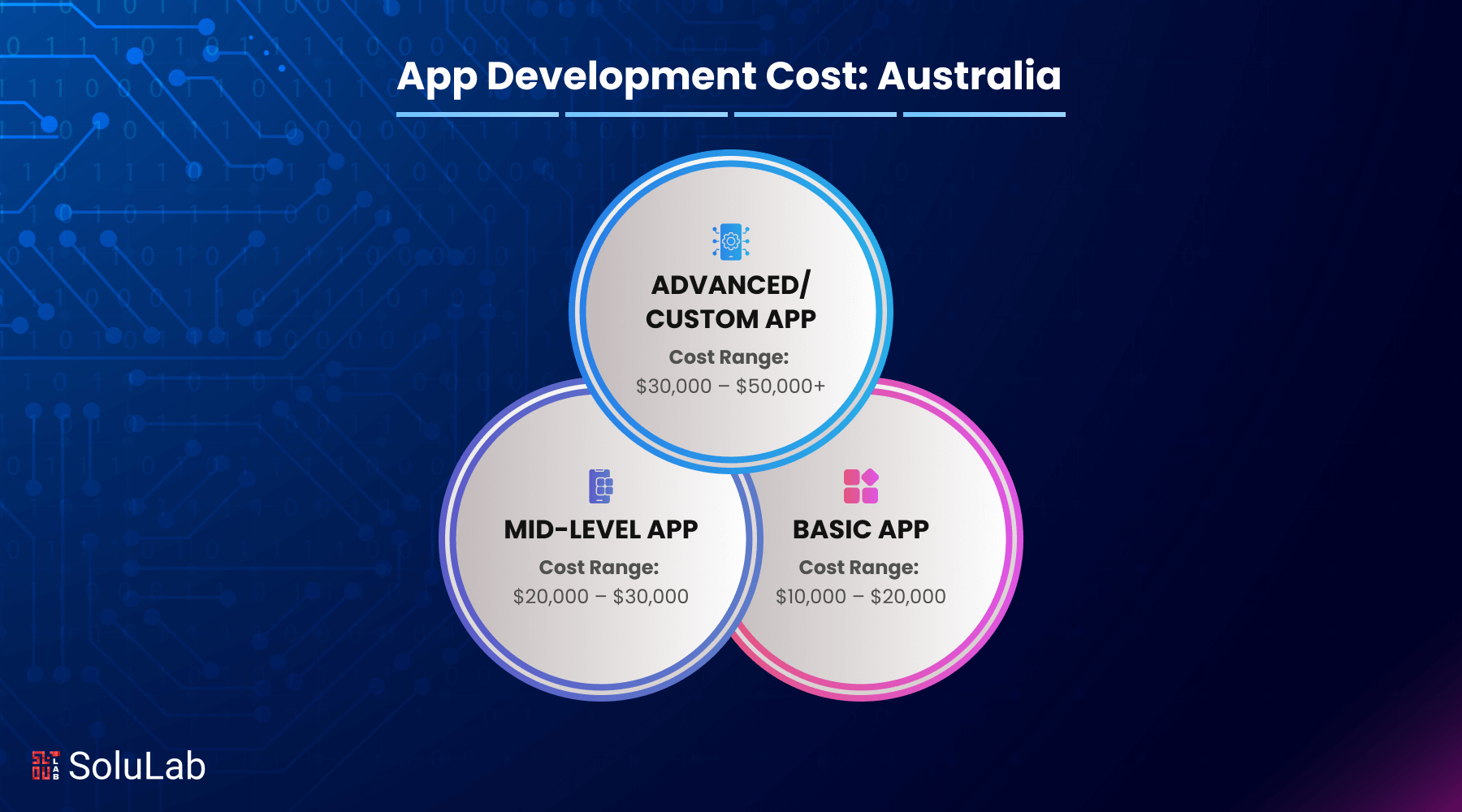
Price depends on what kind of app you are building. Most startups don’t open with something complex, and they shouldn’t. Work out what the business actually needs first, pick a build model that fits, then set the budget around it. Here is a rough guide to what developing a mobile app in Australia tends to cost.
| App Type | Estimated Cost (AUD) | Development Timeline | Ideal For |
| Basic App | $10,000 – $20,000 | 4 – 6 weeks | Startups, MVPs, simple utilities |
| Mid-Level App | $20,000 – $30,000 | 8 – 12 weeks | SMEs, booking apps, ecommerce platforms |
| Advanced/Custom App | $30,000 – $50,000+ | 12 – 20 weeks (depends) | Enterprises, AI-driven apps, real-time systems |
Factors That Influence Mobile App Costs in Australia
Plenty of things move the number. These are the ones that move it most:
- Internal vs. external development
- App platforms (iOS, Android, both)
- Complexity and features
- Back-end and front-end requirements
- Third-party integrations
- Design quality
- Marketing and post-launch support
One at a time, then.
1. Internal vs. External Development
A Perth or Melbourne agency can look pricey on the first quote. What that quote usually hides is everything you avoid later: slipped deadlines, bugs nobody owns, and the overhead of running a team yourself. With an agency you get:
- People who already know the tools and tech stacks
- Quicker turnaround
- Room to add or drop people as the project changes
Outsourcing also takes HR costs off your books. No sick leave, no insurance, no overtime bills. That’s why a lot of Australian businesses outsource even when they already have developers on staff: they want the specialist skills, and they want the thing shipped sooner.

2. Choosing a Platform: iOS, Android, or Both?
Your platform choice changes the build in a few ways:
- iOS apps cost more at the start, but there are fewer device variations to deal with, and you reach higher-spending users in Australia, Japan, and the U.S.
- Android apps need more testing because there are so many devices out there. The upside is global reach.
- Cross-platform apps (Flutter or React Native) reach iOS and Android users from one codebase, which cuts both time and spend.
Around 40% of Australian apps are cross-platform for exactly that reason: lower cost, wider reach. [SOURCE NEEDED]
How App Features and Functions Impact Cost?
Every feature you add pushes the average cost to build an app in Australia up, and it happens faster than people think. Something as ordinary as push notifications or in-app chat can add thousands on its own.
| Common Features | Development Complexity |
| User Login & Profiles | Medium |
| Payment Gateway | High (due to security) |
| Real-Time Tracking | High |
| Push Notifications | Medium |
| In-app Purchases | Medium |
Third-Party Integrations
Social logins? Google Maps? A payments API? Each one adds hours and dollars. They make the app better, sure, but they usually come with strings attached:
- Monthly subscriptions
- Usage-based billing
- More testing and more security compliance work
Handled well, though, a good third-party service saves you from building the same thing yourself, and users get a smoother app out of it.
Developer Accounts & Fees
Small line item, easy to forget. The app stores charge developers too:
- Google Play Developer Account: $25, paid once.
- Apple Developer Account: $99, every year.
That money buys you a listing in the store, plus access to their testing tools and support.
Marketing
A brilliant app nobody has heard of earns nothing. Marketing spend might cover:
- Social Media Campaigns
- Google Ads & SEO
- Influencer or PR outreach
- Outdoor/TV ads for large-scale launches
How much you spend depends on your strategy and who you’re trying to reach. Skip it, though, and you’ll struggle both to win users and to keep them.
Detailed App Development Timeline (With Milestones)
An app gets built in stages, and each stage needs people who know what they’re doing. A typical run looks something like this:
| Stage | Timeframe | Activities |
| Discovery & Planning | 1 – 2 weeks | Market research, feature prioritization, tech stack selection |
| Wireframing & Prototyping | 1.5 – 3 weeks | UI/UX mockups, interactive user flows, initial feedback loop |
| Core Development (MVP) | 6 – 8 weeks | Backend & frontend development, API integrations, core functionality build |
| Testing & QA | 2 – 3 weeks | Functional, performance, and cross-device testing |
| Launch Preparation | 1 – 1.5 weeks | Final bug fixes, deployment, App Store/Play Store submission, ASO |
| Post-Launch Iterations | Ongoing (1st 2-4 weeks critical) | User feedback implementation, performance tracking, feature updates |
From kickoff to a full launch, a standard app usually takes 4 to 8 months. Complex ones can run close to a year.
App Maintenance Costs in Australia
Mobile app development doesn’t stop at launch. Keeping the app alive costs money as well: software has to be updated again and again, and every new feature is another bill. Regulated verticals cost more to build. See building custom legal software for what drives the number in legal.
Post-Launch App Maintenance Costs
Launch day is the starting line. After it, maintenance is what keeps the app stable, secure, and pleasant to use. A fair rule of thumb: set aside 15%-20% of the original build cost each year for updates, security patches, and small feature upgrades.
| Maintenance Task | Frequency | Estimated Cost (AUD) |
| OS & SDK Updates | Quarterly | $2,000 – $5,000/year |
| Bug Fixes & Security | Monthly | $500 – $1,500/month |
| New Features & Enhancements | As Needed | $10,000 – $50,000 per update |
| Server & Hosting Costs | Ongoing | $100 – $1,000/month |
Fix things before users complain and they tend to stick around. Your app store ranking benefits too.
Read More: Asset Tokenization Regulations for Australia
Local Development Agencies vs Offshore Comparison
More and more companies are sending app work offshore to save money. Two reasons come up again and again: building in Australia is expensive, and offshore firms often bundle post-launch support and compliance into the deal. Here’s how the two options stack up side by side.
| Factor | Local (Australia) | Offshore (India/Ukraine) |
| Cost | AUD 100 – 250/hour | AUD 25 – 75/hour |
| Communication | Real-time, culturally aligned | May face time-zone or language gaps |
| Quality Assurance | High standards, regulation-compliant | Varies by agency |
| Data Security | Strong under Australian law | Depends on jurisdiction |
Cost of Integrating Emerging Technologies into App Development in Australia
These days an app is more than screens and code. Smarter tech underneath is what makes it faster, safer, more automated, and nicer to use. Blockchain for secure transactions, AI for automation, NFTs for digital ownership: pick the right mix and the app won’t feel dated in two years.
| Technology | Use Case | Estimated Cost (AUD) | Estimated Timeline |
| Blockchain | Secure transactions, smart contracts, tokenization | $20,000 – $60,000 | 4 – 8 weeks |
| Artificial Intelligence (AI) | Predictive analytics, automation, personalization | $15,000 – $45,000 | 3 – 6 weeks |
| Generative AI (GenAI) | Content generation, chatbots, image/text AI | $25,000 – $75,000 | 5 – 8 weeks |
| NFT Integration | Asset tokenization, digital collectibles | $20,000 – $50,000 | 4 – 6 weeks |
| IoT (Internet of Things) | Smart devices integration, real-time monitoring | $18,000 – $50,000 | 5 – 7 weeks |
| AR/VR | Immersive experiences, 3D product views | $30,000 – $85,000 | 6 – 10 weeks |
| Voice Assistants / NLP | Voice search, AI chat interfaces | $15,000 – $40,000 | 3 – 5 weeks |
Adding one of these, or even a few, doesn’t have to blow the budget. At SoluLab we break integrations into modules, so you pay for what fits your goals, your timeline, and your business model, startup or enterprise.
Smart Ways to Reduce Development Costs
You don’t need a bottomless budget. These tactics keep the bill in check:
- Define Clear Requirements Early: Fuzzy planning is how scope creep starts, and scope creep is expensive. Write detailed specs on day one.
- Use Agile Methodologies: Scrum or Kanban split the work into sprints. You get faster delivery, fewer mistakes, and a smaller bill.
- Go Hybrid or Cross-Platform: One codebase, both platforms. It saves time, and users get the same experience on every device.
- Lean on Third-Party Services: Don’t rebuild what already exists and works. Payment APIs, login auth, cloud hosting: plug them in.
- Build an MVP First: Start with a Minimum Viable Product (MVP). Ship quickly, listen to real users, and improve later with much less at stake.
- Apply for R&D Tax Incentives: Australia’s R&D incentives let tech companies claw back part of their development spend, particularly on innovative features.
- Outsourcing to Experts: Handing the build to experienced app developers in Australia gets you a stronger tech stack and less risk. It also tends to cost less than hiring an in-house team.
How Do Apps Make Money in Australia?
The app is live. Now, how does it pay for itself? Advertising in a few different forms can widen your reach and bring money in. These are the models most apps use:
| Model | How It Works |
| Advertising | Free app with in-app ads (e.g., banners, videos) |
| Subscription | Recurring monthly/yearly payment (e.g., Netflix) |
| Freemium | Free app + premium upgrades (e.g. Evernote) |
| In-App Purchases | Virtual goods or features (e.g., Candy Crush) |
There’s no universal winner. Go with whatever suits your audience and the kind of content you offer.

Final Thoughts
If you’re building a business in Australia, your app needs two things: a realistic budget and sharp execution. The range is wide. Somewhere from AUD 10,000 to more than AUD 50,000, depending on the type of app, and every feature you pile on pushes that figure higher. So decide what the first version truly needs, and cut the rest.
Ready to start on design? SoluLab, the top mobile app development company, can work with you from the first sketch onward. We build native and cross-platform mobile apps, and our team is comfortable wiring device management tools and platforms into them without friction.
Contact us and let’s get your app into the hands of real users.
FAQs
Shipra Garg is a tech-focused content strategist and copywriter specializing in Web3, blockchain, and artificial intelligence. She has worked with startups and enterprise teams to craft high-conversion content that bridges deep tech with business impact. Her work translates complex innovations into clear, credible, and engaging narratives that drive growth and build trust in emerging tech markets.