


Identify Repetitive Tasks and Bottlenecks
Identify time-consuming, repetitive tasks and operational bottlenecks that slow productivity. Prioritize processes that offer the greatest potential for automation and measurable business improvements.

Scale your business without scaling manual workloads. Optimize everyday processes, minimize costly errors, accelerate execution, and free your teams to focus on strategic priorities with tailored automation solutions.












Business process automation (BPA) is the use of software, rules, bots, and AI to run a repeatable business workflow with little manual input. It replaces copy-paste handoffs and email approvals with a system that runs each step and logs it.
BPA automates repetitive tasks that eat hours but need no judgment: invoice processing, employee onboarding, order entry, claims intake. It removes the human error that creeps in when someone types a figure into three systems. It also helps accelerate digital transformation, because each automated workflow becomes a building block for the next.
People mix up BPA and RPA. BPA is the goal: an automated end-to-end process. Robotic process automation is one tool for getting there. We explain the difference between BPA and RPA below. Our guide to AI in business process automation covers the AI side.
Business process automation follows a structured approach to identify inefficiencies, streamline workflows, integrate suitable technologies, and continuously improve operations for better productivity, accuracy, and scalability.
Identify time-consuming, repetitive tasks and operational bottlenecks that slow productivity. Prioritize processes that offer the greatest potential for automation and measurable business improvements.
Document existing workflows, dependencies, and approval processes to understand how tasks move across teams. Identify inefficiencies and areas where automation can simplify operations.
Choose suitable technologies, such as RPA, AI-powered tools, and workflow automation platforms, based on business requirements, integration needs, scalability, and budget.
Connect automation tools with existing business applications, databases, and communication platforms. Configure workflows to execute tasks automatically while maintaining data consistency and operational continuity.
Track automation performance using KPIs such as processing time, error rates, and cost savings. Analyze results regularly and refine workflows to improve efficiency and long-term outcomes.
Our business process automation services help organizations eliminate repetitive tasks, connect existing systems, reduce operational costs, and build scalable workflows that improve efficiency, accuracy, and productivity.
Automate repetitive business workflows, approval processes, and task assignments to reduce manual coordination, accelerate execution, and improve collaboration across departments.
.svg)
Deploy software bots to handle rule-based tasks, including data entry, invoice processing, report generation, and routine transactions with greater speed and accuracy.

Integrate AI technologies to automate complex workflows involving decision-making, predictive analysis, intelligent document processing, and natural language understanding.
Automate document extraction, classification, validation, and data entry to minimize manual errors, accelerate information processing, and improve data accessibility.
Connect business applications, databases, and third-party platforms to enable seamless data exchange, eliminate information silos, and maintain consistent workflows.
Build tailored automation solutions around your business requirements, operational workflows, and existing infrastructure to address unique challenges and support future growth.

Identify automation opportunities, assess existing workflows, and develop implementation strategies aligned with business objectives, technology requirements, and expected returns.
Test automated workflows for reliability, accuracy, and security while providing ongoing maintenance, performance monitoring, and updates to ensure consistent operations.

Share your current workflows, repetitive tasks, and operational challenges. Our automation experts will identify high-impact opportunities and recommend a tailored business process automation strategy.
Get My Automation StrategyBusiness process automation helps businesses simplify daily operations, eliminate inefficiencies, and optimize resources. It enables faster execution, consistent results, improved employee productivity, and sustainable growth.

Automate repetitive tasks to reduce manual effort, minimize labor-intensive processes, and lower operational expenses while allowing employees to focus on higher-value business activities.

Replace error-prone manual processes with automated workflows that follow predefined rules, maintain consistent data, and improve accuracy across critical business operations.

Automate approvals, data processing, and routine transactions to eliminate delays, shorten turnaround times, and help teams complete business processes more efficiently.

Free employees from repetitive administrative responsibilities so they can concentrate on strategic planning, customer relationships, problem-solving, and other activities that drive business value.

Handle increasing workloads without proportionally expanding your workforce by deploying scalable automation systems that adapt to changing business demands and operational requirements.
Explore our business process automation case studies to see how we help businesses streamline workflows, eliminate repetitive tasks, reduce operational costs, and improve productivity through tailored automation solutions.
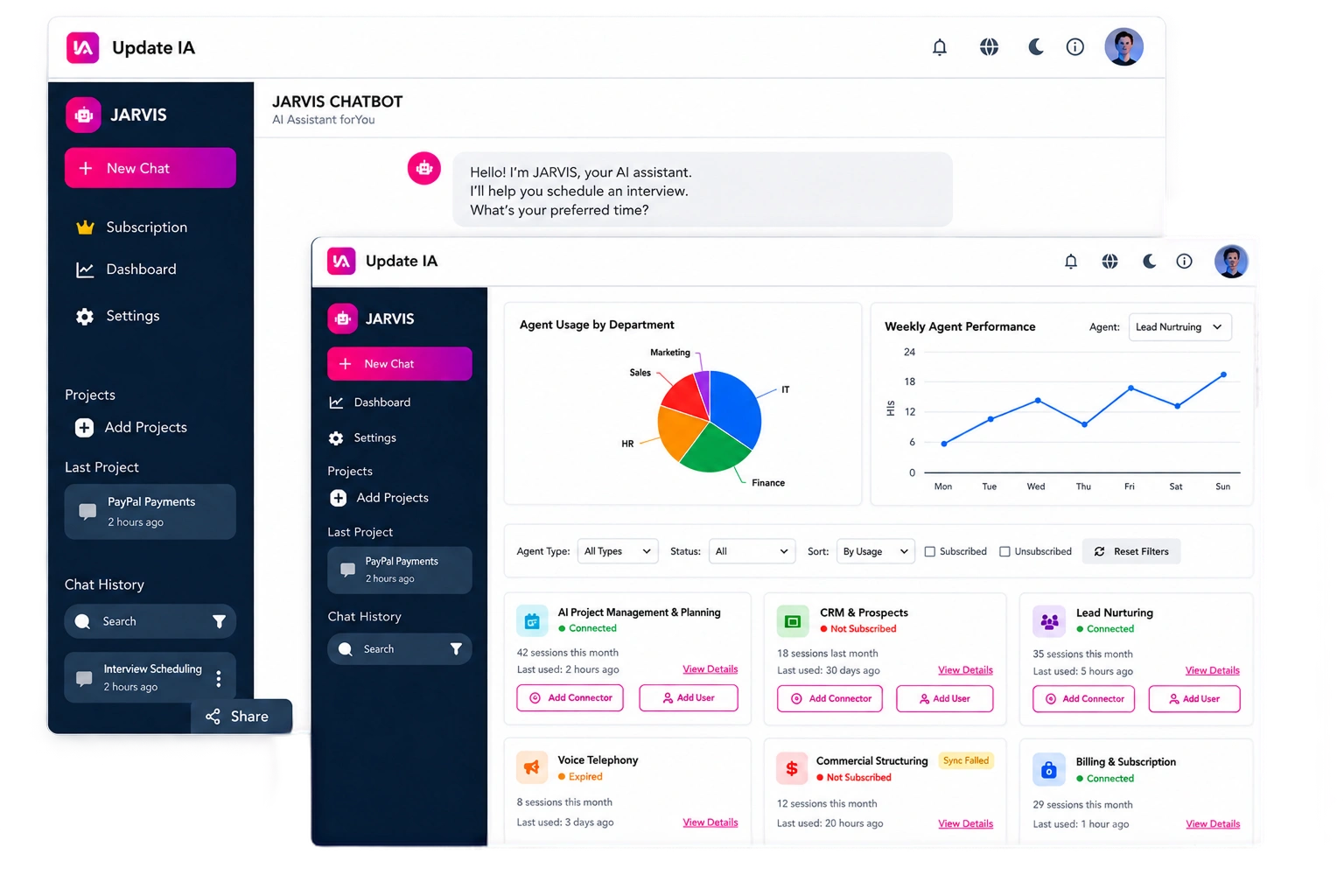
UpdateIA is an enterprise-grade generative AI platform SoluLab built to unify and automate business operations through 14 specialized AI agents. A central orchestrator, "Jarvis", coordinates HR, CRM, finance, legal and support workflows, with a no-code workflow builder and human review triggers.
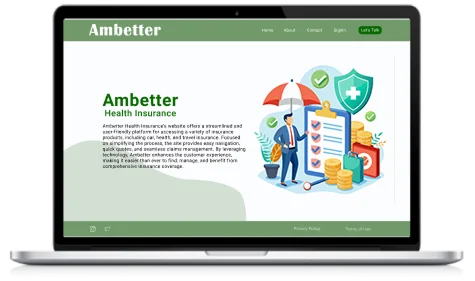
Ambetter Health Insurance, an insurance provider in India offering car, health and travel cover, faced rising claim volumes that delayed settlements. SoluLab automated the claims workflow from submission to settlement, and added automated underwriting, ML-driven fraud detection, and a generative AI chatbot and voice agents.
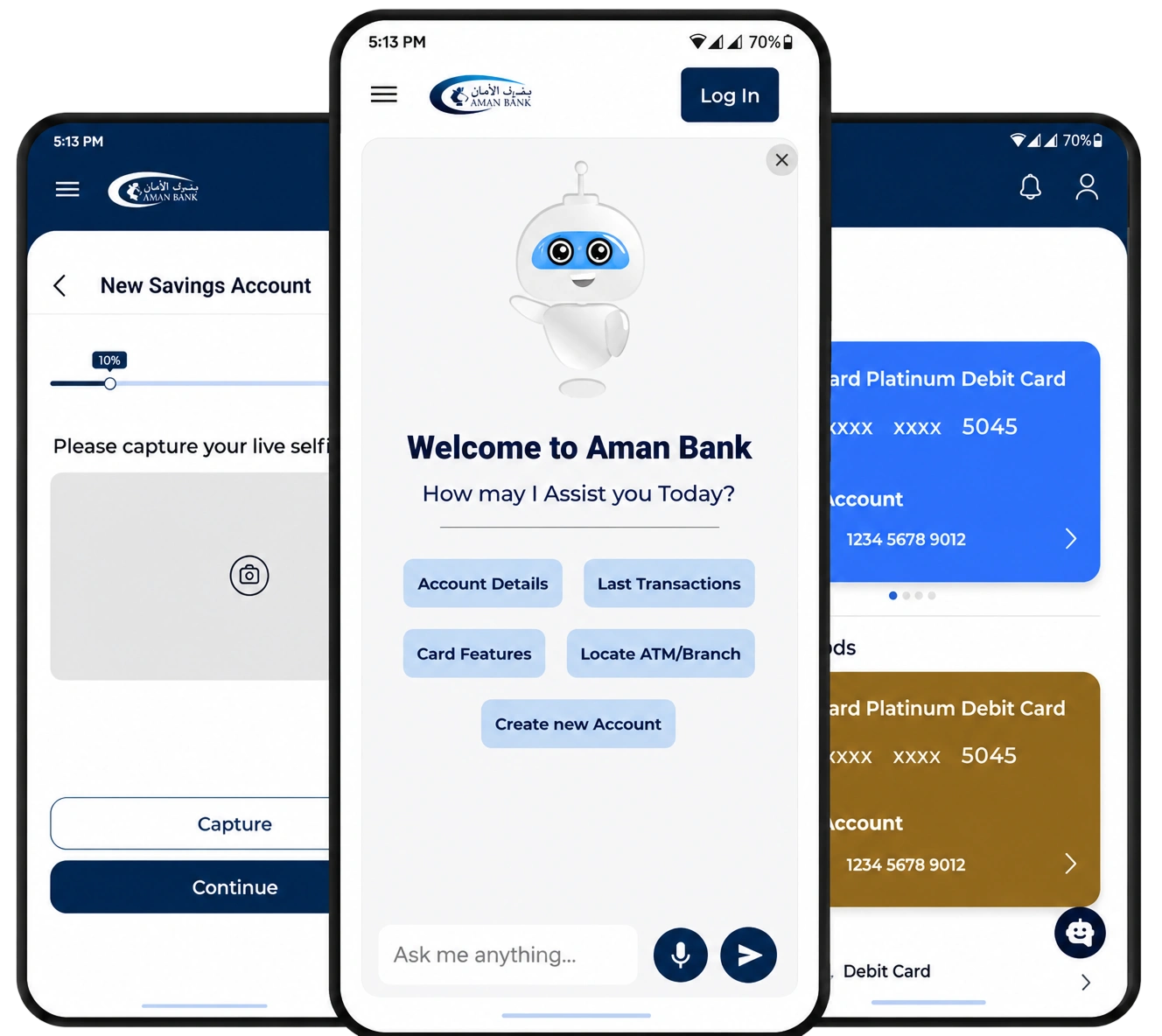
Aman Bank, a Libyan bank serving about 750,000 customers, partnered with SoluLab to automate customer onboarding and support. The platform added digital KYC, OCR document capture and digital signing, plus a generative AI chatbot and voice agent for 24/7 account, transfer and card requests.
Our business process automation services leverage industry-leading RPA platforms, AI frameworks, workflow orchestration tools, APIs, and cloud technologies to build secure, scalable, and seamlessly integrated automation solutions.
 UiPath
 Microsoft Power Automate
 Blue Prism
 Automation Anywhere
 TensorFlow
 Azure AI
 AWS AI Services
 NLP/Computer Vision
 Microsoft Azure
AWS
 SAP
 Salesforce
 Dynamics 365
 Power BI
 Tableau
 Databricks
Our business process automation solutions help industries streamline daily operations, reduce manual workloads, improve accuracy, and enhance service delivery through intelligent workflows tailored to specific operational needs.


Automate payment processing, loan approvals, compliance reporting, and fraud monitoring to improve transaction efficiency, accuracy, and regulatory oversight.


Streamline patient registration, appointment scheduling, medical billing, and claims processing to reduce administrative workloads and improve healthcare operational efficiency.


Automate inventory updates, order processing, customer notifications, and returns management to improve fulfillment speed and deliver consistent shopping experiences.


Optimize production scheduling, quality control documentation, inventory tracking, and procurement workflows to minimize delays and improve operational efficiency.

Automate shipment tracking, order coordination, warehouse operations, and delivery notifications to improve visibility, reduce processing delays, and streamline supply chains.


Simplify property listings, lead management, document verification, tenant onboarding, and rent collection through automated workflows that reduce administrative effort.

Automate incident management, software provisioning, customer onboarding, subscription billing, and support ticket routing to improve service delivery and operational scalability.
Cost depends on workflow depth, integrations, and AI steps. These ranges come from pricing SoluLab publishes for related services.
One bot up to a multi-workflow build
A few weeks to a few months
AI added to a single workflow
4 weeks and up
Several workflows, AI and compliance controls
Up to 6 months
that works only on your automation roadmap
with fixed scope and price for a defined workflow
for smaller or changing scope

Still relying on repetitive manual tasks? Share your workflow challenges, and our team will recommend automation solutions to reduce errors, save time, and improve operational efficiency.
Automate My WorkflowsOur business process automation roadmap follows a structured approach, from identifying inefficiencies to deploying scalable solutions that improve workflow performance, accuracy, and operational efficiency.
Assess existing business operations, identify repetitive tasks, and uncover bottlenecks to determine which processes offer the greatest automation potential.
Map current workflows, evaluate dependencies, and define automation requirements, priorities, timelines, and measurable performance goals for successful implementation.

Develop an automation strategy by selecting suitable technologies, defining system architecture, and designing workflows aligned with business objectives.
.svg)
Build automation workflows and connect existing applications, databases, and enterprise systems to enable seamless data exchange and efficient execution.

Test automated workflows for accuracy, reliability, security, and performance to identify issues and ensure consistent results before deployment.

Deploy validated automation solutions into production environments and train employees to use, manage, and troubleshoot automated workflows effectively.
.svg)
Monitor workflow performance, analyze key metrics, resolve issues, and refine automation processes to maintain efficiency as business requirements evolve.
SoluLab delivers tailored business process automation services that streamline workflows, reduce operational costs, minimize errors, and improve productivity through intelligent technologies, seamless integrations, and scalable automation solutions.



SoluLab helped us bring AI directly into the banking experience. From customer onboarding and account assistance to money transfers and card requests, the AI chatbot and voice agents gave customers a much faster way to complete everyday banking tasks. The solution helped us reduce onboarding time while taking significant pressure off our support teams.

CEO, Amanbank
SoluLab successfully delivered the AI automation system we needed for our FinTech platform. Their team understood how to translate complex business workflows into practical AI agents and worked closely with us throughout development. The result was a much more streamlined approach to automating tasks that previously required significant manual effort.

Co-Founder, FinTech Platform
SoluLab turned our verified tax forms into records we can actually prove. Every form, every change and every approval now has evidence behind it, which has made audit preparation and client conversations far more straightforward.

CEO, ComplyExchange
It removes delays between steps. Requests, approvals, and updates move automatically, data is entered once, and every case follows consistent rules. Customers receive faster responses while teams focus on exceptions instead of paperwork.
Business process automation (BPA) uses software, integrations, bots, and AI to automate repeatable workflows, such as invoice processing and employee onboarding, with minimal manual input and greater visibility and control.
Intelligent process automation (IPA) combines robotic process automation (RPA), workflow automation, and AI technologies like machine learning and natural language processing to interpret unstructured data, make decisions, and route uncertain cases to human reviewers.
RPA follows predefined rules to complete structured tasks, such as transferring data between systems. IPA adds AI to interpret documents, classify requests, and determine next steps. RPA executes tasks, while IPA also interprets information.
BPA automates entire workflows across departments and systems, such as order-to-cash. RPA is one tool within BPA, using bots to mimic human interactions with applications. BPA solutions often combine RPA with integrations and AI.
Yes. Automation connects to the tools you already use, such as SAP, Salesforce, Dynamics 365 and ERP or core banking systems, through APIs. Where older software has no API, RPA bots work through the existing screens instead.
Start with processes that run often, follow clear rules, take significant manual time and cause costly errors when they go wrong. Invoice processing, employee onboarding, claims intake, KYC checks and order entry are common first choices for most businesses.
A single automated workflow usually goes live in about four weeks. Larger RPA builds take a few weeks to a few months, and multi-system enterprise automation with AI and compliance controls can take up to six months, depending on scope.
Business process management (BPM) focuses on designing, monitoring, and improving workflows, whether manual or automated. BPA uses technology to execute those workflows automatically. BPM defines how work should flow, while BPA reduces manual tasks and handoffs.

Learn how AI agents combine with blockchain to automate workflows, improve security, and power Web3 innovation with practical use cases and benefits.
Discover the key differences between Agentic AI and Generative AI, their unique use cases, and how each powers innovation across industries and…
What AI customer service agents do, how they work, which queries they should handle, how to measure ROI, and when to build…