


Banking as a service (BaaS) is a model in which a licensed bank, or a platform built on one, delivers regulated banking functions, such as accounts, card issuing and payments, to third parties through APIs.

Banking as a Service (BaaS) is a model in which a licensed bank exposes its accounts, cards, and payments to other companies through APIs, so a fintech or brand can offer banking products without holding a charter. SoluLab designs and builds the product layer on top of your BaaS provider.













Banking as a service (BaaS) is a model in which a licensed bank, or a platform built on one, delivers regulated banking functions, such as accounts, card issuing and payments, to third parties through APIs.
Banking as a service is a model where a licensed bank, or a platform built on one, lets non-bank companies offer accounts, cards, payments and lending through APIs. The bank holds the licence and the funds. The brand owns the customer experience.
Before BaaS, a company that wanted to offer a bank account had to become a bank or sign a long contract with one. Bank as a service changes the deal: the bank provides regulated services as software, and the company plugs them into its own app or website.
A BaaS program works in four layers: a bank holds the licence and funds, a platform exposes APIs, your product calls those APIs, and your compliance team monitors the program. Money moves through the bank, while your app controls what the customer sees.
Holds the charter, the deposits, and the regulatory obligations.
A banking platform as a service layer that offers APIs for accounts, cards, ledgers and payments.
The app, website or workflow your customers use.
Know-your-customer (KYC) and anti-money-laundering (AML) checks, dispute handling and reporting.
SoluLab is a software development company. We design and build banking-as-a-service solutions on top of your chosen BaaS provider, covering provider selection, API integration, onboarding and KYC, neobank and wallet apps, card programs, embedded lending, AI banking assistants, crypto features, and compliance and reconciliation tooling.

Map your use case, target countries and compliance duties, then shortlist banking-as-a-service providers whose licences and bank partners actually cover them, before you design your product around one.
Connect your product to accounts, cards, ledgers and payment APIs, with webhook handling for settlements and failures, retries, and idempotent payment logic so money never moves twice.
Build onboarding flows with identity verification, document capture and AML screening using providers such as Jumio, Acuant and Experian, as we did for our online lending app for small-business funding.
Launch branded web and mobile banking apps with accounts, transfers, statements and spending insights. Our fintech app development company team builds them, and our guide to white-label neobank solutions covers the faster route.

Issue virtual and physical debit or prepaid cards with spend controls, freeze and unfreeze, limits and real-time authorization rules through card-issuing platforms.

Add loans, pay-later or instant payouts inside your product, with credit scoring, e-signatures and repayment schedules connected to your BaaS partner's ledger. See our fintech software development work.

Add AI chatbots and voice agents that handle balances, transfers and card requests, like the assistant we built for Amanbank. Learn more about AI in banking.

Combine fiat accounts with crypto wallets, on and off ramps or stablecoin payments. Our crypto banking solutions and stablecoin as a service guides cover the options.

Build internal tools for transaction monitoring, alerts, dispute handling, and daily ledger reconciliation against your bank partner's records- the control that failed in the Synapse case.

Banking as a service is the supply side: regulated banking delivered by API. Embedded finance is the outcome: a non-bank brand offering financial products inside its own app. Open banking is a different idea: customers permitting third parties to access their bank data.
| Banking as a service | Embedded finance | Open banking | |
|---|---|---|---|
| What it is | Regulated banking delivered by API | Financial products inside a non-bank app | Customer-permitted data and payment access |
| Who benefits | Fintechs and brands | End customers of the brand | Customers and licensed third parties |
| Needs a bank partner? | Yes | Often | No, but needs a regulated provider |
| Example | White-label account and card | Checkout financing | Account aggregation app |
Compare banking as a service providers on bank partners, licence coverage, API quality, compliance support, fees, uptime, and how they protect customer funds. Ask what happens to your customers if the bank or platform fails, and get the answer in the contract.
The market has three kinds of banking as a service providers: banks that sell directly, platforms that sit between you and one or more banks, and full-stack vendors that add compliance and operations. A provider may be strong in cards and weak in lending, so match the provider to your product.
There is no single best provider. The best banking as a service BaaS providers for a US consumer app differ from those for a business-to-business payments product in Europe. Top banking as a service providers publish their bank partners, uptime, and compliance model. Use this checklist instead of a ranking.
| Question to ask | Why it matters |
|---|---|
| Which bank holds the funds, and is it more than one? | Single-bank dependency raises risk |
| Who owns the ledger of record? | Affects reconciliation and recovery |
| What is the API uptime and sandbox quality? | Slow or flaky APIs cost launch time |
| Who runs KYC, AML and transaction monitoring? | Your regulator will look at your program |
| How are fees structured? | Per-account, per-transaction and minimums add up |
| What is the exit plan? | You need to move customers if the provider stops |
Searches for banking as a service providers USA and banking as a service USA lead to a market shaped by sponsor banks and the regulators that supervise them. On 22 April 2024, BaaS middleware company Synapse Financial Technologies filed for Chapter 11 bankruptcy.
Partner banks then found they held $60 million to $90 million less for consumers than Synapse's records showed, and consumers lost access to funds for weeks or months, according to the CFPB. The lesson for buyers: check who holds the funds and how reconciliation works.
A banking as a service company may be a bank with a developer program, a software firm with bank partners, or a vendor selling white-label neobank software. A bank as a service provider is usually the regulated bank itself, while a banking-as-a-service provider can be the bank or a platform on top. Banking as a service platform providers add APIs and tools that save months of integration work, which is what most buyers mean by platform as a service banking. A banking-as-a-service platform is easier to adopt, but you take on dependence on two parties.
SoluLab has built banking and lending products for a bank and a fintech startup. Amanbank's generative AI mobile banking platform cut average onboarding time by 60%, and a small-business lending app built on Mbanq banking-as-a-service, with AI credit scoring and automated KYC, was delivered within budget and on schedule.
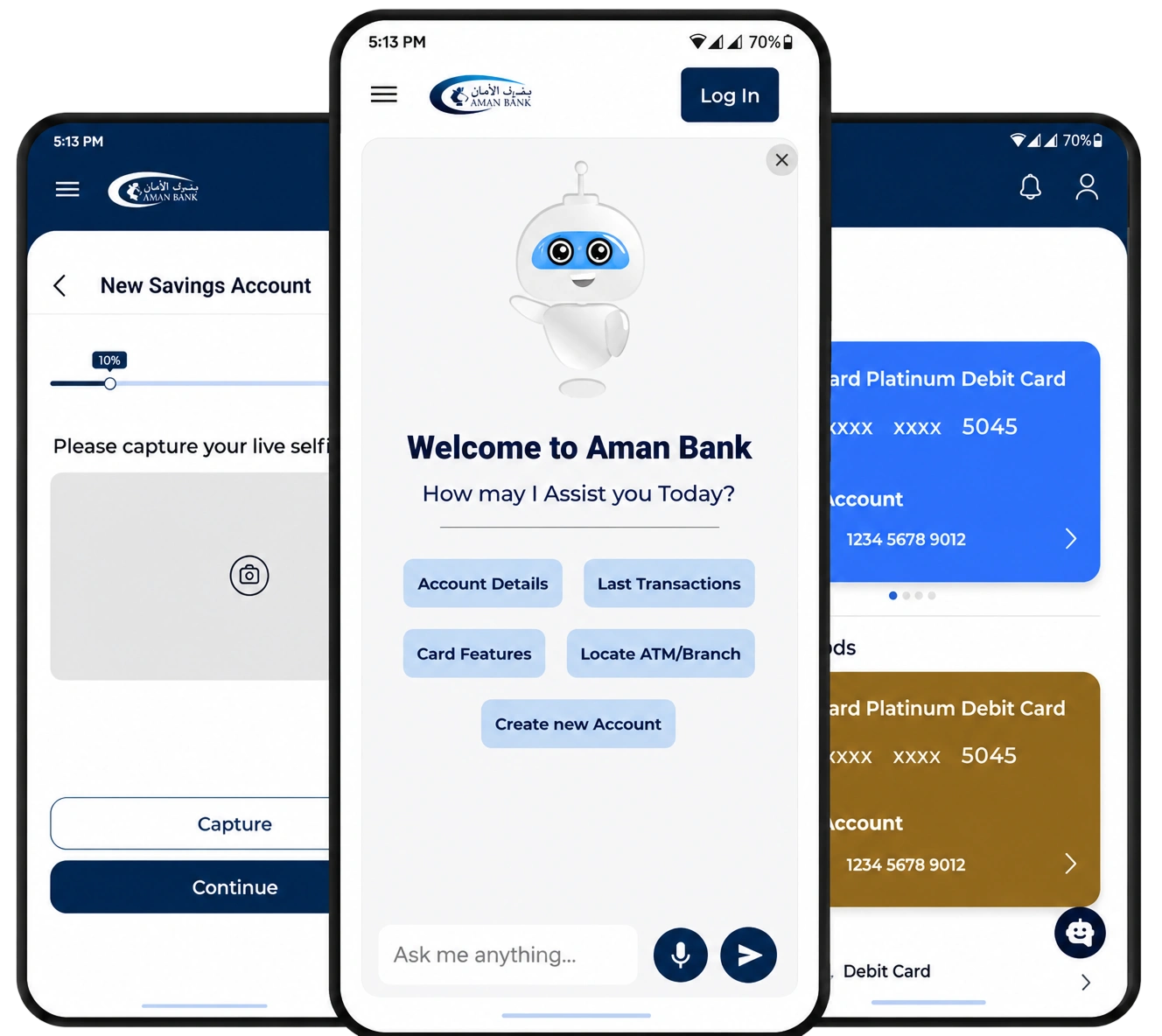
Amanbank, a Libyan bank serving about 750,000 customers, had slow manual onboarding and support limited to office hours. SoluLab built a generative AI-powered mobile banking platform with digital KYC, OCR document capture, digital signing, and an AI chatbot and voice agent for balances, transfers, card requests and bill payments.
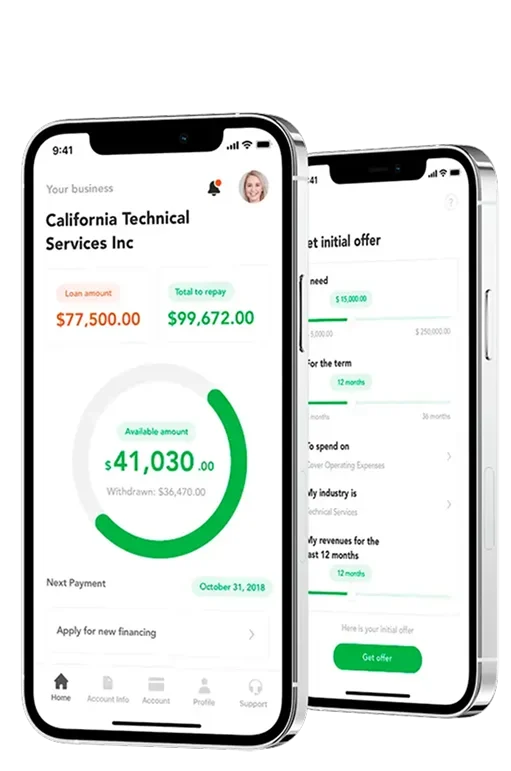
A fintech startup wanted fully digital small-business lending. SoluLab built the mobile app, admin module, and back office on Mbanq banking-as-a-service, with AI credit scoring retrained daily, automated KYC and AML, DocuSign signing, virtual card issuing, and Plaid, Experian, and Jumio integrations.
BaaS lets companies outside banking add financial products where their customers already are.

Launch branded accounts, cards and transfers without applying for a banking charter.

Offer business or consumer loans with automated scoring, disbursement and repayment, like our small-business lending app.

Add embedded payments and loyalty wallets that keep customers inside your app.

Pay sellers, drivers or freelancers instantly into branded accounts or cards instead of waiting days for bank transfers.

Embed business accounts, card spend and invoicing into software your SMB customers already run every day.

Combine fiat accounts with crypto wallets and on and off ramps, or explore crypto as a service and blockchain as a service for related products.
SoluLab builds BaaS products with React and Next.js on the web, Swift, Kotlin or Flutter for mobile, Node.js, .NET or Python on the back end, PostgreSQL for ledgers, and AWS or Azure hosting. We integrate BaaS, card, KYC and data providers through their APIs.
 React
 Next.js
 TypeScript
 Swift
 Kotlin
 Flutter
 React Native
 Node.js
 .NET Core
 Python (FastAPI)
 Go
 PostgreSQL
 Microsoft SQL Server
 Redis
 Mbanq
 Marqeta
 Jumio
 Acuant
 Experian
 Plaid
 ACH
 wires
 card networks
 PayPal
 DocuSign
 OpenAI
 Anthropic APIs
 TensorFlow
 Google Speech-to-Text
 AWS
 Microsoft Azure
 JWT
BaaS cuts the time and cost of launching financial products and avoids the need for your own licence. The risks are dependence on partners, regulatory scrutiny, funds-handling errors and thin margins, so plan reconciliation and an exit path from day one.
Faster launch than applying for a charter
Lower upfront compliance infrastructure
Control of brand and customer experience
Revenue from interchange and fees
Dependence on a bank and a platform
Regulators hold the bank and you accountable for controls
Ledger and reconciliation errors can lock customer funds
Margins shrink as you share fees

Share your product idea and target market. We'll outline the architecture, provider fit, compliance duties, and build estimate, so you negotiate with providers from a position of knowledge.
Book an Architecture and Compliance ConsultBaaS cost has two parts: provider fees and your own build and compliance costs. With an offshore team, building a BaaS MVP with accounts and cards typically costs $60,000 to $80,000 over about four months, while a full neobank or lending app runs $80,000+.
| Product scope | Typical team | Timeline | Estimated build cost (USD) |
|---|---|---|---|
|
01
AI banking assistant added to an existing app
|
2 developers, AI engineer, QA | About 3 months | $35,000–$60,000 |
|
02
BaaS MVP: accounts, cards and KYC on one platform
|
3 developers, QA and PM | About 4 months | $80,000 |
|
03
Full neobank or lending app: web, mobile, admin and back office
|
5 developers, QA, BA and PM | About 5 to 6 months | $80,000+ |
Build estimates multiply team hours (160 a month per full-time role) by Accelerance's 2026 Asia rate band of $24 to $41 an hour. Provider fees come on top.
Choose a BaaS partner by confirming your use case fits their licence, checking their bank partners, testing the API in a sandbox, reviewing compliance duties in writing and planning an exit. Do all of this before you design your product around them.
SoluLab builds BaaS products in six steps: use case and compliance mapping, provider selection and sandbox testing, architecture and ledger design, build and integration, compliance and security testing with your bank partner, and launch with ongoing monitoring and reconciliation.

We define the product, target customers and countries, and list the licence, KYC, AML and reporting duties that come with them.

We shortlist providers against the checklist above and test your real flows in their sandboxes before you sign.

We design how money, data and events move between your app, the platform and the bank, including your internal ledger and daily reconciliation.

Engineers build onboarding, accounts, cards, payments and dashboards in two-week sprints, connecting provider APIs and webhooks.
We run security testing, compliance checks and user acceptance testing with your BaaS provider and sponsor bank before go-live.

After launch, we monitor transactions, alerts and disputes, reconcile ledgers daily and ship new features as your program grows.
Fintechs and brands choose SoluLab to build on banking as a service because we've shipped real banking and lending products, stay provider-neutral, design reconciliation and compliance in from day one, and add AI where it helps customers.

We've built a generative AI banking platform for Amanbank and a small-business lending app on Mbanq banking-as-a-service, so KYC flows, card issuing and loan workflows are familiar ground.

We don't resell any BaaS platform. We shortlist providers on licence fit, bank partners, API quality and exit terms, so the recommendation serves your product, not a referral fee.

Internal ledgers, daily reconciliation, audit logs and AML monitoring are part of the architecture from the first sprint, not patched in after a regulator or bank partner asks.
We add AI chatbots, voice agents and credit scoring that cut onboarding time and support workload, as Amanbank's 60% faster onboarding shows.

If your roadmap includes stablecoins, crypto wallets or tokenized assets, our blockchain teams build them alongside your BaaS features without a second vendor.

You own all code and IP, and builds are priced by milestone or monthly team, with change costs agreed in writing before work starts.

"Chintan leads solution architecture on SoluLab's fintech and blockchain engagements, including the review of BaaS provider choice, ledger and reconciliation design, and fiat-plus-crypto roadmaps."
SoluLab helped us bring AI directly into the banking experience. From customer onboarding and account assistance to money transfers and card requests, the AI chatbot and voice agents gave customers a much faster way to complete everyday banking tasks. The solution helped us reduce onboarding time while taking significant pressure off our support teams.

CEO, Amanbank
SoluLab successfully delivered the AI automation system we needed for our FinTech platform. Their team understood how to translate complex business workflows into practical AI agents and worked closely with us throughout development.

Co-Founder, FinTech Platform
SoluLab brought strong blockchain expertise to our digital wallet project and helped us build what we needed. Their technical understanding and collaborative approach made the development experience highly positive.

CEO and Founder, Sosh
BaaS stands for banking as a service: regulated banking functions packaged as APIs that non-bank companies can use. You'll also see it written as banking-as-a-service, bank as a service or banking platform as a service, and all mean the same model.
A sponsor bank holds the licence and funds. A platform exposes APIs for accounts, cards and payments. Your product calls those APIs, and compliance teams monitor activity. Money moves through the bank while your app shapes the customer experience.
It's a set of endpoints that let your software open accounts, verify customers, issue cards, move money and read transactions. Webhooks notify your system when events happen, such as a payment settling or failing, so your app stays in sync.
Embedded finance is the outcome: financial products inside a non-bank app. Banking as a service is one way to deliver it, by supplying regulated banking functions through APIs. You can also reach embedded finance through payment or lending partners.
Open banking lets customers share their account data with licensed third parties. BaaS lets a company offer its own banking products on a bank's licence. They solve different problems, and many fintech products use both together.
No. Banking as a platform usually means the technology a bank uses internally, such as its core system. Banking as a service packages bank functions so outside companies can offer them. One faces inward, the other outward.
There's no single best provider. Compare bank partners, licence coverage, API quality, compliance duties, fees and exit terms against your use case. Providers that publish their partner banks, uptime and compliance model are easier to assess.
Confirm the sponsor bank holds the right charter, check how funds are held and reconciled, test the sandbox with real flows and read termination terms. The 2024 Synapse bankruptcy showed why fund-holding and reconciliation matter so much.
With an offshore team, a BaaS MVP with accounts and cards typically costs $60,000 to $105,000 to build, and a full neobank or lending app $80,000+. Provider set-up fees, per-account or per-transaction charges, and minimums come on top.
A focused BaaS MVP usually takes about four months to build, plus time for provider onboarding and bank approval. A full neobank or lending app with web, mobile and back office typically takes five to six months.
Yes. SoluLab builds the product layer on top of your chosen BaaS provider, including onboarding, wallets, cards, dashboards, and AI assistants. We're not a bank, so you'll still need a licensed partner for the regulated services.