Key Takeaways
- Retail chatbots now deliver personalized ecommerce shopping experiences. Autonomous AI agents automate customer interactions and retail support workflows.
- AI shopping assistants improve ecommerce conversions through personalized product recommendations.
- AI-powered retail chatbots reduce operational costs with customer automation.
- Predictive AI helps ecommerce brands personalize shopping journeys in real time.
- AI shopping agents enable smarter upselling and cross-selling opportunities automatically. Retail businesses increasingly adopt conversational commerce for scalable customer engagement strategies.
You run a retail business, and your products are available across multiple online channels.
Now comes the challenge:
How do you increase conversions, reduce support workload, and deliver a shopping experience at scale?
The answer lies in an AI agent retail chatbot.
These AI-powered shopping assistants can engage customers 24/7, answer product-related queries, recommend relevant items, recover abandoned carts, provide personalized offers, and even drive upselling opportunities, all without requiring constant human intervention.
As a result, more retailers are investing in AI Chatbot Development Services to transform traditional customer support into intelligent, revenue-generating engagement channels.
This guide will help you understand how autonomous AI shopping agents are changing the retail industry and why businesses are adopting them.
Let’s get started!
What Are Retail Chatbots?
A retail chatbot is an AI-powered software system that simulates conversation to help shoppers find products, get answers, track orders, and complete purchases, without needing a human on the other end.
In fact, the global conversational commerce market is projected to reach $39.53 billion by 2034.
As conversational commerce grows, retail chatbots are evolving into autonomous AI shopping agents that can make decisions, learn customer behavior, and deliver highly personalized experiences without constant human intervention.
What Makes AI-Powered Retail Chatbots Different?
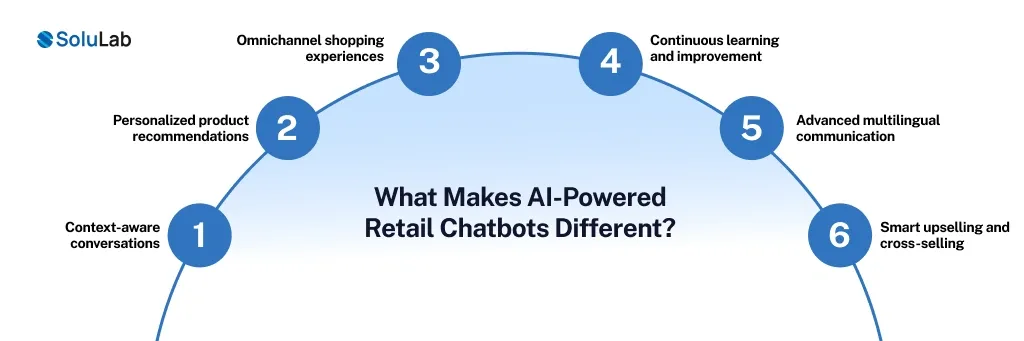
Context-aware interactions that personalize shopping journeys, automate decisions, and improve customer engagement across multiple channels.
- Context-aware conversations: AI-powered retail chatbots understand customer intent, browsing behavior, and previous interactions, enabling more natural conversations instead of delivering repetitive, pre-programmed responses.
- Personalized product recommendations: An advanced AI agent for online shopping analyzes customer preferences, purchase history, and shopping patterns to suggest highly relevant products that improve engagement and increase conversion rates.
- Omnichannel shopping experiences: AI-powered retail chatbots operate across websites, mobile apps, WhatsApp, and social commerce platforms, ensuring consistent customer engagement throughout the buying journey.
- Continuous learning and improvement: Machine learning-powered chatbots continuously refine responses using customer interactions, helping retailers improve conversational accuracy and shopping experiences over time.
- Advanced multilingual communication: AI retail chatbots with multilingual support and localized interactions, enabling ecommerce businesses to serve global audiences without expanding customer support teams manually.
- Smart upselling and cross-selling: Chatbot systems identify customer intent in real time and recommend complementary products, improving average order value and overall ecommerce revenue generation.
How Retail Chatbots Are Evolving Into AI Shopping Assistants?
Retail chatbots are evolving into retail automation agents that deliver personalized recommendations, automate customer journeys, and create smarter conversational commerce experiences across modern ecommerce and digital retail platforms.
According to Grand View Research, the global chatbot market reached $9.56 billion in 2025 and is projected to surpass$41.24 billion by 2033 with a CAGR of 19.6%.
- Personalized recommendations based on real-time customer behavior
- AI agents automate complete e-commerce shopping journeys
- Chatbots now understand context and customer intent
- Conversational AI improves product discovery and engagement
- Smart assistants enable faster cart recovery conversions
- AI chatbots deliver human-like retail shopping experiences
- Autonomous systems support multilingual customer interactions globally
- Predictive AI enhances upselling and cross-selling opportunities

Why Are Ecommerce Brands Upgrading to AI-Agent-Powered Chatbots?
Ecommerce brands are upgrading to AI retail merchandising chatbots to automate customer interactions, deliver personalized shopping experiences, improve conversions, and create smarter conversational commerce journeys across digital retail platforms.
- Smarter customer engagement: AI-agent-powered chatbots understand customer intent, preferences, and shopping behavior to deliver more relevant, personalized, and human-like conversations throughout the buying journey.
- Faster conversion optimization: Retail chatbots guide shoppers with real-time recommendations, upselling, and cart-recovery strategies that help ecommerce brands increase sales and reduce drop-offs.
- 24/7 autonomous support: A conversational AI-powered retail chatbot automates order tracking, FAQs, refunds, and customer queries continuously, helping businesses reduce support workload while maintaining faster response times.
- Hyper-personalized shopping experiences: Advanced AI chatbots analyze browsing patterns and purchase history to recommend products dynamically, improving customer satisfaction and repeat purchases.
- Scalable ecommerce automation: AI-powered chatbots help ecommerce businesses handle thousands of simultaneous customer interactions efficiently without increasing operational or customer support costs.
How to Build AI Agent-Powered Retail Chatbots?
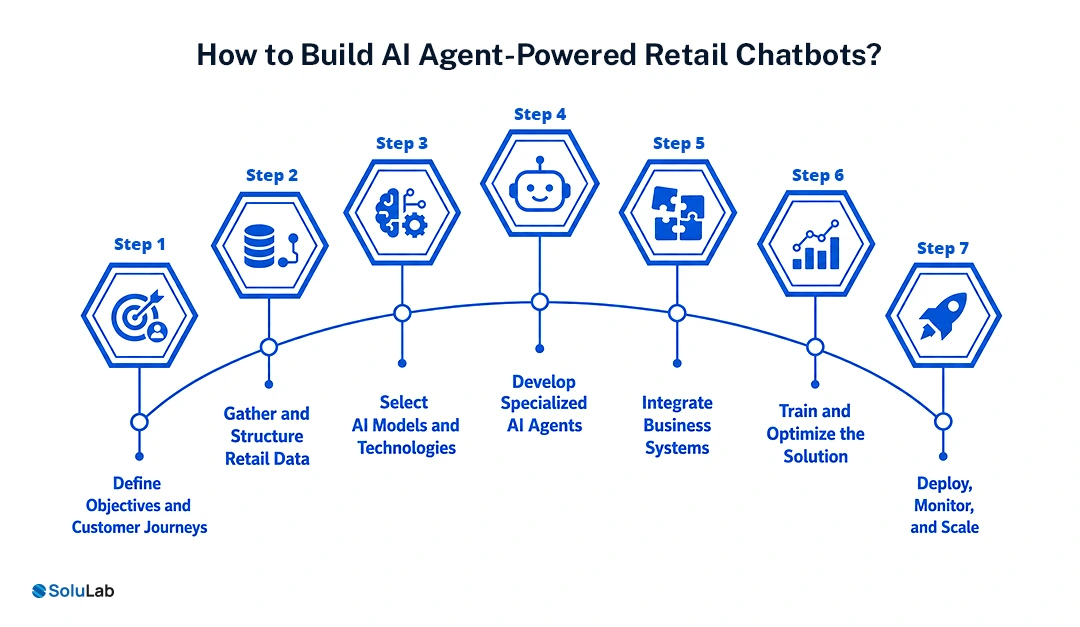
Building AI agent-powered retail chatbots involves combining automation, customer data, and enterprise integrations to create scalable solutions that enhance the shopping experience and operational efficiency.
Step 1. Define Objectives and Customer Journeys
Start by identifying business goals and customer interactions your chatbot will handle. Well-defined AI use cases help align development efforts with measurable outcomes.
- Identify key customer pain points
- Map shopping journey stages
- Establish performance benchmarks
Step 2. Gather and Structure Retail Data
Quality data is essential for training chatbots for retail businesses that can understand customer needs and provide relevant responses.
- Organize product catalog information
- Consolidate customer interaction data
- Maintain accurate inventory records
Step 3. Select AI Models and Technologies
Choose AI technologies capable of understanding context, intent, and customer preferences for meaningful conversations.
- Implement advanced language models
- Enable intent recognition capabilities
- Support contextual conversations
Step 4. Develop Specialized AI Agents
Build AI agents that perform specific retail functions such as customer support, recommendations, and order management.
- Build recommendation agents
- Automate support workflows
- Enable order assistance features
Step 5. Integrate Business Systems
Connect the chatbot with enterprise tools to provide accurate, real-time information and automate processes.
- Integrate CRM platforms
- Connect ERP systems
- Sync inventory databases
Step 6. Train and Optimize the Solution
An effective AI chatbot for retail customer service requires continuous training and refinement using real customer interactions and feedback.
- Test customer interaction scenarios
- Improve response accuracy
- Refine recommendation quality
Step 7. Deploy, Monitor, and Scale
Launch the chatbot, track performance metrics, and continuously enhance capabilities as customer expectations evolve.
- Monitor engagement analytics
- Track customer satisfaction scores
- Scale across sales channels
Key Features Businesses Should Look for in Retail Chatbot Development
The right AI solution should enhance engagement, automate workflows, and deliver personalized shopping experiences at scale. Here are a few must-have features businesses should prioritize:
- Natural Language Understanding: Understands customer intent accurately for more human-like conversations.
- Product Recommendation Engine: Suggests relevant products based on behavior and preferences.
- Omnichannel Support: Delivers consistent experiences across websites, apps, and messaging platforms
- Real-Time Inventory Access: Provides accurate stock availability and product information instantly.
- Personalized Customer Interactions: Create tailored shopping journeys using customer data insights.
- CRM and ERP Integration: Connects seamlessly with existing business systems and workflows.
- Multilingual Support: Engages customers globally through conversations in multiple languages.
- Analytics and Performance Tracking: Measures customer interactions, conversions, and engagement metrics.
- Secure Data Handling: Protects customer information with enterprise-grade security controls.
Types Of Chatbots For The Retail Industry
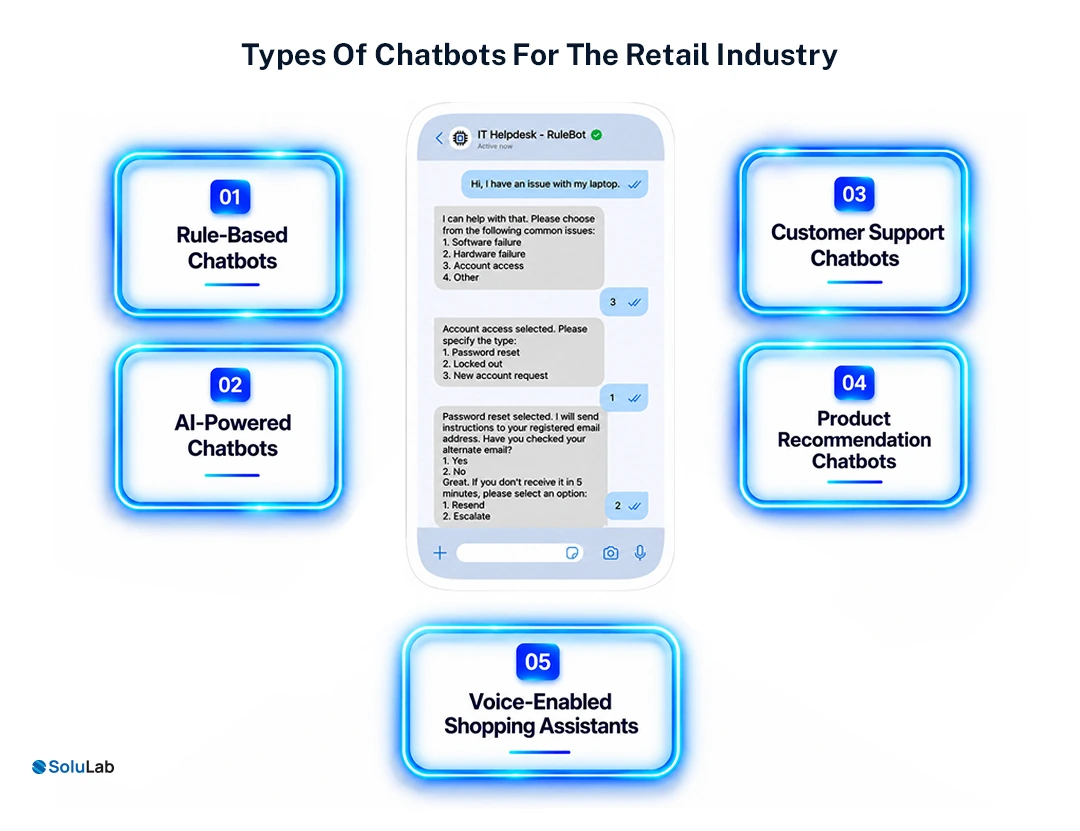
Retail businesses use different types of chatbots depending on their customer engagement goals, automation requirements, and personalization needs. Each chatbot type serves a unique purpose across the ecommerce customer journey.
1. Rule-Based Chatbots
Operate using predefined scripts and decision trees to answer common customer queries.
- Best for FAQs and support
- Limited conversational flexibility
- Easy and cost-effective deployment
2. AI-Powered Chatbots
Use machine learning and NLP to understand customer intent and deliver contextual responses.
- Understand natural language queries
- Improve through customer interactions
- Provide personalized responses
3. Customer Support Chatbots
Designed to automate service-related requests and reduce support workloads.
- Handle returns and refunds
- Assist with order tracking
- Resolve common customer issues
4. Product Recommendation Chatbots
Help shoppers discover relevant products based on preferences and browsing behavior.
- Deliver personalized suggestions
- Increase conversion opportunities
- Support upselling strategies
6. Voice-Enabled Shopping Assistants
Allow customers to interact with brands using voice commands and conversations.
- Support voice-based searches
- Enable hands-free shopping
- Improve accessibility experiences
Retail Chatbots vs Autonomous AI Agents: What’s the Real Difference?
Retail Chatbots Were Built for Conversations. AI Agents Are Built for Decisions.
Retail chatbots and autonomous AI agents both improve customer interactions, but their intelligence, decision-making abilities, and automation capabilities differ across modern ecommerce and conversational commerce ecosystems.
| Feature | Retail Chatbots | Autonomous AI Agents |
| Core Function | Answer predefined customer queries | Execute intelligent shopping tasks |
| Intelligence Level | Rule-based or limited AI | Advanced contextual intelligence |
| Personalization | Basic recommendations | Deep behavioral personalization |
| Decision Making | Requires predefined workflows | Makes autonomous decisions dynamically |
| Memory Capability | Limited conversation memory | Long-term contextual memory |
| Customer Interaction | Reactive communication | Proactive engagement and assistance |
| Automation Scope | FAQ and support automation | End-to-end shopping automation |
| Learning Ability | Minimal self-learning capabilities | Continuously learns from interactions |
| Product Recommendations | Static or keyword-based suggestions | Predictive AI-driven recommendations |
| E-commerce Role | Virtual support assistant | Intelligent shopping companion |
How Much Does Retail Chatbot Development Cost?
Retail chatbot development costs vary depending on AI capabilities, AI integrations, customization complexity, and automation requirements, with advanced AI-agent-powered ecommerce chatbots requiring significantly higher development and deployment investments.
| Chatbot Type | Estimated Cost Range | Key Features Included |
| Basic Rule-Based Chatbot | $5,000 – $15,000 | FAQs, scripted replies, basic customer support |
| AI-Powered Retail Chatbot | $15,000 – $40,000 | NLP, personalized recommendations, ecommerce integrations |
| Omnichannel Ecommerce Chatbot | $30,000 – $35,000 | WhatsApp, website, mobile app, CRM integration |
| Generative AI Shopping Assistant | $30,000 – $40,000 | Contextual conversations, predictive recommendations, memory capabilities |
| Autonomous AI Shopping Agent | $50,000+ | Intelligent automation, decision-making, advanced retail workflows |
How AI Chatbots Are Driving Hyper-Personalized Shopping Experiences?
AI-powered chatbots are changing ecommerce by delivering hyper-personalized shopping experiences that adapt to customer preferences, browsing behavior, and real-time interactions across modern digital retail platforms.
- Real-time product recommendations: AI chatbots analyze browsing history and shopping behavior to suggest highly relevant products that match customer interests and purchasing intent instantly.
- Predictive shopping assistance: AI-powered shopping assistants anticipate customer needs using behavioral analytics, helping shoppers discover products faster with minimal search effort.
- Multichannel personalization support: AI retail chatbots deliver consistent personalized experiences across websites, mobile apps, WhatsApp, and social commerce platforms for unified customer engagement.
- AI-driven customer retention: Personalized chatbot interactions improve loyalty by delivering targeted recommendations, exclusive offers, and faster support tailored to individual customer expectations.
Read more: AI in Sales Agent Development
Top Use Cases of AI Retail Chatbots Across E-commerce
AI Agents in Retail and E-Commerce applications span every stage of the customer journey. Here are the use cases generating the most measurable impact:
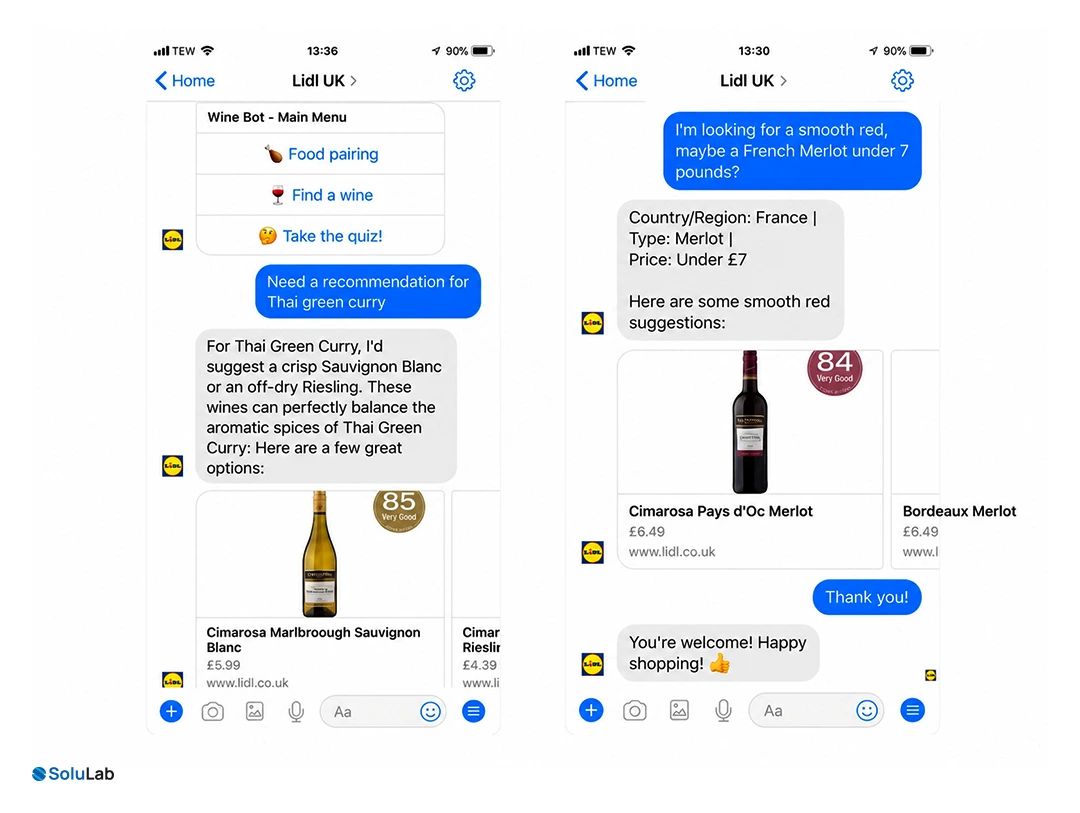
1. Personalized Product Recommendations
AI retail chatbots analyze browsing history, shopping preferences, and customer behavior patterns to recommend highly relevant products in real time, helping ecommerce businesses improve engagement, conversions, and overall shopping experiences.
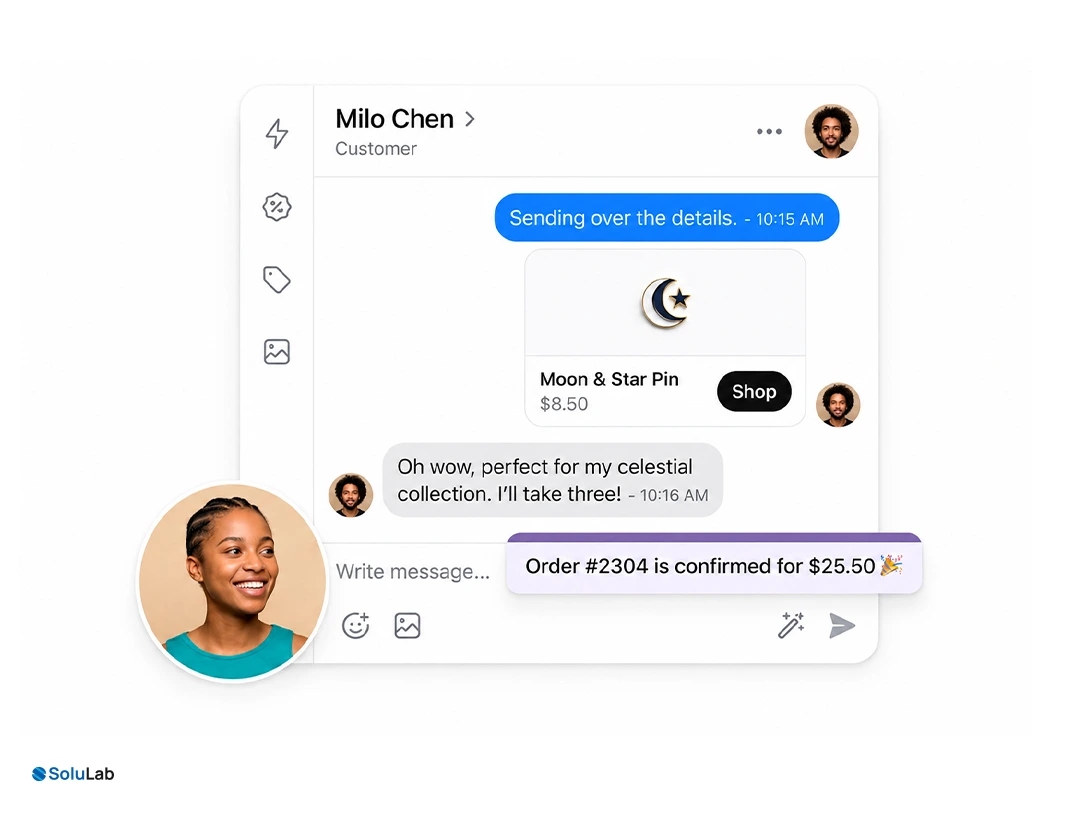
2. Customer Support Automation
Retail chatbots automate customer queries related to returns, refunds, order tracking, and FAQs, enabling ecommerce brands to deliver faster support experiences while significantly reducing manual customer service workloads.
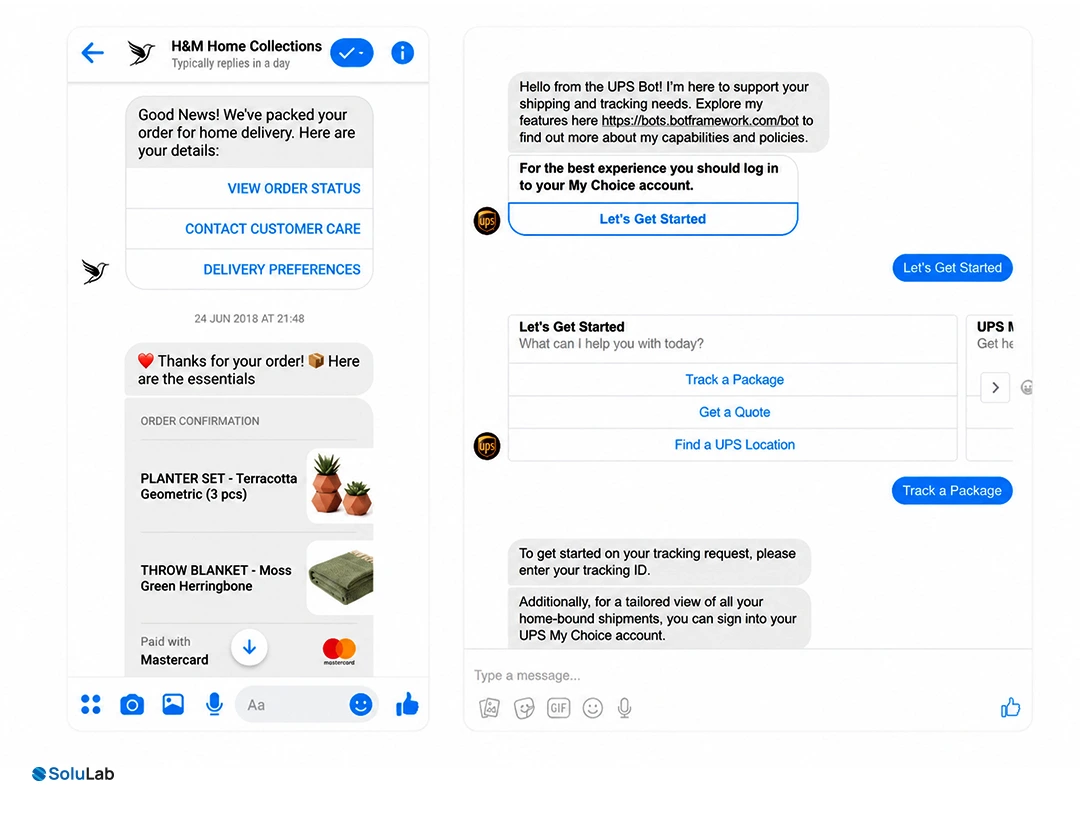
3. Order tracking and notifications
Retail chatbots can keep customers updated about the status of their orders through real-time notifications. Customers can receive updates on their order’s progress, estimated delivery times, and any changes in the shipping status.
4. AI-Driven Product Discovery Experiences
Conversational AI chatbots simplify ecommerce navigation by helping customers discover products through natural conversations, personalized search assistance, and intelligent recommendations tailored to customer intent and preferences.
5. Voice Commerce and Conversational Shopping
Advanced AI chatbots support voice-enabled shopping experiences, allowing customers to search for products, receive recommendations, and complete purchases using natural conversational interactions across smart devices.
Real World Examples of AI Agent Retail Chatbot
Leading retailers and consumer brands are increasingly deploying retail AI assistants to automate customer support, personalize shopping experiences, increase conversions, and streamline operations across multiple digital channels.
1. UpdateIA: Multi-Agent Retail Operations Automation
UpdateIA needed a system capable of coordinating multiple business functions without increasing operational complexity. SoluLab developed a multi-agent AI platform powered by 14+ autonomous agents orchestrated through Jarvis, enabling seamless communication across departments and systems.
Result: Unified enterprise workflows, reduced manual effort, improved compliance management, and enabled faster real-time decision-making across HR, CRM, Finance, and Legal operations.
2. Sephora: Personalized Beauty Recommendations with AI
Sephora invested heavily in AI-driven customer experiences to help shoppers discover products more effectively. Through AI-powered beauty assistants, recommendation engines, and conversational shopping experiences, customers receive tailored product suggestions based on preferences, skin concerns, and shopping intent.
Result: More personalized shopping experiences, improved product discovery, and higher customer engagement across digital channels.
3. H&M: 24/7 AI-Powered Customer Assistance
H&M introduced AI-powered customer support assistants to provide round-the-clock assistance for common customer queries, order-related questions, and shopping support. The chatbot helps customers get quick answers while reducing dependency on human support teams for routine requests.
Result: Faster customer support availability, improved response efficiency, and continuous customer assistance across digital channels.
Future of Autonomous AI Shopping Agents
According to Gartner, by 2028, 70% of customer service journeys may begin and end through conversational AI assistants integrated into mobile devices. Here are a few AI future trends you will see:
- Conversational commerce will dominate ecommerce experiences: AI-powered conversations across websites, apps, and messaging platforms will increasingly replace traditional search-driven shopping methods.
- Predictive AI will personalize shopping in real time: Autonomous shopping agents will analyze customer behavior instantly to deliver dynamic product recommendations and highly targeted offers.
- Voice-enabled AI commerce will rapidly expand: Future shopping assistants will support voice-driven product discovery, purchases, and customer interactions across smart devices and digital platforms.
- Retail businesses will adopt agentic AI ecosystems: Ecommerce brands will integrate autonomous AI agents with CRM, ERP, analytics, and recommendation systems for scalable retail automation.
- Human-like AI interactions will improve customer trust: Generative AI advancements will make retail chatbots and shopping assistants more conversational, contextual, and emotionally responsive.
By 2029, AI Agents Could Resolve 80% of Retail Customer Interactions: Is Your Business Ready?
According to research from Gartner, AI-driven agents are expected to autonomously handle up to 80% of common customer service interactions by 2029, reducing operational costs while improving response times.
From answering product questions and tracking orders to recommending products and recovering abandoned carts, AI agents are becoming an essential part of the retail experience.
The question is: Will your business be leading this shift or struggling to catch up?
To stay competitive, now is the time to partner with an experienced AI agent development company. The right AI development partner can help you build intelligent retail assistants that increase conversions, improve customer satisfaction, and prepare your business for the future of autonomous commerce.

Conclusion
Retail chatbots are evolving from simple customer support tools into autonomous AI shopping agents capable of improving modern e-commerce experiences.
From personalized recommendations and conversational commerce to automation and predictive customer engagement. AI-powered retail chatbots are helping businesses improve conversions, customer satisfaction, and efficiency at scale.
Businesses looking to build scalable conversational AI solutions, intelligent shopping assistants, or autonomous retail automation platforms can partner with SoluLab, an AI agent development company, to create future-ready retail AI ecosystems tailored to evolving customer demands.
FAQs
Neha is a curious content writer with a knack for breaking down complex technologies into meaningful, reader-friendly insights. With experience in blockchain, digital assets, and enterprise tech, she focuses on creating content that informs, connects, and supports strategic decision-making.