Key Takeaways
- The right AI modernization consulting partner lowers implementation risk, speeds up adoption, and protects ROI, while the wrong one leaves you with a stalled pilot and a wasted budget.
- A credible AI modernization consulting process runs through seven stages: business assessment, AI readiness evaluation, technology audit, roadmap, pilot, enterprise deployment, and continuous optimization.
- Legacy technical debt is a real cost, not an abstract one. McKinsey estimates it eats up 20-40% of total technology budgets at large enterprises, which is exactly what a modernization roadmap is meant to unwind.
- When evaluating an AI modernization consultant, check for AI expertise, industry experience, security compliance, real case studies, and transparent pricing before anything else.
- The questions you ask before hiring matter as much as the proposal you get back. Push on legacy system experience, post-deployment support, and how they actually define and measure success.
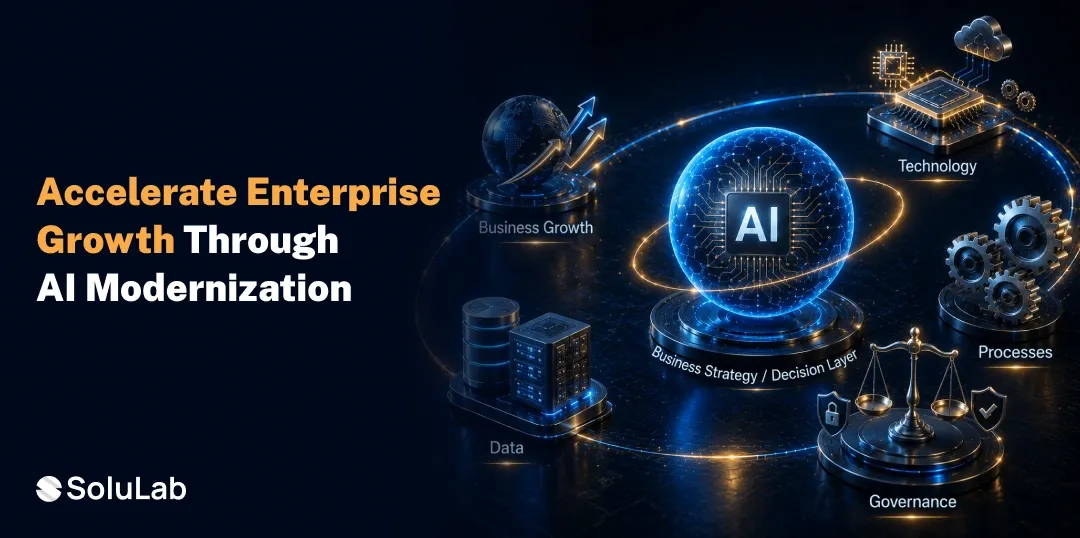
Legacy systems, disconnected data, and outdated workflows can slow innovation, increase costs, and make AI adoption far more difficult than it should be.
That’s why many organizations are turning to AI development services to upgrade their technology, streamline operations, and prepare for long-term AI success. However, choosing the right consulting partner is just as important as deciding to modernize.
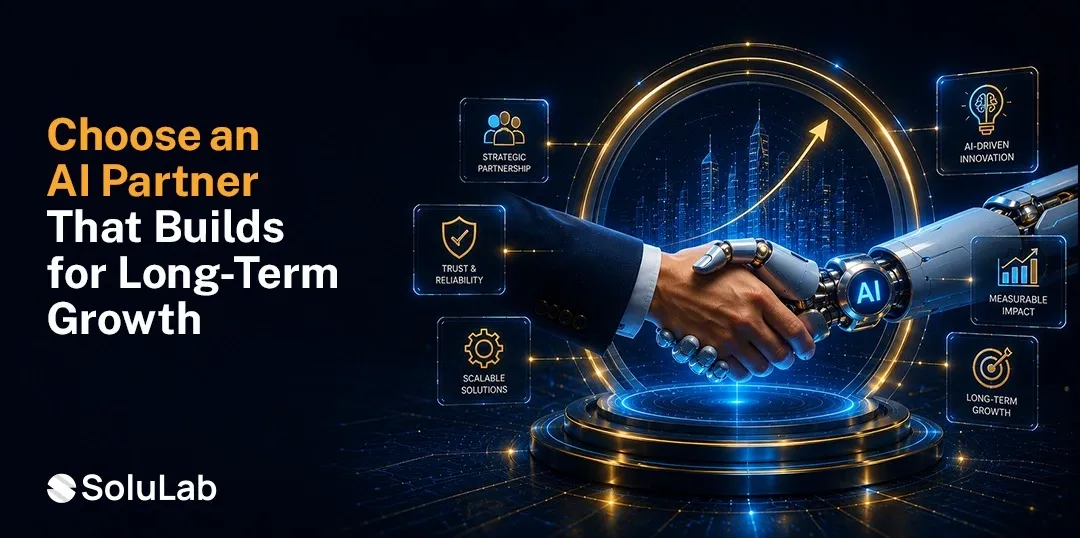
The wrong partner may recommend expensive solutions that fail to align with your business goals, while the right one can create a practical roadmap that delivers measurable results.
In this guide, you’ll learn the key factors to evaluate when selecting an AI modernization consulting partner, the questions to ask before signing a contract, and the common mistakes businesses should avoid to ensure a successful AI transformation journey.
Why Choosing the Right AI Modernization Partner Matters
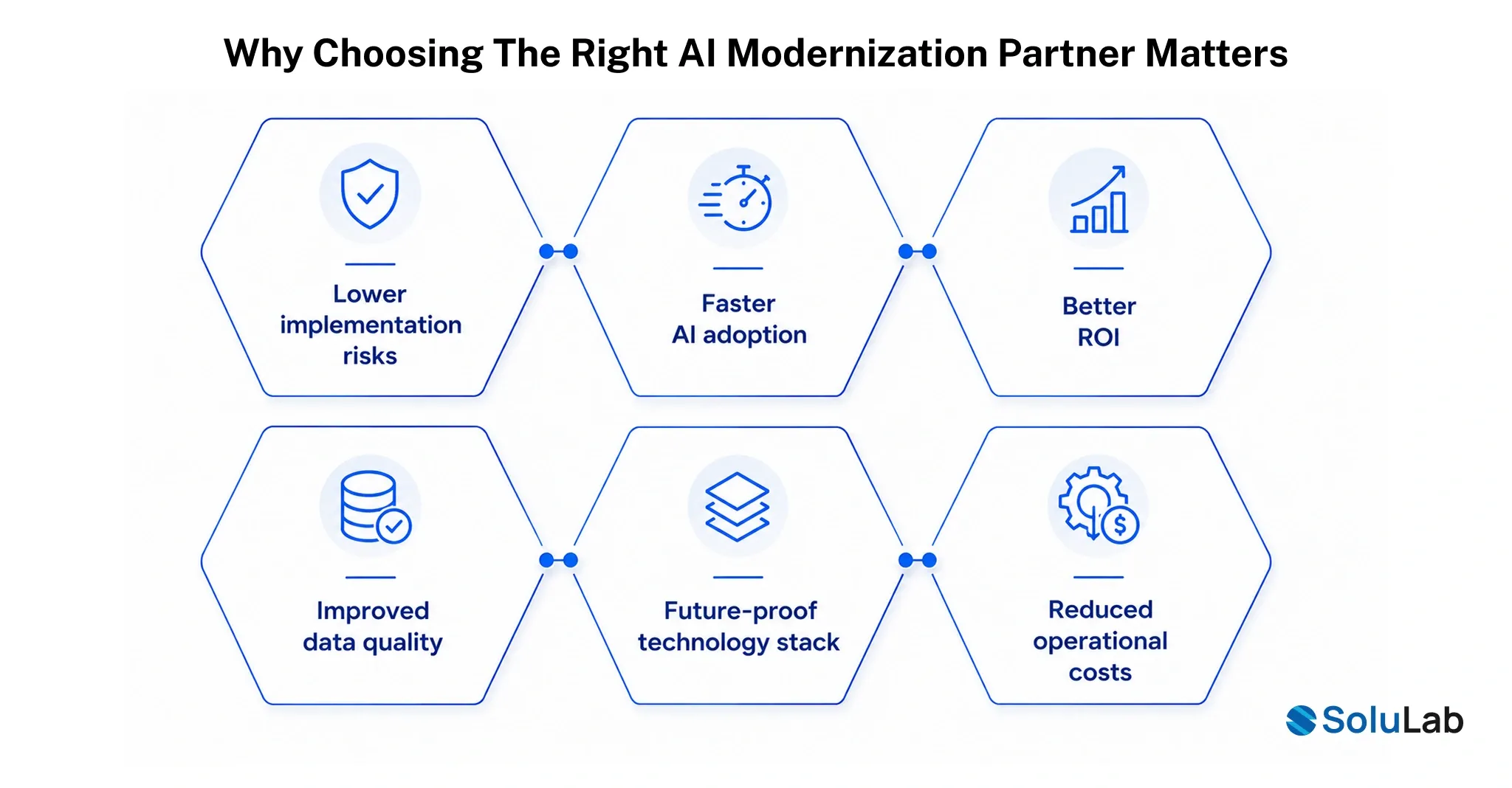
An AI modernization strategy is only as good as the partner executing it. Here’s what’s actually at stake when you get the choice right. Gartner found only 28% of enterprise AI use cases fully deliver on ROI expectations, which makes partner selection, not the technology itself, the biggest lever you actually control.
- Lower implementation risks. An experienced AI modernization consulting partner has already seen where these projects break, usually around data quality and integration, and builds around those failure points instead of discovering them the hard way.
- Faster AI adoption. A consultant who’s run this process before moves you through assessment and piloting in weeks, not the eight-month average prototype-to-production cycle Gartner has reported across the industry.
- Better ROI. Partners with a defined AI consulting framework tie every initiative to a measurable business outcome upfront, rather than shipping a pilot and hoping the value shows up later.
- Improved data quality. Gartner has been direct about this: a large share of AI projects get abandoned specifically because the underlying data was never made AI-ready in the first place. A good consultant fixes this before automation starts, not after.
- Future-proof technology stack. The right partner designs for what your business needs to run on in three years, not just what gets a demo working this quarter.
- Reduced operational costs. Modernizing legacy systems properly cuts the ongoing maintenance tax those systems quietly charge every month, freeing budget for the initiatives that actually grow the business.
Signs Your Business Needs AI Modernization Consulting
Some businesses know they need help. Others are still telling themselves the current setup is “fine.” A few common indicators tend to say otherwise.
- Legacy software limits innovation. New features take months because the underlying architecture wasn’t built to support them.
- Manual business processes. Teams are still doing by hand what software should be doing automatically.
- Disconnected systems. Data lives in five different tools that don’t talk to each other, so nobody has a single accurate picture.
- Poor data accessibility. Decision-makers wait days for reports that should take minutes.
- Rising operational costs. Maintaining old infrastructure keeps getting more expensive, with less to show for it each year.
- Low productivity. Employees spend more time working around the system than working with it.
- Difficulty scaling AI projects. A pilot works fine in isolation but falls apart the moment it needs to touch real production data or run at real volume.
- Slow customer response times. Whatever’s slowing your team down internally is almost always slowing down the customer on the other end, too.
If two or three of these sound familiar, that’s usually enough signal to start the conversation.
Step-by-Step Process of AI Modernization Consulting
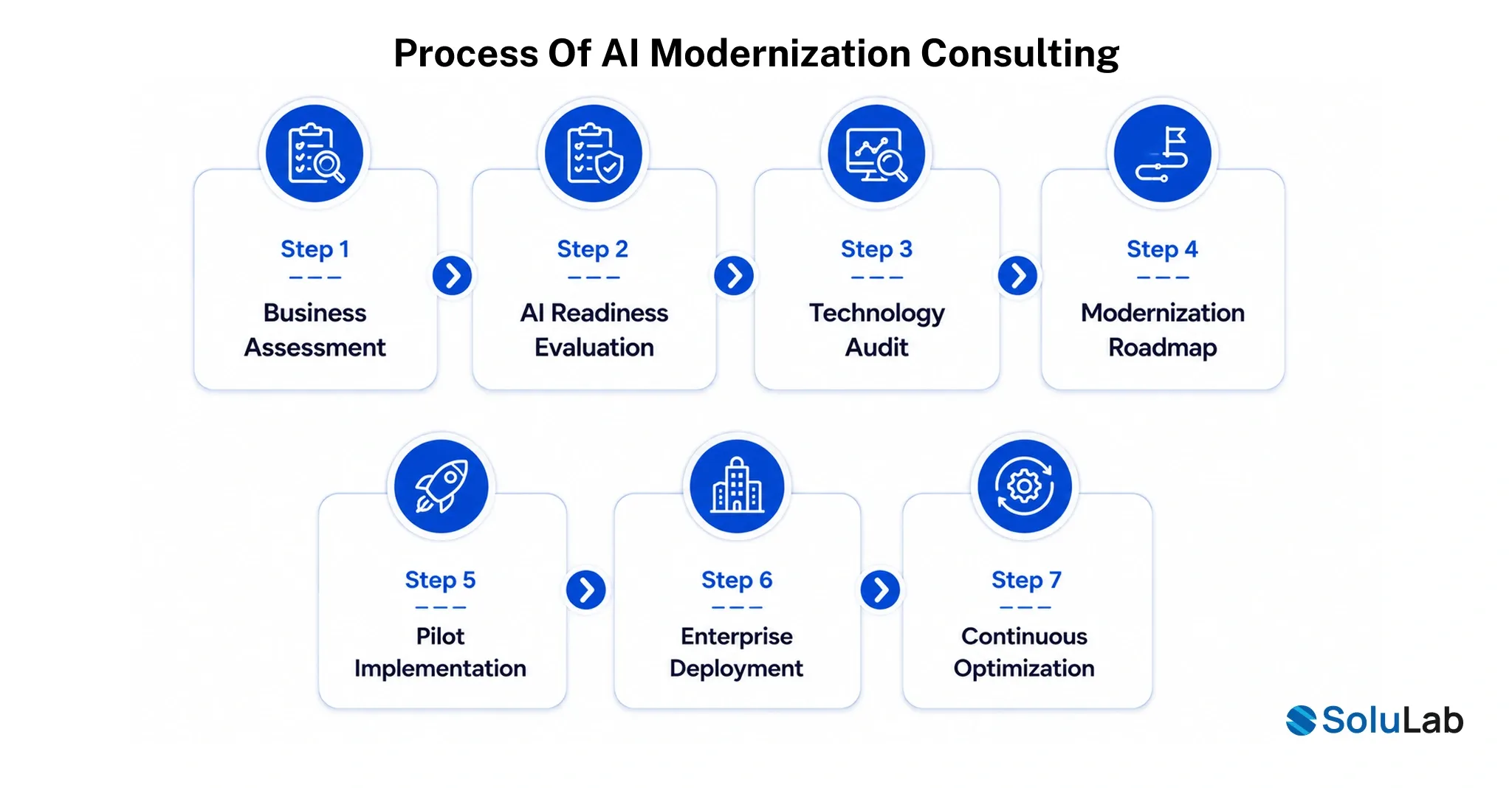
A serious AI modernization consulting process doesn’t start with technology. It starts with understanding the business well enough to know which technology decisions actually matter. Here’s what that process looks like, stage by stage, and what a consultant should actually be doing at each one, not just what it’s called on a slide.
Step 1: Business Assessment
Before any AI conversation starts, a good AI consulting partner spends real time understanding what your business actually runs on and where it’s losing money today.
This stage sets the baseline against which everything else gets measured, and skipping it is the single most common reason later phases go off track.
- Map current business processes
- Identify cost and revenue leaks
- Define success metrics upfront
Step 2: AI Readiness Evaluation
Not every business is ready for AI on day one, and a consultant worth hiring will tell you that honestly instead of selling you a pilot anyway.
This step checks whether your data, tools, and team are actually positioned to support AI, or whether groundwork needs to happen first.
- Assess data quality and availability
- Evaluate team AI literacy
- Review existing tool stack
Step 3: Technology Audit
You can’t modernize what you haven’t fully mapped, and most legacy environments have more undocumented dependencies than anyone on the team remembers.
An AI readiness audit inventories every system in play and flags which ones are genuinely blocking progress versus which ones just look outdated.
- Inventory legacy applications and tools
- Flag integration and compatibility gaps
- Rank systems by modernization urgency
Step 4: Modernization Roadmap
This is where the AI modernization roadmap actually gets built, sequencing the work so early wins fund and justify what comes later.
A good roadmap prioritizes by business impact, not by what’s technically easiest to build first.
- Sequence initiatives by business value
- Set realistic timelines and budgets
- Define milestones and checkpoints
Step 5: Pilot Implementation
Before anything touches the whole business, it should prove itself on a small, contained slice where failure is cheap and fast to catch.
Pilots exist to surface problems early, not to be a formality on the way to a deployment that was already decided.
- Deploy on a limited scope
- Measure against defined success metrics
- Gather user feedback early
Step 6: Enterprise Deployment
Once the pilot earns its results, the same solution gets rolled out at scale, but scaling introduces its own failure points that a pilot never touches.
This stage is where governance, training, and change management matter as much as the underlying technology.
- Scale the successful pilot company-wide
- Train teams on new workflows
- Monitor rollout for early issues
Step 7: Continuous Optimization
AI modernization isn’t a project with an end date. The systems, the data, and the business itself keep changing after go-live.
A real AI-led modernization company stays involved past launch, tuning performance as new data and new needs come in.
- Track performance against KPIs monthly
- Refine models and workflows regularly
- Plan next-phase modernization opportunities
AI Modernization Consulting Evaluation Checklist
Once you’ve got a shortlist of candidates, run each one through the same checklist. It keeps the comparison honest instead of getting swayed by whoever gave the best pitch deck.
- AI expertise. Have they actually built and shipped AI systems, or is this a new practice bolted onto a general software consultancy?
- Industry experience. Healthcare, finance, and retail modernization each come with different compliance and data constraints. Generic experience isn’t the same as relevant experience.
- Security compliance. Ask directly how they handle data governance, access controls, and regulatory requirements specific to your industry.
- Technology partnerships. Established relationships with major cloud and AI platform providers usually mean faster access to support and better pricing.
- Case studies. Look for named, specific results, not vague claims about “driving transformation.” Real case studies name the client, the problem, and the outcome.
- Support services. Confirm what happens after go-live. A consultant who disappears the week after deployment isn’t set up to help you optimize later.
- Pricing transparency. Fixed-scope, time-and-materials, or outcome-based, the model should be clear upfront, not something that shifts once the engagement starts.
- ROI measurement. A partner should be able to explain exactly how they’ll track and report on ROI before the project even kicks off.
Read more: How to select an AI development partner
Questions to Ask Before Hiring an AI Modernization Consultant
The proposal document only tells you so much. These questions tend to surface what it doesn’t.
- What industries have you worked with? Relevant industry experience often matters more than raw years in business.
- Can you modernize our legacy applications? Get specific about your actual tech stack, not a generic yes.
- How do you measure AI project success? If the answer is vague, the project’s success metrics probably will be too.
- Which AI technologies do you recommend? Watch for a partner recommending the same stack to every client regardless of fit.
- How do you ensure data security? This should be a detailed, specific answer, not a one-line compliance statement.
- Can you share case studies? Ask for ones closest to your industry and use case, not just their best-looking one.
- What support do you provide after deployment? This is where a lot of otherwise good engagements quietly fall apart.
How SoluLab Helps Businesses with AI Consulting?
Choosing the right AI modernization consulting partner ultimately comes down to whether they can back up the strategy with actual delivery. SoluLab, an AI native company, works with businesses across the full modernization lifecycle:
- AI modernization consulting to assess where your business actually stands and build a roadmap around real priorities, not a generic template.
- Legacy application modernization for systems that are holding back everything built on top of them is handled through structured enterprise software development rather than a rip-and-replace approach.
- Enterprise AI strategy grounded in what’s achievable given your current data and infrastructure, developed alongside our AI consulting team.
- AI agent development for businesses ready to automate specific, well-defined workflows with custom AI agents built for their actual processes.
- Generative AI solutions built on your own data and use cases, through our generative AI development practice.
- Workflow automation connects the new AI layer to the systems your team already relies on day-to-day.
If you’re not sure whether your business is even ready for this yet, that’s worth answering first through an AI readiness assessment before committing to a full engagement.

Conclusion
The businesses that get real value out of AI modernization aren’t the ones that moved fastest. They’re the ones who picked a partner willing to say “not yet” when the data wasn’t ready and “here’s exactly how we’ll measure this” before the project started.
Given that only a minority of enterprise AI initiatives fully deliver on their promised ROI, the partner you choose is arguably the biggest variable you actually control in this whole process.
If you’re evaluating AI modernization consulting partners right now, SoluLab provides the best AI consulting services and can walk through your current systems honestly and tell you what’s actually worth modernizing first.
FAQs
Neha is a curious content writer with a knack for breaking down complex technologies into meaningful, reader-friendly insights. With experience in blockchain, digital assets, and enterprise tech, she focuses on creating content that informs, connects, and supports strategic decision-making.