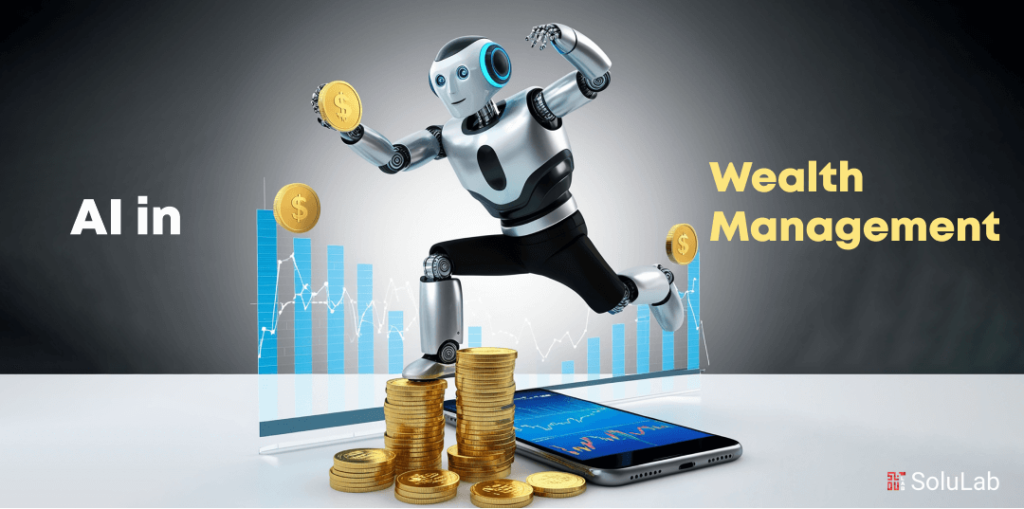
Artificial intelligence touches almost every business now, and financial services caught it early. Most clients still want a human voice on the other end of the call. That has not stopped AI from taking real ground inside wealth management. Six out of ten finance professionals say they want to try it. So if growth is on your list this year, it is worth working out where the technology actually fits in your plan rather than bolting it on later.
AI in wealth management marks a real change in how financial services get built and delivered. Plenty of firms already run it somewhere in the stack, and recent studies say 62% of business and technology experts at wealth management companies want to spend more on new technology over the next year. Picture an adviser who reads a mountain of information in seconds, reacts to a moving market while it moves, and shapes recommendations around your goals and your appetite for risk.
For asset managers and their clients, the payoff shows up in three places: tighter operations, clearer reporting, and personalization at a depth that manual work never reached. Automated onboarding. Portfolio adjustments. Tax-saving opportunities nobody had time to hunt for. None of this is about replacing the human adviser. It is about giving that adviser better reach, faster answers, and fewer hours lost to admin. Banks are moving quickly here because data-driven advice is turning out to be cheaper and easier to explain.
This blog walks through what artificial intelligence in wealth management is changing, what investors and wealth managers get out of it, and the many use cases for AI.
What is Wealth Management?
Wealth management is the part of financial services that helps people run their money properly, with professional guidance behind every call. It covers investments, tax, estate planning, and the legal side too. Your wealth manager is the single point of contact, the one who pulls the accountant, the estate planner, and the tax specialist into one plan built around your situation and what you want to happen next. Done well, it protects what you have, grows what it can, and leaves you able to make decisions with your eyes open.
Read More: Agentic AI for Wealth Management
The Importance of Artificial Intelligence in Wealth Management
Artificial intelligence in wealth management gives advisers something they have never really had: evidence at the speed the market moves. Predictive analytics surfaces opportunities worth a second look and flags the risk sitting next to them. Wealth management AI sharpens risk assessment too, so a plan actually matches what the client wants and what the client can stomach. Read the client data properly and the advice stops being generic. That is the whole point.
PwC forecasts suggest that robo-advisors will manage $5.9 trillion in assets by 2027, more than double the $2.5 trillion they ran in 2022. Personalized indexing is climbing as well, particularly with investors chasing tax optimization or building around ESG (Environmental, Social, and Governance) criteria, factor-based strategies, and algorithmic portfolio construction.
On the institutional side, roughly 40% of investors plan to put money into custom indexing products. Close to 50% of asset managers say they are getting ready to launch individualized indexing solutions of their own.
PwC expects assets under management (AUM) for direct indexing to more than triple by 2027, hitting $1.47 trillion, or about 1% of total AUM. Active exchange-traded funds (ETFs) are forecast to jump from $4.6 billion to $1.1 trillion, which would be 7.5% of the global ETF market by 2027.
Comparison Between Traditional Wealth Management and AI-Based Wealth Management
Here is how AI-based wealth management stacks up against the conventional approach, point by point:
| Aspect | Traditional Wealth Management | AI-Based Wealth Management |
| Client Onboarding | Manual and slow. Clients hand over stacks of paperwork and sit through a verification process that takes its time. | Automated start to finish. AI checks documents, runs anti-money laundering screening, and builds the risk profile without the waiting. |
| Portfolio Creation | Mostly manual, built on research and the individual adviser’s judgment. | Algorithms and data analysis do the construction and the optimization work. |
| Advisory Services | Leans hard on the adviser for every client conversation and every recommendation. | AI cuts the busywork out of advice, supplying data-backed insight and tailored recommendations, usually for less money. |
| Transparency | Varies by adviser. What you learn often depends on who you ask. | Consistent by design, with clear fee structures and product detail available on demand. |
| Portfolio Rebalancing | Advisers rebalance by hand, on their own read of the situation. | Algorithms and live market data drive adjustments that happen more often and land more precisely. |
| Risk Management | Handled by human consultants whose specialisms differ from one firm to the next. | Predictive analytics and algorithms measure and manage risk with far more coverage. |
| Efficiency | Slow, manual, and open to human error. | Routine tasks run themselves, and analysis comes back in minutes rather than days. |
| Personalization | Depends on the adviser’s experience and how much time they spend with the client. | Large data sets get read properly, so recommendations and strategies go deeper per client. |
| Costs | Usually pricier, because manual labour and overhead have to be paid for. | Generally cheaper to run, which shows up in a lower fee structure. |
How AI for Wealth Management Works?
AI for wealth management changes how advisers and institutions run portfolios, price risk, and serve clients one by one. Put strong algorithms next to good data analysis and both the decisions and the day-to-day operations get better.
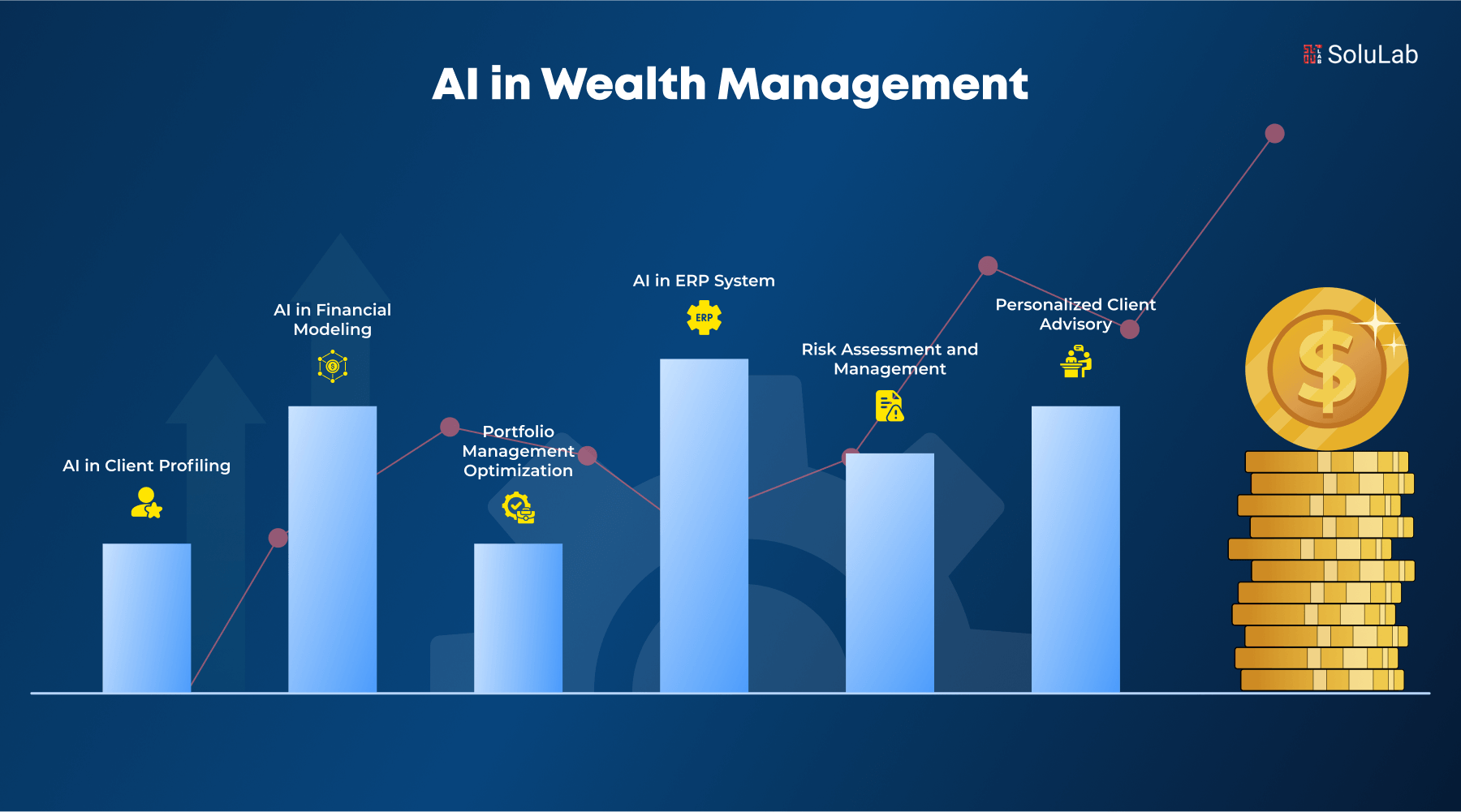
So where do AI and wealth management actually meet?
- AI in Client Profiling
It starts with the data. AI reads through huge volumes of it to build a client profile with actual texture, tracking behaviour, stated preferences, and financial goals, then shaping an investment approach that fits the person’s risk tolerance and long-term plans instead of a generic bracket.

- AI in Financial Modeling
Financial modeling is where AI earns its keep, forecasting market movement and flagging opportunities early. With machine learning, AI in financial modeling can chew through historical data and market indicators to build models that hold up, which sharpens both forecasting and portfolio management.
- Portfolio Management Optimization
Portfolio management becomes a continuous job rather than a quarterly one. The system watches market conditions and adjusts positions against live data. That constant tuning keeps portfolios responsive when the market swings, which lifts performance and holds risk down.
- AI in ERP System for Wealth Management Firms
Plugging AI in ERP systems into the back office tightens up operations fast. AI-driven ERP handles data management, compliance, and reporting without a queue of people behind it, which hands advisers their time back for strategy and client work.
- Risk Assessment and Management
Predictive analytics gives risk assessment more range. AI can run through financial scenarios, measure volatility, and weigh external factors, which puts wealth managers in a better position to protect client assets before the damage happens rather than after.
- Personalized Client Advisory
And then there is the advice itself. AI reads the client data and produces investment guidance built for that person, which is a different animal from the one-size template a traditional advisory model usually falls back on.
Put those pieces together and a firm’s service gets faster, more accurate, and genuinely specific to the person paying for it.
AI Use Cases in Wealth Management
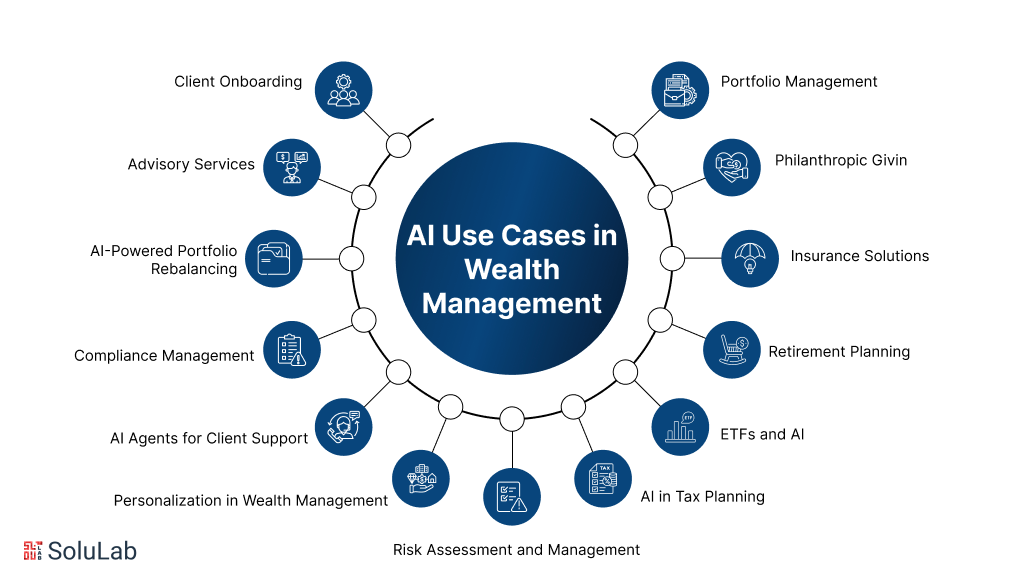
Across the industry, AI is cutting friction out of process, improving what clients experience, and putting real data behind financial strategy. Here is where it shows up:
1. Streamlining Client Onboarding: The opening stretch of a client relationship is mostly admin: first contact, document checks, anti-money laundering screening. AI takes those over. Investment firms verify documents faster and with fewer mistakes, so people get onboarded in a fraction of the time. For wealth management consulting firms, that means client data lands on the desk while it still matters.
Deutsche Bank Wealth Management is one example. The firm runs an AI-powered KYC Solution that reads multiple languages and works with natural language processing (NLP) to confirm identity. It gathers background detail, scores risk, and assembles profiles of both current and prospective clients.
2. Simplified Advisory Services: AI applications in wealth management have taken a lot of weight off the advisory side. Routine work runs itself, which frees wealth managers for the decisions that actually need judgment. The systems read economic conditions alongside client data and put together investment packages with the reasoning attached. Clients notice. Satisfaction goes up, and so does retention.
3. Investment Portfolio Management: AI in wealth management examples usually start here: machine learning reading enormous datasets, finding patterns a person would miss, and tuning strategy off what it finds. Portfolios shift in real time as the market does, chasing return and trimming risk at once. The strategies bend to each investor’s goals and risk appetite rather than the other way round. There is a side benefit too. AI lets you follow what top investors hold, spot trends early, benchmark your own performance, and decide with better information in hand.
Read Our Blog: AI and Blockchain Development Services For Longevity Investing
4. AI-Powered Portfolio Rebalancing:Market conditions move portfolio performance around, and doing that analysis by hand is a slog. An AI consulting company gives advisers portfolio tools that produce insight while it is still current, so rebalancing happens without the lag. Client money stays pointed at the goals it was meant for.
5. Robo-Advisors: Robo-advisors are the most familiar of the AI in wealth management examples. They are automated advisory applications that run on algorithms to produce personal investment advice. The platform reads preferences, goals, and risk tolerance, builds a portfolio to match, then keeps an eye on the market and adjusts when conditions call for it. Cheap, easy to reach, simple to use. That combination is why they pull in such a wide range of investors.
6. AI Agents for Client Support: AI agents, chatbots among them, keep the service desk open around the clock. They field the routine questions about balances, transaction history, and appointment booking, and natural language processing makes the exchange feel less like filling in a form. There is a second payoff: reading those conversations in aggregate shows wealth managers what clients keep asking about, which feeds straight back into better service.
7. Compliance Management: Compliance is where AI quietly does its best work. KYC checks, anti-money laundering (AML) screening, transaction monitoring: all of it runs automatically across datasets far too big for manual review. Firms stay inside the regulations and cut the odds of a breach. Checks that happen in real time rather than in a monthly sweep also do a lot for client trust.
8. Personalization in Wealth Management: Data analytics is what makes truly custom financial strategy possible at scale. Small language models (SLMs) read client behaviour, market movement, and historical financial data, then shape recommendations around all three. Because those models keep watching, portfolios adjust as the client’s life changes, not six months afterwards.
9. Risk Assessment and Management: Predictive analytics lets AI read market volatility and early trends together. It can also look at a client profile and anticipate life events, a health change, a career shift, and translate that into a risk assessment built for the individual with strategy adjusted to match. Getting ahead of those moments is how client security actually holds.
10. AI in Tax Planning: Tax planning gets faster and sharper. AI hunts down tax-saving opportunities and squeezes more out of available deductions. It tracks regulatory change and adapts strategy when the rules move. It will also suggest tax-efficient options, tax-loss harvesting among them, which keeps liabilities low and after-tax returns high.
11. ETFs and AI: Exchange-Traded Funds (ETFs) are a natural fit. Algorithms pick the ETFs that suit a client’s goals, current market conditions, and risk tolerance, then keep checking that the portfolio still lines up with what the client said they wanted. The result is an ETF strategy built per person rather than per product sheet.
12. Retirement Planning: Retirement plans live or die on the assumptions behind them. AI tools read financial data and existing portfolios to build a plan for the individual, factoring in inflation, market volatility, and life expectancy. Wealth managers can run scenario after scenario and see exactly where a retirement fund is exposed. Clients get strategy that moves with them.
13. Insurance Solutions: AI applications in wealth management extend to insurance, where AI-driven tools size up coverage and fit it to what the client actually needs. Premium payments get optimized, claims processing speeds up, and the insurance side of the portfolio shifts as the client’s financial picture changes.
14. Philanthropic Giving: Giving is rarely a simple decision. AI-driven algorithms weigh the risks and benefits of different philanthropic strategies and model donation scenarios, so a client can see what each choice does to their own financial position before committing to the one that matches their values.
Across all of it, the pattern is the same: less friction, cleaner compliance, and advice built for the individual. AI development companies with wealth management technologies will be better equipped to optimize services and deliver superior value to their clients.
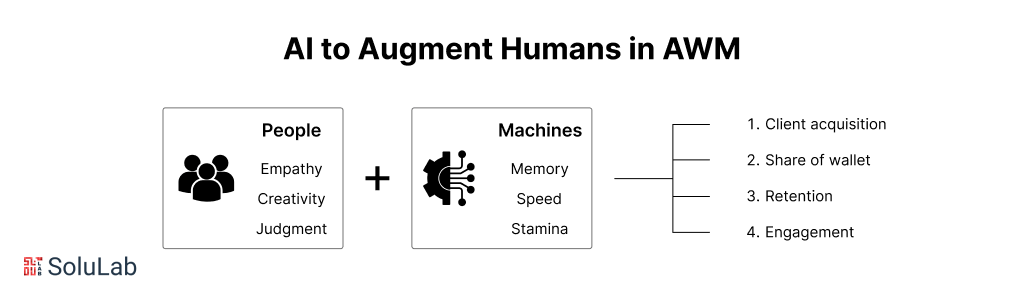
Advantages of Artificial Intelligence in Wealth Management
So what do firms actually get out of artificial intelligence in wealth management? Here is the short list:
- Enhanced Decision-Making
Artificial intelligence in wealth management puts evidence under every investment call. Insight and recommendation arrive together, which means fewer guesses, better returns, and less exposure for the client. Give a wealth manager that kind of analytical backup and the quality of their strategy climbs noticeably.
- Increased Operational Efficiency
Document processing and routine client communication eat hours. AI takes both off the desk, which leaves wealth managers on the strategic work where they add value. The firm runs tighter, portfolios get more attention, and the manual errors that come with repetitive work largely stop happening.
- Personalized Investment Strategies
Multimodal models and AI algorithms build strategy around the individual: their goals, their risk profile, their timeline. That changes the experience of being a client. Instead of a portfolio that roughly fits, you get one that was assembled from your own numbers, and wealth managers end up with solutions that land rather than approximate.
- Improved Risk Management
AI applications in wealth management matter most when something is about to go wrong. Constant monitoring of market data means risks get spotted while there is still room to act, and portfolios can be protected before losses set in. Prevention beats recovery, and this is the part of the job where that gap is widest.
- Cost Reduction
Automation saves money. That is not complicated. Firms spend less running the same service, and the saving tends to reach clients as lower fees. Which quietly opens up good wealth management to people who could not previously justify the cost of it.
- Round-the-Clock Client Support
Chatbots and virtual assistants keep the door open at 2am. Clients get answers when the question occurs to them, not when the office reopens, and that alone does more for satisfaction than most firms expect.
- Tax Optimization
AI helps clients shape their investments to keep the tax bill down. The tools read the tax consequence of each decision, so after-tax returns improve rather than just headline returns. Over a long enough holding period, that precision compounds into real portfolio value.
- Diversification Strategies
Finding genuinely uncorrelated opportunities across asset classes is hard work, and AI is good at it. Spread the portfolio properly and overall client risk drops. The balance between risk and reward holds better when markets get rough, which is exactly when it counts.
Pull all of that into one firm and you get better decisions, leaner operations, and services that are both personal and affordable. Diversification does not stop at equities and ETFs, either. Precious metals are part of the picture: robo-advisors often park a small slice in physical gold as a hedge against inflation and shock, favouring widely traded gold bullion coins so liquidity stays high and pricing stays transparent. AI watches spreads and premiums live to time the entry and the rebalance.
AI Trends in Wealth Management
The way artificial intelligence in wealth management is being adopted keeps shifting, and a handful of trends are quietly rewriting how wealth managers deliver value.
- Rise of Small Language Models (SLMs)
Large models like GPT-4 get the headlines. Meanwhile small language models (SLMs) is spreading through wealth management for a plainer reason: they give specialized, tight answers on narrow tasks. Generating a personalized investment report. Handling a client query. Reading a niche dataset nobody else has time for. They run faster and cost less to host, which matters enormously to a firm that wants AI without rebuilding its infrastructure first.
- AI-Powered Robo-Advisors
Robo-advisors keep growing. These platforms build and manage client portfolios on their own using machine learning, and the models behind them are getting cleverer. Multimodal models in particular let a robo-advisor read several kinds of input at once: financial statements, market trends, even social sentiment. The advice that comes out is broader and more personal. Younger investors who grew up doing everything through an app are driving most of that demand.
- Predictive Analytics for Market Trends
Forecasting is becoming one of the core uses. AI models read enormous quantities of historical and live data to anticipate where a market is heading, which lets wealth managers adjust before the move rather than after it. Better timing on advice translates directly into better portfolio performance.
- AI-Driven Risk Assessment
Risk never stops being the main event, and AI is taking a bigger share of that work. Because it can scan markets continuously and catch anomalies a person would scroll past, forecasting and mitigation both improve. Modern algorithms pick up early warning signals of a downturn, giving wealth managers time to move client assets out of harm’s way.
- Hyper-Personalization
Hyper-personalization is the most interesting trend of the lot. Small Language Models and AI algorithms together let wealth managers build financial strategy at a level of detail that used to be reserved for the very largest accounts. Risk tolerance, life goals, current market conditions: all of it feeds the advice. Every client’s path ends up genuinely their own instead of a variation on a house template.
- Automation and Workflow Optimization
Investment decisions are not the only thing being automated. Onboarding, report generation, compliance handling: AI is working its way through the operational layer of the firm as well. In practice, this is where the time savings show up first, and it puts wealth managers back on planning and relationships instead of paperwork.
As small language models and multimodal analysis mature, firms will be able to offer services that are quicker, more personal, and better informed, with the client experience and the investment outcomes both improving as a result.
Future of AI in Wealth Management
There is a lot still ahead for artificial intelligence in wealth management. New technologies and new approaches keep changing how firms work and how they serve clients, and AI is moving from an add-on toward the centre of the operation.
1. Collaboration with AI Consulting Companies
Adoption is outpacing in-house expertise, so more wealth management firms are turning to AI consulting companies for help with the messy parts of integration. Consultants bring the strategic view: what to automate first in portfolio management, where advanced analytics genuinely improves a decision, and which tools are worth the commitment. Working with them keeps a firm close to the current state of the technology rather than two years behind it. Expect these partnerships to get busier as demand for personal, automated wealth management keeps climbing.
2. AI for Predictive Financial Planning
Predictive financial planning is the next big one. Feed a model historical data, economic trends, and behavioural patterns and it returns forecasts that are far more precise, plus strategy built around the client’s stated goals. The shift is from reactive to proactive: advice that adjusts as market conditions change, aiming for return while keeping the downside in check.
3. Integration of Explainable AI
Then there is Explainable AI (XAI), which may end up mattering most of all. Clients and advisers are both going to demand reasons for AI-driven decisions, and that demand gets loud the moment large sums are involved. XAI lets a wealth manager see why a recommendation came out the way it did and explain it to the person whose money is at stake. Regulators want the same thing. As AI takes on more of the decision-making, being able to answer “why” stops being optional.
4. AI-Driven ESG Investing
Environmental, social, and governance (ESG) investing is another place AI will leave a mark. It can work through datasets no analyst has time for, corporate sustainability reports, CSRD reporting requirements, and market data, and pull out the companies that match a client’s ESG criteria. Socially responsible investing keeps growing, and this is how wealth managers meet it: portfolios that reflect what a client believes without giving up financial performance.
5. AI-Enhanced Client Experience
Client experience gets the hyper-personalization treatment next, at a scale nobody could staff manually. Algorithms that read preferences, behaviour, and financial goals let wealth managers deliver investment solutions that change as the client does. Intelligent chatbots and virtual assistants handle the rest: support at any hour, investment updates as they happen.
With AI consulting companies steering more of these rollouts, AI is heading for the middle of everything: the decisions, the client conversation, the strategy itself. The firms that get there early will be the ones offering service that is personal, efficient, and worth what clients pay for it.

How SoluLab Helps for AI in Wealth Management?
As a leading AI development company, SoluLab builds AI systems for the wealth management industry specifically. We work with firms on the practical side of it: tightening operations, improving portfolio management, and making the client experience worth talking about. Our engineers build systems that take over repetitive work, turn raw data into something an adviser can act on, and shape investment strategy around each client’s goals. The result is better-informed decisions, less exposure, and a service that runs efficiently enough to scale.
You can also hire AI developers from us directly, people who already know this industry and can design and ship a solution that fits how your firm actually works. Predictive financial analysis, risk assessment, client engagement: our developers work alongside your team and build toward results you can measure. What you end up with is a service that is more personal, faster to run, and harder for competitors to match.
FAQs
Shipra Garg is a tech-focused content strategist and copywriter specializing in Web3, blockchain, and artificial intelligence. She has worked with startups and enterprise teams to craft high-conversion content that bridges deep tech with business impact. Her work translates complex innovations into clear, credible, and engaging narratives that drive growth and build trust in emerging tech markets.