


01
2 to 4 Weeks
Readiness and Use-Case Selection
We score your readiness across 8 dimensions and 56 checkpoints, then pick the use case with the best mix of value, data availability, and risk.

SoluLab's AI and machine learning consulting helps you choose the problems where ML pays off, check that your data can support them, and take models from proof of concept into monitored production. One team covers strategy, data engineering, model development and MLOps, starting with a free AI readiness assessment.













AI and machine learning consulting is advisory and hands-on engineering help to find where predictive models, computer vision, NLP, or generative AI can improve a business, test them on real data, and deploy them safely. It covers strategy, data readiness, model selection, MLOps and governance, not just a recommendations deck.
AI consulting is the broader discipline; our AI consulting company page covers it end to end. Machine learning consulting focuses on the part that learns from your data: forecasting demand, scoring risk, spotting defects in images, ranking leads. That's where most of the measurable value sits, and where most projects fail, usually on data quality or on the jump from notebook to production.
Automation follows fixed rules you write. AI is the broader field of systems that perform tasks needing human-like judgment. Machine learning is the part of AI that learns patterns from data instead of following hand-written rules. Use automation for stable rules, ML when patterns are too complex to write down.
Many real systems combine all three: automation moves the data, ML makes the prediction, and a person approves the edge cases. Our machine learning development team covers the build details.
Knowledge-based AI encodes expert rules written by people, so every decision is traceable, but the system only knows what it's told. Machine learning learns from examples, so it handles messy, changing patterns but needs good data and monitoring. In regulated decisions, we often pair them: ML proposes, and a rules layer enforces policy limits.
SoluLab's AI and machine learning consulting services cover the full path from idea to production: AI and ML strategy, data readiness and engineering, predictive analytics, computer vision, NLP and generative AI, model validation, MLOps and AI governance. Each engagement ends with a working model or a clear decision not to build one.
We rank candidate use cases by value, data availability and risk, then turn the top few into a costed roadmap. It starts with our free AI readiness assessment, which scores you across 8 dimensions.
Most ML projects stall on data, not algorithms. We audit sources, labeling and quality, then build the pipelines and feature stores your models need to train and run reliably.
We build models for demand, pricing, risk, churn and valuation using methods such as XGBoost, Prophet and LSTM networks, with explainable outputs your teams can act on. See our machine learning development services for the full build scope.

From defect detection to automated grading, we design vision systems that work on your real images and lighting, not just benchmark datasets. Our collectibles grading model hit 95% accuracy.
We scope and build text classification, document extraction, RAG and LLM features, choosing between classical ML and generative AI on accuracy, cost and risk.

When problems need neural networks at scale, our deep learning consulting team designs architectures and training pipelines that fit your data volume and budget.
We test models for accuracy, bias and drift before launch and document how they make decisions, which matters for lending, healthcare and insurance use cases.
We set up versioning, CI/CD for models, monitoring and retraining so accuracy holds after launch. Our MLOps consulting services cover this in depth, with support plans from $2,000 a month.

To implement AI and machine learning, pick one high-value problem, audit the data, build a proof of concept on real data, validate it against a baseline, deploy it into the systems people already use, and monitor it for drift. Most first models go from kickoff to a go or no-go decision in 4 to 8 weeks.
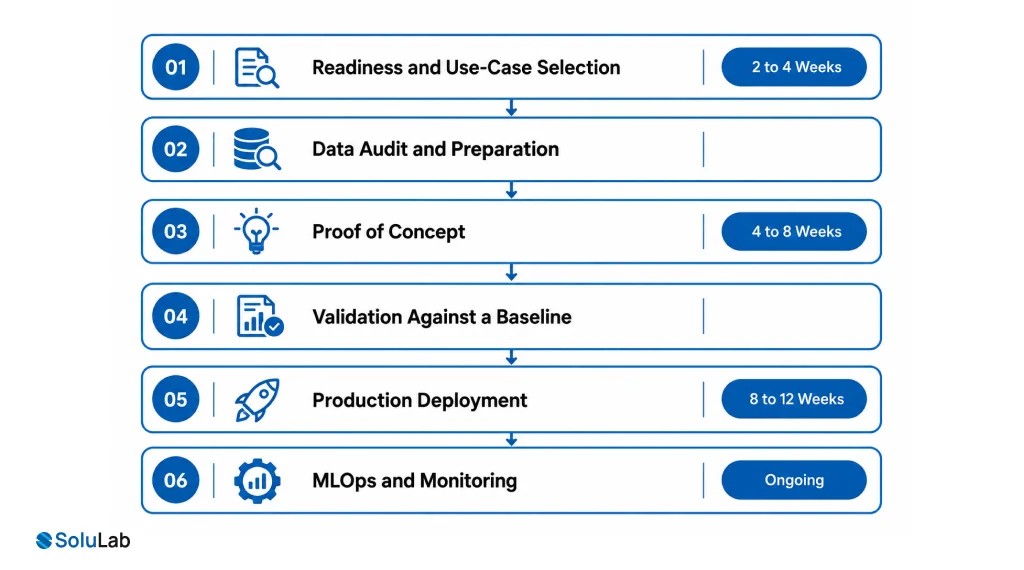
The baseline gate is what keeps a promising notebook from becoming an expensive production mistake.
We score your readiness across 8 dimensions and 56 checkpoints, then pick the use case with the best mix of value, data availability, and risk.
We check volume, quality, labels and access rights, and fix what blocks training. This is where most ML budgets are won or lost.
We train a first model on your real data and measure it against the metric you agreed on, such as forecast error or detection accuracy.
The model has to beat what you do today, whether that's a spreadsheet forecast or a manual review, on a held-out sample. If it doesn't, you stop here with a clear answer.
We package the model as a service, connect it to your applications and workflows, and add the explainability your users and auditors need.
We track accuracy, drift, and data quality, retrain on schedule or on alert, and report results against the original business metric.
AI and machine learning consulting with SoluLab typically starts at $5,000 to $20,000 for a readiness assessment and $10,000 to $20,000 for an ML proof of concept. Production models run $20,000 to $50,000, computer vision or NLP solutions $35,000 to $80,000, and enterprise ML platforms $50,000 to $150,000+.
Score across 8 dimensions
| Engagement | What you get | Typical cost | Typical timeline |
|---|---|---|---|
| AI readiness assessment | Use-case shortlist, data review, roadmap | $5,000 to $20,000 | 2 to 4 weeks |
| ML proof of concept | First model on your data, measured against a metric | $10,000 to $20,000 | 4 to 8 weeks |
| Production ML model | Deployed, integrated, monitored model | $20,000 to $50,000 | 8 to 12 weeks |
| Computer vision or NLP solution | Vision or language system in production | $35,000 to $80,000 | 10 to 16 weeks |
| Enterprise ML platform | Multiple models, shared data and MLOps platform | $50,000 to $150,000+ | 14 to 20+ weeks |
| Ongoing MLOps support | Monitoring, retraining, model updates | $2,000 to $8,000 a month | Ongoing |
Ranges come from SoluLab's published AI consulting and machine learning development pricing. What moves the number: data quality and labeling effort, model complexity, integration depth, explainability and compliance requirements, and how often the model must retrain.
SoluLab's ML stack is chosen per problem: Python with scikit-learn, XGBoost, TensorFlow and PyTorch for modeling; Prophet and LSTM networks for forecasting; Hugging Face Transformers and spaCy for language; Tesseract and CNNs for vision; and MLflow, Docker, Kubernetes and AWS, Azure or Google Cloud for deployment and monitoring.
 Python
 XGBoost
 Random Forest
 TensorFlow
 PyTorch
 scikit-learn
 Prophet
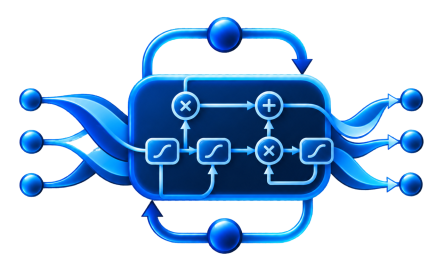 LSTM
 Survival analysis
 CNNsTensorFlow
 Tesseract OCR
 Hugging Face Transformers
 spaCy
 GPT-4o
 Claude
 LangChain
 GANs
 VAEs
 MLflow
 Docker
 Kubernetes
 AWS
 Azure
 Google Cloud
 Datadog
ML models need governance because they can drift, encode bias, and make decisions people must be able to explain. SoluLab documents data lineage, tests for bias and accuracy before launch, monitors drift in production, and maps controls to the NIST AI Risk Management Framework, the EU AI Act, and sector rules such as fair lending.
| Control | What we build in |
|---|---|
 Data lineage |
Where training data came from, who owns it, what was excluded |
 Bias and fairness testing |
Performance checked across customer groups before launch |
 Explainability |
Feature importance and reason codes for each decision where required |
 Drift monitoring |
Alerts when input data or accuracy shifts, with retraining triggers |
 Human review |
Approval steps for high-impact decisions in lending, insurance or healthcare |
 Framework mapping |
NIST AI RMF, EU AI Act risk tiers, GDPR, HIPAA, as your market requires |
We provide engineering controls, not legal advice; your counsel confirms which rules apply.
SoluLab's machine learning work is measured on live systems: a computer vision model that grades collectible coins with 95% accuracy, aviation valuation models with under 10% error that made engine evaluation 80% faster, and an AI copilot for One Wallet that cut support ticket load by 72%.
 01
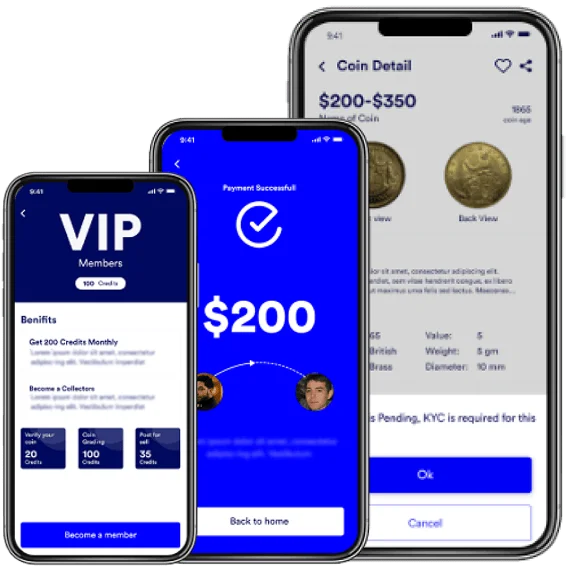
Computer Vision for Collectible Coins
Collectors waited weeks for manual coin grading. SoluLab built a deep learning model that evaluates coins from high-definition images, recognizes authenticity markers and fine details, and returns a grade in seconds through a simple upload dashboard, with blockchain-secured certificates for ownership tracking.
accuracy in automated grading
per grade instead of weeks of manual review
of active collectors at launch
 02
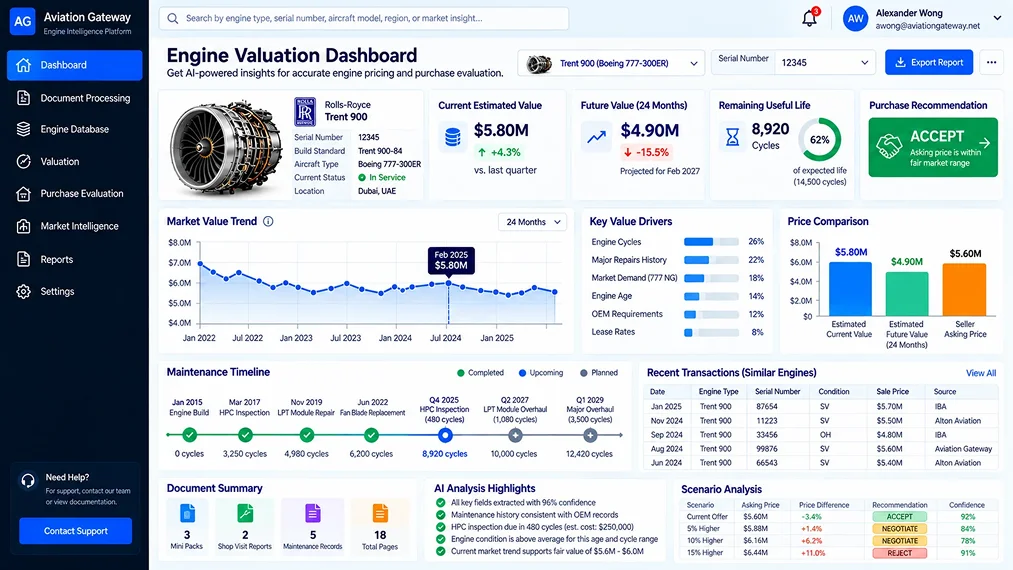
Aircraft Engine Valuation and Purchase Intelligence
Engine buyers valued assets from scanned maintenance records that vary by manufacturer and repair shop. SoluLab built OCR and NLP extraction, XGBoost and Random Forest valuation models, Prophet and LSTM value forecasting, and explainable purchase recommendations that compare asking price with predicted fair value.
engine valuation error (RMSE)
document extraction accuracy
faster engine evaluation
 03
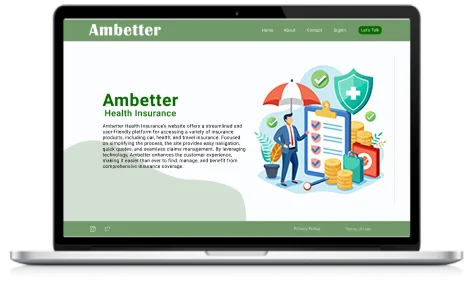
ML Fraud Detection and Claims Automation
Ambetter, an insurance provider in India, faced growing claim volumes, slow and inconsistent settlements, fraudulent claims and manual, error-prone underwriting. SoluLab built fraud detection models that analyze claim data for suspicious patterns, automated claims processing from submission to settlement, ML-driven underwriting decisions and a generative AI assistant for policy and claims questions.
of fraudulent claims identified and prevented
faster average claims processing
higher customer satisfaction scores

Your data already holds patterns worth money.
The question is which ones, and whether a model can
find
them
reliably enough to trust. Let's find out on your data, not a demo.
Companies choose SoluLab for AI and machine learning consulting because the consultants who scope your use case also build and run the model. You get published pricing, a baseline gate before production, MLOps from day one, 40+ ML projects of delivery experience and a Clutch rating of 4.9 from 55 reviews.
The same team that scopes your use case trains, deploys and monitors the model, so nothing gets lost in a hand-off.
A model has to beat your current process on held-out data before we spend your production budget.

We pick XGBoost, a CNN or an LLM on accuracy and cost, not on what's fashionable.
Monitoring, drift alerts and retraining are planned before launch, with support from $2,000 a month.
Bias testing, explainability and NIST AI RMF mapping for regulated decisions.

NDA plus an MSA assigning IP from the first commit, including models, features and training code.

"Rajat has spent more than 14 years building platforms used by millions of people. Before co-founding SoluLab, he was a principal software architect at Citrix, where he led enterprise mobile engineering. He heads SoluLab's 50+ member technical organization and reviews every ML engagement for data feasibility, production architecture, and running cost."
SoluLab brought together document intelligence, predictive analytics, and a practical decision workflow for a highly complex aviation use case. The solution gave our team a structured way to evaluate engine condition, value, and purchase risk from multiple data sources.

Managing Partner, Aviation Gateway
SoluLab helped us bring AI directly into the banking experience. From customer onboarding and account assistance to money transfers and card requests, the AI chatbot and voice agents gave customers a much faster way to complete everyday banking tasks. The solution helped us reduce onboarding time while taking significant pressure off our support teams.

CEO, Amanbank
SoluLab successfully delivered the AI automation system we needed for our FinTech platform. Their team understood how to translate complex business workflows into practical AI agents and worked closely with us throughout development. The result was a much more streamlined approach to automating tasks that previously required significant manual effort.

Co-Founder, FinTech Platform
AI and machine learning consulting helps a business find where predictive models, computer vision, NLP or generative AI can create measurable value, test those ideas on real data, and deploy the ones that work. A good engagement covers strategy, data readiness, model development, MLOps and governance, and ends with a working model or a clear no.
Automation follows fixed rules people write. AI is the broad field of systems that perform tasks needing human-like judgment. Machine learning is the part of AI that learns patterns from data rather than following hand-written rules. Use automation when rules are stable and ML when patterns are too complex or change too often to write down.
Knowledge-based AI uses rules and facts written by experts, so every decision is traceable but limited to what it's told. Machine learning learns from examples, handling messy and changing patterns but needing good data and monitoring. Regulated decisions often combine both: the ML model proposes an outcome and a rules layer enforces policy limits.
Pick one high-value problem, audit the data behind it, and build a proof of concept on real data in 4 to 8 weeks. Validate it against your current process on held-out data, deploy it into the systems people already use, and monitor accuracy and drift with planned retraining. Expand to the next use case only after the first pays off.
With SoluLab, an AI readiness assessment costs $5,000 to $20,000 and an ML proof of concept $10,000 to $20,000. Production models typically run $20,000 to $50,000, computer vision or NLP solutions $35,000 to $80,000, and enterprise ML platforms $50,000 to $150,000 or more, with MLOps support from $2,000 a month.
A readiness assessment takes 2 to 4 weeks and a proof of concept 4 to 8 weeks. Taking a model to production usually takes 8 to 12 weeks, computer vision or NLP systems 10 to 16 weeks, and enterprise ML platforms 14 to 20 weeks or more, depending on data quality and integrations.
Agree one business metric before training starts, such as forecast error, fraud losses, review hours or conversion rate, and measure the current baseline. The model must beat that baseline on held-out data before production, then results are tracked in production against the same metric, net of build and running costs.
No. Many clients start without one. Consultants can run the readiness assessment, data work, model build and MLOps, then train your engineers to own the system. What you do need is a business owner for the outcome and access to the data, since those can't be outsourced.
Use classical ML, such as gradient boosting or CNNs, for predictions, scores and image classification on structured or labeled data; it's usually cheaper and more explainable. Use generative AI for drafting, summarizing and answering questions from text. Many products combine them, and the choice should come from accuracy and cost on your data.
Ask for models running in production with published metrics, a fixed-price proof of concept, a baseline the model must beat before deployment, a plan for MLOps and drift, clear IP ownership, and named engineers on your project. Firms that only deliver strategy decks or won't price the first stage carry more risk.
Yes. SoluLab's MLOps support covers monitoring accuracy, drift and data quality, retraining on schedule or alert, model upgrades and incident handling, typically $2,000 to $8,000 a month depending on the number of models and how often they retrain. Your team gets dashboards and runbooks so it can take over when ready.
Yes, though they overlap. Consulting decides what to build and whether the data supports it, and ends with a validated proof of concept and roadmap. Development builds and scales the production system. SoluLab offers both, so one team carries the work from strategy through machine learning development.

Learn how asset tokenization may evolve, with insights into real estate, funds, digital securities, compliance, and market growth across sectors.

Tokenized assets secondary market explained: how trading, settlement and liquidity work, from venues and DvP to compliance and marketplace design for RWAs.

Wallet whitelisting for tokenized securities explained: how wallets are KYC-verified, approved and enforced on-chain, plus designs, pitfalls and FAQs.