Nobody enjoys “press 3 for billing.” Voice AI is quietly killing that experience, and customer support is where it’s happening fastest. More and more companies are building conversational AI and voice-activated chatbots into how they handle customers. The pitch is simple: fast, personal, low-effort service on whatever channel the customer happens to be using. People just talk. They get an answer. No hold music, no maze of phone menus.
And as voice-enabled chatbots get better, those conversations will feel more intuitive and more human. The companies that move early get a real head start on the kind of experience that keeps customers happy and coming back. This guide looks at how voice chatbots are actually improving customer experience, and what it takes to build one that works.
The Evolution of Voice AI: From Early Beginnings to Mainstream Adoption
Siri and Alexa feel recent. The idea behind them is not. Back in 1952, Bell Labs built Audrey, the first speech recognition machine, and all it could do was understand spoken numbers. IBM followed in 1961 with Shoebox, the first digital speech recognition tool, which could make sense of 16 words and 9 digits.
Then came ELIZA. In the 1960s, MIT professor Joseph Weizenbaum created it as the first conversational chatbot. Crude by any modern standard, sure. But it proved a computer could hold something like a dialogue.
For decades after that, progress in voice and speech processing was slow and steady. The turning point was 2010, when Apple unveiled Siri. An assistant that understood natural language, in your pocket: that was the moment voice tech went mainstream.
The rest of big tech piled in. Google Now arrived in 2012, Microsoft Cortana in 2014. That same year Amazon launched Alexa and its Echo devices, and voice assistants were officially a consumer product.
Now the voice-activated chatbot is one of the fastest-moving areas in tech. Big companies and startups alike are pouring money into speech recognition, voice bots and other voice-driven AI. Keep improving the technology at this pace and voice could easily become the main way people talk to computers.
Voice-Activated Chatbot: A Brief Introduction
So what is one, exactly? A voice-activated chatbot is a kind of conversational AI that lets a business hold natural, spoken conversations with its customers. You’ll also hear them called voice assistants or voice agents. They run on speech recognition to pick up what someone said, and on fairly involved natural language processing to work out what that person is actually asking.
A good one grasps context and intent the way a person would. It answers out loud, in plain language, so the whole exchange feels smooth and obvious rather than mechanical. You want information, you want a task done, you want a problem fixed? You just say it, the way you’d say it to someone across the counter.
People already talk to their smart devices, so voice support fits right in. No fumbling with a tiny keyboard. Customers can ask about a product, check its specs, or sort out an order problem just by speaking. Chatbot Voice offer that convenience, with instant answers, 24/7.
One thing to clear up. Voice chatbots aren’t the same as the Siri or Alexa sitting on your kitchen counter. Both rely on natural language processing, but they do different jobs:
- Voice assistants run smart home devices, live on hardware like smart speakers, and act as a front door to apps and services.
- Voice chatbots are built for customer service. They suggest the right products, explain specs, take orders, and fix problems for customers who are just talking normally.
Voice assistants are handy for your own errands. Voice chatbots are what let a business offer hands-free, personal, on-demand service, which is exactly what customers have started to expect. Get chatbot voice technology in place and you can pull ahead of others in your industry.
Read More: Voice-Activated AI App Development
How Does the Voice-Enabled Chatbot Work?
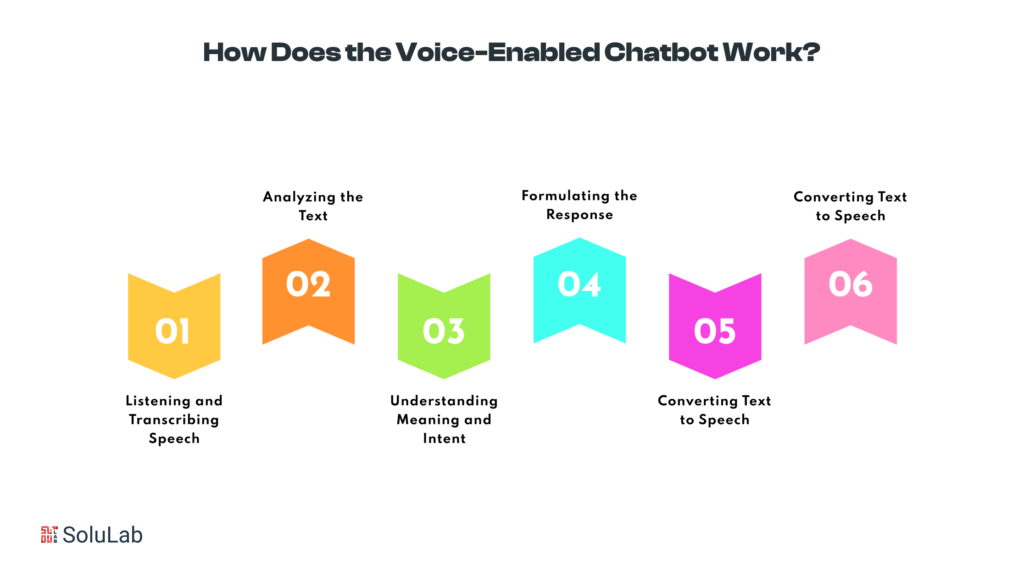
Talking to voice-powered AI chatbots can feel a bit like magic. It isn’t. Under the hood it’s a pipeline, and once you see the steps, it makes a lot more sense. Here’s the simplified version:
Listening and Transcribing Speech
Step one is hearing. Automated speech recognition (ASR) listens to what the user says and turns it into text. The better ASR engines cope with different languages and accents, and they strip out background noise too.
Analyzing the Text
Next, the text gets chopped into smaller pieces. Those pieces run through several rounds of processing, including neural networks that loosely imitate how the human brain handles information.
Understanding Meaning and Intent
This is the hard part. Using natural language processing and understanding (NLP/NLU), the bot works out what the person really means, reading intent from context instead of just matching words. And the NLU keeps getting sharper the more conversations it sees.
Formulating the Response
Once it understands the question, the voice-enabled chatbot picks the best answer from a set of pre-programmed options. Whichever reply fits the question most precisely wins.
Converting Text to Speech
Then the text answer becomes speech that sounds natural. You can tune the text-to-speech engine to sound like real human voices, regional dialects included.
Continuing the Conversation
Last, memory. The chatbot voice keeps a record of the conversation so things stay coherent over several back-and-forths, and the customer doesn’t have to start over.
Advantages of Voice-Activated Chatbots
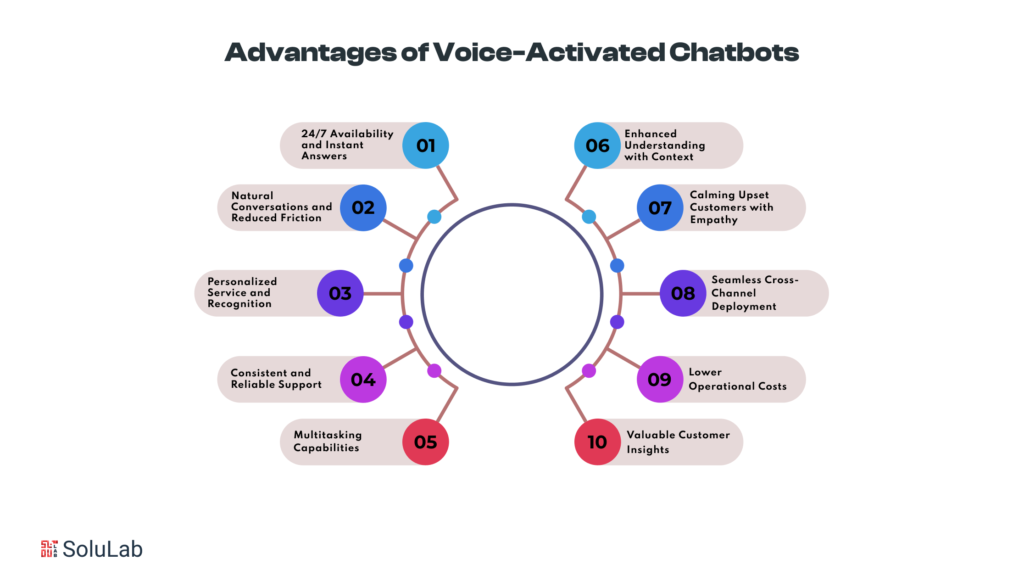
24/7 Availability and Instant Answers
Human agents clock out. Bots don’t. Voice-enabled chatbots keep customer service running around the clock, so nobody has to wait until the next business day for an answer. They pick up every inquiry immediately, which means no hold time at all. For the customer, that’s a big deal: problems get fixed when they come up, not squeezed into a narrow window of support hours.
Natural Conversations and Reduced Friction
With speech recognition and natural language processing, the conversation can wander a little and still work. Customers talk the way they would to a live agent, in their own words, with their own vocabulary. Nobody has to crawl through a phone tree or peck out a question on a small phone screen. Take out that friction and the whole exchange starts to feel smooth, and surprisingly human.
Personalized Service and Recognition
Hook the bot up to customer data and it can remember preferences and make recommendations that actually fit. It might bring up something a customer bought before and suggest related items. Or a returning customer asks where their order is, and the bot pulls their record and gives an update on those specific orders. That’s the moment people feel recognized, not processed.
Consistent and Reliable Support
People have bad days. A rep who’s tired or distracted gives uneven service. Chatbot voice deliver the same standard answers at the same service level every time. The virtual agent doesn’t drift. Every caller talks to the same dependable system, so the variation that humans naturally bring disappears. Customers know what quality to expect.
Multitasking Capabilities
A human rep can realistically juggle a few customers at a time. A voice chatbot can handle hundreds, even thousands, all at once. Parallel processing means no bottleneck when demand spikes at peak hours. Scale is built in from the start. Replies stay fast, and customers stay calm.
Enhanced Understanding with Context
Modern natural language processing applications lets a voice bot really understand a question by weighing the full context, the customer’s sentiment, and their intent. It isn’t just spotting keywords. It gets what the person means and answers that. Fewer misunderstandings, fewer bad experiences, and far fewer customers stuck repeating themselves.
Calming Upset Customers with Empathy
Angry callers are a fact of support life. A voice-activated chatbot can use tone analysis to notice that someone is upset, then switch to carefully written dialogue meant to settle things down and steer the call somewhere positive. Say it apologizes for the hassle and offers to help sort it out. Small move. But it builds trust and takes the heat out of a tense moment.
Seamless Cross-Channel Deployment
Conversational voice AI can run on phones, website chat, mobile apps and smart speakers, giving customers one consistent experience. Someone might start on a phone call and pick it up again with the chatbot in their mobile browser, without missing a beat. Because it’s all one connected platform, they never have to repeat themselves from channel to channel.
Lower Operational Costs
Hand the routine work to the bot: order status, account updates, product Q&A and the like. Human agents end up fielding far fewer inquiries, so you need fewer staff and carry less overhead. And because the bots scale without limit, the automation keeps costs in check as volume grows.
Valuable Customer Insights
Here’s the benefit teams tend to underrate. Every conversation with a voice chatbot throws off useful data. Dashboards can track what people talk about, which questions got resolved and which didn’t, recurring pain points, how products are perceived, and plenty more. That’s an unusually clear view of what customers actually think, and you can use it to adjust products, services and marketing quickly, based on what they told you in their own voice.
Voice-Enabled Chatbot Trends and Predictions
Voice bots used to be stiff. They could handle a narrow script and not much else. Thanks to progress in artificial intelligence, today’s voice AI draws on large datasets and natural language processing to hold smooth, natural conversations. As the tech keeps maturing, a handful of trends are pushing adoption up:
Voice AI is becoming more advanced and human-like
Every new interaction is more training data. So voice chatbots keep getting better at handling real speech, with all its mess and complexity. They sound less robotic and more like someone you’d actually talk to. Users relax, and they come away happier.
Growing consumer awareness and demand
Smart speakers and assistants like Alexa are everywhere now, and that has changed what customers expect from brands: hands-free, voice-first contact. Voice AI answers faster, surfaces better insights, and costs less. Millennials are especially keen, with 35.8% using voice assistants monthly [SOURCE NEEDED].
Integration with the Internet of Things
Connected devices keep multiplying, and voice chatbots give people a hands-free way to run them. As Internet of Things (IoT) takes off in places like India and Latin America, conversational AI makes controlling it feel natural. The global count of IoT devices is predicted to more than triple between 2020 and 2030 [SOURCE NEEDED].
Enhanced security and privacy
Data protection has moved to the top of the list for voice AI. The more advanced systems can recognize individual voices and lock down personal information, which matters a lot to users who are nervous about sharing private details. Studies show AI security can cut breach costs by over 50% [SOURCE NEEDED].
Add it all up and voice chatbots look set to become a favorite way for customers to reach businesses, across pretty much every industry. Companies that get conversational AI working early will have the edge. Customer experience is starting to talk back.
How to Come Up With Your Voice-Enabled Chatbot?
Rolling out voice-enabled chatbots can change how you engage customers in a big way. Doing it well, though, takes planning and some hard choices up front. In practice, this is where a lot of teams stumble. The tips below will help you build voice bots that sound natural, fix real pain points, and make customers like your brand more, not less.
Start with a Clear Voice Strategy
Don’t start building before you know why. What’s the voice chatbot supposed to do for you? Squeeze more efficiency out of operations by automating processes? Build a closer connection with customers? Position your brand as the one out front on new technology? Write the goals down first, then design the assistant around them. Everything else in the project hangs off that focus.
Pinpoint Customer Experience Gaps
Voice is best at fixing specific annoyances in the customer journey. So go find them. Research properly where your customer experience breaks down. Look hard at the everyday touchpoints: changing an order, checking its status, updating preferences. Wherever a clunky process could be replaced with a quick spoken request, that’s your target. Fix those first.
Define Your Voice Bot’s Personality
Text bots have a hard time showing personality. Voice bots don’t: tone, word choice and the rhythm of the conversation all carry it. So pick an attitude. Serious and professional, or relaxed and a bit fun? Should the bot anticipate what users need, or wait to be asked? Let that decision shape the voice itself, the phrasing, how it says hello, and how it handles small talk. The aim is a conversation people actually enjoy.
Choose the Right Platform
Pick the wrong platform and nothing else you do will save the project. Look for omni-channel support so voice can go live across all your touchpoints. Ideally it builds on what you already have, either extending your current chatbots or giving you one integrated system. You’ll need strong tools for tuning complicated conversation flows, plus simple visual design. Check for solid AI that improves understanding and keeps learning. Good natural language processing is what copes with the endless ways users phrase things. And the APIs should plug cleanly into your backend systems. The right platform gets both the voice side and the general chatbot mechanics right.
Use Of Voice Enabled Chatbots Across Industries
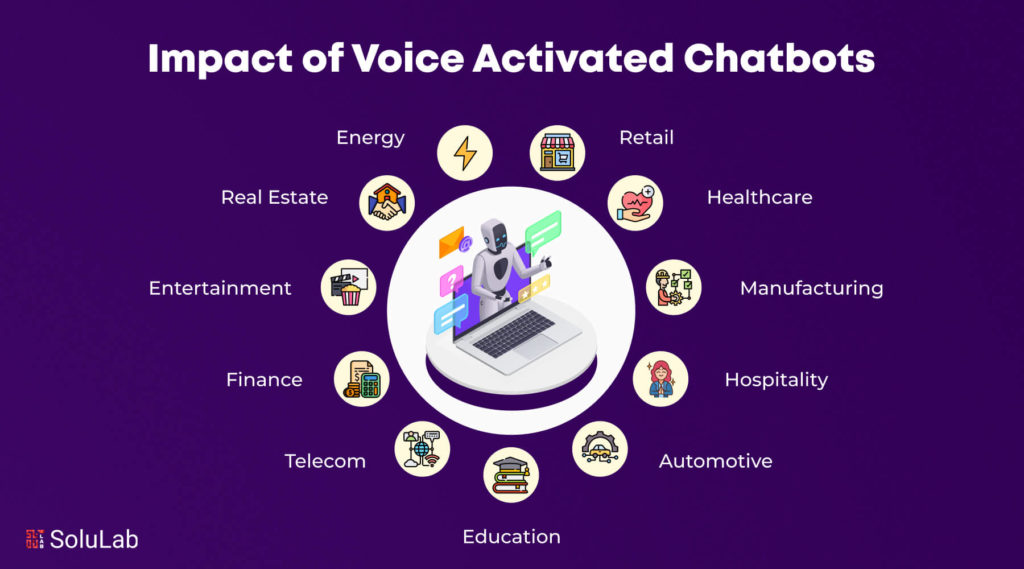
Voice-enabled chatbot technology is reshaping all kinds of industries, changing how they talk to customers, cutting friction out of operations, and making room for new ideas. Here’s how different sectors are putting it to work:
1. Retail – Voice Chat Bots give online shoppers round-the-clock help, from personal recommendations to getting the purchase over the line. Interactive conversations push sales up.
Related: AI in Real Estate
2. Healthcare – Virtual health assistants book appointments, answer patient questions and send medication reminders. Patients get better care, and staff get some breathing room.
3. Finance – Voice-enabled chatbots help people manage accounts, share financial tips, and make voice-activated banking possible for extra security. The service feels tailored to each customer.
4. Hospitality – Hotels and travel brands use Voice AI to handle bookings, suggest things to do, and play the role of an interactive concierge that makes a stay memorable.
5. Automotive – Drivers control navigation, entertainment and vehicle diagnostics without taking their hands off the wheel. Safer, and easier.
6. Education – AI in Education help students pick courses, get homework support, and learn at their own pace. Admin work gets automated, which frees up more time for teachers and students to actually interact.
7. Telecom – Customers troubleshoot network problems, manage their accounts and look into new services by talking to a conversational agent. Fewer calls hit the call center.
8. Manufacturing – Intelligent chatbots keep an eye on equipment, predict when maintenance is due, and warn workers about likely problems. Efficiency goes up, and so does uptime.
9. Entertainment – Interactive AI recommends shows, content and games based on what each person likes, changing how people experience media platforms.
10. Real Estate – Chatbots bring in leads by answering questions about properties and booking viewings for buyers and renters.
11. Energy – Virtual agents let customers check bills, report outages and get tips on saving energy, and customers come away more satisfied.
Best Practices for Using Voice-Enabled Chatbots
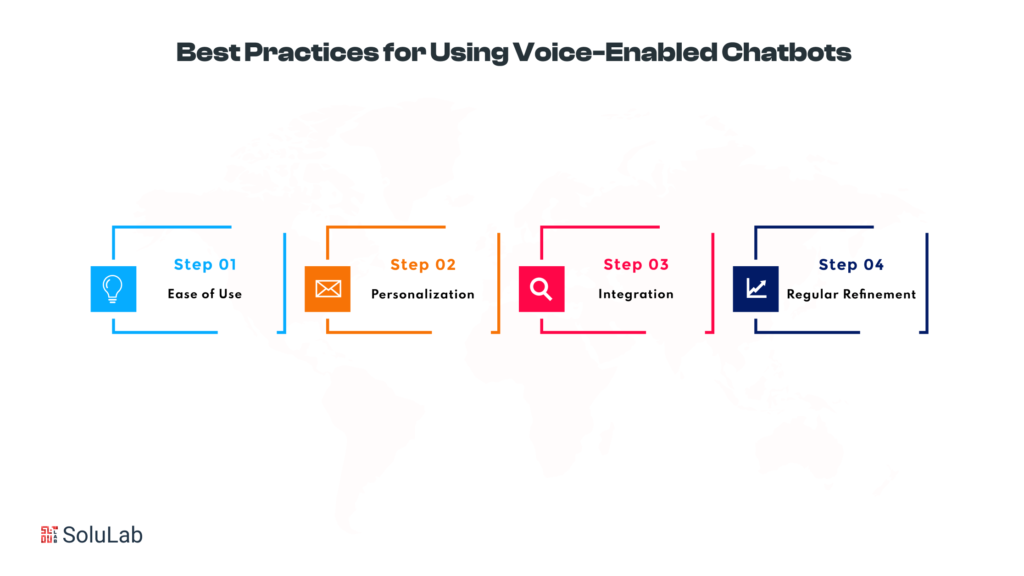
Ease of Use
If you want chatbots to help win customers, they have to be easy. Painfully easy. Design with the customer in mind from the first screen, and keep the interface simple and friendly.
Personalization
Shape the bot around each customer’s needs and preferences. That personal touch builds stronger relationships and makes the whole experience better.
Integration
Don’t let the chatbot live on an island. Connect it to your other support channels, like email and phone, so customers can get help wherever they prefer.
Regular Refinement
Launch day is the start, not the finish. Review and improve the bot on a regular schedule as customer needs shift. That might mean fresh training data, new features, or tweaks to the interface.
Future Of Voice Chatbots In Customer Acquisition
Where is this heading for customer acquisition? Somewhere good, it looks like. New advances in artificial intelligence keep opening up creative ways to give customers experiences that are highly personal and effortless.
Start with support. One of the clearest benefits of voice chatbots is customer support and service. As natural language processing gets more sophisticated, chatbots will get steadily better at catching the context and subtle shades in what customers ask for. That means answers that are tailored and actually solve the problem, which builds trust and loyalty faster than traditional support channels manage to.
Then there’s prediction. As chatbots pick up predictive abilities through machine learning, service will shift from reactive to proactive. By studying earlier conversations and purchase history, a bot will be able to guess what a customer needs and offer a recommendation or fix before they even ask. Done right, that’s the kind of thing that makes a customer feel genuinely understood.
And sales. Chatbots can qualify leads through conversational questionnaires and suggest products after an interactive back-and-forth about what the customer likes. Because they can hold a genuine two-way conversation, finding and buying a product stops being a click-through funnel and turns into something closer to a real exchange.
Takeaway
Voice-activated chatbots are a genuine leap, and they’re changing how customer service and customer conversations work. Because they can talk naturally and in real time, businesses can offer instant help and fixes at any hour. Customers like being able to just say what’s wrong, without phone menus and without typing.
Speech recognition, neural processing and natural language skills are all still improving, so voice chatbots will keep getting smoother and more lifelike. Adoption across industries is picking up speed. Businesses that put conversational voice AI to work will stand out on customer experience, and that’s a hard advantage to claw back. Chatbot Voice are where customer engagement is going.
Want a better customer experience? SoluLab’s conversational AI developers can build a custom voice-enabled chatbot made to fit your business. With natural language processing, smooth voice-to-text transcription and machine learning built in, your SoluLabs chatbot development company will talk with customers naturally, understand what they’re asking, and solve it quickly, 24/7.
Customer service is becoming a conversation. With SoluLab’s expertise, you can give your customers voice support that is efficient and personal. Get in touch now!
FAQs
Shipra Garg is a tech-focused content strategist and copywriter specializing in Web3, blockchain, and artificial intelligence. She has worked with startups and enterprise teams to craft high-conversion content that bridges deep tech with business impact. Her work translates complex innovations into clear, credible, and engaging narratives that drive growth and build trust in emerging tech markets.