Trying to pick coins that will still exist in five years? It’s hard.
There are thousands of them now, and most won’t make it past the next round of regulation.
Here’s the thing. Finance is changing, and not every token was built for a world where banks and regulators actually have a say. A handful were. ISO 20022 is the messaging standard that banks are moving to, and it’s quietly turning into the connective tissue between old-school finance and digital assets. A small group of cryptocurrencies already speak that language.
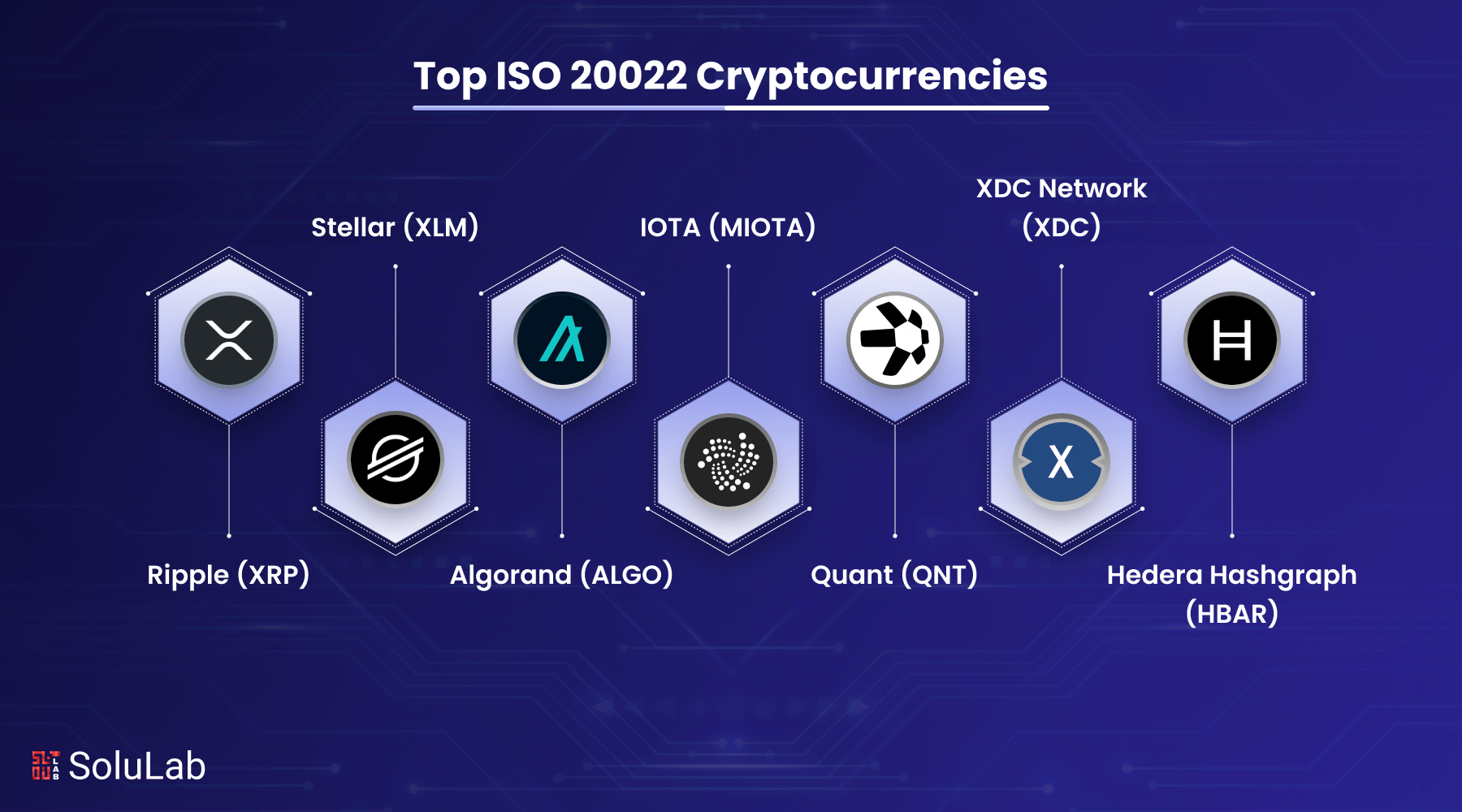
So this post walks through the Top 8 ISO 20022-Compliant Cryptocurrencies worth watching in 2026, coins that were designed to work with the plumbing of finance rather than pick a fight with it.
What is ISO 20022?
ISO 20022 is a standard for how financial institutions exchange information. It gives payments, securities trades, and fund transfers one common message format, so systems stay structured, efficient, and able to talk to each other.
Put plainly: it lets different financial systems speak the same language. Fewer errors. More transparency. Faster settlement.
Traditional finance already runs on it. Banks, payment processors, that crowd. And now ISO 20022 coins and crypto are picking it up too, which pulls them closer to the big cross-border messaging systems like SWIFT and SEPA. What you get out of that is cleaner cross-border payments, easier compliance, and processing that happens in real time.
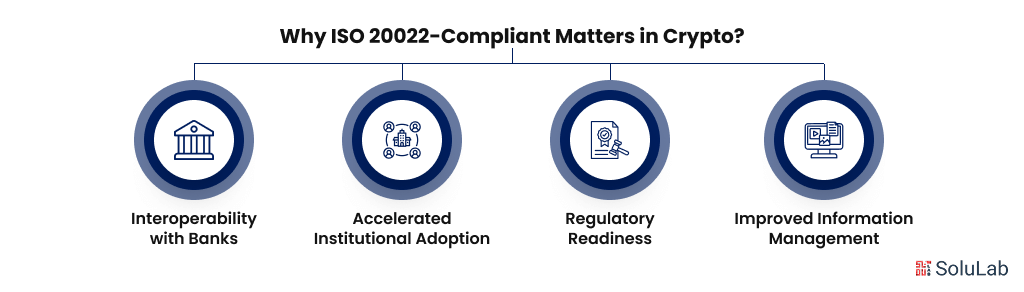
Why ISO 20022-Compliant Matters in Crypto?
ISO 20022 is the standard banks worldwide use to pass around data-rich, secure, well-structured messages. As traditional finance shifts to it, the cryptocurrencies that already comply are the ones with a head start.
Why does that matter? A few reasons:
- Interoperability with Banks: Compliant coins slot into global banking systems without much friction, which makes them a natural fit for payments and institutional use.
- Regulatory Readiness: Coins built on ISO 20022 have a better shot at meeting the rules that are coming. Governments like that. So do the big investors.
- Accelerated Institutional Adoption: If a coin already fits the ISO standard, financial institutions are far more likely to actually pick it up.
- Improved information management: Richer transaction data feeds automation, catches fraud earlier, and makes compliance less of a scramble.
Top 8 ISO 20022-Compliant Cryptocurrencies of 2026
As more than 70 countries back the standard, ISO-aligned coins should see wider use and more trust, institutions especially. Here are the ones worth knowing:
Cardano (ADA)
Cardano (ADA) runs a secure, efficient platform for developing smart contracts and dApps. It was built to improve on the blockchains that came before it, with interoperability, sustainability, and scalability as the priorities.
Two layers do the heavy lifting. The Cardano Settlement Layer (CSL) handles the actual transactions, and the Cardano Computation Layer (CCL) runs the smart contracts. Holding it all together is Ouroboros, a Proof-of-Stake system that pays out rewards to people who stake their ADA.
Ripple (XRP)
Ripple (XRP) is a digital payment system built to make international transfers less painful. Instead of energy-hungry mining, it uses the Ripple Protocol Consensus Algorithm (RPCA), where trusted nodes confirm payments quickly.
For crypto-friendly banks and other financial firms, Ripple is a cheaper alternative to the old SWIFT rails, moving money across borders fast. Inside the network, XRP acts as a bridge currency, letting one fiat currency swap for another without friction through the XRP / USD pair.
Stellar (XLM)
Stellar (XLM) is a decentralized payment network aimed at financial inclusion and cheap cross-border transactions. Its Ripple-based infrastructure links banks, payment processors, and everyday users around the world. And rather than mining, it confirms transactions almost instantly through a set of trusted nodes running the Stellar Consensus Protocol (SCP).
Lumens (XLM) are what bridge currencies on the network and smooth out cross-border transfers. They also keep spam in check. Stellar leans into small transactions and lets people build digital assets on its decentralized exchange. For anyone without a bank account, financial services opens up money transfers and tokenized assets.
Algorand (ALGO)
Algorand (ALGO) is a platform for dApp development. It’s decentralized, and it validates transactions with Pure Proof of Stake (PPoS). What PPoS does is give every user an equal shot at producing and checking new blocks, which keeps the network secure while burning far less energy than mining-based chains.
ALGO is the token that moves through it all, confirming transactions and rewarding participants. Because the network chews through a lot of transactions at once, it fits financial services, DeFi, and asset tokenization well. Safe, fast, and efficient. That combination keeps it in the conversation.
IOTA (MIOTA)
IOTA (MIOTA) is a ledger built for the Internet of Things. Its biggest recent shift is “IOTA Rebased,” a rework proposed by the IOTA Foundation that moves the network off a Layer 1 blockchain and onto a Move-based object ledger.
The point of the change is scale, more decentralization, and programmability. Developers can now build dApps directly on the main network. Layer 1 smart contracts get written in Move, and that makes blockchain applications simpler across supply chains, asset tokenization, and digital identity.
Quant (QNT)
Quant (QNT) exists to get different blockchains, and traditional financial institutions, talking to each other. Its core platform, Overledger, handles data sharing, cross-chain operations, and building dApps that span several blockchains at once.
By letting blockchains exchange value and messages safely, Overledger boosts scalability, liquidity, and overall functionality across the sector. QNT is the token that powers it. You use it to pay transaction fees, reach Overledger services, and reward the people keeping the network running. Supply is fixed, so QNT is deflationary by design, and that tends to push its value up.
XDC Network (XDC)
XDC Network (XDC) targets supply chain management, trade finance, and secure cross-border transactions. It’s built on the XinFin Composite Blockchain, which blends public and private blockchain elements into one flexible, connected system.
To keep confirmations quick while staying secure and decentralized, XDC runs XinFin Delegated Proof of Stake (XDPoS). The XDC token pays for transactions, unlocks platform services, and gives holders a vote in network decisions. The whole project leans practical, with logistics and trade finance front and center.
Hedera Hashgraph (HBAR)
Hedera Hashgraph (HBAR) uses the Hashgraph consensus method to deliver speed, security, and fairness. It backs the building and running of decentralized applications (dApps) across social networking, gaming, supply chains, and banking.
Instead of a conventional blockchain, Hedera reaches consensus through a directed acyclic graph (DAG). That means faster transactions and very little power drawn. HBAR, the network token, gets staked to secure the network, pays transaction fees, and carries a vote in governance. Fixed supply plus a deflationary approach helps it hold value.
Benefits of ISO 20022 Compliance For Crypto
ISO 20022 is reshaping how traditional finance talks to crypto. It brings order, transparency, and a shared vocabulary, and that makes digital assets more effective, more compliant, and more trustworthy inside the wider financial system.
1. Increased Cross-Border Payment Efficiency: By tidying up message structures, ISO 20022 cuts the friction out of cross-border payments. Crypto payments land faster, cost less, and carry fewer mistakes, and blockchain networks start to interoperate smoothly with financial institutions worldwide.
2. Regulatory and Institutional Alignment: Standardized messaging makes it far easier for crypto platforms to hit global compliance benchmarks. That, in turn, gives institutional players the confidence to step in, knowing their operations sit inside what regulators expect.
3. Trust and Fairness: When data is structured and standardized, transactions become easy to trace and audit. That transparency shrinks the room for fraud and builds trust between users, regulators, and the financial partners working with crypto assets.
4. Improved Compatibility with the Legacy Finance (TradFi): ISO 20022 closes the gap between blockchain and legacy systems. Crypto users can plug into bank and financial infrastructure more easily, and that speeds up mainstream adoption of digital currencies.
How will ISO 20022 Impact Crypto Regulation in 2026?
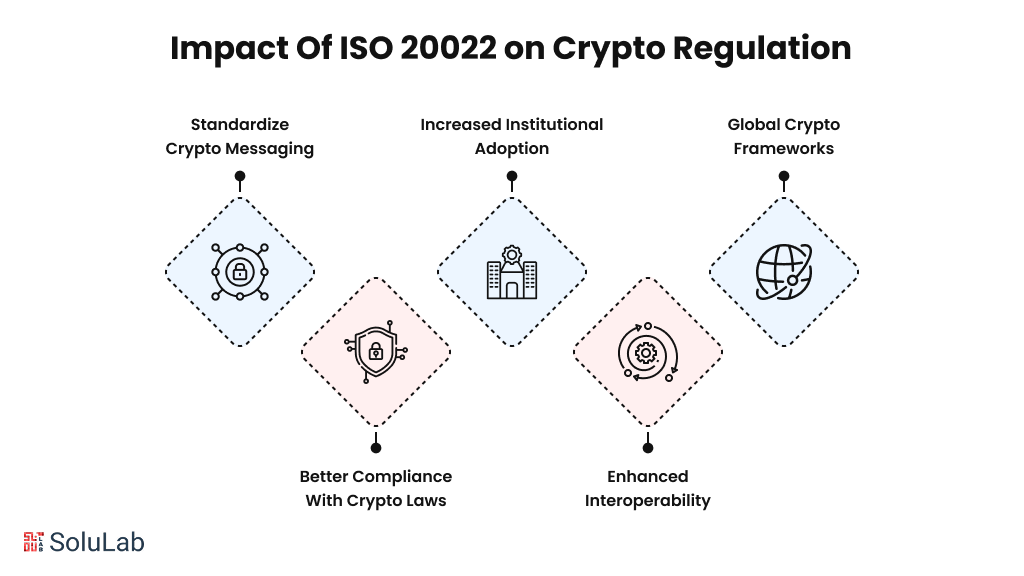
ISO 20022 could shift how crypto is regulated and folded into finance in 2026. Here’s what to keep in mind:
- ISO 20022 will standardize crypto messaging: The standard hands financial institutions one universal message format. Apply that to crypto transactions and communication gets simpler, errors drop, and transparency climbs, which makes it much easier for crypto rules to form across global markets.
- Better compliance with cryptocurrency laws and regulations: Clear transaction metadata and structured data let regulators spot suspicious activity. That helps cryptocurrency development firms stay on the right side of cryptocurrency laws and regulations while earning trust.
- Increased institutional adoption of cryptocurrency: ISO 20022 lines crypto up with the protocols traditional finance already runs on. So banks and large institutions may feel safer stepping into the market, and that nudges crypto toward the mainstream.
- Enhanced interoperability across platforms: Richer data formats mean crypto exchanges, banks, and payment providers can actually talk to one another. The result is a more integrated financial system where digital assets move freely.
- Encouragement for more global crypto frameworks: As more countries adopt ISO 20022, it pushes crypto regulation forward and helps a global framework take shape, which eases cross-border compliance and makes launching crypto services abroad simpler.
Conclusion
As the global financial system tilts toward ISO 20022, the coins that already align with it are drawing real attention. Better interoperability, faster cross-border transactions, and a genuine chance to reshape how value travels around the world.
Investors, developers, institutions: watching this list of ISO 20022-compliant cryptocurrencies through 2026 isn’t only smart. It’s strategic. As things move quickly, these coins could end up being the ones that stitch crypto together with mainstream finance.
NovaPay Nexus partnered with SoluLab to add multi-crypto support, tighten security, and build an interface people actually want to use. The result? A decentralized, fee-free payment solution that hands businesses full control and privacy. NovaPay Nexus is now driving wider adoption of ISO-compliant cryptocurrencies across industries, changing how secure digital payments get made.
SoluLab, a top cryptocurrency development company, can help turn your blockchain idea into something real. Got one in mind? Let’s talk.
FAQ
Shipra Garg is a tech-focused content strategist and copywriter specializing in Web3, blockchain, and artificial intelligence. She has worked with startups and enterprise teams to craft high-conversion content that bridges deep tech with business impact. Her work translates complex innovations into clear, credible, and engaging narratives that drive growth and build trust in emerging tech markets.