Most companies are not short on data. They are short on answers. A Retrieval-Augmented Generation (RAG) system paired with Agentic AI closes that gap by fetching the right material, working through it, and handing back something usable while the question is still warm. Build it properly and you get agents that query your own records, adjust as they go, and surface what matters about products, integrations, and daily operations.
Some numbers first, since they set the stakes. The global Retrieval-Augmented Generation (RAG) market was valued at USD 1,042.7 million in 2023 and is expected to grow at a CAGR of 44.7% from 2024 to 2030. Advances in natural language processing (NLP) are pushing that curve, along with plain demand for AI systems that actually know things.
Pair RAG with Agentic AI and scattered files stop being dead weight. What follows is a build, not a survey: the pipeline end to end, the reasoning behind each piece, and code you can run.
What is a RAG System?
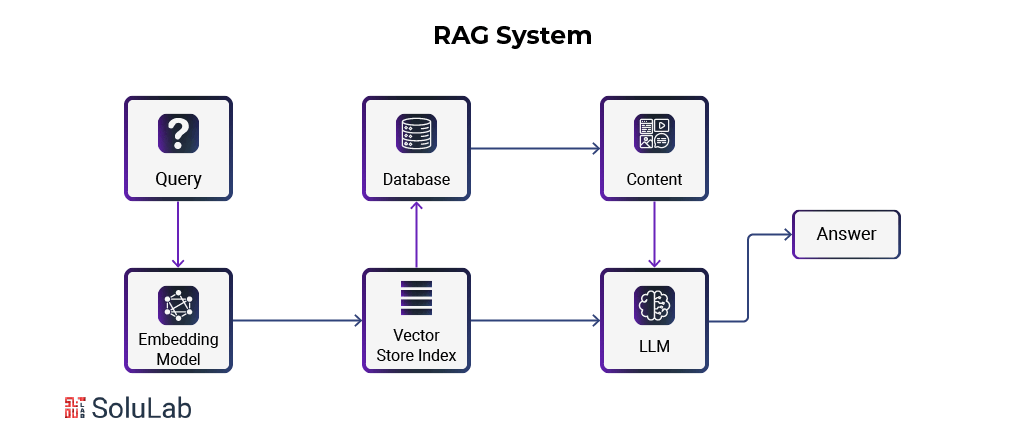
RAG, short for retrieval-augmented generation, is a method for making a large language model’s output genuinely relevant to the person who asked.
large language models (LLMs) have gotten dramatically better at producing content over the past few years. Plenty of executives still feel burned. They expected a jump in productivity and corporate efficiency, and the off-the-shelf tools never delivered what the noise around generative artificial intelligence (gen AI) promised.
Start with the obvious constraint. An LLM knows only the data its provider could get hold of. In any setting that runs on complex, company-specific knowledge, that ceiling shows up fast.
How Does RAG Work?
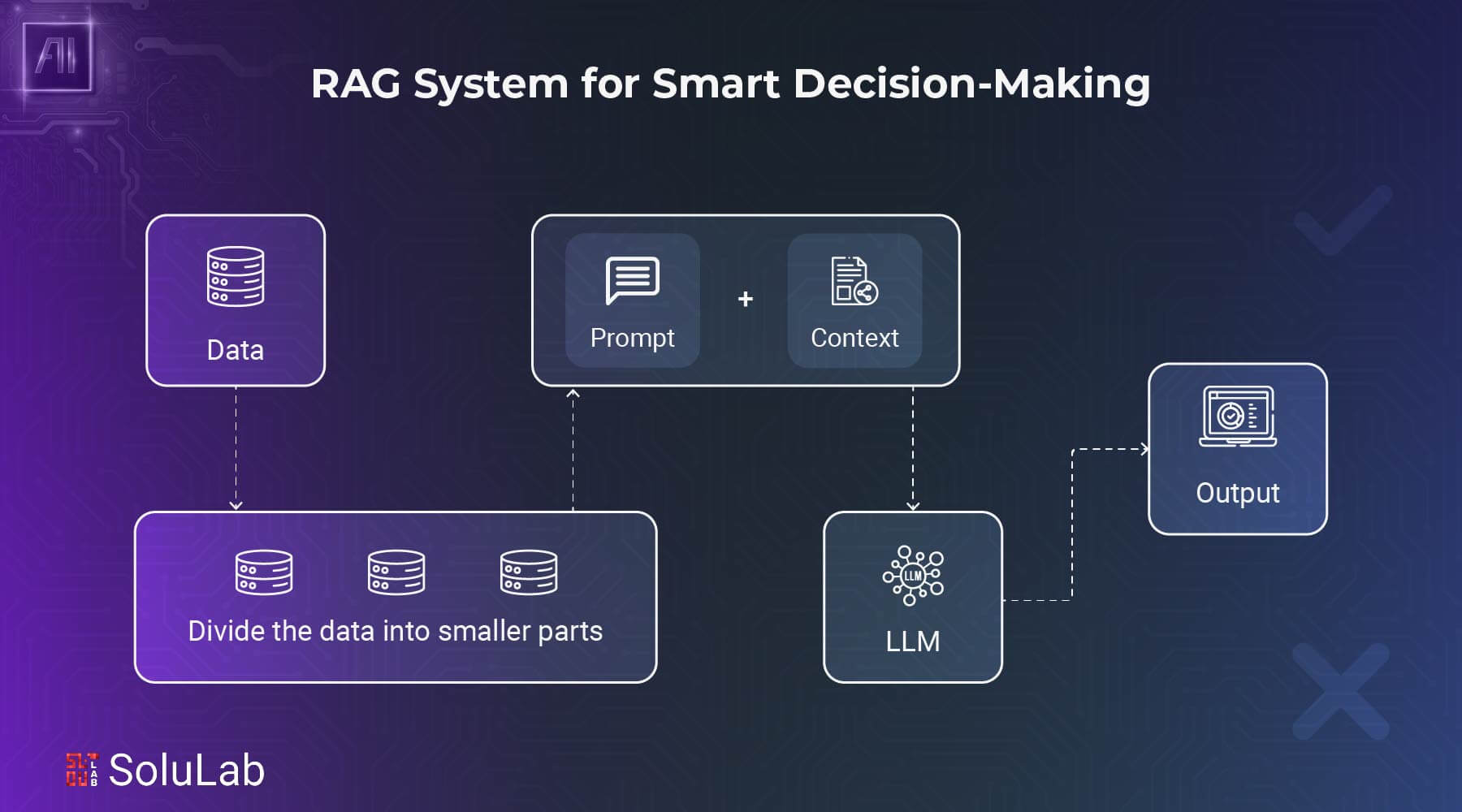
The agentic RAG process has two halves: intake and retrieval. Picture a library holding millions of volumes.
1. Ingestion is the stocking and indexing work. A librarian can find any book in the building because somebody built that index first. Here the index is made of dense vector representations, or “embeddings” (for more, see sidebar, “What are embeddings?”), one for every book, chapter, or paragraph.
2. Once the shelves are full and the index exists, retrieval starts. A question arrives. The librarian checks the index, pulls the books that fit, scans them for the passages that matter, and compresses what she finds into something compact.
3. She keeps the original question in front of her the whole time, which is how she lands on the right material rather than merely related material. That might mean summarizing significant ideas from several sources, quoting an authoritative work, or writing something new out of what the shelves gave up.
4. Those two phases are the reason RAG produces output a typical LLM cannot match. Stocked library, working index, a selector who synthesizes: the answer comes back more relevant and more helpful.
Data Extraction Using BFS and Scraping the Data
Collection comes first. Before any of the clever parts, data from scattered web sources has to be scraped and put in order. Breadth-First Search is a solid tool for finding the pages worth having. BFS walks outward from a primary page, following links one layer at a time, so you gather everything relevant without overloading the system.
This section covers pulling links out of a website with BFS and then scraping what sits behind them. BFS gives us a route through the site, and the result is a dataset the RAG pipeline can actually chew on.
1. Step 1: Link Extraction Using BFS
Gather the links first. BFS reads the homepage, then follows the links it finds on every page after that, going only as deep as you tell it to. Product features, integrations, the small print buried three clicks down: it all gets caught this way.
The code below starts at one URL and expands outward. It fetches the primary page, extracts every link ( tags with href attributes), and follows them to the next layer, widening the search until it hits the depth limit you set.
Step 2: Scraping Data from Extracted Links
Links in hand, now take the text. We want product features, integrations, and anything else that belongs in an organized RAG dataset.
So we loop through the retrieved links and scrape page titles plus the primary content. Want pricing tables or FAQs instead? Point the same code at different selectors and it holds up fine.
Related: Retrieval-Augmented Generation (RAG) vs LLM Fine-Tuning
Automating Information Extraction with AI Agent
So far: a breadth-first search (BFS) crawl and a pile of unfiltered web text. Raw is the problem. Something has to classify that material and pull the useful parts out of it, and that is the job agentic AI takes on. It reads the scraped data and files it into sections that make sense.
Here we look at how Agentic AI finds the product data buried inside everything we scraped.
1. Loading Scraped Data
The first move is getting the raw scraped content into the system. It sits in JSON, as you saw earlier, one entry per URL with its related material attached. The AI cannot touch any of it until the format is right.
Python’s built-in JSON module loads the complete dataset into memory. Every entry carries its source URL and a text_content field holding the raw scraped text. That is what the next phases operate on.
2. Extracting Raw Text Content
Now iterate through the dataset and pull the relevant text for each element. Only legitimate entries carrying the fields we need get through. Anything invalid or half-empty is omitted, which keeps the rest of the process honest.
input_text is the variable holding the raw text on its way to the AI model for further processing. Check that the required keys exist before an entry goes anywhere. In practice, skipping that check is how a run quietly falls apart three hundred entries in.
3. Sending Data to the AI Agent for Processing
With the text extracted, hand it to the AI agent model for structured extraction. We talk to the Groq API through preset prompts that ask for structured insight rather than prose. What comes back is sorted by topic: product features, integrations, troubleshooting techniques.
4. Processing and Collecting Results
The model returns its structured information in chunks. We gather those pieces and concatenate them, so nothing falls on the floor and the final output is whole.
This block appends the material from each chunk onto the pm_points variable, which builds one complete, organized set of insights. The format is plain enough that stakeholders can read it directly or push it straight into further study. A screenshot of the original code’s output sits below, with sensitive data masked.
5. Error Handling and Maintaining Data Integrity
Things break. Missing content, a network problem, a page that returns half a response. Error handling is what keeps every legitimate entry moving through anyway.
The try-except block detects failures and logs them. One bad entry gets flagged for review, and the run carries on instead of dying.
6. Saving the Processed Data
Last step: save the data annotation so it is there when you want it. Once the AI has processed the content and produced structured insights, those findings get written back into a JSON file, each item keeping its own processing detail for later analysis.
The code holds on to the processed data and makes it easy to pull back up. Each entry is stored with its own structured points, so retrieval and analysis stay simple later on.
Retrieval-Augmented Generation Pipeline Implementation
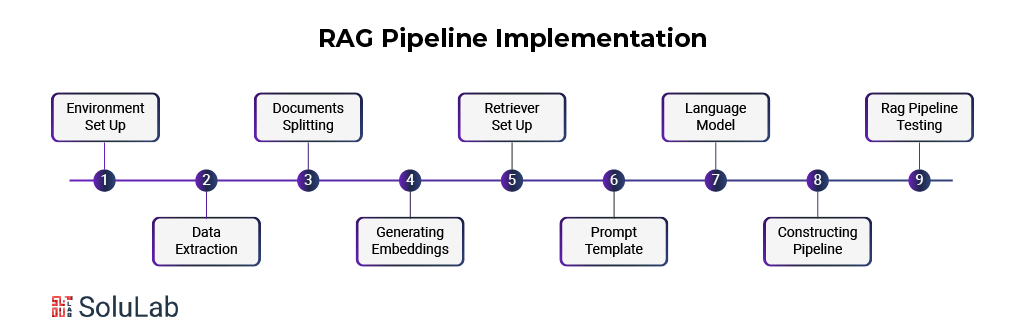
Up to now we have taken web pages apart and turned them into structured forms like JSON. We cleaned the essential data out of the mess, and the dataset is ready for analysis.
1. Setting Up The Environment
These packages carry the load for LangChain document processing, vector processing, and OpenAI model integration. Langchain is the framework behind language model pipelines. jq is a lightweight JSON processor. long-chain-chroma supplies Chroma-based vector storage for document embeddings, and long-chain-open wires in OpenAI models like GPT.
Sentence transformers build the text embeddings using pre-trained transformer models, which is what makes document handling and retrieval efficient.
2. Loading The Extracted Data
JSON Loader picks up the structured data retrieved and processed in the preceding phase. That JSON came off websites, so it likely carries key-value pairs tied to particular subjects or inquiries. This stage loads the extracted data, product capabilities and integrations and features alike, ready for processing.
3. Splitting The Documents Into Smaller Chunks
Raw data in hand, the RecursiveCharacterTextSplitter fragments the document. Why bother? Token limits. No chunk can exceed what the language model will accept.
The RecursiveCharacterTextSplitter breaks a document apart while maintaining overlap between chunks, so context survives the cut. Chunking_size controls how big a chunk gets, and chunk_overlap keeps important material from being severed between two of them. Add_start_index tags each chunk with where it began in the original document, which is how document order stays intact.
4. Generating Embeddings For Document Chunks
Now SentenceTransformer embeds each chunk of text. Those embeddings place the meaning of the text in a high-dimensional vector space, which is what makes later searching and retrieval possible at all.
SentenceTransformer turns text chunks into dense vector representations carrying semantic information. embed_query handles user queries, while embed_documents runs over many documents and returns their embeddings. Chroma, the vector store, holds all of it and serves similarity-based retrieval, so matching a query against a document stays fast and accurate.
5. Setting Up The Retriever
Configure the retriever next. Given a user query, this component finds the text that fits best and returns the top-k most similar documents. It locates the right vector store chunks by similarity search. Set the argument k=6 and you get back the six chunks closest to the query.
6. Creating The Prompt Template
Then a prompt template to shape what the language model sees. It carries the context, meaning the retrieved chunks, alongside the user’s query, and it pushes the model to answer from that context and nothing outside it.
The ChatPromptTemplate structures model input so the demand for context-based answers is explicit. {context} gets swapped for the relevant text, {question} for the user’s query.
7. Setting Up The Language Model
The OpenAI GPT model gets initialized here. Everything it says will be shaped by the structured context the retriever handed over.
Once initialized, the ChatOpenAI model takes the prompt and responds.
We run “GPT-4o-mini” here for efficient processing. Harder tasks justify a larger model.
8. Constructing The Rag Pipeline
Retriever, prompt, and LLM now become one RAG pipeline. It retrieves context, passes that through the model, and returns a response.
From langchain_core.output_parsers we import StrOutputParser, and from langchain_core.runnables, RunnablePassthrough. RunnablePassthrough sends queries straight into the prompt. StrOutputParser cleans and formats the model output into strings.
9. Testing The Rag Pipeline
Last, throw real user queries at it. For each one the system obtains its document chunks, runs the language model, and responds.
Every inquiry invokes the pipeline, and the result prints. Each answer is built from the context retrieved for that specific question.
Read Also: Agentic AI Frameworks
Deployment and Scaling
The firm intelligence system exists. Now it has to run in production. AWS or GCP buys you flexibility and room to grow, while on-premise buys you control over where the data physically sits. Put a simple API or UI in front of it so people can actually reach the insights. And scaling matters more than it looks, because datasets swell and query demand follows right behind.
Distributed vector stores plus retrieval optimization keep the pipeline quick when usage is heavy. Get the infrastructure and the optimization methodology right and the agentic platform handles large-scale operations, delivering insight in real time and keeping company intelligence competitive.
Applications of RAG Across Industries
A few places RAG earns its keep:
1. Customer Intent Resolver In Retail
Retail runs this one more than any other RAG implementation. The agent knows the product details, the manuals, the frequently asked questions, the customer reviews, the old support tickets, and it uses all of that to settle whatever problem the customer walked in with.
It also gets sharper with every client engagement. Answers stay accurate and consistent across every interaction, which is what builds trust and makes the whole purchasing experience feel less like a chore.
2. Clinical Evidence Synthesis Engine In Healthcare
RAG models can be put to work in the AI in the healthcare industry, where they help clinicians identify the therapies that fit one patient’s specific circumstances. The system connects symptoms to candidate treatments and to the studies behind them. And it holds every required piece of data while following privacy law to the letter, so patient confidentiality is never the thing you trade away.
3. Risk Pattern Recognition System In Insurance
Here RAG reads thousands of previous policies and claims and learns the shapes that repeat. It flags dangerous trends a human assessor might skim straight past, and it keeps reviews of insurance plans consistent rather than mood-dependent. Insurance professionals end up with something firmer to decide on.
4. Educational Personalization Assistant
An intelligent tutoring system is RAG in education: a personalized companion tuned to one student. It reshapes course material around how that learner takes things in, how fast they move, and what they have genuinely understood so far. Think of a committed tutor who remembers every previous conversation and changes tack because of it.
5. Real Estate Market Intelligence System
An all-inclusive property assessment system that behaves like a seasoned real estate tokenization advisor, folding market trends, historical data, and the specifics of a single property into one in-depth analysis.
Which Areas of the Business Stand to Benefit from RAG Systems?
RAG reaches into customer service, marketing, finance, and knowledge management. Wire it into systems you already run and the outputs beat what an off-the-shelf LLM produces, which shows up as happier customers, lower costs, and better performance. A few concrete uses:
- Chatbot for Enterprise Knowledge Management: RAG can reach across the whole enterprise, pull what is relevant, stitch it together, and give an employee searching the intranet or other internal sources something they can act on instead of a list of links.
- Customer Service Chatbots: A consumer lands on the website or opens the mobile app with a question about a product or service. The RAG system chatbot development pulls from corporate policies, that customer’s own account data, and whatever else applies, then answers with something specific rather than generic.
- Drafting Assistance: An employee opens a blank report. The RAG system reaches into enterprise data sources like databases and spreadsheets and prepopulates sections before a word gets typed. Faster, and usually better.
Conclusion
A Retrieval-Augmented Generation (RAG) system that actually sharpens decisions comes down to one balance: retrieval that is efficient, generation that is intelligent, and no weak link between the two. Put a retrieval mechanism in front of a strong language model and what your teams get back is precise and grounded in their own context. The system collects, organizes, and returns the information that matters, in real time, while the question is still live.
It scales as your data does. It handles the questions that do not have a tidy single answer. Set it up right and it stops being a project and becomes part of how the business runs day to day, which is where the competitive edge actually lives.
SoluLab is an RAG app development company with a team of experts who can help you in your business. Contact us today to discuss this further!
FAQs
Shipra Garg is a tech-focused content strategist and copywriter specializing in Web3, blockchain, and artificial intelligence. She has worked with startups and enterprise teams to craft high-conversion content that bridges deep tech with business impact. Her work translates complex innovations into clear, credible, and engaging narratives that drive growth and build trust in emerging tech markets.