Talk to an Expert
Get in Touch

How Blockchain Can Benefit Consumer Goods And Retail Industries

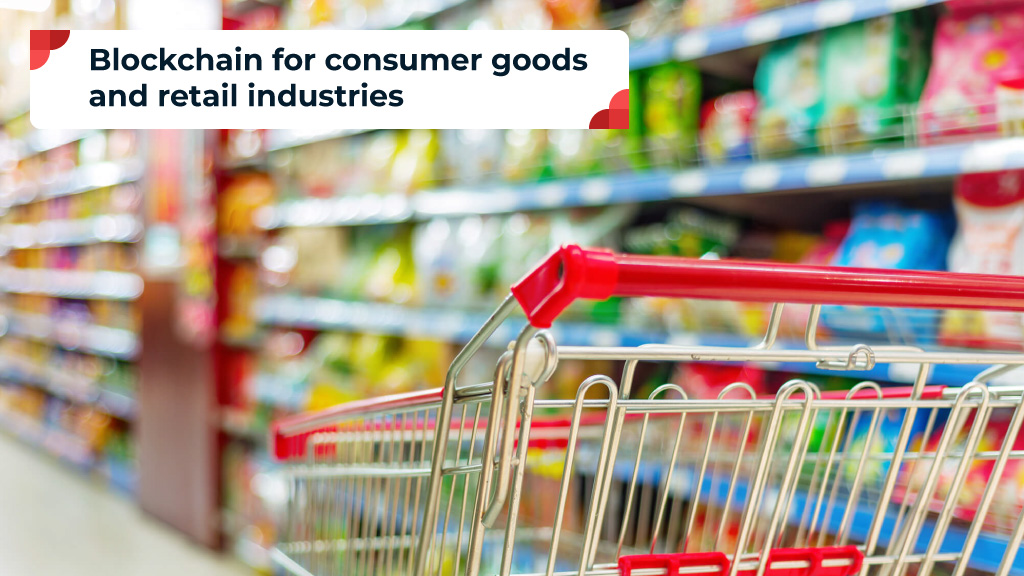
Blockchain is the one stop solution in the processes that requires gaining trust or building a reputation that depends upon safety for all its concerns. Looking forward to industries like retail ones, the maximum need is to grab the trust of the consumers for a long run. Blockchain can benefit consumer goods and retail industries to the large extent. After all, what is blockchain for consumer goods and retail industries? And, how does it impact?

Blockchain for consumer goods

Blockchain for Consumer Goods And Retail Industries

We are already aware about the functions of Blockchain and its role. It provides an unbreakable security system for all the situations. The very first and foremost feature of blockchain is that it helps in recording all the transactions without any interruption. There is no need of modification by the third party. Hence, keeping the records safe and reliable is possible with blockchain.

Blockchain can provide all the game-changing features to the retail industry. Blockchain would facilitate a free-flow of supply chain management, sales activities and also maintaining the after-sales activities. Also, blockchain would help ensure the easy flow of goods. This, in turn, will build a trustworthy relationship with the consumers and improve their experience.

Some areas should be priority; these parameters are:

  • Payments without hassle,
  • Providing authenticity with every purchase,
  • Improving the experience, reliability, and transparency with consumers regarding supply chain management,
  • Maintaining identity, being loyal, and
  • Building a trustworthy relationship with the clients or consumers.

As we just got to know the main dimensions that retail industry demands; here, are a few features that would bind retailers and consumers through blockchain!

Clarity and Liquidity

Marking the exact origin and providing the actual journey of the product is the customer’s main concern and a right too. Blockchain plays a role in which the transparent ledger provides all the information about the history of the goods. It also makes the information visible to all the parties involved in the transaction like supplier, manufacturer, retailer, and the consumer.

Implications of fake and real

Blockchain comes with an unremarkable feature of certified goods under a certain measure. Hence, it helps in figuring out that if the product that has reached the manufacturer or the retailer is a fake or the real ones. Items like medicines and too expensive items need to go through a set of standards which defines them to be different from others. According to these standard, these products are marked as real or fake ones.

Providing opportunities

Dealing in transactions that include a huge amount of money involved in it makes it harder for the normal bank processes to make it done and also, is a very risky take. Blockchain has the ledger which records each and every transaction to its exact point making it safe from modification and errors. In this way, blockchain paves a way for a more reliable system of making transactions. 

Staying safe and relied on retailers

There are many already existing companies that use this feature to transfer the warranty without any hassle. Blockchain helps in maintaining warranty wallets from transferring it from cloud to blockchain ledgers which in turn helps the manufacturers and the retailers to stay free from the unnecessary tasks they would have to perform in order to maintain the administrative work. Also, eliminating this hassle makes a way for building a trustworthy relationship among the retailer and the end consumer. 

Increasing the reach

Blockchain development technology has headed towards the international markets to help in the easy flow of supply chain globally. The decentralized system of blockchain helps in the direct communication of the parties involved in the transactions. If blockchain would come into charge the need for the certification of the middlemen to validate the transaction would not be needed. All the supply processes will be done directly within the parties, hence, solving the shipping problems.

Signing off:

It has been a long time since we started getting to know the functions and enhancing the possibilities which blockchain will be able to provide for us. It has now reached the industry which includes the most trust, labor work, transactions and supply, and shipping chains. Increasingly people are adopting it in the retail industry and are surprised to know the outcomes of blockchain for consumer goods. 

There are many loyalty programs that blockchain leads the retail industry to enhance its performance by each day passing.  
How Beacons Can Help Enhance Restaurant Dining Experience

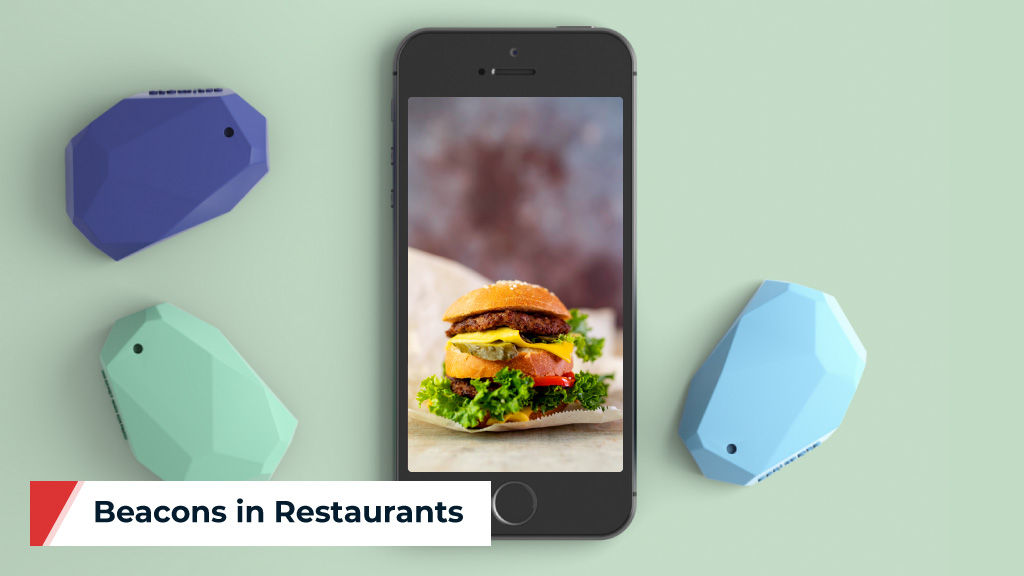
According to a recent survey, around five billion people are using mobile phones, customers’ wants to network and connect with their favorite restaurants. Beacon technology has entered the restaurant market. And, beacons in restaurants  is about to transform the entire industry. For a few years from now, the term “beacon” is circulated among tech enthusiasts. Earlier, very limited entrepreneurs were actively using beacon. However, a lot of other industries, including restaurants, have started exploring beacon. For those who are not aware about beacon technology for restaurant, here is some brief about it.

Andrew Levi, Blue Calypso has provided this explanation in a concise and easily understandable manner:

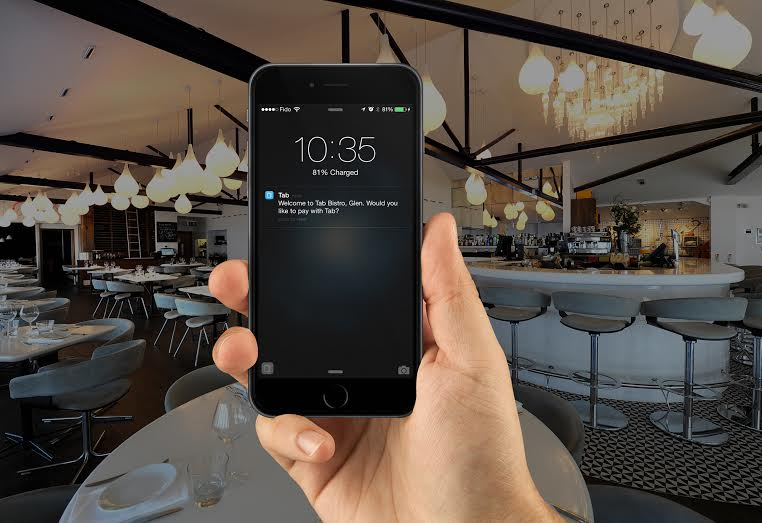
Beacons can be placed anywhere in a restaurant or nearby location and rely on a smart phone’s Bluetooth connection to transmit information directly to a mobile app that’s listening for their signal. These devices are highly cost effective.  The mobile solutions provider companies who specialize in providing software programs purchase these devices to manage the delivery of messages. The customer must first download an app, either a universal or branded one that will listen for the beacon’s signal. Once the beacon is initially connected and the customer opts-in to receive information, the beacon will automatically begin pinging the smart phone. Messages are delivered each time a connected smartphone passes by a beacon, regardless if the app is open or not” (Andrew Levi, 2016).

Beacons will help restaurant to enhance interaction with customers with the use of beacon. Moreover, places like malls, airlines and stadiums are using beacon to ease their operations. And now, restaurants have also joined the bandwagon. 

Beacon-based Proximity Restaurant Marketing 

What exactly is proximity marketing for restaurants?

Proximity marketing refers to communicating with customers at the right place, the right time and with  appropriate and personalised messages, on their smartphones. Be it greeting at the entry points, special offers in the store aisles, or getting feedback on a new product. This all is pretty simple with beacons in restaurants.

How does proximity marketing work (using beacons)?

We will look into an example of a restaurant to see how marketing works using beacons.

  • Beacons are deployed at the restaurant front with ongoing offers.
  • These BLE beacons transmit signals in its range. BLE signals are a combination of numbers and characters.
  • Any Bluetooth-enabled smartphone, in the transmitting range, detect the signals.
  • Then, the smartphone sends the ID number attached to the signal to the cloud server.
  • Accordingly, the server checks the action assigned to that ID number and responds. It could be a notification about a discount, or offers, a feedback form or just a greeting!
  • These notifications will then drive customers to a relevant form, a web page or a markdown card (a Beaconstac card creative which works as a substitute for a website).

Further, we will discuss in detail about how beacons can help restaurants to enhance dining experience with customer:

How Restaurants Can Use Beacon for Convenience of Customers

Beacons in restaurants

Beacons will allow customers to make mobile payment:

Most people have got a mobile phone these days; many consumers are becoming aware of handy mobile payment options. With change in technology and changing consumer behavior, consumers expect the same features from their favorite restaurants.

In fact, according to a recent study by Latitude,” an international research consultancy, 61% of people agrees that they have a better opinion of brands that offer a good mobile experience”.

With the help of beacon, customers will choose your restaurant instead of competitors.

Lessen wait time for customers

Beacons will make sure that customers get a quick service. You can begin by letting your customers order ahead. However, a number of mobile commerce apps such as Q app have successfully integrated order-ahead capabilities into their apps. This, in turn, helps restaurants to increase their average order value by cutting down on waiting time. Because, the moment a customer walks down the restaurant, beacons help notify managers, without the guest doing anything. 

According to a recent study by Technomic, a research firm in the food service industry, casual dining restaurants, a segment that generally generates around $160 billion every year, saw a mere rise of just 2% last year. Complement beacon-driven experiences with reliable cold storage like commercial walk-in freezers to safeguard perishables, meet food-safety standards, and streamline back-of-house workflows. This supports faster order-ahead pickup and reduces waste.

Rewards for customer 

Beacon will help to drive meetings and engagements by easily interlacing your customers wants and preferences by offering rewards. Since the past few years,  the popularity of loyalty programs for the customers staying loyal to the brand is continuously rising.

For example:- Mook, a German restaurant group, recently integrated iBeacon technology within their existing mobile app. It will reward their customers for spending time at the restaurant.

Enhance dining and clubbing experience   

Nowadays, surplus of offers and deals strafe the customers. Beacons are, for sure, the next trend for restaurant industry. Beacons in restaurants deliver hyper contextualized content to users based on their location. Hence, they provide an extremely personalized experience to consumers and enhance their engagement with the brand. Further, gamification acts as an important business strategy to drive customer engagements. In the case of events, beacons help restaurants to strengthen connections with their customers by giving them offers and rewards for doing specific actions.

restaurant-banner

Recently, iBeacon technology was used to enhance conventional downtown pub crawl night out. The venues in lower New York, installed beacons to allow party crawlers to use the Beacon Crawl app. The Beacon Crwal app detect beacons, answer the challenges, and gain special rewards like  drinks, foods and similar such advantages.

Push notifications regarding offers 

The main use of beacons in restaurants is to provide important push notifications to customers. Also, they have to keep in mind  to not bury customers with notifications, as this would result in or uninstalling an app. The important aspect here is to have a proper understanding of the value offered to customers. And, also convey them in best possible way.

Better insights into restaurant traffic

With the  help of Beacons in restaurants, one can collect huge amounts of data. Such data include customer dwell time at beacons within a specified time and date range. These can be the most busiest hours throughout the whole week, the amount of customers served etc., and  make enhancement on better allocation of staff and services

Deliver custom menus and pricing to valued customers

One innovative way to personalize customers dining experience is to station beacons in such a way which will provide menus according to customer’s previous order and history. Top of it, restaurants can offer coupons who visits frequently. Also, restaurants can offer discounts for the first-time customers to encourage them to come back often.

Conclusion :

With the help of Beacons,  restaurants have the ability to engage customers in a better way through a real-world experience. At the same time, they are also able to understand, analyse, and take necessary actions with regards to consumers needs and interests.

How Blockchain Technology can Advance Leasing in Commercial Real Estate

Why Blockchain in Commercial Real Estate is the next big thing? Blockchain based smart contracts are transforming commercial real estate. With the help of  blockchain technology people are able to advance leasing. It also helps to easily carry out buy and sale transactions in commercial real estate. The real estate industry is all about record keeping, keeping track of transactions and transfer of funds from one party to another. Even the top-notch companies that operates with the highest levels of efficiency in these transactions are prone to errors, because the process is highly complicated and demands  lots of involvement from companies.

Commercial Real Estate Challenges Involved In Leasing

For the clients, doing research on previous property transactions is tiring process. And often, they need to obtain the services of a lawyer to make the process smooth. There is no central point of reference in the real estate market where all clients can conduct their research on property transfers before making a final purchase. Its difficult for those who are selling or leasing out their properties,to keep up with client’s details and payments, because its intricate and also requires a lot of work in the commercial real estate market.

blockchain technology in construction industry

Blockchain To Advance Leasing In Commercial Real Estate

Blockchain development system will empower for systematic and organised record keeping. Also, one can easily access and quickly go through all the information required for owners and clients. Since everyone in the system have access to the records, accountability will also be guaranteed. 

Blockchain technology keeps information well secured; this will increase the trust in the system because the records will be genuine . Without this, the due diligence process will continue to prove dull for new buyers, thereby slowing down real estate processes.

Commercial real estate (CRE) industry has lately adapted blockchain technology.  

CRE executives have realized that blockchain-based smart contracts can play a huge role in their industry. Blockchain technology can reconstruct core CRE operations such as property deals like buying, selling, sales, leasing, financing and management transactions.

smart contract in real estate leasing

Where do real estate and blockchain actually intersect? 

You can best evaluate this answer through the eyes of a certain applications within the real-estate industry. Blockchain technology within has benefitted commercial real estate by improving database management and information management. Also, it has improved efficiency for multiple listing services (MLS) and smart contract (leasing). Blockchain technology has created many opportunities while reducing some of the challenges.

Read More: Blockchain can fix the issues of construction industry – hype or reality?

Blockchain For Real Estate Leasing And Purchase And Sale Transactions

blockchain in leasing

Common Database

Shared databases are important  for leasing and purchase and sale transactions. One important example is a multiple listing service, which gathers property-level data and  information from private databases of brokers and agents. It also improves property search process. 

Multiples bodies can modify database

Negotiating and managing real estate properties involves multiple entities, such as investors, tenants, owners, lenders, operators and service providers and alter number of information.    

Lack of trust among organization

Is difficult  to develop trust  among participants in leasing and purchase and sale transactions because they are new to each other and might even face data integrity concerns. Although, with the help of blockchain technology identity risk can be reduced by making digital identities, and more transparent record keeping system for real estate titles and financing.

Read More: Decentralised Platform for Real Estate Property Listing

Opportunity for Disintermediation

Trusted intermediaries through blockchain can be disintermediated, due to heightened  security and transparency in title management, and auto confirmation by government land registries.  

Transaction Dependence 

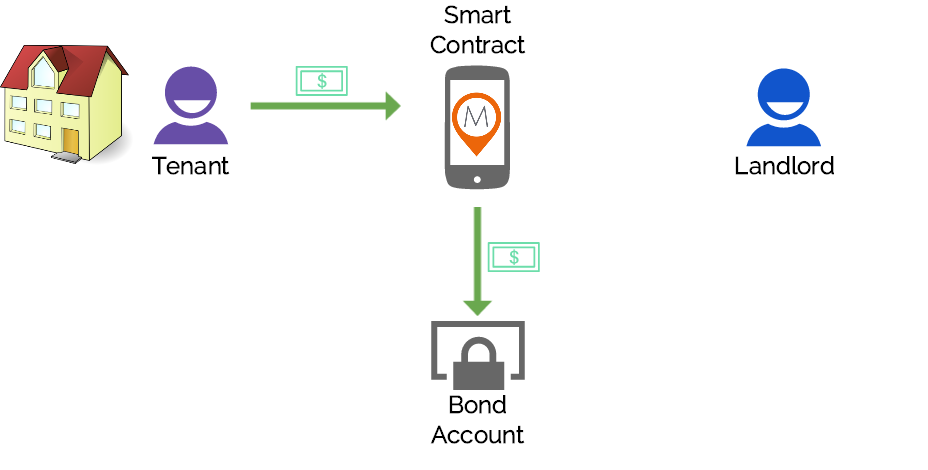
Many real estate transactions have conditional clauses and can be executed through smart contracts. For instance, the conclusion of a purchase-sale transaction could be dependent on loan approvals or title clearances. The entire process of property title management can be made transparent and relatively cheaper with blockchain in real estate.  In all, a blockchain development company can ease leasing and subsequent property and cash flow management

Conclusion :

Blockchain real estate

Blockchain technology will make leasing much easier for real estate  companies. Real estate agent is the one who carries out all the finance related activities, he i involved in buying and selling of properties. If the company is dealing with many clients the process becomes complicated and elaborated, also it involves lots of company’s engagement and efforts. 

With the help of blockchain in real estate platform, clients can make any kind of payments directly made to the owner, eliminating the need for ascertaining payment. This would make the process effortless, efficient and systematic. It would also be easy to keep track of clients on what date and time they have made the payment. Blockchain in construction and real estate industry can handle any type of debt with ease.    

What Opportunities Smart Contracts Can Bring To The Music Industry?

Blockchain in music industry is one of the trending benefits for the entire media industry. Blockchain in music and media protects content and rights from digital theft. Smart contracts ensure that the sale of music content has appropriate digital authorization. It also ensures necessary digital protection in case of theft and plagiarism. Smart contracts also help in receiving royalties for the music content published and released. In short, smart contracts add value and enhance the operability of all operations that take place within the music industry. 

Traditional Challenges Faced in The Music Industry   

Consider a chain of operation in music industry where, the process starts from songwriters,  performers, publishers and ends with fans. Each operation starting from creation of music until it reaches the fans involves multiple parties. These parties include labelling companies, profession digital marketers, digital aggregators, producers, recording facilities, etc.

Read More: Can Blockchain Make a Wave in Music, Media and Entertainment?

Traditionally, there existed a huge constant confusion between parties due intervention by multiple parties. 

For example, a songwriter asks where is their money? A publisher focuses only on collecting royalties and says ask the professionals. A labelling partner focuses only on promoting the content and they say they don’t know. A professional says they only know the songwriter and does not know what is going on with the publisher and labelling partners. It finally leaves an aggregator in confusion about who owns the song. At the end, a song writer is still left with the question, how long song a will it take to reach their fans? and where is their money? 

You see the confusion here? It is due to loss of information somewhere in between the chain of command or supply chain or due to manipulation of data and operations, etc. All these confusions can be eliminated completely with the usage of smart contracts. 

Opportunities from Smart Contracts in the Music Industry 

Blockchain music media entertainment

Safeguarding and protecting Intellectual Property Rights (IPR)

Smart contracts in music industry monitor each and every song released on blockchain platform. This in turn, assigns a unique number to each song authorized and published. This unique number allows artists to have control over their music content. And, ensure that their music is not digitally copied or stolen. Smart contracts also encrypt songs with public or private encryption according to the requirement. This encryption does not allow money launderers to get a hold of a digital copy of the IPR of a song. 

Music artists get to be entrepreneurs 

Music artists can control and monitor royalty payments with smart contracts in real-time. This ensures that publishers, labelers, performance artists and all necessary personnel get paid on time. It also allows receiving royalties or song bought from licensee or franchisee on-time without delay. Music artists can now conveniently make their own decisions without having to hire a middle-manager to handle decision-making. 

Earning creatively with blockchain based music startups 

Smart contracts allow music artists to provide free streaming to fans in their own Convenient time and platform. This cuts down middlemen which reduces the cost of subscription packages and premium privileges in live-streaming of music events. Using smart contracts, music artists can predict how much money they could earn from copyrights using data management systems for accuracy integrated with smart contracts. 

Faster P2P transactions allow direct payments 

One-touch, instantaneous payments is possible with smart contracts as it is decentralized. There is no central authority that has to verify and pass through transactions. Peers can directly connect with each other. For instance, the recording studio can instantly connect with publishers and labelers to acquire trademark and copyrights for the music. Simultaneously, fans can pay for the song. Blockchain ensures equal division of  money gets paid in equal share accordingly between the recording studio, publishers, labelers and music artists, etc.  

P2P payments become more faster and easier if music artists wish to use smart contracts that allow cryptocurrencies as one of the payment options too. 

Direct connection between music artists and fans 

Music artists can directly connect with their fans at any point of time and day to acquire feedback, suggestions, ideas or just interact. Say goodbye to the traditional obstacles of waiting to authorize music artists to interact with fans. Fans and music artists can transact and transfer files among each other quickly and easily with smart contracts without any restriction. 

Transparency in royalty payments and ownership 

Smart contracts in music industry allow music creators to receive payments directly without any third-party intervention to handle their transactions. Thus, the payment is received in real time without any legal restrictions. Also, data manipulation is not possible with smart contracts as it uses blockchain. In order to change an information, the complete system has to be re-structured or re-programmed which is not logically encouraged. 

Blockchain-based projects that are providing opportunities for the music industry 

Choon 

Allows music artists to gain income with an increase of 80% from their investment through decentralized distribution approach. 

Bitsong 

Provides decentralized platform for streaming of music. Music artists can directly receive donations from their fans. 

Revelator 

Allows key personnel to monitor copyrights of the music at all times to ensure digital security and protection of the music content. 

BitTunes 

Offers a bitcoin-based platform to share music files and also allows fan themselves to stream songs digitally with appropriate protection. 

Over to you!  

Traditionally, Blockchain development for music industry can play important role in an artist’s life. A music artist also didn’t have the freedom of speech in their song content due to various regulatory limitations. Now, using blockchain and smart contracts, music artists have complete freedom to express emotions through their songs. In addition, smart contracts in music industry record all operations in real-time. Hence, all involved get real-time updates on the progress of the published song at each stage. This enhances transparency, trust and confidence between studio managers, artists and fans.

Use smart contracts and gear your song with freedom. Let us know, what are the other opportunities you think that smart contracts will bring music industry. 

How To Leverage Smart TV Application Development For Multiple Platforms

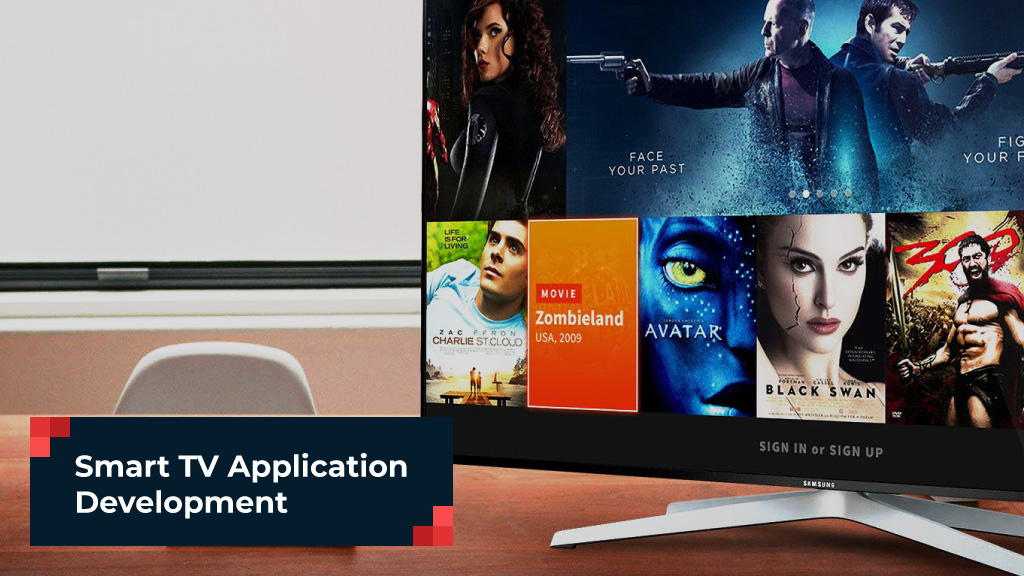
We are living in an era, where technology automates operations and reduces the processing time by interconnecting devices. OTT (Over the top media services) and Smart TV application development enhances the user engagement with automated services such as streaming, voice control, etc. which increases the customer experience. This has led to the increase in demand of Smart TV app developers as with internet of things (IoT), the usage of Smart TVs becomes easier and makes everyday life comfortable too.

According to Business Insider, Smart TVs hold 38% of the digital technology market and it is only going to increase more in the future.

Almost everyone loves Netflix, the binge watching feel never gets older. What is better than sitting cozy and enjoying the streaming in Smart TVs across multiple platforms with a simple mobile app control?

Smart TV Application Development For Multiple Platforms

Lets understand the fast Smart TV applications and the furious development for multiple platforms. Smart TV application development is one of the hot applications of IoT Development.

Today developers leverage Smart TV application development developers because of the multiple platform availability. Users have the ability to choose a platform they prefer but each platform operates differently. Following are some of the multiple platforms:

  • Android TV
  • Apple TV
  • Amazon Fire Stick
  • Samsung Tizen, etc.

In order to build an efficient Smart TV mobile application you have to follow a set of guidelines to ensure glitch-free performance and enhanced user experience in return. This article discusses about some of the important approaches to follow in leveraging Smart TV application development for multiple platforms.

Key Tips To Be Considered While Developing Smart TV Application Development For Multiple Platforms

Smart tv application development

Choose the appropriate technology stack

Each Smart TV operates on a different platform. So, same tools may not be compatible for all the platforms. There are tools that are expensive and then there are tools that are cheap. First gather the requirements to meet and the budget you have to stick to.

After gathering these requirements, validate all tools and software development kits to see if they are comprehensive enough to execute the functions you are trying to develop without any hassle. These tools include, XCode, JAVA, AJAX, android development tools (ADT), etc.

Using emulators is not a smart choice

Emulators are software with in-built simulation. Do not use them for developing Smart TV mobile applications because they come with in-built features and functions. These in-built features and functions may not be appropriate for Smart TV development. This is because emulators do not support keyboard control and checking network performance is not possible too. This is a major drawback as Smart TVs work via network support to offer different services like streaming, video-calling, etc.

Cross verify with platform guidelines

Each platform store has its own set of rules and regulations that your Smart TV mobile application should meet in order to be deployed. After development and successful testing, check whether your Smart TV mobile application meets all the rules and regulations set by the platform store. Also, ensure that your Smart TV mobile application satisfies the guidelines set by the platform store.

Better choice would be to develop Smart TV mobile application after going through the complete guidelines and cross verifying with those guidelines at each stage. This increase the chance of your Smart TV mobile application to be deployed by 50%.

Not all scenarios can be predicted

There are unforeseen factors that may affect the performance of the Smart TV mobile application. This may be due to natural climatic factors or low network performance. During such occasions, your Smart TV app may glitch or abruptly close or just freeze. These may lead to dissatisfied customers if these occasions are not handled in the right approach. The right approach of handling them includes notifying the customer of the functional issue and asking them to patiently wait for it to get fixed.

When there is low network, let users get notified through in-app or push notifications that their network is poor and the app may underperform due to it. In the case of natural climatic factors, notify users with a proper error message that will be displayed on the screen. For example, in the case of heavy rain, notify users that “Dear user, your services will resume in a short while. Heavy rains affect the inter-connectivity” or so. Ensure that the Smart TV mobile app works fine even with just a 2G network. That should be your minimum viable product (MVP).

Focus on the core functions for developing attractive user-interface

Developers and clients sometimes mistake Smart TV app with a normal mobile app. A Smart TV must cut to the chase and adherent to the purpose it serves. Ensure that you do not develop and include features more than needed. Keep it simple and elegant with soothing colours and attractive designs.

As a developer, you should also understand that, different platforms perform differently with each design. A Smart TV with 8K resolutions will underperform in a Smart TV app if it does not support 8K resolution and designs. So, make sure that your Smart TV app designs are in-line with the resolution of the Smart TV it is connected with. Make all content understandable and readable.

Important Key Steps To Follow In Developing Smart TV Application For Multiple Platform

Step one: Application design

Gather requirements, create prototypes to understand the functionality to ensure there is no point of failure. Ensure that the design is simple, understandable and unique with pleasing visuals.

Step two: Application development

Be intuitive and cross verify your Smart TV application performance with the intended Smart TV resolution, environment guidelines and variables of the respective platform, etc. Ensure the inter-connectivity between devices is strong and seamless.

Step three: Application testing

At every stage, test and check your Smart TV application for quality, endurance and performance. Any test that provides a result of lower than minimum quality, make sure to re-engineer or re-develop the particular operation or the entire application based on the error consequence.

Step four: Application Maintenance

This is most important step of all. At set interval period of time, keep monitoring and maintaining your Smart TV app for bug fixing. Also, ensure glitch-free operation while bug fixing. Have a team that monitors the Smart TV application for any downtime to make sure that there is no bug that hinder the continuous functionality.

Conclusion: Smart TVs today are transforming close to computers

Computers may have complicated functionalities and features but a Smart TV is supposed to work in a simple manner even if it uses complicated hardware. This is because there are different kinds of users and all users may not understand complicated functionalities. Keep it simple and provide easy navigation with an instant finger touch feature or what you deem appropriate.

A good Smart TV application increases the viewership and also expands your business brand. Quoting stranger things to our purpose, “your Smart TV application should be stealthy, like a ninja”. Good Luck.

Invest In Branded Taxi App Development To Flourish Like Uber

Transportation industry, and, especially, the taxi sector has been flourishing with increased demand on a daily basis. Customers and riders use mobile phones for various telecommunication purposes. And, today they use it to book a cab instantly from their doorstep. With the increase in demand, ever taxi app development company is striving hard to enhance the rider experience. Each competitor try harder than their competitors to provide a better service than the other. The ultimate goal is to enhance the riding experience for the rider.

Some of the best examples of taxi booking services are Uber and Lyft.

In order to gain advantage of Unique Selling Proposition (USP) you have to understand why investing in branded taxi app development is a good choice. Ondemand travel booking app solution helps to meet the local demand and supply for cabs hassle-free. If you make the right choices in investing in a branded taxi app development, your taxi app would flourish like Uber too. 

Investments in Branded Taxi App Developing Is A Benefit For Your Taxi Business 

Following are some of the ways how you can investment in branded taxi app development. It might also help your taxi business to be successful as Uber. 

Invest in ensuring visibility of your taxi app during development 

On a daily basis, there are n number of customers and riders who use taxi booking services for various purposes. It may be a random individual/professional/ tourist, etc. and to any given customer the taxi app must be accessible and well recommended.  

Some of users may use search engine to book cabs and some users may use the taxi service providers app. What you have to ensure is that your taxi app should pop up in the search engine results . Only if your taxi app service is visible to the customer, then you will have successful flourishing business. Because if you fail to accomplish visibility, then you are losing your customer base. 

branded taxi app development

Invest in satisfying the rider by developing appropriate features 

First of all, you need to understand the requirements of a rider. Some of those needs might be booking taxi quickly without waiting time, ability to register themselves with multiple sign-in options etc. Features like registering allows new users to have a profile for themselves to track their booking and travel history without any confusion. Features like sign-in allows existing users to use the in-app features of your taxi service. These are some basic functionalities your taxi app should provide. 

Some other features that satisfy customers are providing a bill after each ride through the means the riders prefer. It may be via e-mail or in-app notifications or SMS, etc. One of the important features to focus is riders must be able to track their ride in real-time after booking. Rider must also be able to connect with the driver. 

Invest in satisfying the driver by developing appropriate features 

Satisfying the rider is alone never enough. You need to satisfy your drivers too. Drivers are the back-end reasons that have the potential to increase your brand experience for riders. Provide drivers with features to connect with riders through phone calls and maps to precisely locate the rider location. 

Allow drivers to accept and cancel rides. This is an important feature which you should not fail to invest during development.  Drivers must be empowered with the accessibility to accept rides or cancel rides so that they could provide the best experience possible.So, ensure to connect riders and drivers based on the nearby locality. This increases the productivity of your taxi app service too. 

Invest in creating a brand for your taxi app as you keep developing 

taxi app solutions

Establishing your own reputation and creating a name for your taxi app is the biggest challenge but the challenge bears fruitful results if accomplished successfully. In order to create and become a brand, follow the footsteps of satisfying all your stakeholders of your taxi application. 

Focus on creating trust, enhancing credibility by providing security and privacy to the data of riders and safety insurance policies to the drivers. Provide customized features such as the ability to add home and work locations so that the rider does not have to enter their home or work location every time they book a taxi. The location would already be stored and this makes the operation of your taxi app user friendly for the rider.

Invest in something new like the auto-pilot mode 

Every day is hectic with busy schedules of different purposes for different people. Drivers simply might not have the time to keep surfing for riders and riders simply might not have the time to manually surf for taxi bookings. Here the auto-pilot mode will help. 

With the help of auto-pilot mode, riders and drivers should be able to connect automatically (note: the location of the rider and driver must be as close as possible). This auto-pilot mode automatically fixes a price for the rider to pay and driver to receive. The rider simply has to book a taxi, a driver nearby will get booked and the riders have to pay the fare at the end of the trip. There is no negotiation process or delay time. 

Conclusion: Taxi Industry Is Blooming Today And Today Is The Best Day To Invest In Branded Taxi App Development 

Read More:  What All It Takes To Develop A Carpooling App Like Lyft

Taxi industry is the new trend today and we see numerous taxi service providers out in the market daily. It is important to first understand that, the taxi market keeps changing based on the customer needs and preferences. The market might not function tomorrow as it does today. For example, yesterday people booked taxi through phone calls or local taxi service providers.  Today, people book taxi through apps and these taxis include cars. Tomorrow, people might want something better like booking taxi through smart wearables. Always be ready to develop unique and new features to ensure you have your own unique selling proposition and brand. This will ensure the flourishing success your taxi app. Good Luck. 

How IoT, AI And Blockchain Will Empower Manufacturing Sector?

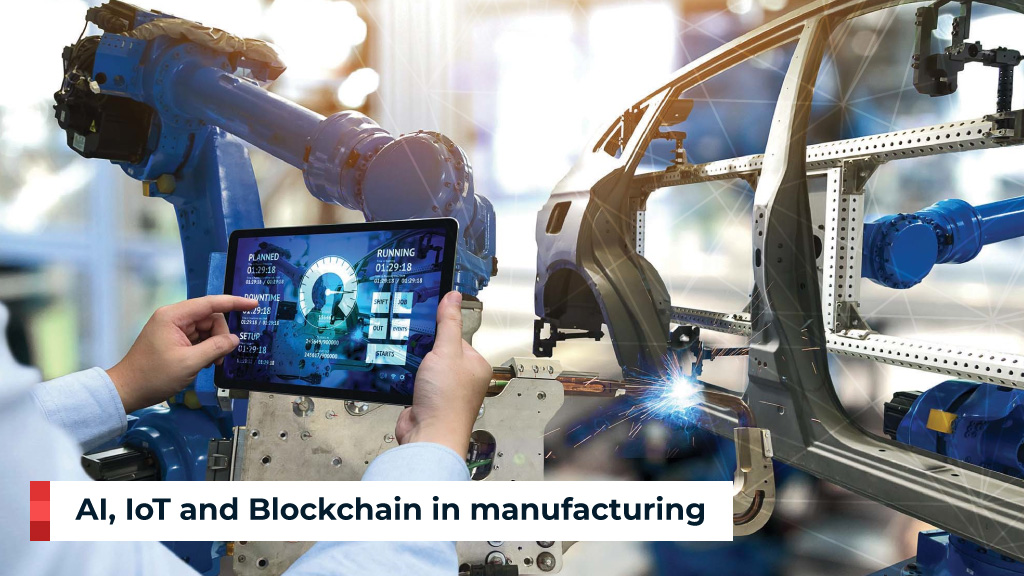
Manufacturing industry has been constantly evolving ever since the invention of steel and malleable metals. But, that is not the only inventions that changed the manufacturing  industry. With constantly evolving technology, manufacturing industry has been incorporating new technologies to make production operations faster, efficient and much more. These technologies mainly include Artificial Intelligence (AI), Internet of Things (IoT) and Blockchain.  AI, IoT blockchain helps in automation of the manufacturing processes that save time and cost in the process.

By connecting AI and IoT with blockchain based platforms, manufacturing industry is able to have a decentralized environment with enhanced productivity and interoperability. Is there one too many questions running in your mind  right now regarding this? If yes, do not worry, you are in the right pace. This article discusses various blockchain and AI use cases in manufacturing along with the use cases of internet of things. 

AI, IoT And Blockchain in Manufacturing Sector 

Transformation of manufacturing sector with  IoT, AI and blockchain 

Investment in creating unique products and enhancing services for client, customer satisfaction has been helpful with IoT, AI and blockchain. Together, they also help lowering the operating and production cost of products and services in the long term. 

Power of internet of things 

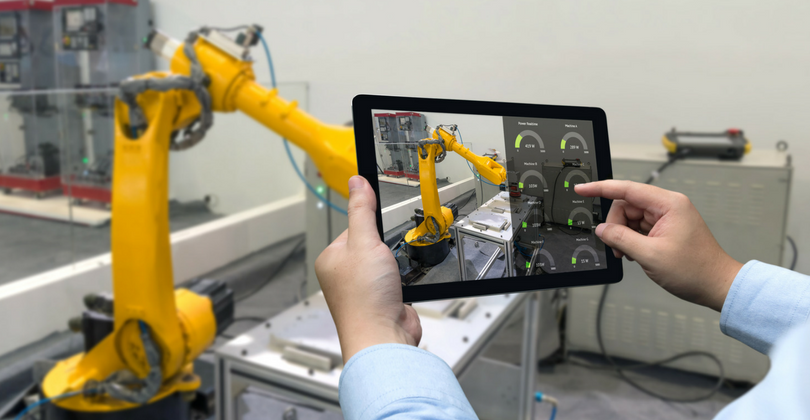
Internet of things have been enhancing the interoperability between different devices, machines and across different departments in the manufacturing sector. Interoperability refers to the interconnection among personnel, devices and machines to share information and data to make smarter decisions.

IoT in Manufacturing

For example, when employees enter or leave the manufacturing premises, IoT sends automatic notifications to the manager via SMS / email. This helps the manager to efficiently keep the productivity rate up by ensuring that no employee is lethargic in their work. 

Power of artificial intelligence

Artificial intelligence has been enhancing the automation of the manufacturing industry as a whole.  In addition, AI has been helping manufacturing industries since a long time. AI helps manufacturing industry to build machines and systems that think like humans. This, in turn, reduces the human error and human intervention.

For example, take a situation where employees have to manually identify cracks in a product that is constantly moving in a conveyer belt before sending for packing. Say, the product is a gear shaft. And, the job of an employee is to identify cracks through a process called electroluminescence. In this process, employees have to look at a computer screen that projects the scanned image of the product. Based on the scanned images, they need to identify damages and cracks in the gear shaft.

On the basis of employees’ capability, each individual takes different time to identify if a product can be passed to the next stage or if the product has to be reworked. Here, the chances of missing a crack or damage is huge. And, the time taken to check a product is huge too. Now, with artificial intelligence, the electroluminescence machine will be fed with an automated program that will make the system by itself identifying cracks and damages. After identifying possible cracks or damages, the machine will be able to make automated decisions. These decisions comprise of if to pass the product to packaging or rework based on the error tolerance level incorporated in the program.  

Power of blockchain 

Blockchain is a decentralized platform. And, it does not require any third-party service in order to share, transfer data and information. The time taken to accomplish a transaction with blockchain is unimaginably faster than any traditional method of completing any transaction. This is because blockchain reduces the number of middlemen. The customer and manufacturer will also have the ability  to connect with each other directly for any given point of time. 

Blockchain in manufacturing

This in turn increases the production efficiency. Also, blockchain stores data with high encryption. Further, without the unique decryption key assigned to each user, the data stored will not be visible. This enhances trust, security and transparency between suppliers, customers and manufactures.  

With blockchain, a manufacturer can quickly and easily connect with a supplier in local and international market at the same time. The manufacturer will be able to deliver products to customers in local and international markets without any delay, without any border restrictions  and also accomplish all this at a lower cost. 

Read More: How can blockchain revamp the manufacturing industry and build trust?

Combination of IoT, AI And Blockchain Provides Enhanced Operability 

AI IoT Blockchain Manufacturing

Let us consider all the above examples and see how combining them all would benefit the manufacturing industry. 

When an employee working in the electroluminescence machine enter the premises, IoT can immediately notify the supervisor. Then, the manager or supervisor can ensure that the required resources are ready for the employee to start the electroluminescence operation. 

With the help of artificial intelligence, the employee can use the resources given by manager and just start the machine. The machine will start working on the automated processing of the products trying to identify cracks and damages. When the automation process is taking place, the employee can be used for work elsewhere too. 

Blockchain helps manufacturers to quickly hire suppliers to deliver final products to customers at the right time and right place at a lower cost. 

Over to you:

IoT, AI and blockchain together provide universe of possibilities. Also, there are numerous possibilities with the combination of internet of things, artificial intelligence and blockchain.

They have their limitations too, like:

  • the cost of building automated infrastructure,
  • cost of implementation,
  • cost of training employees to adapt to the technological changes, etc.

Yet, using these technological tools in a smart way, manufacturing sector can boost efficiency and revenue generation. Let us know what you think are the other ways in which IoT, AI and blockchain will empower the manufacturing sector.  

How Apps Like Practo Are Transforming The Healthcare Industry?

Nowadays, mobile apps have become very crucial part of your life. They control nearly every aspect of our lives. Everything from planning our finances, where to eat, commuting, shopping and many other such things, there is an app to help us and make the entire process convenient and easy. In this scenario, can the healthcare sector be left behind? In the past few years, there has been an explosion in healthcare mobile apps. We often fail to realize the importance of technology in our life. However,  modern science and technology has enhanced the general quality of life.

Technology can be transformative in transferring healthcare services, where the density of doctors is one per 1,000.    

Healthcare Mobile Apps like Practo Are Transforming Industry

healthcare mobile apps

Healthcare Mobile apps like Practo has entered the healthcare industry for a digital revolution. Such healthcare mobile apps have had a great influence on the behavior of both patients and medical professionals. Let’s check out  some of the ways in which mobile applications like Practo  are making the healthcare community more connected:

Better Patient Engagement and Improved Patient Safety:

Patient engagement has been simplified with the help of mobile apps like Practo

Due to the long queues, doctors are unable to build a trustworthy relationship with patients, if Doctor is unable to take time out and interact with his patients then patient would be unsatisfied, and would switch to another doctor.

Healthcare mobile apps like Practo provide instant online consultation, visits and unlimited follow-ups and free hospital visits.

One can also connect to specialists on voice or video calls to ask questions regarding the problems they are facing. They also provide 24*7 instant chat with the patient’s care team. People living in remote locations can engage with their Doctors for any medical help.

Improve Decision-Making

Before the arrival of smartphones, the only way to make decision among multiple hospitals was by getting suggestions or hearing to the experiences of friends, family, neighbors, hoardings and advertisements, doctors’ name, reputation and qualifications etc. But today, we can sign in into mobile apps like Practo and all the necessary information regarding service provider’s ratings, reviews and other details which are dependable and trustworthy.

Know what suits you the best

With the help of app like Practo you can choose  among a list of clinics and doctors, which suits you best and you feel comfortable with the service they provide. The decision making gets more accurate by the recent comments and reviews for the doctor and the clinic. This solves the problem of taking advice from friends, relatives, and neighbors. 

Efficient in recording all the information

When you receive the reports of your tests, from the doctors through the Practo, it gets stored in the apps so that you can view, take advice, and prescriptions from other doctors  for future references. It eliminates all the hustle and bustle of finding your reports and making a mess. 

Advance healthcare and disease control

Blockchain in Healthcare

Due to the development of particular software programs i.e Practo, it has become easier to improve the quality of healthcare services delivered to people. For example, the World Health Organization (WHO) has been able to classify disease, causes and symptoms into a massive database. 

Storing of essential records 

This kind of mhealth application records signals like high/low blood pressure and uneven heart rates. This eliminates the need of visiting the doctor for every small test.

Pay only for the services you are taking

The Internet has all the noted prices of medicines. Many times we are deceived by the pharmacist of the medical stores and healthcare providers.  With the help of an mhealth app, such hurdles are erased. It creates transparency, with which, the customer can make sure he is not paying any extra.

A suitable and accessible place to fight your symptoms

All the needed medical or health related  information about dealing with certain symptoms without the presence of an expert is delivered on Practo. They update their readers with all the problem getting prevalent in the city or the country and help them find a way to deal with it and take important precautions.

Conclusion :

healthcare mobile apps

Practo is an app which comes with a mission for the betterment for human lives. They believe in making human life, a healthier one. They want their app to be centrally available for simplifying and easily accessible for all the consumers worldwide. Practo not only provides the list of best and filtered doctors with proper qualifications but also helps the consumer with better decision making about their health. This mHealth app’s strength is to provide a platform for the doctors and patients to connect and simultaneously digitizing the healthcare industry. It also aids in creating more jobs and bringing the healthcare industry under one roof.

You must have gone through some problems where you faced a lack of services around your area. Next time if you face something, try any healthcare mobile app like Practo and see what miracle you carry within your hands every day! 

Why Uber for Maids Are In Vogue?

Gone are the days when we could only get the cabs with a single tap on our smartphones. Uber is at our doorstep for many other services which is considered the most hectic task! It has been our savior for so long now that we almost forgot about giving recognition to one the biggest issue of our nation that is, finding maids for our household chores and to run other different errands. Haven’t each one of us once in our life regretted about fighting with our maid and had to ultimately end up doing all the work on our own?

In the world where most of the people are busy getting their lives and careers on the track, our house is the one who suffers the most. It needs to be cleaned and organized too. A house is a most essential part of a human beings life and therefore needs special attention. So, enough of appreciating and digging into the need for maids, Let’s get to know more about on-demand app development like Uber for Maids. And, what it has to surprise us and make our lives easier and bring the missing pieces to us.

Why is “Uber for Maids” Special?

There are quite many examples and features that make Uber for Maids a standalone concept in the market.

Most popular apps are getMaid, Handy, Dazzling Cleaning, etc.

Such apps are utilized for hiring services like house cleaning, apartment cleaning, furniture cleaning, or availing routine maid tasks.  What benefits Uber for Maids provide? Let’s see.

Benefits to service providers / admin

No matter if you function as an individual or a company, you can sign up with house cleaning apps and make your services of supplying maids and servants to reach the highest pace and can manage it too within the same platform. This app makes easy for the service providers to track payments and provide their customers with the best of experience.

Benefits to maids, helpers, and others

Just like how Uber has three dimensional view i.e. taxi drivers, customers and admin panel – Uber for Maids also falls in the same category.  With Uber for maids, anyone who wants to provide services like home cleaning, cooking, washing, laundry etc. can get registered. They no need to search for hirers. They can have a choice of jobs, rates and job seekers.

Benefits to end-users (customers)

It is obviously the customers for whom all these services are designed. So, let’s have a look at what they will be acknowledged with when they will use house cleaning apps. They have an option to choose from the wide range of maids and helpers signed up with the app according to the service they want to avail. Not to forget, they are all registered maids with a foolproof background verification. After signing up to the app, one can hire personal maids and helpers too. Special needs and suitable timings can be provided by the customers for better experience; some of the features are:

Search for the perfect candidate

The users can find the perfect candidate or the maid according to their requirements and the services that they require.

Schedule and book according to the suitable timings

The next step is to book the maid or the house help according to the timings that suit the user.

Services will be provided when the maid reaches your destination

All the timely tasks that are being performed by the maid is updated in real time on the app.

Payment method to be decided

After all the tasks are performed by the maid, the payment is made either by cash or card.

Let’s Get Into Tech-aspects of Uber For Maids

If we study the technical aspects, these are the features one can get in on demand home cleaning apps.

User identification

This feature is designed for the maids. And, it helps them to see the  details of the user and their locations prior to accepting the job offered by  the user.

Pay through cards

Payments are not only limited to be paid through cash as it is done   in traditional methods, but the app also provides the users to pay through credit and debit cards.

In-app navigation

Reaching the user is not a hectic or difficult task as the app provides proper navigation for the maids to reach the destination hassle-free.

Wallet payment

The app provides a payment mode in which a user can pay through   in-app wallets.

Schedule booking

Managing the timing according to which the booking has been scheduled  is taken care properly by the admins of the app.

Instant chat and push notifications

There is a feature in the app which provides a place for the direct  conversation with the maid to stay organized and informed about the tasks and status of the maids. These features are notified through the feature of push   notifications.

Maids availability switching

Maid needs to stay online to accept a job with a single click. Therefore, the online/offline status of the app helps in determine the availability of a particular maid.

Job history details and background checks

Maid and the user can easily track the information about the jobs done by the maid in the past.

Transaction history

All the detailed transactions are provided in the app including all the services taken by the user.

Detailed profile view

Users can have a brief look at the maid and the services provided by them and the prices for each service.

Bank details

Maids can add the banking information to use them in the future.

Loyalty programs

Admin can provide promotional offers and coupon codes for the users and maid to keep them intact with the app and take its advantages for a longer period of time.

Over to you! 

Uber for Maids

Undoubtedly, the market opportunity for an on-demand cleaning service is huge. Such services allow you to spare time from busy schedule and cheer up with friends and families. Moreover, getting cleaning and maintenance done from professionals ensures best quality at affordable rates.  Day by day generations are getting busier. Everyone constantly hunts for novel and innovative ways to get tasks done, so why not Uber for Maids?  Do let us know about your opinions.

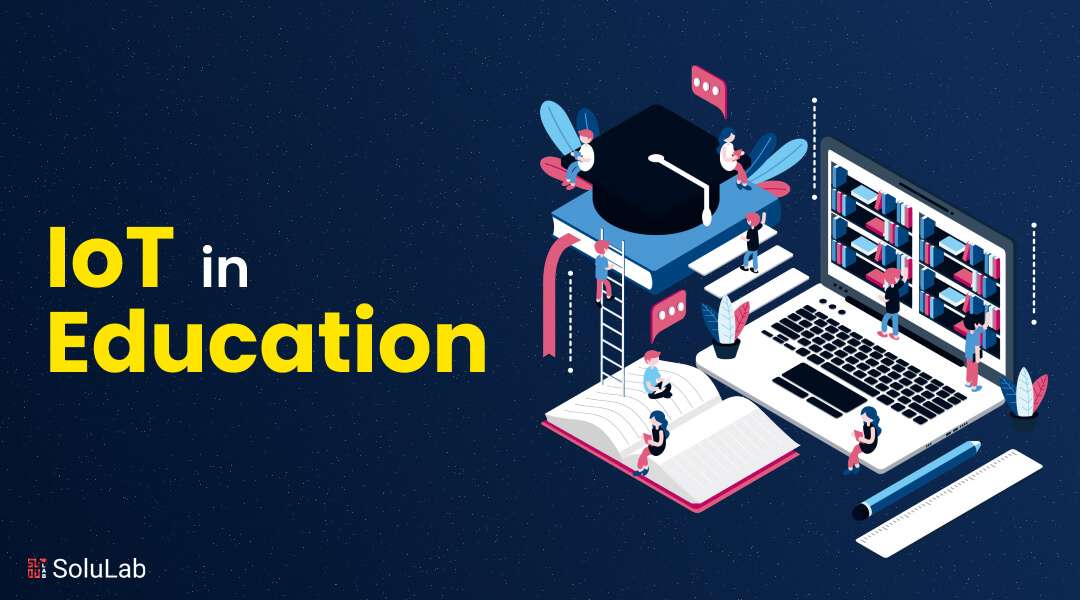
IoT in Education: How Classroom Education Has Benefitted

Internet of Things in Education

Internet of Things  (IoT) Solution For Education

Internet of things help professors and educational institutions to establish procedures and structured educational scope in efficiently managing important educational resources. It also helps providing students, parents and tutors with holistic information. 

Today, Internet of things is considered to be a huge spectrum that provides accessibility to educational information that people thought never even existed. For example, with the internet of things, students are even able to learn the patterns between to scientific theories or connectivity between two technologies in real-time. With the help of the internet of things, it is possible to have connected device operation between smartphones, laptops and different PC systems. This in turn, increases the interoperability. 

Benefits of Internet of Things in Education 

1. Ensures the safety of educational institution and its campus 

Technologies such as RFID (Radio Frequency Identification) is highly beneficial when it comes to tracking something. With RFID and IoT combined together, the accessibility and controlling of devices have become much better. In real-time, educational institutions can track school buses or individual students within campus by placing RFID tags in their Identity cards, etc. 

This will be highly helpful in case of any emergency. With the internet of things, educational institutions can use IoT based video sensors to ensure the security of administration cells such as exam cells.   

2. Enhanced understandability with interactive learning 

Learning theoretical knowledge or practical knowledge is just not enough with the rate at which the world is increasing in terms of competition. Today, both kinds of learning have to go hand in hand. With IoT in education, it is easy to combine images, text and information together. This way one can make the learning process more interesting and enriching as possible. 

Textbooks can be integrated with online websites and additional interesting videos, informative links and resources or assessing exercises, etc. For students working on academic assignments, accessing resources like college essay help online can complement interactive learning by providing guidance on structuring and presenting ideas effectively. This also supports the students to have an engaged learning process. One of the other important benefits of interactive learning is that it provides different perspectives for the students to look at what they learn. It also helps professors and tutors to look at the method of teaching in different ways to make the learning process interesting for the students.

Read Blog:  IoT: The Future of Innovation & Technology

3. Increased operative efficiency provides better insights 

With the internet of things, tasks like taking student class attendance has become easier and efficient. Traditionally, professors and tutors used to maintain a log of attendance manually. But, today, with the internet of things, professors and tutors can use devices such as tablets or smartphones or any digital system to take attendance. Also, they can store them on a digital server or cloud. 

Multiple access to files and personnel is possible through IoT by storing in one central system. Due to the centralized storage of data, it reduces the need for any human interference in accomplishing any operation. IoT supports automation of processes to the maximum extent as possible. This provides tutors and professors with extra saved time to focus more on teaching. 

4. Faster operating environment makes any process simple 

With the internet of things, there is no need to carry cash in hand at all times.  Parents can make fee payments anytime, anyplace and any amount of money quickly. They also get the tracking ability to track the cash movement in real-time. Hence, it is easy to check if the educational institution has received fee payment. 

Internet of things also help to reduce any queuing time, especially in dining areas and cafeterias. Online payments with IoT integration reduces queueing time to a large extent.  

5. Internet of things increases collaboration and performance 

Using internet of things, it is also possible to understand the neurosensory cognitive activity of a student’s brain via smart wearable technology. Such understanding allows tutors and professors to customize the teaching process for students according to their IQ levels. This in turn will help students to learn at their own pace and with ease too.

Real life Examples of IoT in Education 

Scanmaker 

It is an IoT enhanced tool that is coded with necessary languages and can function wired or wirelessly. It helps in scanning texts from various books, documents, etc. that are hardcopies and transferring them to a tablet, computer or a phone in the form of a soft copy easily. Scanmaker is widely used in schools in Kansas City, Missouri. 

Magiccard 

These are physical cards that are integrated with IoT to function as a digital card. It is helpful in occasions such as requirement of authentication, attendance, e-learning or getting accessibility to facilities with this card as an alternative for photo I.D. Magiccard is widely used in schools in Weymouth, U.K. 

Conclusion: IoT enhances tech-literacy 

Internet of things will help educational industry to save time, money and integrate data from different departments. It will also increase the interoperability for better and smarter decision making. IoT has the potential to remove educational barriers such as language, economic stability of the education institution, etc.  Also, IoT in education helps to bridge the communication gap between administration, professors and students. This boosts overall productivity. IoT will positively disrupt education as we know. Let us know, what are the other ways do you think IoT can benefit the education sector? 

WhatsApp Telegram