









Last updated: October 2026

Offshore Software Development for Startups & SMBs

Offshore software development means hiring engineers in another country to design, build, and maintain your software at a lower cost than local hiring. SoluLab provides it for funded startups, founders, and SMBs, with vetted developers, QA engineers, and delivery leads who join your sprints and work your hours.

  • Up to 40% lower development cost
  • 100% code and IP ownership
  • Under NDA from the first call
View Portfolio (opens in a new tab)
Forbes
CoinDesk
Bloomberg
TechCrunch

What Is Offshore Software Development?

Offshore software development is a delivery model in which a company hires software engineers in another country, usually through a specialist partner, to build, test, and maintain its products. The partner handles recruiting, payroll, equipment and compliance, while the engineers work inside the client's roadmap, tools and sprint cadence.

In practice, offshore outsourcing sits between hiring in-house and handing a whole project to an agency. You keep product ownership and decide priorities. The offshore team provides engineering hours, process discipline, and specialist skills you can't find or afford locally.

Why Choose Offshore Software Development?

Companies choose offshore software development to cut engineering cost, reach a larger talent pool and ship faster without the delay of local hiring. It works best for teams with a clear product owner, written requirements and a partner that manages quality control, so cost savings don't come at the expense of code quality.

Cost efficiency

Cost Efficiency Without Cutting Seniority

Rates vary sharply by region. Accelerance's 2026 rates guide puts senior developers in Asia at $31 to $41 an hour, against $60 to $75 in Latin America and $64 to $76 in Europe (Accelerance). That gap lets a startup fund a senior engineer offshore for roughly what a junior hire costs in Western Europe or the US.


Specialist skills

A Larger Talent Pool for Specialist Skills

Native iOS, Kotlin, LLM integration and smart contract engineers are hard to hire locally on a startup budget. An offshore partner already has them on the bench, so you skip a long search for one role.

Faster time to market

Faster Time to Market

You don't wait for notice periods or onboarding paperwork. Profiles arrive in 48 hours, and the first sprint usually starts within a week of selection.

Flexible scaling

Flexible Scaling Up or Down

Add two engineers for a launch, then scale back once the release ships. There's no severance, no idle bench cost and no long-term headcount commitment.

Offshore Software Development Services We Deliver

SoluLab's offshore software development services cover custom software, dedicated offshore teams, mobile apps, AI and blockchain development, SaaS products, quality assurance, DevOps and ongoing support. Each service can run as staff augmentation inside your team or as a self-managed squad with its own delivery lead.

Custom Offshore Software Development Icon

Custom Offshore Software Development

Get web platforms, internal tools and APIs built around your workflows instead of forcing your process into off-the-shelf software. Our custom software development company team handles architecture, build and integration end to end.

Offshore Software Development Team Icon

Offshore Software Development Team

Spin up a complete squad of developers, QA and a delivery lead that runs your roadmap as one unit. A dedicated offshore development team gives you squad-level velocity without hiring each role yourself.

Mobile App Development Icon

Mobile App Development

Ship native iOS and Android apps in Swift and Kotlin, or one cross-platform codebase in Flutter or React Native. Our mobile app development company practice covers design, build, store release and updates.

AI and Generative AI Development Icon

AI and Generative AI Development

Add LLM features, RAG search, AI agents and predictive models to your product without building an ML team from scratch. You can also hire AI developers who have already shipped these systems to production.

Blockchain and Web3 Development Icon

Blockchain and Web3 Development

Build smart contracts, wallets, token platforms and dApps with engineers who know the security trade-offs of each chain. Teams range from Ethereum and Solana to Cardano blockchain development for Plutus-based projects.

SaaS Product Development Icon

SaaS Product Development

Take a SaaS idea from MVP to a multi-tenant product with billing, roles and analytics. Our SaaS product development team plans the architecture to scale before the first paying customer arrives.

Quality Assurance and Automated Testing Icon

Quality Assurance and Automated Testing

Catch defects before your users do with manual QA, automated testing in Selenium, Cypress or Appium, and regression suites wired into CI. Quality control runs inside every sprint, not as a phase at the end.

DevOps and Cloud Engineering Icon

DevOps and Cloud Engineering

Shorten release cycles with CI/CD pipelines, infrastructure as code and container orchestration on AWS, Azure or Google Cloud. Our DevOps consulting services keep deployments repeatable and environments consistent.

Maintenance and Support Icon

Maintenance and Support

Keep a live product stable with bug fixing, dependency upgrades, performance tuning and monitoring after launch. Support can run on a monthly retainer sized to your release cadence.

Background graphic representing SoluLab's services for providing vetted engineer profiles for your next sprint within 48 hours

Need Engineers on Your Next Sprint?

Tell us your stack, seniority and overlap hours. We'll send vetted engineer profiles within 48 hours, and you interview before anyone joins.

Offshore Software Development Case Studies and Results

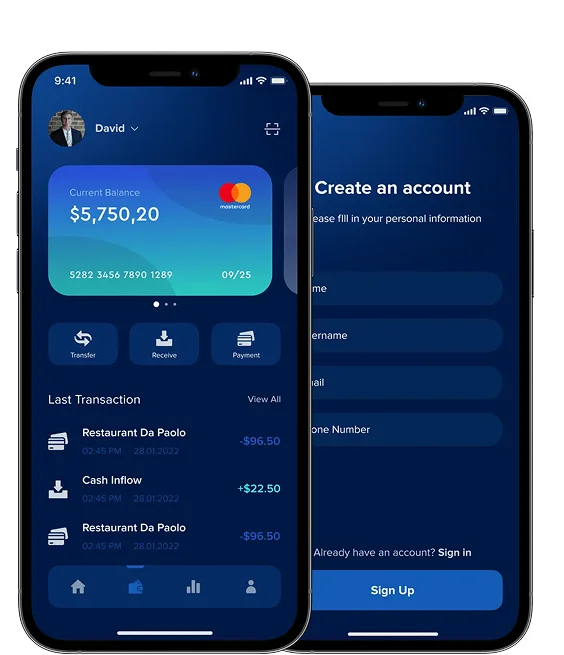
SoluLab's offshore teams have delivered fintech, lending, and trading products for startups in Europe and the US. One example: two offshore engineers joined a Northern European fintech startup's in-house team within about a week and shipped native iOS and Android eWallet apps in five months.

Team Extension for a Fintech Startup's Family eWallet

Team Extension for a Fintech Startup's Family eWallet

A Northern European fintech startup was building an eWallet that helps parents guide their children's spending. The product was already in development and needed mobile engineers with fintech experience to reach the market sooner. We placed a senior iOS developer and a mid-level Android developer, who joined the client's sprints within one week.

  • iOS and Android Apps
  • 100% Admin Hassle Removed
Read the team extension case study
Online Lending Platform for a Fintech Startup

Online Lending Platform for a Fintech Startup

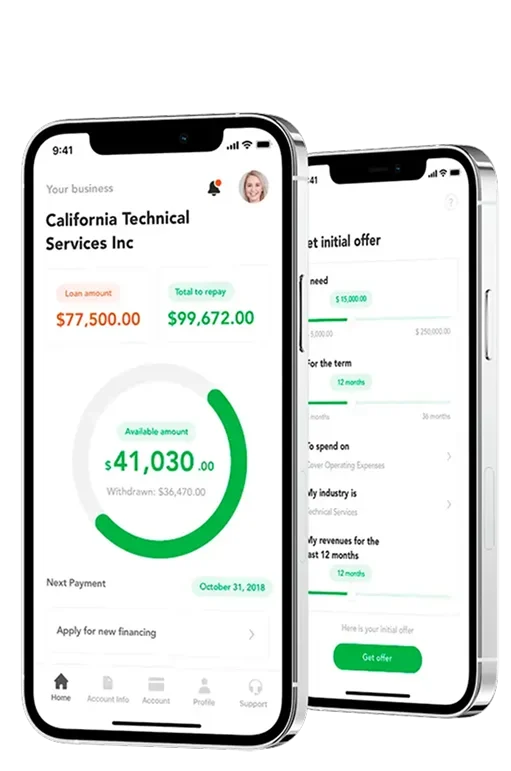
A fintech startup wanted to replace manual small-business lending with a fully digital process. A team of 8 built an iOS app, an admin module, and a back office covering the loan cycle from application to repayment, with KYC checks, e-signed agreements, and a credit scoring model.

  • Delivered within budget and on schedule
  • AI-based credit scoring module
Read the online lending platform case study
Algorithmic Stock Trading Platform

Algorithmic Stock Trading Platform, MVP in Three Months

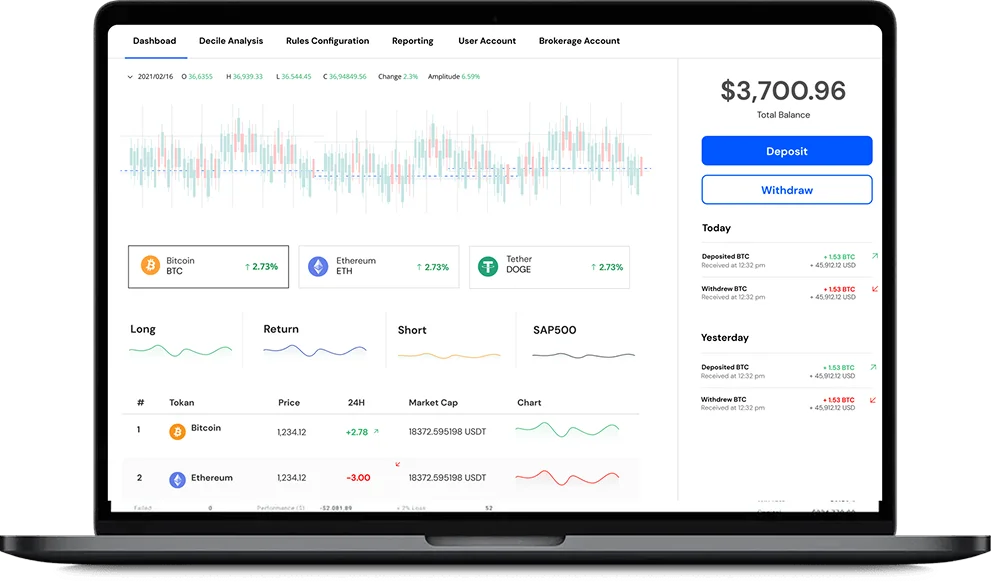
A wealth management firm turned its 20-year-old trading strategy into a SaaS product. A team of 7 built and launched the MVP in three months. Clients connect a brokerage account, set risk levels, and let the system trade.

  • Live for NYSE and NASDAQ trading
  • Reduced manual operations
Read the algorithmic stock trading case study

Industries We Serve With Offshore Software Development

SoluLab's offshore teams build software for fintech, crypto, healthcare, insurance, real estate, education, logistics and manufacturing. Industry experience matters offshore because compliance rules, integrations and data handling differ by sector, and a team that already knows them needs less ramp-up time.

Our offshore engineers bring sector context to every build, so you spend less time explaining the basics.

How the Offshore Engagement Works

SoluLab's offshore engagement runs in six steps: a discovery call, vetted profiles within 48 hours, your interviews, onboarding in about a week, two-week sprints, and a monthly review to scale or adjust. You approve every engineer before they start, and you see working software at the end of every sprint.

Discovery call

Discovery call (day 1)

We map your product goals, stack, team gaps, budget and the hours you need covered.

Vetted shortlist

Vetted shortlist (within 48 hours)

You receive engineer profiles matched to the role, with skills, past projects, and availability.

Interviews and selection

Interviews and selection

You interview and pick. Nobody joins your team without your sign-off.

Onboarding

Onboarding (about one week)

NDA, repository and tool access, working-hour overlap and a sprint calendar are set up.

Sprint delivery

Sprint delivery

Two-week sprints with planning, daily updates, demos and code review.

Monthly review

Monthly review

We check velocity, quality and fit, then scale the team up or down.

What Technologies and Frameworks Are Used in Our Offshore Software Development Services?

SoluLab's offshore teams work in mainstream, well-supported technologies: React and Next.js on the front end, Node.js, Python, Java and .NET on the back end, Swift, Kotlin and Flutter for mobile, and AWS, Azure or Google Cloud for infrastructure. Teams plug into your existing tools rather than asking you to switch.

Flask logoFlask
Express.js logoExpress.js
PHP logoPHP
Java Spring logoJava Spring
Django logoDjango
.NET logo.NET
Ruby logoRuby
Python logoPython

How SoluLab Vets Offshore Engineers

Every SoluLab offshore engineer passes a five-step vetting process before you see their profile: a portfolio and experience review, a stack-specific technical assessment, a live interview with a senior engineer, an English proficiency and communication check, and reference verification. You then run your own interview before anyone joins your team.

Portfolio and experience review

Portfolio and experience review

Shipped projects, code samples and seniority are checked against the role you need.

Technical assessment

Technical assessment

A hands-on test in your stack, scored on correctness, code structure and testing habits.

Senior engineer interview

Senior engineer interview

A live session on architecture, debugging and trade-off decisions.

Communication and English proficiency check

Communication and English proficiency check

Written and spoken clarity, since most offshore work runs through Slack threads and Jira tickets.

Reference and background verification

Reference and background verification

Past client or employer feedback before the profile is shared.

Offshore Software Development Cost and Engagement Models

Offshore software development cost depends on region, seniority, and engagement model. Senior developers average $31 to $41 an hour in Asia, $60 to $75 in Latin America and $64 to $76 in Europe. Startups usually pick hourly or part-time engagement for early work and move to a dedicated team once the roadmap is stable.

Offshore Hourly Rates by Region

Asia

India, Bangladesh

Junior developer $24–31 / hour
Senior developer $31–41 / hour
Latin America


Junior developer $33–45 / hour
Senior developer $60–75 / hour
Europe

Including Central and Eastern Europe

Junior developer $31–39 / hour
Senior developer $64–76 / hour

Our Engagement Model

01

Hourly

How it's billed

Per hour worked, invoiced monthly

Best for

Short tasks, audits, unclear scope

02

Part-time developer

How it's billed

Fixed monthly fee for part-time hours

Best for

Ongoing maintenance, small feature backlogs

03

Full-time dedicated developer

How it's billed

Fixed monthly fee per engineer

Best for

Extending an in-house team long term

04

Dedicated offshore team

How it's billed

Monthly fee for the full squad

Best for

MVPs, v2 builds, full product ownership

05

Fixed-scope project

How it's billed

Agreed price per milestone

Best for

Well-defined builds with stable requirements

SoluLab vs In-House vs Freelancers

An offshore team from SoluLab starts faster than in-house hiring and carries less risk than freelancers, because vetting, QA, replacement and delivery management come included. In-house hiring gives the most control at the highest cost, while freelancers suit short, well-defined tasks where you can manage quality yourself.

In-house hiring

Time to start

Weeks to months of recruiting

Cost

Highest: salary, benefits, office and equipment

Vetting

Your own hiring process

Scaling

Slow to grow, costly to shrink

QA and process

You build and fund it

IP and contracts

Covered by employment contracts

Continuity

Notice periods and rehiring

Freelancers

Time to start

Days, but vetting is on you

Cost

Low hourly rate, rising with rework and turnover

Vetting

Platform ratings and reviews

Scaling

One person at a time

QA and process

Rarely included

IP and contracts

Negotiated person by person

Continuity

High risk if someone drops off

How to Choose an Offshore Region

Choose an offshore region by the overlap you need first, then cost and skills. Latin America overlaps most with US hours, Eastern Europe with Western Europe, and India and Southeast Asia with the Gulf, while India offers the largest talent pool and lowest senior rates. Shifted schedules can close most gaps.

Region

Southeast Asia

Best time zone overlap with

Gulf, Australia

What it offers

Growing mobile and QA talent, competitive rates

Region

Eastern Europe

Best time zone overlap with

Western Europe, US East Coast (morning)

What it offers

Strong engineering education, close cultural fit with EU clients

Region

Latin America

Best time zone overlap with

US and Canada

What it offers

Near-full working-day overlap with North America

SoluLab's engineering teams work from India, with offices in the USA, Canada and Australia, and schedules are shifted to give daily overlap with US, European and Middle East clients.

Background graphic representing SoluLab's services for building your offshore team and providing vetted engineer profiles within 48 hours

Build Your Offshore Team This Week!

Share your stack and the roles you need. We'll send vetted engineer profiles within 48 hours, you interview the shortlist, and your new engineers can join the next sprint.

Security, IP Ownership and Compliance

With SoluLab, you own 100% of the source code and intellectual property from the first commit. Every engagement starts with an NDA, engineers work in your repositories under access you control, and delivery runs under CMMI Level 3 and SOC 2 practices.

01

NDA signed before discovery, with IP assignment written into the main contract

02

Code lives in your GitHub, GitLab or Bitbucket organization, not ours

03

Least-privilege access to production, revoked the day an engineer rolls off

04

Process maturity: CMMI Level 3 delivery practices and SOC 2 controls

05

Data handling aligned with GDPR for European clients and with children's privacy rules where they apply

Offshore Development Roadmap: Your First 90 Days

A SoluLab offshore engagement follows a five-step roadmap: discovery and scoping, team selection and onboarding, first sprints, steady delivery, and review and scale. Each step ends at a gate you approve, such as signing off on the team or accepting the first demo, so the team never moves ahead without your decision.

Discovery and scoping
Step 1

Discovery and Scoping

We map your product goals, stack, roadmap priorities and the roles you need, then agree on a team plan and daily overlap hours.

Gate

you agree the scope.

Team selection and onboarding
Step 2

Team Selection and Onboarding

You receive vetted engineer profiles within 48 hours, interview the shortlist and approve the team. NDA, repository access and tools are set up before any work starts.

Gate

you approve the team.

First sprints
Step 3

First Sprints

The team runs sprint planning, sets a shared definition of done, wires CI with automated testing, and presents the first sprint demo.

Gate

you accept the first demo.

Steady delivery
Step 4

Steady Delivery

Features ship on a regular release cadence, with velocity and escaped defects tracked every sprint.

Gate

both sides agree on a velocity baseline.

Review and scale
Step 5

Review and Scale

A structured review of quality, speed, and team fit leads to a decision to scale up, hold or scale down, plus a plan for the next phase of your roadmap.

Gate

you decide the team size.

Why Choose SoluLab for Offshore Software Development?

Startups and SMBs choose SoluLab because it pairs offshore rates with consulting-led engineering: 250+ engineers, 1,500+ projects since 2014, profiles in 48 hours, CMMI Level 3 and SOC 2 practices, and verified ratings of 4.9 on Clutch and GoodFirms. You get a delivery partner that questions scope, not just extra headcount.

12 Years of Delivery

12 Years of Delivery

SoluLab has built software since 2014, with more than 1,500 projects delivered for clients in 15+ countries.

Vetted Profiles in 48 Hours

Vetted Profiles in 48 Hours

You see matched engineer profiles within two days and decide who joins, so hiring never stalls a release.

Consulting-Led, Not Just Headcount

Consulting-Led, Not Just Headcount

Senior architects review scope and design with you, which stops expensive rework before the first sprint.

Depth in AI and Blockchain

Depth in AI and Blockchain

The same offshore bench includes engineers who ship LLM features, AI agents, smart contracts and tokenization platforms.

Verified Client Ratings

Verified Client Ratings

Clients rate SoluLab 4.9 from 55 reviews on Clutch and 4.9 from 101 reviews on GoodFirms.

95% Client Retention

95% Client Retention

95% of clients keep working with SoluLab after their first engagement, so team knowledge carries into the next release.

What Our Clients Have to Say About Us

I am extremely impressed with the collaborative efforts of AI-Build and SoluLab in developing our CAD product using generative AI. Their solution revolutionized our product development process by automating design generation, improving customization, and enhancing accuracy.

SoluLab successfully delivered the project on time, and we were very pleased with the team’s flexibility and honesty. They were considerate of our needs and even accommodated a few minor changes outside the original scope without additional charges. They delivered everything on time.

SoluLab did an excellent job. They were always eager to assist and find the best solution. Their technical expertise and willingness to work closely with us helped turn an ambitious product vision into a working blockchain gaming ecosystem.

They didn’t just execute tasks; they took the time to understand our goals. SoluLab built the core product, integrated third-party tools and APIs, and created a smoother user experience that resulted in higher engagement and better retention.

1 / 4
FAQ

Helpful resource to grow your business

Define the role first: stack, seniority, overlap hours, and the first 90 days of work. Then shortlist two or three partners that share real profiles quickly, let you interview candidates, and assign IP to you in the contract. Run a short paid task or first sprint before committing to a larger team.

Keep every agile ceremony but schedule planning, demos and retrospectives inside your shared overlap window. Run daily stand-ups asynchronously when hours don't line up, keep user stories and acceptance criteria written in Jira, and use two-week sprints so you see working software often enough to correct course early.

Offshore software development is the practice of hiring software engineers in another country, usually through a partner company, to build and maintain your products. The partner handles recruiting, payroll and compliance, while the engineers work on your roadmap, in your tools, and under your product owner's direction.

Manage by outcomes. Agree on a definition of done, track sprint velocity and escaped defects, and require code review and automated testing before every merge. Name one delivery lead on each side, document decisions in writing, and hold a monthly review of quality, speed and team fit.

In the US, offshore development spend usually counts as foreign research and experimental expenditure. Since 2025, domestic R&E costs can be deducted in the year incurred, but foreign R&E must still be capitalized and amortized over 15 years. Confirm your treatment with a tax advisor.

An offshore software development company employs engineers in lower-cost regions and provides them to clients abroad as individual developers, dedicated teams, or full project delivery. A good one also supplies vetting, QA, delivery management, security controls, and replacement cover, so the client gets working software rather than just hours.

Companies choose offshore software development to lower engineering costs, access skills that are scarce locally, and start faster than in-house hiring allows. Senior developers in Asia average $31 to $41 an hour against $64 to $76 in Europe, so the same budget funds more experienced engineers.

Yes, when the basics are in place: enough time zone overlap for daily decisions, written requirements, automated testing and one accountable delivery lead. It fails when teams skip sprint planning, leave requirements verbal, or treat offshore engineers as a separate black box instead of part of the product team.

Check four things: verified reviews on Clutch or GoodFirms, case studies in your industry or stack, a clear vetting process, and how they handle time zone overlap. Ask to interview the actual engineers, not a sales team, and confirm who your delivery lead will be before signing.

Compare vendors on contract terms as much as talent. Look for full IP assignment, an NDA before discovery, a no-cost replacement clause, monthly exit flexibility and transparent per-role rates. Then run a two-week pilot sprint and judge the vendor on code quality, communication and delivery against the plan.

Cost depends on region, seniority and engagement model. Accelerance's 2026 guide puts senior developers at $31 to $41 an hour in Asia, $60 to $75 in Latin America and $64 to $76 in Europe. Your engagement model then sets how that rate is billed.

With SoluLab, you receive vetted engineer profiles within 48 hours of the discovery call. After you interview and approve candidates, onboarding usually takes about a week, covering the NDA, repository access, tool setup and agreed overlap hours, so the first sprint can start within days of selection.

With SoluLab, you own 100% of the source code and intellectual property from the first commit. IP assignment is written into the main contract, an NDA is signed before discovery, and all code lives in your own repositories, so nothing depends on SoluLab's systems if the engagement ends.