Blockchain is a genuine game-changer, handing decentralized solutions to sectors and companies across the board. At its core, it’s a distributed ledger that enables safe, open transactions without a middleman in sight. Since Bitcoin introduced it back in 2009, blockchain has come a long way, and a huge number of platforms and apps have sprung up to put its unique properties to work.
People in the crypto world often use “multi-chain” and “cross-chain” as if they mean the same thing. They don’t. Both models move value and information between blockchain networks, but the methods and the goals behind them are genuinely different.
In this blog, we’ll cover the key use cases, advantages, limitations, and differences between cross-chain and multi-chain crypto.

Importance of Interoperability in Blockchain Networks
As blockchain keeps spreading, the need for different networks to actually talk to each other only grows. Interoperability just means different blockchain platforms can communicate and transact with each other smoothly. Without it, blockchain ecosystems risk fragmenting, which holds back what decentralized applications (DApps) can do and limits how many people end up using them.
Interoperability lets blockchain networks share data, assets, and functionality, opening doors for innovation and collaboration that wouldn’t exist otherwise. It powers cross-border transactions, makes assets interoperable, and builds interconnected ecosystems. It also pushes competition and diversity across the blockchain space, which drives even more innovation.
What is Multi-Chain?
Multi-chain happens when several chains link together in a federated setup. Each network stays independent while still allowing permissioned access between chosen entities. Participants on a chain have to agree on a shared set of standards before they can transact with each other. That setup keeps private data stores secure, and each network handles its own consensus method independently.
Each Decentralized Application (DApp) instance in a multi-chain ecosystem runs smart contracts separate from apps on other blockchains. As the ecosystem grows, new on-chain settings push aggregate throughput up, pulling in more users with lower transaction costs. Every network in this setup handles scalability, decentralization, method design, consensus, execution, data availability, and privacy its own way.
Advantages of Multi-Chain Architectures
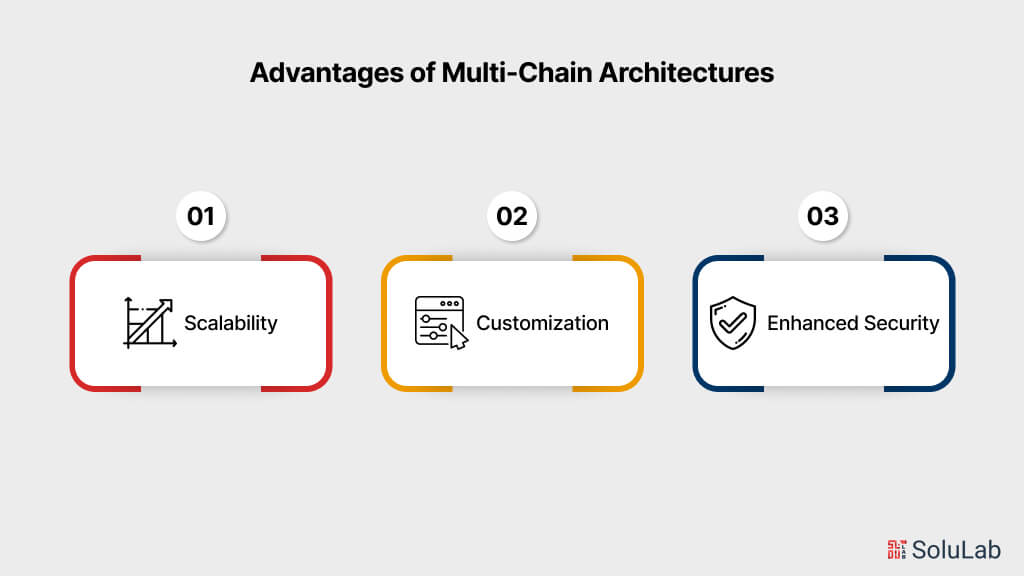
Before getting into specifics, it’s worth noting that multi-chain architectures solve some real challenges inside blockchain ecosystems. Scalability, customization, tighter security, these advantages all add up to more efficient, more effective blockchain networks.
1. Scalability
Multi-chain architectures solve the scalability limits that single-chain networks usually run into. By running multiple parallel chains, each processing transactions on its own, multi-chain platforms push throughput up significantly. That’s what lets them handle a much larger volume of transactions without slowing the network down or dropping transaction speed. On top of that, multi-chain setups can shift resources between chains dynamically based on demand, squeezing out even more scalability and efficiency.
2. Customization
One of the biggest wins with multi-chain architectures is the ability to tailor each chain to its own use case. Single-chain platforms process every transaction on one ledger with the same rules for everyone. Multi-chain breaks that mold, letting developers build specialized chains optimized for different applications. That flexibility means blockchain solutions can actually fit the diverse needs of different industries. Developers can run different consensus mechanisms, smart contract languages, and governance models on individual chains, tuning performance for whatever the application needs.
3. Enhanced Security
Multi-chain architectures boost security by isolating transactions and smart contracts on separate chains, which limits the damage from any single breach or vulnerability. If one chain gets compromised, it doesn’t automatically put the rest of the network at risk. Multi-chain platforms can also layer in advanced security like sharding, encryption, and multi-signature authentication across chains, guarding against unauthorized access, tampering, and fraud. Spread transactions and data across multiple chains, and you cut the risk of any single point of failure while making the whole network more resilient.
Examples of Multi-Chain Platforms
A handful of major platforms have already embraced multi-chain architectures to reshape what blockchain can do.
- Ethereum 2.0: Ethereum 2.0, also called Ethereum 2 or Eth2, is a major upgrade aimed at improving Ethereum’s scalability, security, and sustainability. One of its key features is the Ethereum Beacon Chain, a multi-chain architecture that acts as the backbone of the Ethereum 2.0 network, coordinating activity across multiple shard chains. These shard chains process transactions in parallel, which is how Ethereum 2.0 pulls off higher throughput and scalability than the original blockchain ever could.
- Polkadot: Polkadot is a multi-chain platform built specifically for interoperability between different blockchains. It runs multiple parallel chains called parachains, all connected to a central relay chain. Parachains can be customized for specific use cases, while the relay chain provides a secure, decentralized communication layer between them. Polkadot’s architecture enables cross-chain messaging, asset transfers, and interoperability, letting very different blockchains interact and share data without friction.
- Cosmos: Cosmos is a decentralized network of interconnected blockchains built for interoperability and scalability across disparate blockchain platforms. At its core sits the Cosmos Hub, a multi-chain blockchain that connects independent blockchains called zones. Each zone runs independently with its own validators, consensus mechanisms, and governance. Through the Inter-Blockchain Communication (IBC) protocol, Cosmos enables secure, trustless communication between zones, moving assets and data across multiple blockchains.
Multi-Chain Applications
Multi-chain architectures open the door to a wide range of applications across industries, leaning on their scalability, customization, and stronger security. Here are some worth knowing about:
1. Decentralized Finance (DeFi)
Multi-chain platforms are reshaping DeFi by offering scalable financial services. Customized chains built for lending, borrowing, or decentralized exchanges (DEXs) give users access to a wide range of DeFi applications with better efficiency and lower transaction costs. Ethereum 2.0, Polkadot, and Cosmos are all fueling DeFi growth by providing scalable infrastructure for decentralized financial protocols.
2. Supply Chain Management
Multi-chain architectures are reshaping supply chain management by boosting transparency, traceability, and efficiency. Customized chains let stakeholders track products across the entire supply chain, confirming authenticity and cutting the risk of fraud or counterfeits. Pair blockchain with IoT devices and smart contracts, and multi-chain platforms enable real-time monitoring and automated execution of supply chain processes.
3. Gaming and Non-Fungible Tokens (NFTs)
Multi-chain platforms are powering the growing market for gaming and NFTs with scalable infrastructure for managing and trading digital assets. Customized chains let developers build immersive gaming experiences with tokenized assets and in-game economies. Interoperability between chains adds seamless cross-chain asset transfers and trading on top, boosting liquidity and access for NFT enthusiasts.
Related: NFTs in Gaming
4. Identity Management
Multi-chain architectures offer secure, decentralized identity management, letting individuals actually control their personal data and digital identities. Customized chains support self-sovereign identity systems, where users store and manage identity credentials on the blockchain themselves. Combine that with advanced cryptography and multi-chain interoperability, and identity management applications deliver stronger privacy, security, and user control over personal data.
5. Government and Public Services
Multi-chain platforms are reshaping government and public services with transparent, efficient data management and governance. Customized chains let governments digitize administrative processes, streamline public service delivery, and improve transparency and accountability. Blockchain technology here means better data integrity, less bureaucracy, and more control for citizens over their interactions with government agencies.
What is Cross-Chain?
Cross-chain technology lets assets and data move smoothly between different networks by connecting numerous chains in an interoperable way. That architecture supports smart contracts, safe transactions across chains, and Decentralized Applications (Dapps), all without leaning on a central authority or middleman.
Native cross-chain apps exist because of this capability. Instead of setting up several separate instances across different networks, a single Decentralized Application (dApp) instance runs across many smart contracts installed on separate blockchains at once.
In cross-chain technology, several smart contracts on different chains each handle their own discrete tasks while staying synchronized, all working toward a single use case inside one application. That’s what lets developers tap into the unique strengths of different blockchain networks.
Advantages of Cross-Chain Architectures
Cross-chain architectures tackle the interoperability challenges baked into blockchain ecosystems, delivering real advantages in connectivity, liquidity, and accessibility. Here’s what stands out:
1. Interoperability
Cross-chain architectures let very different blockchain networks communicate and interact without friction, building real interoperability and collaboration. By moving assets and data across chains, cross-chain solutions break down silos and build interconnected ecosystems, extending blockchain’s reach and usefulness.
2. Increased Liquidity
Cross-chain architectures boost liquidity by enabling asset transfers and trading across multiple blockchains. Through interoperability protocols like atomic swaps and decentralized exchanges (DEXs), users swap assets between different chains without needing an intermediary or a centralized exchange. That interoperability drives market efficiency, price discovery, and liquidity, which benefits traders, investors, and DeFi participants alike.
3. Enhanced Security
Cross-chain architectures lean on blockchain’s decentralized, immutable nature to improve security. By enabling trustless asset transfers and cross-chain transactions, they cut counterparty risk and reduce reliance on centralized intermediaries. Cryptographic techniques like hash locks and multi-signature schemes keep cross-chain transactions accurate and legitimate, adding real security and trust to the ecosystem.
Related: Layer-1 Vs. Layer-2: The Blockchain Scaling Solutions
4. Diversification and Risk Mitigation
Cross-chain architectures open up diversification for blockchain users, giving them access to a wider range of assets and applications across chains. Spread the risk across multiple blockchains, and users soften the blow from vulnerabilities or failures in any single network. Cross-chain interoperability also cuts dependency on any one blockchain platform, adding resilience and stability to the broader ecosystem.
5. Scalability and Performance
Cross-chain architectures boost scalability and performance by offloading transactions and computational work onto multiple chains. Spread the workload across interconnected networks, and cross-chain solutions ease congestion and bottlenecks, improving throughput and efficiency overall. That’s what lets blockchain networks handle a bigger volume of transactions and growing user demand without losing performance or driving up transaction costs.
Examples of Cross-Chain Solutions
Cross-chain solutions are driving interoperability between different blockchain networks, with innovative approaches to asset transfers, data exchange, and cross-chain transactions. Here are some worth knowing:
- Atomic Swaps: Atomic swaps let people exchange cryptocurrencies peer-to-peer across different blockchains, no intermediary needed. This trustless, decentralized mechanism swaps assets atomically: either both parties get what they agreed on, or the whole transaction cancels. Atomic swaps run on smart contracts and cryptographic hash functions, making cross-chain transactions secure, verifiable, and seamless between compatible blockchains.
- Interoperability Protocols: Protocols like the Interledger Protocol (ILP) and the Blockchain Interoperability Protocol (BIP) handle communication and data exchange between different blockchain networks. They set standards and guidelines for interoperability, making integration between disparate systems possible. By defining common data formats, messaging protocols, and communication channels, these protocols enable cross-chain transactions, asset transfers, and smart contract interoperability, building connectivity across the blockchain ecosystem.
- Decentralized Oracles: Decentralized oracles act as trusted sources of external data for blockchain applications, letting smart contracts interact with off-chain data and systems. Using decentralized consensus mechanisms and cryptographic proofs, they deliver reliable, tamper-proof data feeds for cross-chain applications. That gives blockchain networks access to real-world data, price feeds, weather information, IoT sensor data, and it opens up new use cases in decentralized finance (DeFi), supply chain management, and decentralized autonomous organizations (DAOs).
- Cross-Chain Bridges: Cross-chain bridges are specialized protocols or smart contracts that handle asset transfers and interoperability between blockchain networks. They build secure connections between blockchains, letting assets and data move smoothly across different systems. Cross-chain bridges typically use token wrapping or locking mechanisms for cross-chain transfers, keeping assets securely locked on one chain while corresponding tokens get minted or unlocked on another. By bridging multiple networks, cross-chain bridges enable cross-chain liquidity, decentralized asset exchanges, and cross-chain DeFi applications.
- Cross-Chain Middleware: Middleware platforms like Chainlink and Wanchain provide the infrastructure and tools for building cross-chain applications and interoperable networks. They offer services like cross-chain data oracles, interoperability protocols, and cross-chain asset management tools, making it easier for developers to build and deploy cross-chain applications. By abstracting away the complexity of cross-chain interoperability, these platforms free developers up to focus on building applications that actually use blockchain’s full potential.
Cross-Chain Use Cases
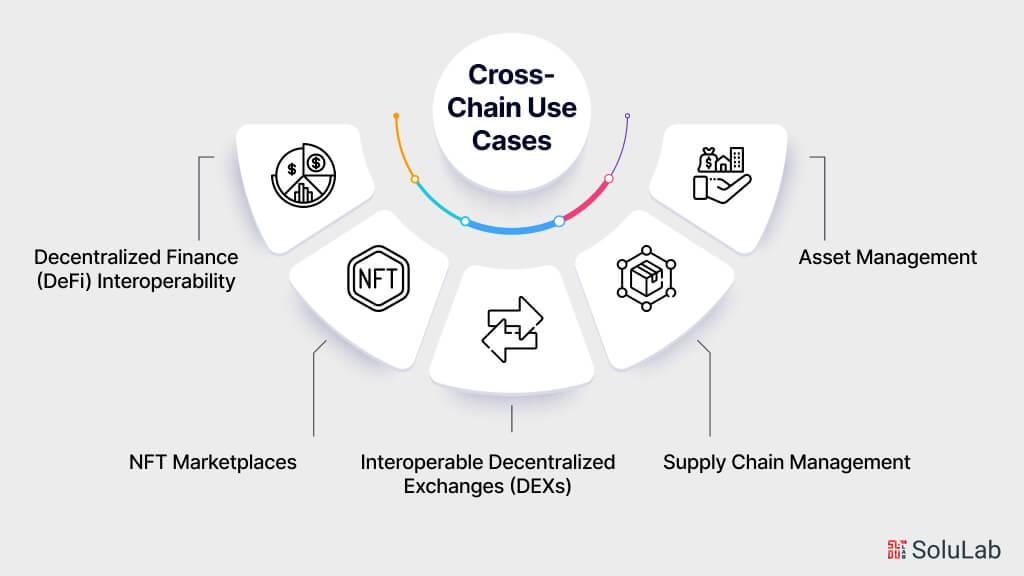
Cross-chain solutions have powered a huge range of applications across industries, tapping interoperability to unlock new opportunities for collaboration, efficiency, and value. Here are some worth calling out:
1. Decentralized Finance (DeFi) Interoperability
Cross-chain interoperability is reshaping DeFi, enabling seamless asset transfers and liquidity across multiple blockchain networks. Platforms like Polkadot and Cosmos support cross-chain asset exchanges, giving users access to a wide range of DeFi protocols and liquidity pools across different chains. That drives market efficiency, liquidity, and composability across DeFi, opening up more financial service access and opportunity for users.
2. Interoperable Decentralized Exchanges (DEXs)
Cross-chain DEXs lean on interoperability protocols and cross-chain bridges to enable decentralized asset trading across different blockchain networks. Platforms like Thorchain and Uniswap v3 support trustless, non-custodial trading across disparate chains, making crypto exchange possible without a centralized middleman. Cross-chain DEXs boost liquidity, price discovery, and accessibility for traders, investors, and DeFi participants, building a more decentralized, more inclusive financial system.
3. Cross-Chain Asset Management
Cross-chain asset management platforms let users manage and diversify crypto portfolios across multiple blockchain networks. Platforms like Enjin and ICON support seamless transfer and management of tokenized assets across chains, giving users more flexibility and control over their investments. These solutions improve portfolio diversification, risk management, and asset liquidity, helping users optimize strategy and manage risk in a market that moves fast.
4. Cross-Chain NFT Marketplaces
Cross-chain NFT marketplaces use interoperability protocols and cross-chain bridges to enable trading and ownership of NFTs across different blockchain networks. Platforms like Rarible and OpenSea support the creation, discovery, and exchange of NFTs across disparate chains, giving artists, creators, and collectors access to a genuinely global marketplace. NFT marketplace platforms boost liquidity, discoverability, and interoperability for NFTs, pushing innovation and creativity forward in digital art and collectibles.
5. Cross-Chain Supply Chain Management
Cross-chain solutions are reshaping supply chain management with seamless data exchange and asset tracking across multiple blockchain networks. Platforms like VeChain and IBM Food Trust use cross-chain interoperability to sharpen transparency, traceability, and efficiency across supply chains, letting stakeholders track products from source to destination across disparate chains. These solutions boost supply chain visibility, compliance, and sustainability, helping organizations run tighter operations and earn consumer trust.
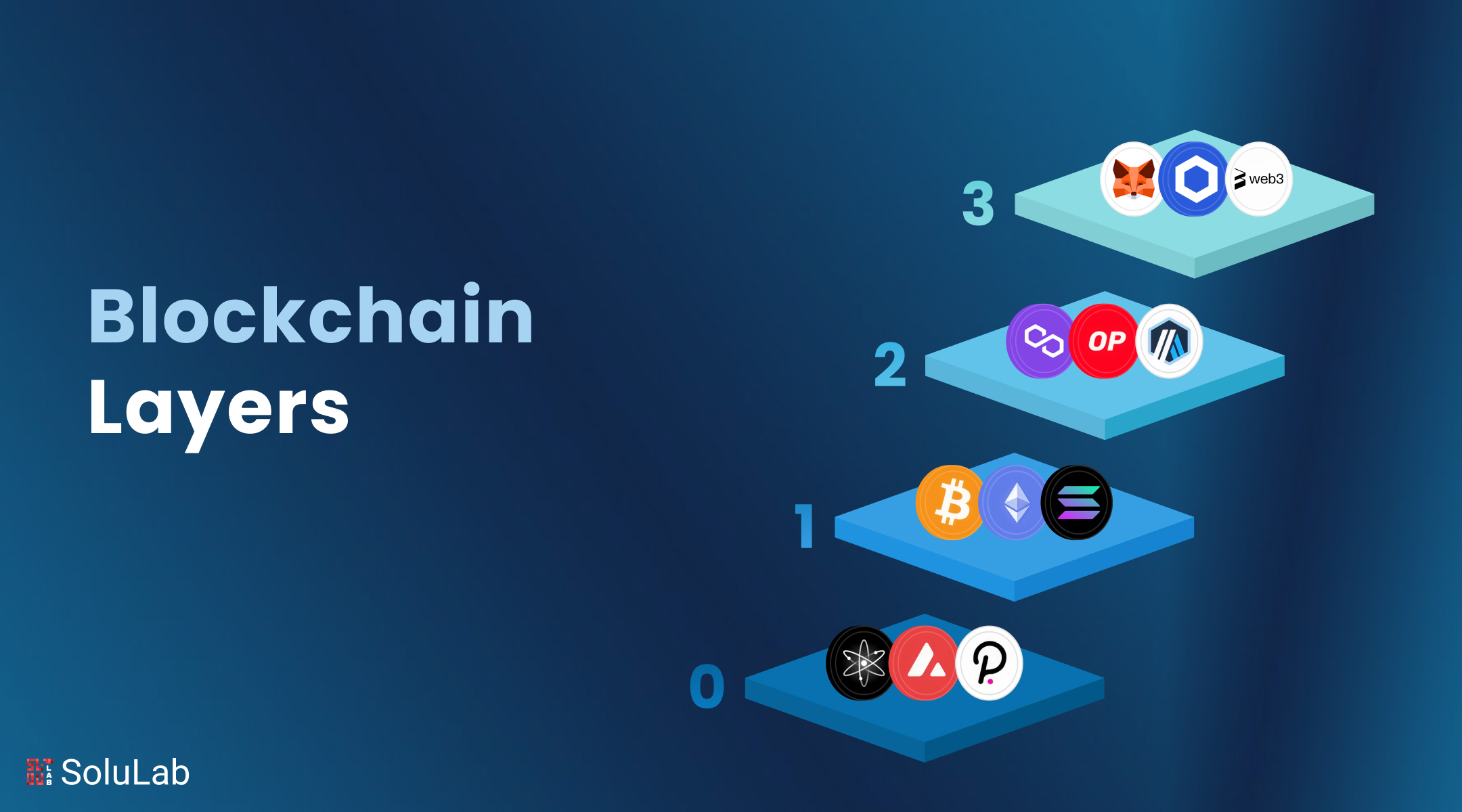
Related: Business Lens on Blockchain Stack: From Layer 0 to Layer 3
Differences Between Multi-Chain Vs. Cross-Chain
Multi-chain and cross-chain both tackle interoperability, but they take genuinely different approaches:
| Aspect | Multi-Chain | Cross-Chain |
| Scope | Multiple independent blockchains within the same ecosystem | Facilitates communication between separate blockchain networks |
| Independence | Each blockchain operates independently | Facilitates communication between separate blockchains |
| Interoperability | Interaction between chains within the same ecosystem | Communication and asset transfer between distinct blockchains |
| Use Cases | Scalability, customization, and isolation of functionalities | Decentralized exchanges, asset tokenization, cross-border payments |
| Challenges | Security, scalability, and governance across multiple chains | Security, scalability, standardization of cross-chain protocols |
Future of Multi-Chain vs. Cross-Chain in Blockchain Technology
As blockchain technology keeps evolving, both multi-chain and cross-chain approaches have real promise ahead, just on different paths.
1. Multi-Chain
Expect multi-chain ecosystems to keep multiplying and specializing. As blockchain networks get more complex and varied, demand for tailored solutions built around specific use cases will keep growing. Multi-chain architectures give developers the flexibility and scalability to design blockchains optimized for particular applications: decentralized finance (DeFi), non-fungible tokens (NFTs), supply chain management, and more.
Down the road, expect interconnected multi-chain ecosystems to emerge, where interoperability between chains inside the same framework gets smoother. That could lead to standardized protocols and interoperability frameworks, making communication and asset transfer between diverse blockchain networks easier.
Better consensus mechanisms, scalability solutions, and governance models will push multi-chain architectures further too. Projects exploring new approaches to cross-chain communication inside multi-chain ecosystems are likely to gain real traction, fueling innovation and collaboration across blockchain platforms.
2. Cross-Chain
Cross-chain technology is set to play a central role in solving the blockchain industry’s interoperability problem. As the number of blockchain networks keeps climbing, moving assets and data seamlessly between disparate chains only becomes more important.
Expect cross-chain solutions to get more sophisticated and standardized, delivering frictionless interoperability across a wide range of blockchain networks. That could bring interoperability protocols and middleware layers built for secure, trustless cross-chain transactions. Cross-chain interoperability could also unlock new use cases that draw on the strengths of multiple blockchain platforms. Decentralized finance (DeFi), decentralized exchanges (DEXs), asset tokenization, and cross-border payments are just a few areas where cross-chain technology could change how value moves and gets managed.
As the blockchain ecosystem matures, cross-chain interoperability standards will likely see wider adoption, building more collaboration and synergy between different blockchain projects and communities. That could pave the way toward a more interconnected, more inclusive blockchain technology, where innovation thrives across diverse networks and applications.
Both multi-chain and cross-chain approaches have genuinely promising futures in blockchain technology, each solving different needs and challenges. Multi-chain architectures bring flexibility and scalability inside a single ecosystem, while cross-chain interoperability enables seamless communication and asset transfer between separate blockchain networks. As both technologies keep evolving, they’ll play key roles in shaping the future of decentralized finance, digital asset management, and more.

Concluding Thoughts
The future of blockchain technology is closely tied to how both multi-chain and cross-chain approaches evolve. Multi-chain architectures bring versatility and scalability inside individual ecosystems, while cross-chain interoperability holds the key to seamless communication and asset transfer between disparate blockchain networks. As the blockchain industry matures, these two approaches converging will likely drive innovation and unlock new possibilities for decentralized applications, financial systems, and beyond. Whether it’s optimizing specific use cases within a multi-chain framework or enabling cross-chain interoperability for broader connectivity, progress on both fronts will shape decentralized technology for years to come.
At SoluLab, we understand what it takes to stay ahead in the blockchain ecosystem. As a leading blockchain development company, we bring expertise in both multi-chain and cross-chain technologies, helping businesses use blockchain innovation to its full potential. Whether you want to build custom blockchain solutions, integrate cross-chain interoperability, or hire blockchain developers for your project, SoluLab delivers tailored services built around your actual needs. Contact us today to start your blockchain journey and unlock new possibilities for your business.
FAQs
Shipra Garg is a tech-focused content strategist and copywriter specializing in Web3, blockchain, and artificial intelligence. She has worked with startups and enterprise teams to craft high-conversion content that bridges deep tech with business impact. Her work translates complex innovations into clear, credible, and engaging narratives that drive growth and build trust in emerging tech markets.