Key Takeaways
- AI Integration: Machine learning reduces fraud detection latency to sub-200ms and optimizes liquidity routing.
- Cost Efficiency: AI-powered stablecoin systems cut remittance costs by up to 80% compared to SWIFT rails.
- Regulatory Compliance: Systems now prioritize MiCA (EU) and FCA (UK) standards, including DAC8 transparency.
- Modular Infrastructure: Modern platforms use a “Digital Asset Marketplace” architecture, supporting T+0 settlement cycles and multi-asset classes (stablecoins, RWAs, and derivatives) on a single dashboard.
The banking game is changing from retail-heavy platforms to high-end automated systems to handle trillions in transaction volume. But how? Stablecoins have transitioned into a foundational pillar of global commerce, particularly for cross-border payroll and supply chain settlements. However, just using stablecoins for payments is not enough; maintaining the privacy and giving analytics to your users is also a rising point.
- By combining AI-native strategy with robust blockchain architecture, SoluLab facilitates the creation of ecosystems that are both compliant and high-performing.
- Whether you wish to navigate the SEC’s 2026 Joint Staff Statement.
Implementing AI-powered stablecoin development for automated liquidity is the most popular adoption. This reduces friction and maximizes capital efficiency.
Why Are Businesses Adopting AI in Crypto Platforms?
In 2026, the primary driver for AI adoption is operational intelligence. Traditional crypto systems often struggle with “slippage” and high-latency fraud detection. By integrating an AI development company’s expertise, businesses can implement predictive analytics that forecast market volatility and adjust stablecoin reserves in real-time.
- Fraud Mitigation: AI models now identify suspicious patterns in under 200 ms, essential for meeting the UK FCA’s 2026 Consumer Duty requirements.
- Smart Routing: AI algorithms analyze gas fees across networks like Solana, Polygon, and Ethereum to route Stablecoin remittances for startup operations through the most cost-effective path.
- Automated Compliance: AI-driven “RegTech” tools automate DAC8 reporting, ensuring that every transaction is audit-ready without manual intervention.
How does AI Improve Stablecoin Payment Systems?
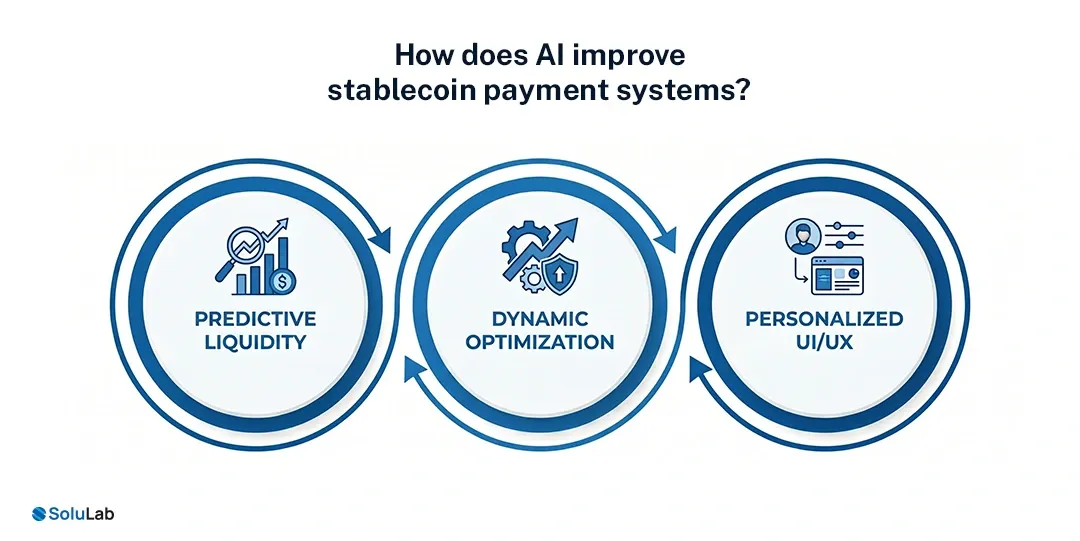
The integration of AI Algorithm-Based Stablecoin Development has redefined how electronic money tokens (EMTs) behave. In a 2026 enterprise environment, “dumb” tokens are being replaced by programmable assets that use machine learning to manage their own stability and distribution.
- Dynamic Collateral Management: AI monitors the value of RWA-backed stablecoins (gold, oil, or copper) and triggers automatic rebalancing to maintain the peg.
- Predictive Liquidity: For custom crypto remittance software development, AI predicts peak payout periods (e.g., end-of-month payroll) and ensures liquidity pools are pre-funded, preventing transaction failures.
- Personalized UI/UX: AI-driven dashboards provide institutional clients with real-time ROI metrics and tax liability forecasts based on regional 2026 regulations.

How do Stablecoin Remittance Systems Work?
A modern stablecoin remittance system operates as a hybrid layer between legacy banking and decentralized ledgers. This AI-native approach ensures that while the settlement happens on-chain, the user experience feels like a standard banking app.
- The Ingress: Fiat is converted into a regulated stablecoin (like USDC or EURI) via a licensed on-ramp.
- The Transmission: The AI-powered crypto platform development layer selects the optimal blockchain. For instance, Solana’s Token Extensions might be used for their programmable compliance features.
- The Egress: On the recipient side, the stablecoin is either held in a digital wallet or off-ramped into local currency through a T+0 settlement cycle.
Why is everyone talking about stablecoin remittance in 2026?
| Feature | Traditional Bank (SWIFT) | Stablecoin Remittance |
| Speed | 3 to 5 business days | Seconds to Minutes (24/7) |
| Average Cost | ~6.5% total fees | < 1% total fees |
| Transparency | Black box (money “disappears” mid-flight) | On-chain tracking (see exactly where it is) |
| Availability | Bank hours only (Mon-Fri) | Anytime (even at 3 AM on a Sunday) |
What is The Cost and Timeline To Develop a Stablecoin Remittance System?
The AI-Powered Crypto Platforms development cost in 2026 is influenced by the depth of integration and regulatory requirements.
| Project Scope | Estimated Cost (USD) | Timeline |
| Basic MVP (Stablecoin Wallet) | $50,000 – $120,000 | 8 – 12 Weeks |
| Custom Remittance Platform | $120,000 – $350,000 | 4 – 7 Months |
| Enterprise AI-Crypto Ecosystem | $400,000 – $1M+ | 8 – 18 Months |
The cost to build an AI-powered crypto platform that features agentic AI for treasury management typically adds $60,000 to $150,000 to the base budget. However, the ROI is seen in the elimination of intermediary fees (averaging 3% to 7% in traditional systems) and the reduction of settlement times from 3 days to seconds.
Which Industries and Regions Are Leading Adoption?
As of April 2026, stablecoin development services are seeing the highest demand in regions with clear legal frameworks and high cross-border trade.
- Latin America: 71% of businesses in this region use stablecoins for B2B payments to hedge against local currency inflation.
- Europe: With MiCA fully operational, the focus is on artificial intelligence (AI) Crypto Coins that comply with strict euro-backed reserve rules.
- South Korea: The STO market, led by partnerships like Ripple and Kyobo, is driving a surge in Cryptocurrency Development Company contracts for asset-backed tokens.
Industries such as energy & commodities are utilizing these systems to tokenize natural resources, allowing for instant, stablecoin-funded settlements that bypass the traditional SWIFT network.
How Long Does It Take To Develop an AI-Powered Crypto Platform?
A comprehensive AI-powered crypto platform development cycle generally spans 6 to 14 months. The timeline is divided into:
- Discovery & Regulatory Mapping (4 Weeks): Ensuring the architecture meets ADGM, VARA, or SEC standards.
- Core Blockchain Development (12 Weeks): Building the smart contracts and stablecoin minting engines.
- AI Integration & Training (8-16 Weeks): Developing the machine learning models for fraud detection and liquidity routing.
- Auditing & Security Testing (4-6 Weeks): Essential for institutional-grade stablecoin remittance solution providers.
Technical Integrations: The 2026 Standard
Modern systems built by a cryptocurrency development company must support specific technical standards to be viable for institutional use:
- ERC-3643 & Token Extensions: For “permissioned” DeFi, ensuring only KYC-verified wallets can hold specific assets.
- Zero-Knowledge Proofs (ZKP): Integrating ZKPs into AI-powered crypto platform development features allows for transaction privacy while remaining compliant with AML laws.
- Interoperability Protocols: Using CCIP or LayerZero to ensure stablecoins can move seamlessly between Ethereum, Solana, and private bank-ledgers.
How SoluLab Can Help You Build Custom AI-Powered Crypto Platforms?
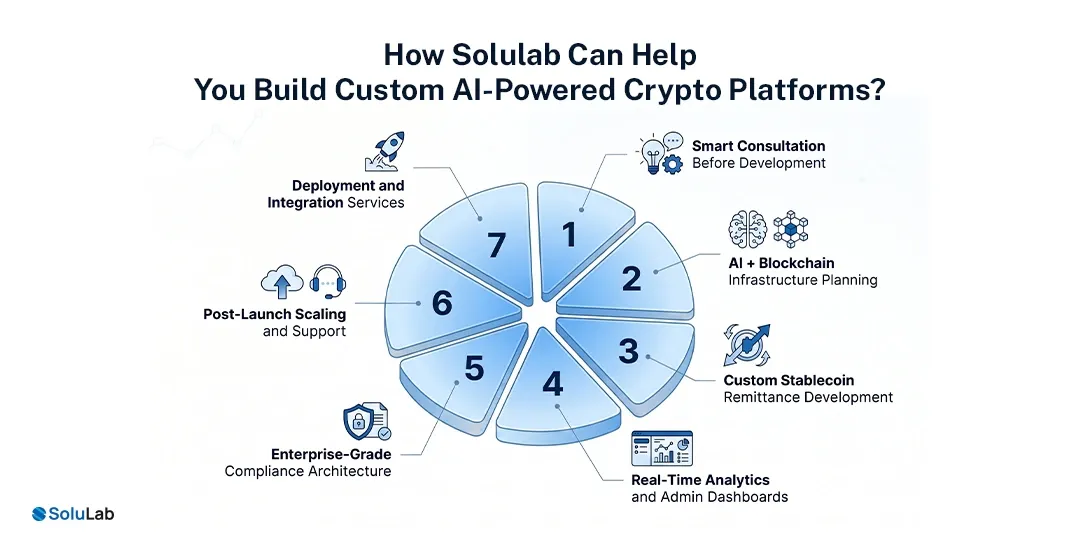
SoluLab helps businesses avoid unnecessary infrastructure costs by building modular and scalable platforms from day one.
With 250+ developers and experience across blockchain, fintech, and AI-powered app development, the team focuses on faster deployment, 80% cost cuts, and enterprise-ready services.
1. Smart Consultation Before Development
Our team starts with a consultation-first approach to understand your business model, transaction flow, compliance goals, and scaling requirements before AI-led development begins.
2. AI + Blockchain Infrastructure Planning
The team helps you choose the right blockchain networks, AI models, wallet architecture, and payment infrastructure for secure and scalable AI-powered crypto platform development.
Integrations Include:
- Ethereum, Solana, Polygon
- Stablecoin payment rails
- Smart contracts
- AI analytics engines
- Multi-chain wallets
3. Custom Stablecoin Remittance Development
SoluLab builds custom stablecoin remittance software development solutions that support instant cross-border payments, automated settlement systems, and real-time transaction tracking.
- T+0 settlements
- Low-fee payment routing
- Multi-currency support
- KYC/AML systems
- Treasury management tools
5. Real-Time Analytics and Admin Dashboards
Our experts develop AI-powered dashboards that give businesses complete visibility into:
- Transaction volume
- Treasury activity
- Liquidity flow
- User behavior
- Fraud alerts
- Compliance reports
This helps you make faster operational and financial decisions.
6. Enterprise-Grade Compliance Architecture
The company designs platforms aligned with modern global compliance standards, including:
- MiCA
- SEC guidelines
- AML/KYC frameworks
- DAC8 reporting
- GDPR-ready infrastructure
This is especially important for stablecoin remittance solutions providers operating across multiple regions.
7. Post-Launch Scaling and Support
Beyond development, SoluLab supports businesses with:
- Infrastructure scaling
- AI model optimization
- Blockchain upgrades
- API maintenance
- Security monitoring
- Feature expansion
This 24/7 service helps businesses grow without rebuilding their platform again and again as new laws or adaptations come.

Conclusion
Building a future-ready financial system requires more than just blockchain; it requires a synergy between decentralized ledgers and intelligent automation. As enterprises seek to optimize their global capital, the role of a specialized AI Development Company in USA becomes critical.
By focusing on factual ROI, sub-second settlement, and strict regulatory adherence, SoluLab remains at the forefront of this transition.
The 2026 market demands quality and quickness along with the right AI-native strategy, and businesses can finally achieve the “frictionless” finance they have been promised for a decade.
FAQs
Deepika is a content writer who blends storytelling with strategic thinking. She explores topics across digital innovation, emerging tech, and the evolving blockchain industry. She enjoys breaking down complex ideas into simple, engaging narratives in the growing global markets.