DeFi keeps reshaping how crypto actually gets traded, and DEX aggregators sit right in the middle of that shift. Pull liquidity from a dozen decentralized exchanges into one place and something interesting happens: rates improve, trades settle faster, slippage shrinks. That’s the whole pitch, and it’s holding up as the space matures.
According to DeFi Llama, the total value locked (TVL) across DeFi protocols currently sits at roughly $45 billion. Not a straight line up, but the trend holds despite the usual market noise.
Before aggregators, trading was fragmented, messy, and honestly a bit exhausting. Now traders tap into a much wider liquidity pool and see prices compared in real time, which means swaps get executed with far less guesswork.
DeFi DEX aggregator solutions keep getting sharper, and that’s giving crypto traders a smoother ride overall. So in this piece, we’ll dig into how these aggregators are reshaping the market and why they’ve become a fixture of modern trading.
Let’s begin!

What are DEX Aggregators?
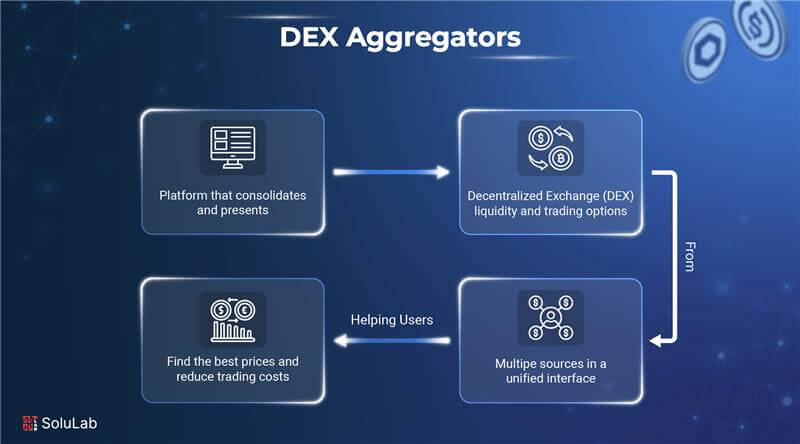
Think of a DEX aggregator as a search engine built specifically for finding your best possible trade. It scans a bunch of decentralized exchanges at once instead of making you hop between crypto trading platforms one by one. You type in what you want to swap; it does the legwork and hands you back the best price and the deepest liquidity it can find.
Plenty of these tools also plug into other DeFi products, like DeFi lending platforms, so you can borrow, lend, and trade without bouncing between five different apps. In practice, that’s what keeps a crypto portfolio from turning into a management headache.
How DEX Aggregators Work?
Under the hood, a DEX aggregator is software built on blockchain rails that pulls real-time trade data from many decentralized exchanges (DEXs) and folds it into one interface you can actually use. You enter the swap you want once. The aggregator then checks a whole stack of DEXs at once, looking for the best rate, the lowest cost, and the deepest liquidity it can line up. The net effect: trading gets simpler, and you’re not leaving value on the table by only checking one source.
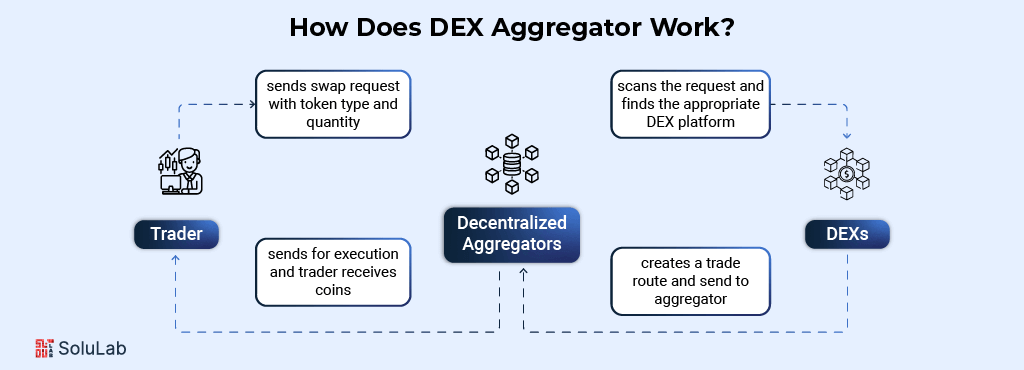
1. Data Collection: Everything starts with pulling real-time data from a wide net of decentralized exchanges. That’s the core job of any DeFi DEX aggregator software. Bring it all together and you get a full market picture without opening ten tabs.
2. Search and Trade Matching: The moment a trader enters tokens to swap, the aggregator gets to work checking every linked DEX. It weighs multiple routes and pairings to land on whatever’s cheapest and fastest, so you’re not stuck comparing tabs by hand.
3. Algorithmic Route Optimization: This is where the heavy lifting happens. The algorithm weighs transaction costs, prices across exchanges, slippage tolerance, and liquidity depth all at once. The target is simple to state and hard to hit: the best return for the least risk and cost.
4. Smart Contract Execution: Once the best route is picked, the aggregator hands the trade off to smart contracts for execution. No middleman standing between you and the trade, which cuts failure risk and keeps things fast, transparent, and safe.
5. Streamlined User Experience: You never have to manually deal with each individual DEX. That single change flattens the learning curve for anyone new to decentralized finance.
6. Real-Time Monitoring: The interface keeps you posted on token prices, how a trade is progressing, and order status as it happens. Traders can watch conditions shift and react before the window closes.
7. Liquidity Aggregation: By pooling liquidity from many exchanges, aggregators widen the available trading volume, which knocks down slippage and sharpens price execution. When markets get choppy, this is exactly when pooled liquidity earns its keep.
Teams looking to build or upgrade their own platform often turn to DeFi DEX aggregator development solutions for the customized groundwork, scalable, secure, efficient software built for exactly this job.
Key Benefits of DEX Aggregators for Crypto Traders
DEX aggregators changed how traders deal with decentralized exchanges, both in ease of access and in the results they walk away with. There’s a real list of advantages here, and if you trade on decentralized markets, it’s worth knowing what they actually are.
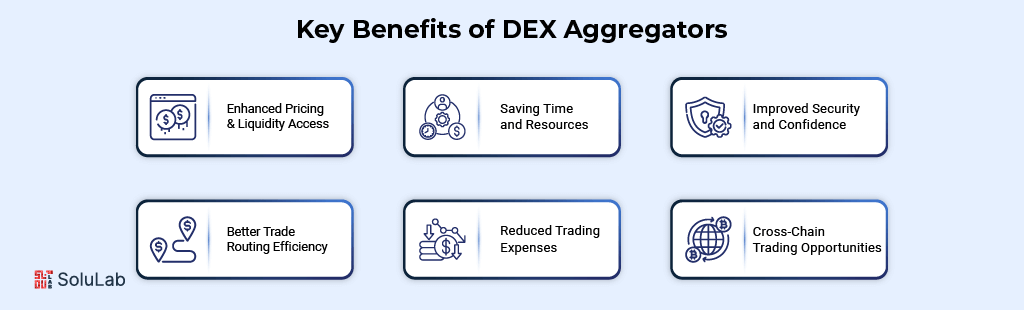
- Enhanced Pricing and Liquidity Access
By pulling liquidity together from many decentralized exchanges, aggregators give traders a shot at genuinely optimal pricing. You’re drawing from one large combined pool instead of being stuck with a single exchange’s order book. Less slippage, cleaner execution. It’s arguably the core benefit that modern DEX aggregator solutions offer.
- Saving Time and Resources
Checking token prices across a handful of crypto trading platforms by hand gets old fast. DEX aggregators fold all of that data into a single interface, so traders can swap quickly without hopping between apps or exchanges. Less friction, more actual trading.
- Improved Security
Most trades routed through DEX aggregators run on smart contracts that are visible and immutable on-chain. That cuts reliance on centralized middlemen and shrinks the risk of hacks or fraud. Strict DeFi protocol requirements baked into these systems only add to that confidence.
- Better Trade Routing Efficiency
Smart algorithms let aggregators split orders across multiple DEXs when it makes sense, chasing the best execution path available. A large trade can get broken into smaller pieces and routed through several liquidity pools to soften its market impact. This kind of dynamic routing is a defining piece of what DeFi Dex aggregator development platforms bring to the table.

- Reduced Trading Expenses
Aggregators hunt down the cheapest viable route for every trade, factoring in fees and gas costs along the way. That matters most when the network gets congested and gas on chains like Ethereum starts to spike.
- Opportunities for Cross-Chain Trading
Some of the stronger aggregators now handle cross-chain swaps, letting users move tokens across different blockchain networks without much friction. That opens up trading opportunities and access to liquidity pools that would otherwise sit out of reach, a feature that’s catching on fast across growing DeFi protocol ecosystems.
- Transparency and Real-Time Data Analysis
You get a clear view into trade routes, fees, and token valuations right through the aggregator’s interface. Real-time updates mean traders can track orders closely and adjust course fast. That level of transparency tends to separate the good decentralized trading solutions from the rest.
Impact of DEX Aggregators on Trading
DEX aggregators have sharpened decentralized trading by making it faster, more efficient, and cheaper cryptocurrency exchanges for traders. Before they showed up, people had to manually dig through decentralized exchanges hunting for good pricing and enough liquidity. Slow. Sometimes costly, thanks to slippage or steep fees. Aggregators fixed that by acting as a smart bridge connecting exchanges and routing trades wherever they’d run most efficiently.
That shift opened up better pricing and stronger liquidity pools to traders of every size, not just the high-volume or institutional players who used to have it to themselves. The overall trading experience got smoother, more centered on the user, and that’s fed back into growing confidence in decentralized finance.
As a core piece of the wider DeFi platform ecosystem, DEX aggregators are pulling in a bigger, broader crowd by making decentralized trading genuinely accessible, and that’s good for the overall health of crypto markets.
How to Develop Your Own DEX Aggregator?
Building your own DEX aggregator means pairing smart software design with real blockchain technology expertise. Users expect it all in one place: the best trade paths, sharp pricing, and an experience that doesn’t fight them. That’s why so many teams end up working with an established DEX aggregator development company rather than figuring it out alone.
Key Steps to Develop a DEX Aggregator
1. Research and Understand the Market: Look at what existing DEX aggregators and crypto trading platforms already do well, and figure out where the gaps are.
2. Integrate Multiple DEX APIs: Hook your aggregator into several exchanges through their APIs or smart contracts so you can pull real-time price, liquidity, and order book data.
3. Develop a Smart Routing Algorithm: Build logic that weighs trade paths across exchanges, fees, slippage, liquidity, and settles on whichever swap path actually performs best.
4. Implement Secure Smart Contracts: Lean on audited smart contracts for on-chain execution. This is what keeps user funds safe and the whole process transparent.
5. Plan a User-friendly Interface: People should be able to enter a swap, see the best pricing, and track their transaction without fighting the front-end.
6. Test for Performance and Security: Before anything ships, put the platform through its paces on speed, reliability, and vulnerabilities. Skipping this step is where things go wrong.
7. Continuous Monitoring and Updates: Staying competitive means constantly adding new DEX integrations, tracking market shifts, and pushing performance improvements.
Top 3 DEX Aggregators in the Market
By combining price and liquidity from multiple decentralized exchanges into one platform, DEX aggregators have made decentralized trading simpler and noticeably cheaper. Here are three worth knowing:
- 1inch: Widely seen as a pioneer in the space. 1inch splits trades across many DEXs through an advanced smart routing algorithm to land the best pricing at the lowest cost. It works for beginners and seasoned traders alike, with limit orders and liquidity mining sitting alongside the basic swap function.
- Matcha: Built on top of the 0x protocol. Matcha’s clean, simple interface makes it a solid choice for anyone who just wants a fast token swap without the fuss. By combining liquidity from multiple decentralized exchanges, it keeps slippage down and pricing competitive.
- Paraswap: Known for being upfront about how it works. Paraswap gives traders real-time pricing comparisons and a fee schedule you can actually understand. It also integrates a large number of DEXs and offers developers an open API, which invites custom builds and keeps innovation moving inside the DeFi ecosystem.
The Future of DEX Aggregators
As decentralized finance keeps expanding, DEX aggregators are only going to matter more. These platforms will keep smoothing access to the best liquidity and pricing across a growing set of blockchains, which in turn pushes forward more decentralized exchanges and DeFi protocol development.
Developments in smart contracts and better routing will chip away at slippage and cost, lifting both efficiency and affordability. Real-time data and interfaces built for both new and experienced traders will keep getting sharper. And as regulations shift, DEX aggregators may start weaving in compliance measures without giving up on decentralization.

Final Words
DEX aggregators have genuinely made crypto trading simpler and more affordable, helping people find the best deals across a spread of decentralized exchanges. They’re still reshaping how people interact with decentralized finance, handing back more control and a smoother experience along the way.
SoluLab, as a DeFi development company, builds practical blockchain solutions that meet real-world needs. Take our recent work with E-Motive , which shows how blockchain can power a decentralized automotive marketplace, cutting out middlemen, lowering costs for buyers, and backing more sustainable, eco-friendly practices.
Curious how blockchain or DeFi could work for your business? Get in touch with the experts.
FAQs
Shipra Garg is a tech-focused content strategist and copywriter specializing in Web3, blockchain, and artificial intelligence. She has worked with startups and enterprise teams to craft high-conversion content that bridges deep tech with business impact. Her work translates complex innovations into clear, credible, and engaging narratives that drive growth and build trust in emerging tech markets.