


Full Customization Around Your Users
Every screen, role and workflow matches how your customers actually work, so you don't train them around another vendor's limits.

Custom SaaS development is building a cloud-based software product designed around your users, workflows, and business model instead of adapting a generic tool. SoluLab builds it for funded startups, founders, and SMBs, from MVP scoping and multi-tenant architecture to launch and ongoing support.












SoluLab's custom SaaS development covers everything needed to take a SaaS application from idea to paying customers: product discovery, MVP scoping, UX design, multi-tenant architecture, subscription billing, cloud infrastructure, QA, launch, and ongoing support. It's built for funded startups, founders, and SMBs who need full customization rather than a template product.
The outcome you should expect is a product you can sell, measure, and scale: tenant-isolated data, role-based access, usage analytics, and a release pipeline your team can keep shipping on. It sits under our wider SaaS product development practice, which also covers modernizing existing SaaS platforms.
Build custom SaaS when your workflow, pricing model or data is the thing that sets you apart. Off-the-shelf software is faster to start, but it caps customization, locks your data into a vendor's model, and gives competitors the same features. A custom build turns your process into a product you own.
Every screen, role and workflow matches how your customers actually work, so you don't train them around another vendor's limits.
Your logic, data model and integrations stay yours. Competitors can't buy the same product off a shelf.

Seat-based, usage-based or tiered plans are built into the billing layer, so you can test pricing without a rebuild.
Architecture, caching and cloud computing resources are sized for your load, not for an average customer of a generic tool.
SoluLab's custom SaaS development services include MVP development, multi-tenant platform engineering, AI-powered SaaS features, SaaS modernization, integrations, cloud infrastructure and ongoing support. Each service can run as a fixed-scope project or as a dedicated team that owns your roadmap.
Launch a SaaS application with only the features your first customers will pay for, then iterate on usage data. Our MVP development for startups process keeps version one small and shippable.

Get tenant isolation, role-based access, subscription billing and admin dashboards designed to scale from 10 customers to 10,000. Data stays separated by tenant from the first release.
Move a single-tenant or legacy app to a modern multi-tenant SaaS architecture without stopping current customers. We migrate in stages, behind feature flags.
Connect your product to Stripe, CRMs, ERPs, and identity providers, and expose a public API so customers can build on it.
Set up cloud infrastructure on AWS, Azure, or Google Cloud with CI/CD, autoscaling, and monitoring, so releases are routine rather than risky.
Keep the platform fast and secure after launch with bug fixing, upgrades, performance tuning and a monthly feature roadmap.

Share your idea, target users, and must-have features. Our SaaS consultants will send an MVP scope and fixed-price estimate within 48 hours.
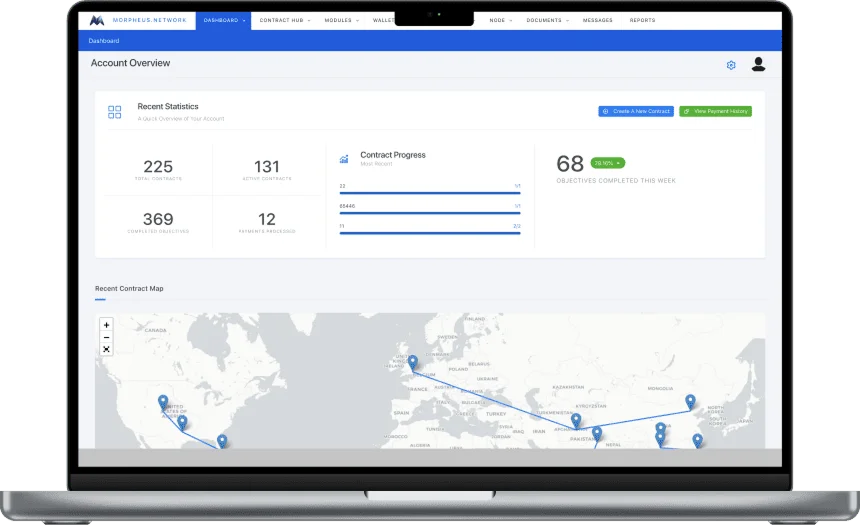
SoluLab has built SaaS and platform products for supply chain, lending, and trading businesses. Examples include Morpheus.Network's blockchain supply chain SaaS platform, an instant loans app for small businesses, and an algorithmic intraday trading system, each designed around the client's own workflow rather than a template product.
 01
Morpheus.Network offers a SaaS supply chain platform that connects to customers' existing ERP systems, automates import and export documents and customs approvals, and records shipment data on a blockchain so goods can be tracked and checked for counterfeits. SoluLab engineered the blockchain-backed SaaS platform behind it.
 02
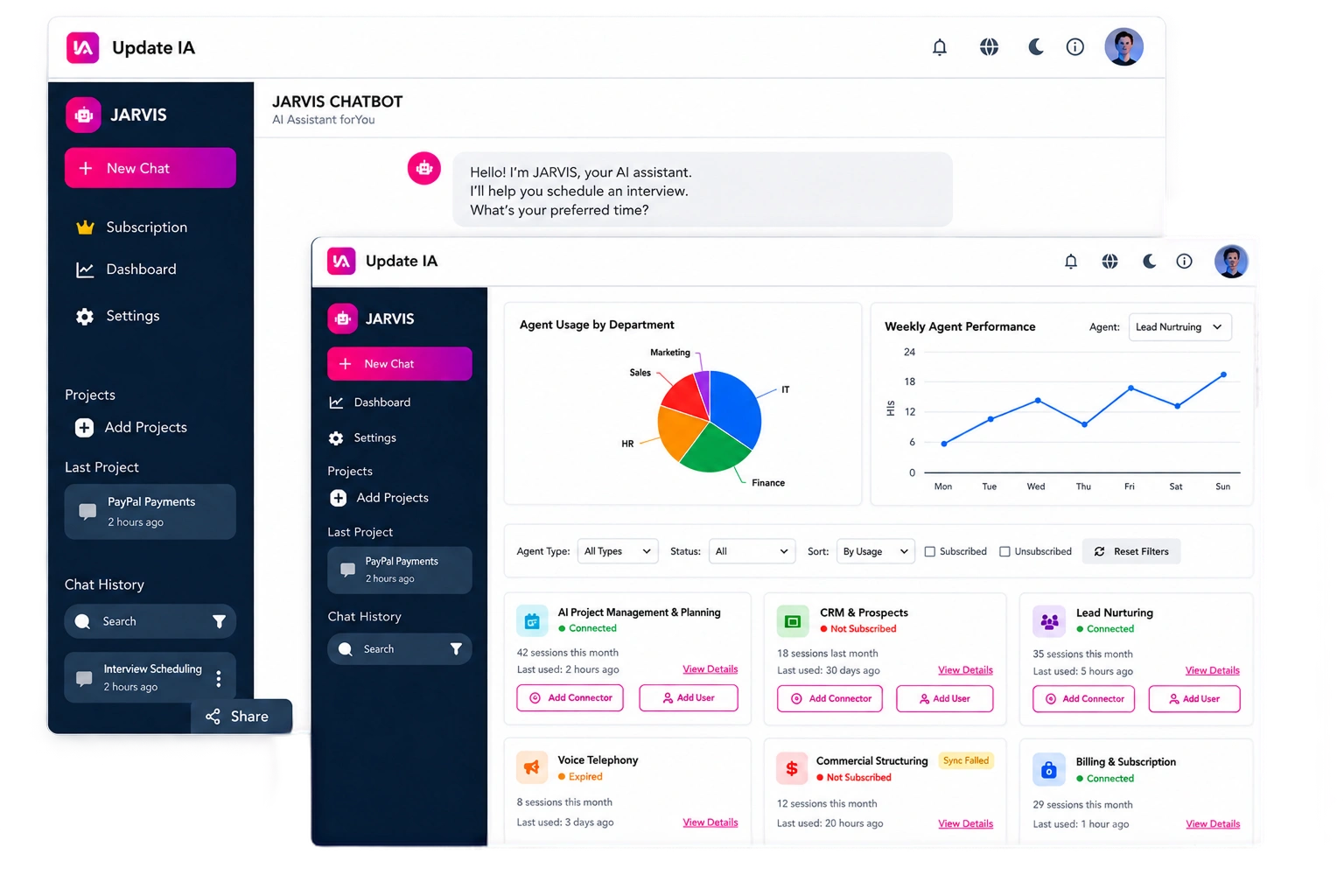
UpdateIA is an enterprise-grade Generative AI ecosystem built by SoluLab to unify and automate business operations through 14+ specialized AI agents. Powered by a central “Jarvis” brain, it enhances HR, CRM, finance, and support functions. Results achieved are:
 03
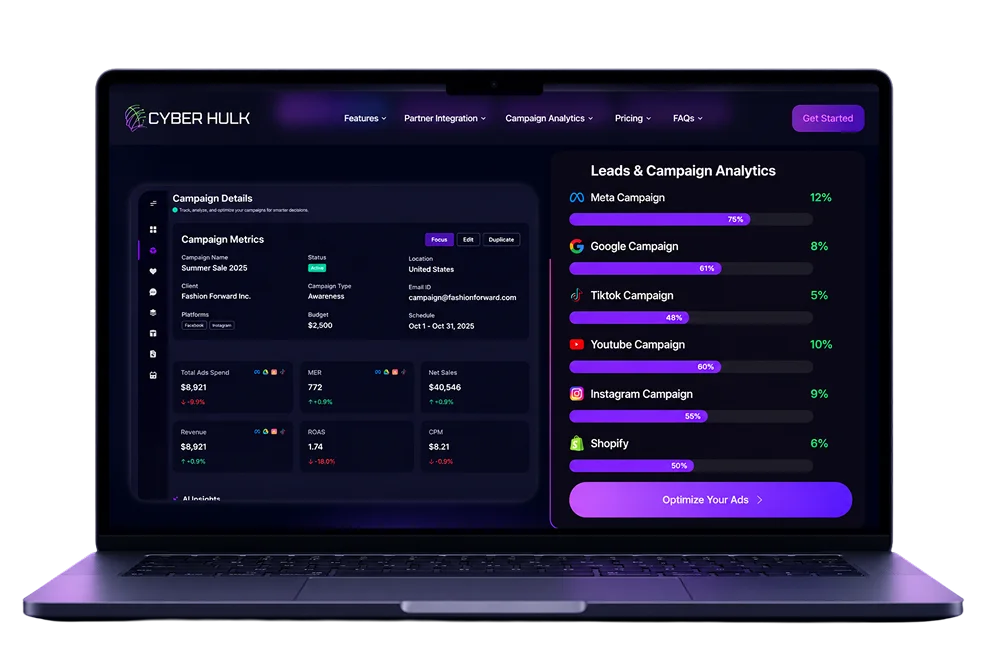
A platform built to help teams plan, automate, and optimize campaigns from a single dashboard by combining real-time analytics, multi-channel integration, and intelligent workflow automation.
SoluLab builds custom SaaS for fintech, insurance, healthcare, supply chain, real estate, education, and AI-first startups. Each sector brings its own compliance rules, integrations and data handling, so a team that already knows them spends less of your budget on ramp-up.
We bring sector context to every SaaS build, so your team spends less time explaining the basics.


Lending, payments, and wealth platforms with audit trails, KYC integrations, and role-based approvals, like the lending platform shown below.


Patient portals and care management SaaS with access logs, consent controls, and hosting set up for health data rules.


Policy, claims, and broker portals with multi-level approvals and secure document handling.


Learning and school management platforms for teachers, parents, and administrators, like SchoolUp.


Shipment tracking, documentation, and customs workflows connected to ERP and warehouse systems, like Morpheus.Network.


Campaign, analytics, and reporting platforms connected to Google Ads and Meta Ads, like CyberHulk.


Hiring, onboarding, and payroll SaaS with a separate workspace for every client company and enterprise sign-on.

Property management and listing platforms with separate portals for owners, tenants, and agents.
SoluLab builds SaaS applications on proven, well-supported technologies: React and Next.js on the front end, Node.js, Python, or .NET on the back end, PostgreSQL for tenant data, and AWS, Azure, or Google Cloud as cloud providers. The stack is chosen for your team's ability to maintain it, not for novelty.
 React
 Angular
 Javascript
 Next.js
 HTML
 Vue.js
 CSS3
 Tailwind CSS
 Bootstrap
 TypeScript
 Node.js
 Python
 Express.js
 Laravel
 GraphQL
 CodeIgniter
 WebSocket
 CakePHP
 MongoDB
 MySQL
 PostgreSQL
 Firebase
 Redis
 Elastic
Search
 Microsoft SQL
 AWS
 Git
 Azure
 Google Cloud
 Docker
 Kubernetes
 Jenkins
 Selenium
 Cypress
 Mocha
 Chai
 Jest
 Jira
 android
 iOS
 React Native
 Flutter
 PWA
Custom SaaS development costs roughly $35,000 to $60,000 for a lean MVP, $80,000 for a market-ready v1, with an offshore team. Cost depends mostly on team size and build time, which scope decides.
| Product stage | Typical team | Timeline | Estimated cost (USD) |
|---|---|---|---|
| Lean MVP | 2 developers, part-time QA and designer | About 3 months | $35,000 to $60,000 |
| Market-ready v1 | 3 developers, QA, part-time designer and PM | About 5 months | $80,000 |
| Scale-up platform | 5 to 6 developers, 2 QA, DevOps and PM | About 8 months | $80,000 + |
| Model | How it's billed | Best for |
|---|---|---|
| Fixed-price MVP | Agreed price per milestone | A scoped MVP with a fixed launch date |
| Dedicated SaaS team | Monthly fee for the full squad | Post-launch roadmap and continuous releases |
| Time and materials | Hours worked, invoiced monthly | Evolving scope, audits and modernization |
A SoluLab custom SaaS engagement runs in five stages: an MVP scope and fixed-price estimate in 48 hours, UX and architecture in about two weeks, an MVP build in two-week sprints, QA and a beta release, then launch and ongoing support. A focused MVP typically reaches launch in about three months.
.svg)
We turn your idea into a feature list, user roles and a fixed-price MVP estimate.
.svg)
Wireframes, a clickable prototype, the tenancy model, and your cloud provider are agreed.
Two-week sprints with a demo at the end of each one.
.svg)
Automated tests, a security review and a closed beta with real users.

Production release, monitoring, bug fixes and the next roadmap cycle.
Before you request a SaaS estimate, write down your target customer, the one problem the MVP solves, user roles, must-have features, pricing model, required integrations, compliance needs and launch date. Those eight answers set most of the budget and timeline.
Target customer and the one problem the MVP solves
User roles and what each role can see and do
Must-have features for launch, and a later list for everything else
Per seat, usage-based or tiered
Integrations your first customers already rely on
Compliance needs such as SOC 2, HIPAA or GDPR
Single-tenant or multi-tenant data model
Target launch date and the budget ceiling
SoluLab suits founders who need a full SaaS team now, with architecture, QA and DevOps included. In-house hiring gives the most control but takes the longest and costs the most. Freelancers can work for small, well-defined features but rarely cover multi-tenant architecture, security and ongoing support together.
End-to-end SaaS development with architecture, QA and DevOps included.
Scope and estimate in 48 hours
Fixed-price MVP or monthly team fee
Multi-tenancy, billing and security included
Included in every sprint
100% yours by contract
Monthly support plans
Direct control over your team, priorities and development process.
Months of hiring
Highest: salaries, benefits, tools
Depends on who you hire
Separate hires
Yours
Your team's capacity
A flexible option for small, well-defined development features.
Days, but you vet and coordinate
Lowest hourly, rises with rework
Rarely covered end to end
Usually missing
Negotiated person by person
Depends on availability
Founders choose SoluLab to build SaaS because they get a fixed-price MVP estimate in 48 hours, SaaS experts who design for multi-tenancy from day one, and AI and blockchain depth under one roof. SoluLab has delivered 1,500+ projects since 2014 and holds 4.9 ratings on Clutch and GoodFirms.
You know the budget and scope before you commit, so funding conversations rest on real numbers.
Tenancy, billing and security are planned in the architecture stage, not patched in after customers arrive.

Our SaaS consultants challenge scope and cut what your first customers won't pay for, which protects your runway.

Add LLM features, analytics or on-chain records without hiring a second vendor.
You see a demo every two weeks, keep access to every repository and own 100% of the code and IP.

1,500+ projects since 2014, 250+ engineers, CMMI Level 3 and SOC 2 practices, and 4.9 ratings from 55 Clutch reviews and 101 GoodFirms reviews.
SoluLab builds custom SaaS in five steps: scope the MVP, design and architect it, build it in sprints, run a beta and launch, then grow and scale. Each step ends at a gate you approve, such as signing off the scope or the prototype, so nothing moves forward without your decision.
We define the problem, target users and feature priorities, then send a fixed-price quote.
You sign off the scope.
Wireframes become a clickable prototype, and we agree on the tenancy model, stack and cloud provider.
You approve the prototype.
Two-week sprints deliver core workflows, billing and user roles, with a demo at the end of each sprint.
The MVP is feature-complete.
A security review, a closed beta with real users and fixes from their feedback lead to the production release.
Go-live.
Usage analytics guide new features, performance tuning and ongoing support.
You approve the next roadmap.

Tell us who the product is for and what it must do on day one. You'll get an MVP scope and fixed-price estimate within 48 hours, with no commitment to build.
SoluLab's AI software development services have been instrumental in driving innovation at SMART RETAIL. As the CTO, I've had the pleasure of collaborating with their team on numerous projects. Their depth of knowledge, expertise, and dedication to delivering high-quality solutions have been invaluable to our success. SoluLab's AI solutions have helped us streamline operations, improve efficiency, and stay ahead of the competition. I highly recommend SoluLab to any company seeking to leverage AI technology for business growth.

The attention to detail and the ability to customize the solution to fit our specific goals were outstanding. Throughout the process, SoluLab’s team was always available, offering insightful advice and ensuring the project stayed on course. The result has exceeded our expectations, significantly enhancing our operational efficiency and security. What truly stood out was their dedication to building a long-term partnership, making them a key player in our company’s growth.

At SHADECRAFT, we've experienced firsthand the transformative impact of SoluLab's AI software development expertise. As the CEO, I've been consistently impressed by their professionalism, innovation, and commitment to exceeding our expectations. SoluLab's AI solutions have enabled us to enhance our products, optimize processes, and deliver unparalleled value to our customers. Their team's expertise and dedication make them a trusted partner in our journey towards success.

Custom SaaS development is designing and building a cloud-based software product around your own users, workflows and business model, then selling it on subscription. Unlike off-the-shelf software, you control every feature, the data model and pricing, which turns the product itself into a competitive advantage you own.
With an offshore team, a lean SaaS MVP costs roughly $35,000 to $60,000, a market-ready v1 about $80,000+. Team size and build time drive the number, and scope decides both. A fixed-price estimate removes the guesswork.
A focused SaaS MVP usually takes about three months: two weeks for UX and architecture, eight to ten weeks of sprints, and two weeks of QA and beta. A market-ready v1 takes around five months, and larger platforms eight months or more.
Choose off-the-shelf when the tool supports a standard internal process and speed matters most. Choose custom SaaS when the product is what you sell, when your workflow or pricing is your edge, or when off-the-shelf limits would force customers into workarounds.
A SaaS MVP typically includes sign-up and login, one core workflow, user roles, a simple admin view, one subscription plan with payments, basic analytics and a production cloud setup. Features like SSO, advanced reporting and extra integrations usually wait until real customers ask for them.
The best SaaS stack is one your team can hire for and maintain. A common, proven choice is React or Next.js on the front end, Node.js or Python on the back end, PostgreSQL for data, and AWS, Azure or Google Cloud for hosting.
In multi-tenant SaaS, customers share one application and infrastructure with their data logically separated, which lowers hosting cost per customer. Single-tenant SaaS gives each customer a dedicated instance, which suits enterprise buyers with strict isolation or compliance needs but costs more to run.
AWS, Microsoft Azure and Google Cloud all run SaaS well. Pick the one your team knows, your target customers prefer, or that offers credits for your stage. Enterprise buyers on Microsoft often favor Azure, while AWS has the broadest set of managed services.
Security starts in the architecture: tenant data isolation, encryption in transit and at rest, role-based access, audit logs and regular dependency updates. Compliance frameworks such as SOC 2, HIPAA or GDPR are planned at scoping, because retrofitting them after launch costs far more.
With SoluLab, you own 100% of the source code and intellectual property. IP assignment is written into the contract, an NDA is signed before scoping, and all code lives in your own repositories and cloud accounts from the first commit.
A live SaaS product needs monitoring, bug fixes, security patches, dependency and cloud upgrades, performance tuning, and a steady flow of new features. Most founders move from the MVP build into a monthly support plan or a dedicated team sized to their release cadence.