Blockchain started life as plumbing for cryptocurrency. It did not stay there. Over the past decade the same idea has turned up in supply chains, banking, medical records, and, more slowly than the hype promised, property. Real estate is the interesting case, because nearly every pain point in a property deal is a trust problem wearing a paperwork costume. What follows is a plain account of the technology, where it actually fits in property, and what still gets in the way.
Strip the jargon and blockchain is a shared ledger. Copies of it sit on many computers at once, and every new block of transactions carries a cryptographic reference back to the block before it. Edit one entry and everything downstream stops matching. That is the whole trick. Nobody holds the master copy, which is why people call it peer to peer: the network does its own verifying, and the intermediary whose job was to vouch for the record becomes optional.
Property, meanwhile, runs on friction. A single sale crawls through brokers, escrow agents, title researchers, lenders, and registrars, and each handoff adds days and fees to the bill. Records live in systems that do not speak to each other. Fraud finds room in exactly those gaps: forged deeds, parcels sold twice, liens nobody disclosed until closing. The industry has been asking for a better answer for a long time.

What are the Fundamental Principles of Blockchain?
Four ideas do most of the work here: decentralization, transparency, immutability, and consensus. Instead of one server holding the truth, a network of nodes holds it, and each node checks the transactions the others propose. Nothing gets written until enough of them agree on what happened.
No single party owns the network. So no single party can quietly rewrite what it remembers.
A. Decentralization and Security Aspects
Spreading the data across the network is the point, not a side effect. There is no one machine to seize, corrupt, or knock offline, so the system keeps going when a node drops out. Security comes from mathematics rather than a locked server room: changing a stored record means redoing the cryptographic work on every block that came after it, on most of the network, faster than everyone else can extend the honest chain. Consensus rules such as proof-of-work or proof-of-stake are what make that arithmetic hopeless for an attacker.
B. Blockchain in Real Estate
Put that machinery underneath a property transaction and a few things shift. Records become auditable by the people entitled to see them. Fraud gets harder, since a recorded transfer cannot be edited after the fact. And smart contracts, which are really just small programs that fire when their conditions are met, can perform the steps a paralegal would otherwise chase down by email: release the escrow, move the title, trigger the next payment. Fewer hands on the file, fewer places for an error to hide.
What is the Transformative Impact of Blockchain on Real Estate?
So what actually changes on the ground? Three things come up over and over in property work: who can see the record, who executes the agreement, and how small a slice of a building you are permitted to own. Transparency, smart contracts, tokenization. Take them in that order.
A. Transparency and Trust in Property Transactions
Start with visibility. A conventional deal routes through several intermediaries, each holding a partial view and none of them obliged to show it to the rest. That opacity is where fraud lives. A distributed, tamper-proof ledger flips the arrangement: transaction data gets recorded once, sealed cryptographically, and made readable to the parties who need it.
One record. Everybody reading from it. Because entries cannot be rewritten retroactively, a buyer, a seller, or a regulator tracing a chain of title is looking at the same history instead of reconciling three competing versions of it. That sounds like a modest change. It is not, once you count the hours currently spent proving that two documents describe the same building.
B. Smart Contracts Revolutionizing Deal Processes
A smart contract holds the terms of a deal as code and carries them out itself once the conditions check out. Payment clears, title moves. There is no officer manually confirming each leg, no middleman billing for that confirmation, and far less room for the sort of dispute that starts with two parties reading the same clause differently.
The practical gain is speed. Sales, leases, rent collection, option exercises: every one of them involves waiting on a person to verify something and then act, and that waiting is where the weeks disappear. Automate the verification and the cost curve bends too. This is blockchain doing something genuinely useful rather than merely novel.
C. Tokenization of Real Estate Assets
The idea behind asset tokenization is simple enough. Take a real asset, a building in this case, and represent claims on it as digital tokens. Buy a token, own a slice, trade the slice if you want out. Fractional ownership itself is old news; fractional ownership you can actually sell on a Tuesday afternoon is the part that opens the market up to investors who were never going to write a seven-figure cheque.
Split a property into tokens and the minimum ticket to participate drops sharply. A warehouse that used to need institutional money can instead take in a hundred smaller backers, each holding a share of the same asset. Liquidity improves. The barrier to entry falls. And owners get a financing route that does not require selling the whole building to raise cash, which is why this appeals to both sides of the table.
What are the Key Challenges Associated With the Adoption of Blockchain Technology in the Real Estate Industry?
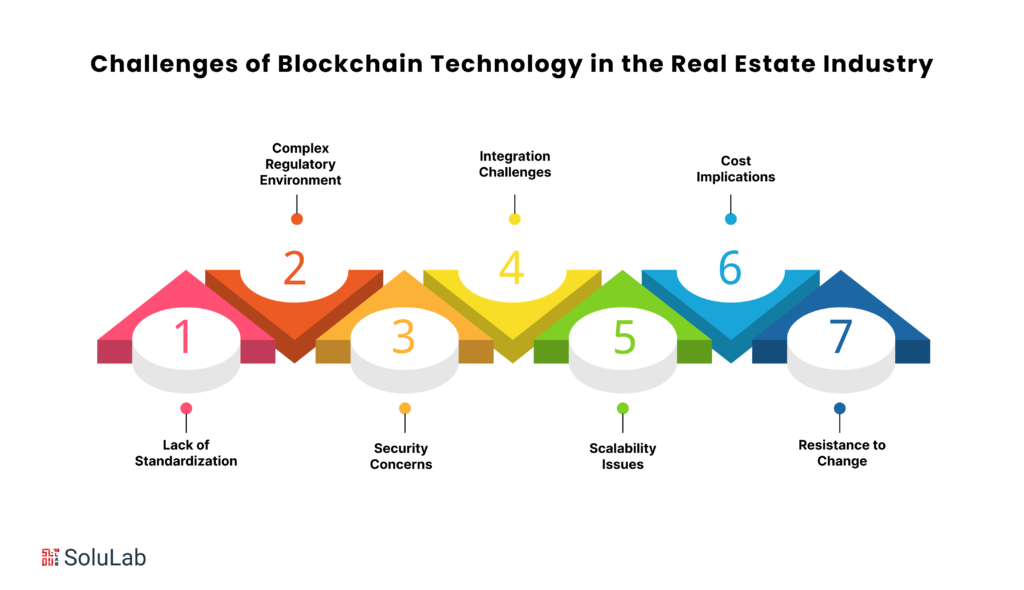
None of this has swept the industry. Adoption has been real but patchy, and the reasons are not mysterious once you have sat in a few of these projects. Below are the obstacles that surface almost every time, and what tends to move them.
1. Lack of Standardization
There is no agreed protocol. Ask two vendors how a title record ought to be structured on chain and you get two answers, neither of which can read the other’s data. Until the industry settles on shared standards, interoperability and clean data exchange between stakeholders stay aspirational.
2. Complex Regulatory Environment
Property law is local, stubbornly so. Rules on transfer, recording, securities treatment, and disclosure differ by country and frequently by state or province within one. Any deployment has to work inside those rules rather than around them, and building a framework that lines up with what already exists is what earns trust from regulators and counterparties alike.
3. Security Concerns
Blockchain has a strong security reputation, and buyers still worry about breaches and unauthorized access anyway. Fair enough. The chain can be sound while the wallet, the key management, or the web front end is not. Strong encryption, disciplined access control, and honest education about what the technology protects and what it does not are all part of the answer.
4. Integration Challenges
Most property operations run on systems that predate the internet in spirit, if not in date. Bolting a distributed ledger onto that stack is the hard part of the job, and in practice this is where teams get stuck. It takes a staged plan, engineers who have done it once already, and the patience to run the old and new processes side by side for longer than anybody wants to.
5. Scalability Issues
Real estate throws off a lot of data. Transactions, deeds, inspection reports, payment histories, correspondence. Whichever chain you choose has to carry that volume without choking, and the honest version of that question deserves an answer before anyone signs a build contract.
6. Cost Implications
Setup is not cheap. Infrastructure, integration, audits, training, all of it lands before a single saving shows up. Someone has to make the case that the long-term payoff justifies the upfront spend, and that case has to convince a finance director, not just an engineer.
7. Resistance to Change
And then there is plain reluctance. Property is an old business with entrenched habits, and the people whose buy-in you need, owners, buyers, brokers, regulatory bodies, have very little appetite for experiments on a transaction worth millions. Convincing them is not a side task. It is half the project.
Check out Case Study: acreage
How is Blockchain Technology Reshaping the Future of the Real Estate Industry?
Where does this go next? A handful of trends are already visible in live projects rather than in conference slides, which makes them worth taking seriously. Here is what is emerging now, and what looks likely to follow it.
A. Emerging Trends in Blockchain and Real Estate
Tokenization of Real Estate Assets
Fractional ownership again, this time at scale. An investor takes a share of an expensive property instead of the whole thing, which puts high-value assets within reach and gives holders an exit that does not require selling the building.
Smart Contracts Streamlining Transactions
Listings, payments, contract execution. Each step that currently needs a human to check and approve can be written as code instead. That thins out the intermediaries and leaves a cleaner audit trail for whoever remains on the deal.
Decentralized Property Listings
A listing recorded on a shared ledger cannot be quietly doctored. Fake listings and duplicated ones get much harder to pull off when the record is tamper-evident, which raises the baseline of trust across the whole market rather than one platform at a time.
B. Potential Advancements and Innovations
Enhanced Security and Transparency
Sensitive deal data sits inside a structure that resists alteration by design. Fraud gets harder as a result, and every party to the transaction reads the same unalterable history instead of trusting the copy a counterparty hands them.
Blockchain-Based Real Estate Platforms
New blockchain platforms are already running, handling transactions, rental agreements, and everyday property management on chain. The pitch is straightforward: less overhead, lower cost, and a smoother, more secure experience for the people using them.
Integration with Emerging Technologies
Then there is the combination play. Pair a ledger with AI and IoT sensors and you get buildings that report their own condition, maintenance that schedules itself, and valuation models fed by readings nobody had to type in. Early days. But the direction is not ambiguous.
What are the Risks and Mitigations in Harnessing Blockchain for Real Estate?
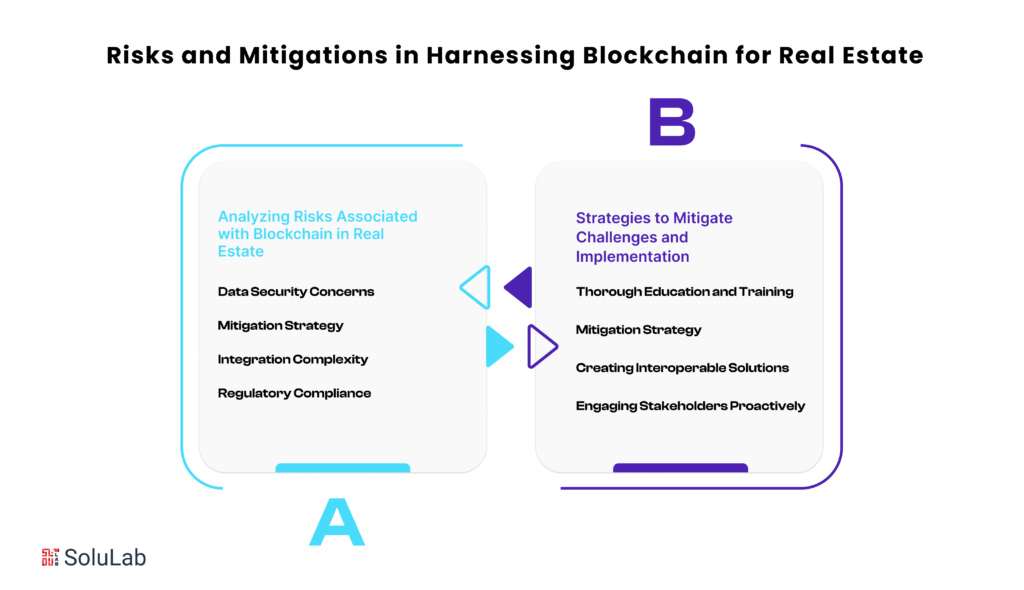
Everything above has a flip side. A technology that promises less fraud and faster closings also introduces new ways for things to go wrong, and pretending otherwise helps nobody, least of all the client signing off on the budget. So here are the risks worth planning around, and the moves that actually reduce them.
A. Analyzing Risks Associated with Blockchain in Real Estate
Data Security Concerns
Distribution cuts both ways. Losing one node no longer takes the system down, true, but more copies also means more surface area. If the wrong party gets at sensitive transaction data, the integrity of the deal is in question no matter how sound the underlying cryptography happens to be.
Mitigation Strategy
Serious encryption, plus a permissioned network where membership is vetted and read access is granted deliberately rather than by default. Confidential material then stays in front of the parties entitled to see it.
Integration Complexity
Existing property infrastructure rarely accepts a ledger without a fight. Expect friction during implementation, expect some disruption to processes that currently work fine, and expect that friction to slow adoption more than any technical limitation of the chain itself.
Regulatory Compliance
Real estate sits under strict rules that differ from one region to the next. Satisfying all of them while running a blockchain deployment is genuinely hard, and getting it wrong means legal exposure and months of lost time.
B. Strategies to Mitigate Challenges and Ensure Successful Implementation
Thorough Education and Training
Nobody adopts what they do not understand. Agents, brokers, closers, and in-house counsel need the concept and the day-to-day mechanics both, and one lunchtime presentation will not get them there.
Mitigation Strategy
Work with academic institutions and people who have shipped this kind of system before, then build training aimed at specific roles, so each group learns the part that touches their own job rather than sitting through a general overview.
Creating Interoperable Solutions
Building blockchain solutions that plug into the systems a firm already runs is not optional. Interoperability is what turns the rollout into a gradual transition instead of a hard cutover with a war room and a lot of apologising.
Engaging Stakeholders Proactively
Bring everyone in early. An objection raised in month one is cheap to answer; the same objection raised the week before go-live is expensive. Early involvement also has a habit of turning skeptics into people with a stake in the outcome.
How is Blockchain Technology Reshaping the Global Real Estate Landscape?
Adoption is not spread evenly. Some markets have run real pilots, others are still drafting policy papers, and the difference largely tracks how digitized the local land registry already was before anyone mentioned blockchain. What follows is a quick tour of the international picture, the regional differences, and the projects people point to when they want to show this works.
A. Overview of International Adoption of Blockchain in Real Estate
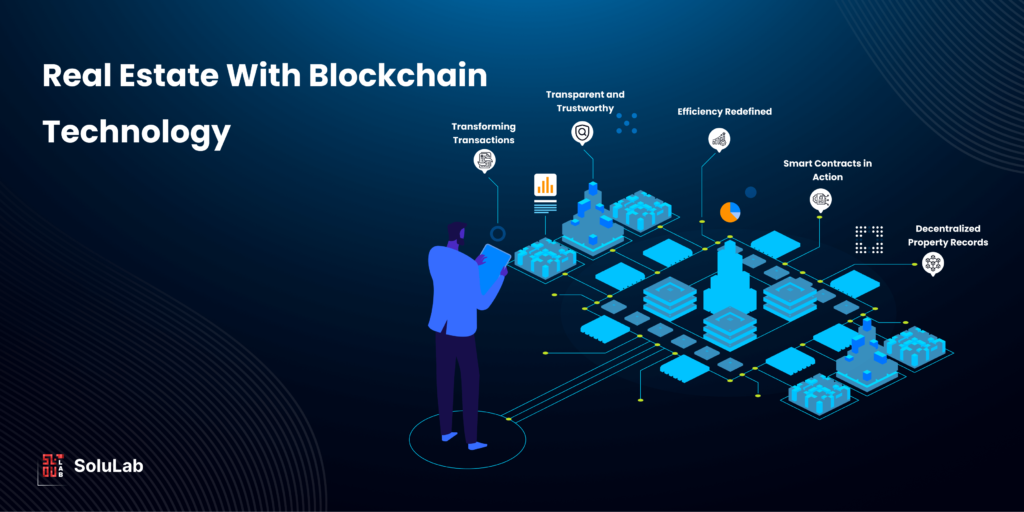
Transforming Transactions
A decentralized, transparent ledger takes much of the guesswork out of a property transfer. Documentation is sealed and verifiable, fraud gets harder to attempt, and the parties spend less energy checking up on one another.
Efficient Title Management
Verifying a title is slow, costly, and mostly clerical work. Move titles onto a ledger and a good chunk of that effort simply evaporates. Smart contracts then handle the transfer of ownership itself, quickly, without the transcription errors that plague manual handoffs.
Tokenization of Assets
Divide a property into tradable digital tokens and the market gains liquidity it has never really had. Smaller investors get into buildings that were previously reserved for institutions.
B. Regional Variances and Success Stories
North America
North America has taken this up with real momentum, particularly for transparent and efficient property transactions. Most of the activity people cite clusters in large cities, New York and Toronto among them.
Europe
European countries are testing blockchain applications in property as a way to handle regulatory complexity and speed up transactions. Sweden’s pilot work on property registration is the example that comes up most often in these conversations.
Asia-Pacific
Singapore and Japan are pushing growth across the Asia-Pacific region. Where property investment volumes run high, the transparency and anti-fraud argument tends to land harder than the cost-saving one does.
Middle East and Africa
Land registries are the focus here. Taking paperwork out of registration and transfer lines up neatly with regional ambitions to modernize how property changes hands, which is why the public sector, rather than private platforms, is driving much of it.

Conclusion
SoluLab, a blockchain development company, has been building in this corner of property tech for a while now, and one pattern holds across the work: blockchain earns its keep when it removes a specific piece of friction from a real transaction. Transparency, speed, security. Those are outcomes, not features you switch on.
None of it comes off a shelf. Our teams build customizable platforms around the use case a client actually has, whether that means lifting property transactions off paper, tightening data security, or cutting the manual steps out of a workflow that everybody privately admits is broken. Different clients, different builds, the same underlying ledger doing the quiet work in the background.
What is striking is how undramatically this is happening. There will be no single day when property goes on chain. There will be registries that digitize, deals that close in days rather than weeks, and fractional ownership that stops sounding exotic. The approach SoluLab takes sits inside that gradual shift, and gradual shifts are usually the ones that end up changing an industry for good.
FAQs
Shipra Garg is a tech-focused content strategist and copywriter specializing in Web3, blockchain, and artificial intelligence. She has worked with startups and enterprise teams to craft high-conversion content that bridges deep tech with business impact. Her work translates complex innovations into clear, credible, and engaging narratives that drive growth and build trust in emerging tech markets.