
































AI-Powered Software Development

AI-powered software development is building software with engineering teams that use AI tools at every stage, from requirements and code to testing, review, and documentation. As an AI-powered software development company, SoluLab pairs experienced engineers with these tools so routine work moves faster while people keep control of architecture, security, and quality.

  • Capacity in days, not a hiring cycle
  • Less time on routine work
  • Speed without rework
Forbes
CoinDesk
Bloomberg
TechCrunch

What Is AI-Powered Software Development?

AI-powered software development is a way of building software in which engineers use AI tools to plan, write, test, review, and document code, while humans remain responsible for design decisions and what ships.

The term gets used two ways, and it helps to separate them before you talk to any vendor.

Dimension AI in the process AI in the product
What it means Engineers use AI tools to build any software faster The software itself contains AI, such as an assistant or a prediction model
Who benefits Your delivery timeline and budget Your end users
Example AI writes the first draft of unit tests for a payments API A support assistant that answers customer questions

How Is AI Changing Software Development?

AI is changing software development by taking over the first draft of routine work, while shifting human effort toward review, architecture, and judgment. Adoption is already mainstream. In the 2025 Stack Overflow Developer Survey, 84% of respondents used or planned to use AI tools in their development process, and 51% of professional developers used them daily (Stack Overflow, 2025).

Trust hasn't kept pace. The same survey found more developers distrust the accuracy of AI output (46%) than trust it (33%). That gap is the whole point of a well-run AI-powered team. The tools generate quickly. The engineers decide what is correct.

In practice, the change looks like this:

Requirements

AI turns meeting notes and tickets into draft user stories and acceptance criteria, which a business analyst then corrects.

Coding

AI writes boilerplate, data mappings, and first-pass functions. Engineers keep the architecture and the hard logic.

Testing

AI proposes unit and edge-case tests, which raises coverage on code that rarely got tested before.

Review

AI flags likely bugs and style issues before a human reviewer looks, so review time goes to design questions.

Legacy code

AI explains unfamiliar codebases, which shortens the weeks a new engineer used to need before contributing.

AI-Powered Software Development Services We Offer

SoluLab's AI-powered software development services cover full product builds, extra engineering capacity, and focused work on testing and legacy systems.

AI-augmented product engineering icon

AI-augmented product engineering

A complete team designs and builds your web, mobile, or SaaS product with AI tools built into each sprint.

AI-augmented team extension icon

AI-augmented team extension

Engineers who already work this way join your team and sprint rhythm. Vetted profiles arrive within 48 hours.

AI-assisted testing and quality assurance icon

AI-assisted testing and QA

We raise test coverage on existing products, starting with the flows that handle money or personal data.

Legacy software modernization icon

Legacy modernization

AI helps map, document, and refactor older codebases before a migration, so the rewrite starts from an accurate picture.

Software documentation and handover icon

Documentation and handover

Architecture notes, API references, and onboarding guides kept current as the code changes.

AI features and integration icon

AI features in your product

When the software itself needs AI, such as an assistant, agent, or search, our AI agent development and AI product teams take it on.

How Does AI-Powered Development Work at SoluLab?

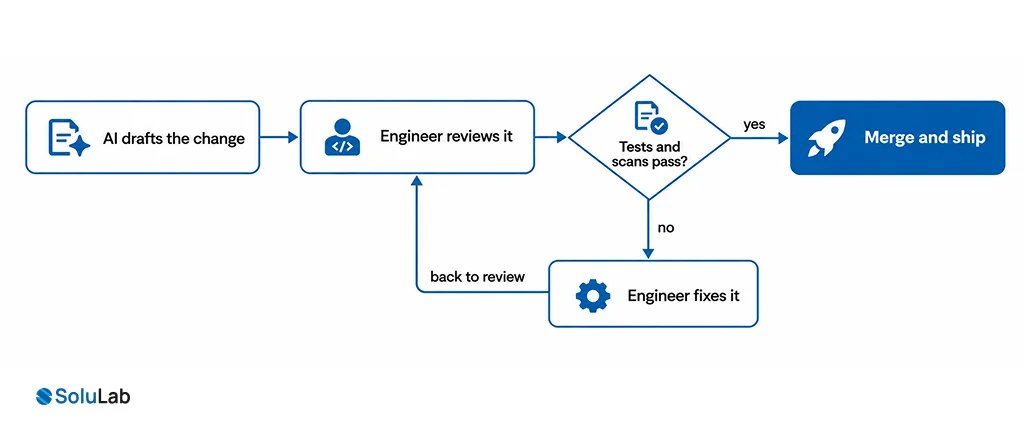
Every change follows the same loop: AI drafts, an engineer reviews, automated checks run, and only then does the code merge. The tools speed up the first step. They never skip the other three.

How Does AI-Powered Development Work at SoluLab?
CTA Background

would approach your backlog?

Book 30 minutes with an engineering lead.

Talk to an AI Engineering Lead

Where Does AI Help, and Where Do Engineers Stay in Charge?

AI helps most on work that is repetitive, well specified, and easy to check. Engineers stay in charge wherever a mistake is expensive or the right answer depends on your buspness.

AI takes the first draft Engineers own the decision
Boilerplate, data models, API clients System architecture and service boundaries
Unit tests and edge-case tests What counts as correct behaviour
Code explanations and documentation Security, privacy, and access control
Refactoring suggestions on legacy code Trade-offs between speed, cost, and scale
First-pass code review comments Final approval of every merge

How Do We Keep Your Code and Data Safe With AI Tools?

We agree on the AI tool policy with you before the first commit. Your security team decides which tools may see your code, and we work inside that list.

Approved tools only

Approved tools only.

Engineers use the AI tools your policy allows, with settings that stop your code from being used to train public models.

No secrets in prompts

No secrets in prompts.

Credentials, customer data, and production records stay out of AI tools.

Human review on every change

Human review on every change.

No AI-generated code merges without a named engineer's approval.

You own the output

You own the output.

Code, tests, and documentation produced during the engagement belong to you.

Which Industries Use AI-Powered Software Development?

Our AI-powered software development teams work across regulated and fast-moving industries, setting clear rules on what AI tools may touch before the first line of code.

How to Start: Vetted Engineer Profiles in 48 Hours

You can go from a first call to engineers in your sprint without a long procurement cycle. If you are hiring for a specific AI role, such as an ML or LLM engineer, see our page to hire AI developers.

Share the need.
Step 01

Share the need.

Tell us the stack, the seniority, the time zone overlap, and the work ahead.

Receive profiles within 48 hours.
Step 02

Receive profiles within 48 hours.

Each profile shows the engineer's stack, past projects, and the AI tools they work with.

Interview and choose.
Step 03

Interview and choose.

You meet the engineers and approve each one.

Onboard and agree with the AI policy.
Step 04

Onboard and agree with the AI policy.

Access, tools, and review rules are set in week one.

Ship and review
Step 05

Ship and review.

Sprint demos and regular check-ins on quality, velocity, and fit.

CTA Background

Need engineers who already work with AI tools? Tell us your stack and timeline. You'll have vetted profiles within 48 hours.

Get Vetted Engineer Profiles

What Have We Built With AI?

These three products show the same teams building software where AI is part of the product itself.

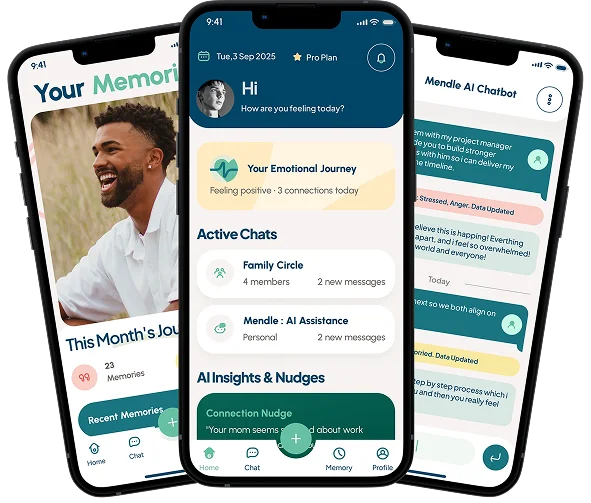
Mendle: AI Emotional Wellness Platform - Mobile and Web App Screens

Mendle: AI Emotional Wellness Platform

A mental healthcare provider needed a wellness app whose conversations understood emotion and context, rather than repeating scripted replies. We built Mendle across web and mobile: emotion-aware AI conversations, personalised wellness journeys, community sentiment analysis, and a privacy-first security framework.

Stack: Python, TensorFlow, OpenAI APIs, Node.js, NestJS, React, Next.js, PostgreSQL, AWS

  • 90% emotion detection accuracy
  • 60% faster AI response times
  • 70% higher group engagement
  • 5,000+ beta users onboarded
Read the Mendle case study →
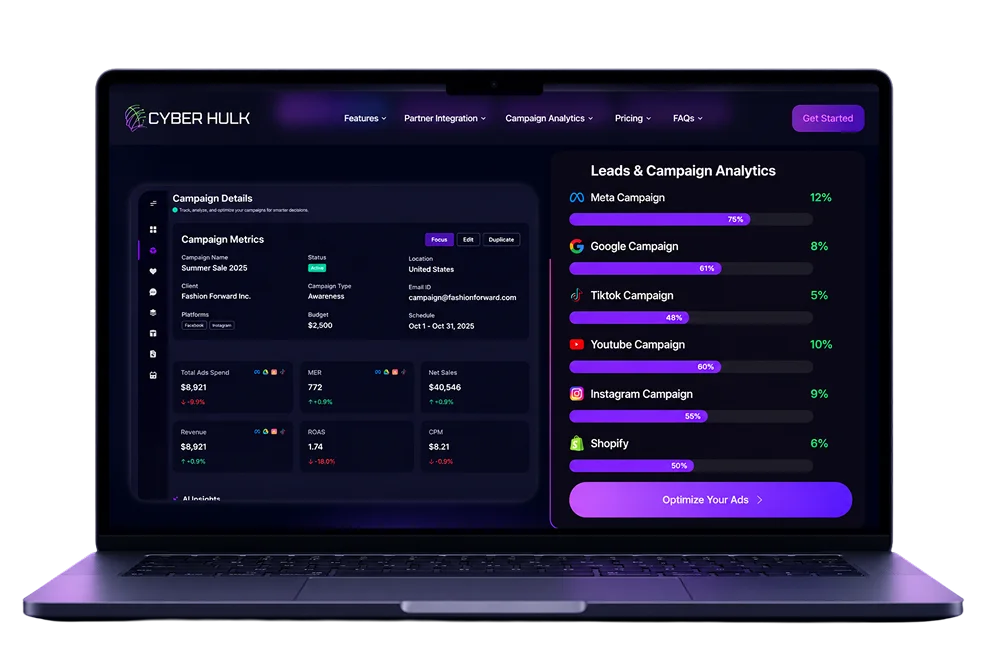
CyberHulk: AI Digital Marketing Platform - Dashboard Screen

CyberHulk: AI Digital Marketing Platform

Marketing teams were juggling disconnected tools and managing campaigns by hand. We built CyberHulk, a SaaS web application that combines a multi-channel campaign builder with AI suggestions, real-time analytics, task management, and AI-generated reports, synced with Google Ads and Meta Ads.

Stack: React, Next.js, Node.js, TypeScript, MongoDB, Python, TensorFlow, OpenAI API

  • 70% faster campaign execution
  • 50% fewer manual tasks
  • 3x website traffic growth
Read the CyberHulk case study →
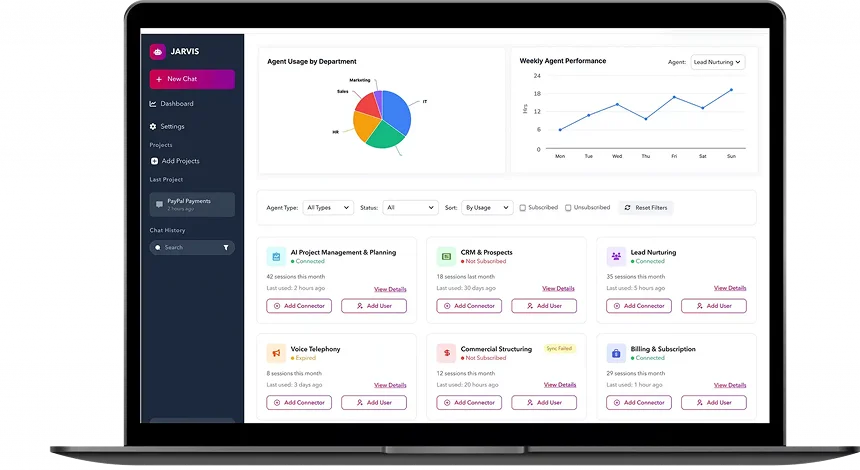
UpdateIA: Multi-Agent Enterprise Automation Platform - Orchestrator Dashboard

UpdateIA: Multi-Agent Enterprise Automation Platform

A French AI startup wanted a single AI operating system for everyday business work, in place of disconnected tools and costly custom automation. We built UpdateIA, where a central orchestrator called Jarvis coordinates 14 specialised AI agents across HR, CRM, finance, legal, and customer support. It adds a no-code workflow builder, human review triggers when an agent is unsure, and compliance dashboards on web and mobile.

Stack: Node.js, Python, Docker, Kubernetes, React, Next.js, React Native, PostgreSQL, MongoDB, AWS

  • 80% fewer manual workflows
  • 3x faster task execution
  • 14 agents under unified control
Read the UpdateIA case study →

Why Choose SoluLab as Your AI-Powered Software Development Company?

Teams choose SoluLab because the engineers who use AI to build faster are the same people who build AI products. They know where the tools are reliable and where they arc not.

AI product experience, not just AI tools

AI product experience, not just AI tools

Platforms like Mendle, CyberHulk, and UpdateIA give our engineers hands-on knowledge of model behaviour, cost, and failure modes.

Profiles in 48 hours

Profiles in 48 hours

You see vetted engineers before you sign anything long term.

A human signs off every change

A human signs off every change

No AI-generated code merges without a named engineer's review and passing tests, so speed never turns into rework.

Your AI policy, not ours

Your AI policy, not ours

Engineers use only the AI tools your security team approves, with your code kept out of public model training.

Three ways to engage

Three ways to engage

Team extension, a dedicated team, or a fixed-scope project, so you pay for the model that fits your stage.

One partner for both meanings

One partner for both meanings

Faster delivery today, and AI features in the product when you are ready.

Meet Your Architect

Chintan Thakkar

"Chintan leads SoluLab's product engineering teams across AI, blockchain, IoT, and enterprise software. Before co-founding SoluLab, he spent about a decade at Goldman Sachs, where he was a Vice President. He advises companies in the US, Europe, and APAC on AI-driven automation. "

Chintan Thakkar · Co-founder and CEO, SoluLab · View full profile
Testimonials

What our clients have to say for us

Since implementing SoluLab’s AI-powered chatbot, our user experience has reached new heights. Thanks to SoluLab, our customer interactions have become more efficient and enjoyable.

Martina Swift

Martina Swift

Director of Sales, Digital Quest

I am extremely impressed with the collaborative efforts of AI-Build and SoluLab in developing our CAD product using generative AI. Their solution revolutionized our product development process by automating design generation, improving customization, and enhancing accuracy.

Keven Mejia

Keven Mejia

Co-Founder & CEO, AI-Build

The project went smoothly, their communication was consistent, deadlines were met, and they always explained technical details in a way that made sense to non-developers like us.

Mark GreenSpan

Mark GreenSpan

Co-Founder, FinTech Platform

SoluLab worked closely with our team to refine the models and successfully delivered a reliable production-ready solution. The platform achieved over 90% prediction accuracy while reducing manual data analysis and accelerating reporting.

Meena Dessai

Meena Dessai

Data & Analytics Manager, Vikran

FAQ

Helpful resource to grow your business

AI-powered software development is building software with engineers who use AI tools to plan, write, test, review, and document code. The AI produces first drafts of routine work. Engineers keep responsibility for architecture, security, and every change that ships, so speed improves without giving up quality or control.

No. AI is changing what developers spend their time on, not removing the need for them. The US Bureau of Labor Statistics projects employment of software developers, QA analysts, and testers to grow 10% from 2025 to 2035. Routine coding shrinks, while design, review, and judgment grow in importance.

AI now drafts code, tests, documentation, and review comments, so engineers spend less time typing and more time checking and deciding. It also makes unfamiliar codebases easier to understand. The main risk is trusting output too quickly, which is why disciplined human review matters more than before.

Very fast. In the 2025 Stack Overflow Developer Survey, 84% of respondents used or planned to use AI tools, up from 76% the year before, and 51% of professional developers used them daily. Trust lags behind: 46% distrusted the accuracy of AI output, against 33% who trusted it.

Start with work that is repetitive and easy to verify: tests, boilerplate, documentation, and code explanations. Agree which tools may see your code, keep secrets out of prompts, and require human review on every AI-generated change. Measure cycle time and defect rates before and after, so the gain is visible.

Developing AI software starts with a business problem and the data to support it. You choose a model approach, such as an existing model API, retrieval over your documents, or a custom model, then build, evaluate, and monitor it. Our AI development company page covers this process in detail.

AI software development builds software that contains AI, such as an assistant or a prediction model. AI-powered software development uses AI tools to build any software faster. A product can involve both: an AI-powered team building an AI feature. The difference matters when comparing vendors and quotes.

Agentic AI refers to systems that plan and carry out multi-step tasks, not just answer questions. In software delivery, coding agents take on whole tickets for engineers to review. In enterprise products, agents automate workflows such as document handling and approvals, which lets the same team support more users and processes.

AI-generated code is as secure as the review and testing around it. AI tools can repeat insecure patterns or invent dependencies that don't exist. Safe teams scan dependencies, run security tests automatically, keep secrets out of prompts, and require a named engineer to approve every AI-generated change before it merges.

In a SoluLab engagement, the code, tests, and documentation produced for you belong to you, whether an engineer or an AI tool wrote the first draft. Your contract should state this plainly and name the AI tools allowed on your codebase.

SoluLab sends vetted engineer profiles within 48 hours of understanding your stack and needs. You interview and approve each engineer. Once access and the AI tool policy are agreed, engineers can join your sprints, typically within days of approval rather than after a months-long hiring process.

Articles

Latest Insights from Experts

Top 15 AI Business Ideas to Start in 2026
Artificial Intelligence

Top 15 AI Business Ideas to Start in 2026

Explore 15 AI business ideas to start in 2026, from AI SaaS and automation to content, customer support, and industry-specific AI solutions.