Key Takeaways
- An AI-powered learning ecosystem for CBSE schools combines adaptive learning software, an AI-enabled LMS, and data analytics to personalize how each student learns.
- AI adaptive learning K-12 tools adjust difficulty and pacing in real time, instead of forcing every student through the same worksheet at the same speed.
- CBSE schools already sitting on years of assessment data are well positioned to benefit, since AI needs that data to personalize anything meaningfully.
- Teachers gain the most from automation of grading, lesson planning, and progress tracking, freeing up time for actual teaching.
- Rollout success depends more on training and change management than on the technology itself.
- A phased pilot, starting with one grade or subject, tends to work better than a school-wide launch on day one.
Most CBSE staff rooms are sitting on a small mountain of data nobody looks at twice. Test scores, attendance registers, homework logs, the works, filed away the moment a report card ships and rarely opened again until the next exam cycle.
An AI-powered learning ecosystem for CBSE schools takes that pile and puts it to use, turning routine records into something a teacher can act on the same week, not the same year.
This isn’t some far-off concept either. Schools in Delhi, Bengaluru, and a growing number of tier-2 towns are already testing AI solutions for education, typically with one grade or one subject before anything wider gets greenlit.
What follows covers what these systems are built from, where CBSE schools stand to gain the most, and where a rushed rollout tends to fall apart.
What Is an AI-Powered Learning Ecosystem for CBSE Schools?
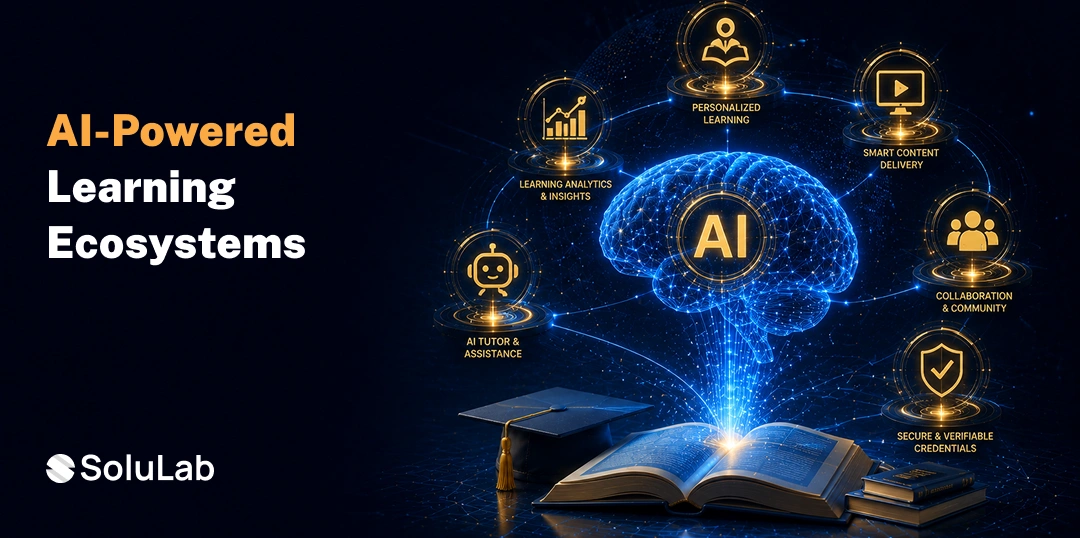
Start with what it’s not. It’s not a single app, and it’s not one dashboard a vendor demoed in a thirty-minute pitch. Think of it as several tools wired together: an adaptive learning engine, a management system, analytics dashboards, sometimes a chatbot, all pulling from the same student records so the whole setup reacts to how kids are actually progressing, not how a syllabus assumes they should be.
For CBSE specifically, that means the system needs to fit the board’s own rhythm: chapter-wise objectives, continuous assessment cycles, the run-up to board exams. Drop a tool built for a different curriculum into a CBSE classroom and watch it fall apart within a term, the pacing simply won’t line up.
That’s precisely why schools building purpose-fit systems tend to see far better traction than the ones that bought whatever was cheapest at the annual ed-tech expo.
The Three Layers That Typically Make Up the System
- The learning layer: adaptive content and practice questions that shift with each student’s pace.
- The management layer: an AI learning management system tracking progress, assignments, and communication under one roof.
- The insight layer: dashboards that catch patterns early, a cluster of Class 6 students falling behind in fractions, say, weeks before it ever reaches a report card.
Why CBSE Schools Are Turning to AI Right Now
This isn’t a coincidence of timing. A handful of trends are landing at once, and CBSE schools sit right in the crosshairs. The global AI in education market is projected to grow from USD 11.4 billion in 2026 to USD 57.2 billion by 2033, at a CAGR of 25.9% from 2026 to 2033.
- Gartner’s Hype Cycle work on K-12 education points to learning losses and staff shortages as two of the biggest pressures nudging schools toward AI. Not because AI happens to be fashionable this year, but because it offers a path that doesn’t hinge on hiring more staff schools can’t afford in the first place.
- That pressure is felt more sharply in CBSE classrooms than most, where forty or fifty children per section make real individual attention almost impossible without some kind of automated support carrying part of the load.
- Then there’s Deloitte’s research on digital learning habits, which found that a clear majority of students who attended classes in the past year had learned online from home for at least part of that time.
- Kids are no strangers to screens as a learning medium anymore. Building AI-driven personalization on top of habits that already exist is a far smaller ask than it would have been before remote learning became routine.
- Market numbers point in the same direction. Statista’s tracking of India’s edtech segments shows K-12 holding the largest and steadiest share for years running, with room to keep expanding as personalization and AI in CBSE schools initiatives mature. Vendors aren’t betting blind here. The demand’s already visible in the numbers.
Core Components of an AI Learning Management System for CBSE
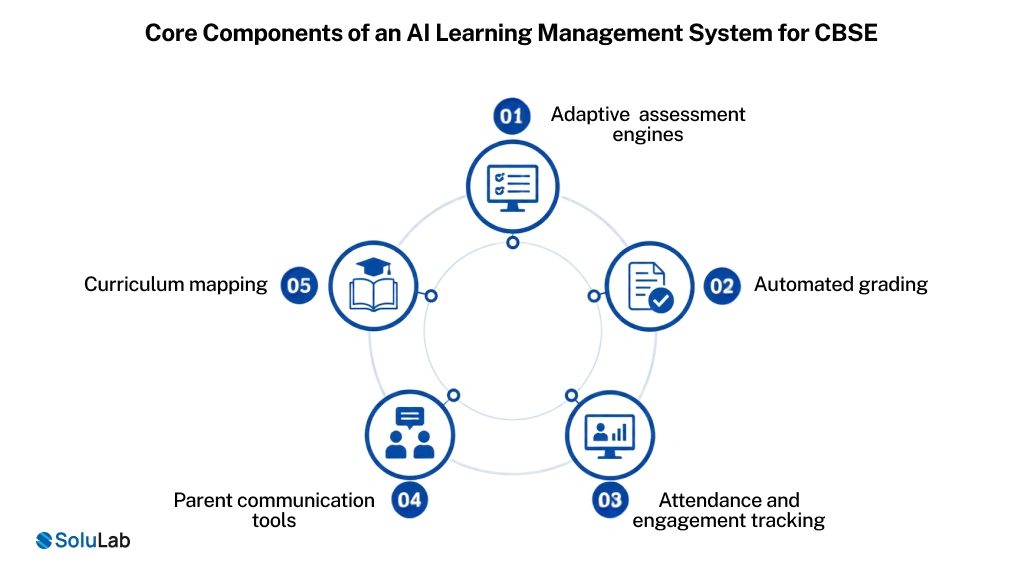
A real AI learning management system does considerably more than put a gradebook online, though plenty of vendors will sell that exact thing and call it a breakthrough. Below is what separates a system worth adopting from one that’s just a spreadsheet wearing a nicer interface.
- Adaptive assessment engines: Adaptive assessment adjust question difficulty based on the student’s last answer, rather than pushing everyone through the same fixed test regardless of where they stand.
- Automated grading: or objective and short-answer responses, which hands teachers back hours every week, hours that go toward lesson prep rather than marking notebooks late into the evening.
- Attendance and engagement tracking: Attendance and engagement tracking that catches disengagement early, flagging not just who’s absent but who’s present in body and checked out otherwise.
- Parent communication tools: Tools often built around a conversational AI in the education layer capable of fielding routine questions about homework or timetables without dragging a teacher out of class.
- Curriculum mapping: Curriculum mapping is tied directly to CBSE’s syllabus, so the numbers a system generates actually connect to something meaningful at report card time.
None of this works well as separate pieces bolted together. The real payoff comes from how they exchange data with each other. An LMS that can’t feed the adaptive engine is little more than a filing cabinet with a login screen.
How AI Adaptive Learning Helps CBSE Students Learn Differently
A class of forty-odd kids, all handed the same algebra worksheet. Five wrap up in ten minutes and start fidgeting. Ten are stuck and too self-conscious to say so out loud.
The remaining twenty-five drift somewhere between the two, keeping pace or slowly slipping without anyone quite noticing yet. Every CBSE teacher has run this exact class more times than they’d care to count.
AI adaptive learning K-12 tools are built to close precisely that gap. Rather than one worksheet for the whole room, the system produces practice problems matched to where a student currently stands.
A student pulling ahead gets harder material instead of sitting through a review he doesn’t need. A student who’s stuck gets scaffolded questions that rebuild the missing piece before pushing forward, rather than moving on and dragging a gap into next term’s chapter.
What This Looks Like Day to Day
- A student works through a short set of diagnostic questions before a topic starts.
- The system pinpoints exactly which sub-skills are weak, not just a single overall score.
- Practice questions shift on the fly as the student moves through the material.
- Teachers open one dashboard summary rather than paging through forty separate notebooks.
None of this replaces a teacher, and it isn’t meant to. It just means a teacher walks in already knowing which five students need thirty seconds of attention before the lesson even begins.
Personalizing the CBSE Curriculum with AI
Personalized learning AI India efforts tend to get framed around students, but the curriculum planning side deserves just as much credit, if not more. AI curriculum India tools let schools sequence lessons differently across cohorts without tearing up the CBSE syllabus, which is usually the concern that stops schools from trying this at all.
Picture a Class 9 science teacher with a genuinely mixed classroom on her hands. Rather than pacing the whole chapter uniformly, an AI-assisted curriculum tool can point out which sub-topics need extra classroom time based on how similar cohorts fared on that material the previous year, and which ones this year’s batch will likely pick up fast.
That’s a fundamentally different way to plan than pulling out a lesson plan written years back and running it unchanged, regardless of who’s actually sitting in the room this term.
Connected classroom hardware feeds this loop too. Schools piloting IoT-enabled classrooms, smart boards, attendance sensors, devices scattered through the room, end up generating richer streams of data that flow straight back into curriculum decisions. What happens on the ground shapes what the system suggests next, and the cycle keeps tightening from there.
Benefits for Teachers, Administrators, and Parents
Conversations about student outcomes tend to skip over the people who have to run this technology day after day, teachers and administrators. What they get out of it looks different depending on where someone sits.
- For teachers, it’s less time buried in repetitive grading, sharper visibility into which specific students need attention this particular week, and lesson planning that leans on real performance numbers rather than a gut feeling about what usually works.
- For administrators, it’s school-wide analytics surfacing patterns across grades and sections, useful for far more than test scores alone, think resource allocation, or spotting which teachers might need backup with a stubbornly difficult unit.
- For parents, it’s clearer and more frequent word on where a child actually stands, rather than waiting until a term-end report card reveals that a topic went unaddressed three months earlier.
- One caveat worth being upfront about: none of this happens automatically the moment a school signs off on a purchase order. It happens when teachers get trained to actually use what the system surfaces, not handed a login and left to work it out alone, or worse, left to ignore the dashboard altogether.
Challenges CBSE Schools Should Plan For
No AI rollout is without friction, and schools expecting an easy launch tend to lose steam quickly once reality parts ways with the sales deck.
- Data quality tends to bite first. Messy or incomplete attendance and assessment records get inherited straight into the AI system, and the recommendations it produces will feel noticeably shakier through that first term than anyone hoped.
- Teacher pushback is common, and more often than not it’s fair. Plenty of teachers have already sat through a “game-changing” ed-tech pitch that quietly disappeared a year later. Treating that wariness as a reasonable starting point rather than something to train away tends to land far better than brushing it aside.
- Infrastructure gaps carry real weight here too. A school without a steady internet, or without enough devices to go around a classroom, can sink even a well-built AI system before it gets a fair chance to prove itself. Auditing that honestly before committing beats discovering the gap midway through rollout.
- Budget cycles and procurement processes, particularly in government-aided CBSE schools, generally crawl along at a slower pace than whatever timeline gets floated in a first vendor meeting. Building that lag into the plan from day one spares everyone a good deal of frustration down the line.
How to Get Started: Building an AI-Powered Learning Ecosystem
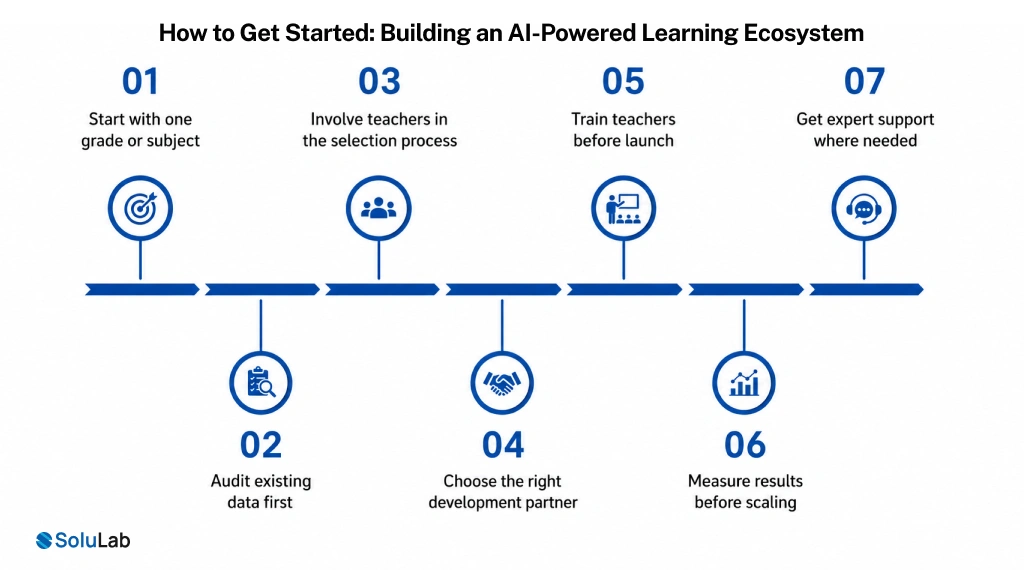
Schools that successfully implement AI-powered learning ecosystems usually follow a practical, phased approach rather than trying to digitize everything at once. Starting small helps schools identify gaps, involve teachers, and improve the system before scaling.
1. Start With One Grade or Subject
Begin with a single grade, subject, or learning use case instead of rolling out AI across the entire school. A focused pilot makes it easier to identify technical, academic, and adoption challenges while keeping risks manageable.
2. Audit Existing Data First
Review student records, assessment data, learning resources, and existing school systems before selecting a technology provider. Clean and consistent data creates a stronger foundation for AI-powered personalization and analytics.
3. Involve Teachers in the Selection Process
Teachers should be part of the technology selection process, not just administrators. Their practical experience can help schools choose tools that fit classroom workflows, teaching methods, and student needs.
4. Choose the Right Development Partner
Work with a partner experienced in e-learning app development and AI solutions for education. Off-the-shelf platforms may not align with CBSE syllabi, assessment patterns, or individual school requirements. A custom e-learning app development approach allows the technology to be designed around the school’s specific needs.
5. Train Teachers Before Launch
Teacher training should happen before the platform goes live. Staff need to understand how AI tools work, how to interpret student insights, and where human judgment remains essential. Without proper training, adoption can quickly fall back to familiar processes.
6. Measure Results Before Scaling
Review the pilot after one academic term. Look at metrics such as student engagement, learning progress, teacher adoption, assessment performance, and time saved. Use these findings to fix gaps before expanding the ecosystem to other grades or subjects.
7. Get Expert Support Where Needed
If the internal team lacks the time or expertise to evaluate vendors, define use cases, or plan implementation, AI consulting for education can help create a practical roadmap. External expertise can also help schools avoid costly technology choices and implementation mistakes.
Conclusion
AI-powered learning ecosystems were never pitched as a substitute for good teaching, and they shouldn’t be. What they do is put better information in a teacher’s hands sooner, so classroom time counts for more than it currently does.
CBSE schools already hold the data these systems run on. What remains is whether that data keeps piling up unread in spreadsheets, or finally starts serving the students it came from.
SoluLab, an AI development company with direct experience building adaptive learning tools and school-specific LMS platforms, can help your business shape an AI-powered learning ecosystem around your school’s real curriculum and constraints, not a generic template pulled off a shelf. If you’re weighing where to begin, that conversation is worth having before any procurement decision gets locked in.
FAQs
Neha is a curious content writer with a knack for breaking down complex technologies into meaningful, reader-friendly insights. With experience in blockchain, digital assets, and enterprise tech, she focuses on creating content that informs, connects, and supports strategic decision-making.