Key Takeaways
- AI in plastic waste management helps smart cities automate waste sorting, improve recycling accuracy, and reduce reliance on landfills.
- AI-powered waste collection systems optimize routes, lower operational costs, and improve urban waste management efficiency.
- Smart recycling technologies enable real-time waste monitoring and support sustainability and circular economy initiatives.
- AI-driven analytics help governments and businesses predict waste generation trends and improve resource allocation strategies.
- Implementing AI in plastic waste management supports cleaner cities, reduces carbon emissions, and promotes long-term environmental sustainability.
Plastic waste is becoming one of the biggest challenges for modern cities. Overflowing landfills, inefficient recycling systems, and rising urban populations are putting immense pressure on existing waste management infrastructure.
Traditional methods often fail to handle large-scale waste segregation, leading to increased pollution and environmental damage. As smart cities focus on sustainability and operational efficiency, the need for automation is becoming unavoidable.
This is why AI in plastic waste management is changing urban ecosystems through monitoring, automated sorting, predictive analytics, and smart recycling systems. Governments and enterprises are investing in AI development solutions to improve waste collection and reduce operational costs.
Continue reading this blog to know how AI can handle waste management and plastic recycling
What is the role of AI in Plastic waste management?
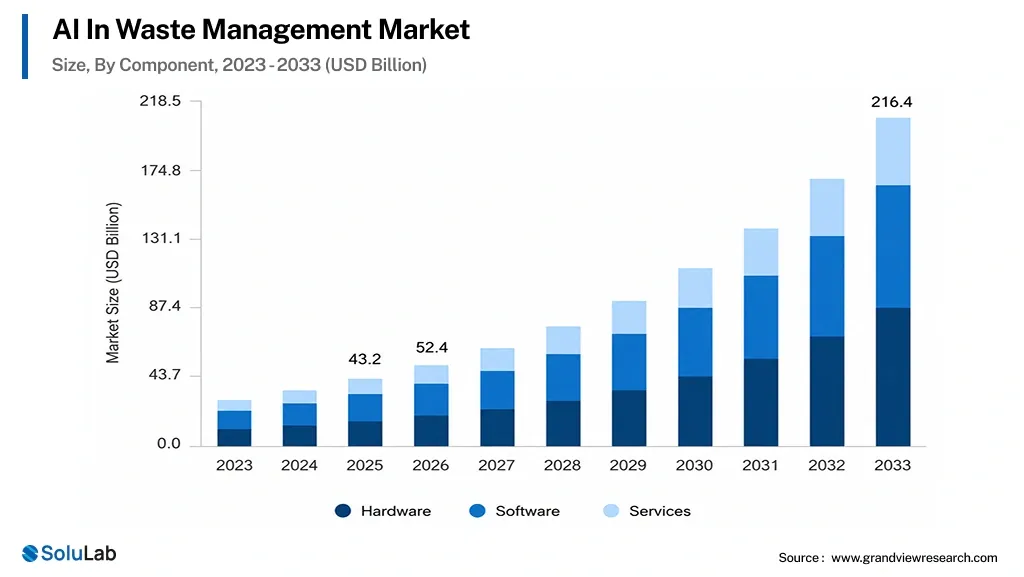
Artificial intelligence is transforming plastic waste management by improving recycling accuracy, automating waste segregation, optimizing collection systems, and helping smart cities build cleaner, data-driven, and environmentally sustainable waste ecosystems.
The global AI in waste management market is projected to reach USD 216.35 billion by 2033.
- Automated plastic waste sorting: AI-powered computer vision systems identify and separate plastic materials with high accuracy, reducing contamination rates and improving recycling efficiency across large-scale waste processing facilities.
- Predictive waste collection optimization: AI-powered solutions analyze waste generation patterns and traffic conditions to optimize collection routes, helping municipalities reduce fuel consumption, operational costs, and unnecessary collection delays.
- Real-time waste monitoring: Smart sensors combined with AI track bin capacity and waste accumulation levels in real time, enabling faster responses and preventing overflow in densely populated urban areas.
- Improved recycling efficiency: AI-driven recycling systems detect recyclable and non-recyclable plastics more effectively, helping recycling plants recover valuable materials while minimizing landfill dependency and environmental pollution.
- Data-driven sustainability planning: AI processes large waste management datasets to identify trends, improve resource allocation, and support governments in building smarter and more sustainable waste management strategies.
- Reduced human intervention in hazardous environments: Robotic AI systems automate dangerous waste handling processes, minimizing worker exposure to harmful materials while increasing operational safety and productivity in recycling facilities.
- Enhanced circular economy initiatives: AI helps track plastic usage, recycling cycles, and material recovery processes, supporting circular economy models focused on reuse, sustainability, and reduced plastic waste generation.
Understanding the Growing Plastic Waste Challenge in Urban Cities
Urbanization and plastic consumption are overwhelming traditional waste systems, pushing cities toward smarter, sustainable solutions powered by AI in Plastic Waste Recycling and Management technologies.
- Rising plastic consumption in modern cities: Urban populations increasingly depend on single-use plastics, packaged goods, and e-commerce deliveries, significantly increasing daily waste generation and straining already overloaded municipal recycling systems.
- Inefficiencies in traditional waste collection systems: Conventional collection methods lack automation, route optimization, and real-time monitoring, resulting in delayed pickups, overflowing bins, higher fuel consumption, and inefficient waste segregation processes.
- Environmental and economic impact of plastic pollution: Poor plastic disposal contaminates water bodies, damages ecosystems, increases public health risks, and creates massive cleanup costs for governments and urban management authorities worldwide.
- Why smart cities need intelligent waste infrastructure: Cities adopting AI-Powered Plastic Waste Management systems can improve sorting accuracy, optimize collection operations, and enable data-driven sustainability initiatives for long-term environmental efficiency.
- Growing demand for automation in recycling ecosystems: The rise of AI In Recycling Industry solutions is helping municipalities automate plastic identification, improve recycling rates, and reduce landfill dependency through intelligent waste processing technologies.
How to Implement AI in Plastic Waste Management for Smart Cities?
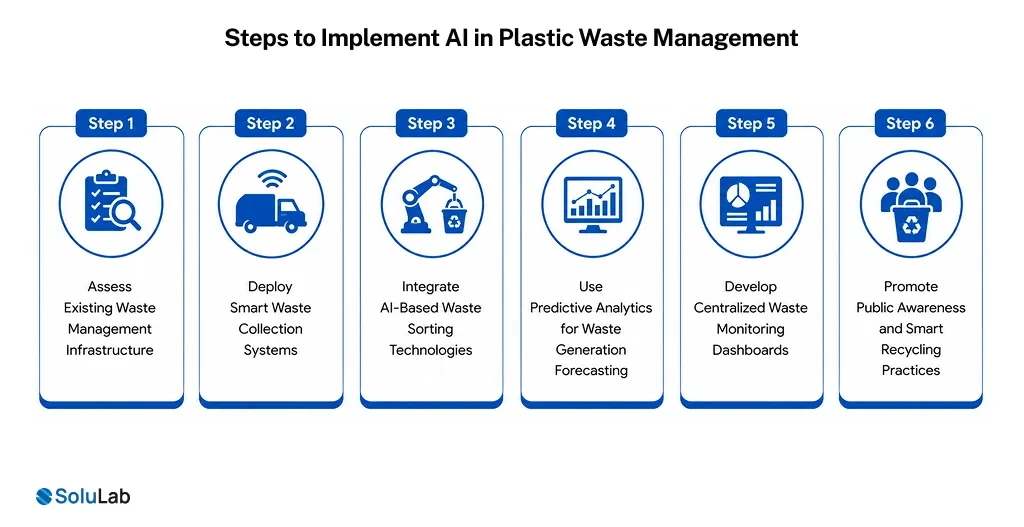
AI led development for plastic waste management helps smart cities improve recycling efficiency, reduce operational costs, and build sustainable urban ecosystems through automation, predictive analytics, and intelligent waste monitoring systems.
Step 1. Assess Existing Waste Management Infrastructure
Cities should first evaluate current waste collection, segregation, and recycling systems to identify inefficiencies. Understanding infrastructure gaps helps authorities define clear AI adoption goals and prioritize areas where automation and smart monitoring can deliver measurable improvements.
Step 2. Deploy Smart Waste Collection Systems
Install AI-enabled smart bins equipped with IoT sensors to monitor waste levels in real time. These systems optimize collection schedules, prevent overflow issues, reduce fuel consumption, and improve operational efficiency across urban waste management networks.
Step 3. Integrate AI-Based Waste Sorting Technologies
Computer vision and machine learning models can identify and separate plastic waste with high accuracy. Automated sorting systems reduce manual labor dependency while improving recycling quality and increasing recovery rates for reusable plastic materials.
Step 4. Use Predictive Analytics for Waste Generation Forecasting
AI-driven analytics can predict waste generation patterns based on population density, seasonal trends, and consumer behavior. This enables municipalities to allocate resources efficiently and prepare smarter recycling and disposal strategies for growing urban populations.
Step 5. Develop Centralized Waste Monitoring Dashboards
Smart cities should implement centralized dashboards that collect and visualize waste management data in real time. These platforms improve decision-making, track recycling performance, and help authorities monitor sustainability targets more effectively.
Step 6. Promote Public Awareness and Smart Recycling Practices
Successful AI implementation also depends on citizen participation. Cities should launch awareness campaigns, encourage waste segregation habits, and use AI-powered apps to educate residents about recycling practices and sustainability initiatives.

Benefits of AI in Plastic Waste Management for Smart Cities
Urban waste volumes are increasing rapidly across smart cities worldwide. AI native strategy solutions are helping improve recycling efficiency and reduce operational costs. They are also strengthening sustainability efforts across the growing plastic waste management market.
- Improved waste sorting accuracy: AI-powered systems use computer vision and robotics to identify and separate plastic waste more precisely. This reduces contamination and improves recycling efficiency across modern plastic waste management solutions.
- Reduced operational costs: According to McKinsey & Company, AI-powered manufacturing and operational systems highlight up to 70% waste reduction alongside major efficiency improvements. This helps municipalities reduce fuel consumption, labor dependency, and infrastructure expenses.
- Real-time waste monitoring: Smart sensors and AI analytics provide instant visibility into bin capacity and collection requirements. This enables faster decision-making and more efficient urban waste management operations.
- Lower environmental impact: AI improves recycling rates and reduces landfill overflow through intelligent waste processing. It also helps minimize plastic leakage into oceans and supports circular economy initiatives.
- Better scalability for smart cities: AI-driven systems can adapt to growing urban populations and rising waste volumes efficiently. They also support evolving sustainability goals without requiring major infrastructure changes.
Key Applications of AI in Plastic Waste Management for Smart Cities
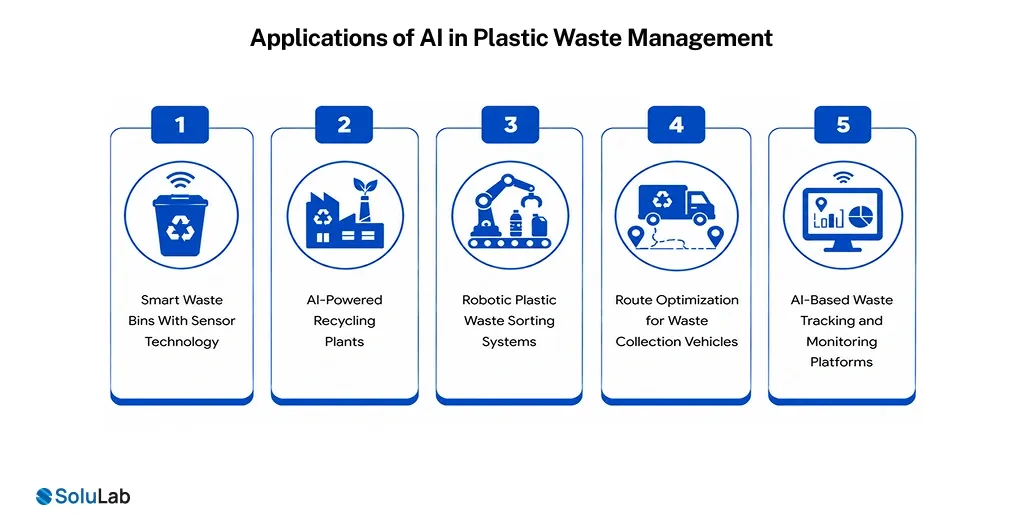
AI use cases in Plastic Waste Management are helping smart cities build cleaner, faster, and more efficient waste systems by automating recycling operations, improving collection efficiency, and enabling real-time monitoring of urban plastic waste generation.
1. Smart Waste Bins With Sensor Technology
Smart waste bins use IoT sensors and AI algorithms to monitor fill levels, detect waste types, and notify collection teams automatically. This reduces unnecessary pickups, prevents overflow situations, and improves overall waste collection efficiency across urban environments.
2. AI-Powered Recycling Plants
AI-powered recycling facilities use computer vision and machine learning to identify, classify, and separate plastic materials with higher accuracy. These systems improve recycling rates, reduce contamination, and help municipalities process large waste volumes more efficiently.
3. Robotic Plastic Waste Sorting Systems
Robotic sorting systems equipped with AI can recognize different plastic materials through image recognition and sensor analysis. They automate waste segregation processes, minimize human intervention, and significantly increase the speed and precision of recycling operations.
4. Route Optimization for Waste Collection Vehicles
AI-based route optimization systems analyze traffic conditions, waste generation patterns, and collection schedules to create efficient pickup routes. This helps cities reduce fuel consumption, lower operational costs, and minimize carbon emissions from waste transportation fleets.
5. AI-Based Waste Tracking and Monitoring Platforms
AI-driven monitoring platforms provide real-time insights into waste generation, recycling performance, and landfill usage. Smart cities use these analytics tools to improve sustainability planning, identify inefficiencies, and make data-driven waste management decisions.
Real-World Examples of AI in Plastic Waste Management
AI integration is transforming how cities and recycling facilities identify, sort, track, and process plastic waste. Several organizations worldwide are already using intelligent automation to improve recycling accuracy and reduce environmental impact.
1. NANDO: An Example of AI to Manage Waste
NANDO uses AI-powered image recognition and data analytics to identify waste patterns and optimize waste collection processes. The system helps municipalities improve recycling efficiency, reduce overflowing bins, and lower operational costs through predictive waste management strategies.
2. AMP Robotics
AMP Robotics uses computer vision and machine learning to identify and sort recyclable plastics at high speed. Its AI-driven robotic systems improve material recovery rates, reduce contamination, and help recycling plants process waste more efficiently with minimal manual intervention.
3. Greyparrot
Greyparrot develops AI waste analytics platforms that monitor recycling streams in real time. Its technology helps recycling facilities track plastic waste composition, identify inefficiencies, and generate actionable insights that improve sorting accuracy and sustainability performance.
4. ZenRobotics
ZenRobotics uses AI-enabled robotic arms to automate waste sorting in recycling plants and construction facilities. The system identifies different materials quickly, improves recycling throughput, and minimizes landfill dependency by increasing material recovery efficiency.
Future Trends in AI-Powered Plastic Waste Management
AI technologies are rapidly transforming how cities handle recycling, waste tracking, and sustainability planning. Emerging innovations are making waste systems more intelligent, automated, scalable, and environmentally efficient for future-ready smart cities.
- Autonomous recycling facilities: AI-powered robotic systems are enabling fully automated recycling plants with minimal human intervention. These facilities improve sorting accuracy, processing speed, and operational efficiency in Artificial intelligence in plastic recycling.
- AI + IoT integration in smart cities: Connected sensors, smart bins, and predictive analytics are helping municipalities optimize collection routes and monitor waste levels in real time. This is accelerating the adoption of Smart waste management with AI.
- Digital twins for urban waste management: Digital twin technology creates virtual city waste models using real-time AI data. This helps governments simulate waste patterns, improve infrastructure planning, and reduce operational inefficiencies.
- Generative AI for sustainability planning: Generative AI tools analyze environmental data and recommend optimized waste reduction strategies. They also support policymakers and businesses in building long-term sustainability and circular economy frameworks.
Conclusion
AI in Plastic Waste Management is becoming essential for smart cities aiming to improve sustainability and optimize recycling operations. With technologies like machine learning, computer vision, and predictive analytics.
As urban populations continue to grow, AI-powered waste management systems will play a major role in building cleaner, smarter, and more environmentally responsible cities.
If your organization is planning to develop waste management solutions, a SoluLab, an AI development company in USA, can help your business build scalable and customized AI-powered applications for smart city innovation.
FAQs
Neha is a curious content writer with a knack for breaking down complex technologies into meaningful, reader-friendly insights. With experience in blockchain, digital assets, and enterprise tech, she focuses on creating content that informs, connects, and supports strategic decision-making.