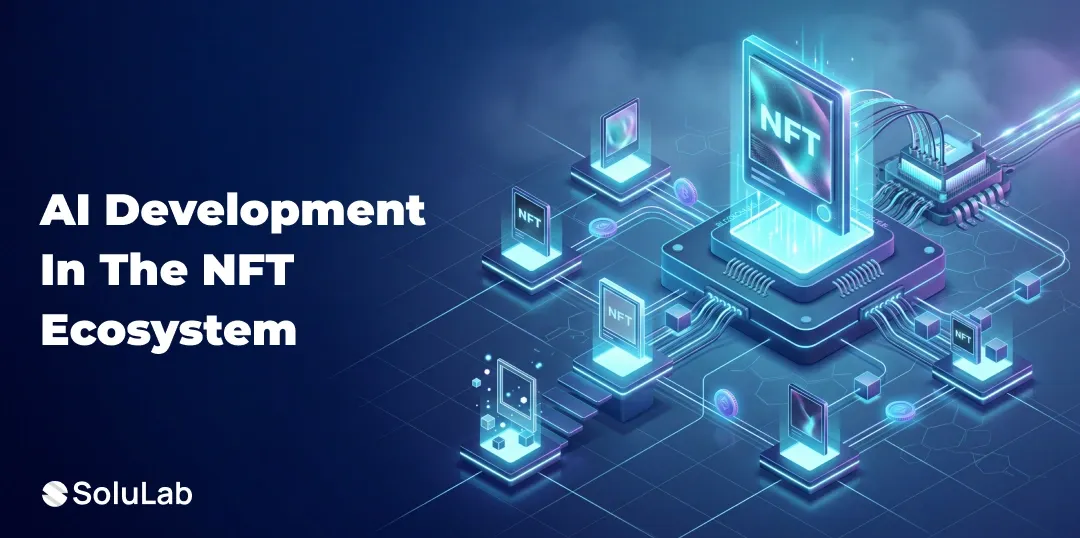
The NFT market has evolved far beyond digital collectibles. In 2026, the real shift is happening at the intersection of Artificial Intelligence in NFTs.
- Behavioral AI models now achieve 95% accuracy in detecting illicit NFT wash-trading.
- Gaming NFTs (often AI-driven) account for 38% of total volume.
AI is not just enhancing creativity; it is redefining how NFTs are created, traded, authenticated, and experienced.
From AI-generated NFTs to intelligent trading engines, the ecosystem is becoming smarter, faster, and more scalable. For enterprises and startups alike, integrating AI into NFT platforms is no longer optional. It is a strategic advantage.
Key Takeaways
- Intelligence over Staticity: AI transforms NFTs from simple static images into dynamic, interactive digital assets.
- Trust & Security: AI-driven authentication effectively tackles the long-standing “plagiarism paradox” in digital art.
- Predictive Value: Machine learning models provide data-backed fair market valuations, reducing speculative volatility.
- Enterprise Growth: Integrating AI into NFT marketplaces unlocks new revenue streams like premium subscriptions and automated trading fees.
What is the Unique Role of AI in the Evolving NFT Ecosystem?
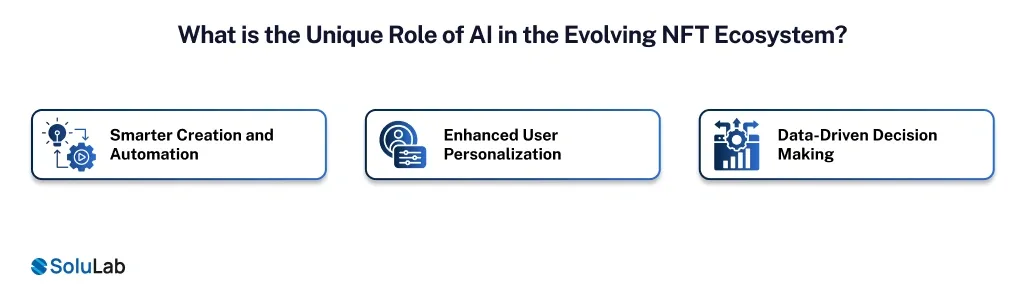
AI introduces intelligence into an otherwise static ownership model. Traditional NFT platforms rely heavily on manual discovery, human creativity, and basic smart contract logic. AI changes that:
- Smarter Creation and Automation: AI enables automated content generation, allowing creators to scale production with minimal effort, especially in AI in NFT art creation and gaming.
- Enhanced User Personalization: With AI-based NFT recommendation systems, platforms deliver highly relevant assets based on user behavior, significantly improving retention.
- Data-Driven Decision Making: AI unlocks predictive insights through AI NFT analytics, helping investors and platforms make informed decisions.
Regional Growth
- USA & Canada: Focus on AI-driven trading and analytics
- South Korea & Japan: Leading in NFT gaming innovation
- UAE & Saudi Arabia: Investing in AI-powered digital asset ecosystems
- Europe (Germany, France): Strong focus on NFT authentication and compliance
Integration with Web3 Infrastructure
AI is being combined with blockchain technology, IoT, and metaverse platforms to create immersive ecosystems.
Challenges in the NFT Ecosystem That AI Can Solve In a Snap
The NFT ecosystem has moved past its initial “hype” phase and is now entering a period of technical refinement. However, the industry still grapples with systemic hurdles that threaten its long-term viability.
1. Eliminating Fraud and Intellectual Property Theft
Plagiarism remains the “Achilles’ heel” of the NFT market. “Sleepminting” and “lazy minting” have historically allowed bad actors to impersonate famous artists. AI-powered computer vision and pattern recognition algorithms can now scan across multiple blockchains in real-time to identify visual similarities.
Unlike manual reporting, these AI systems compare the “fingerprint” of an image or video against billions of existing records. If a user attempts to mint a slightly modified version of a Bored Ape or a piece of digital fine art, the AI-driven moderation system can flag or block the transaction before it ever reaches the secondary market.
2. Solving the Discoverability Paradox
As the volume of NFTs reaches into the millions, the “Paradox of Choice” becomes a barrier for new collectors. Traditional marketplaces rely on simple “most popular” or “recently listed” filters, which favor established projects.
AI-driven recommendation engines, similar to those used by Netflix or Spotify, analyze a user’s on-chain behavior, wallet history, and social media sentiment. By moving from broad categories to hyper-personalization, AI helps niche artists find their specific audience, ensuring that “hidden gems” aren’t buried under a mountain of celebrity-backed drops.
3. Stabilizing Market Volatility with Predictive Analytics
NFT pricing has long been criticized for being purely speculative. Because NFTs are non-fungible, they lack the immediate liquidity and price discovery of standard tokens.
AI solves this by utilizing Machine Learning (ML) valuation models. These models ingest thousands of data points, including:
- Historical floor prices
- Rarity score weighting
- Social media velocity (hype cycles)
- Broader macroeconomic trends
By providing a “fair market value” estimate in real-time, AI reduces the emotional “FOMO” buying that leads to market bubbles and subsequent crashes.
4. Transitioning from Static Assets to Dynamic Engagement
The biggest complaint from NFT holders is that their assets “don’t do anything.” AI is changing this by enabling Generative AI NPCs and Dynamic NFTs (dNFTs).
Through Large Language Models (LLMs), NFTs can now have their own “personalities.” Imagine a gaming NFT that learns from your playstyle or a digital pet that reacts differently based on real-world weather data. This level of AI-driven interactivity transforms an NFT from a static JPEG into a living, breathing digital entity, significantly boosting long-term user retention and engagement.
5. Overcoming Scalability and Operational Constraints
Scaling an NFT project used to require a massive team for community moderation, asset generation, and technical support. AI automates these “manual bottlenecks.”
AI agents now handle 24/7 Discord moderation, while Auto-Minting bots can optimize gas fees by timing transactions for when network congestion is lowest. Furthermore, AI-assisted smart contract auditing can scan code for vulnerabilities in seconds, preventing the multi-million dollar exploits that have plagued the ecosystem in the past.
7 Use Cases of AI in the NFT Ecosystem
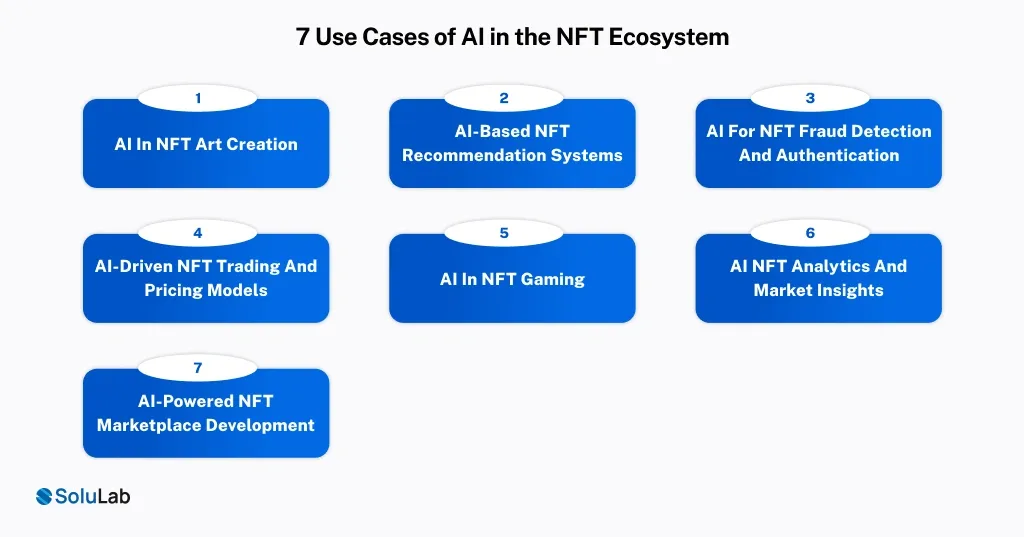
1. AI in NFT Art Creation
AI is redefining digital creativity. Tools powered by machine learning can generate unique, high-quality artworks at scale.
- Artists use generative models to create AI-generated NFTs
- Style transfer and deep learning enhance originality
- Reduces time and cost of production
- Enables non-artists to participate in NFT creation
This is one of the fastest-growing segments within AI NFT development.
2. AI-Based NFT Recommendation Systems
Discovery is everything in NFT marketplaces. AI makes it intelligent.
- Tracks user behavior, wallet activity, and preferences
- Suggests NFTs based on buying patterns
- Increases platform engagement and conversions
- Personalizes homepage and marketplace feeds
This is a core feature in any NFT marketplace with AI integration solutions.
3. AI for NFT Fraud Detection and Authentication
Trust is a major barrier in NFTs. AI solves it efficiently.
- Detects duplicate or plagiarized content
- Uses image recognition and metadata analysis
- Flags suspicious transactions in real time
- Enhances transparency and credibility
AI for NFT fraud detection is becoming a standard in enterprise-grade platforms.
4. AI-Driven NFT Trading and Pricing Models
NFT trading is moving toward data-backed strategies.
- Predicts NFT price trends using historical data
- Automates bidding and trading decisions
- Identifies undervalued assets
- Reduces speculative risks
This enables smarter AI-driven NFT trading ecosystems.
5. AI in NFT Gaming
Gaming is one of the most promising areas for AI in NFT ecosystems.
- Creates adaptive in-game NFT assets
- Personalizes gameplay using AI agents
- Generates dynamic storylines and characters
- Enhances player engagement and retention
Countries like South Korea, Japan, and the UAE are heavily investing in AI in gaming.
6. AI NFT Analytics and Market Insights
Data is becoming the backbone of NFT decision-making.
- Tracks market trends and trading volumes
- Provides real-time insights for investors
- Identifies high-performing NFT categories
- Helps platforms optimize listings and pricing
AI NFT analytics is essential for institutional adoption.
7. AI-Powered NFT Marketplace Development
The future lies in fully intelligent platforms.
- Automated minting and listing processes
- AI moderation for content quality
- Smart search and filtering capabilities
- Dynamic pricing and royalty optimization
Businesses are increasingly investing in AI development solutions to stay competitive.
Strategic Revenue Generation for Enterprises
For businesses, integrating AI into an AI NFT Marketplace isn’t just a tech upgrade; it’s a revenue multiplier.
| Revenue Stream | How AI Enhances It | Enterprise Benefit |
| Trading Commissions | AI trading bots increase transaction frequency. | Higher volume of 2.5% transaction fees. |
| Subscription Tiers | AI provides “Pro” analytics and rarity alerts. | Predictable monthly recurring revenue (MRR). |
| Minting Fees | AI tools help users generate art on the fly. | Revenue from “Creation-as-a-Service” fees. |
| Verification Fees | AI-driven “Verified Authentic” badges for artists. | Additional one-time or recurring trust fees. |
| Premium Placement | AI identifies which NFTs are likely to sell to specific users. | Ad revenue from targeted featured listings. |

How SoluLab Helps Businesses Build AI-Powered NFT Platforms?
At SoluLab, a top AI consulting services provider, the focus is on building scalable, intelligent, and future-ready NFT ecosystems powered by AI technology.
1. End-to-End AI NFT Development
From concept to deployment, SoluLab delivers complete AI NFT development solutions tailored to business needs.
2. Custom AI Integration
- Recommendation engines
- Fraud detection systems
- AI trading models
- Analytics dashboards
3. Scalable Marketplace Development
SoluLab builds high-performance AI NFT marketplaces with seamless UX and advanced automation.
4. AI-Native Approach
Being an AI-native company, SoluLab leverages AI internally to reduce development time and cost, delivering faster and more efficient solutions.
To avail our latest offers, contact us today!
FAQs
Deepika is a content writer who blends storytelling with strategic thinking. She explores topics across digital innovation, emerging tech, and the evolving blockchain industry. She enjoys breaking down complex ideas into simple, engaging narratives in the growing global markets.