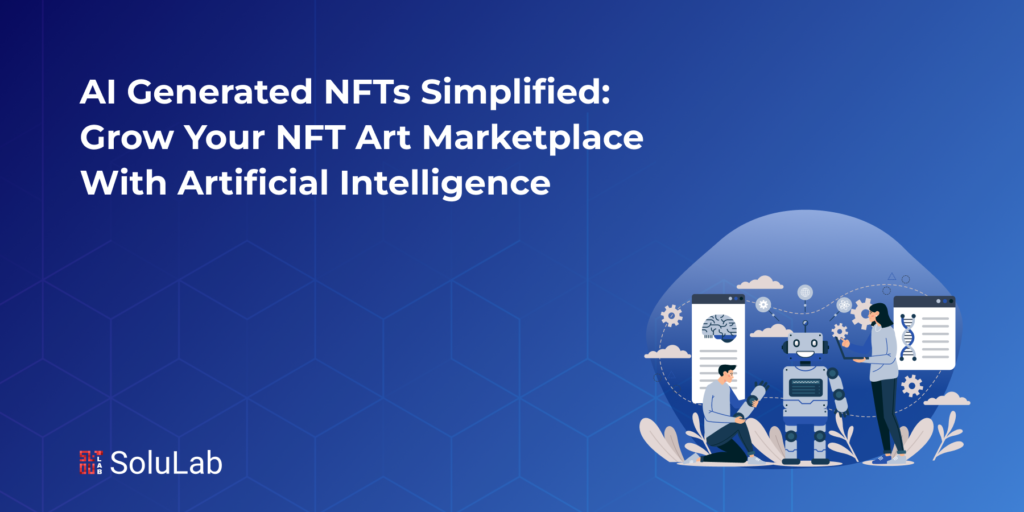
An AI-generated NFT is simple enough to describe. A generative model, usually a diffusion model or a GAN, produces the image. The creator prompts or trains that model, keeps the handful of outputs worth keeping, and mints them as tokens on a chain like Ethereum or Solana, which is what puts provenance and ownership on the record. The effect on the NFT art marketplace is the interesting part: artists without a traditional technical background can ship work, and platforms can build large collections that actually differ from one another. The messy questions are not settled. Who gets credit for the training data, how royalty splits should work, what a platform owes the artists whose style a model absorbed. Platforms and regulators are still arguing about all of it.
What is the Growing Demand For AI-Generated NFT Art Marketplace?
Demand for AI-generated NFT art marketplaces did not come from one place. Three things arrived at roughly the same time: the models got good, artists got curious, and collector taste shifted toward work that looks machine-touched rather than hand-drawn. Put generated output on a chain and you have something that is both novel and provably scarce. That pairing is what keeps pulling money and attention into this corner of the art business. Here is what is actually driving it.
- Odd, Unrepeatable Output
Working with a model is nothing like working with a brush. The artist sets constraints, feeds the system a direction, and gets back something they would never have drawn unassisted. The results skew strange on purpose.
That strangeness is the point. Visual aesthetics no studio brief would have approved. Patterns too dense for a human hand to execute. Compositions that abandon the usual rules about figure and ground entirely. Collectors chasing this material are not buying decoration, they are buying the single copy of a thing nobody can produce twice.
- A Shorter Path From Idea to Output
Most of the grind in digital art is not the idea. It is the first sketch, the forty variations nobody sees, the texture pass that eats a weekend. Models take a good chunk of that: rough compositions, creative directions worth chasing, intricate pattern and texture work that used to be entirely manual.
What is left for the artist is editing. Choosing, cutting, retouching, deciding which of two hundred outputs deserves a name. In practice that moves the job from making to judging, and it lets one person put out far more finished work while testing styles they would never have had the hours to attempt.
Read Our Blog: How to get started with NFT art?
- Getting Found, and Getting Matched
A marketplace holding ten thousand pieces has a discovery problem, not a supply problem. Recommendation models read what a collector clicks, lingers on, and buys, then push similar work in front of them. Same machinery a streaming service uses, aimed at art instead of songs.
Curation systems tag and sort the catalogue automatically, so browsing stops feeling like scrolling a spreadsheet. Collectors stay longer. They also come back more often, which is the number platforms genuinely care about.
- The Models Keep Getting Better
Progress in AI technology and the machine learning methods behind it has done most of the heavy lifting here. Newer systems copy an artistic style convincingly and render detail that older ones smeared into mush. Every improvement widens what an artist can even attempt.
And artists keep pushing past whatever the tooling was built for, which pulls in more buyers, which funds the next round of marketplaces. The loop feeds itself.
- Buying It as an Asset
Plenty of people here are not collectors. They are traders. The speculative side of NFTs has drawn heavy attention in recent years, and buyers who believe a unique digital asset can appreciate make up a real share of the demand.
AI-generated work sits at a convenient intersection for that crowd: new enough to carry a story, scarce enough to be priced. So the market gets two kinds of buyer at once, the ones who want the picture and the ones who want the position. Both push volume up.
What Is AI-Generated NFT Art?
Strip the jargon and the definition is short. AI-generated NFT art is digital work made, or co-made, by machine learning models, then tokenized so it can be owned on blockchain platforms. The art half comes from generative models. The ownership half comes from the chain, which records who holds what and will not let anyone quietly rewrite that record later.
It starts with training. A model gets fed a large pile of visual material, images mostly, sometimes video or audio, and works out the patterns sitting inside it: what a style looks like statistically, how shapes and colors tend to arrange themselves. After that it can produce new work from those learned patterns plus whatever parameters the artist sets.
How artists actually use that varies enormously. Some treat the model as a collaborator rather than a tool. It offers a first design, throws out variations, reacts to a specific input, and the artist steers from there. The back and forth is usually where the interesting pieces come from.
The practical gains are easy to list. New territory to work in. Styles that would be tedious to execute by hand. Iteration measured in minutes instead of days. A model that spits out twenty versions of one idea gives an artist something to react against, which beats a blank canvas most mornings.
Read Also: What is an AI Powered Chatbot?
Collectors come at it from the other end. What draws them is that each output is genuinely distinct, the product of one model, one prompt, one moment. You cannot ask for that exact piece again and receive it. For a certain kind of buyer, that is the entire appeal.
Then there are the ethics, which nobody has resolved. Who counts as the author when a model does the drawing? What is owed to the artists whose work sat in the training set? Where does the human contribution actually begin? The art community is arguing this out in public right now, mostly around fair credit, fair pay, and being honest about what was machine-made.
Why Use AI NFT Generators?
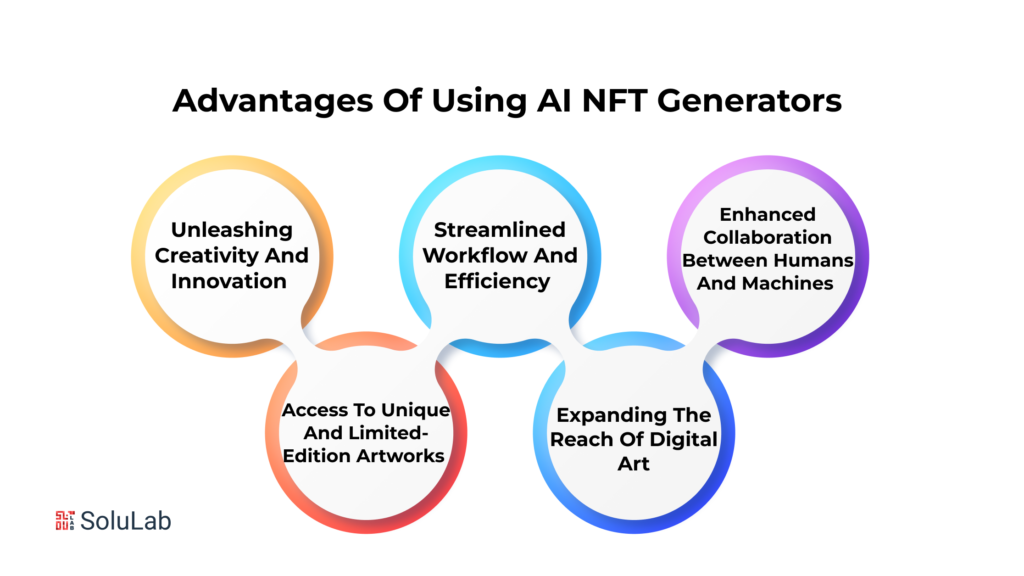
AI NFT generators caught on fast, and not for one single reason. Artists and collectors get different things out of them. Here is the short version of why people keep using them.
- Creative Range
These tools widen what one person can make. The machine learning models underneath produce a large spread of visual output from a small amount of input.
An artist can chase a style they have never worked in, run complex patterns far past what hand-drafting allows, and build compositions that would not survive a normal planning process. Treat the generator as raw material. Most of it gets thrown away. The rest points somewhere the artist would not have found alone.
- Less Busywork
The boring stretches of production shrink. Initial sketches, variation sets, repetitive design elements: a generator handles them without complaint.
That leaves the artist’s hours for the parts that need judgment. More finished work ships. More concepts get tested instead of abandoned for lack of time. Iteration gets faster, and speed of iteration is usually what separates a good series from a dull one.
Read Our Recent Press Release: SoluLab Bridging the Gap Between Technology And Innovation
- Working With the Model, Not Just Through It
Some artists describe the model the way they would describe a studio partner. It suggests, they reject, it suggests again.
Nothing mystical is going on. The algorithm proposes, responds to specific inputs, and generates options at a rate no human can match, while the artist keeps every decision about what counts as finished. The vision stays with the person. The volume comes from the machine.
- Genuinely Limited Editions
Because output shifts from run to run, each generated piece differs from the last. That gives collectors something they can reasonably call one of one.
Scarcity is what prices art, digital or otherwise. Rare and extraordinary pieces hold attention and hold value better than anything mass-produced, which is why the limited-edition framing shows up in nearly every AI NFT drop you will see.
- A Lower Barrier to Entry
You no longer need a decade of software fluency to make something worth minting. Generators put usable output within reach of people at very different skill levels and from very different backgrounds.
That changes who gets to take part. Fewer technical gates, fewer expensive tools, fewer years of practice demanded before anyone will look. The result is a wider mix of creators and, inevitably, a wider mix of what gets made. Some of it is noise. Some of it would never have existed otherwise.
What are the Benefits of merging AI and NFTs?
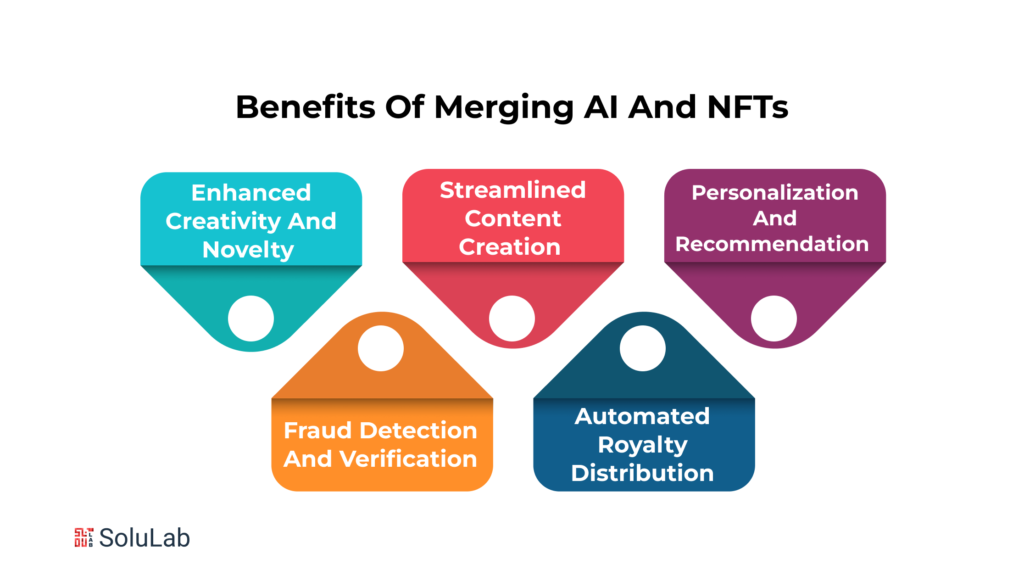
Put the two together and each one covers the other’s weakness. AI produces at volume but cannot prove who owns what. NFTs prove ownership but do not make anything. The overlap is where the useful material sits. Here is what that buys you.
- Work That Stands Out
Generative models produce a broader range of output than any single hand can. That matters most in a crowded market.
Artists can work in styles outside their training, test new concepts cheaply, and end up with digital assets that look like nothing else in a grid of ten thousand thumbnails. Standing out is half the battle on a marketplace. Unusual output is the only reliable way to manage it.
- Faster Production
On the production side, the algorithms take over parts of the workflow: first designs, variation runs, the repetitive steps nobody enjoys doing twice.
Output per person goes up. Iterations get shorter. Generating content at scale stops being a staffing question and becomes a compute question. The creator’s time goes back where it belongs, into sharpening the idea and putting a recognizable hand on the result.
- Personalization and Recommendation
Recommendation is where AI earns its keep on the marketplace side. Models read stated preferences, click patterns, and purchase history, then surface work that fits.
Done properly, a collector stops hunting and starts finding. Relevant suggestions, curated shelves, fewer dead ends. Inside NFT marketplaces, that is what keeps someone browsing past the first page and coming back the following week.
Read Our Blog Post: Everything You Need to Know About Metaverse NFT Marketplace Development
- Fraud Detection and Verification
AI does real work on fraud inside NFT platforms. The algorithms compare patterns, metadata, and transaction histories to flag copies, suspicious trades, and outright fakes.
For a marketplace, this is not a nice-to-have. Counterfeits poison buyer confidence faster than anything else, and once people stop believing a platform they do not come back to it. Automated checking protects the artist whose work got lifted and the buyer who nearly paid for a forgery. Trust is the product.
- Automated Royalty Distribution
Royalties can run themselves. A smart contract can be written to pay the original artist a set cut every time their token changes hands, with no invoice and nobody to chase.
That is a real shift in who holds leverage. An artist keeps earning from resales they had no part in, on terms fixed once at mint, which gives them far more grip on their own intellectual property than the old arrangement ever did. How consistently marketplaces honor those terms is its own argument, and not one this piece settles.
What Is the Impact of AI NFT Marketplaces on Artists and Collectors?
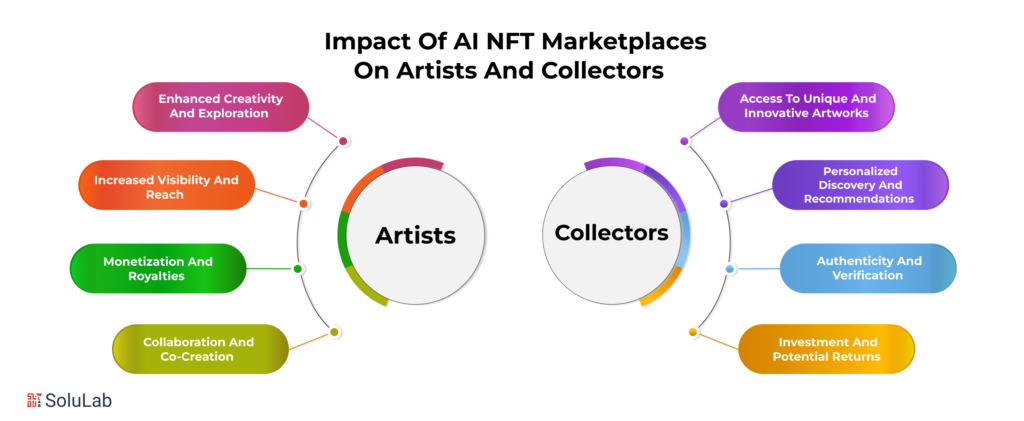
AI NFT marketplaces changed the working conditions on both sides of the transaction. Artists make and sell differently now. Collectors find and buy differently. Worth taking each in turn, because the two groups are getting very different things out of the same platforms.
Artists
- Room to Experiment
The obvious gain for an artist is range. The algorithms let you work in styles you never trained in, generate complex pattern work that would take weeks by hand, and pull suggestions that knock an idea loose when you are stuck at two in the morning. The artist still decides what is good. The machine just supplies more things to decide about, and that changes the shape of a career.
- Reach
Then there is distribution. A marketplace is a global storefront, and its recommendation engine spends all day trying to match your work with people who like that kind of work. For an unknown artist, that matching is worth more than any gallery mailing list. Exposure, followers, actual paying collectors, a name that starts circulating without you pushing it.
- Monetization and Royalties
Selling changes too. Tokenize the piece and you sell straight to the collector, with no gallery taking a cut and no agent standing in the middle. Smart contracts handle the rest: a percentage of every resale routes back to you automatically, for as long as that token keeps trading. Artists have been asking for that arrangement for a very long time.
- Co-Creation
And some artists simply start from machine output. Take a generated base, paint over it, fold fragments of it into a larger composition, or run an entire series as a running dialogue with the model. It widens what one person can put out, and it lands on work neither the artist nor the algorithm would have reached alone.
Collectors
- Access to Work You Cannot Get Elsewhere
Collectors get a steady supply of genuinely unusual material. Generated pieces look different from hand-made digital art, and the difference shows up even at thumbnail size. Buying a few makes a collection less predictable, which for most serious collectors is the whole reason they bother.
- Discovery That Fits
Recommendation systems do the hunting for you. They watch what you save and what you buy, then rank the catalogue against that history. You find pieces that match your taste sooner and waste less time scrolling past things you were never going to want. A small thing on paper. It is also the difference between a marketplace you browse and one you close after ninety seconds.
Check Out Our Blog: Solana NFT Marketplace: How to build your own NFT Marketplace on Solana
- Authenticity and Verification
Verification matters more here than in most markets. Platforms run algorithms across patterns, metadata, and transaction records to catch counterfeits before they ever reach a listing page. A collector spending real money wants to know the thing is what it claims to be, and automated checking is the only way to do that across a catalogue nobody could review by hand.
- The Investment Case
Some buyers are here for returns, plainly. The argument runs that unique, innovative work appreciates over time, which is the same argument people have always made about traditional art. It may hold. It may not. What is true is that collectors can now take a position in a digital art market that is still young, carrying the same uncertainty any art purchase carries.
Conclusion
So where does this leave things? Demand for AI-generated NFT art marketplaces is not a fad built on one platform or one lucky drop. It comes from several currents meeting at once: better models, artists willing to hand part of the process to a machine, and collectors who have decided that machine-touched work belongs in a serious collection.
The pull is practical. Artists get range and speed. Collectors get discovery that works and pieces they cannot find anywhere else. The model functions as a collaborator rather than a replacement, which is the part critics usually miss, and the artist using one still decides what ships and what gets deleted. On the buying side, scarcity and novelty do to price exactly what they have always done to price.
The infrastructure around all of it filled in quickly. Recommendation engines, fraud checks, authenticity verification, royalty payouts that run without an invoice, browsing that does not feel like querying a database. None of these are glamorous features. They are the ones that decide whether a marketplace keeps the users it worked so hard to attract.
If you are building one, SoluLab does this work. As a Artificial Intelligence development company, the team builds AI systems for businesses through its AI app development practice: intelligent chatbots, predictive analytics, custom machine learning, shaped around what a given industry actually needs instead of a template. On the NFT side, SoluLab has built marketplaces from scratch for artwork, digital collectibles, gaming, and asset tokenization. The NFT marketplace development services are feature-heavy and put together with some care about the details. If an AI-driven NFT art marketplace is on your roadmap, talk to SoluLab.
FAQs
Shipra Garg is a tech-focused content strategist and copywriter specializing in Web3, blockchain, and artificial intelligence. She has worked with startups and enterprise teams to craft high-conversion content that bridges deep tech with business impact. Her work translates complex innovations into clear, credible, and engaging narratives that drive growth and build trust in emerging tech markets.