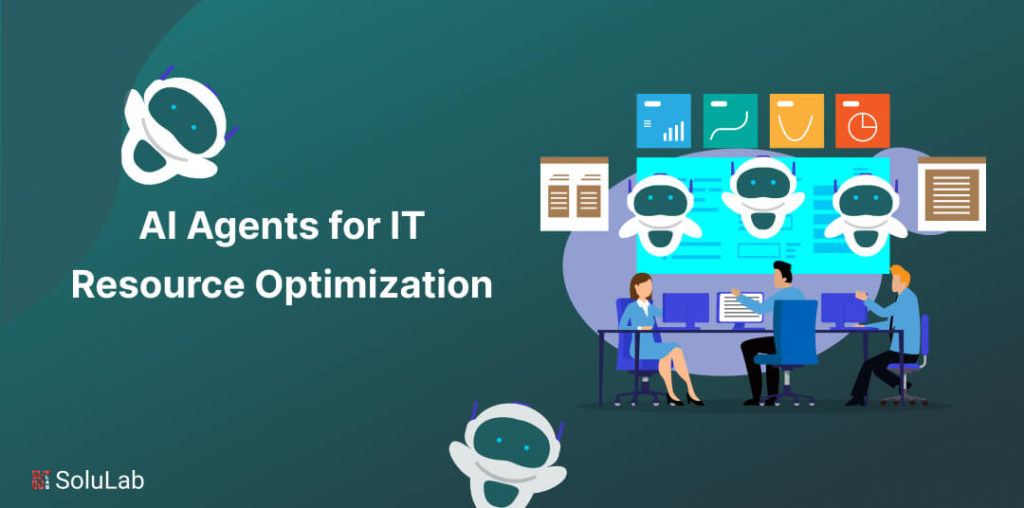
Ask any IT lead what eats their week and you’ll hear the same list. Capacity guesswork. Shifting schedules. Bodies assigned to the wrong sprint. AI agents are quietly rearranging that work: they forecast demand, rebuild timetables, and push resources where they actually matter. Meanwhile the pressure on IT keeps climbing. Infrastructure sprawls. Attackers get better funded. Regulations move faster than the documentation does. And uptime expectations never go down, only up. On top of all that, teams burn hours on repetitive chores that leave almost nothing behind, which is exactly the time they needed for the strategic work nobody else can do. That gap is where AI agents earn their keep. Built on machine learning and some genuinely good algorithms, they change how IT work gets done rather than just making it a bit faster.
Financial institutions have seen a 38% increase in profitability after putting AI agents to work on fraud detection and risk scoring. AI agents in IT are reshaping operations too, and security is where it shows first. They watch systems around the clock, flag threats, and move on a suspected breach before a human has finished reading the alert. Compliance gets easier as well, since regulatory checks and the reports that follow them can run on their own. Then there’s the analysis side: feed an agent a large enough dataset and what comes back is something you can act on, not a chart nobody opens.
Calling them tools undersells it. AI agents for IT behave more like a partner on the team, one that helps you work through hard problems, tighten operations, and ship something new. This article walks through what they change, where they get used, what you gain, and which kinds exist, because the bar for IT excellence in the digital age has already moved.
What are AI Agents?
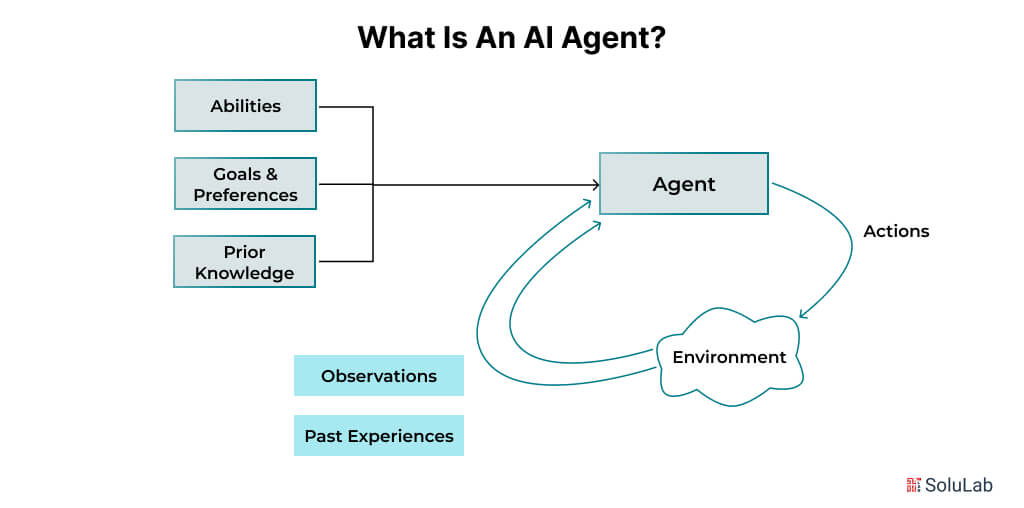
Think of an AI agent as a virtual assistant with far more range than the name suggests. It runs on artificial intelligence and finishes tasks without somebody standing over it. Four things happen on loop: it reads its environment, processes what it finds, decides, then acts toward a goal it was handed.
What separates an agent from a script is that it gets better. Large Language Models sit underneath, and every interaction sharpens the next one. Give it a few months of real traffic and the agent you deployed is not the agent you have.
Then there’s the multi-agent question. Autonomous systems rarely run on one agent. Each brings a narrow specialty, they share an objective, and a problem that would choke a single generalist gets carved into pieces small enough to solve.
The Working of AI Agents
Under the hood, IT operations management AI agents stack several technologies together, which is what lets them run with little or no supervision. The mechanics break down like this:
1. Environmental Perception: The agent never stops watching. It reads its operating environment and adjusts as new data lands, in real time. Sophisticated large language models (LLMs) is what lets it read an instruction correctly, context included, instead of pattern-matching on keywords.
2. Tool Utilization: APIs, calculators, search engines. AI agents reach for whatever gets them the information a task needs, then decide with that information in hand.
3. Decision-Making: Decisions are anchored to data and to what the business actually wants. LLM-powered agents are particularly good at untangling a complicated instruction and the situation around it, so they can run the task themselves while still pulling in the direction of the strategy.
4. Adaptive Learning: Past outcomes feed the next attempt, and the strategy gets refined rather than repeated. Reasoning methods like chain-of-thought and tree-of-thought help them draw the logical links that hard problems depend on.
5. Problem Resolution: New problem shows up, the agent works out a fix. Better still, it goes after issues that have not surfaced yet. LLMs stretch this further by letting the agent produce the artifact the situation calls for, a detailed report or an email that moves the resolution along.
6. Strategic Planning: Forecast the trend, plan around it, allocate resources accordingly. That’s how an agent supports the long game and keeps a business ready for whatever lands next quarter.
Put those six together and you understand why AI agents have become hard to do without in IT operations, both for the innovation they enable and for the performance lift across the organization.
Types of AI Agents
An AI agent is a digital system built to sense what’s around it, chew through data, and act toward a defined objective. What it can do, and where you’d point it, splits them into a handful of categories:
1. Reactive Agents: Input comes in, response goes out, nothing gets stored. That simplicity suits narrow jobs such as game playing or basic robotics control. Efficient, yes. But with no memory and no learning, anything complex or shifting will break them.
2. Goal-Based Agents: Here the agent holds a target and weighs each possible action by how much closer it gets. You’ll find this pattern in navigation systems and anywhere decisions have to be ranked before they’re taken.
3. Utility-Based Agents: A step up from goal-based. These compare outcomes and pick whichever one scores highest on utility or satisfaction, so the question is not only whether the goal is reached but whether it was reached the best way. Logistics leans on this heavily, because in logistics the route is the product.
4. Learning Agents: Experience accumulates, and the agent grows into something more capable than what you deployed. Exploration, feedback, and optimization all live inside it, which is why they fit volatile settings such as autonomous vehicles or recommendation systems built around one person’s taste.
5. Social Agents: Built to hold their end of an interaction with people or with other agents, often by mimicking human behavior. AI agents for customer service include chatbots, virtual assistants, and the collaborative robots that share a floor with human workers.
6. Collaborative Agents: Team players. They work with humans or with other agents toward one shared outcome, and they show up constantly in multi-agent systems for things like supply chain management and swarm robotics.
7. Autonomous Agents: No hand on the wheel. These run without continuous human direction, making calls, learning from what surrounds them, and adjusting when conditions shift. Self-driving cars and drones that route and complete a mission by themselves are the obvious examples.
8. Intelligent Agents: The combination platter: perception, reasoning, learning, and action working together on problems that resist any single technique. Smart assistants, healthcare diagnostics, and predictive analytics all sit in this bucket.
Every one of these contributes something different to efficiency, problem-solving, and innovation, whatever the industry. Pick the type that matches the problem in front of you and the goal stops feeling so far away.
Key Components of AI Agents in IT
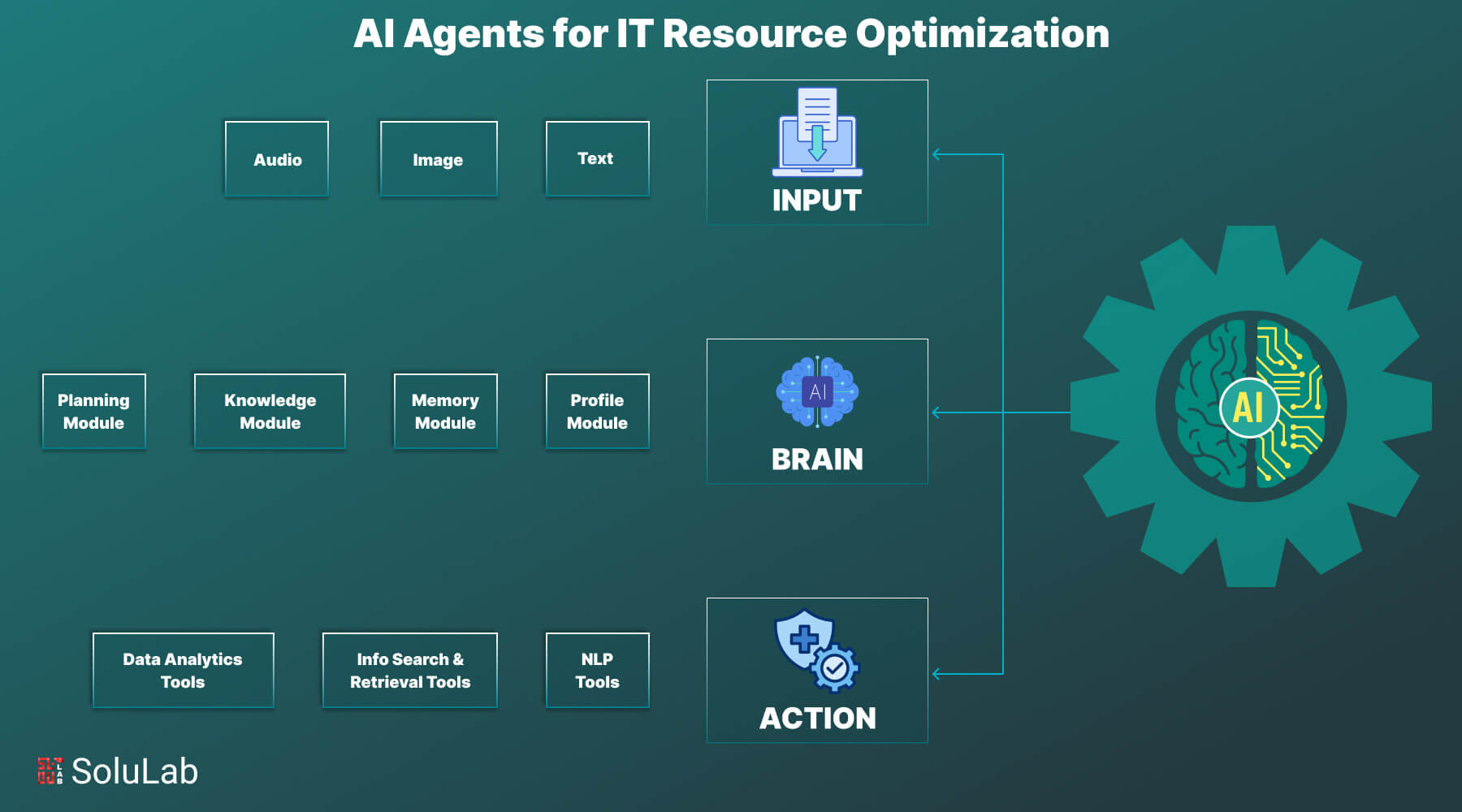
Open up an AI agent built for IT and you’ll find a few parts doing the heavy lifting: input processing, cognitive thinking, and strategy execution. Together they are what make the agent both precise and fast enough to matter.
- Input: Everything the agent knows arrives here. Text, audio, images, streaming in from systems and from people. Whatever choices and actions follow inside IT operations, they rest on this layer.
- Brain: The cognitive hub. Linked modules feed each other, and out of that comes the thinking and the decisions.
- Profiling: Sets the agent’s job and its boundaries. Network management, say, or cybersecurity work.
- Memory: Holds past interactions and the data that came with them, which is what makes learning from yesterday possible at all.
- Knowledge: The domain-specific material IT work demands. Without it, decisions are guesses and fixes are hit or miss.
- Planning: Weighs incoming data against the goals it was given, then picks the path. That’s the difference between a job done and a job done well.
- Action: Where the plan meets reality. System monitoring, incident response, performance tuning, all of it executed through the specialized toolbox the agent carries, keeping IT running the way it should.
Wire those pieces together and you get accuracy, flexibility, and room to grow. In a modern IT setting, that combination is no longer optional.
The Role of AI Agents in IT
AI agents for IT infrastructure are rewriting how operations run, mostly because they can work through tangled technical environments and read data at a volume no team could. A standard language model writes text. These do something else entirely, covering everything from routine system monitoring to the kind of cybersecurity analysis that used to require a senior analyst and a long afternoon.
This is not automation with a new label. AI agents in IT spot irregular network traffic on their own, call out a system fault before it happens, and propose the configuration that fits the data in front of them right now. The payoff runs two ways: IT gets smoother, and security posture improves because threats are anticipated and blunted rather than cleaned up after.
Hand them the repetitive chores and your people get their attention back for the work that counts. Systems become more dependable. Predictive maintenance pulls downtime down. Incidents get answered faster. Organizations across IT that put agents to work see better operational efficiency, tighter resource consumption, and, in the end, an infrastructure sturdy enough to bend with whatever technology demands next.
In the digital age, AI agents for IT are instruments you build around. They raise performance standards, pull operational risk down, and clear the way for what comes after. Their ability to absorb and analyze data at scale hands companies the insight they need to move with new technological norms instead of against them.
Use Cases of AI Agents in the IT Industry
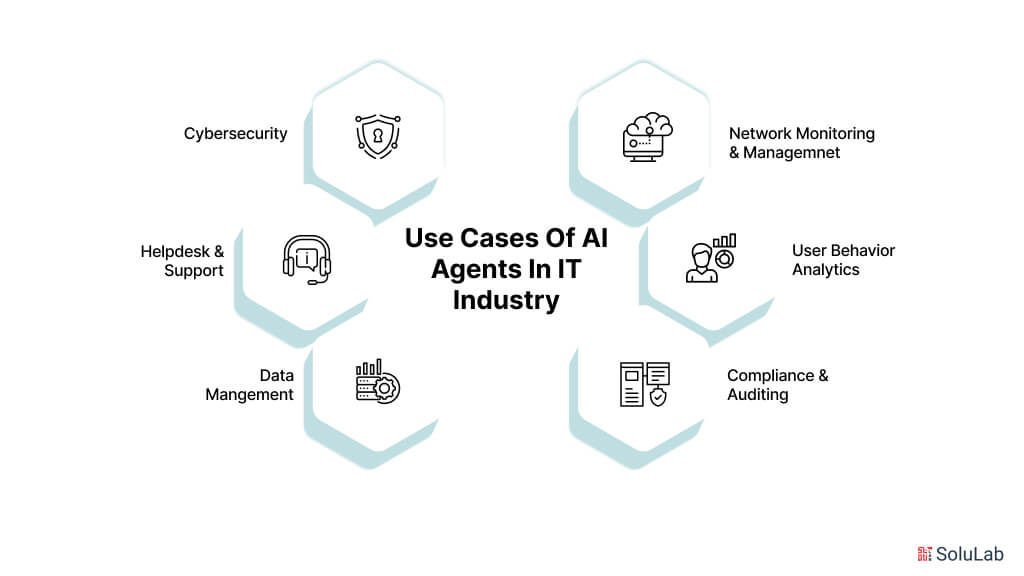
AI agents in IT are changing the industry from the inside: tighter processes, stronger security, better numbers across the board. Here’s where they pull real weight:
1. Network Monitoring and Management
- Traffic gets watched without pause, so odd spikes, bottlenecks, and latency problems surface and get fixed.
- Network setups get tuned to hold connectivity steady and keep downtime short.
- Predictive analytics call the fault before it lands, which buys you the window to step in first.
2. Cybersecurity
- Malware, phishing attempts, unauthorized access: all of it spotted as it happens, not in Monday’s report.
- Vulnerability assessments run automatically, with fixes or upgrades suggested to close what turns up.
- Agent-driven incident response squeezes the gap between discovery and resolution, and a smaller gap means smaller damage.
3. System Performance Optimization
- CPU use, memory utilization, disk activity: the agent reads the parameters and reallocates resources to match.
- Performance bottlenecks get found and cleared, and availability stays high.
- Automated diagnostics get your people to a resolution faster with far less manual poking around.
4. Helpdesk & Support
- Client questions get handled through intelligent AI-powered chatbots and virtual assistants, with no wait in the queue.
- Classification, assignment, and resolution run automatically, which shows up as faster responses and better service.
- Recurring issues get matched against prior support data, so the fix arrives with the ticket.
5. Data Management and Analysis
- Huge datasets get sorted and assessed, and what comes out is insight you can put to work.
- Cleansing and transformation happen without a human in the loop, so quality and accuracy climb.
- Predictive modeling surfaces the trends and patterns that strategic planning depends on.
6. DevOps and CI/CD Automation
- Integration, testing, deployment, monitoring: the agent takes friction out of each stage of the pipeline.
- Flaws in a build get caught early, which shortens both debugging and the release cycle.
- Because they keep learning, procedures get tighter and time-to-market keeps shrinking.
7. IT Asset Management
- Hardware and software get tracked across their whole lifespan, so nothing sits idle and nothing runs past its useful life.
- Maintenance needs get called ahead of time, cutting downtime and the repair bills nobody budgeted for.
- With asset performance on record, upgrade and replacement calls stop being arguments and start being decisions.
8. Compliance & Auditing
- Compliance inspections run automatically against industry law, GDPR and HIPAA and ISO standards included.
- Audit reports come out thorough, and your department gets its week back.
- Real-time monitoring keeps a firm on the right side of obligations that keep expanding.
9. Incident Management
- Events get identified, sorted, and ranked by severity, so the serious ones get answered first.
- You get insight you can act on plus a proposed route to keep service interruptions short.
- Historical data analysis points at the underlying cause, which is how the same incident stops repeating.
10. User Behavior Analytics
- User activity gets watched for the anomalies that matter: illegal access, insider threats.
- Your staff learn what people actually prefer, which makes delivery of IT services a lot more efficient.
- Those same behavior patterns sharpen both security protocols and the experience itself.
11. IT Project Management
- Scheduling, resource allocation, and live progress tracking all get a hand.
- Predictive insight flags the delay or the resource crunch while there’s still time to move.
- Reporting stays integrated, so stakeholders are never reading last week’s status.
12. Data Privacy and Governance
- Privacy standards get enforced by tracking who touched what data and why.
- Global data protection requirements such as CCPA and GDPR stay covered.
- Automated notifications put a potential privacy violation or illegal data use in front of your team immediately.
Across all of it, the pattern holds: efficiency, accuracy, and scale that manual work can’t match. Take the repetitive activities off the board, lock security down, put good insight in front of the right people, and your IT team finally gets to zone in on strategy and innovation. Business results follow from there.

Benefits of AI Agents in IT
Bring AI agents into IT operations and the returns show up in more than one column: tighter processes, better security, more output per person. Here’s what that looks like in practice:
1. Enhanced Efficiency: System monitoring, patch updates, ticket administration. All the work that has to happen and nobody wants to do. Hand it to an agent and your team goes back to strategic work with fewer manual errors and hours returned to the week.
2. Improved Cybersecurity: Monitoring never stops, so threats get caught and answered in real time. Data intrusions get blocked, vulnerabilities get named, and the protection stays proactive as the attacks keep changing shape.
3. Cost Optimization: Routine processes automated, resources allocated properly, failures called before they occur. Operational costs drop. Latency drops with them, and the spending tied to outages or emergency manual intervention simply stops happening.
4. Decision-Making Based on Data: An agent reads more data than your whole team could and returns something usable. Predictive analytics line IT strategy up with business objectives, speed up resource planning, and put problems on your radar early.
5. Scalability: More load, same performance. As the business grows, agents scale IT resources to match and absorb whatever new demands arrive with that growth.
6. Accelerated Incident Resolution: Identify, classify, resolve. Agents are quick at all three, and a fix that arrives immediately is the difference between a blip and a bad day for system performance.
7. Customized User Experience: Using user behavior analytics, agents shape IT services and support around the person in front of them. Resolving a ticket, recommending a system change, either way the answer fits, and satisfaction follows.
8. Governance and Compliance: Compliance checks run on their own and the audit reports come out complete. Non-compliance risk goes down, and with it the legal exposure and penalties that follow a miss.
9. Continuous Improvement and Learning: Machine learning is what pushes an agent’s performance up over time. Processes get refined, new data gets absorbed, and each round of solutions works better than the last, which keeps IT operations at the front of the field.
10. Constant Accessibility: Agents don’t sleep. Monitoring, assistance, and incident response run 24/7, and if your organization spans time zones that consistency is the whole point.
How to Build an AI Agent for IT?
Building an AI agent for IT is a sequence, not a sprint. It starts with knowing exactly what you want and never really finishes, because optimization keeps going. Below is the full path to a custom agent that can carry a wide range of IT duties and lift operational efficiency.
- Define Your Objectives
What is this agent for? Answer that first. System performance tuning, automated cybersecurity response, network monitoring, better user support: pick, and be specific. Everything downstream gets easier when the objective is sharp.
- Select the Most Suitable Frameworks and Libraries
The framework choice sticks with you, so make it carefully. For the machine learning models themselves, sci-kit-learn, PyTorch, and TensorFlow are the workhorses. Pair them with IT-specific libraries for the jobs that need them, infrastructure administration or anomaly detection, and you avoid the compatibility mess later.
- Choose an Appropriate Programming Language
Python still owns AI development, and the reason is boring: the libraries are there and it bends to whatever you need. That said, a specialized framework may point you toward a different language built for the IT task at hand, which usually buys you performance and cleaner integration.
- Data Collection and Preparation
No good data, no good agent. Gather what you’ve got: network logs, system performance metrics, security incident records, user interaction data. Then check it honestly. Is it relevant, is it clean, does it look like the situations the agent will actually face? In practice this is where most builds stall.
- Develop a Scalable Architecture
Go modular, because IT operations only ever get bigger. The agent should slot into your cloud platforms, ticketing systems, and monitoring tools without a fight. Design for large deployments and real-time data streams from day one rather than retrofitting both later.
- Initiate Model Training
Match the method to the problem: reinforcement learning when the environment keeps shifting, supervised learning when you’re classifying. Specialized frameworks sometimes ship purpose-built training environments for IT models, and the accuracy gain is worth the look.
- Deploy the AI Agent
Cloud services or containers, either gives you the scale and the flexibility you’ll want. Confirm it plays well with your IT infrastructure and that your security protocols are respected, not assumed. Most frameworks now offer simplified deployment paths straight into an existing IT setup.
- Conduct a Thorough Examination
Test it hard. Functionality, performance, and security, checked across the range of IT operations the agent will meet. Build scenarios that stress scalability, reliability, and responsiveness specifically, because production will find the gap you skipped.
- Consistently Monitor and Optimize
Launch day is the midpoint. Watch the agent in the wild, because IT environments shift and new hazards appear on their own schedule. Regular updates and tuning keep performance, responsiveness, and alignment with your IT goals moving in the right direction.
Follow that sequence and what you end up with is a genuinely capable AI agent shaped around IT. It automates the grind, hardens your security posture, and lifts operational efficiency. More to the point, it puts your IT team ahead of problems instead of behind them, improves what you deliver, and gives innovation somewhere to happen inside the organization’s IT frameworks.
Implementation Challenges of AI Agents in the IT Industry
Now the other side of the ledger. The benefits are real, and so are the obstacles, and an organization that doesn’t plan for the second set rarely gets the first. These are the ones that bite:
- Integration with Legacy Systems
Plenty of IT estates still run on systems that were never built with AI in mind. Getting an agent to talk to them is messy work, full of custom connectors and upgrades, and the upgrades themselves can knock operations sideways while they happen.
- Data Quality and Availability
Agents need good data to work. Feed them incomplete or dirty datasets and accuracy falls off a cliff. Getting data clean, correct, and relevant sounds like housekeeping. For most IT teams it turns out to be the hard part.
- High Implementation Costs
Hardware, software, people who know what they’re doing. The bill lands up front. Smaller organizations feel that most, especially when the financial upside is real but not yet visible on a spreadsheet.
- Skill Gap
You need machine learning, data science, and AI operations experience in the room. Those people are scarce, and when you can’t find them the deployment drags and the system never performs the way it should.
- Change Management
Agents change how work moves through a team, and people notice. Some resist on principle, some are worried about their jobs, and a lot simply don’t know what the AI is supposed to do. All three slow adoption, inside IT and across the wider organization.
- Security Concerns
Here’s the irony: the thing improving your cybersecurity can open new holes while it’s being installed. A misconfiguration or a heavy dependence on external APIs is all it takes to end up with a data breach or unauthorized access.
- Ethical and Regulatory Issues
Legal and ethical standards apply in full, and they apply hardest where sensitive data or automated decisions are involved. Working out what GDPR or CCPA means for your specific setup is rarely a quick conversation.
- Scalability Issues
An agent that works in one corner of IT does not automatically work across all of it. As operations grow, the computational demands grow too, and the infrastructure underneath has to be ready for that.
- Unrealistic Expectations
Some organizations want the transformation by Friday. When results arrive smaller and slower than the pitch deck implied, the disappointment is about the expectation, not the technology.
Future Trends of AI Agents in IT Resource Management
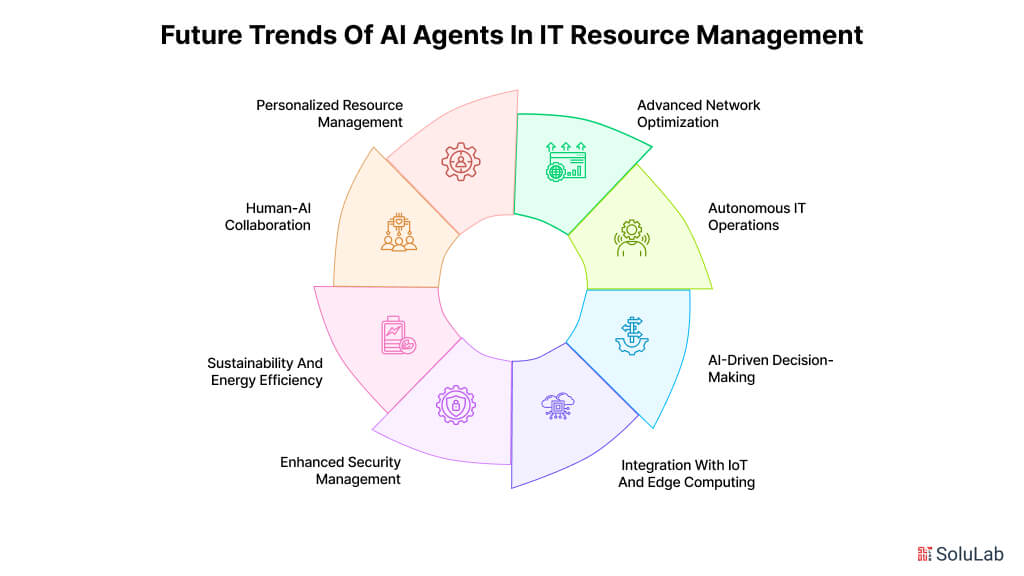
This space is moving fast. New patterns are forming around how businesses tune their operations, and they point to AI solutions getting considerably more sophisticated, enough to change what an IT strategy even looks like. Here’s where AI agents for IT resource management appear to be heading:
1. Advanced Network Optimization
Network optimization is already a busy use case, with live monitoring and resources shifting on the fly. What’s next is predictive: AI agents for network optimization reading demand before it arrives, cutting latency, and getting more out of the bandwidth you’re paying for. Multi-cloud environments are where that will matter most, because that’s where connectivity gets ugly.
2. Autonomous IT Operations
The more the technology matures, the less human input it needs. Expect agents to handle IT resources end to end: provisioning, scaling, performance tuning, all without a ticket. Costs come down and both efficiency and reliability go up.
3. AI-Driven Decision-Making
Recommendations are going to get sharper and more strategic. Pull in enormous datasets, add the business objectives sitting behind them, and the agent can weigh in on resource allocation, which projects go first, and where the budget lands.
4. Integration with IoT and Edge Computing
IoT and edge computing scatter resources everywhere, and something has to keep order. Agents will manage the flow between devices, edge servers, and cloud infrastructure so processing stays efficient and latency stays low.
5. Enhanced Security Management
Expect deeper ties between AI agents and IT security frameworks, with resource management handled securely by default. The direction is clear: predict the threat, blunt it early, and keep IT resources covered as cybersecurity risks keep shifting.
6. Sustainability and Energy Efficiency
AI agents for enterprises have a part to play in sustainability targets by trimming energy use across IT operations. They’ll find the inefficiencies hiding in data centers and tell you what to change, which is how a carbon footprint actually gets smaller.
7. Human-AI Collaboration
Much of where this goes next is about human-AI collaboration getting better. Agents feed IT teams live insight, dashboards that read clearly, and recommendations specific enough to act on, which frees professionals from routine operations and points them at the strategic work.
8. Personalized Resource Management
One-size resource management is on the way out. Agents will bend to the business they’re in, adjusting allocation department by department, project by project, workflow by workflow, so utilization and productivity both hold up.
The Bottom Line
IT resource management looks different when agents are in the mix: fewer manual steps, tighter security, decisions backed by data instead of instinct. Repetitive tasks go away. System performance gets tuned continuously. What’s left is room for the innovation and growth work that was always getting pushed to next quarter.
Recently, a travel company partnered with SoluLab on a familiar set of problems: too many queries, responses taking too long, and support that couldn’t personalize anything. An AI-powered chatbot changed that. Customers started getting answers quickly, along with travel recommendations shaped around them.
So where does your IT stack, or your customer experience, hurt most right now? We being an AI agent development company have a team of experts who are ready to help you take the next step. Get in touch and let’s work out what AI-powered solutions would actually change for your business.
FAQs
Shipra Garg is a tech-focused content strategist and copywriter specializing in Web3, blockchain, and artificial intelligence. She has worked with startups and enterprise teams to craft high-conversion content that bridges deep tech with business impact. Her work translates complex innovations into clear, credible, and engaging narratives that drive growth and build trust in emerging tech markets.