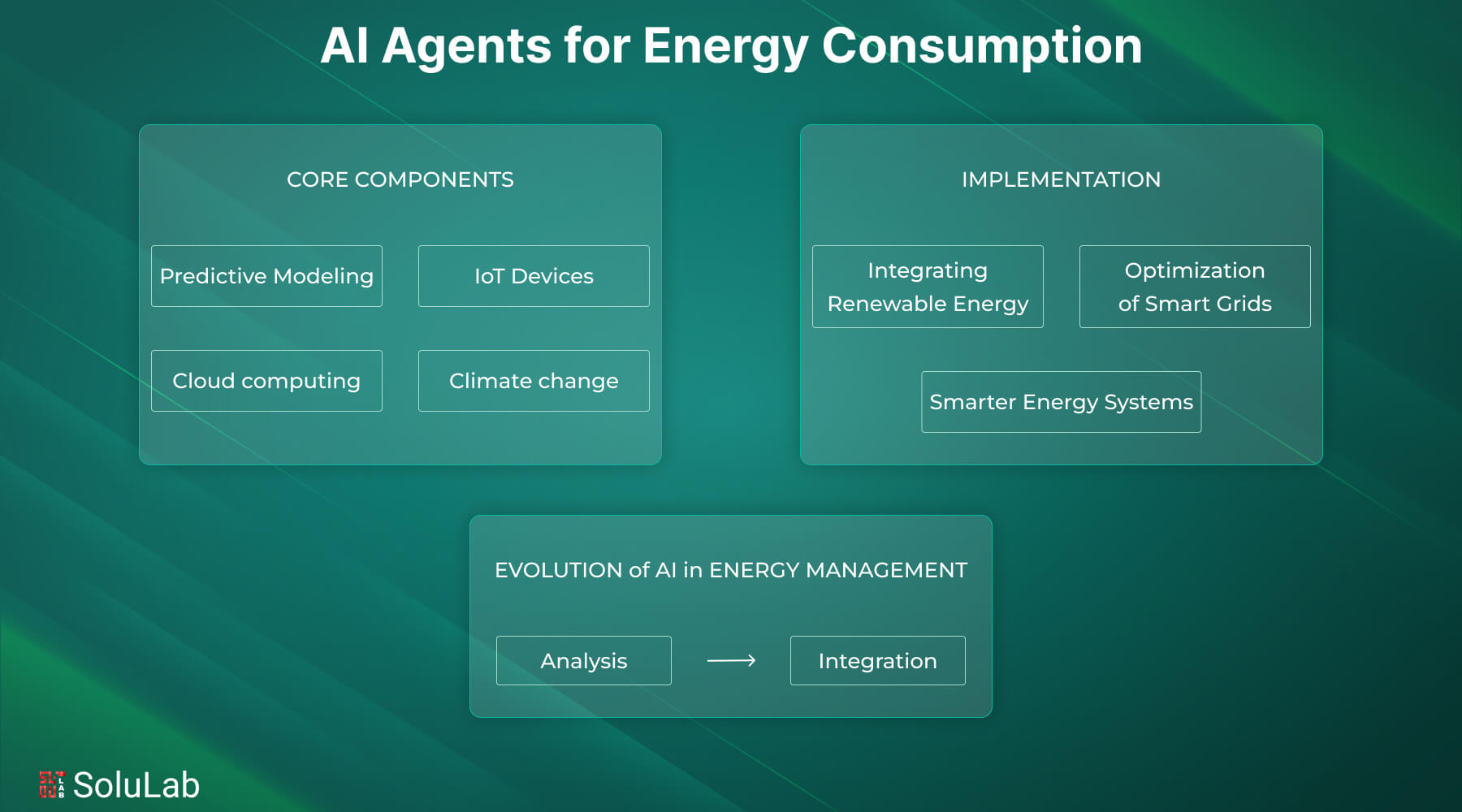
Energy management has a math problem. Grids built for one-way power flow now have to juggle solar panels, batteries, EVs, and demand that spikes without warning, and old rule-based control systems just can’t keep up anymore. That’s the gap AI agents are stepping into: software that watches consumption in real time, predicts what’s coming, and adjusts before a human operator would even notice something changed. The scale of what’s at stake is already visible in the numbers. According to the recent report, AI itself is projected to draw somewhere between 14 and 18.7 gigawatts by 2028, roughly a fifth of all data center power use worldwide.
From grid balancing to folding in renewable sources, AI agents are quietly rewriting how energy gets produced, moved, and paid for, usually with sustainability and cost as the twin goals. This piece walks through what that shift actually looks like: where AI agents on energy management are already doing real work, and where the hype still outruns the hardware. We’ll look at how these systems pull in real-time data, run it through machine learning and predictive models, and use the output to run smarter grids, give consumers more say over their own usage, and tighten operations across the board. Put simply, when AI, hardware, and sustainability goals line up, energy management stops being reactive and starts looking ahead.
What are AI Agents in Energy Consumption Systems?
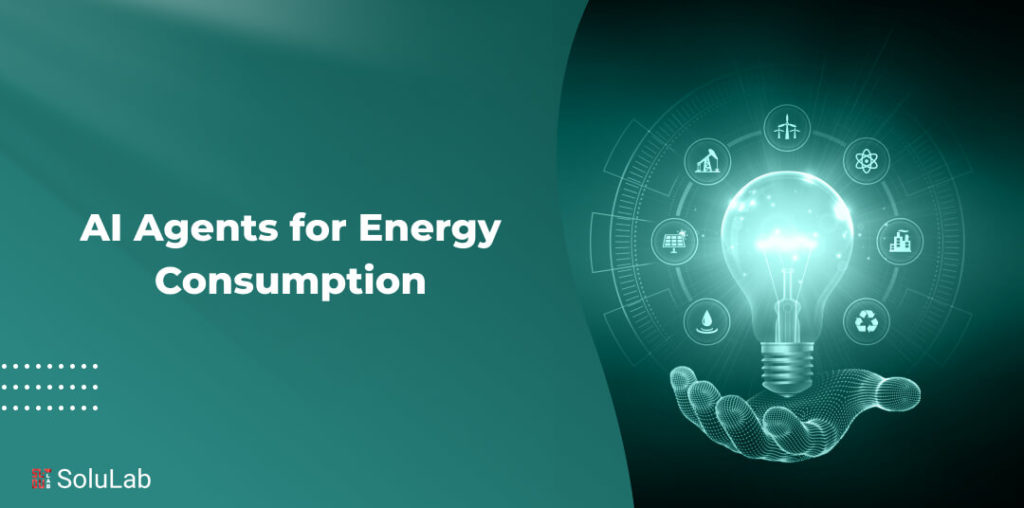
AI agents for energy consumption are software systems built on AI techniques that monitor, control, and fine-tune energy use. Some operate on their own. Others sit next to a human operator and just make the decision easier. A handful of traits show up again and again:
- Data Analysis: AI agents for enterprises can chew through huge, messy datasets pulled from smart meters, weather feeds, and historical usage logs at once. That’s what lets them catch a pattern, or a weird spike that doesn’t fit one, in the noise.
- Predictive Modeling: Machine learning lets these agents forecast where demand and supply are headed, not just where they’ve been. That forward-looking piece matters most when renewable output is uneven, which, let’s be honest, it almost always is.
- Real-time Monitoring: These agents watch energy systems as they run, flagging performance and efficiency issues on the spot. When demand or supply shifts, the response happens in minutes, not after next week’s report.
- Optimization: They adjust settings on the fly to match what users actually need right now, dialing HVAC systems up or down, or shifting battery storage decisions during renewable generation.
- Decision Support: Rather than replace judgment, they back it up: concrete, data-backed recommendations that a manager can act on. Done well, that saves both energy and money.
Get this right and the payoff is concrete: lower bills, systems that perform and hold up better under stress, and a real dent in the sustainability numbers.
Key Technologies Shaping Smart Energy Systems With AI Agents
AI agents didn’t arrive alone. They’re built on top of a stack of newer technologies, and it’s really that combination that’s pushing energy systems toward being smarter and more effective. Here’s how each piece contributes:
- Machine Learning for Predictive Analytics: Machine learning, a core piece of AI agents for IT, lets computers learn from data and get sharper at the task over time, without someone rewriting the rules each week. That’s exactly what forecasting energy usage needs, and it’s what turns raw numbers into better management calls.
- IoT Devices for Real-Time Monitoring: Smart meters and sensors, the everyday hardware of the Internet of Things, gather consumption and environmental data as it happens. Everything AI-driven optimization does downstream depends on this feed being accurate.
- Big Data Analytics for Perceptive Decisions: Modern energy systems generate more data than any human team could read through. Big data tools do the sorting, surfacing trends AI agents then turn into usable, cost-saving decisions.
- Cloud Computing for Smooth Operations: The sheer volume of data coming out of Internet of Things devices needs somewhere reliable to live and get processed, and cloud infrastructure is that place. It also means AI agents can monitor and control energy systems remotely, in real time, without anyone standing next to the equipment.
- Blockchain for Safe and Open Transactions: Bring blockchain technology into energy management and data sharing gets both safer and more visible to everyone involved. Stakeholders trust the numbers more, and that trust is half of what makes a smart energy system dependable.
- Integration of Renewable Energy: As wind and solar capacity keeps climbing, AI agents are what make folding that capacity into existing networks actually workable, instead of a scheduling headache. It’s how sustainability goals and resource efficiency end up on the same side, instead of pulling against each other.
Stack these technologies together and energy systems come out the other side smarter, more dependable, and kinder to the environment. Energy optimization with AI agents is only going to matter more as it matures, pushing both innovation and the timeline toward a cleaner future.
The Role of AI Agents in Optimizing Energy Consumption
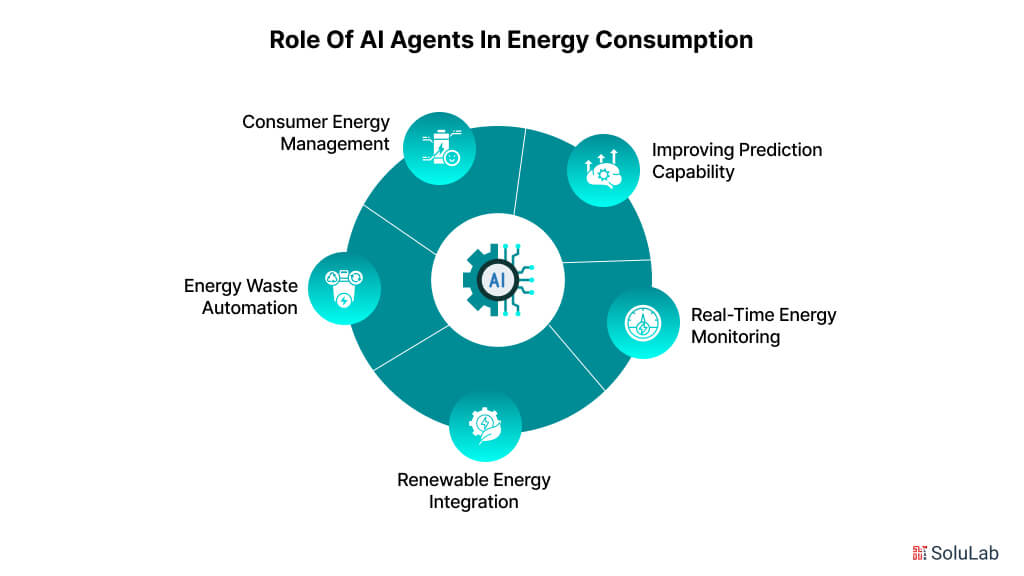
AI agents are changing how homes and businesses use, manage, and squeeze more value out of energy. Systems built on artificial intelligence are opening up options that are both smarter and lighter on the environment. So what does that actually look like in practice? Here’s where AI agents for smart energy systems are pushing optimization forward:
1. Improving the Ability to Predict: Feed an AI agent enough historical and live data and it gets remarkably good at estimating what comes next. That accuracy cuts waste and cost simply by keeping output in line with actual demand. A practical example: the system spots a demand spike coming hours out and reroutes distribution before it hits.
2. Monitoring and Controlling Energy in Real Time: Hook an AI agent up to sensors and smart meters and real-time monitoring stops being aspirational. The system pulls in environmental and consumption data continuously, then adjusts on the spot. That’s what keeps efficiency high whether you’re talking about a home air conditioner or a factory floor full of machines.
3. Enhancing the Integration of Renewable Energy: Solar and wind don’t show up on a schedule, and as they take up more of the generation mix, that randomness becomes a bigger problem to manage. AI agents work through weather trends and grid conditions to figure out how much renewable capacity a network can absorb at any given moment. The result is stability without wasting resources.
4. Cutting Down on Energy Waste With Automation: Automate the energy-heavy parts of a process and waste drops almost on its own. In an industrial setting, that might mean an AI agent flagging an inefficient piece of equipment or suggesting a process tweak that saves real money. Buildings work the same way: heating, cooling, and lighting shift based on who’s actually in the room and when.
5. Strengthening Energy Management for Consumers: On the consumer side, AI hands people direct control over their own energy use. AI agents for customer service platforms translate raw usage data into specific, personal suggestions, not generic tips. Utility bills go down. So does the friction of trying to be more sustainable.
Put real-time monitoring, predictive analytics, and automation together under one system, and energy management stops looking like the same field it was a decade ago. What makes this shift notable is that it’s tackling problems people had genuinely written off as unsolvable. As the technology matures, these solutions will keep mattering more, not less, for how the world moves toward a cleaner, more efficient energy system.
Taxonomy of AI Agents in Energy Systems
Not every AI agent does the same job. A taxonomy sorts them by trait, capability, and use case within energy systems, and understanding that breakdown matters if you actually want to know where artificial intelligence fits into improving this sector, rather than treating it as one big undifferentiated tool.
Start with reactive agents. They respond to whatever’s happening around them right now, with no memory of what happened before. Simple jobs suit them best: watching energy use, flagging something odd to the consumer.
- Proactive Agents: These look backward to plan forward, using historical patterns to anticipate what’s coming. Forecasting supply and demand this way opens up better planning and sharper resource allocation.
- Learning Agents: Using machine learning methods, these agents get better at the job the longer they run. Real-time data keeps them adjusting operations as conditions in the energy system shift underneath them.
- Collaborative Agents: These work alongside human operators, or alongside other agents, rather than in isolation. Better coordination between the different players in an energy network tends to mean better decisions overall.
- Autonomous Agents: No human in the loop here. These agents decide and act on their own, most often in advanced applications like grid management or automated demand response.
- Hybrid Agents: Mix traits from several agent types and you get hybrid AI agents, which adapt to more situations than any single approach could. One moment they’re reactive, the next proactive, switching modes as the circumstance demands.
- Domain-Specific Agents: Built for one job and one job only, whether that’s grid optimization, energy trading, or forecasting renewable output. The narrow focus is the point: solving the specific problems of that field, not everything at once.
This taxonomy isn’t just an academic exercise. Practitioners in the energy field need it too, because it gives a structured way to weigh the strengths and weaknesses of different AI agents, and that in turn shapes how efficient AI solutions actually get built and deployed in energy systems.
Read Also: Vertical AI Agents
Benefits of AI in Energy Consumption
Strip away the jargon and AI for energy management systems does two things well: efficiency and sustainability. Here’s where that actually shows up. Key benefits of AI in energy consumption include:
- Cost Savings: Sharper demand forecasting and smarter resource allocation add up. Families and companies both see energy costs drop, and return on investment climb alongside it.
- Enhanced Efficiency: These agents dig through usage patterns and point out exactly where things are being wasted. Fix those spots and operations run tighter, which shows up on the balance sheet, not just in a sustainability report.
- Sustainability: AI agents give companies the tools to actually implement renewable energy solutions, not just plan them on paper. That means a smaller carbon footprint and a lighter environmental trace overall.
- Increased Reliability: Predicting demand swings ahead of time means supply keeps flowing instead of getting caught off guard. Fewer outages, more dependable systems, at a global scale.
- User Involvement: Based on someone’s own usage history, AI agents can offer recommendations that actually apply to them, nudging energy-saving habits and raising awareness of how much they’re using in the first place.
- Scalability and Flexibility: Need more capacity? These systems expand without much friction, and they adjust as energy sources and consumption patterns shift, which is why they fit such a wide range of applications.
- Data-Driven Insights: Data analysis turns into insight businesses can actually use, whether that’s shaping an energy management plan or tightening operations more broadly.
- Regulatory Compliance: Monitoring usage and reporting sustainability numbers isn’t just busywork; it helps firms stay on the right side of energy regulations, cuts the risk of fines, and backs up corporate responsibility claims with actual data.
Applications of AI Agents in Energy Management
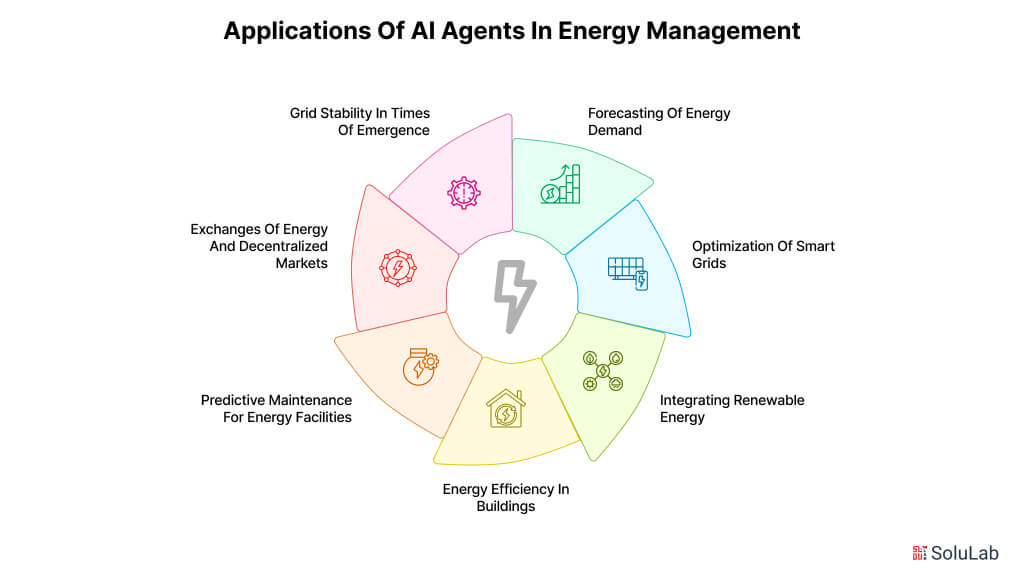
Generation, distribution, consumption: AI agents are touching all three. These systems are backing the global shift toward sustainable practices while, at the same time, pushing efficiency up and costs down. A few fields where that influence is showing up clearly:
- Forecasting of Energy Demand
Combine historical records with live data and AI agents get remarkably sharp at spotting where usage trends are headed. Suppliers use that to match supply against demand more precisely, cutting both overproduction and waste. A model that can see a demand spike coming means distribution gets planned around it instead of scrambling after it hits.
- Optimization of Smart Grids
Modern smart grids more or less need AI agents to run well. They pull data from meters and sensors scattered across the grid, catching inefficiencies, smoothing energy flow, and spotting problems before they cascade. Automating that work is what keeps the grid dependable even when conditions swing.
- Integrating Renewable Energy
Folding solar and wind into an existing energy system is exactly where AI agents earn their keep. They look at storage capacity, production trends, and weather forecasts together, and use that combination to squeeze the most out of the renewable resources available. Less reliance on non-renewables, a steadier supply, that’s the payoff.
- Energy Efficiency in Buildings
In residential and commercial buildings, AI agents manage lighting, heating, and cooling to cut waste without anyone noticing a drop in comfort. The trick is that the system learns from how people actually behave and from ambient conditions, not from a fixed schedule someone set once and forgot about.
- Predictive Maintenance for Energy Facilities
Transformers, pipelines, turbines: AI-powered predictive maintenance keeps watch over all of it. Catch a problem before it turns into a malfunction and you’ve saved downtime, improved safety, and stretched the equipment’s working life, often by years.
- Exchanges of Energy and Decentralized Markets
Automated trading in decentralized marketplaces means producers and consumers can buy and sell energy directly, without the usual friction. Fair pricing and real visibility into the process push people toward renewable sources and hand customers more say over the whole transaction.
- Grid Stability in Times of Emergence
When a storm knocks out part of the grid, or an outage hits without warning, AI agents can redirect electricity fast and prioritize the locations that matter most, like hospitals and other critical infrastructure. Real-time data processing is what makes that kind of quick, coordinated response possible in the first place.
Across all of this, the theme is the same: AI agents make energy systems more adaptable, more efficient, more sustainable. Expect that list of applications to keep growing as the technology matures, and the payoff to keep compounding with it.
Challenges and Limitations of Implementing AI Agents in Energy Management
None of this comes free, though. AI agents are effective, but rolling them out runs into real friction, and that friction says a lot about how hard it still is to graft modern technology onto conventional energy infrastructure.
- High Initial Expenses
Advanced AI agents for energy solutions often mean a hefty upfront spend: software, infrastructure, and staff who actually know what they’re doing. Long-term savings are real, but try explaining that to a smaller organization looking at this quarter’s budget. Many simply can’t justify the expense yet.
- Data Dependency and Quality
AI agent systems lives or dies on its data. Inconsistent collection methods or a low-quality dataset can quietly sabotage energy efficiency before the system ever gets a chance to help. And keeping that data accurate, complete, and current isn’t a project with an end date. It’s ongoing, full stop.
- Connectivity With Current Systems
Modern AI tools don’t automatically play nice with conventional energy infrastructure. Retrofitting an older system to support AI-driven optimization can get expensive fast, and it takes real time: testing, adjustment, testing again.
- Risks to Cybersecurity
Every AI agent added to a system is also, whether anyone likes it or not, a new attack surface. Strong security measures aren’t optional here, not when these systems handle sensitive data and manage infrastructure that entire regions depend on.
- Absence of Skilled Workforce
Running these systems well takes people who understand both energy management and AI, and that combination is genuinely rare. The shortage of qualified experts in this cross-disciplinary space is, honestly, one of the biggest brakes on adoption right now.
- Regulatory and Ethical Issues
Data privacy and regulatory compliance come up almost every time AI enters energy management, and for good reason. Businesses deploying AI agents for energy solutions still have to walk a line between pushing innovation forward and staying inside regulatory and ethical bounds, and that balance doesn’t get easier with scale.
None of these problems get solved by one party alone. Tech companies, legislators, and energy stakeholders all need to be at the table. Broad adoption will hit friction along the way, sure, but the long-term case for AI-optimized energy use holds up. Clear these hurdles and what’s on the other side is a genuinely different era for energy management: more innovative, more sustainable, more efficient.
The Future of AI Agents in Energy Consumption
The future of energy management is already being shaped by AI agents for energy consumption, and the direction of travel points toward more innovation, more sustainability, more efficiency. As the global energy picture shifts fast, artificial intelligence is expected to matter a great deal in tackling rising consumption, climate change, and the push to integrate renewables at scale.
- More Smarter Energy Systems
Grids are going to get noticeably smarter as AI agents become standard in energy management. Expect networks that distribute power efficiently, roll with swings in renewable generation, and keep supply and demand in balance without constant manual intervention. Reading real-time data is how AI pulls that off: better grid performance, less waste, fewer interruptions.
- Providing Personalized Insights to Guide Customers
Personalized energy solutions are leaning harder on AI every year. From a smart thermostat to a full monitoring setup, AI agent technology is what turns raw usage data into practical advice on cutting both cost and consumption. And because the automation adjusts to trends, preferences, and conditions on its own, the savings tend to arrive without much effort on the user’s part.
Read Blog: AI Agents for Due Diligence
- Improving the Integration of Renewable Energy
As solar and wind take up a bigger share of the mix, controlling their unpredictability becomes a job AI is well suited for. AI-powered systems will forecast production based on weather conditions and adjust distribution and storage accordingly, keeping resource use efficient and pushing global sustainability targets forward at the same time.
- Transforming Maintenance Procedures
Predictive maintenance is where AI’s future contribution gets very concrete: less downtime, longer equipment life. Spotting a problem before it actually happens is what keeps energy systems dependable and effective, for consumers and businesses alike.
- Motivating Decentralized Energy Solutions
Decentralized energy markets, powered by AI, will let people and companies trade excess energy directly and efficiently. That shift encourages wider use of sustainable solutions while opening up access to energy resources more fairly than the current setup manages.
As the technology matures and genuinely intelligent solutions arrive for problems that used to seem intractable, AI agents are only going to become more central to how energy gets used. What’s opening up is a future of sustainable energy management that benefits people and the environment together, by simplifying systems, putting more control in users’ hands, and folding renewables in successfully.
The Bottom Line
Bringing AI agents into energy management is a real step toward a healthier, more efficient energy future, not just a talking point. These technologies have already reshaped energy management worldwide, from squeezing more value out of existing use to folding renewable sources into the grid without friction. Automation, real-time data, and predictive analytics together are what let AI agents help people and companies cut costs, cut waste, and move the needle on sustainability.
We at SoluLab, an AI agent development company, have been doing this work firsthand, helping companies put AI to use in energy management. One project worth mentioning: SoluLab partnered with Kadi Energy to build hybrid solar solutions that give Ghanaians access to reliable, sustainable, grid-independent power for homes, businesses, and entire communities. It’s the kind of project that changes daily life while pushing toward a greener future at the same time.
Ready to bring AI into your own energy systems? Get in touch with SoluLab and let’s see what AI-powered energy management can actually do for your business processes. A smarter, greener future doesn’t build itself. Let’s start now.
FAQs
Shipra Garg is a tech-focused content strategist and copywriter specializing in Web3, blockchain, and artificial intelligence. She has worked with startups and enterprise teams to craft high-conversion content that bridges deep tech with business impact. Her work translates complex innovations into clear, credible, and engaging narratives that drive growth and build trust in emerging tech markets.