Forget the monkey JPEGs. The NFT trends actually bringing in business revenue in 2024 and 2025 have very little to do with art speculation. Gaming studios sell tradeable in-game items whose scarcity anyone can check. Nike (with .SWOOSH) and Starbucks (with Odyssey) built loyalty programs where the reward is a token you own. Real-world asset tokenization is pulling property, IP rights, and collectibles on-chain. So where’s the cleanest money for a business? Secondary royalties: a 5 to 10 percent cut of every resale, paid out by the smart contract without anyone chasing an invoice.

What are Non-Fungible Tokens?
Non-fungible tokens (NFTs) are one-of-a-kind digital assets. Each one records, on a blockchain, who owns a specific item, piece of content, or collectible, and proves it’s the real thing. Bitcoin and Ethereum work differently. One bitcoin is as good as any other, so you can swap them one for one. An NFT can’t be split up, and you can’t trade it for another NFT as if they were equal, because each carries its own data and traits. Cryptography locks in that uniqueness and the ownership record. That’s why digital creators, collectors, and businesses across a lot of industries have found them so useful.
The Growing Significance of NFT Trends in the Business Landscape
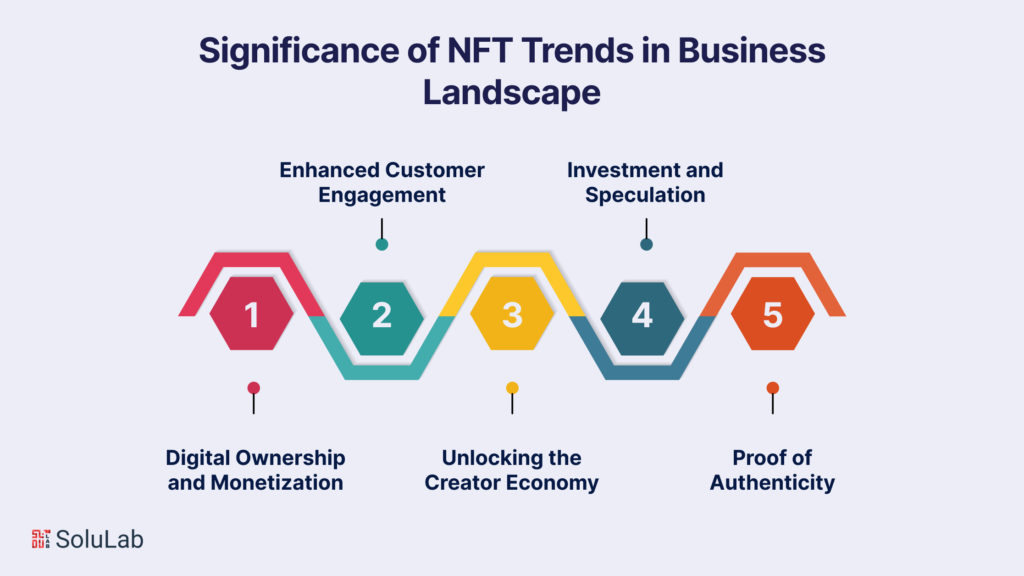
NFTs got popular fast, and they’re changing how business works in more than one way. They record who owns a digital or physical item and prove it’s authentic, and that simple idea is reshaping whole industries and opening new ways to make money. Here’s why NFT trends matter more every year, and what they can realistically do for a business:
- Digital Ownership and Monetization: Businesses can now turn assets into digital goods and sell them in ways that weren’t possible before. Art, music, virtual real estate, in-game items. NFTs give you a secure, transparent way to prove who owns them and to sell them, which means revenue from places you weren’t earning before.
- Enhanced Customer Engagement: This is a genuinely new way to reach customers. A brand can drop limited edition collectibles, hand out loyalty rewards, or build one-off digital experiences, and people who own a piece of something tend to stick around longer.
- Unlocking the Creator Economy: Creators, artists, and influencers can sell their work directly and skip the middlemen who used to take a cut. If more people can earn that way, entertainment and content businesses could look very different in a few years.
- Investment and Speculation: NFTs are now treated as an asset class, and they pull in investors and speculators alike. For businesses, that opens the door to NFT-based financial products and services, which is fresh ground in finance.
- Proof of Authenticity: An NFT is hard proof that something is genuine. That makes it handy for verifying luxury goods, collectibles, and rare items, and it takes a lot of the worry out of counterfeits.
Top NFT Trends in 2024
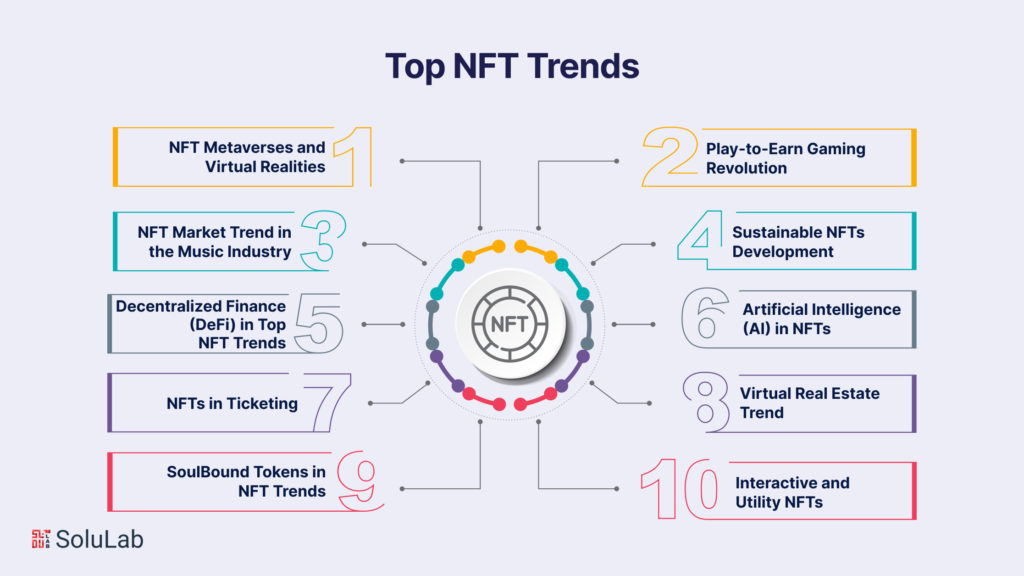
NFTs never sit still, and 2024 is shaping up to be a busy year. These are the trending NFT trends worth keeping an eye on:
NFT Metaverses and Virtual Realities
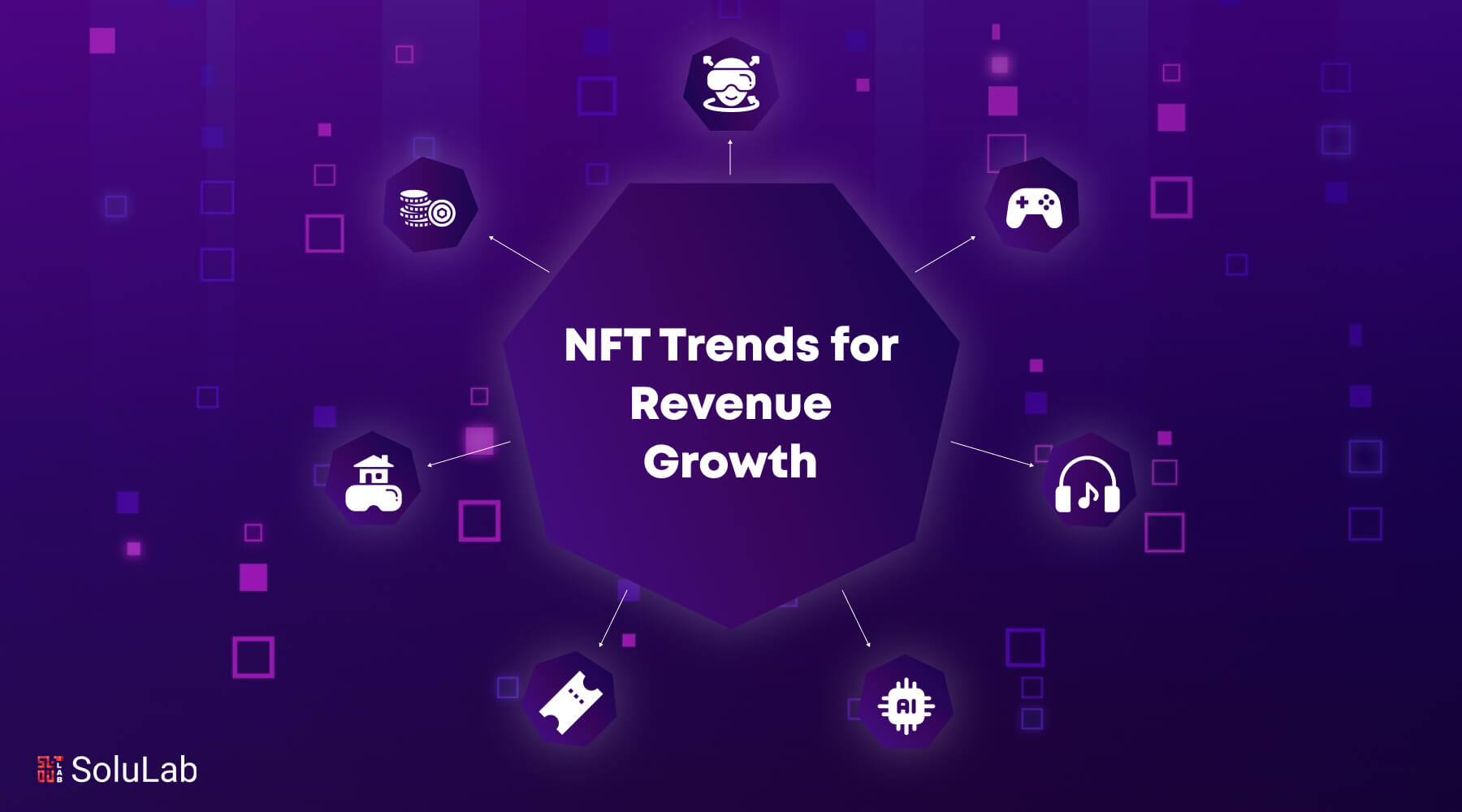
Metaverse projects built on NFTs are set to change what “online” even means in 2024. Inside these immersive worlds, users own their NFT assets, trade them, and show them off. People go there to hang out, shop, catch a show, and sometimes to work, and the NFT space sits right at the center of how those worlds make money. The appeal is simple. Show up, create something, take part, and get paid for it. Companies have noticed. They’re testing virtual brand activations, immersive events, and experiences you can’t get anywhere else, which is why so much new product thinking and revenue planning now points at the metaverse.
Play-to-Earn Gaming Revolution
The play-to-earn gaming model runs on NFTs, and it’s about to shake up gaming. Players earn NFT rewards, tokens, and rare in-game items, and they actually own them. They can trade them too. The NFT industry is rewriting how in-game economies work, and gamers finally feel their time produces something of value. Expect more of it. As momentum builds, a wave of blockchain games that put player rewards and NFTs first is likely on the way. Studios are designing loops that pay players back for the hours and money they put in, and at that point it gets hard to say where playing a game stops and owning digital assets begins.

NFT Market Trend in the Music Industry
Music is changing in 2024, and NFTs are a big reason. Musicians use them to talk to fans directly and to open up income that labels never touched. The NFT market is where artists now tokenize exclusive releases, concert tickets, and one-off merch. Cut out the intermediaries and the artist keeps more of what they make. Simple as that. And the fans? Holding a music NFT becomes a badge that says “I was here early,” and the whole thing feels more personal than streaming a track. More musicians and platforms will likely build NFTs into how they do business, which changes how music gets made, shared, and paid for.
Sustainable NFTs Development
The environmental critique hasn’t gone away. So 2024 brings a push toward sustainable NFT Marketplace Platforms, platforms built to shrink the carbon footprint of minting and trading. Sustainable NFT development work looks at blockchain networks that burn far less energy and puts greener practices up front. Collectors and creators who care about the planet will probably gravitate there, especially as the wider public keeps asking about energy use. It fits a bigger pattern across industries. It’s also just the responsible move for NFTs, since energy use and ecological impact are the criticisms the sector hears most often.
Decentralized Finance (DeFi) in Top NFT Trends
Among the top NFT trends of 2024, the meeting of Decentralized Finance (DeFi) and NFTs is changing what an NFT is actually for. DeFi protocols let holders turn their digital assets into liquidity and income. Your NFT can now be collateral for a DeFi loan. That means a collector or creator can raise capital without selling the piece they love. Yield farming and liquidity pools are showing up as well, so holders can earn interest and rewards by staking their tokens in DeFi protocols. Why does this matter? Because illiquidity was always the weak spot. Pair NFTs with DeFi and they get more useful, and the markets get livelier and easier to enter. If this keeps developing, expect it to reshape how the NFT market works and open real financial options for enthusiasts and investors.
Artificial Intelligence (AI) in NFTs
In 2024, Artificial Intelligence (AI) and NFTs are colliding, and the NFT market will look different because of it. AI is creeping into every stage: making NFTs, curating them, managing them. The obvious example is generative art. Algorithms produce original pieces, and those pieces get tokenized as NFTs. Some people love it, some hate it, but it’s forcing a real argument about what counts as art. Then there’s discovery. Recommendation engines study what you look at and what you buy, then surface NFTs that match your taste. That personal touch makes NFT collection browsing and buying less of a slog, and collectors stumble onto good finds more often. AI is also being put to work verifying and authenticating content.
NFTs in Ticketing
Ticketing might be the most practical NFT use case of 2024, and it’s shaking up the events business. Here the NFT is the ticket, and it beats paper and ordinary e-tickets on several counts. Because each one lives on a blockchain, it’s very hard to fake, which goes straight at counterfeiting and scalping. Organizers can also build extras into the ticket itself: exclusive content, VIP upgrades, even ownership of digital assets tied to the event. On the supply side, NFT development solutions make NFT tickets simpler to create and hand out, so attendees don’t need a crypto degree to use them. Fans get a better night out. Artists, performers, and organizers in live entertainment get new revenue and new ways to sell.
Virtual Real Estate Trend
Virtual real estate is changing the NFT market too, and it hints at where digital ownership is heading. In 2024, NFTs for virtual land and property inside metaverses and decentralized worlds are drawing more interest than ever. Own one and you own a specific plot. You can build on it, earn from it, and customize it however you like. Investors, creators, and businesses are piling in, betting that these digital places will host shopping, socializing, entertainment, and work. The whole bet rests on one idea: that the metaverse becomes the next place people spend their time. If that happens, owning land there is a status symbol and a strategic seat in the new digital economy at once. Big if. Still, as more projects launch and metaverse use grows, this trend could change how we think about, and use, digital space.
SoulBound Tokens in NFT Trends
One of the more interesting NFT trends for 2024 is the arrival of SoulBound Tokens, and people are paying attention. They’re a fresh take on making NFT projects more valuable and more distinct. The idea is a permanent tie between an NFT and whoever created it. So however many times the token changes hands, the original creator keeps a stake, such as a share of future sales or royalties. For artists and content creators, that’s steady income, not a one-time payday. It also keeps them connected to the work long after the first sale. As NFT projects 2024 keep maturing, SoulBound Tokens look set to be central to supporting creators over the long run and to holding NFT projects’ value over time.
Interactive and Utility NFTs
Interactive and utility NFTs are one of the biggest shifts in the NFT space in 2024. They break away from the static collectible that just sits in a wallet. Owning one gets you something. Interactive NFTs open doors to experiences or content, and utility NFTs hand you privileges or rights. Think exclusive virtual events, behind-the-scenes material, or special in-game interactions inside the metaverse. On the utility side, a token might give you a vote in a decentralized organization, access to premium services, or real-world perks like discounts and VIP entry. That’s a much easier pitch to a customer. In practice, this is the trend that turns NFTs from something you own into something you use, whether you’re in entertainment, gaming, finance, or governance.
Few NFT Developments to Boost Market Profitability
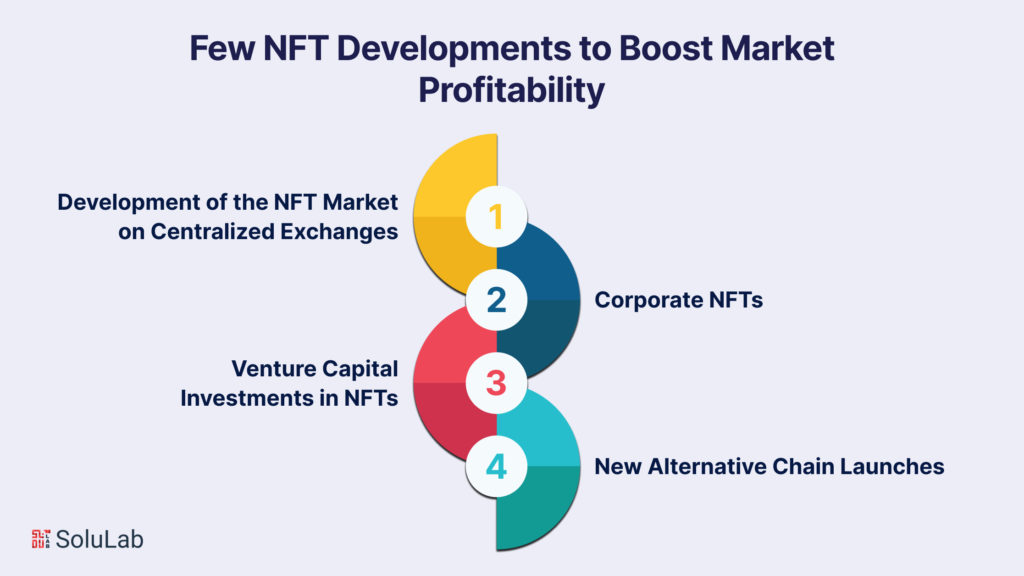
Will the NFT sector hold up heading into 2024? Plenty of people aren’t sure. Honestly, it depends on which patterns take hold over the coming year. Below are a few developments that look most likely to push market profitability up in 2024.
- Development of the NFT Market on Centralized Exchanges: Most NFTs have traditionally been bought through exclusive auctions. For a newcomer, that’s intimidating: you have to buy crypto on an exchange first, and one mistake can cost you money. cryptocurrency exchanges could win here by adding NFT markets to their own platforms, with a smoother experience, less risk, lower costs, and fatter margins. That said, building NFT marketplaces on centralized exchanges is going to draw criticism.
- Corporate NFTs: Companies are working out how NFTs can serve both the people who make content and the people who consume it. Take music. An NFT gives an unbroken chain of custody that can’t be altered, so you no longer need a specialist service to certify that something is authentic.
- Venture Capital Investments in NFTs: With global NFT sales expected to reach $634 million in September 2022 [SOURCE NEEDED], it’s no shock that venture capitalists want a piece of the NFT craze. Lots of investors are hunting for openings here, and turning VC money into NFTs has become a more popular move as a result.
- New Alternative Chain Launches: Ethereum fees for NFT transactions got expensive, so developers started moving to cheaper chains like Solana and Avalanche. Expect that to continue through 2024 as more investors and creators look for affordable ways to mint and trade. And as more alternative chains launch, we may see better interoperability between blockchains, which gives NFT creators and buyers more freedom and easier access.

Conclusion
NFTs are still early. The promise is real, though. Every trend above points the same way: this market keeps shifting, and a business that wants to earn from digital assets has plenty of openings. Games and virtual worlds, utility NFTs, a metaverse that keeps growing. Each is a route to new revenue. But be clear-eyed. The NFT market swings hard, and winning here takes a considered plan, a real grasp of how the market moves, and a commitment to making digital assets that are original, valuable, and authentic.
If you’re adapting to these trends, stay informed and stay flexible. Put sustainability and ethical creation first, not last. NFTs could reshape whole industries, and the teams that come in with fresh ideas and honest intentions are the ones most likely to be rewarded, while leaving the wider digital economy better off. Over the next year, expect NFTs to keep changing how businesses talk to their audiences, work with creators, and make money online.
SoluLab helps businesses in the NFT space build with modern NFT development services. With the option to hire the best NFT developers, clients get experienced people for creating, deploying, and running NFT projects. Need an NFT marketplace? Want to mint distinctive digital assets, or add blockchain solutions for better security and transparency? SoluLab’s team has done this work and can guide you through a market that changes quickly and isn’t always simple. Through its full range of NFT development services, SoluLab works as a strategic partner for companies that want to turn NFTs into revenue and real digital products. Contact SoluLab today and start building your NFT project.
FAQs
Shipra Garg is a tech-focused content strategist and copywriter specializing in Web3, blockchain, and artificial intelligence. She has worked with startups and enterprise teams to craft high-conversion content that bridges deep tech with business impact. Her work translates complex innovations into clear, credible, and engaging narratives that drive growth and build trust in emerging tech markets.