A team launches a crypto wallet expecting early adopters to test basic features like token storage and transfers. Within weeks, the same request starts appearing in user feedback:
“Can I store and send USDT?”
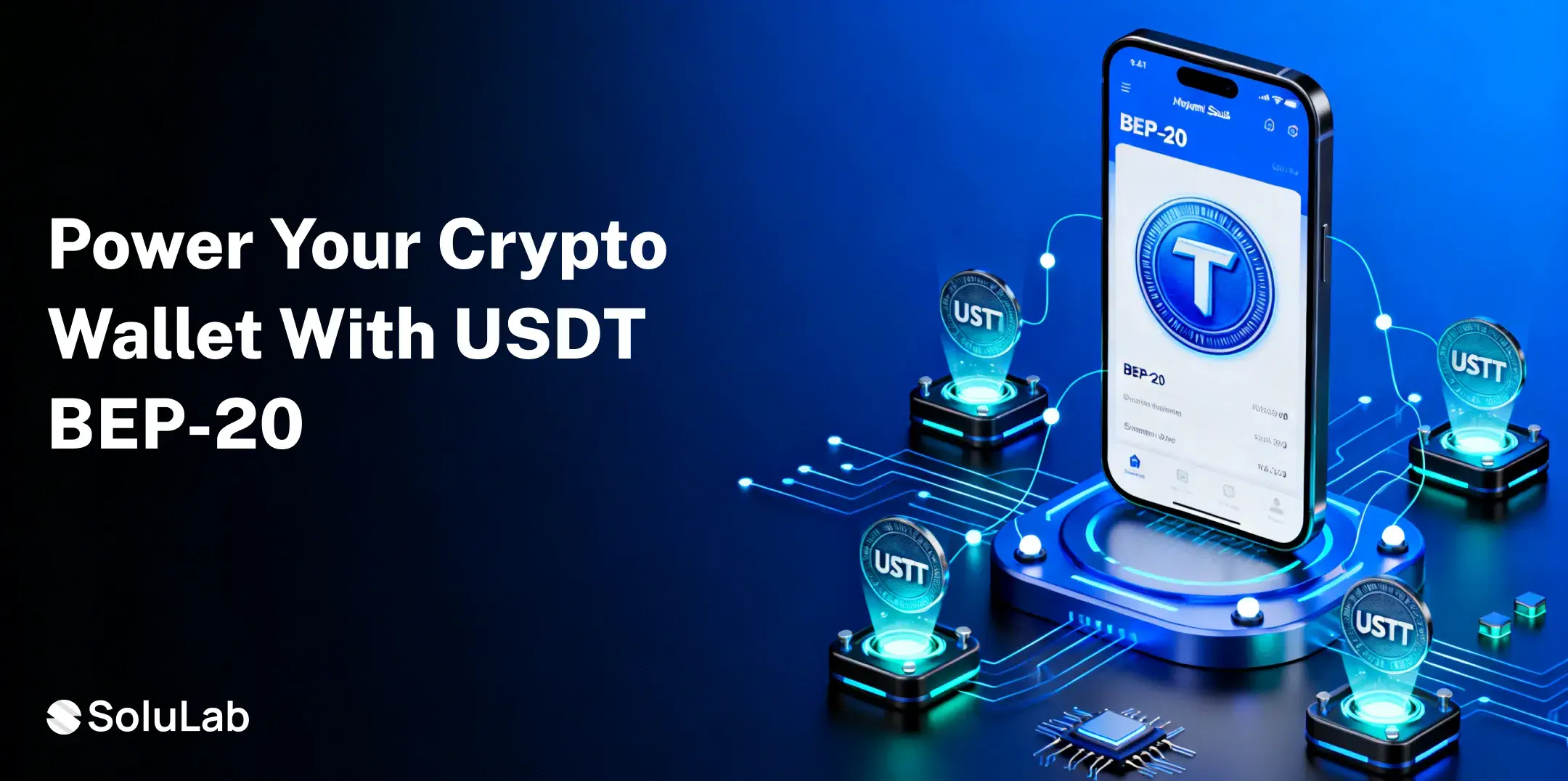
Not just any version of USDT. Most users specifically ask for USDT on BNB Smart Chain (BEP-20) because it offers fast transaction confirmations and extremely low fees. Traders move liquidity through it, DeFi users depend on it for swaps and lending, and many global payments are increasingly settled through stablecoins.
For crypto wallet development companies, integrating USDT BEP-20 has become a practical requirement rather than an optional feature. Supporting stablecoins enables wallets to participate in DeFi ecosystems, cross-chain trading platforms, and global Web3 payment flows.
But behind the simple “send USDT” button inside a wallet lies a series of technical components. Wallets must interact with blockchain nodes, read token balances from smart contracts, monitor events on-chain, and ensure transactions are secure.
This guide explores how developers integrate USDT BEP-20 into a crypto wallet application, covering architecture, implementation steps, code snippets, security practices, and cost considerations. It is designed for teams building DeFi wallets, trading platforms, payment applications, or enterprise blockchain products.
Key Takeaways
- USDT BEP-20 is one of the most widely used stablecoin standards, running on BNB Smart Chain and enabling faster transactions with significantly lower fees than Ethereum-based transfers.
- Integrating USDT BEP-20 into a crypto wallet requires smart contract interaction, BSC node connectivity, transaction monitoring, and secure private key management.
- Stablecoins now power a large share of blockchain transactions, making USDT support essential for wallets focused on DeFi, trading, and Web3 payments.
- BNB Smart Chain processes a major portion of global stablecoin transfers, which is why many wallets prioritize BEP-20 token compatibility.
- SoluLab helps businesses build stablecoin-ready crypto wallets, providing secure architecture, multi-chain support, and enterprise-grade blockchain development expertise.
- SoluLab has delivered 150+ blockchain solutions globally, helping enterprises build secure wallet infrastructures, token platforms, and Web3 payment systems that support stablecoin transactions at scale.
What Is USDT BEP-20?
USDT BEP-20 is a version of the Tether stablecoin issued on BNB Smart Chain (BSC). It follows the BEP-20 token standard, which is structurally similar to Ethereum’s ERC-20 token standard.
Tether is designed to maintain a value pegged to the US dollar, meaning 1 USDT is intended to equal approximately $1.
Key characteristics of USDT BEP-20 include:
• Runs on BNB Smart Chain
• Uses the BEP-20 token standard
• Offers low transaction fees
• Supports faster block confirmations
• Compatible with DeFi protocols on BSC
Stablecoins like USDT play a critical role in crypto infrastructure because they allow users to move value between exchanges, wallets, and decentralized platforms without being exposed to market volatility.
Key Statistics Driving USDT and Stablecoin Adoption
Stablecoins have evolved into a major payment infrastructure within the digital asset ecosystem.
- According to Defillama, the total stablecoin market capitalization exceeded $314 billion globally, making it one of the largest segments of the crypto economy. Also, USDT maintains over 58% of the total stablecoin market share globally.
- Global stablecoin transaction volume exceeded $33 trillion in 2025, representing a 72% year-over-year increase.
- Trading view reports show that BNB Chain processes around 40% of global stablecoin transactions by count. The network supports over 15 million stablecoin-active addresses monthly.
Difference between BEP-20, ERC-20, and TRC-20
USDT exists across multiple blockchain networks. The main difference lies in transaction speed, gas fees, and network infrastructure.
| Standard | Blockchain Network | Average Fees | Transaction Speed | Typical Use |
| ERC-20 | Ethereum | High | Moderate | DeFi and institutional trading |
| BEP-20 | BNB Smart Chain | Low | Fast | Trading, wallets, DeFi |
| TRC-20 | Tron | Very Low | Fast | Exchanges and payments |
Developers often integrate multiple USDT standards in crypto wallets, allowing users to choose the most efficient network.
Why BEP-20 Integration Is Popular?
BEP-20 has become widely used because it offers:
• faster transaction confirmations
• low transaction costs
• compatibility with DeFi applications on BSC
Developers building Web3 applications often prioritize BEP-20 support because it balances performance and ecosystem adoption.
Wallet platforms often integrate multiple token standards simultaneously so users can choose their preferred network.
Why Crypto Wallet Apps Must Support USDT BEP-20?
Stablecoins are the backbone of modern crypto activity. They are used for trading, payments, lending, and liquidity provisioning across Web3 platforms.
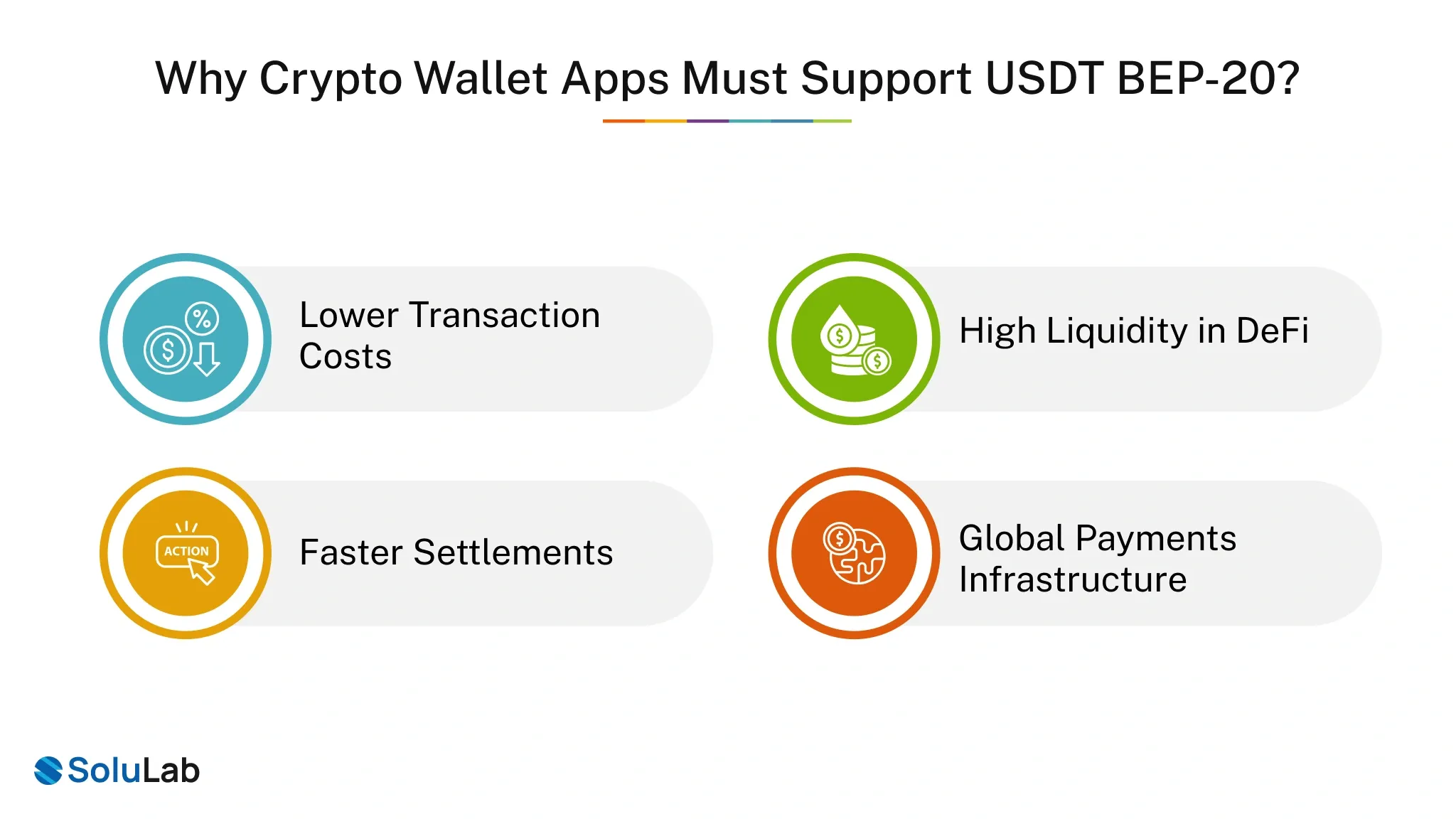
Here are the key reasons wallet apps support USDT BEP-20:
- Lower Transaction Costs
BNB Smart Chain transactions typically cost a few cents, making it ideal for payments and frequent transfers.
- High Liquidity in DeFi
Many decentralized exchanges and lending protocols rely heavily on USDT liquidity pools.
- Faster Settlements
Transactions on BNB Smart Chain confirm much faster compared to Ethereum.
- Global Payments Infrastructure
Stablecoins like USDT allow cross-border payments without relying on traditional banking rails.
Because of these advantages, many companies work with a crypto wallet development company to implement multi-chain stablecoin functionality inside wallet apps.
Key Requirements Before Integrating USDT BEP-20
Before integrating USDT BEP-20 into a wallet, developers must prepare the blockchain infrastructure required to interact with the network.
Key requirements include:
- BNB Smart Chain Node Access
Your wallet backend must communicate with a BSC RPC node.
Options include:
• Running your own node
• Using infrastructure providers
• Using public RPC endpoints
Example RPC endpoint:
- Web3 or Blockchain SDK
Wallets need libraries that interact with smart contracts.
Common options include:
• Web3.js • Ethers.js
• BSC SDK tools
- Token Contract Details
Developers must verify the official token contract.
USDT BEP-20 contract address:
0x55d398326f99059fF775485246999027B3197955- Secure Key Management
Wallets must implement secure private key storage such as:
• encrypted keystores
• secure enclaves
• hardware wallet compatibility
Many web3 wallet development services focus heavily on secure key management as it forms the foundation of wallet security.
Technical Architecture for USDT BEP-20 Wallet Integration
A crypto wallet integrating USDT BEP-20 typically follows a layered architecture that separates the user interface, backend services, and blockchain interaction layer. This design improves scalability, security, and transaction reliability.
The architecture allows the wallet application to securely interact with the BNB Smart Chain network while managing token balances, transactions, and blockchain events.
Core Components
- Wallet Application (Mobile/Web)
This is the user-facing interface where users can view their USDT balance, send tokens, receive payments, and track transaction history.
Typical functions include:
- displaying token balances
- generating wallet addresses
- initiating token transfers
- showing transaction confirmations
The wallet application communicates with backend services rather than interacting with the blockchain directly.
- Backend API Layer
The backend acts as the communication bridge between the wallet interface and the blockchain network.
Key responsibilities include:
- managing blockchain queries
- building and broadcasting transactions
- handling authentication and wallet security
- integrating blockchain infrastructure services
Most enterprise wallet platforms implement backend services using Node.js, Python, or Golang-based microservices.
- BNB Smart Chain Node
The BSC node enables the wallet to interact with the blockchain network. Developers typically connect to the blockchain through RPC endpoints, which allow the wallet to:
- read blockchain data
- submit transactions
- monitor smart contract events
Wallet platforms can use:
- public RPC nodes
- infrastructure providers
- self-hosted BSC nodes for higher reliability
- Smart Contract Interaction Layer
This layer handles communication with the USDT BEP-20 token smart contract. Using blockchain libraries like Web3.js or Ethers.js, the wallet interacts with functions such as:
- balanceOf() to retrieve token balances
- transfer() to send tokens
- approve() and allowance() for DeFi interactions
This layer ensures that token operations are executed correctly on the blockchain.
- Transaction Monitoring System
Once transactions are broadcast to the network, the wallet must monitor their status.
A transaction monitoring system tracks:
- pending transactions
- confirmations on the blockchain
- failed or rejected transactions
This system ensures that wallet users receive real-time updates about their transfers.
- Blockchain Indexing Service
Blockchain indexing services help wallets efficiently retrieve transaction data without repeatedly scanning the entire blockchain.
These services store indexed blockchain information such as:
- token transfer history
- wallet activity
- smart contract events
Indexing improves performance and allows wallets to display transaction history instantly.
Architecture Flow
| User Wallet App |
| ↓ |
| Wallet Backend API |
| ↓ |
| BSC RPC Node |
| ↓ |
| USDT BEP20 Smart Contract |
The backend communicates with the BNB Smart Chain network to:
• fetch token balances
• submit transactions
• monitor transfers
• track confirmations
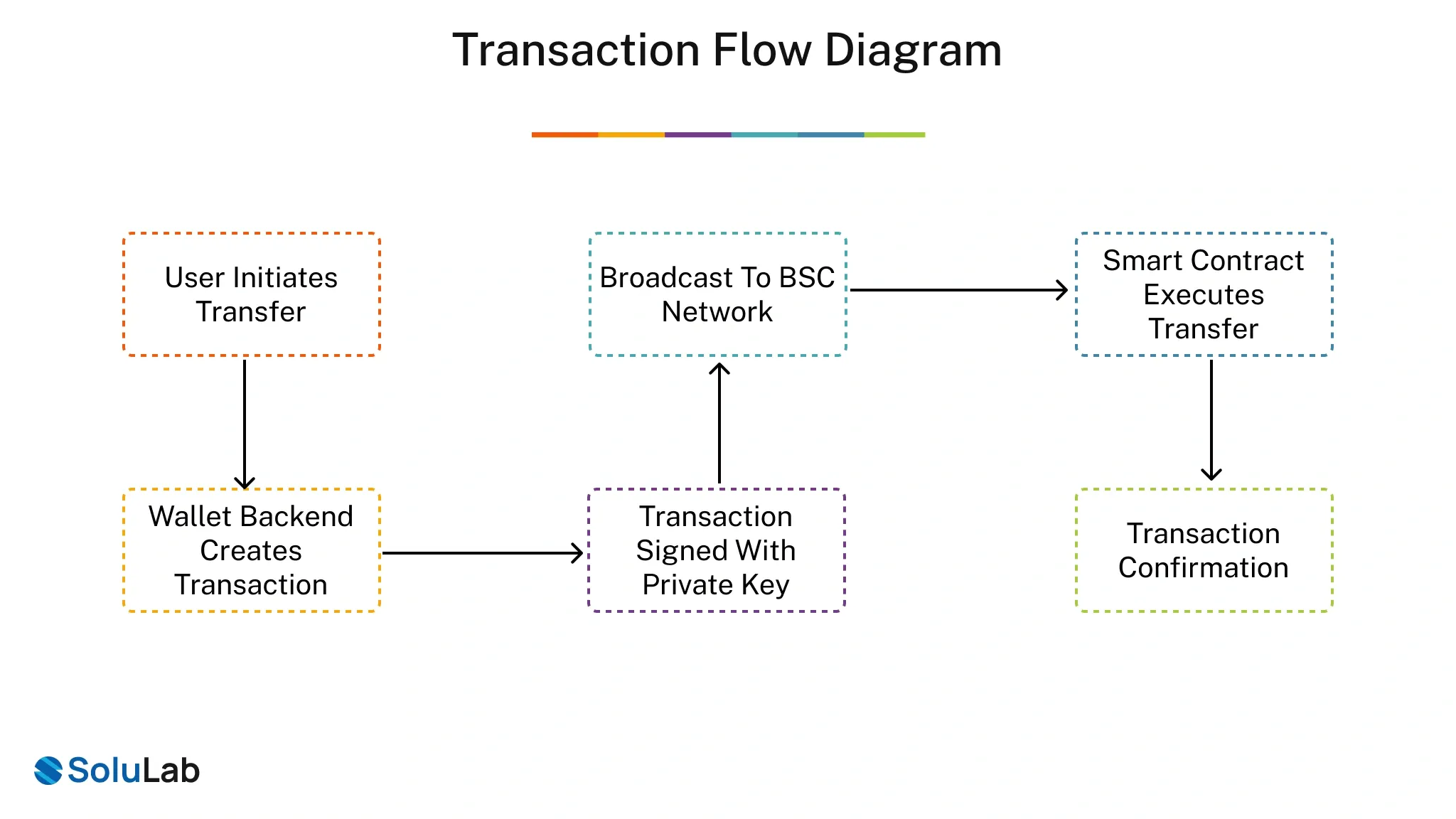
Transaction Flow
- A user initiates a USDT transfer in the wallet interface
- The request is sent to the backend API
- The backend creates and signs the transaction
- The transaction is broadcast to the BNB Smart Chain network
- The USDT smart contract processes the transfer
- The transaction monitoring service confirms the transaction
This architecture ensures the wallet can perform key functions such as sending tokens, fetching balances, and monitoring transactions
Step-by-Step: How to Integrate USDT BEP-20 into a Wallet App
Now let’s look at the technical implementation.
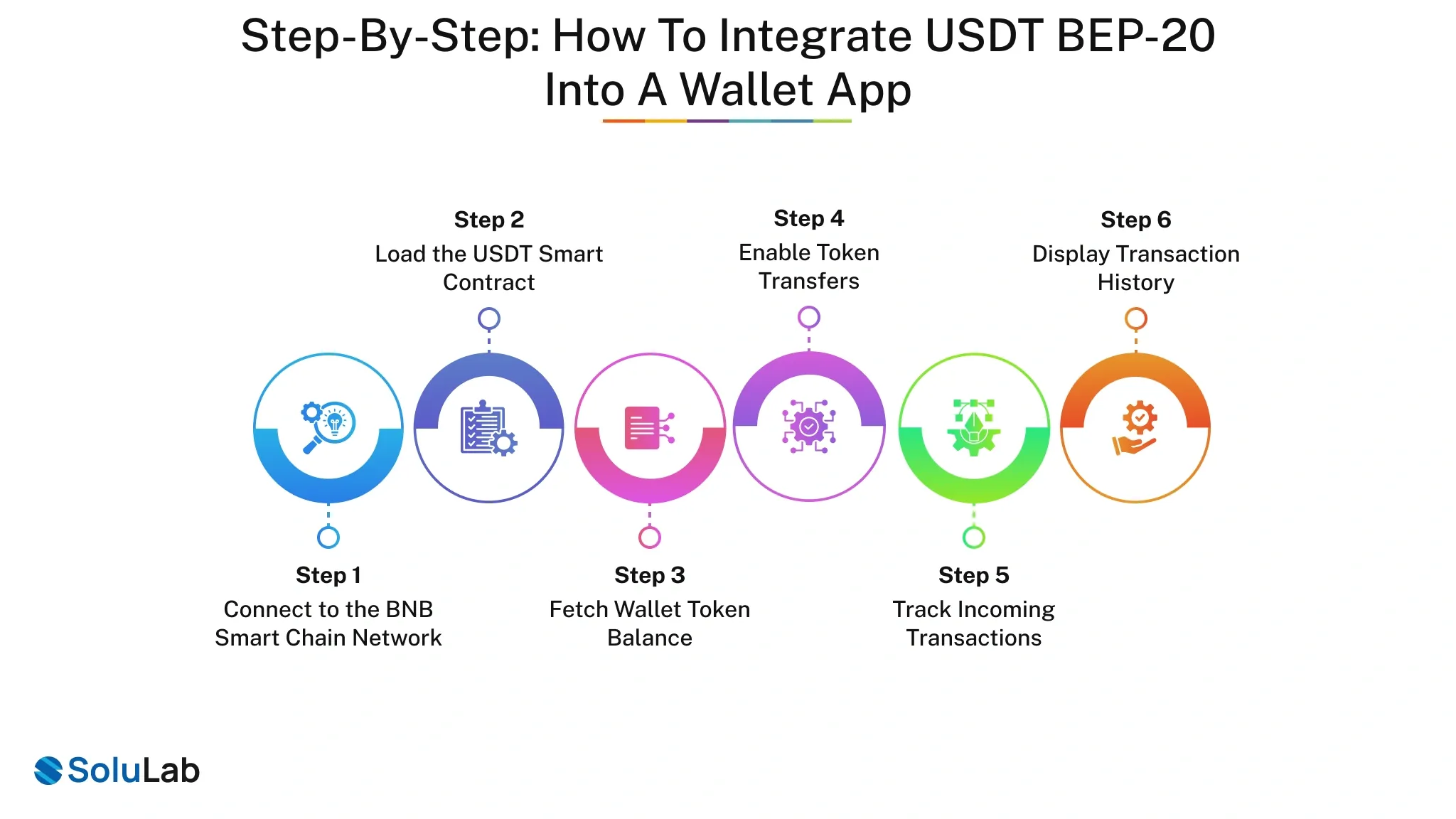
Step 1: Connect to the BNB Smart Chain Network
The first step is establishing a connection between the wallet backend and the BNB Smart Chain (BSC) network.
This is usually done through an RPC node, which allows the wallet to read blockchain data and broadcast transactions.
Example using Web3.js:
const Web3 = require('web3');
const web3 = new Web3(  "https://bsc-dataseed.binance.org/");
This allows the application to interact with the BNB Smart Chain blockchain.
Step 2: Load the USDT Smart Contract
To support USDT, the wallet must interact with the official BEP-20 smart contract deployed on BNB Smart Chain.
const contract = new web3.eth.Contract( USDT_ABI, "0x55d398326f99059fF775485246999027B3197955");The ABI defines how the application interacts with the smart contract.
Step 3: Fetch Wallet Token Balance
Wallet applications must fetch token balances from the smart contract.
The BEP-20 balanceOf() function returns the number of tokens held by a wallet address.
const balance = await contract.methods.balanceOf(walletAddress).call();Convert the token value from Wei format:
const formattedBalance = web3.utils.fromWei(balance);Step 4: Enable Token Transfers
Sending USDT requires interacting with the transfer method.
Example:
contract.methods.transfer( recipientAddress, amount);Transaction flow:
- Construct transaction
- Sign transaction with private key
- Broadcast transaction to the BSC network
- Wait for confirmation
Step 5: Track Incoming Transactions
Wallet apps must monitor transactions to update balances and transaction history.
This is usually done by listening to the Transfer event emitted by the USDT smart contract.
Example event:
Transfer(address indexed from, address indexed to, uint value)Wallets typically monitor this event using blockchain indexing services or event listeners.
Step 6: Display Transaction History
Most wallets also maintain a transaction history dashboard.
This can be achieved by using:
- blockchain indexing services
- event logs from the smart contract
- transaction APIs from node providers
Displaying transaction history helps users track their USDT transfers and verify successful payments.
Security Best Practices in USDT BEP-20 Wallet Development
Security is one of the most critical aspects of wallet infrastructure.
Key practices include:
- Secure Private Key Storage
Private keys must never be exposed.
Common approaches include:
• encrypted keystore files
• hardware wallet integration
• secure enclave storage
- Transaction Verification
Wallets should simulate transactions before broadcasting to prevent malicious contract interactions.
- Smart Contract Validation
Always verify token contract addresses from trusted sources.
- Multi-Layer Authentication
Many wallets implement:
• biometric authentication
• two-factor authentication
• device authorization
Professional blockchain development services often implement multiple security layers to protect user assets.
Cost to Integrate USDT BEP-20 in a Crypto Wallet
The cost of integrating USDT BEP-20 depends on the wallet’s complexity and features.
Factors influencing development cost include:
• custodial vs non-custodial wallet architecture
• blockchain infrastructure setup
• multi-token support
• transaction monitoring systems
• security layers and compliance
Estimated cost ranges:
| Wallet Type | Estimated Cost |
| Basic wallet with USDT support | $15,000 – $30,000 |
| Multi-chain wallet | $30,000 – $70,000 |
| Enterprise wallet infrastructure | $80,000+ |
Working with an experienced MPC crypto wallet development company can reduce integration time and ensure secure blockchain architecture.
How SoluLab Helps Launch Stablecoin-Ready Wallets with USDT BEP-20?
Building a production-ready wallet requires expertise in blockchain infrastructure, smart contract integration, and secure wallet architecture.
SoluLab provides crypto wallet development services that help businesses launch scalable Web3 wallet platforms.
Capabilities include:
• multi-chain wallet development
• stablecoin integration including USDT
• DeFi wallet infrastructure
• secure key management systems
• blockchain node integration
• transaction monitoring and analytics
With experience across DeFi platforms, token ecosystems, and blockchain applications, SoluLab helps businesses build secure and scalable blockchain wallet solutions.
Conclusion
Stablecoins have become a core layer of the digital asset economy, with the global stablecoin market surpassing $300B in circulation and trillions in annual transaction volume. Among them, USDT BEP-20 remains one of the most widely used options due to its low transaction fees, fast confirmations, and strong DeFi liquidity across BNB Smart Chain.
For businesses building Web3 products, integrating USDT BEP-20 into a crypto wallet app enables seamless stablecoin payments, faster exchange transfers, and direct access to DeFi ecosystems. Achieving this requires the right blockchain wallet architecture, smart contract integration, and secure transaction monitoring infrastructure.
As stablecoins continue powering a growing share of on-chain transactions, organizations are increasingly partnering with an experienced DeFi wallet development company to build scalable and secure wallet platforms. SoluLab has delivered 150+ blockchain solutions globally, helping enterprises launch multi-chain wallets, token platforms, and Web3 payment systems.
Planning to build a stablecoin-ready crypto wallet? Connect with experts to develop a secure, scalable wallet with seamless USDT BEP-20 integration!
FAQs
Shipra Garg is a tech-focused content strategist and copywriter specializing in Web3, blockchain, and artificial intelligence. She has worked with startups and enterprise teams to craft high-conversion content that bridges deep tech with business impact. Her work translates complex innovations into clear, credible, and engaging narratives that drive growth and build trust in emerging tech markets.