By 2027, the crypto wallet space will have quietly crossed a line. As the market has moved past debating whether crypto is real, it is now rewarding whoever controls the user entry point. And Wallets are becoming that control layer, and incumbents that do not evolve are watching faster, as structurally leaner players absorb their users.
Because of this pressure is asymmetric. User expectations keep rising, from multi-chain assets, one-click swaps, staking, NFTs, compliance, and near-zero friction UX, while the economics refuse to cooperate. The gap between what a wallet must do and what it reliably earns is widening every quarter.
This is why 2026 feels different. New crypto wallet development architectures are fundamentally changing the cost structure, trust model, and revenue surface. The window where wallets turn from apps into the operating layer of crypto is already closing, and we suggest you not wait.
Key Takeaways
- The problem: Most teams get surprised by the actual Crypto Wallet App Development Cost because they either over‑engineer v1 or underestimate security, audits, and ongoing work.
- The solution: Start with a lean, secure MVP, then scale in phases. Treat it as a product and an infrastructure piece, not a lab experiment.
- How Solulab helps: The right Crypto Wallet Development Company already knows the traps, like wrong chain choices, messy integrations, poor UX, and can cut 30–40% of hidden costs with better architecture, cross‑platform tools, and battle‑tested components.
- If you do it well, Custom Crypto Wallet Solutions turn into a repeat revenue engine – transaction fees, premium features, institutional partnerships, and cross‑sell into your other products.
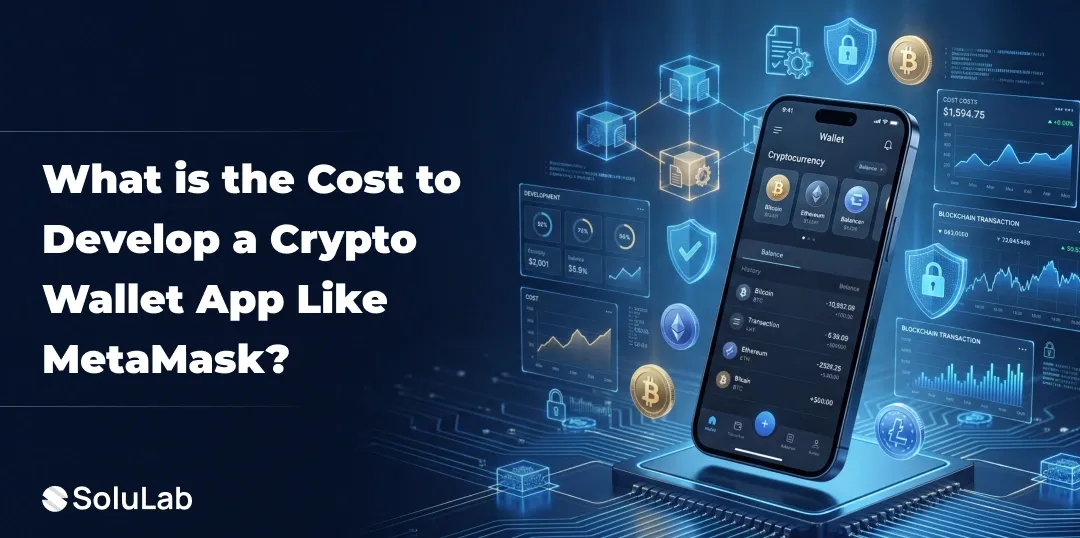
Why build a wallet like MetaMask?
MetaMask became the gateway to Web3 because it solved one real problem: let normal users control their keys and talk to dApps without reading a protocol spec. It now has tens of millions of monthly active users, made 9.04M gross profit last quarter, and is still one of the default browser wallets for Web3.
For an enterprise, a Crypto Wallet like Metamask gives you:
- Direct access to DeFi, NFTs, and Web3 apps without sending users to someone else’s interface.
- Ownership of the user relationship and data, instead of renting it from a big exchange.
- A base where you can build a Crypto Wallet App that adds staking, rewards, on‑chain loyalty, or your own token later.
This is why MetaMask-level crypto wallet development now shows up in roadmaps for banks, fintechs, Web3 startups, and even large consumer brands.
Crypto Wallet Types You Should Understand Before You Build a Crypto Wallet App
Before you think about the Cost To Develop a Crypto Wallet App like Metamask, you need to get clear on what type of wallet fits your strategy.
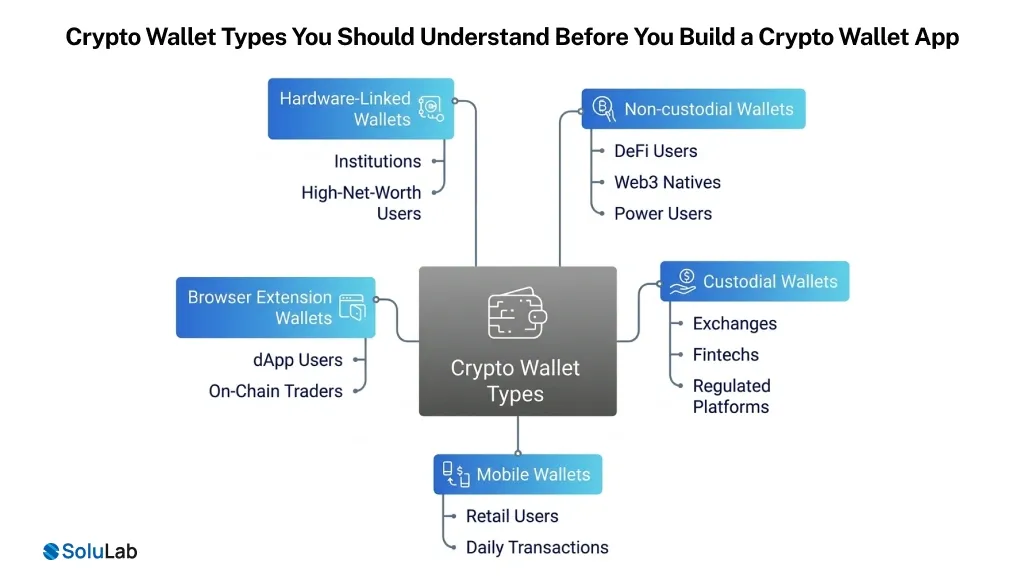
That choice drives architecture, compliance, and cost. Major types:
| Wallet Type | Who It’s For | Key Trade-offs |
| Non-custodial wallets (like MetaMask) | DeFi users, Web3 natives, power users | Users hold private keys; lower custody liability, but high UX, security, and recovery complexity |
| Custodial wallets | Exchanges, fintechs, regulated platforms | Easier onboarding and recovery; heavy regulatory, compliance, and custodial risk |
| Mobile wallets | Retail users, daily transactions | Best UX for payments and simple flows; limited for advanced dApp interactions |
| Browser extension wallets | dApp users, on-chain traders | Deep Web3 integration and composability; higher security and maintenance burden |
| Hardware-linked wallets | Institutions, high-net-worth users | Maximum security and cold storage; higher cost and lower usability for daily use |
Most serious teams end up with some mix – a non‑custodial mobile app and extension at the center, with optional custodial rails for specific user segments.
Essential Features That Define the Cost of Building a MetaMask-Like Crypto Wallet
The feature list is where Crypto Wallet App Development either stays sane or goes off the rails. Every feature has a cost, but some features are much more expensive than others.
Features that move the needle most:
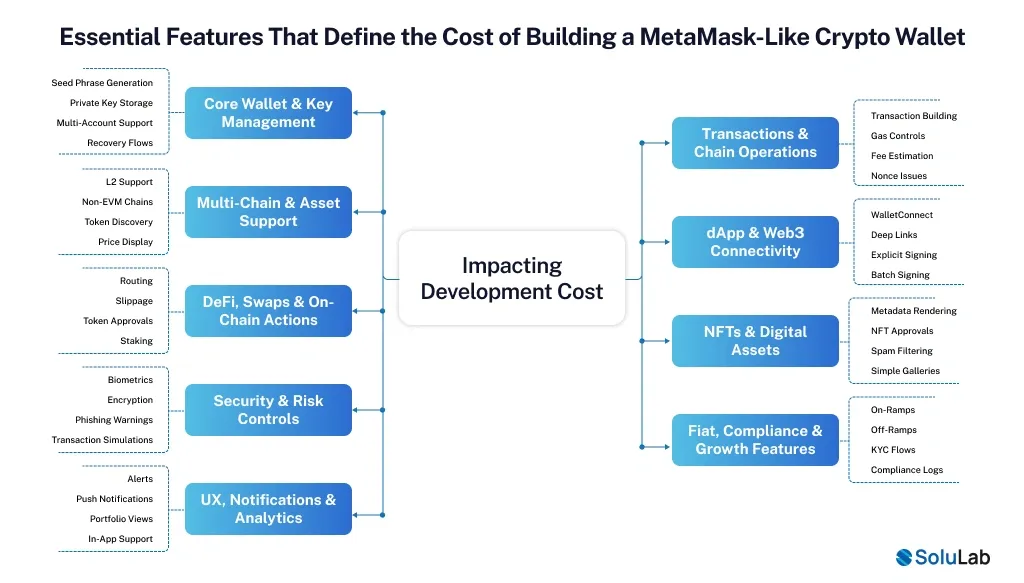
1. Core wallet & key management
- Everything starts with seed phrases, so the way you generate, back up, and recover them really matters. If users mess this up, there is no second chance.
- Private keys have to live inside secure OS storage or hardware enclaves, not in clever but risky custom setups.
- People almost immediately want more than one account, so multi-account and profile support shows up earlier than most teams expect.
- Recovery flows need to calm users down, not confuse them, especially when something has already gone wrong.
- Some teams add social or smart-contract recovery later on, which can help, but it also raises the bar for security and testing.
2. Transactions & chain operations
- Sending a transaction sounds simple until networks get busy, which is why building, signing, and broadcasting have to work under stress.
- Gas controls matter more than marketing copy; users want fast, normal, or fully custom when things get weird.
- Fee estimation is chain-specific and often wrong by default, so handling failures cleanly becomes part of the UX.
- Nonce issues quietly break trust, so pending transactions and retries need to be rock solid.
- Resubmitting or speeding up stuck transactions is one of those features users only notice when it is missing.
3. Multi-chain & asset support
- Supporting Ethereum alone is no longer enough, so most wallets add L2s and major EVM chains early.
- Non-EVM chains like Solana or Cosmos come later, usually when the product already has traction.
- Token discovery has to “just work,” because users should not be pasting contract addresses all day.
- Prices turn balances into something people understand, even if they are not traders.
- Custom RPCs are mostly for power users, but without them, enterprises feel boxed in.
4. dApp & Web3 connectivity
- For many users, the wallet only exists to connect to dApps, whether through a mobile browser or an extension.
- WalletConnect and deep links fill the gaps when devices and platforms don’t line up cleanly.
- Signing flows need to be explicit, because blind signatures are where most damage happens.
- Batch signing sounds advanced, but it quickly becomes necessary for power users.
- Human-readable names like ENS remove friction and reduce very expensive mistakes.
5. DeFi, swaps & on-chain actions
- Swaps are where wallets start to feel useful, but also where trust can break fast.
- Routing, slippage, and price impact need to be visible, not hidden behind “best price” labels.
- Token approvals are dangerous if ignored, which is why revoking allowances becomes a real feature.
- Staking and bridging add stickiness, but they also add support and risk overhead.
- Clear boundaries between wallet actions and protocol risk help users blame the right thing.

6. NFTs & digital assets
- Once users hold NFTs, they expect to see them, not hunt for them.
- Metadata and media rendering sound trivial until they break on slower networks.
- NFT approvals matter just as much as token approvals, but fewer wallets explain them well.
- Spam NFTs are unavoidable, so hiding and filtering become part of basic hygiene.
- Simple galleries usually beat fancy ones, especially on mobile.
7. Security & risk controls
- Biometrics and PINs are about everyday safety, not hardcore cryptography.
- Encryption at rest and in memory is invisible to users but non-negotiable.
- Phishing warnings save real money, even if they annoy people occasionally.
- Transaction simulations catch mistakes before they become losses.
- Security here is never done, it just keeps evolving with attackers.
8. Fiat, compliance & growth features
- The moment fiat enters the picture, everything slows down, but the audience widens.
- On-ramps and off-ramps bring growth, and regulators, at the same time.
- KYC flows are painful but unavoidable for custodial or hybrid models.
- Compliance logs and exports matter more to auditors than users.
- Regional switches help teams survive a fragmented regulatory world.
9. UX, notifications & analytics
- Alerts are reassurance, not noise, when done right.
- Push notifications usually beat email, but some users still want both.
- Portfolio views should explain ownership, not turn the wallet into a trading app.
- In-app support tools reduce panic when something breaks.
- Crash reports and monitoring are boring until the day they save you.
The more polished and broad the features of a MetaMask-like wallet, the higher your MetaMask-Like Crypto Wallet Development Cost climbs.
That’s why most teams start with a small, high‑value feature set and add the rest only after v1 is live.
Cost to Build a Custom Crypto Wallet App Like MetaMask: Stage-by-Stage Breakdown
Most serious Crypto Wallet App Development projects follow a similar budget pattern.
| Phase | What This Actually Includes | Typical Cost Range |
| Strategy & Discovery | Product-market positioning, user personas, custody model decisions, chain selection, threat modeling, compliance risk mapping, core UX flows, technical architecture blueprint | $8,000 – $25,000 |
| Core Wallet Build (MVP) | Key management, seed phrase flows, send/receive logic, transaction signing, gas estimation, address book, activity history, base UI, initial EVM chain support (mobile and/or extension) | $20,000 – $70,000 |
| Integrations & Advanced Capabilities | Multi-chain expansion, DEX/aggregator swaps, NFT viewing & transfers, fiat on/off-ramps, WalletConnect, analytics, admin & support tooling | $10,000 – $40,000 |
| Security & Audits | Secure storage implementation, encryption, external audits, penetration testing, bug bounty setup, and remediation cycles | $15,000 – $80,000 |
| QA, Launch & Ongoing Operations | Cross-device QA, store compliance, release pipelines, monitoring, incident response, updates & maintenance (15–25% of build cost annually) | $10,000 – $30,000 + ongoing |
When you add it up, it lines up with what multiple industry studies say: a serious MetaMask‑style build lands roughly in the $45,000–$150,000 band for v1, and can push toward $200,000+ when you go heavy on multi‑chain, DeFi, and compliance.
Post‑launch and ongoing costs
Launch is the start, not the end. You need to expect recurring spend on:
- Security updates and new audits (annually at least, more often after big releases).
- Node/RPC costs or managed node providers.
- Customer support, fraud operations, and incident response.
- Compliance work as laws around custody, KYC, and reporting changes.
Many sources suggest planning for 15–25% of initial build cost per year for maintenance and operations, which matches what we see in long‑running wallet products.
Developer rates by region
The same spec for developing a Crypto Wallet App Like MetaMask can have very different price tags based only on where the team sits.
2026 rate ranges:
- North America / Western Europe: $80–$200/hour
- Eastern Europe: $40–$90/hour
- India / South Asia: $25–$70/hour
This is why many enterprises do a hybrid model: product and architecture in‑house or nearshore, and a specialized Web3 Crypto Wallet Development Company in a more cost‑efficient region handling big parts of the build and QA.
How to Optimize the Cost of Developing a MetaMask-Like Crypto Wallet App
You don’t want to cheap out on security, but you also don’t want to overbuild. Here’s what actually helps lower MetaMask-Like Crypto Wallet Development Cost without hurting the product:
- Start with a narrow, “must‑have” feature set and grow from there.
- Use cross‑platform tech where sensible (for example, React Native + web + extension) to avoid multiple separate mobile teams.
- Lean on audited open‑source and proven Cryptocurrency development Solutions, but run your own checks before you ship.
- Choose chains and L2s with good tooling and reasonable fees instead of throwing every chain into v1.
- Plan a roadmap that separates launch features from roadmap features, and stick to it.
- Partner with a Crypto Wallet Development Company that has already shipped several wallets and Crypto Exchange Developments, not a generic dev shop learning on your project.
If you do these things, it’s realistic to cut 25–40% off the total Crypto Wallet App Development Cost compared to a naive, everything in v1 approach.
How SoluLab can help you develop a crypto wallet like MetaMask?
Our angle is simple: we think like operators, not just coders. When we develop a Crypto App like Metamask with a client, we:
- Start from your business model, where will the wallet make money, how does it tie to your existing products, and what risks you can live with.
- Design the features of a MetaMask-like wallet around those goals, not around a generic checklist.
- Use a battle‑tested process for Crypto Wallet App Development, from architecture to testing and security, to shorten the path from idea to production.
- Stay in the loop post‑launch so we can help you scale, add more chains, or extend into related areas like swaps and Crypto Exchange Development Services.
So, if you want to build a Crypto App like Metamask that has a different brand but similar trust level, we bring in a full‑stack team that can own architecture, implementation, security, and long‑term evolution.

Conclusion
In 2026, building a wallet like MetaMask is a business move, because it gives you direct access to users and on‑chain activity, and it opens the door to new revenue streams that sit on top of that access.
The key is to treat Crypto Wallet App Development Cost as an investment into long‑term infrastructure. With the right scope, tech stack, and partner like SoluLab, Custom Crypto Wallet Solutions can pay for themselves through usage, transaction volume, and the new products you build on top.
FAQs
With over 3 years of experience, I specialize in breaking down complex Web3 and crypto concepts into clear, actionable content. From deep-dive technical explainers to project documentation, I help brands educate and engage their audience through well-researched, developer-friendly writing.