Web 3 development and DeFi integration sit right at the sharp end of where the internet is heading. Decentralized finance (DeFi) keeps growing, Web3 keeps maturing, and the two are pulling digital life toward something more decentralized, more secure, and built around the user instead of the platform. This piece walks through how DeFi gets built, starting with DeFi lending platforms, then the top DeFi protocols and the wider DeFi ecosystem. After that we switch to the Web3 side: real use cases for Web3 technology, the top Web3 platforms, and where Web3.0 development seems to be going. The question underneath all of it is simple. What happens when Web 3 and DeFi stop being separate conversations?
Understanding DeFi Development
DeFi moves fast. If you want to know why decentralized finance keeps attracting users, you have to understand DeFi development itself: the principles, the moving parts, and the mechanics that make a financial product run without a bank behind it. Below we break down the basic components of DeFi development and the building blocks that shape the DeFi ecosystem as its reach into global finance keeps widening.
Exploring the DeFi Ecosystem
The DeFi ecosystem is a broad mix of financial applications running on blockchain networks, all offering services that used to require a middleman. Lending. Borrowing. Yield farming. Decentralized exchanges. That’s the short list. These DeFi platforms rely on smart contracts to automate the process, so each transaction is visible and settles without anyone signing off on it. Because nothing is gated by a central party, the DeFi ecosystem opens financial services to people almost anywhere, with very few barriers to entry. And since so many DeFi protocols are open source, developers can build on top of what already exists instead of starting from zero, which is exactly how new financial products tailored to specific needs keep appearing.
The Rise of DeFi Lending Platforms
DeFi lending platforms have become one of the core pieces of DeFi. The idea is straightforward: lend your digital assets and earn interest, or post crypto as collateral and borrow against it. Smart contracts handle the whole cycle, from deposit to repayment, so the rules are enforced by code rather than a loan officer. Take the bank out of the picture and what’s left? DeFi lending platforms that give people a more open, more direct way to get liquidity and put idle assets to work.
Unraveling the Top DeFi Protocols
A handful of protocols have earned real standing in DeFi. They tend to act as base infrastructure, the layer other services get built on: decentralized exchanges (DEXs), liquidity provision, asset management, yield farming. Compound, Aave, MakerDAO, Uniswap, and Synthetix are some of the better-known names. What they share is a permissionless model. Anyone can use them, and users get far more say over what they do with their money than a traditional account would allow.
Analyzing the Best DeFi Exchanges
DeFi exchanges, usually called decentralized exchanges or DEXs, let people trade digital assets directly with each other. No broker, no central order book owner. They run on blockchain networks and use automated market-making (AMM) algorithms to price and execute swaps quickly. DeFi exchanges give users stronger security, better liquidity, and lower trading fees than traditional centralized exchanges. Uniswap, SushiSwap, and PancakeSwap are the names most people know, and each has done a lot to make decentralized trading more reachable within the DeFi ecosystem.
Exploring Web3 Development
Look closely at Web3 development and you start to see how much next-generation web tech could change the way decentralized systems and apps get built. Here we look at what’s new in Web3 development: the tools and technologies that make it possible to build decentralized products around the user, and why that points toward a more open and more secure internet.
Understanding the Concept of Web3 Technology
Web3 technology is the next stage of the internet. It pulls together decentralized protocols, blockchain, and peer-to-peer networks. Web2 was built on centralized platforms where corporations held the data; Web3 flips that, putting ownership, privacy, and control back with the user. The core ideas behind Web3 technology are decentralization, transparency, and giving people direct control, so they can interact and transact without an intermediary standing between them. Blockchain and distributed ledgers make that possible. You don’t need to trust the other party, because the system itself enforces the rules, and you keep a much tighter grip on your own digital footprint.
Key Use Cases of Web3 Technology
Web3 technology has opened up new use cases across a lot of industries, most of them built around privacy, security, and shared governance. The prominent ones for Web3 technology include decentralized finance (DeFi), non-fungible tokens (NFTs), decentralized autonomous organizations (DAOs), decentralized social networks, and supply chain management tools. The common thread? Value moves easily, data is handled in the open, and interactions are secured by the chain rather than a company’s promise. That changes how people and organizations use digital services, full stop.
Top Web3 Platforms in the Market
A few platforms carry most of the weight in Web3 right now. They’re the ones pushing decentralized tech into real industries, and they hand developers a full toolkit to build, deploy, and run Web3 applications. Ethereum, Polkadot, Cardano, Binance Smart Chain, and Solana lead the pack. Each has its own strengths, and picking one usually comes down to the use case and what the dev team needs. Together they form the backbone for building decentralized applications (dApps) and make it far easier to plug blockchain into the digital infrastructure companies already run.
Uncovering the Web3.0 Development Trend
Web 3.0 is a real shift in how the internet is put together. Data, apps, and interactions all move toward decentralization. The trends in Web 3.0 development center on privacy, data security, and experiences designed around the person using them, so people can take back control of their digital identities. Demand for decentralized apps keeps climbing. So the work is shifting toward interoperable protocols, blockchains that actually scale, and interfaces normal people can use without a tutorial, all aimed at a more transparent web where you own your data.
DeFi Development and Integration
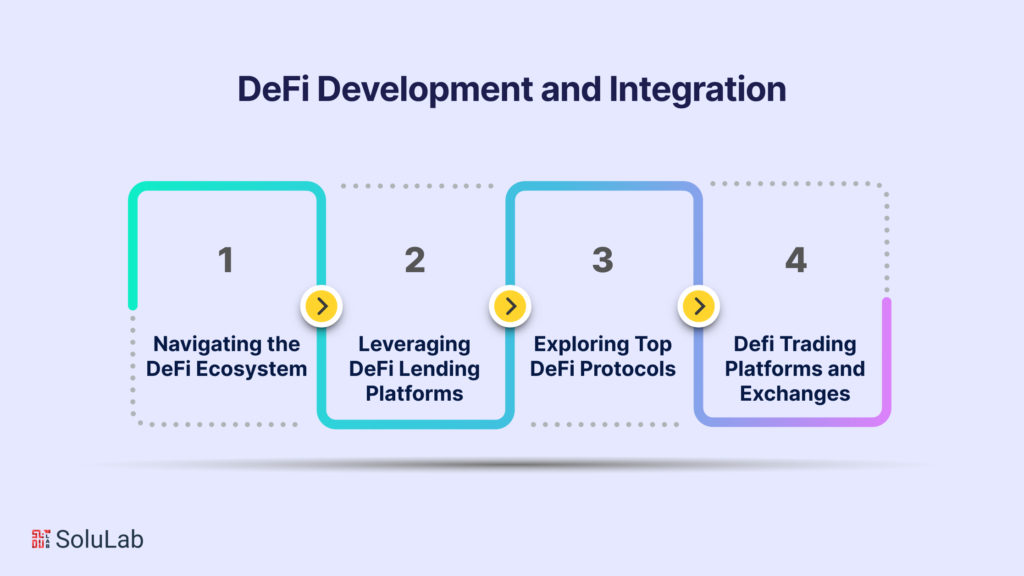
How well DeFi slots into the wider Web3 stack will decide a lot about where decentralized finance ends up. This section covers the processes and strategies behind building and integrating DeFi services, and why DeFi development and the rest of Web3 make each other stronger.
Navigating the DeFi Ecosystem
DeFi development has reshaped traditional finance by making lending, borrowing, and trading possible without intermediaries. The DeFi ecosystem is made up of many protocols, platforms, and apps that handle asset swaps, yield farming, liquidity provision, and decentralized trading. Blockchain and smart contracts do the heavy lifting here. They keep transactions transparent, secure, and quick, and they give users several ways to earn passive income or take part in decentralized finance on their own terms.
Leveraging DeFi Lending Platforms
DeFi lending platforms let people lend and borrow digital assets with no bank involved. Smart contracts automate the lending flow. Deposit assets and you earn interest; hold crypto and you can borrow against it as collateral. Simple enough. Without intermediaries or a central authority, DeFi lending platforms give users more control over their own funds, competitive interest rates, and flexible borrowing terms. In practice, that makes finance more open to people who were never well served by the old system.
Exploring Top DeFi Protocols
Some protocols stand out for taking fresh approaches to decentralized finance and for helping the DeFi ecosystem grow. Between them they cover decentralized exchanges (DEXs), lending and borrowing, yield farming, and liquidity provision. Some of the top DeFi protocols include Uniswap, Aave, Compound, MakerDAO, and Synthetix. None of them does exactly the same thing, which is the point: different protocols fit different DeFi use cases and financial goals.
DeFi Trading Platforms and Exchanges
DeFi trading platforms and exchanges changed how people get to and trade digital assets. They’re decentralized and non-custodial, meaning you keep your own keys and your own control. Crypto, tokens, and other digital assets change hands directly between users, with no middleman. Built on blockchain and smart contracts, DeFi trading platforms make trading secure and transparent, and they offer plenty of trading pairs, liquidity pools, and yield farming options for anyone trying to grow returns or spread their holdings across more assets.
Advancements in Web3 Development
Recent progress in Web3 development marks a real milestone for decentralized tech. The infrastructure keeps getting refined, and the platforms keep getting better. Below are the latest shifts in Web3 development and what they could mean for decentralized systems and services down the road.
Harnessing the Power of Web3 Technology
Web3 technology brought a new set of internet capabilities, built on peer-to-peer interaction and owning your own data. That has led to products that put privacy, security, and digital sovereignty first. Using blockchain, distributed ledgers, and decentralized protocols, Web3 development produces apps and platforms built around the user, where people control their own digital identity and use online services securely and in the open.
Top Web3 Platforms and Their Capabilities
Several leading Web3 platforms now shape how decentralized tech gets built and integrated. They give developers and users a big set of tools for building and shipping Web3 applications. Think dApp development, blockchain integration, and digital asset management, all packaged in ways that make secure, privacy-respecting products easier to build. Some of the top Web3 platforms are Ethereum, Polkadot, IPFS, Filecoin, and Holochain. Each one pushes decentralized technology forward in its own way, and together they keep widening what Web3 can do.
Exploring Web3 Use Cases and Applications
As Web3 technology spreads, it keeps producing new use cases across industries: decentralized apps, peer-to-peer networks, and data systems anyone can audit. Web3 use cases cover a lot of ground, including decentralized finance (DeFi), non-fungible tokens (NFTs), decentralized social networks, supply chain management tools, and decentralized autonomous organizations (DAOs). Why does this matter? Because each one shows Web3 changing something concrete, whether that’s how people interact online, how data is managed, or how transactions settle, and it opens those systems up to far more people and organizations.
Emerging Web3.0 Development Trends
Web 3.0 development keeps moving, and the direction is fairly clear. Interoperable protocols. Blockchains that scale. Interfaces that don’t scare people off. The trends focus on data privacy, user security, and digital sovereignty, with apps and platforms that let people decide how their digital lives work and use online services safely and openly. As demand for decentralized tech rises, the pressure is on builders to ship products that are scalable, efficient, and designed for the user, without giving up privacy or security along the way.
Integrating DeFi with Web3 Technologies
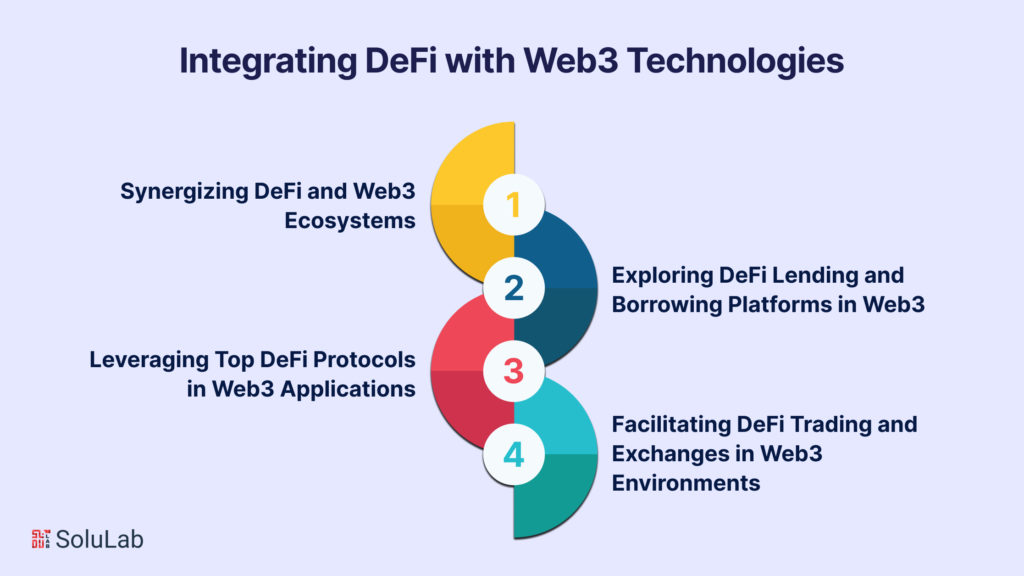
Bringing DeFi services together with Web3 technologies is a big shift. Decentralized financial tools stop living in their own silo and start connecting to everything else. Here we look at how that integration works, the main strategies behind it, and the benefits, which mostly come down to financial products that are both new and easier to use.
Synergizing DeFi and Web3 Ecosystems
Combining DeFi with Web3 technologies moves finance toward something more connected and more centered on the user, with services that are decentralized, transparent, and secure by design. When DeFi and Web3 work together, decentralized financial protocols plug straight into blockchain-based technologies. The result is financial products that are simpler to access and that treat privacy, security, and user control as defaults. Blockchain, smart contracts, and decentralized networks are the glue. And what they produce is a financial system sturdy enough, and open enough, to serve very different needs from users all over the world.
Exploring DeFi Lending and Borrowing Platforms in Web3
Bringing DeFi lending and borrowing platforms into Web3 has made it easier to move digital assets and to lend or borrow in a way that’s secure and visible to all. Blockchain and smart contracts automate the lending process, move funds instantly, and keep every transaction transparent. Once those platforms are wired into Web3, users get access to peer-to-peer lending, decentralized borrowing, and yield farming. That’s a real widening of who gets to use financial services, for individuals and businesses alike.
Leveraging Top DeFi Protocols in Web3 Applications
Top DeFi protocols are a big part of why decentralized finance is showing up inside Web3 at all. They give users a broad set of tools for managing and growing digital assets. Lending, borrowing, liquidity provision, yield farming: all of it runs with transparency, security, and speed built in. Put top DeFi protocols inside Web3 applications and users can reach decentralized financial services without friction, spread their portfolios across more assets, and chase better returns. Finance gets a lot more open that way.
Facilitating DeFi Trading and Exchanges in Web3 Environments
Bringing DeFi trading platforms and exchanges into Web3 environments changed how people access and trade digital assets. Trading becomes decentralized, secure, and transparent, for individuals and for businesses. These platforms use blockchain and smart contracts to swap assets smoothly, keep users in control of their own funds, and make every transaction verifiable. By pairing DeFi trading platforms and exchanges with Web3 technologies, users get a wide choice of trading pairs, liquidity pools, and yield farming options, and far fewer people are shut out of trading.
Enhancing Web3 Technologies with DeFi Integration
Adding DeFi principles and features to Web3 technologies is a big step for decentralized systems. It expands what they can do and who they’re useful to. This section looks at how DeFi integration improves the features and the day-to-day experience of Web3, and why that leads to digital systems that are secure, transparent, and open to more people.
Amplifying Web3 Use Cases with DeFi Applications
DeFi applications have stretched what Web3 technologies are useful for. Decentralized financial services now sit right alongside blockchain-based platforms and solutions. Users can reach decentralized lending and borrowing, liquidity provision, asset trading, and yield farming, all in one connected setup that puts access, transparency, and security first. So what does amplifying Web3 use cases with DeFi apps actually get you? More decentralized financial services, better financial tools, and a way into financial activity that used to be closed to many people around the world.
Exploring the Synergy Between DeFi and Web3 Technology
DeFi and Web3 technology feed each other. Together they’ve sped up the arrival of financial products that are new, easy to use, and decentralized, transparent, and secure. The mechanics rely on blockchain, smart contracts, and decentralized networks, which let decentralized financial protocols connect cleanly with Web3 applications. What comes out the other side is a financial setup built around the user, where privacy, security, and control aren’t afterthoughts. Get the pairing of DeFi and Web3 technology right, and users gain tools for fast, secure transactions, while individuals and businesses alike find finance easier to get into.
Navigating Web3.0 Development Trends and DeFi Integration
Keeping up with Web 3.0 development trends and with how DeFi fits into Web3 shows just how far decentralized tech and financial services have come. The goal is a connected financial environment built around the user, one that stays accessible, transparent, and secure. Progress in blockchain, smart contracts, and decentralized networks is what makes friendlier, more inclusive financial products possible, products that fit very different needs and preferences. Here’s the practical upshot. When users adopt Web 3.0 development trends and DeFi integration, they can handle a financial world that changes quickly, get to better tools and services, and take part in financial activity that used to be out of reach, whether they’re individuals or businesses.
Embracing the Role of Top Web3 Development Companies in DeFi Integration
When top Web3 development companies take on DeFi integration, it’s a reminder that collaboration and fresh thinking are what move decentralized finance forward. These firms bring deep experience in blockchain, smart contracts, and decentralized networks, and they use it to fit DeFi solutions into Web3 without the rough edges. Users end up with a wide set of financial tools that are accessible, transparent, and secure. Bring in top Web3 development companies for DeFi integration and you get people who’ve done this before, access to up-to-date financial solutions, and a place in a financial environment where the user stays in control.
The Role of Top Web3 Development Companies in the DeFi Ecosystem
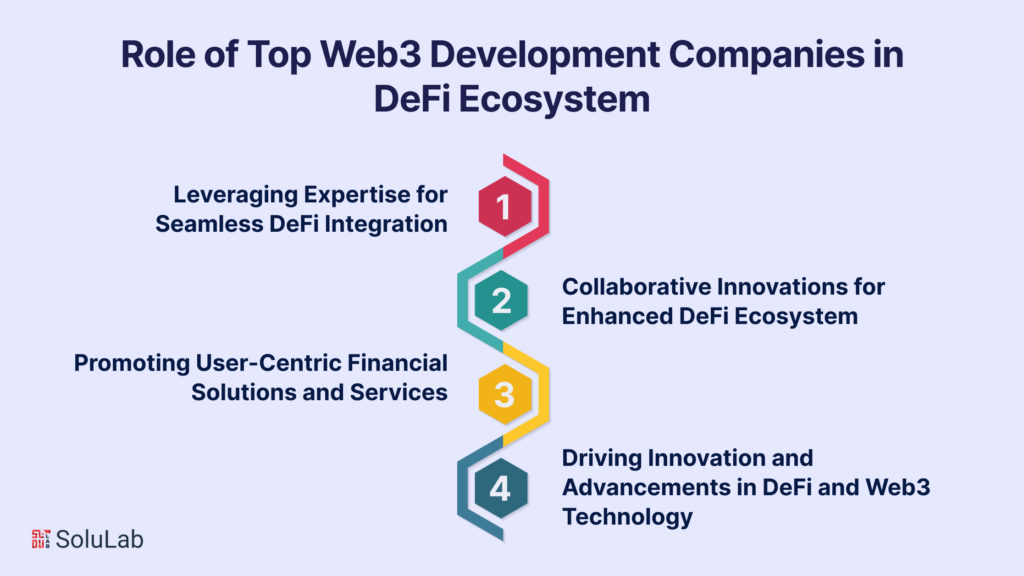
Leading Web3 development companies are deeply involved in the DeFi ecosystem, and they matter a lot to how quickly decentralized finance gets adopted. This section covers what top Web3 development companies actually contribute, and how they shape where DeFi goes next as financial services become safer and more focused on the user.
Leveraging Expertise for Seamless DeFi Integration
What do top Web3 development companies really do in the DeFi ecosystem? Mostly, they apply what they know about blockchain, smart contracts, and decentralized networks to get DeFi apps and protocols working inside Web3 without friction. Their focus is on financial products that are easy to use and genuinely new, built for users with very different needs and preferences. Transparency, security, and user control come first. Done well, this integration work lets users reach a wide set of financial tools, try different kinds of financial activity, and find new ways to grow their money.
Collaborative Innovations for Enhanced DeFi Ecosystem
No single firm builds a better DeFi ecosystem alone. Partnerships between top Web3 development companies are what push user-centered, inclusive financial products into wider use. Most of this joint work is about connecting decentralized financial protocols with Web3 applications, so finance becomes more linked up and easier to use while staying accessible, transparent, and secure. When they collaborate on a stronger DeFi ecosystem, top Web3 development companies move decentralized tech and financial services forward, bring more people into the financial system, and help the DeFi ecosystem grow for users everywhere.
Promoting User-Centric Financial Solutions and Services
Building financial products around the user is where top Web3 development companies show what they’re committed to. The aim is financial systems that are new, open to everyone, and flexible enough for users with very different needs. That means tools that are easy to use and easy to reach, with transparency, security, and user control baked into every transaction. By putting users first, top Web3 development companies give people better financial tools, more ways to take part, and new routes to financial growth. The payoff is a livelier financial world where the user’s experience actually counts.
Driving Innovation and Advancements in DeFi and Web3 Technology
Pushing DeFi and Web3 technology forward is a core commitment for top Web3 development companies. They want financial products that are advanced but still easy to use, and that stay accessible, transparent, and secure. Their work in blockchain, smart contracts, and decentralized networks aims at a financial system that’s more connected and more open to users with very different needs. As they keep advancing DeFi and Web3 technology, top Web3 development companies shape how decentralized tech and financial services evolve, widen access to finance, and help the DeFi ecosystem grow for individuals and businesses.
The Growing Significance of Web3.0 Development Trends in DeFi Ecosystem
Web 3.0 development trends are carrying more and more weight in the DeFi ecosystem. That reflects how seriously people now take next-generation web tech and its power to reshape global finance. Here we look at what’s emerging in Web 3.0, how it affects the DeFi ecosystem and the wider digital world, and why it points to more advanced, more inclusive digital infrastructure.
Embracing Decentralized Finance with Web3.0 Innovations
The weight Web 3.0 trends now carry in the DeFi ecosystem shows an industry leaning into decentralized finance, backed by more advanced Web 3.0 innovation. Blockchain, smart contracts, and decentralized networks are the tools. The target is finance that’s more connected and easier to get into, with transparency, security, and user control built in. If the DeFi ecosystem takes up these Web 3.0 innovations, it can speed the spread of user-centered, inclusive financial products and open finance up to individuals and businesses around the world.
Driving Technological Advancements for Enhanced DeFi Offerings
Better DeFi products depend on better underlying tech. The industry is putting real effort into advanced, easy-to-use financial products that fit a wide range of needs. Most of that effort goes into blockchain, smart contracts, and decentralized networks, aiming for a financial system that’s livelier, more inclusive, and still accessible, transparent, and secure. If that work pays off, the DeFi ecosystem gets bigger, more people get into finance, and decentralized technology and financial services keep maturing.
Fostering Collaboration and Integration Across DeFi and Web3.0 Landscape
Cooperation across DeFi and Web 3.0 is becoming a priority. The industry wants partnerships among the main players so that connected, user-focused financial products actually get built and adopted. A lot of that joint work targets one thing: linking decentralized financial protocols with Web 3.0 applications. Get that right and the financial system runs more smoothly and efficiently, with user experience, security, and transparency at the center. Working together this way, the industry can build a friendlier and more connected financial world, grow the DeFi ecosystem, and move decentralized tech and financial services forward for users everywhere.
Exploring Future Possibilities and Innovations in DeFi and Web3.0
What comes next for DeFi and Web 3.0? The industry is clearly committed to finding out, and to chasing new openings in decentralized finance and technology. The focus is on spotting the trends and technologies that will shape the future of the DeFi ecosystem, then turning them into easy-to-use financial products that keep pace with what users want. Keep exploring what DeFi and Web 3.0 can become, and the payoff is better decentralized tech and financial services, more people with real access to finance, and a global financial system that works better for individuals and businesses.

Conclusion
DeFi and Web3 development change quickly, and companies like SoluLab are part of what keeps that change moving. As a Web3 development company focused on DeFi solutions, SoluLab keeps building with current technologies and tools and helps businesses hold their own in a digital world that won’t sit still. It pairs hands-on DeFi development experience with a detailed grasp of how Web3 technologies behave in practice, and it delivers full solutions shaped around what modern businesses and industries actually need.
Working with a DeFi development service and Web3 development company like SoluLab gives businesses a real way into what DeFi and Web3 can offer. The focus is on smooth, well-built solutions that help companies stay ahead, adopt new trends early, and turn DeFi and Web3 into actual business results. As a leading DeFi development service and Web3 development company, SoluLab brings a dedicated team of skilled professionals and a high bar for quality to every DeFi and Web3 project. The practical goal is simple: make sure businesses are ready for whatever shift in this market comes next.
FAQs
Bhavya is driving growth through data-backed demand generation for AI and Web3 solutions. With 9+ years in digital marketing, he has spearheaded initiatives that led to a 40% increase in qualified inbound leads. Bhavya shares insights on marketing ROI and scaling a digital presence via AI workflows. He is open to connecting with startups and enterprise teams to help them overcome their challenges.