























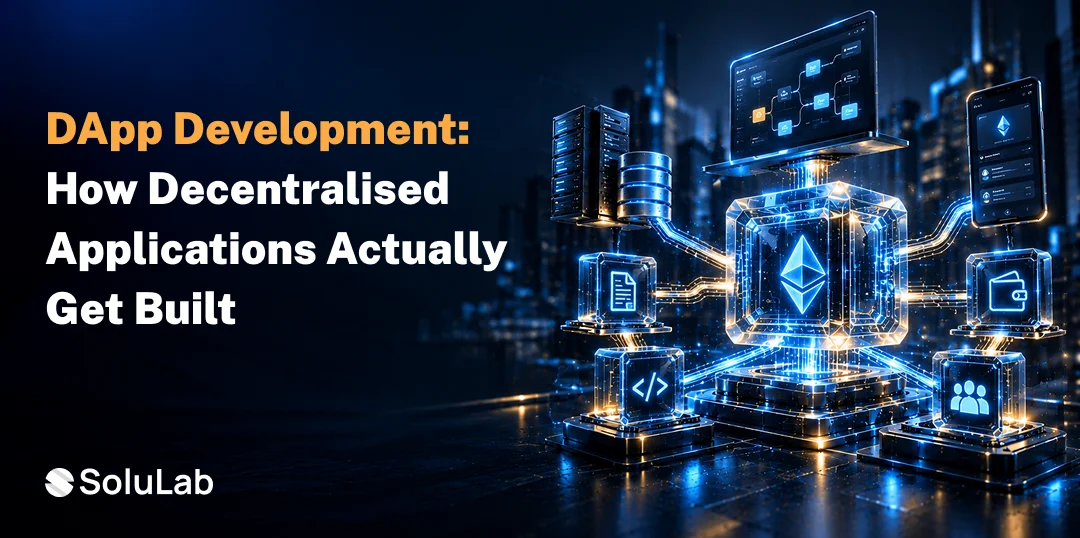
dApp Development: How Decentralised Applications Actually Get Built
dApp development means building an app whose core logic runs as smart contracts on a blockchain. This guide covers what makes an…

An Ethereum blockchain development company designs, builds, and audits applications on Ethereum and its Layer 2 networks: smart contracts, dApps, ERC-20 and ERC-721 tokens, NFT marketplaces, and wallets. SoluLab does this for startups and enterprises in the USA and worldwide, with security audits built into every build. Book a free strategy call to scope your project.
As an Ethereum development company in the USA, we take Ethereum projects from first design to mainnet and keep them running after launch, across smart contracts, tokens, dApps, wallets, and Layer 2 deployments.
As an Ethereum blockchain consulting company, we help you decide what belongs on-chain, whether to launch on mainnet or a Layer 2, and what it will cost to run, before any code is written.
We build Ethereum dApps from scratch: audited smart contracts, the web or mobile front end, and wallet connections. For apps that need to run on Ethereum and other chains from one codebase, work with our blockchain app development company in the USA team.
We create ERC-20, ERC-721, ERC-1155 and ERC-3643 tokens with the controls your use case needs, such as mint limits, vesting, pausing, and KYC/AML-gated transfers for regulated assets. See our ERC20 token development services.
We set up public and private Ethereum networks and nodes, with monitoring and redundancy so the network stays available.
We write Ethereum smart contracts in Solidity and audit them before mainnet, so deals execute automatically and funds stay protected
We build NFT marketplaces on Ethereum and its Layer 2s with minting, listings, auctions, royalties, and wallet login, designed around your audience and fee model.
We build custodial and non-custodial Ethereum wallets that hold ETH and ERC tokens, connect to dApps through WalletConnect, and support multi-signature or MPC key management for teams handling larger balances.
Our tech team integrates Layer 2 to reduce congestion on Ethereum by processing transactions off-chain, which offers speed at low cost.
We aid you in the real-world asset tokenization into blockchain-based tokens to enable fractional ownership, increased liquidity, and easy transactions.
Helping you design and launch Ethereum-powered NFT-based Play-to-Earn and Earn-to-Play incentives in a safe, democratic, and interactive gaming ecosystem.
Ethereum remains the dominant force in decentralized finance, holding roughly 53-54% of total DeFi TVL in 2026, more than the next four largest chains combined.
Its Layer 2 ecosystem alone now secures over $48 billion in total value locked across 73 active rollups, led by Arbitrum and Base, proof that Ethereum's scaling roadmap isn't theoretical anymore; it's live infrastructure handling real capital.
With the following features, unlock the unlimited possibilities in your Ethereum development business.
Off-chain transaction batching that cuts gas fees and increases throughput without compromising Ethereum's core security model.
Custom smart contracts written in Solidity, Ethereum's native contract language, built for gas efficiency and readability.
Applications built to run cleanly on the Ethereum Virtual Machine, so they interoperate with the broader EVM ecosystem.
Every on-chain transaction is publicly verifiable, giving your users and auditors a clear record they can trust.
Bridges and integrations that let your Ethereum application communicate with other chains and Layer 2 networks.
Architecture designed to handle growing transaction volume as your user base expands.
Direct peer-to-peer value transfer with no intermediary holding or delaying funds.
Optimized contract logic and gas handling so transactions confirm predictably and fail rarely.
Security-first development practices, including thorough testing and audit trails, to reduce exposure to exploits.
Gas-optimized contracts and Layer 2 routing that keep transaction costs down for your users.
SoluLab combines deep technical know-how with strategic insight to develop Ethereum-based applications that unlock new revenue streams, increase transparency, and drive long-term growth.
Get a Custom Quote →Our team maps each solution below to a specific business outcome: lower gas costs, new liquidity, faster fundraising, or a governance model your token holders can trust. Here's what we build:
Ethereum's security, transparency, and smart contract flexibility make it a fit well beyond crypto-native use cases; here's how that plays out across the industries we build for most.
Cross-border settlements, tokenized assets, and DeFi lending platforms built on transparent, auditable smart contracts.
Secure patient data sharing and drug traceability systems, with permissioned access controls where compliance requires it.
Verifiable academic credentials and certificates that institutions, students, and employers can all trust without manual verification.
End-to-end shipment tracking and supply chain provenance recorded on an immutable, tamper-proof ledger.
Digital ticketing, loyalty programs, and booking platforms that cut out intermediary fees and settlement delays.
Property tokenization and fractional ownership models that make real estate investment more liquid and accessible.
NFT platforms and royalty automation that protect creator ownership and streamline payments without a middleman.
Transparent, crypto-enabled payment rails and loyalty programs that build customer trust through verifiable transaction history.
Let SoluLab show you what’s possible. From custom smart contracts to enterprise-grade dApps, we simplify blockchain integration and deliver real-world impact. Reach out today for a no-obligation demo!
Connect Now →Four Ethereum and EVM products we've shipped, from DeFi and banking to healthcare records and token launches.
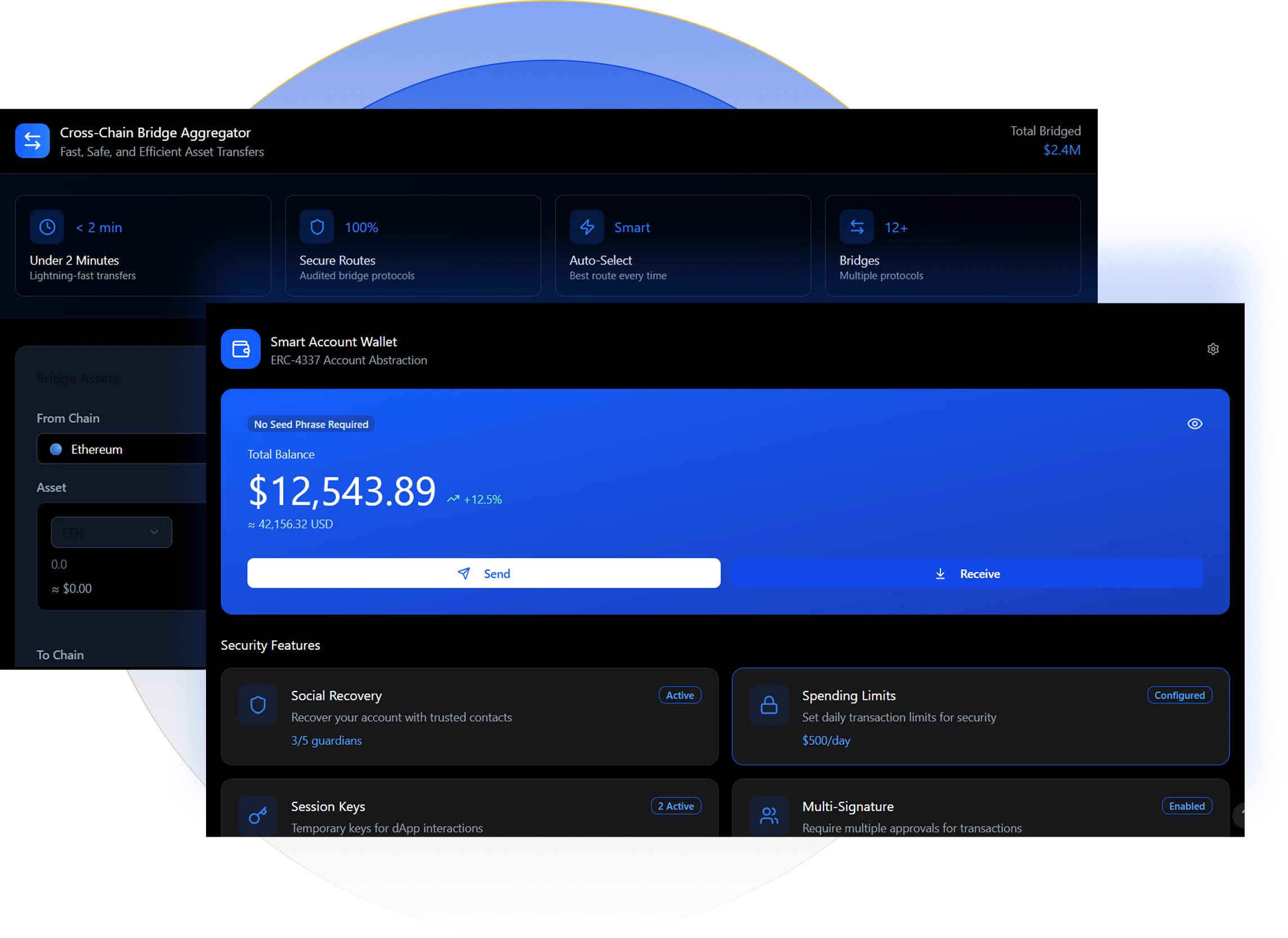
A decentralized exchange where users trade across Ethereum, Polygon, Arbitrum, Optimism and Base without holding gas tokens, using ERC-4337 account abstraction.
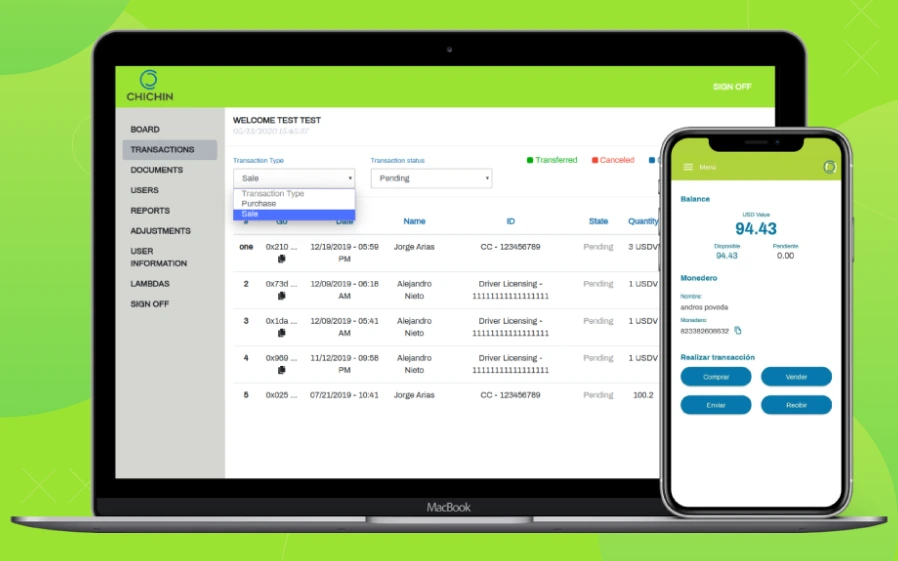
A trading app with Chichin tokens, electronic and cold wallets, and instant peer-to-peer transfers between users.
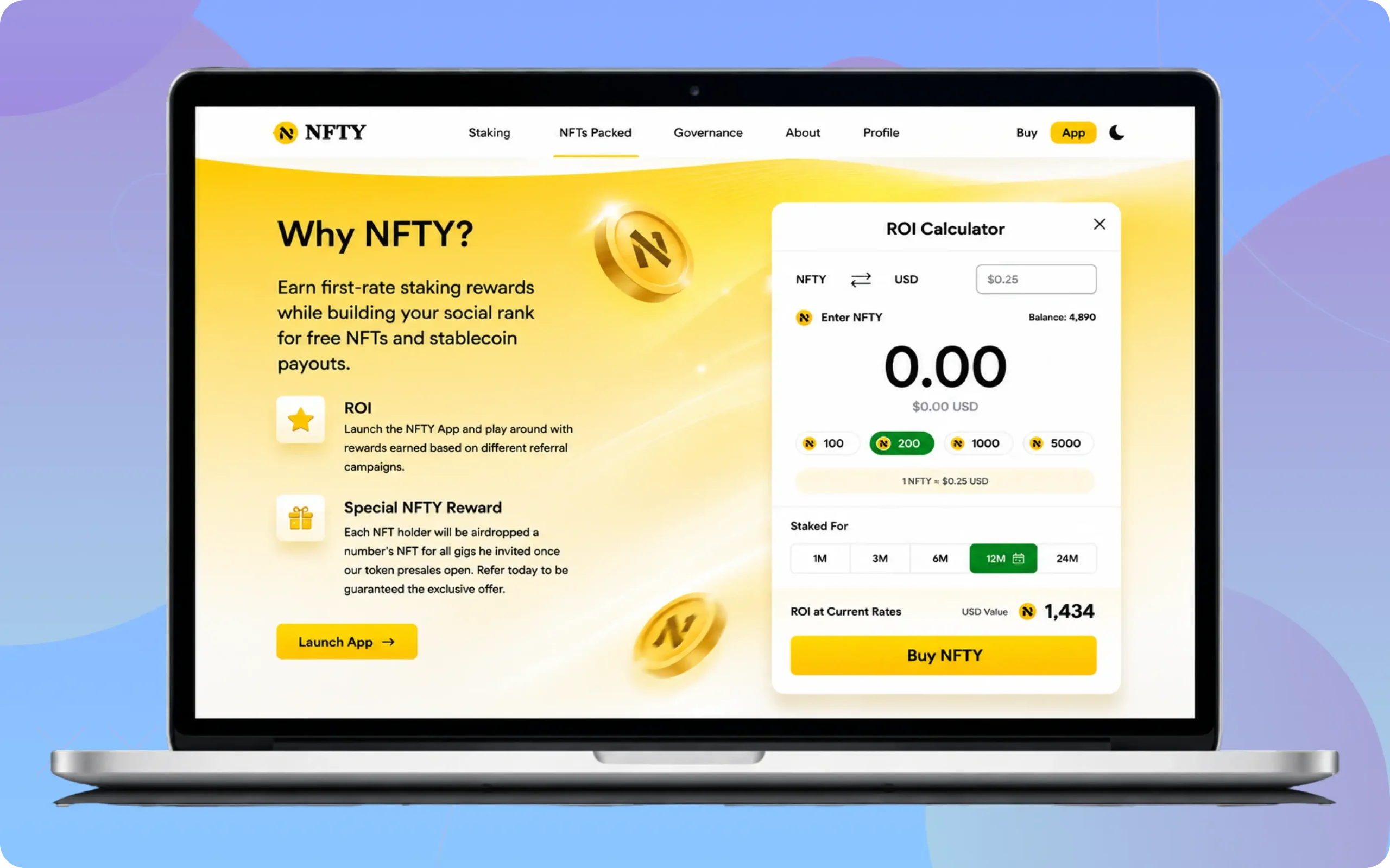
A token launchpad where projects apply, pass an admin review, and run investment rounds, built with Solidity smart contracts on Polygon.
Our Ethereum projects follow six stages, built for teams that need a production system, not a demo. Security review and gas costs are planned from the first stage, not added before launch.
We learn your business, goals, challenges, and priorities to map existing workflows against what an Ethereum-based solution could improve.
After a requirements-gathering session, we move into design, prototyping, and user testing for your platform or product.
We build to the approved designs across three stages: Alpha, Beta, and Release, so you can review and adjust before launch.
Every release goes through data-driven validation and in-depth QA to confirm the product is market-ready.
Once you approve, we publish to live environments (cloud, on-premises, or both) and handle deployment.
We provide ongoing maintenance, optimization, and fix support so the product keeps performing after launch.
What you build on Ethereum sets the budget more than anything else: a basic token and a DeFi protocol are different jobs. These are planning figures, not quotes; you get a fixed price after a scoping call. For a line-by-line breakdown, see our blockchain development cost guide.
1 to 4 weeks
$8,000 to $20,000
2 to 3 months
$50,000+
2 to 5 months
$15,000 to $55,000+
2 to 6 months
$20,000 to $70,000+
2 to 5 months
$25,000 to $70,000+
+ $10,000 to $40,000 for audit8 to 18 months
$300,000 to $600,000+
We build Ethereum products around your business goals, not a template. Here's why startups and enterprises choose us for Ethereum blockchain development:
A dedicated team of Solidity and EVM engineers with hands-on experience shipping production Ethereum applications, not just prototypes.
We build around your business logic and constraints instead of forcing your project into a templated product.
Every smart contract goes through structured testing and audit practices before it touches mainnet.
Sprint-based delivery with regular check-ins, so you always know what's built and what's next.
Flexible engagement and pricing models scoped to your project size, from MVP to enterprise platform.
We've built Ethereum solutions across finance, healthcare, logistics, real estate, and more, so we bring pattern-matched context to your project, not a blank slate.
"Rajat is a blockchain specialist and technophile who has led enterprise engineering teams at Citrix and InfoStretch before co-founding SoluLab. "
An Ethereum development company designs, builds, and maintains software that runs on Ethereum or its Layer 2 networks: smart contracts, dApps, tokens, NFT marketplaces, and wallets. The work covers architecture, Solidity development, security audits, front-end and wallet integration, deployment to mainnet or a Layer 2, and support after launch.
Ethereum development companies range from ecosystem builders such as ConsenSys, the team behind MetaMask and Infura, to full-service agencies such as SoluLab and specialist Solidity studios. Compare them on shipped Ethereum projects, audit process, Layer 2 experience, and pricing model. Our list of top Ethereum blockchain development companies in the USA compares ten firms.
An Ethereum smart contract is a program stored on the Ethereum blockchain that runs automatically when its conditions are met, such as releasing payment once goods are confirmed. It is usually written in Solidity, runs on the Ethereum Virtual Machine, and cannot be quietly changed after deployment, which is why audits before launch matter.
ERC-20 tokens are fungible: every unit is identical and interchangeable, like dollars, which suits utility tokens, stablecoins, and rewards. ERC-721 tokens are non-fungible: each token is unique with its own ID, which suits NFTs, certificates, and property titles. ERC-1155 combines both in one contract and is common in games.
Yes. We build custodial and non-custodial Ethereum wallets that hold ETH and ERC tokens, connect to dApps through WalletConnect, and support multi-signature or MPC key management. We also build NFT marketplaces with minting, listings, auctions, and royalties, on Ethereum mainnet or a Layer 2 such as Base or Arbitrum to keep fees low.
For regulated tokens, we connect identity verification providers to the smart contract so only verified wallets can hold or transfer the token, using standards such as ERC-3643. Token sale platforms get KYC/AML checks at sign-up and screening for sanctioned wallets. Your legal counsel sets the rules; we enforce them in code.
It depends on your priority. Mainnet gives you maximum security and decentralization, which matters most for high-value assets and institutional use cases. A Layer 2 like Arbitrum or Base gives you much lower gas costs and faster transactions, which matters more for consumer apps with frequent, smaller transactions.
Yes. Since Ethereum moved to proof of stake in 2022 and Layer 2 networks matured, enterprises can run applications with predictable fees and strong security. For data that must stay private, we use permissioned Ethereum networks or keep sensitive data off-chain with proofs on-chain, then settle to public Ethereum where transparency helps.
A basic ERC-20 token typically costs $8,000 to $20,000, an NFT marketplace $15,000 to $55,000 or more, a DeFi application $25,000 to $70,000 or more plus audit, and an enterprise-grade Ethereum system $300,000 or more. Integrations, compliance, and audits move the number most. See our blockchain development cost guide.
A basic token takes 1 to 4 weeks, an NFT marketplace or DeFi application 2 to 5 months, a wallet 2 to 6 months, and an enterprise-grade system 8 to 18 months. Audits and integrations with existing systems add the most time, so we schedule them from the start rather than at the end.
Yes. We audit existing smart contracts, optimize gas usage, patch security issues, and migrate legacy Ethereum dApps to newer contract patterns or to a Layer 2. If your contracts are not upgradeable, we plan a migration path that moves users and balances to new contracts without losing history.
Every contract goes through code review, automated testing with Hardhat or Foundry, static analysis, and an independent audit before mainnet. We use audited OpenZeppelin libraries instead of rewriting standard logic, add multi-signature control for admin functions, and monitor contracts after launch for unusual activity. Any change to contract logic gets re-audited.
Yes. After launch, we monitor performance, apply security patches as new vulnerabilities surface, and optimize the application as usage grows. The same team that built your application stays accountable for how it runs in production, rather than a separate support desk with no context on your codebase.
Yes. We sign NDAs before any detailed discussion and follow strict confidentiality practices throughout the project. Access to your code and documents is limited to the people working on it, and ownership of the intellectual property we build is set out in your contract before work begins.
dApp development means building an app whose core logic runs as smart contracts on a blockchain. This guide covers what makes an…
Discover how to verify a blockchain development company's expertise, technical abilities, security practices, case studies, and client track record.
Most lists of the best Ethereum RPC providers are written by the providers themselves. This guide shows how to compare them on…