

Cryptocurrency showed up in tech and didn’t just add a new payment option. It rewired how a lot of companies think about money, trust, and who gets to hold the keys. This piece walks through how the two grew into each other, and why you can’t really talk about one without the other anymore.
Cryptocurrency is a digital currency secured by cryptography. Bitcoin got there first, and a wave of alternative coins, altcoins, followed. Cut out the banks and the middlemen, and you get a financial system that runs on code instead of institutions. That’s the pitch, anyway, and it’s what pulled the tech industry in.
Tech companies are always hunting for the next disruptive technology, and crypto turned out to be a real one. Below, we look at where it’s actually changed how the industry builds and invests, not just where it made headlines.
How Has the Historical Evolution of Cryptocurrency Unveiled Transformative Narratives?
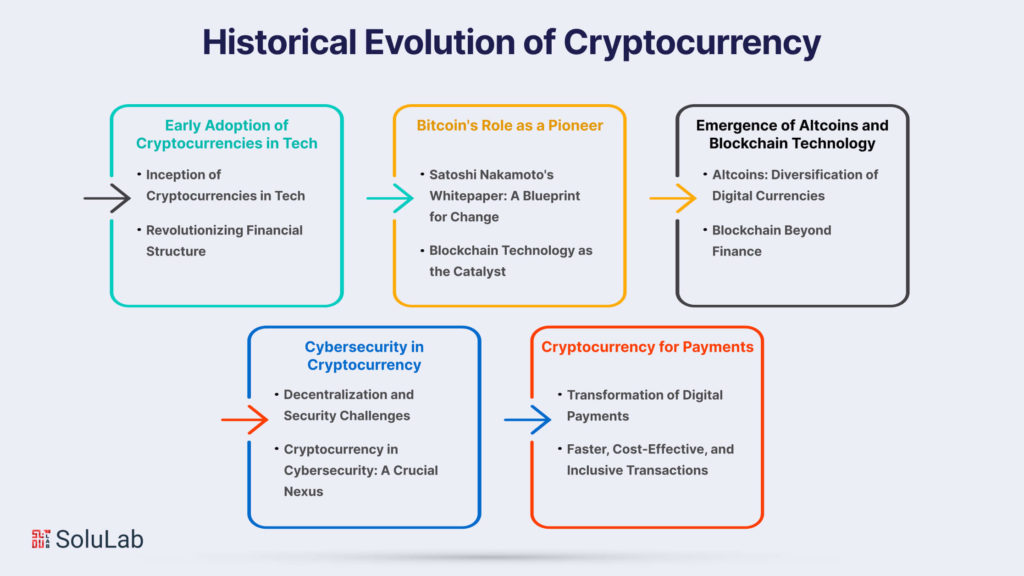
I. Early Adoption of Cryptocurrencies in Tech
- Inception of Cryptocurrencies in Tech
Cryptocurrency started as a direct answer to what centralized currencies got wrong. The idea was simple to state and hard to build: a digital currency that’s decentralized, transparent, and secure by design. Once that idea clicked with people inside tech, the groundwork was laid for a genuinely different era.
- Revolutionizing Financial Structures
Tech leaders were among the first to adopt cryptocurrencies seriously. They saw a chance to build a financial system around security, transparency, and access for people the old system left out. Folding crypto into tech wasn’t a side experiment, it challenged how the industry thought about money from the ground up.
II. Bitcoin’s Role as a Pioneer
- Satoshi Nakamoto’s Whitepaper: A Blueprint for Change
In 2008, Satoshi Nakamoto published a whitepaper describing Bitcoin: a decentralized, peer to peer electronic cash system. It pushed back hard against centralization, and it set the terms for a currency built on code rather than trust in an institution. That paper still sits underneath most of the conversation about decentralized systems today.
- Blockchain Technology as the Catalyst
Bitcoin did more than launch a currency. It pushed blockchain into existence, and blockchain turned out to be useful for a lot more than money. A tamper-resistant, decentralized ledger has obvious uses outside finance, and that’s exactly where it went next, becoming the backbone for secure, transparent, immutable record-keeping across a bunch of industries.
III. Emergence of Altcoins and Blockchain Technology
- Altcoins: Diversification of Digital Currencies
Once Bitcoin proved the model worked, altcoins followed fast. Each one tried something different, a new consensus mechanism, a new use case, a new tradeoff. That competition is what kept the space moving instead of stalling out after the first success.
- Blockchain Beyond Finance
Blockchain outgrew its origin story fast. Supply chain tracking, healthcare records, smart contracts, none of that is about currency directly, but all of it leans on the same trust-without-a-middleman idea. That’s the real reason blockchain kept spreading into industries that have nothing to do with trading coins.

IV. Cybersecurity in Cryptocurrency
- Decentralization and Security Challenges
Decentralization removes a single point of failure, which is good for security. But it opens new doors too. 51% attacks, double-spending, weak smart contracts, these are real risks, not hypotheticals, and closing them off matters as much as any feature launch.
- Cryptocurrency in Cybersecurity: A Crucial Nexus
Bringing crypto into mainstream use meant cybersecurity couldn’t be an afterthought. Encryption had to get better, and it did. Secure transaction protocols now carry a lot of the weight for keeping digital assets and blockchain networks actually safe, not just theoretically safe.
V. Cryptocurrency for Payments
- Transformation of Digital Payments
Cryptocurrencies gave people a way to pay each other directly, no bank in the middle, no borders to work around. That’s a genuine break from how legacy payment systems work, and it changed what “sending money” even means for a lot of users.
- Faster, Cost-Effective, and Inclusive Transactions
Transactions got faster and cheaper. More importantly, people who never had a bank account got a way into the global economy. Speed and cost savings matter, but the access piece is the part that actually changes lives.
How Has the Integration of Cryptocurrencies Reshaped Investment Strategies?
A. Cryptocurrency as a Source of Funding for Tech Startups
- Direct Access to Global Capital
Startups can now raise money straight from a global pool of investors, skipping the usual gatekeepers entirely.
- Innovation in Fundraising
Initial Coin Offerings (ICOs) changed fundraising by giving startups a faster route to capital than the traditional venture path.
- Challenges and concerns
ICOs aren’t without downsides. Regulatory ambiguity, investor protection, and security concerns all come with the territory given how lightly regulated they still are.
B. Influence of Initial Coin Offerings (ICOs)
- Crowdfunding Mechanism
ICOs work like crowdfunding for startups, letting them raise capital quickly.
- Opportunities and Challenges
Direct funding is the upside. Regulation, security, and earning investor trust are the parts that still trip companies up.
C. Venture Capital in the Crypto-Tech Sectors
- Increased Synergy
VCs are putting real money into blockchain projects, dApps, and crypto-adjacent tech ventures, more than they used to.
- Investment in Innovative Tech Ventures
That closer relationship between venture capital and crypto-tech is pushing more capital, and more innovation, into the space.
Cryptocurrency’s Role in Tech Industry Advancements
- Streamlining Payments
Payments got faster and cheaper once crypto entered the picture, plain and simple.
- Enhanced Cybersecurity Measures
Crypto’s spread pushed teams to build stronger security protocols specifically built for blockchain, keeping pace with new threats.
- Transformation of Financial Transactions
Cross-border, no middlemen, no waiting days for a transfer to clear. That’s the new baseline crypto set.
What are the Key Ways in Which Blockchain Technology is Revolutionising Various Industries?
- Decentralization: Transforming Tech Landscapes
Decentralization sits at the core of what blockchain does. It shows up across sectors, and in each one it tends to bring the same three things: better security, more transparency, more efficiency.
Instead of one central authority holding control, that control gets spread across nodes. That single change protects data integrity and makes the whole system harder to knock over with a single point of failure. Cloud computing, data storage, networking, all of them get a cybersecurity boost from that structural shift.
- Smart Contracts: Powering Technological Advancements
Smart contracts automate whole chunks of tech processes. Predefined conditions get met, the contract fires, no human has to push it through. That cuts out intermediaries and speeds everything up.
Supply chains, complex financial transactions, all sorts of workflows benefit. The point is automation and efficiency, not the buzzwords around it: smart contracts genuinely reduce operational friction and build trust into the process itself.
- Supply Chain Management and Blockchain Integration
Blockchain in supply chains means transparency and traceability that paper trails never gave you. Powered by blockchain’s immutable ledger, it records every transaction, so tracking happens in real time and counterfeit products get a lot harder to slip through.
Logistics, pharmaceuticals, food supply chains, all of them lean on this now. Ethical sourcing and stakeholder trust both improve when every step of the chain is actually traceable.
- Cryptocurrency’s Influence on Tech and Cybersecurity
Cryptocurrency runs on blockchain, and that combination is reshaping how tech handles international payments and financial services generally. Finance, e-commerce, remittances, all faster and cheaper than before.
None of that works without solid cybersecurity though. Strong encryption, secure wallets, active fraud monitoring, these aren’t optional extras. Blockchain’s decentralized structure helps protect data, but only if the security layer around it holds up.
How Has the Integration of Cryptocurrencies and Stablecoins Reshaped the Landscape of Payment Methods?
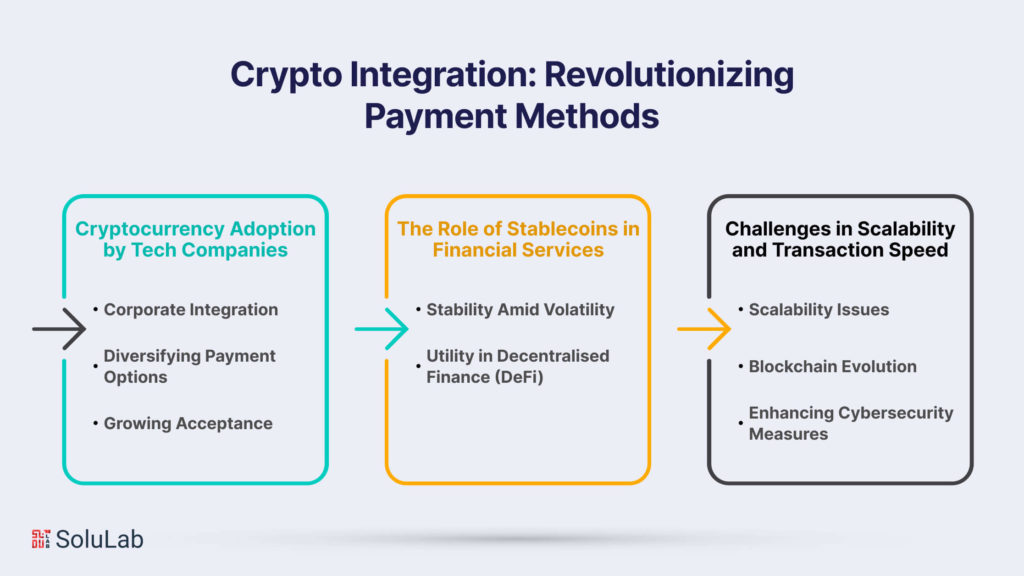
A. Cryptocurrency Adoption by Tech Companies
- Corporate Integration
Tesla, Microsoft, PayPal, big names have already started accepting cryptocurrencies for transactions.
- Diversifying Payment Options
Customers now get the option to pay in crypto, not just card or cash.
- Growing Acceptance
That kind of adoption is a signal in itself: crypto is looking more legitimate to the tech-driven market every year.
B. The Role of Stablecoins in Financial Services
- Stability Amid Volatility
Stablecoins peg to fiat currencies, which gives them a stable value and makes transactions quicker and more predictable, opening the door wider for financial inclusion.
- Utility in Decentralised Finance (DeFi)
They’re central to DeFi applications and cross-border transactions, not a side feature.
C. Challenges in Scalability and Transaction Speed
- Scalability Issues
Blockchain still hits scalability limits, and those limits slow down transaction processing when volume spikes.
- Blockchain Evolution
Efforts like Ethereum 2.0 are trying to fix that through sharding and newer consensus mechanisms.
- Enhancing Cybersecurity Measures
Stronger security protocols are going in specifically to guard against hacking and fraud in crypto transactions.
How are Cryptocurrency, Security, and Privacy Interconnected Within the Technological Landscape?
Crypto’s rapid growth has shaken up how tech companies think about hiring and innovation. As digital currencies keep disrupting traditional finance, their pull on top talent is hard to ignore.
A. Cryptocurrency’s Influence on Talent Attraction
Crypto-driven companies attract talent for two reasons: money, obviously, but also the chance to work on something that feels like the frontier of the industry.
Tokenized rewards and remote-first setups are pulling in tech talent who might otherwise stay put at a traditional employer.
B. Innovation in Fintech and Tech-Driven Services
Fintech has changed shape fast, powered by blockchain and crypto. DeFi, non-fungible tokens (NFTs), and smart contracts have all pushed what “financial services” even means.
And that’s created real demand for people who actually know how to work with these tools, not just talk about them.
C. Tech Companies Exploring Blockchain and Crypto Applications
Major tech companies are actively testing blockchain and crypto applications inside their own operations. Secure transactions, crypto payment gateways, these are becoming standard parts of the roadmap, not experiments on the side.
What are the significant risks and uncertainties that tech companies encounter?
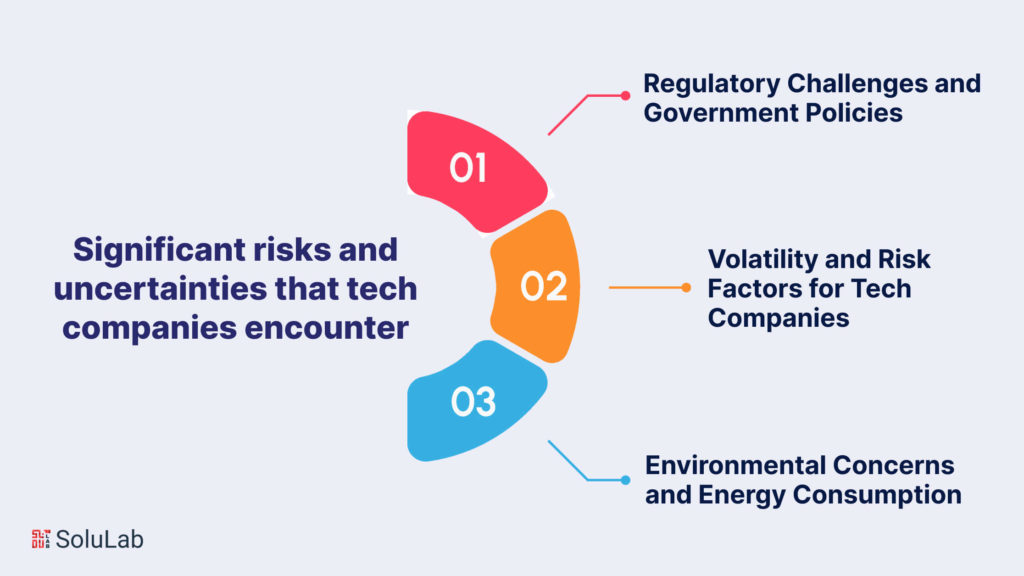
A. Regulatory Challenges and Government Policies
Regulation is still a patchwork. Different countries take different stances, and that inconsistency makes life harder for tech companies trying to integrate crypto, since compliance demands shift depending on where you operate.
B. Volatility and Risk Factors for Tech Companies
Crypto’s volatility is a real risk for any company relying on it. Price swings hit financial stability and make it harder to depend on crypto for transactions or as a treasury holding.
C. Environmental Concerns and Energy Consumption
Mining still eats a lot of energy, and that’s a growing concern as more companies push for sustainable practices. The environmental footprint of crypto mining isn’t a minor detail anymore, it’s part of the conversation about whether adoption is worth the tradeoff.
Cryptocurrency runs on cryptography and decentralized blockchain networks. In tech, it’s becoming both a payment method and an investment asset. Bringing crypto into tech operations means more secure transactions, wider financial inclusion, and more blockchain-based development overall.

Conclusion
Cryptocurrency has genuinely reshaped tech, pushing new solutions and disruptions across the board. SoluLab’s approach to crypto technology reflects that shift: building on blockchain’s decentralized structure to modernize traditional systems, with security baked in rather than bolted on afterward.
SoluLab puts digital assets to work for secure, efficient payment solutions, and that shows up directly in how scalable and transparent the resulting financial transactions are.
Crypto and tech keep pushing each other forward. That relationship isn’t slowing down, and SoluLab is building for where it goes next.
FAQs
Shipra Garg is a tech-focused content strategist and copywriter specializing in Web3, blockchain, and artificial intelligence. She has worked with startups and enterprise teams to craft high-conversion content that bridges deep tech with business impact. Her work translates complex innovations into clear, credible, and engaging narratives that drive growth and build trust in emerging tech markets.