Key Takeaways
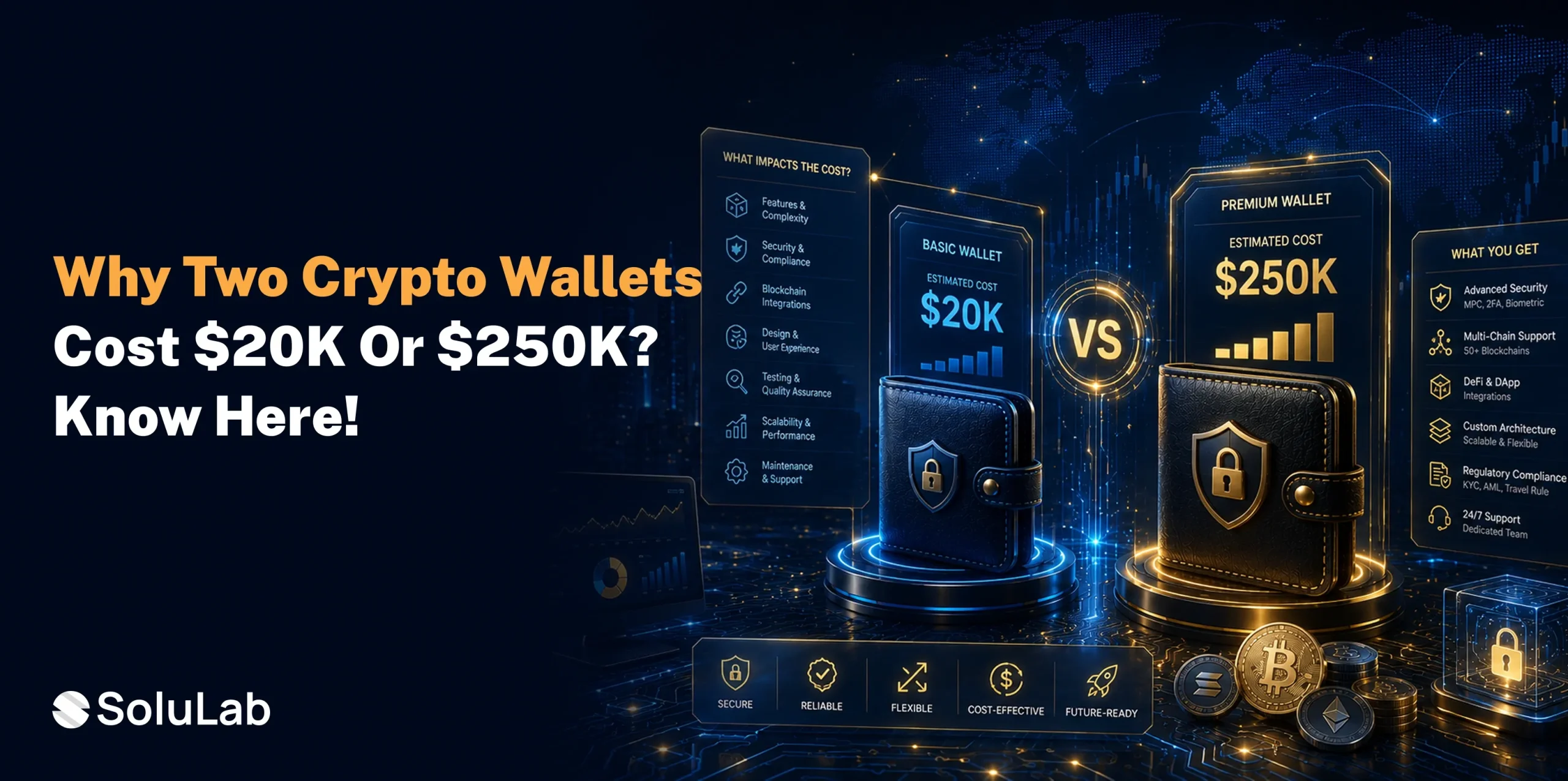
- Crypto wallet development costs typically range from $20,000 for basic wallets to over $500,000 for enterprise-grade MPC infrastructure.
- Recovery systems, phishing protection, transaction simulation, and governance controls contribute more to long-term success than feature quantity.
- ERC-4337 account abstraction can reduce onboarding friction through social recovery, sponsored transactions, and flexible authentication.
- MPC wallets are generally better suited for enterprises, while multisig wallets often satisfy early-stage treasury requirements.
- Wallet architecture decisions made during the MVP stage can significantly influence future compliance, maintenance, and scaling costs.
- Liquidity, compliance, and fiat integrations become critical once a wallet expands into exchange or payment services.
The crypto wallet market is a $19.3 billion market in 2026, projected to cross $100.8 billion by 2033 at a CAGR of 26.6%. Hot wallets already account for 56.2% of the market, while North America controls 30.7% of global revenue.
The conversation is no longer about whether crypto wallet development is necessary. The real question is whether your crypto wallet can survive
- phishing attempts,
- poor user decisions,
- network congestion,
- compliance reviews, and
- Support tickets at scale.
That means founders are fighting two battles simultaneously:
- Preventing attackers from getting in.
- Preventing legitimate users from getting locked out.
And both battles directly impact crypto wallet development costs.
Why Is Crypto Wallet Development Becoming a Strategic Investment?
A few years ago, most wallets were simple storage applications.
Today, they sit at the center of:
- DeFi participation
- NFT ownership
- Cross-border remittances
- Tokenized asset ecosystems
- Institutional treasury management
- Web3 identity frameworks
The average user now expects real-time portfolio visibility, transaction previews, biometric authentication, fraud alerts, and seamless connectivity with decentralized applications.
Meanwhile, enterprises expect governance controls, policy-based approvals, audit trails, and recovery mechanisms.
That expectation gap is where costs start climbing.
Businesses seeking crypto wallet development are no longer paying for a digital vault. They are funding an operational platform.
How Much Does Crypto Wallet Development Cost in 2026?
The answer depends on the custody model, supported networks, user volume, compliance requirements, and transaction complexity.
1. Cost Overview by Wallet Category
| Wallet Type | Estimated Cost Range |
| Basic Mobile Wallet | $20,000 – $45,000 |
| Multi-Currency Wallet | $45,000 – $90,000 |
| Non-Custodial Wallet | $60,000 – $150,000 |
| Enterprise Wallet | $120,000 – $350,000+ |
| MPC-Based Wallet | $180,000 – $500,000+ |
| Wallet With Exchange Features | $250,000 – $700,000+ |
A founder choosing the cheapest option often discovers the hidden invoice later.
- Support incidents become expensive.
- Recovery becomes expensive.
- Compliance becomes expensive.
Poor architecture has a habit of sending invoices months after launch.
What Is the Cost of a Non-Custodial Wallet?
The discussion around non-custodial wallet development cost usually starts with one misconception.
Many assume removing custody responsibilities lowers development effort.
The opposite is often true.
When users control their own assets, the application must provide:
- Seed phrase management
- Recovery mechanisms
- Transaction simulation
- Permission transparency
- Anti-phishing controls
- Hardware wallet compatibility
Every missing safeguard increases user risk.
2. Features That Influence Pricing
- Recovery Architecture
Users lose credentials far more often than they admit. Social recovery systems, encrypted backups, and account abstraction mechanisms require significant engineering effort.
- Transaction Simulation
Showing users exactly what will happen before signing reduces costly mistakes. This feature alone can dramatically reduce support requests.
- Contract Risk Detection
Unknown contracts, suspicious approvals, and malicious domains require continuous intelligence feeds. A wallet without transaction intelligence is like driving through fog without headlights.

How to Architect a Non-Custodial Crypto Wallet That Survives Growth, Phishing Attacks, and Enterprise Requirements
In general, enterprises go for a fast launch at a low price without analysing risk factors.
That distinction often determines whether a wallet becomes a trusted financial product or a support-ticket factory six months later.
However, a non-custodial wallet is not just a place to store assets. It is a combination of
- cryptography,
- recovery systems,
- transaction intelligence,
- account permissions, and
- user trust.
Every architectural decision made during the crypto wallet MVP development stage affects future development costs, compliance readiness, and user retention.
Adding numerous features later is not required for every wallet build. Repairing a flawed wallet architecture is expensive.
Phase 1: Start With an MVP That Solves the Core Problem
A wallet MVP should focus on ownership, visibility, and recovery.
Not staking.
Not NFTs.
Not DeFi integrations.
Not a dozen blockchain networks.
The goal is to help users safely create a wallet, access assets, and recover accounts when things go wrong.
Typical MVP Timeline and Cost
| Development Stage | Timeline | Estimated Cost |
| Discovery & Architecture | 2-3 Weeks | $5,000-$15,000 |
| Wallet Core Development | 4-8 Weeks | $15,000-$40,000 |
| Blockchain Integration | 2-4 Weeks | $10,000-$25,000 |
| Security Testing | 2-3 Weeks | $5,000-$20,000 |
| MVP Launch | 8-16 Weeks | $35,000-$100,000 |
For most startups, this phase is sufficient to validate market demand before expanding functionality.
Phase 2: Introduce Account Abstraction for Better User Experience
One reason many users abandon crypto products is simple.
Seed phrases are intimidating.
Gas fees are confusing.
Transaction signing feels unfamiliar.
This is where ERC-4337 Account Abstraction becomes valuable.
Instead of forcing users to behave like blockchain experts, the wallet can behave more like a modern financial application.
Features Enabled by ERC-4337
- Social recovery mechanisms
- Session-based permissions
- Sponsored gas payments
- Flexible authentication methods
- Automated transaction workflows
For enterprises, these capabilities reduce onboarding friction significantly.
For users, they remove several of the hurdles that traditionally slow adoption.
Additional Investment for ERC-4337 Features
| Feature | Additional Cost |
| Social Recovery | $10,000-$30,000 |
| Gas Sponsorship | $8,000-$20,000 |
| Smart Account Infrastructure | $20,000-$60,000 |
| Session Key Management | $10,000-$25,000 |
While these features increase initial investment, they often reduce customer support costs and onboarding abandonment rates later.
Phase 3: Strengthen Wallet Security Before Adding More Features
Many wallet projects make a costly mistake.
They add staking, swaps, and DeFi integrations before addressing fraud prevention.
Attackers are not breaking blockchain cryptography.
They are exploiting human behavior.
In 2024, nearly 44% of crypto thefts were linked to compromised private keys. Most incidents originated from phishing attacks, malicious approvals, fake websites, clipboard malware, social engineering, or compromised devices.
The strongest wallets focus on prevention before expansion.
Critical Protection Layers
- Transaction Simulation
Show users exactly what assets will leave and enter their wallet before approval.
- Contract Risk Detection
Identify suspicious smart contracts, unknown approvals, and malicious permissions.
- Phishing Protection
Detect fake domains, fraudulent wallet connections, and scam websites before users sign transactions.
- Device Intelligence
Monitor suspicious device activity and unusual login patterns.
- Adaptive Authentication
Request additional verification for high-risk transactions.
Common Crypto Scams Every Wallet Must Address
- Seed phrase phishing attacks
- Fake customer support scams
- Wallet-drainer websites
- Malicious token approvals
- Clipboard address replacement malware
- SIM-swap attacks
- Fake airdrop campaigns
- QR-code redirection scams
A harsh reality exists here.
Most crypto theft happens because users trust the wrong screen at the wrong moment.
Good wallet architecture assumes mistakes will happen and places guardrails everywhere.
Phase 4: Choose the Right Signing Architecture for Long-Term Growth
As transaction volume increases, enterprises usually face a crucial decision.
Should approvals rely on Multi-Signature wallets or MPC infrastructure?
Multi-Signature Wallets
Best suited for startups and smaller treasury operations.
Advantages
- Transparent approval process
- Established ecosystem support
- Easier implementation
Limitations
- Slower approvals
- Visible signer structure
- More operational friction
MPC Wallets
Typically preferred by exchanges, institutions, and large treasury teams.
Advantages
- No complete private key exists in one location
- Flexible approval workflows
- Better operational efficiency
Limitations
- Higher implementation costs
- More sophisticated infrastructure requirements
Enterprise Upgrade Cost
| Architecture Type | Estimated Cost |
| Multi-Sig Infrastructure | $25,000-$75,000 |
| MPC Implementation | $100,000-$300,000+ |
| Enterprise Governance Layer | $50,000-$150,000 |
| Treasury Management Features | $30,000-$120,000 |
Different enterprises, for example, if you are managing millions in digital assets, then a good custom crypto wallet MPC is the best choice. In case you are just in the starting phase with hundreds or thousands in assets, then a multisig is your cup of tea.
Beyond the Wallet: What Comes Next When Your Product Starts Gaining Users?
Most wallet founders eventually reach the same crossroads. The wallet works. Users are onboarding. Transactions are flowing.
But should the product remain a wallet, or should it evolve into a broader crypto ecosystem?
The answer depends on your business model.
If your audience primarily stores and transfers assets, a wallet-focused roadmap may be enough. However, if users frequently trade, swap, invest, or move funds between fiat and crypto, additional infrastructure becomes difficult to ignore.
1. Start With the Right Technical Foundation
Technology choices made early can influence maintenance costs for years. Teams working on web3 wallet development often rely on established frameworks such as Wagmi, Viem, Ethers.js, WalletConnect, RainbowKit, or Solana Wallet Adapter because mature libraries reduce development risk and improve long-term reliability.
If a library lacks community support or documentation, today’s shortcut can easily become tomorrow’s migration project.
2. When Trading Becomes Part of the Product
As user activity grows, many businesses explore cryptocurrency exchange development opportunities.
A typical exchange ecosystem includes:
- User wallet management
- Escrow mechanisms
- Matching engines
- Liquidity infrastructure
- Compliance monitoring
- Administrative controls
This is where p2p crypto exchange platform development becomes relevant, particularly in regions where traditional banking access remains limited.
One factor deserves special attention: liquidity.
Even the most polished platform struggles if buyers and sellers cannot execute trades efficiently. Strong liquidity aggregation algorithms for crypto exchanges often influence user retention more than interface design.
3. Compliance and Fiat Access Cannot Be an Afterthought
If growth is the goal, compliance deserves a seat at the table from day one.
A practical crypto exchange regulatory compliance checklist should include:
- KYC verification
- AML monitoring
- Transaction reporting
- Sanctions screening
- Audit logging
Similarly, businesses planning mainstream adoption should prioritize the ability to integrate fiat on off ramps into a dApp. Most users arrive with bank accounts, not stablecoins.
4. White Label or Custom Development?
If speed to market matters most, comparing the cost of white-label crypto exchange software cost against internal development budgets makes sense.
If wallet functionality will become a competitive advantage, custom crypto wallet development often delivers greater long-term value. Larger organizations usually lean toward enterprise crypto wallet solutions, where governance, treasury controls, approval workflows, and disaster recovery matter far more than visual polish.

Conclusion
Whether you are into customizing or building your crypto wallet from scratch, you need a clear idea and a great partner. A crypto wallet development company like SoluLab is often the best choice for your crypto development services‘ growth. You can hire crypto wallet experts individually so that you can cover your requirements under the budget.
However, amidst all these, you must get a proper architecture design and provide your feedback and clearly state your requirements to cut 80% of further costs and time. After all, whoever launches first with clear features and user requirements wins the race in the crypto market. Contact us today and get your crypto wallet ready!
FAQs
Shipra Garg is a tech-focused content strategist and copywriter specializing in Web3, blockchain, and artificial intelligence. She has worked with startups and enterprise teams to craft high-conversion content that bridges deep tech with business impact. Her work translates complex innovations into clear, credible, and engaging narratives that drive growth and build trust in emerging tech markets.