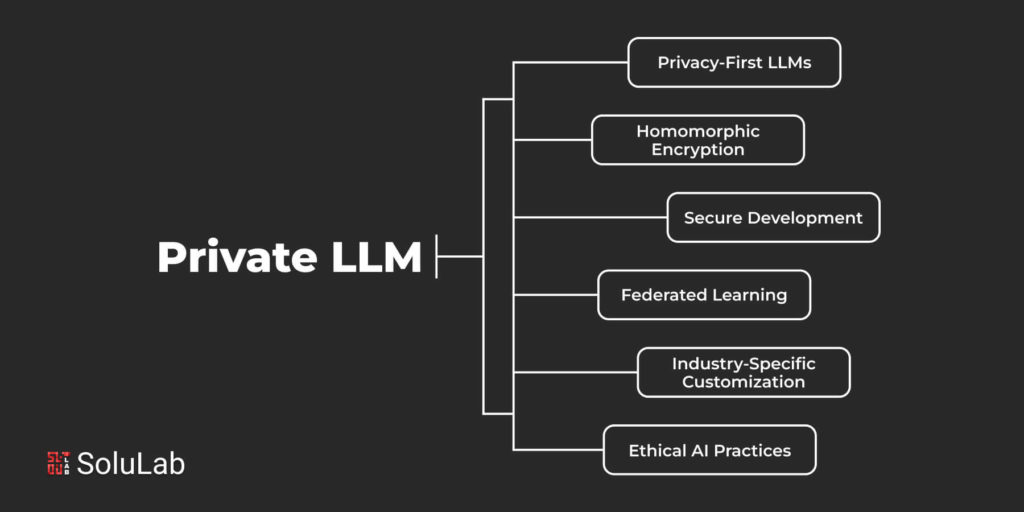
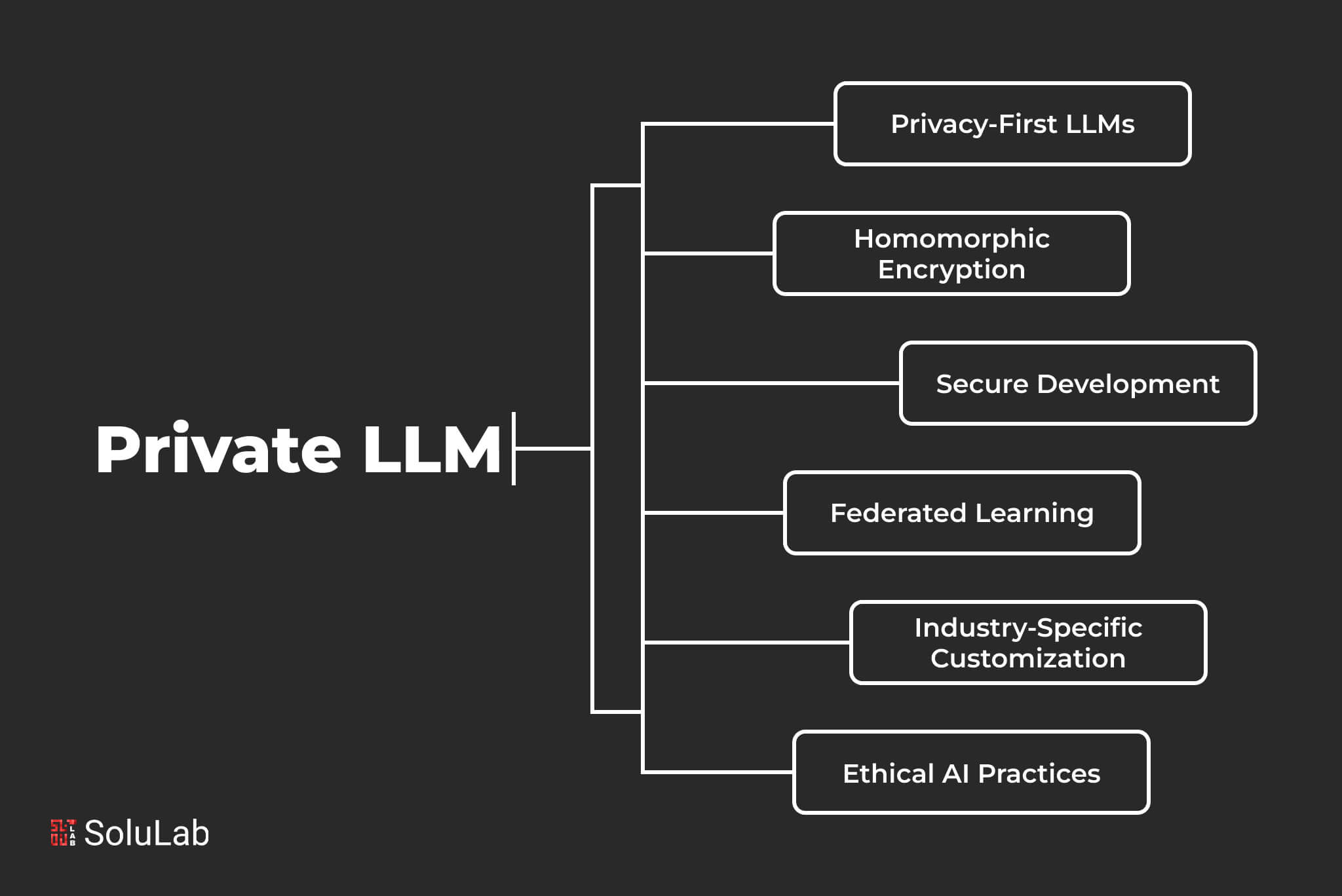
LLMs are trained on enormous amounts of data, and a lot of that data is sensitive. That’s the whole problem this guide tackles: how do you build a large language model that actually protects the people whose data trained it? A few techniques do the heavy lifting here: Differential Privacy, Federated Learning, Secure Multi-Party Computation (SMPC), and Homomorphic Encryption. Each one solves a different piece of the puzzle. private LLMs also lean on practical strategies like Data Minimization, Data Anonymization, and Regular Security Audits, cutting down on exposure, stripping out identifying information, and keeping things compliant with privacy rules. Get this right and you’re not just protecting data, you’re building something people can actually trust. Use the techniques and strategies here, and you can build an LLM from scratch that keeps user privacy intact while still getting the full benefit of natural language processing. That’s what a responsible, secure future for this technology looks like.
Understanding Private Large Language Models
Let’s start with the basics of Private Large Language Models (LLMs) and why they matter so much for keeping data safe. We’ll look at what separates private models from regular ones, and why privacy comes first here.
Definition of Private LLMs
Private Language Models (LLMs) exist to fix a real privacy gap in advanced language models like GPT-3 and BERT. These models write human-like text and handle all kinds of language tasks, but that same capability can put sensitive user information at risk. Private LLMs close that gap using real mechanisms: encryption, differential privacy, federated learning. As LLMs show up everywhere, chatbots, virtual assistants, content platforms, protecting user data stops being optional and becomes the thing that keeps people trusting the product. Private LLMs handle this through data protection, differential privacy, federated learning, and access control. They let people use language technology without handing over control of their own data, which builds trust and pushes responsible innovation forward in natural language processing. As demand for LLMs keeps climbing, privacy-centric design isn’t a nice-to-have anymore. If you want to go deeper, look into how to make your own LLM from scratch to build something customized around user privacy and data security from day one.
Types of Large Language Models
New LLMs show up constantly, and the market keeps shifting. But not every one of them treats user privacy as a priority. Here’s a look at the different types of LLMs out there, with a focus on their privacy features, so you can actually make an informed call on which one fits. If you’re trying to understand how to build an LLM from scratch, the technical side and the privacy side need equal attention.
Popular LLMs like GPT and BERT, GPT developed by OpenAI and Google AI respectively, don’t put much weight on user privacy. They’ve been known to collect and store user data without asking first. Compare that to privacy-focused LLMs like Themis, Meena, and PaLM 2, which run on decentralized architectures and encrypt user data by design. These models protect privacy in ways the mainstream options don’t. When you’re picking an LLM, think about what your privacy needs actually are, then choose accordingly.
How to Build a Private LLM
Building your own Private Language Model (LLM) is a real undertaking, but it’s doable with the right approach. Here’s what to actually think about when you’re building a language model that keeps data private without tanking performance.
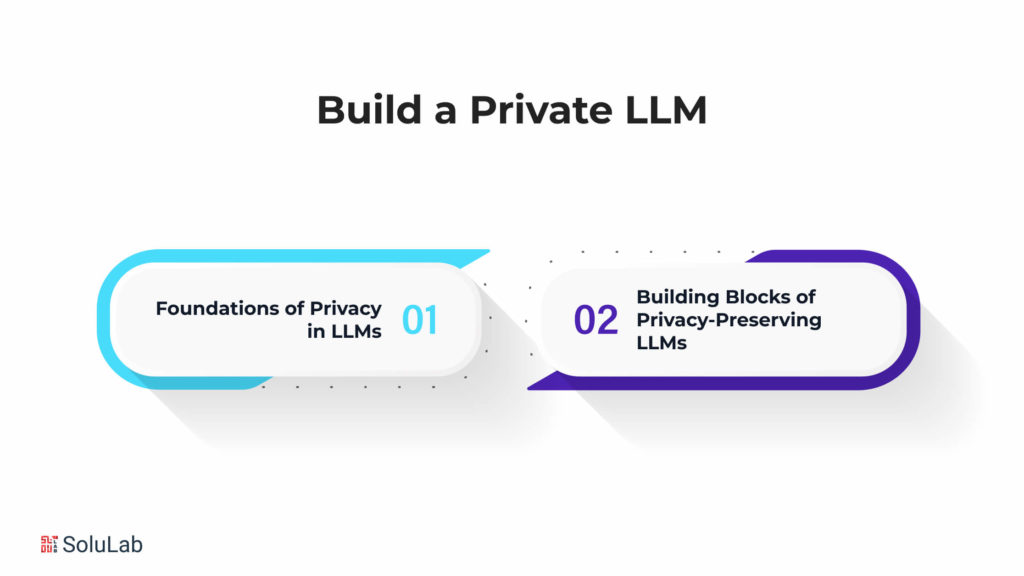
Foundations of Privacy in LLMs
Building a private LLM means being deliberate about privacy from the start. Set clear privacy goals: what data you’ll handle, what users should expect. Understand what your data usage actually implies, the types, the purposes, the risks involved. Transparency and explicit consent aren’t optional extras, they’re the baseline. Protecting user confidentiality takes encryption, access controls, and audits that actually happen on schedule. Get this foundation right, and private LLMs deliver accurate results while respecting user rights, and that’s what earns trust over time.
Building Blocks of Privacy-Preserving LLMs
Building a private LLM comes down to solid encryption and secure data handling. Homomorphic encryption lets you run computations on encrypted data without ever decrypting it. Federated learning keeps training data decentralized instead of pooled in one place. Differential privacy adds statistical noise so no individual can be picked out. On top of that: access control, data minimization, regular security audits, and an actual incident response plan for when things go wrong. Together, these keep user trust intact and put machine learning’s power to responsible use.
Read Also: Applications of Natural Language Processing
Private LLM Models in Action
Here’s what Private LLMs look like in the real world, a few examples of how these confidential language models actually keep data safe.
Real-World Applications:
Private Language Large Models (LLMs) do a lot more than the obvious stuff. They’re reshaping healthcare and finance without compromising the privacy that makes those industries so sensitive in the first place.
Healthcare:
- Privacy-preserving LLMs make HIPAA-compliant chatbots possible, ones that can offer genuine mental health support without leaking anything.
- LLMs analyze medical data to support diagnosis, treatment planning, and drug discovery, all while keeping confidentiality intact.
Finance:
- LLMs help secure financial data by encrypting messages and transactions, strengthening online banking and trading platforms in the process.
- They catch fraud by scanning large volumes of financial data and flagging suspicious patterns as they happen.
The applications of private LLMs go well beyond these two industries:
Government and public services:
LLMs process sensitive government data while keeping citizen privacy intact, powering things like digital identity verification and secure voting.
Education:
LLMs analyze student data to personalize learning, spot where a student is struggling, and tailor content, all without exposing student privacy.
Legal services:
LLMs help legal teams review and analyze huge volumes of documents, pull out what matters, and flag legal issues faster and more accurately than manual review alone.
Private LLMs can genuinely change how industries operate, protecting data privacy while opening up personalized, trustworthy services that let people and organizations put AI to work responsibly.

Case Studies:
Looking at real case studies tells you a lot about how Large vision models actually gets implemented. Take a private LLMdeployed in healthcare, for instance. It shows how LMs can support accurate, fast diagnosis without touching patient confidentiality. The private LLM draws on specialized knowledge to analyze patient data, helping providers make faster, better-informed calls. It also functions as a decision-support tool, surfacing insights grounded in current research. Because the whole thing runs in a private setting, patient data stays secure and confidential throughout. This case highlights something real: these models can genuinely reshape how industries work and how people’s daily lives improve. If you want to go further into this space, understanding how to make your own LLM from scratchwill show you how to build something tailored to your specific needs while keeping data security standards high.
Challenges and Considerations
Building private LLMs isn’t simple. You’re juggling model performance, data safety, and ethical questions all at once. Understanding just how hard this actually is goes a long way toward doing it right.
Ethical Challenges:
Building private LLMs raises ethical questions that deserve real thought, not a checkbox. Balancing innovation against user privacy is the core tension here. The key considerations:
- Transparent Data Usage Policies: Being clear about what data gets collected, how it’s used, and who can access it builds trust and puts users in control.
- Informed Consent: Giving people the full picture, implications, risks, benefits, lets them make an actual informed choice, not a forced one.
- Fair Model Deployment: Fairness means tackling bias head-on, preventing discrimination, and promoting responsible AI use.
- Addressing Bias and Fairness: Cutting down bias means examining training data closely, applying mitigation techniques, and monitoring continuously, not just once at launch.
- Security and Data Protection: Strong security measures are what actually protect user data privacy and confidentiality, not just a policy document.
- Accountability and Governance: Clear lines of accountability, real policies, and regular audits are what keep ethical compliance from being just words on paper.
Take these considerations seriously, and organizations and developers can build private LLM systems responsibly, pushing innovation forward without sacrificing user privacy and trust.
Legal and Regulatory Compliance:
Language models have to operate within a real legal landscape, and developers need to stay current on data privacy regulations. The General Data Protection Regulation (GDPR) is the big one, a significant international framework LLMs need to comply with to protect individual privacy rights. If you’re figuring out how to build a LLM from scratch, GDPR compliance isn’t something you bolt on later.
GDPR puts strict obligations on organizations handling personal data, LLMs included. It demands transparent data practices, individual control, and real security measures. What GDPR compliance actually requires: explicit user consent for data collection, strong data security measures, respecting data subject rights, notifying affected parties quickly when breaches happen, and safeguards for cross-border data transfers. Following GDPR isn’t just about avoiding fines, it shows a real commitment to user privacy and builds trust.
Future Trends in Private LLMs
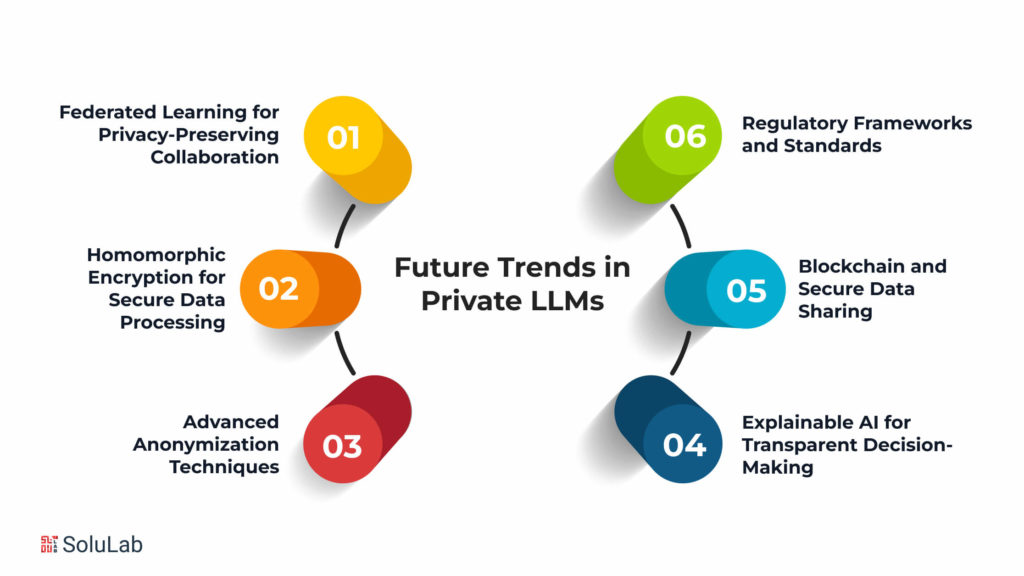
So where is language model development headed next? Here’s a look at the new trends shaping Private LLMs, and how these models are set to level up as new tech reshapes confidential language processing. Here’s what’s coming.
The future of private LLMs holds real promise for privacy technology. Ongoing research across multiple fields will push data protection and user privacy forward. A few areas worth watching:
- Federated Learning for Privacy-Preserving Collaboration: Federated learning lets multiple parties train a model together without ever sharing their individual data. This distributed approach protects privacy while still developing capable LLMs.
- Homomorphic Encryption for Secure Data Processing: Homomorphic encryption lets computations run on encrypted data, keeping sensitive information protected the entire time. This means LLMs can analyze and generate insights from encrypted datasets directly.
- Advanced Anonymization Techniques: Research into anonymization, differential privacy, secure multi-party computation, keeps advancing and will further protect individual identities when LLMs are in use. These techniques cut the risk of re-identification and protect data privacy.
- Explainable AI for Transparent Decision-Making: Pairing explainable AI (XAI) with private LLMs will make their decision-making more transparent and more trustworthy. XAI lets users actually understand the reasoning behind LLM outputs, which supports accountability and responsible AI practices.
- Blockchain and Secure Data Sharing: Blockchain technology can provide a secure, transparent framework for sharing data across multiple parties without sacrificing privacy. Blockchain-based solutions offer tamper-proof records of data transactions, which strengthens trust and accountability in how LLMs get used.
- Regulatory Frameworks and Standards: As private LLMs keep evolving, regulatory frameworks and standards will matter more, not less, for responsible and ethical use. These frameworks will define how data gets collected, stored, and processed, aiming to protect user privacy and head off potential abuses.
Explore these emerging trends and invest in privacy-enhancing technologies, and the future of private LLMs balances powerful language capabilities with real data protection, building trust and enabling responsible deployment across industries and use cases.
Check Blog Post: What is Retrieval Augmented Generation?
Predictions for the Future:
The future of private LLMs looks genuinely promising, driven by growing awareness of privacy risks and the push for stricter privacy standards. Innovations in secure AI development are ushering in a new era of privacy-centric language models. Here’s what to expect:
- Enhanced Privacy Protections: As awareness of privacy risks grows, building privacy-preserving LLMs will get more emphasis, not less. Techniques like differential privacy, federated learning, and secure multi-party computation will protect sensitive information and keep things compliant with privacy regulations.
- Transparent and Explainable Models: Private LLMs will prioritize transparency and explainability to earn user trust. Developers will focus on models that can explain their own reasoning, letting users understand how their data gets used and make informed choices about their privacy.
- Collaborative Development: Building private LLMs will increasingly mean collaboration between researchers, industry experts, and policymakers. That means sharing best practices, setting industry standards, and building open-source tools and frameworks for privacy-preserving AI.
- Regulation and Compliance: Governments and regulators will take a more active role in shaping the private LLMs landscape. Expect regulations aimed at protecting individual privacy and pushing responsible AI development to get introduced and enforced. Companies developing and deploying private LLMs will need to demonstrate compliance to operate legally and ethically.
- Integration with Privacy-Enhancing Technologies: Private LLMs will be integrated with other privacy-enhancing technologies to create a comprehensive approach to data protection. This may include technologies such as encryption, access control, and data minimization, which will work in conjunction with the inherent privacy features of the LLMs to provide multiple layers of protection.
Embrace these advancements and put privacy first, and private LLMs become powerful tools that empower people while respecting their fundamental right to data privacy. The future of private LLMs is one where privacy isn’t an afterthought bolted on at the end, it’s built into the design from the start.
Conclusion
Building private Large Language Models (LLMs) isn’t optional anymore, it’s essential for protecting user data in today’s digital world. SoluLab, an AI Consulting Company, sits right at the front of this work, putting confidentiality, security, and responsible data usage first. Their team of skilled AI developers builds state-of-the-art language models grounded in privacy principles. SoluLab’s private LLM models use techniques like homomorphic encryption and federated learning, delivering both technological advancement and ethical rigor. Beyond building private LLM models, SoluLab handles the full lifecycle, from concept to implementation, across a range of industries. Their work spans different types of LLMs, including GPT and BERT, tailored to meet specific privacy requirements. By championing private LLM models and ethical AI practices, SoluLab is setting up a future where innovation and privacy work together instead of against each other.
FAQs
Bhavya is driving growth through data-backed demand generation for AI and Web3 solutions. With 9+ years in digital marketing, he has spearheaded initiatives that led to a 40% increase in qualified inbound leads. Bhavya shares insights on marketing ROI and scaling a digital presence via AI workflows. He is open to connecting with startups and enterprise teams to help them overcome their challenges.