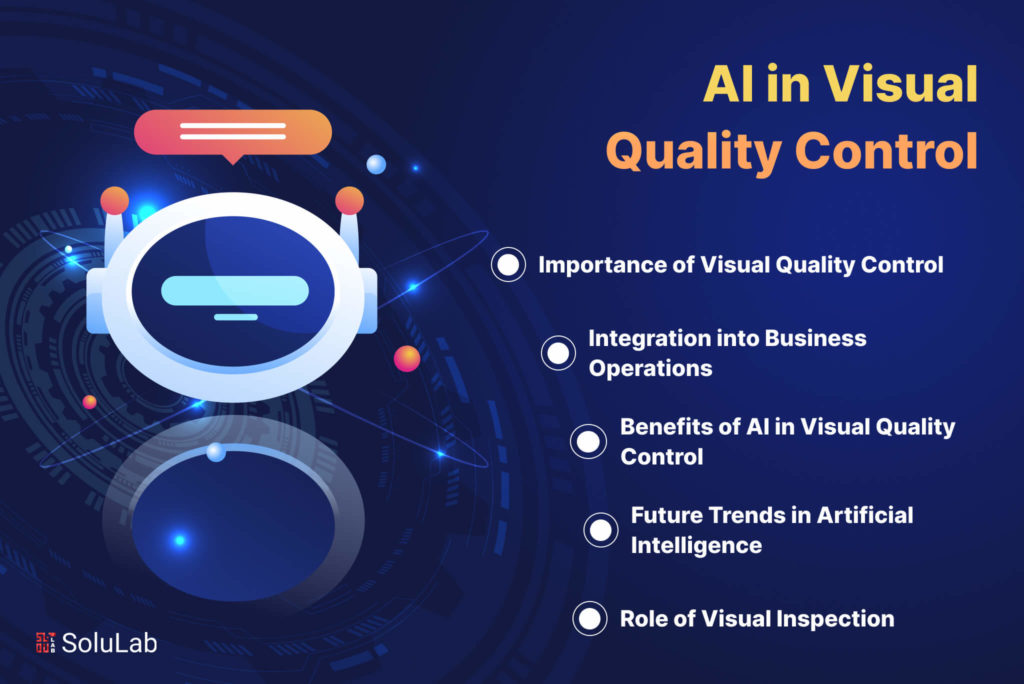
Manufacturers have always cared about quality. That part isn’t new. What has changed is how much weight now sits on visual quality control, because customers expect every unit to look and work exactly like the last one, and they notice fast when it doesn’t. Artificial Intelligence (AI) has walked straight into that pressure and started rewriting how quality assurance gets done on the floor.
This post looks at what AI actually does inside Visual Quality Control. We’ll cover how it sharpens precision, speeds up inspection, and catches the small, awkward defects a tired human eye slides right past. The short version? It changes what “good enough” means on a production line.
Here’s the long version.
The Transformative Impact of AI on Visual Inspection for Quality Control
Visual Quality Control (VQC) is one of the oldest tools in quality assurance, and it shows up in almost every industry that ships a physical product. The idea is simple: you judge a product by how it looks, and you check that look against a quality benchmark you set in advance. Today that job is shared between human eyes and technology, with AI and computer vision doing more of the heavy lifting every year. Put together, they find defects, inconsistencies, and deviations in how a product appears.
So what gets checked? Pretty much anything visible. Color, texture, shape, dimensions, surface finish, labeling, and the overall appearance of the item all get held up against the standard.
The point is to catch anything that could hurt a product’s function, safety, looks, or ability to sell. That’s where AI earns its place. It makes the process more precise and much faster, and it picks up the faintest visual discrepancies that people routinely miss.

The Importance of Visual Quality Control: Harnessing AI for Enhanced Assessments
Ask any plant manager why VQC matters and you’ll hear two things: product integrity and brand reputation. The method pairs sharp human perception with AI and computer vision to test each product against predefined standards. Where AI really pays off is timing. It spots defects and irregularities early, before they turn into unhappy customers, expensive recalls, higher costs, or a dent in your reputation. Because problems surface during production, teams can correct them on the spot. The result is a steady flow of products that look right, work right, and give buyers a reason to keep trusting the brand.
Limitations of Conventional Visual Inspection Methods
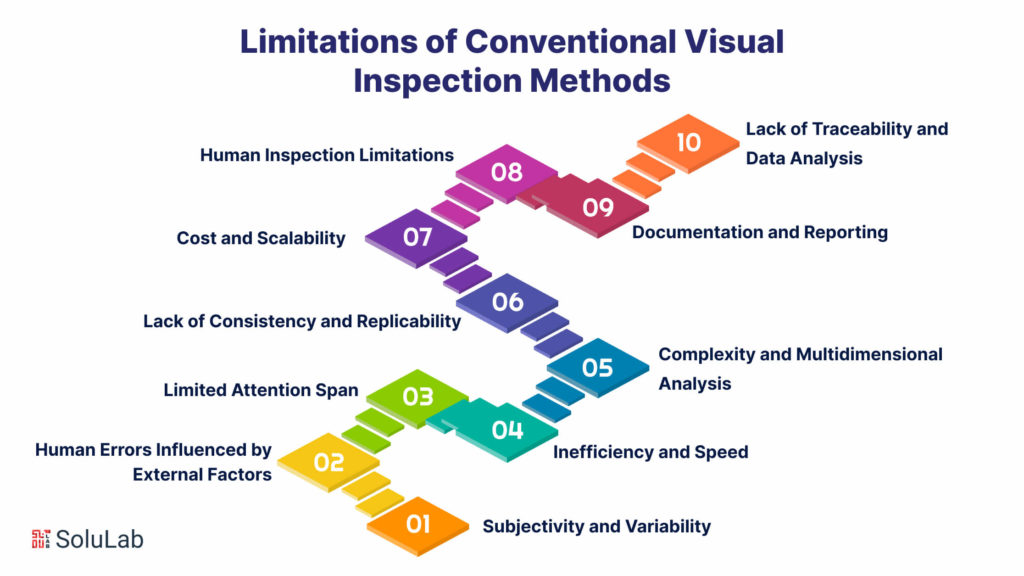
Traditional visual inspection still has value. But it has real weak spots. When everything depends on a person looking at a part, you get errors, disagreements, and wasted time. Below are the problems that keep coming up, starting with subjectivity and human error:
Subjectivity and Variability
People judge differently. One inspector flags a scratch as a defect; the next one either misses it or decides it’s fine. That built-in subjectivity makes quality assessments inconsistent, and it makes a single uniform standard very hard to hold.
Human Errors Influenced by External Factors
Fatigue. Distraction. A bad morning. Any of these can knock an inspector’s accuracy off noticeably, and together they raise the odds of a wrong call. It’s a strong argument for an inspection process that doesn’t depend on how someone slept.
Limited Attention Span
Inspection needs focus that lasts for hours, and humans aren’t built for that. As fatigue sets in, defects start slipping through, which is a serious problem in industries where hundreds of items have to be checked quickly.
Inefficiency and Speed
Manual checks are slow, especially at high volume. Every single product needs its own look, so inspection can hold up the line and drag down overall efficiency.
Complexity and Multidimensional Analysis
Some defects are simply too complex to see, or they need analysis across more than one dimension. If a product has intricate designs or internal components, the human eye on its own often isn’t enough.
Lack of Consistency and Replicability
Can the same inspector give the same verdict on Tuesday as on Friday? Often not. Lighting changes, moods shift, and the results drift with them.
Cost and Scalability
Skilled inspectors cost money to train and keep, more so when the work needs specific domain knowledge. Scale up production and you need more of them, and at some point that bill gets hard to justify.
Human Inspection Limitations
Some things people just can’t see. Microscopic defects and issues outside the visible spectrum are the obvious examples, and when they go unnoticed, product quality takes the hit.
Documentation and Reporting
Logging results and writing accurate reports by hand is tedious and easy to get wrong. Turning what an inspector saw into structured data you can actually analyze is tough without automation.
Lack of Traceability and Data Analysis
Most conventional setups collect very little usable data. Without it, spotting trends, patterns, or the root cause of a recurring defect over months is close to impossible.
That’s why more and more industries are turning to AI and computer vision. These systems take on the exact weaknesses listed above. They bring better accuracy, steadier consistency, more speed, and the ability to read complicated visual data. Used well, they can reset how quality control is practiced and lift the quality of what ships.
The Role of AI-Based Visual Inspection
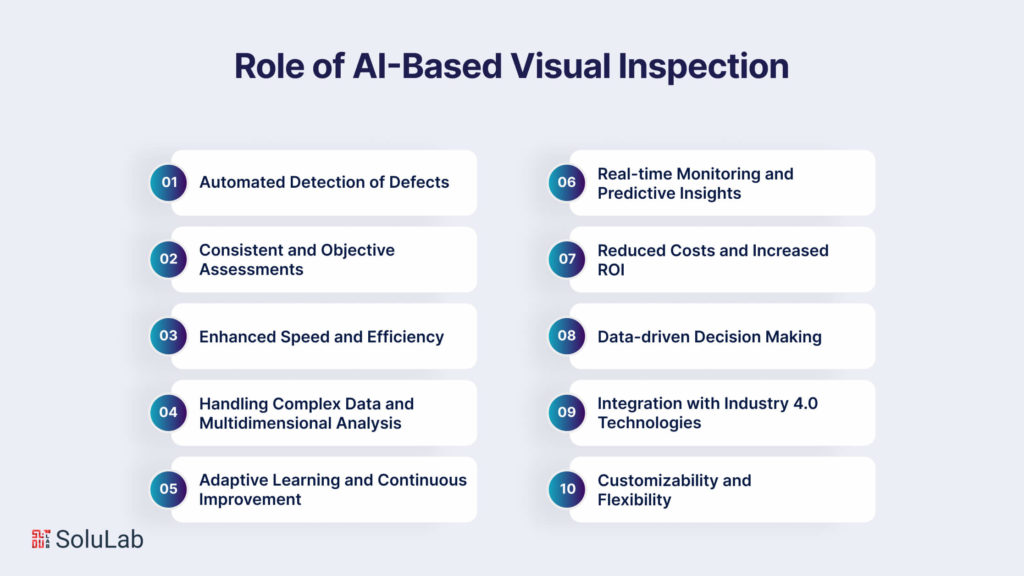
Artificial Intelligence (AI) is changing how a lot of industries work, and Visual Quality Control is one of the clearest examples. By bringing in AI technologies such as Machine Learning (ML) and computer vision, companies are getting quality control that is more precise, faster, and simply more effective.
Here’s how AI changes the job, point by point:
1. Automated Detection of Defects: AI-powered systems are very good at catching subtle defects that trip up human inspectors. Train ML models on large datasets and they learn the patterns that signal a defect, so problems get caught early and faulty products don’t make it to customers.
2. Consistent and Objective Assessments: AI takes subjectivity out of the call. It judges every item against the same predefined criteria, which means better outcomes and far fewer arguments about whether something passes.
3. Enhanced Speed and Efficiency: It’s faster than manual inspection. Much faster. Automated systems read visual data in real time, so you can inspect at high speed without giving up accuracy, which matters most on quick-moving production lines.
4. Handling Complex Data and Multidimensional Analysis: AI algorithms can work through complex visual data like high-resolution images or 3D scans, and find intricate defects that human vision can’t.
5. Adaptive Learning and Continuous Improvement: These systems get better with time. They adapt to new data and learn to recognize new kinds of defects, which is exactly what you need when quality problems keep changing shape.
6. Real-time Monitoring and Predictive Insights: AI-equipped systems watch the line as it runs and alert operators the moment something drifts from the standard, so fixes happen immediately and defects don’t spread.
7. Reduced Costs and Increased ROI: Yes, the upfront investment is significant. Over time, though, AI-driven systems save real money by cutting manual inspection, reducing defective output, and heading off costly recalls.
8. Data-driven Decision Making: AI produces data you can act on. It helps you trace defects back to their root causes and target process improvements where they’ll count.
9. Integration with Industry 4.0 Technologies: AI-driven quality control plugs into Industry 4.0 technologies such as robotics and the Internet of Things (IoT). Extra sensor data sharpens the analysis, and robots can handle products automatically during inspection.
10. Customizability and Flexibility: You can tune an AI system to look for the defects that matter for your product or industry, which gives you a quality control approach built around your line rather than someone else’s.
Put simply, visual inspection AI answers most of the problems that traditional methods leave on the table.
AI Visual Inspection: Transformative Applications Across Industries
AI-driven Visual Quality Control has shaken up traditional quality assurance and raised the bar for what a good product looks like in a lot of industries. With artificial intelligence and computer vision doing the looking, companies are solving hard inspection problems and holding their products to the highest quality standards.
Where is it actually being used? A few examples:
1. Manufacturing: On a manufacturing line, AI-driven Visual Quality Control quickly flags defects in metal parts, plastic components, and all sorts of other goods, so only the best items move further down the production pipeline.
2. Electronics and Semiconductor: In electronics manufacturing, AI inspects intricate circuit boards, connectors, and microchips. Holding to strict quality standards here makes electronic devices more precise and more reliable.
3. Automotive Quality Control: Carmakers use AI to check vehicles for defects in bodywork, paint finish, and critical components. That helps them build cars that are safe, look good, and perform well.
4. Food and Beverage Production: In food and beverage, AI-driven Visual Quality Control inspects packaging. Catching things like improper seals or labeling errors protects product integrity and keeps consumers safe.
5. Textile and Garment Industry: Textile manufacturers use AI to spot defects in fabrics and garments, so only flawless material ends up in clothing and textile production.
6. Pharmaceutical and Medical Device Quality Control: Here, AI-powered Visual Quality Control inspects medical devices, implants, and pharmaceutical packaging. Finding even minor defects supports the safety and efficacy of medical products, and in this sector minor is never really minor.
7. Aerospace Components Inspection: Aerospace teams use AI-driven Visual Quality Control on intricate components like engine parts and structural elements, helping keep safety and performance standards intact.
8. Consumer Electronics Manufacturing: For consumer electronics, fast and accurate defect detection helps products such as smartphones and appliances meet high standards for both looks and function.
9. Healthcare and Medical Imaging: In medical imaging, AI improves quality control by picking out artifacts and abnormalities in X-rays, MRIs, and CT scans, which supports accurate diagnoses and treatment plans.
The range here says a lot. AI-driven Visual Quality Control adapts to very different products while staying accurate and efficient. It helps industries keep strict quality standards, keep customers happy, and push new ideas in product development and manufacturing. And as the technology keeps maturing, its reach across industries is expected to grow.
Effective Integration of AI Visual Inspection Systems into Business Operations
Dropping an AI visual inspection system into a working business takes method, not enthusiasm. The technology has to fit the quality control processes you already run. Here’s a step-by-step framework that keeps the integration on track:
Step 1: Define the Problem
Start by getting very clear on the problem and what the inspection system is supposed to achieve. Focus on the defects that affect product quality, safety, and reliability. Then think through the manufacturing environment, whether you need real-time or deferred detection, how the system should notify people, and which development approach makes sense. In practice, this is where teams get stuck, so give it time.
Step 2: Gather and Prepare Data
Everything rests on data. Collect and prepare datasets for training and validation, and look at sources like video records. IoT analytics can help digitize the supply chain; just make sure the data you gather is well organized and actually fit for training.
Step 3: Develop Deep Learning Model
Choosing the Model: Pick a deep learning model that fits your system’s complexity, your budget, and your timeline.
Options for Model Development:
- Model Development Services: Use platforms such as Google Cloud ML Engine or Amazon ML, which offer pre-designed models based on heuristic rules.
- Pre-trained Models: Start from pre-trained models built for similar tasks and fine-tune them to your needs.
- Custom Model Development: Build your own deep learning model with advanced computer vision algorithms when you need precise, tailored results.
Step 4: Train & Evaluate
Train the model on your prepared dataset and keep iterating until it performs. Then test it against validation datasets, tracking metrics like precision, recall, and F1 score to see how accurately it identifies defects.
Step 5: Deploy & Improve
Don’t go plant-wide on day one. Run a pilot in a controlled setting first. If the model meets your requirements, roll it into the full manufacturing system, then keep monitoring and fine-tuning. Keep it learning, too: update the model regularly with new datasets and adjust as market trends shift.
Follow these steps and your business can bring in an AI-based visual inspection system that genuinely improves quality control. Adjust them to your situation, and bring domain experts, data scientists, and software developers into the room early. Integration goes far better when all three are involved.
Benefits of Implementing AI-Enhanced Visual Quality Control
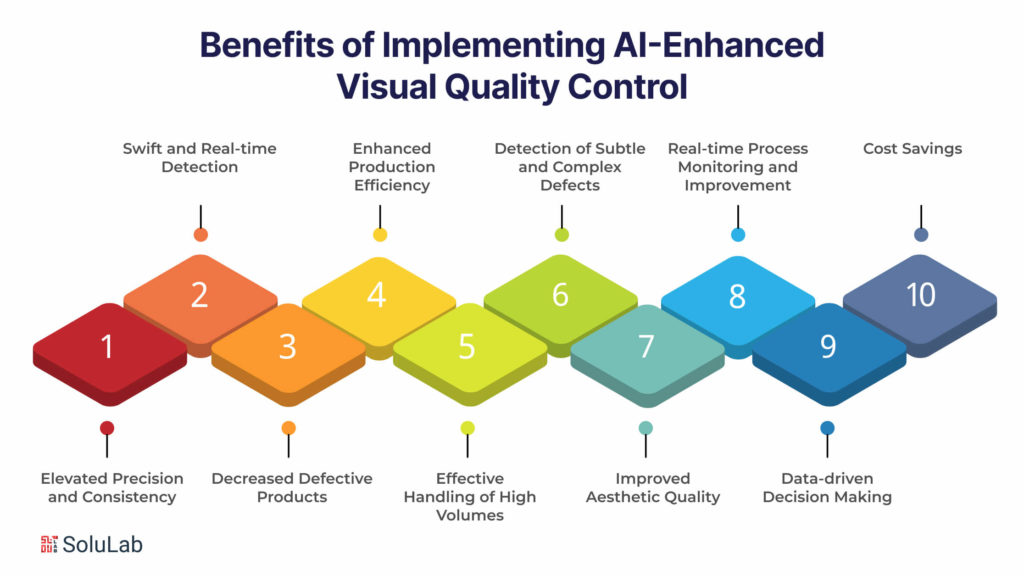
Bringing AI into Visual Quality Control pays off in several ways at once. Quality assessment and defect detection become more precise, faster, and more effective. With Machine Learning (ML) and computer vision in the loop, companies see clear gains in how they run quality control. Here’s what those gains look like:
Elevated Precision and Consistency
AI doesn’t get tired. It doesn’t have mood swings or lose focus when someone walks past, so its assessments stay consistent from the first unit to the last. That means fewer false positives and fewer false negatives, dependable detection of even subtle defects, and a lower chance of faulty products reaching customers.
Swift and Real-time Detection
AI-powered Visual Quality Control works in real time, reading visual data as products move down the line. Defects get flagged instantly, and people can fix them right away. Catch a problem early and it doesn’t spread, which saves you trouble downstream and keeps production moving smoothly.
Decreased Defective Products
This is the big one for most businesses: fewer defective products in customers’ hands. Find the defect before the product leaves the line and you avoid costly recalls, cut down on complaints, and protect your reputation. Fewer defects also mean happier, more loyal customers.
Enhanced Production Efficiency
AI systems run fast and need very little human input, so inspection speeds up. Products move through the line more quickly, and quality standards don’t slip along the way.
Effective Handling of High Volumes
Big volumes at high speed? AI-driven systems handle them without creating the bottlenecks that manual inspection runs into. For mass-production industries, that scalability is a real advantage.
Detection of Subtle and Complex Defects
AI algorithms are good at finding the subtle defects that challenge human inspectors. They also dig through complex visual data, such as high-resolution images or multidimensional scans, to find intricate flaws. The upshot is that defects affecting how a product works or looks actually get caught.
Improved Aesthetic Quality
Where looks matter a lot, AI-driven Visual Quality Control keeps products up to high aesthetic standards. It checks color consistency, surface finish, and overall appearance so products match what the brand promises.
Real-time Process Monitoring and Improvement
AI systems keep an eye on production processes as they happen, tracking defect rates and other metrics to show how the process is performing. With that live data, you can fix issues quickly and keep improving the process.
Data-driven Decision Making
Every inspection produces data, and AI-driven Visual Quality Control produces a lot of it. Companies can use those insights to decide on process optimization, product design changes, and supplier quality management. Decisions grounded in data make quality control work better and cost less effort.
Cost Savings
Getting started means spending on technology and training. No way around that. Over the long run, though, the savings add up: fewer imperfections, fewer recalls, and smoother operations all push ROI higher. You also need fewer extensive manual inspections, so labor costs come down.
Future Trends in AI-Enhanced Visual Quality Control
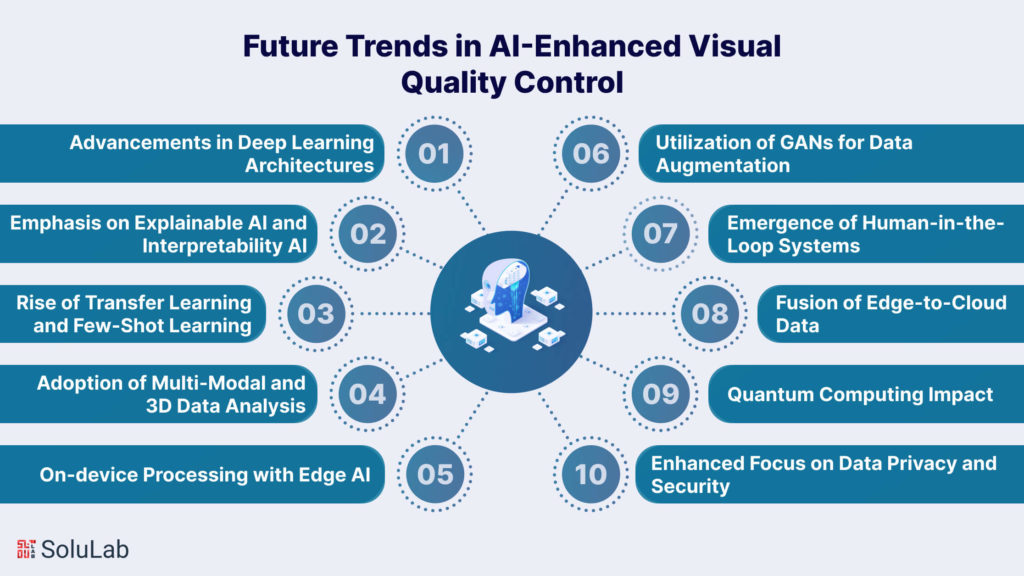
AI in Visual Quality Control is moving quickly, pushed along by progress in artificial intelligence, computer vision, and manufacturing technology. As more industries adopt AI-powered tools, a handful of trends look set to shape where VQC goes next. Here are the ones worth watching:
Advancements in Deep Learning Architectures
Convolutional Neural Networks (CNNs) won’t be the whole story for long. Newer architectures such as capsule networks and transformers are expected to take on more intricate visual data, read context with more nuance, and push defect-detection accuracy higher.
Emphasis on Explainable AI and Interpretability
People want to know why the AI decided what it decided. That demand is growing. In Visual Quality Control, work is underway on models and techniques that explain their assessments in terms a person can follow, which makes the whole decision process more transparent and easier to trust.
Rise of Transfer Learning and Few-Shot Learning
Transfer learning and few-shot learning are fast becoming must-haves in AI for quality control. You take a pretrained model and fine-tune it on a smaller, industry-specific dataset, and the system can pick up a new quality control task without mountains of training data. That opens AI up to far more industries.
Adoption of Multi-Modal and 3D Data Analysis
Expect to see more multi-modal data, where visual, textual, or sensor inputs are combined, along with more analysis of three-dimensional (3D) data. AI systems will use both to make better-informed quality calls. Aerospace, automotive, and healthcare stand to gain most, since 3D analysis can find defects deep in intricate components and structures.
On-device Processing with Edge AI
Edge AI runs the computation on the device itself instead of in the cloud, and it’s catching on. Processing locally improves privacy and cuts latency, both of which matter for real-time quality control. Give the cameras, sensors, and devices on your line their own AI capability and defects get caught immediately, with no round trip to cloud resources.
Utilization of Generative Adversarial Networks (GANs) for Data Augmentation
GANs, a distinctive Generative AI models, will show up more and more in data augmentation. For quality control, they create synthetic data that closely resembles the real thing, which is especially handy for rare defects or ones that are hard to capture on camera. The bigger dataset helps AI models generalize and perform better, above all when annotated data is scarce.
Emergence of Human-in-the-Loop Systems
Humans aren’t leaving the picture. Expect a surge in human-in-the-loop systems, where inspectors work alongside AI and validate or verify its calls. The AI learns from that feedback, improves its performance, and adapts to defect types it hasn’t seen before.
Fusion of Edge-to-Cloud Data
Combining edge-device data with cloud-based analysis will give a fuller picture of quality control. Edge devices handle the first pass of inspection. Cloud systems then pull in data from many sources and analyze it together, surfacing broader quality trends and anomalies that no single station would notice.
Quantum Computing Impact
This one is further out. Progress in quantum computing may eventually help solve complex optimization problems in quality control, including applying quantum image classification to find defects in difficult visual data. Think optimized inspection algorithms, analysis of huge datasets, and simulations of intricate manufacturing processes, all pointing toward quality control strategies that are more efficient and more effective.
Enhanced Focus on Data Privacy and Security
AI systems handle sensitive visual data, so privacy and security will move to the top of the list. Approaches like federated learning, which trains models across distributed devices while the data stays local, are likely to gain ground as a way to protect that data.
There’s a lot to be excited about. Between better interpretability, multi-modal analysis, and the rest of these trends, quality assurance is heading into a new phase. Products get better, operations get more efficient, and industries get new room to innovate.

Conclusion
Visual Quality Control and artificial intelligence are now tied together, and AI keeps moving. Advanced deep learning architectures, explainable AI, transfer learning, multi-modal data analysis, and the other trends above will reshape how quality assurance works across industries. As more businesses put AI-driven systems to work, the gains won’t stop at accuracy and efficiency. They’ll reach product quality and the manufacturing process itself.
For industries, the practical takeaway is to stay flexible. Watch the emerging trends and adopt what fits. Human expertise working with AI, edge data feeding the cloud, and the longer-term promise of quantum computing all point the same way: this shift is collaborative, and it keeps moving. Each trend is one more building block toward a Visual Quality Control setup that is sturdy and able to adapt.
If you’re ready to start, SoluLab can help with AI in Visual Quality Control. We have a track record of building strong solutions, and we bring AI, computer vision, and industry-specific knowledge together to shape solutions around the particular challenges of your inspection process. The first step is simple: see how SoluLab’s AI Development solutions can raise your organization’s quality standards and efficiency. The factories that start training their models now will have the most defect data to learn from later.
FAQs
Shipra Garg is a tech-focused content strategist and copywriter specializing in Web3, blockchain, and artificial intelligence. She has worked with startups and enterprise teams to craft high-conversion content that bridges deep tech with business impact. Her work translates complex innovations into clear, credible, and engaging narratives that drive growth and build trust in emerging tech markets.