Ever tried investing in real estate or fine art and felt buried under paperwork, middlemen, and high entry barriers? That’s the real problem with traditional asset ownership: slow, costly, exclusive. Now picture owning a fraction of a luxury property or a rare painting with a few taps on your phone.
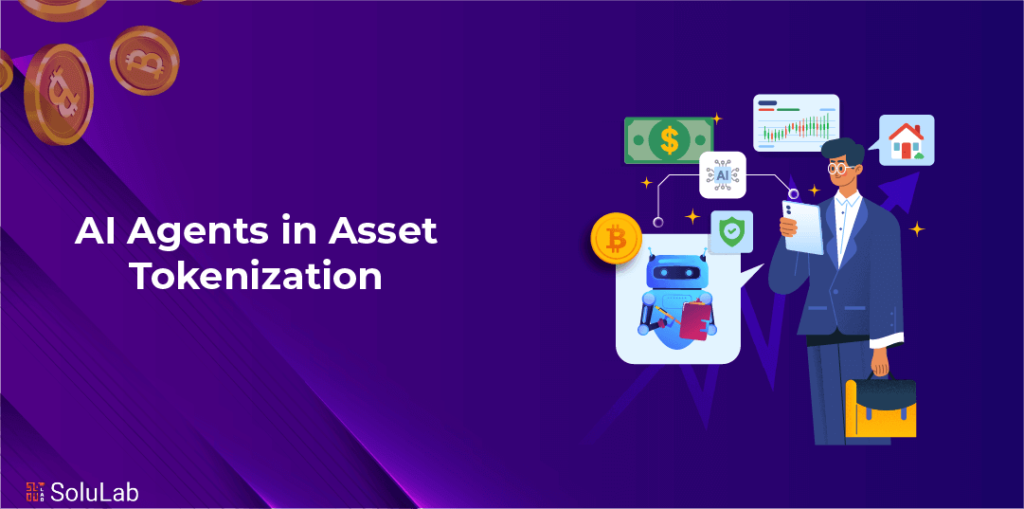
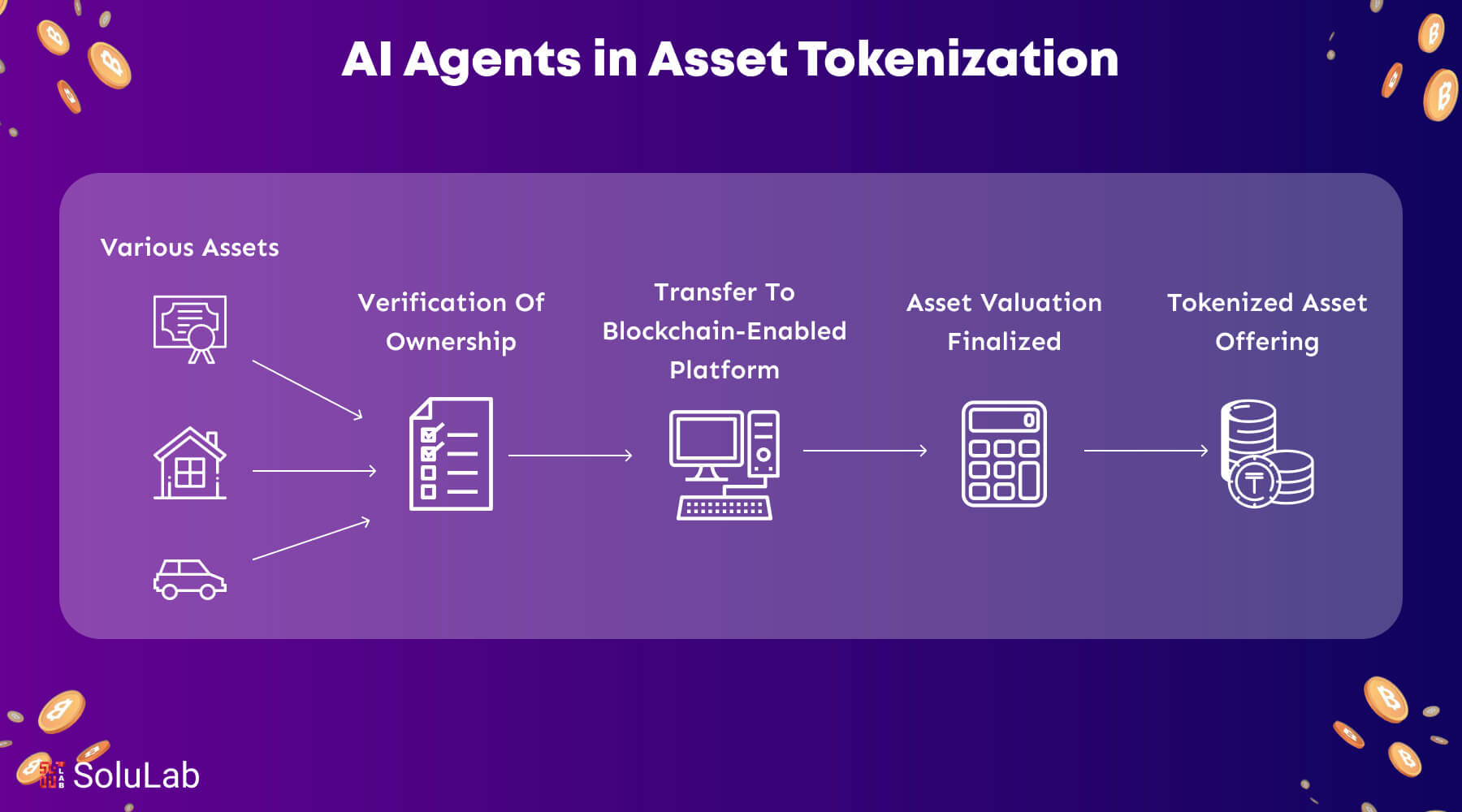
That’s where AI agents in asset tokenization come in. They simplify the complex process of turning physical assets into digital tokens on the blockchain, while automating verification, compliance, and trading along the way.
| Asset Tokenization Market: Valued at $5.6 billion in 2024, it’s projected to grow to $30.21 billion by 2034, reflecting an 18.4% CAGR. |
In this piece, we’ll break down how AI agents are redefining digital ownership: making asset tokenization smarter, faster, and far more scalable than it’s ever been. Let’s get into the future of investing, powered by AI and blockchain!
What are AI Agents?
AI agents are software built to sense their environment, make decisions, and act on their own to reach a specific goal. AI agents use cases figure out, without hand-holding, the best path to complete whatever a human tells them to do. Some are simple bots automating one task. Others handle multi-step reasoning: planning a trip, writing code, running a whole conversation.
Most run on machine learning and large language models, which is what lets them adapt and get better over time. Think customer support chatbots, virtual assistants, and autonomous research agents like AutoGPT and AgentGPT.
Understanding Asset Tokenization
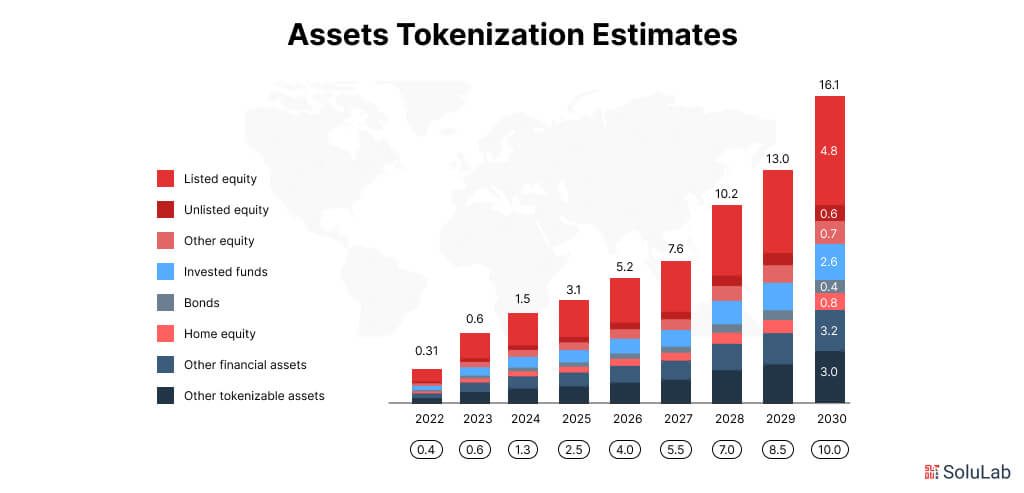
Asset tokenization converts real-world assets, real estate, artwork, stocks, into digital tokens on a blockchain. Those tokens represent ownership or shares of the physical asset, and you can trade, sell, or transfer them with ease. Thanks to blockchain technology, the whole process stays transparent, secure, and efficient.
It cuts out middlemen, lowers transaction costs, and opens the door to fractional ownership, so you don’t need to buy a whole asset just to get exposure to it. As blockchain matures, tokenization is reshaping how people handle and invest in traditional assets.
What is the Need for AI Agents in Asset Tokenization?
Tokenization relies on smart contracts and blocks to turn real assets into crypto assets. As it scales with blockchain technology, the need for intelligent automation grows right along with it. That’s where AI agents step in: improving, securing, and optimizing processes that used to take a lot of manual work.
Transforming Asset Valuation
- Automated valuation models (AVMs): AI turns out to be a genuinely useful tool for precise valuation, since it can process huge volumes of data: asset records, market movements, economic indicators. By automating how assets like real estate get valued, it keeps tokenized transactions fair and transparent.
- Predictive Analysis: Instead of just reacting to data, AI predicts where the market is headed. It reads price patterns across historical and current data, giving investors what they need to make sharper calls in a market that moves fast.
Automated Contracts
- Smart Contracts Creation: Asset tokenization using AI makes smart contract development quicker, more effective, and far less prone to human error. Generating predefined phrases automatically speeds up tokenization and cuts down administrative workload.
- Self-Executed Contracts: These agents monitor and carry out smart contracts on their own, keeping fulfillment smooth and on time. AI handles it all, whether that’s transaction fees or automating rent payments in real estate tokenization.
- Risk Assessment: By examining variables like geopolitical developments and market volatility, AI proactively detects and evaluates risk. That gives investors the insight they need to manage uncertainty and protect what they’ve put in.
Improving Security
AI-based asset management tokenization never stops watching transaction patterns for signs of fraud. That’s anomaly detection at work. Catching questionable activity early is what keeps trust intact in tokenized assets and avoids expensive breaches down the line.
- Real-Time Monitoring: AI watches blockchain networks for security risks around the clock, so any weak spot gets a fast response. That level of attention is what keeps tokenized assets safe and dependable.
- Biometric Authentication: AI-powered asset tokenization relies on biometric technologies, fingerprint scanning, facial recognition, to lock security down further, making sure only authorized users ever touch private information or assets.
Simplifying Compliance and Regulations
- Automated Compliance Checks: AI keeps companies compliant as tokenization requirements shift. By automatically verifying regulatory compliance, it helps businesses stay ahead of the law instead of scrambling to catch up, and avoid expensive fines in the process.
- Timely Reporting: Compliance isn’t a one-time checkbox, it’s ongoing. AI can produce real-time reports, cutting the chance of oversight and keeping the organization’s state current with requirements like AML/KYC and tax standards.
- AI Chatbots: AI-powered chatbots provide round-the-clock customer service, answering questions on tokenized assets and helping investors whenever they need it. This improves the client experience and increases consumer satisfaction.
- Individualized Suggestions: AI tailors investment suggestions by looking at investor preferences and historical performance, helping people make more informed, more confident decisions about tokenized assets.
The role of AI in asset tokenization isn’t just a trend, it’s fundamental. These intelligent solutions are reshaping the asset tokenization process while improving security, strengthening compliance, streamlining procedures, and delivering support tailored to each investor.
Read Also: AI Tokenization For Asset Ownership
Real-World Use Cases of Asset Tokenization
Here are a few real examples of tokenized assets already in the market:
- Diamond Standard Tokenized Fund
To operate in the United States, Oasis Pro tokenized the Diamond Standard Fund (“Fund”) and listed it on the Oasis Pro Market, registered with the SEC’s ATS. It later expanded the Fund into the Asia market through the InvestaX platform.
What’s the Fund About
The Fund physically owns and stores Diamond Standard Commodities as its real assets. It gives experienced investors access to the first regulator-licensed diamond commodity in the world, with diamond itself as the asset class.
Type of fund: Alternative fund
Sponsors: Horizon Diamond Advisers, LLC and DSAM Advisors, LLC
Diamond commodities are a portfolio asset.
Bloomberg’s DIAMINDX is the benchmark index.
- Mikro Kapital ALTERNATIVE eNoteTM Tokenized Bond
Mikro Kapital is a microfinancing company focused on helping small and medium enterprises in developing markets. ALTERNATIVE, the digital security and Corporate eNote provider, fractionalizes business loans, and Mikro Kapital is issuing an ALTERNATIVE eNote™ Tokenized Offer to be listed on the regulated platforms of Obligate and InvestaX.
About the Tokenized eNoteTM
Professional investors and institutions can buy fixed coupon, fixed maturity debt instruments linked to microfinance risk from ALTERNATIVE, a securitization fund from Mikro Kapital. To keep financing accessible for micro, small, and medium-sized businesses and entrepreneurs, the issuer takes on the credit risk tied to debt and equity from microfinance firms, small financial institutions, leasing companies, banks, and credit cooperatives.
Mikro Kapital eNoteTM- ALTERNATIVE Bond tokenizations
Mikro Kapital is a microfinance-focused company providing small credits to independent businesses in developing countries. ALTERNATIVE eNote™ is its dedicated tokenized product, offered publicly on the regulated platforms of Obligate and InvestaX.
- Methodic CoinDesk ETH
The Methodic CoinDesk ETH staking Fund aims to deliver the full return on Ethereum, plus ETH staking rewards. The issuer applied tokenization here too, opening the Fund to a wider pool of investors. Rewards come in Ether and get paid back by the Fund, either in currency or in-kind. The main token sale runs through the regulated InvestaX platform.
- Metavisio Corporate Bond
Metavisio SA, an issuer of entry-category computer equipment, is a Euronext-listed company focused on growth regions like India. The brand itself has been around for 130 years and counts established players like Microsoft, Google, and NVIDIA among its backers.
The Metavisio Corporate Bond launched in March 2024. The funding is meant to expand the company’s production facilities in India, which should help grow its overseas business. It’s offered through the Singapore-regulated marketplace InvestaX.
Read Also: Top 5 AI-Powered Asset Tokenization Use Cases Enterprises Must Adopt in 2026
Future of AI Agents in Tokenization of Assets
Artificial intelligence already plays a central role in asset tokenization, and that role keeps growing as the tech matures. Here’s what’s coming in the next few years:
1. Smarter Automation: AI agents will handle everything, from verifying asset ownership to executing smart contracts, making tokenization faster and less error-prone.
2. Fraud Detection in Real-Time: With machine learning, AI agents can spot unusual patterns or suspicious activity fast, keeping transactions secure.
3. Personalized Investment Opportunities: AI will read your risk appetite and suggest tokenized assets built around your goals, basically a digital investment advisor that never sleeps.
4. Regulatory Compliance: AI agents track changing legal frameworks in real time, keeping every transaction compliant without anyone running manual checks.
5. Faster Settlement Times: AI can cut settlement time for asset trades from days down to minutes.
6. Scalable Ecosystems: As more assets get tokenized, AI agents scale the operations without piling more work onto human teams.
Conclusion
AI agents are turning asset tokenization into something smarter, faster, and more secure. Combine automation with blockchain’s transparency, and you get digital ownership that’s more accessible and efficient than it’s ever been.
From tightening asset verification to managing compliance and cutting fraud, AI agents are building toward a future where traditional asset management starts to feel like a relic.
As tokenized markets keep growing, these systems will be essential for scaling operations without adding complexity. AI agents aren’t just a tech trend. They’re the backbone of what comes next in digital asset ownership and innovation.
Digital Quest, by SoluLab, an AI Agent development company, reworked its user experience and customer interaction strategy by working with us, a real demonstration of what artificial intelligence can do. Beyond offering precise, personalized travel advice, the chatbot also built a smooth feedback loop for ongoing improvement.
Get in touch with SoluLab today and start your transformation!
FAQs
Shipra Garg is a tech-focused content strategist and copywriter specializing in Web3, blockchain, and artificial intelligence. She has worked with startups and enterprise teams to craft high-conversion content that bridges deep tech with business impact. Her work translates complex innovations into clear, credible, and engaging narratives that drive growth and build trust in emerging tech markets.