Start with the money. The metaverse market is already worth more than $38.5 billion, and analysts expect it to keep climbing at roughly 13.1% a year. Two things are pushing it: people are willing to pay for serious VR hardware, and virtual real estate has turned into a real asset class, with investors spending over $500 million on it so far.
So what is the Metaverse, exactly? Think of it as a place where the virtual and physical overlap, and where people meet and act in real time. Schools could teach inside it. Shops could let you walk the aisles. Entertainment gets a whole new stage. Plenty of people describe it as the internet’s next form, one that doesn’t live behind a flat screen and a keyboard. That’s the pitch, anyway. The open questions are just as real: privacy, ethics, and what hours inside a headset do to someone’s mental health. It could change how we work, learn, play, and talk to each other. Whether that change is good for people depends on how carefully the ethical, social, and technical choices get made along the way.
What is Metaverse Gaming?
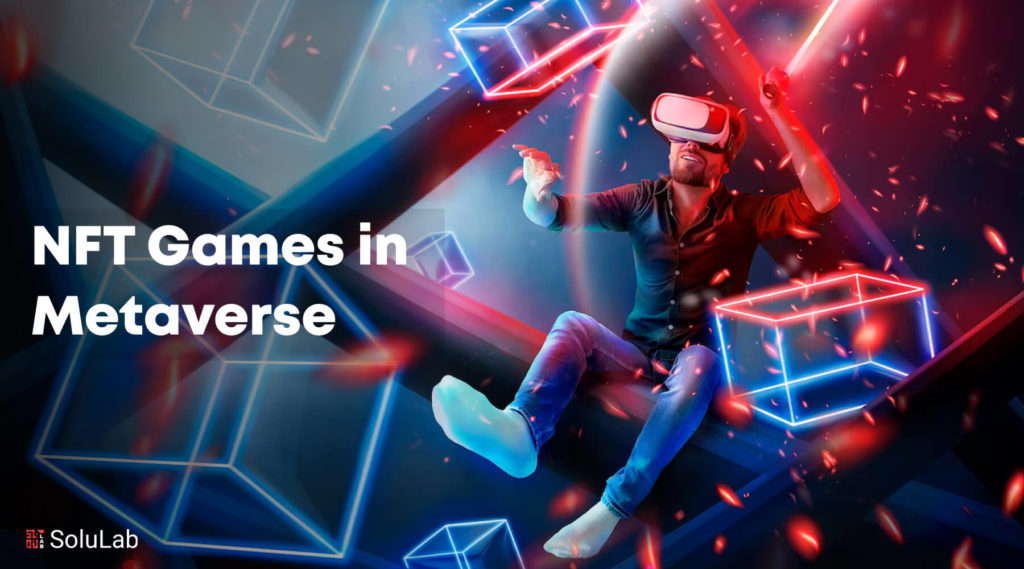
Metaverse gaming is what happens when you put blockchain underneath a game. Suddenly the game isn’t only something you play. You earn rewards, you trade what you own, and you hang out with other players inside a shared world. Part game, part social space, part classroom. And because NFTs and virtual land can be bought and sold, there’s actual revenue on the table for players and studios alike. As the tech matures, a lot of people expect this to grow into a multi-billion dollar industry that changes how we play and explore virtual worlds.
Elements of Metaverse gaming
A lot of moving parts go into a Metaverse game. We won’t claim this list covers every one of them. But these are the pieces you’ll find in almost every serious Metaverse games project:
- 3D Virtual Worlds:
Everything sits on top of this. Big, open 3D environments that players can actually get into, wander around, and lose themselves in.
- Virtual Characters and In-Game Interactions:
You play as a character, and that character is how you talk and team up with everyone else. Those relationships often outlast a single session. Guilds form, friendships form, and the social side becomes half the reason people log in.
- In-Game Items and Assets:
Owning your items matters here. Most games use a blockchain to record who holds what, which keeps trades and sales secure and visible to anyone who checks.
- Gameplay Principles and Goals:
Metaverse games still have rules and objectives. Same as any game. The difference is the setting, which pulls you in much further than a traditional title does.
- VR and AR Technologies:
Virtual Reality (VR) and Augmented Reality (AR) sit at the center of the whole experience. They’re what blur the line between the screen and the room you’re standing in.
- Blockchain and Cryptocurrency:
This is the plumbing for the in-game economy. Cryptocurrencies and Non-Fungible Tokens (NFTs) let players own digital assets outright and move real-world value in and out of the game.
- Internet of Things (IoT):
IoT pulls physical objects into the game world. Real-time data from the real world can shape what happens on screen, and what you do physically can count in-game.
- 3D Reconstruction and Mixed Reality:
Scan a real place into a 3D model, mix it with virtual layers, and you get worlds that feel lived in. Moving from one virtual experience to the next stops feeling like a loading screen.
- Brain-Computer Interfaces:
Still early. Researchers are testing brain-computer interfaces that would let you steer an avatar with your thoughts instead of a controller, which would make play feel far more natural.
Put all of that together and you get the direction the industry is heading: games that are more immersive, more social, and far more economically alive than anything we’ve played before.
Metaverse Coins
Metaverse games keep pulling in players who want worlds they can actually explore. Our list of top Metaverse games below was built against a few specific criteria. First, engagement: does the gameplay hook you, is the story worth following, do your choices matter? Second, graphics and feel. Visuals need to be sharp, mechanics need to be smooth, and you should sense yourself progressing. Third, community. A strong one makes the game better and keeps it alive for years. The best titles hit all three, and that’s why players keep coming back.
“DO YOU KNOW?”
Here’s a telling overlap: 53% of companies putting money into the metaverse also invest in cryptocurrencies. The metaverse has over 400 million active monthly users, and it could add another five trillion US dollars to the world economy by 2030. That’s a lot of promise.
Top Metaverse Games and Company
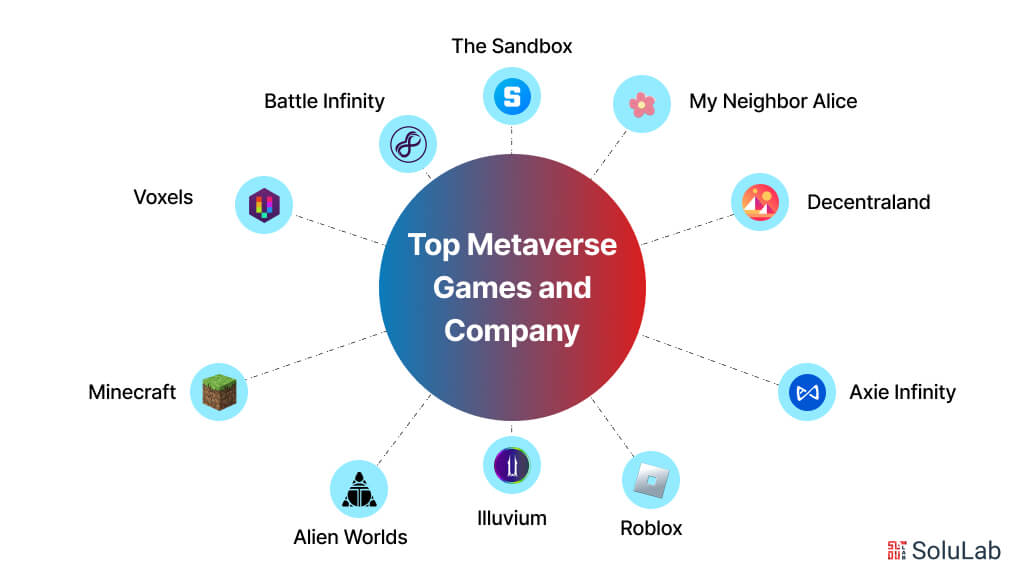
1. Decentraland
Decentraland opened to the public in the early 2020s. You spend its token, MANA, to build an avatar, buy items, and pick up parcels of virtual land. That land can be rented out, used for events, or turned into a gallery to sell virtual art. The standout piece is LAND: each parcel is a non-fungible token. Combine LAND and MANA and you can build your own experiences and games for other people to visit. Why did it catch on? Immersive play, a lot of content made by users, and a steady run of brand and organization partnerships. In 2021 the In-World Builder arrived and made creating things inside the platform even easier.
2. Axie Infinity
Axie Infinity comes from a Vietnamese company founded in 2018. The game borrows heavily from Pokemon: you breed, raise, collect, and trade creatures called Axies. Each Axie has swappable body parts, and those parts decide how it looks and what it can do. You can even buy land and houses for them. Every creature and most in-game items are NFTs controlled by blockchain technology. Win battles and you earn Small Love Potion (SLP) tokens, which you can swap for Ethereum or other cryptocurrencies. That’s the hook. People came for the fresh gameplay and stayed because they could earn real money. Players built their own mini-games inside the Axie universe, and that user-made content did a lot of the heavy lifting. The part people remember most, though? In some developing countries, players earned a living wage from the game.
3. The Sandbox
The Sandbox is built for making things. Creators use Metaverse blockchain tech and smart contracts to build content and share it with everyone else. It has three main tools. VoxEdit is for designing avatars and objects. The marketplace is where you trade what you’ve made. And Game Maker lets you build 3D games without writing a line of code. Every virtual asset is an NFT, so creators can actually sell their work on the game’s marketplace. SAND, the native token, buys you property on the Sandbox map, and that property can also be resold on the Open Sea NFT marketplace. Honestly, the community is the real engine here. Players build games, real estate, and items, and the whole place is packed with their work. There’s also a Creator Fund that pays creators who ship inventive, engaging content.
4. Alien Worlds
Alien Worlds is play-to-earn at its most literal. You mine Trilium, the in-game currency, across six planets. Your assets are represented by non-fungible tokens (NFTs), so you can own and trade them, and you can start or join Decentralized Autonomous Organizations (DAOs) inside the game. People like it for the gameplay, the unusual features, and the chance to earn crypto. But the community is what keeps it growing. Players make their own planets, quests, and mini-games, and that steady stream of new stuff keeps drawing fresh players in.
5. Illuvium
Illuvium is one of the newer releases, and it got popular fast by mixing proper gameplay with blockchain. You explore an odd, alien world, capture and heal mythical creatures called Illuvials, then send them into battle. Illuvial NFTs can be traded. The stronger and rarer yours is, the more it’s worth. Finish challenges and assignments and you earn Illuvium cryptocurrency (ILV), tradable on the IlluviDEX. It appeals to two crowds at once, gamers and NFT collectors, and the community-first approach plus user-made content has done the rest. Both the blockchain and gaming worlds have taken notice, which cements its standing as one of the titles reshaping blockchain gaming.
6. Roblox
Roblox has been around since 2006, and young gamers adore it. Millions of people play every day, choosing from a huge library of games and experiences that users built themselves. It’s easy to get into. It’s social. And there’s almost no limit to what you can create or customize, which is exactly why kids and young adults love it. The community is supportive and creative, and that breeds loyalty. Because users keep making content, there’s always something new to try, and you can play with friends anywhere in the world. Its public offering showed developers and investors how much room there is to grow. Big-name brands followed, and so did serious revenue.
7. My Neighbor Alice
My Neighbor Alice runs on the Ethereum blockchain, and it has a gentler feel than most games on this list. You explore a virtual world, build and decorate your own island, and spend time with other players. What draws people? The immersive play, the chance to earn crypto, and the one-of-a-kind experiences other users create. You can design your island, show up to community events, and buy, sell, or trade virtual assets. All that user-made content has produced a lively in-game economy, and some players have made significant money trading NFTs. It’s social at heart, too. Players team up on projects and just hang out together in the game world.
8. Minecraft
Minecraft, from Mojang Studios, needs little introduction. Build anything, explore anywhere, go on whatever adventure you like. The world is open, generated procedurally in 3D, and the mechanics are simple enough that a young kid and a veteran gamer can both pick it up. It goes beyond play, too. Teachers use it, and it has solid inclusivity features. The whole thing runs on player imagination: user content, mods, and multiplayer are why it’s lasted so long. People still build, design, and collaborate in it every day, and they share what they make with a huge, lively community.
9. Voxels
Voxels used to be called Cryptovoxels. It’s a Metaverse platform on the Ethereum blockchain where you buy, sell, and build on parcels of land using voxels, which are small cubes you stack into 3D structures. Simple. Easy to get into. Put that next to real blockchain ownership and you can see why it caught on in the NFT space. The game leans hard on community and collaboration, and players respond by getting creative. Its audience isn’t only crypto people either. Gamers, artists, and even schools have shown up.
10. Battle Infinity
Battle Infinity is a gaming platform built with the Metaverse front and center. It runs on a blockchain, which means the platform is decentralized and players fully own whatever they earn or buy in-game. You can also build your own games and share them. Made for gamers, by gamers, as the saying goes. What made it take off? Features like PVE and PVP battles plus sports games. It pulled in more than 20,000 players and raised over $200,000 in its presale. A big part of the story is user-generated content: players can create games and make money from them. NFTs lock in real ownership of in-game assets, and the community is tight, with players swapping tips and stories constantly. Put together, that makes it one of the stronger Metaverse-focused gaming platforms out there.
Current Market Status of Metaverse Gaming
The numbers are big. Metaverse gaming hit $13.84 billion in 2023 and is forecast to reach $710.21 billion by 2027. Better VR and AR are the main driver, since they make games feel richer. Education and training are another growth lane: game-based learning alone is expected to reach $52.3 billion by 2030. Sandbox games are the most popular category, and the fastest growing, because players love worlds without walls. North America leads for now. Asia Pacific is expected to grow the fastest. What’s holding things back? Expensive gear and privacy worries, mostly. To stay competitive, companies are leaning on alliances and partnerships.
“DO YOU KNOW?”
Roblox is the biggest virtual world in the metaverse, and its crowd skews very young: 51% of users are under 13. In the United States, 74% of adults have thought about joining the metaverse or already have. By 2026, an estimated 25% of Americans will spend at least an hour a day inside it.
Challenges in Metaverse Gaming
Fast growth brings its own problems. If Metaverse gaming is going to last, the industry has to deal with these:
1. Technical Infrastructure Limitations:
- Building Metaverse games takes serious infrastructure: fast internet and a lot of computing power.
- In places where that infrastructure is thin, it’s a real wall.
2. Expensive Equipment Costs:
- The full experience usually means buying pricey gear, like VR headsets and gaming consoles.
- That price tag shuts out a lot of would-be players, and the games reach fewer people as a result.
3. Privacy and Data Security Concerns:
- People share more and more personal data in the Metaverse, and that raises hard questions about privacy and security.
- Keeping that data safe from attackers is a big job for game studios and platform owners.
4. User Experience and Inclusivity:
- The experience has to be immersive and fun, and it has to work for a wide audience.
- That means interfaces people understand without a manual, and a Metaverse that welcomes users with different abilities and preferences.
5. Content Moderation and Ethical Considerations:
- When anyone can create anything, moderation gets messy fast.
- Keeping content appropriate and stopping harmful behavior in virtual worlds is one of the hardest problems here.
6. Integration of Blockchain and NFT Technologies:
- Blockchain and NFTs open up new kinds of in-game economies and ownership, but wiring them in so they’re both secure and easy to use is genuinely hard.
7. Interplatform Interoperability:
- Players want to move between Metaverse platforms and games without friction. For a unified experience, that’s non-negotiable.
- Getting there is technically tough, and it needs a lot of different players in the industry to cooperate.
8. Regulatory and Legal Frameworks:
- This is a young space that changes fast, and clear rules and legal frameworks often don’t exist yet.
- Working through that uncertainty, and staying compliant across different jurisdictions, is a major headache.
9. Sustainable Business Models:
- Studios need business models that make money without wrecking the player experience.
- In practice, that means weighing every monetization idea against what players actually get out of it.
10 Adoption and User Base Growth:
- For all the hype, the sector still struggles to attract a big, active player base and keep it.
- Winning over skeptics and building a community that actually shows up is what decides whether these platforms survive.
None of these get solved by one group alone. Developers, investors, regulators, and players all have a hand in it. If they work together, Metaverse gaming has a real shot at living up to its promise and leaving digital entertainment better than it found it.
Future of Metaverse gaming
The metaverse is changing the NFT in gaming industry from the ground up, with VR and AR making experiences far more immersive. It brings real economies with it: players make and trade virtual assets, and those trades keep in-game markets busy. It’s a social space too. Voice chat and multiplayer let players meet, talk, and form communities. Here’s the part traditional games can’t match: these worlds persist. They keep changing even after you log off. AI adds another layer, making gameplay and environments react and shift. And it’s not only about fun. Education, training, remote teamwork, and social gatherings all have a place here. It changes how we deal with virtual spaces, and it opens doors nobody has walked through yet.
Conclusion
NFT Games in the Metaverse sit right where digital innovation meets interactive play. If you understand What is NFT game and spend time with the best NFT games in the metaverse, you’ll find experiences and opportunities that ordinary games simply don’t offer. As Metaverse games mature, how NFTs in the Metaverse get built in will decide the future of NFTs and much of the wider Metaverse future. Metaverse NFT games are changing how games play, and through NFT token economies they’re inventing new ways to make money too. SoluLab works in exactly this space, bringing hands-on expertise in Metaverse game development. If you’re planning for the future of the metaverse and building around gaming NFT tokens, SoluLab can help you get ahead while the market is still taking shape.
FAQs
Shipra Garg is a tech-focused content strategist and copywriter specializing in Web3, blockchain, and artificial intelligence. She has worked with startups and enterprise teams to craft high-conversion content that bridges deep tech with business impact. Her work translates complex innovations into clear, credible, and engaging narratives that drive growth and build trust in emerging tech markets.