Family offices arenot just exploring digital assets investments, they are now bringing questions towards adoption.
- How can we unlock liquidity from illiquid holdings without disrupting long-term wealth structures?
- How do we approach real-world asset tokenization without regulatory, custody, or reputational risk?
We all know how global digital asset adoption ($3 trillion-2025) continues to rise. Also, institutional interest in real-world asset tokenization has accelerated significantly in the last two years.
Tokenized bonds, private equity interests, and real estate structures are moving from pilot projects to structured frameworks.
But here’s the shift: traditional family offices are not just evaluating tokenization platform development. They are increased working with tokenization advisors and tokenization consultants to design a strategy before selecting technology.
Key Takeaways
- Family office tokenization unlocks structured liquidity for illiquid assets without compromising long-term governance and wealth preservation goals.
- Tokenization advisors improve 70% strategic clarity by aligning legal structuring, compliance, custody, and cross-border reporting before platform deployment.
- Real world asset tokenization for wealth management requires compliance-first architecture and disciplined execution to meet institutional standards.
Why Are Family Offices Embracing Tokenization?
Family offices manage long-term capital. Their priorities are stability, governance, and generational continuity. Tokenization enters the picture when it aligns with those objectives.
1. Liquidity Without Full Exit
Many family portfolios include private equity, real estate, infrastructure, and operating businesses. These assets are valuable but illiquid.
Asset tokenization for family offices enables:
- Fractional ownership structures
- Controlled tokenized asset trades
- Secondary liquidity mechanisms without full divestment
This allows families to release partial liquidity while retaining control.
2. Generational Transition and Digital-Native Heirs
Next-generation leaders are more comfortable with digital asset advisory services and blockchain-backed structures. They want transparency, portability, and programmable ownership.
Tokenization strategy for family offices can align:
- Trust structures
- Estate planning
- Cross-border beneficiaries
- Digital reporting systems
It modernizes wealth architecture without abandoning conservative principles.
3. Portfolio Diversification Through Real World Asset Tokenization
Real world asset tokenization allows fractional exposure to:
- Infrastructure projects
- Global commercial real estate
- Private credit
- Structured debt
Institutional tokenization consulting services help design a compliant entry into these markets.
4. Competitive Positioning
As private wealth tokenization solutions become more common, early adopters gain a strategic advantage. Waiting may mean losing liquidity options or access to emerging tokenized investment platforms.
In Which Global Hubs Are Family Offices Most Actively Exploring Tokenization?
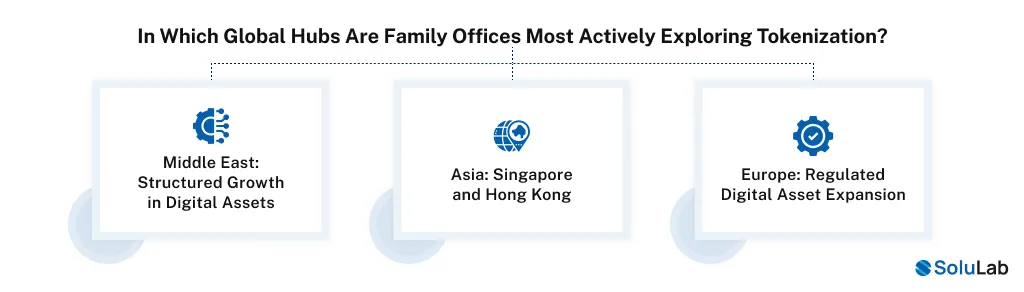
Family office tokenization adoption is not uniform. It is driven by regulatory clarity, capital flows, and wealth migration.
1. Middle East: Structured Growth in Digital Assets
Dubai and Abu Dhabi have positioned themselves as regulated digital asset hubs. Clear frameworks for the 2030 vision and proactive regulators have made them attractive for family offices exploring RWA tokenization consulting.
Family offices in this region are focusing on:
- Real estate tokenization
- Cross-border wealth corridors
- Digital securities issuance
The region’s capital mobility encourages tokenization strategy consulting before platform selection.
2. Asia: Singapore and Hong Kong
Singapore (New 200 financial institutions) continues to refine digital asset regulations, creating space for compliant tokenized structures. Hong Kong has revived its digital asset strategy and launched institutional-focused initiatives.
Family offices here prioritize:
- Institutional-grade custody
- Regulatory clarity
- Structured tokenized investment platforms
Advisory engagement is common before implementation.
3. Europe: Regulated Digital Asset Expansion
European frameworks now provide clearer compliance paths for digital securities and asset tokenization services.
Family offices in Europe are increasingly exploring:
- Tokenized funds
- Structured private credit
- Regulated tokenized asset trades
Again, advisory-first models dominate due to compliance sensitivity.
How Do Regulatory Frameworks Affect Family Office Tokenization Decisions?
Regulation is the defining variable in blockchain solutions for family offices. Family offices operate across jurisdictions. A single structure may involve:
- Offshore holding entities
- Multi-country beneficiaries
- Tax optimization treaties
- Cross-border reporting obligations
Tokenization consultants evaluate:
1. Securities Classification
Is the token a security? A digital representation of ownership? A fund unit? Misclassification can lead to enforcement risk.
2. AML and KYC Controls
Traditional family offices maintain strict compliance standards. Digital asset advisory services must align with institutional AML frameworks.
3. Custody and Safekeeping
Custody is critical. Who controls private keys? Is there regulated custody support? What happens in insolvency scenarios?
4. Tax Implications
Tokenized structures may trigger:
- Capital gains recognition
- Cross-border tax events
- Withholding obligations
Tokenization consulting services help structure compliant vehicles rather than relying on platform templates.
Without advisory oversight, tokenization platform development alone cannot address jurisdictional complexity.
How Does a Tokenization Advisor De-Risk the Process for Family Offices?
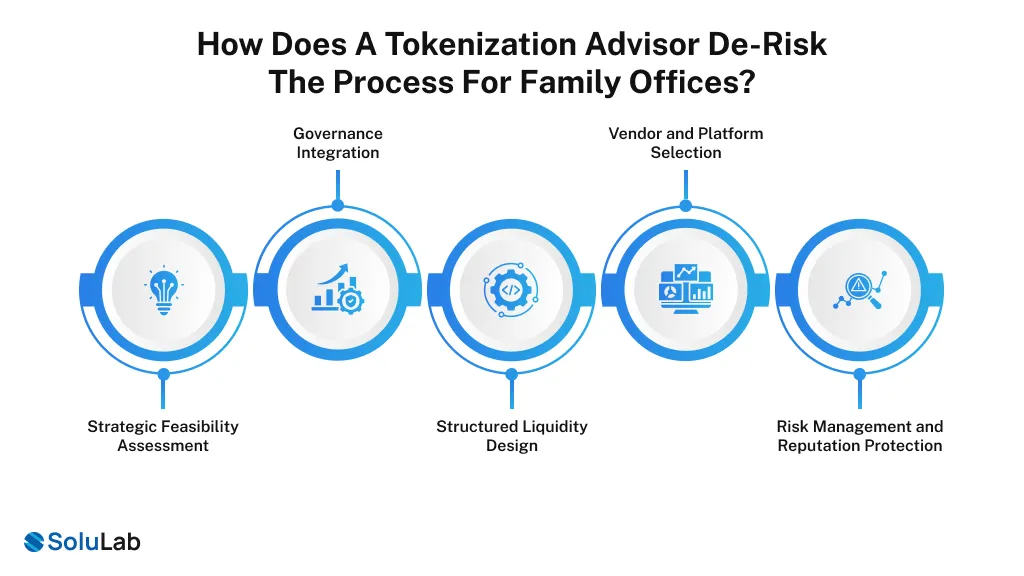
This is where the distinction becomes clear.
A tokenization platform provides technology. A tokenization advisor designs architecture.
1. Strategic Feasibility Assessment
Before issuing any digital asset, advisors evaluate:
- Asset eligibility
- Legal wrapper compatibility
- Regulatory jurisdiction
- Liquidity objective
This ensures alignment with long-term wealth preservation.
2. Governance Integration
Family offices require:
- Board-level reporting
- Audit trails
- Capital controls
- Transfer restrictions
Tokenization strategy consulting ensures governance standards are embedded into smart contracts and operational workflows.
3. Structured Liquidity Design
Not all tokenized asset trades should be open-market. Many family offices prefer:
- Private secondary windows
- Whitelisted investor pools
- Controlled trading environments
Institutional tokenization consulting services design these safeguards.
4. Vendor and Platform Selection
Instead of locking into a single tokenized investment platform, advisors:
- Compare blockchain networks
- Evaluate custody partners
- Assess compliance providers
- Design modular infrastructure
This prevents long-term vendor dependency.
5. Risk Management and Reputation Protection
Traditional family offices are conservative by design. Reputation matters more than speed.
RWA tokenization consulting helps:
- Reduce smart contract risk
- Avoid regulatory missteps
- Ensure audit readiness
- Align with global standards
The benefits of tokenization consulting for family offices are not just operational. They are strategic.
Conclusion
As mentioned above, family office tokenization is growing and walking towards infrastructure development.
If you are planning to implement a tokenization strategy for family offices, the foundation matters more than the token itself. That foundation requires experienced tokenization advisors, strong compliance architecture, and institutional-grade execution.
At SoluLab, a tokenization platform development company, we support private wealth tokenization solutions with:
- 250+ skilled developers experienced in blockchain and digital asset advisory services
- 150+ custom software solutions built for enterprise and regulated environments
- 150+ successful projects delivered across fintech, asset tokenization services, and institutional platforms
Contact us today to explore how we can support your family office tokenization strategy with clarity and confidence.
FAQs
Deepika is a content writer who blends storytelling with strategic thinking. She explores topics across digital innovation, emerging tech, and the evolving blockchain industry. She enjoys breaking down complex ideas into simple, engaging narratives in the growing global markets.