Start with a sobering number. DappRadar, which tracks this stuff, counted 312 hacks and exploits hitting dApps in 2022. The money lost came to roughly $48 billion. Then 2023 looked better on paper: losses fell 96% to $1.9 billion. But that headline hides something. The attacks themselves went up 17.3%. Fewer dollars stolen, more attempts. And by Q1 2024 the losses climbed again, up 9% to $407 million versus Q1 2023’s $373 million. So the security story here is not a clean line. Keep that in mind as we go.
DApp development grew out of two things: blockchain, and the older world of peer-to-peer (P2P) file sharing. A lot of startups now build decentralized software that leans on what blockchain does natively, giving businesses a more transparent and secure place to run.
What Are Decentralized Applications (dApps)?
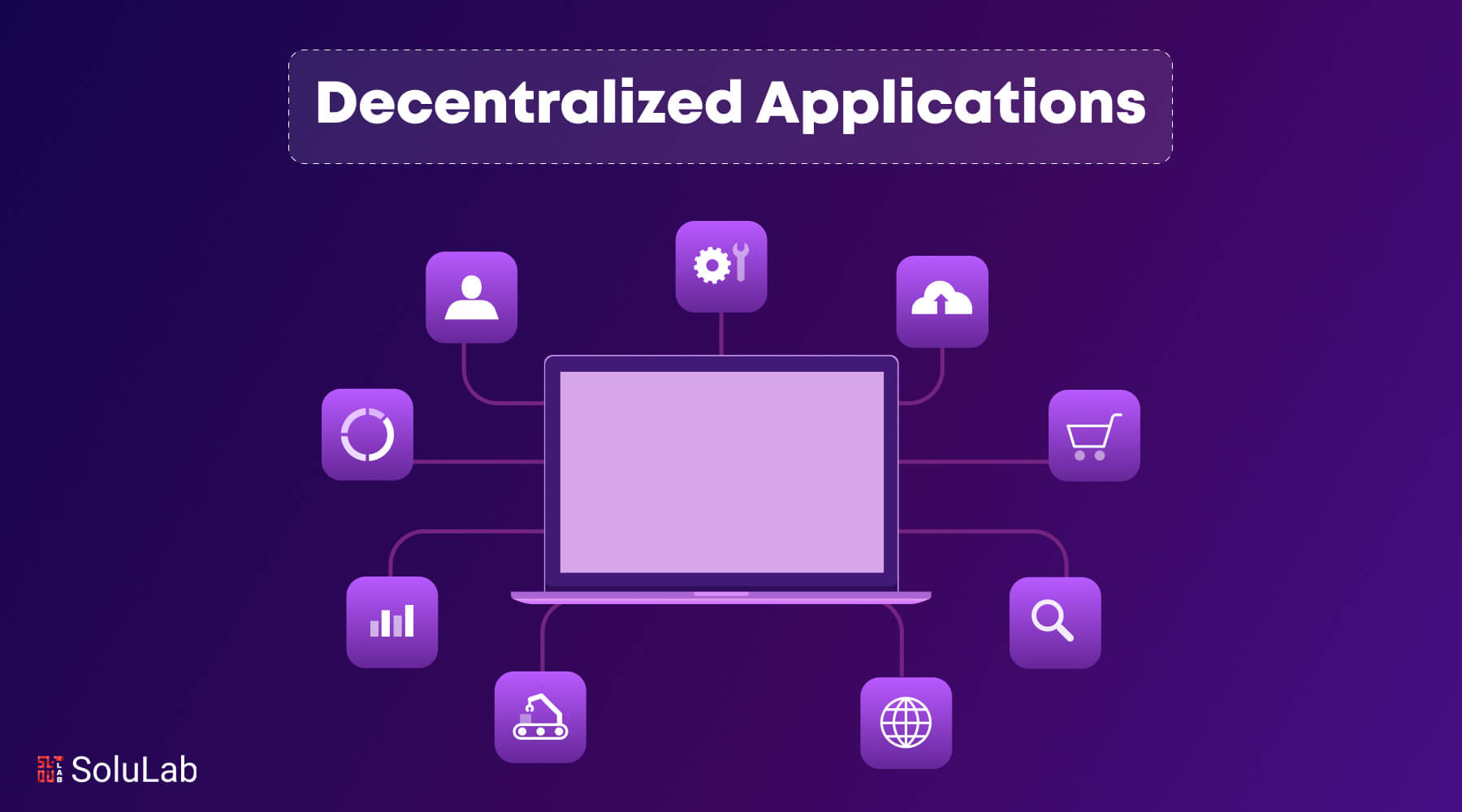
So what is a dApp, plainly? It’s a software program that runs on a blockchain or a peer-to-peer (P2P) network of machines instead of sitting on one device or one company’s server. That’s the whole trick. A normal app answers to a central authority. A dApp spreads itself across the network, and the people using it govern it together. Many get built on Ethereum. What they actually do runs wide: crypto wallets, digital asset exchanges, games, personal finance tools, social platforms. Same idea underneath, very different faces on top.
KEY TAKEAWAYS
- A dApp runs on a blockchain network of computers, not on a single company-owned server.
- No single authority controls it or can quietly interfere. That’s the point of the design.
- What you get in return: stronger privacy, censorship resistance, and more room to build the way you want.
- What you pay for it: scaling limits, harder user-interface work, code you can’t easily change after launch, and real security risk.
Understanding Decentralized Applications (dApps)
Think about an app like Uber or X (formerly Twitter). One company owns the servers, runs the system, and calls every shot. A dApp doesn’t work that way. It runs on a peer-to-peer (P2P) or blockchain network, spread across many computers instead of one owner’s data center.
You’ve probably touched a P2P app already. BitTorrent, Tor, Popcorn Time: all of them run across computers in a P2P network, where each participant can consume, feed, or seed content to the others.
DApps push that further. They run on a blockchain in a public, open-source, decentralized setting. No single authority sits above it, deciding what stays and what goes.
Here’s a concrete case. A developer could create a decentralized application that looks a lot like X and put it on a blockchain, where anyone can post. But once a message is up, nobody deletes it except the author who wrote it. The data stays put. That immutability is the feature, not a bug.
Difference Between a Centralized and Decentralized Apps
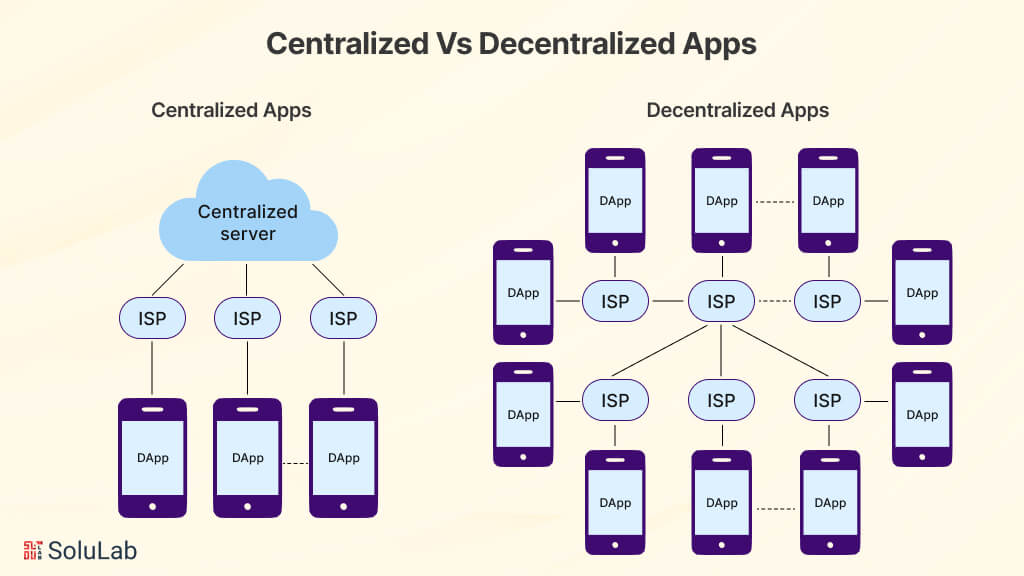
Before we get into how a dApp behaves differently from your everyday mobile or desktop app, let’s pin down a couple of terms.
Centralized App:
- One entity owns it.
- The software lives on servers that owner controls.
- You download a copy, use it, and shuttle data back and forth with the company’s server the whole time.
Decentralized App (dApp):
- Runs on a blockchain or peer-to-peer network of computers.
- Users transact straight with each other. No central middleman sits in between.
- It might be free, or it might cost you crypto paid to the developer to download and use the source code.
- The code usually runs on smart contracts, which execute transactions between parties on their own. You don’t have to trust the other side.
- dApps lean on blockchain protocols that keep personal information protected.
Importance of dApps
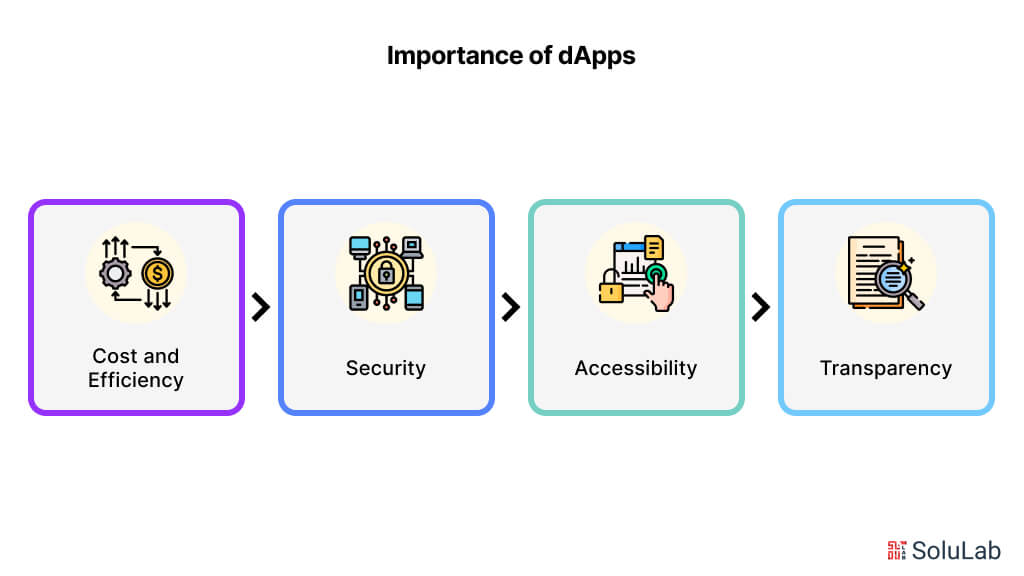
A handful of dApp traits can genuinely change how information and resources move around. Here are the ones that matter.
1. Cost and Efficiency
Because they run on decentralized networks, dApps cut out the middlemen. That can mean real cost savings, faster processes, and access for people who couldn’t get it before. Picture running almost every part of your finances yourself, with no bank standing in the middle. For an industry like finance, that’s a big deal. It’s the clearest line you can draw between a dApp and a normal app: one is decentralized, transparent, and secure by design; the other isn’t. As more sectors shift this way, working with a team that knows the terrain pays off. SoluLab builds in this space and helps businesses actually get value out of decentralized applications instead of just talking about them.
2. Security
With blockchain technology underneath them, dApps can make business and personal processes harder to tamper with. Blockchains use cryptography and distributed, automated consensus to lock data in place. Every user holds a copy of the ledger, and those copies get compared, so nobody quietly rewrites history. That’s a solid base for transactions and storage you can trust. Put a dApp next to a normal app on this one point and the difference is obvious: the decentralized, transparent structure gives it security features the centralized model can’t match.
3. Accessibility
Anyone with an internet connection can reach a dApp. Where you live doesn’t matter. That opens up services, digital assets, and information to people all over the world, and it lets them take part in a connected digital economy that used to shut them out.
4. Transparency
On a blockchain-based dApp, transactions get recorded out in the open. Users can check the data themselves instead of taking a central authority’s word for it. For anonymous, distributed networks, that matters a lot, because trust in the system is the only thing holding it together.
DApp Uses
DApps exist to strip out intermediaries and hand various functions back to the network. Self-executing financial contracts, multiplayer games, and social media platforms are a few common examples.
They go further than that, though. Some dApps run secure, blockchain-based voting and governance. Others slot into web browsers as plugins to serve ads, watch how users behave, or ask for crypto donations, with more security and transparency baked into what happens online.
A few practical places you’ll find them:
- Financial Transactions: Peer-to-peer money and asset transfers, from currency swaps to moving stocks around.
- Supply Chain Tracking: Following goods as they move, so the trail stays transparent and someone can be held accountable.
- Identity Verification: Storing and checking personal records safely, including voter rolls and passport applications.
- Real Estate Management: Letting buyers and sellers deal directly, while ownership and paperwork like deeds get tracked.
- Healthcare Records: Holding and monitoring medical records, and helping clinicians share information.
- Education Platforms: Decentralized places to learn, where students and teachers work together without a middleman.
- Decentralized Social Media: Platforms for posting and sharing that no central authority can censor.
- Predictive Markets: Decentralized markets where people bet on how future events will turn out.
Scams Involving dApps
Now the ugly side. Plenty of bad actors have used dApps to run scams. Ponzi schemes are a classic: early investors get paid with money from newer ones, which fakes the look of steady profit until the whole thing collapses. Knowing what a dApp is and how it actually works makes these easier to spot before you’re in.
Fake initial coin offerings (ICOs) have been used to raise money for a “new” cryptocurrency or dApp the founders never planned to build. Understand how a legitimate decentralized application is supposed to behave, and this kind of pitch starts to smell wrong pretty fast.
Phishing hits dApps too, with fake websites and emails that trick people into handing over sensitive data. Some dApps examples have been used to push malware or viruses that put a user’s device at risk and steal personal information. The better you understand what dApps are actually for, the more carefully you can move through the space.
And here’s the hard part: because dApps are decentralized, tracking down whoever pulled the scam and holding them responsible is tough. That’s exactly why you should slow down and do real research before you touch any dApp.
Do you Know?
DappRadar, an industry analytics group, counted 312 hacks and exploits against dApps in 2022, with losses landing around $48 billion.
Losses then dropped 96% to $1.9 billion in 2023, even as the number of hacks and exploits climbed 17.3%.
In Q1 2024, losses rose 9% to $407 million against Q1 2023’s $373 million.
Advantages and Disadvantages of dApps
dApps come with a real trade-off. Their decentralized nature gives them clear strengths and just as clear weaknesses. Worth weighing both before you build on one.
Advantages
- Privacy is the big one. dApps use smart contracts to let anonymous parties transact, so personal information stays private and protected.
- They can also revolutionize social media platforms. Decentralized social platforms built on dApps resist censorship: no single entity can delete or block a message on the blockchain, which keeps speech open.
- Ethereum makes a flexible base for building decentralized applications. It hands developers the infrastructure they need so they can focus on the actual product. That can push out new dApps quickly across banking and finance, gaming, social media, and online shopping.
Do you Know?
Nick Szabo, the American cryptographer and computer scientist, coined the term “smart contract” while he was a graduate student at the University of Washington in 1996.
Disadvantages
- dApps are still early and experimental, and that shows. Scaling is a live question. Pile enough resource-hungry apps onto one network and it clogs up.
- The interface is hard to get right. People are used to the polish of centralized apps, and that’s the bar. To win users over, a dApp has to match that experience and performance, which is easier said than done.
- There’s no built-in oversight or auditing the way centralized apps have. Code that’s rushed, unaudited, or just sloppy leaves dApps wide open to hackers.
- After launch, you’ll usually still need to improve things, squash bugs, or patch security holes. But Ethereum points to the real snag developers run into: once code and data are published to the blockchain, they’re immutable, so updating a dApp is genuinely hard.
Read Also: Build a dApps on Solana
Regulatory Considerations for dApps
Regulators have a genuinely tricky problem here. Their usual playbook assumes a location: a company, a jurisdiction, a place where things happen. A dApp has no center, so pinning regulation to wherever a transaction landed gets complicated fast.
The Emerging Centralization of dApps
Take the European Union. Any dApp provider serving an EU audience has to comply with the General Data Protection Regulation (GDPR), no matter where the company itself is based.
In December 2023, a European subnet of the Internet Computer Protocol (ICP) went live. ICP is a blockchain DAO that gives developers the infrastructure and tools to build compliant dApps. It could become the go-to path to compliance, but there’s a catch: the apps would give up their decentralized standing, because ICP is centralized. The DAO votes nodes in, and they can only sit inside the EU.
Some dApps issue tokens or run token sales to raise funds. That rings alarm bells, because regulators are trying to protect investors and often read it as an unregistered securities offering. And any dApp doing financial services, like decentralized exchanges (DEXs) or lending platforms, has to follow anti-money-laundering and know-your-customer rules to keep out laundering and terrorist financing.
Consumer Protection
Even when no money or goods actually change hands, using a dApp still raises consumer-protection questions: personal data, privacy, security. When you sign a transaction, you’re taking on risk. MetaMask, for one, warns users flat out that they can lose funds if they don’t fully grasp what they’re agreeing to.
Dapps examples
The one people always bring up is CryptoKitties, a blockchain game where you adopt, breed, and trade virtual cats. Each kitty is unique, owned by you, and verified on the blockchain like any other tradable asset. Its value goes up or down with the market. That’s why they’re called “crypto collectibles”: every digital pet is one of a kind and provably yours.
Then there’s Uniswap, a decentralized exchange protocol on Ethereum. It lets people trade straight with each other, no bank or broker in the middle. Automated smart contracts set up liquidity pools that make the trades happen, and users swap tokens right from their own wallets. Take away the decentralized design and Uniswap simply doesn’t exist.
Examples like these show what dApps can do to old industries, and how much more control they hand users over their own assets and data. As the tech matures, expect stranger and more useful ones to show up.
The Bottom Line
So where does that leave you? A dApp is not just a normal app with blockchain bolted on. It runs on a distributed network, which is what gives it the security, transparency, and lack of a single owner that a centralized app can’t offer. Set the two side by side and the split comes down to control and who can trust the data. The uses run from finance to gaming, as the examples above show, and the risks, from scams to unfixable code, are just as real. If you’re weighing what dApps could do for your business, or you’re curious about the crypto side of them, SoluLab develops decentralized applications (dApps) and can help you put these ideas to work. Build with a team that has done it before, and you skip a lot of the expensive mistakes.
FAQs
Bhavya is driving growth through data-backed demand generation for AI and Web3 solutions. With 9+ years in digital marketing, he has spearheaded initiatives that led to a 40% increase in qualified inbound leads. Bhavya shares insights on marketing ROI and scaling a digital presence via AI workflows. He is open to connecting with startups and enterprise teams to help them overcome their challenges.