Healthcare has changed fast. A lot of that change traces back to one technology: Generative Artificial Intelligence (AI). Generative AI didn’t just add another tool to the shelf. It shifted how clinicians work, how care gets delivered, and where teams spend their attention. Diagnostics got sharper. Treatment plans got personal. Drug pipelines that used to crawl started to move. Below are ten places where the shift is most visible, and what each one actually looks like on the ground.
Advanced Diagnostics and Imaging Techniques
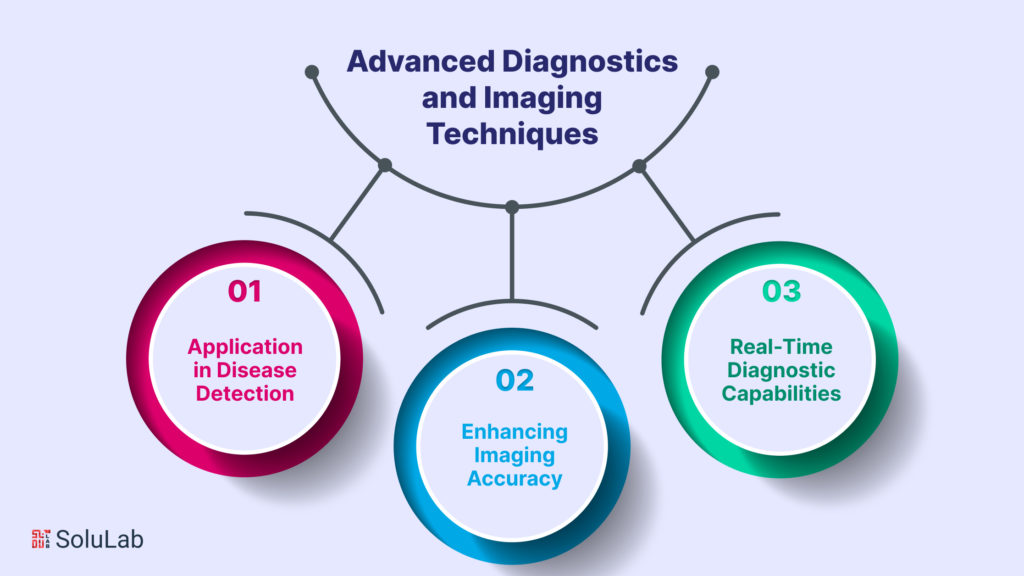
Start with what a doctor sees. Generative Artificial Intelligence AI tools now sit alongside imaging and diagnostic work, and they change what’s catchable. Models trained on medical data help spot disease earlier, sharpen the images clinicians read, and push results back in something close to real time. The payoff lands where it matters most: better calls, faster, for the patient in front of you.
- Application in Disease Detection
Disease detection is where the precision shows up first. Feed a model enough images and data, and it starts to notice things a tired eye at the end of a long shift can miss: faint patterns, small signals, the early edge of something worth a second look. That head start is the whole point. Catch it sooner, act sooner.
- Enhancing Imaging Accuracy
Then there’s the image quality itself. Generative models baked into imaging tools clean up and clarify what the scanner produces. Better processing, sharper pattern recognition, more detail where a radiologist needs it. A clearer picture means a more confident read, and a more confident read means fewer second-guesses on the diagnosis.
- Real-Time Diagnostic Capabilities
Speed counts too. Generative AI diagnostic tools can return insights and suggestions on the spot, not after a queue. That shortens the wait, cuts the lag between question and answer, and lets clinicians move on a plan while it still helps. Patients notice. So do the outcomes.
Personalized Treatment Plans
No two patients are the same, and treatment is finally starting to reflect that. With Generative AI tools, providers can shape medication around the person, build therapy protocols that fit their history, and suggest lifestyle changes that actually match how someone lives. When the plan feels built for you, you stick with it. That’s the quiet win here: engagement follows relevance.
- Tailoring Medication Regimens
Take medication. Pull a patient’s records, their history, their genetic markers, and Generative AI models help a provider build a regimen around that specific mix instead of a one-size default. The dose, the drug, the timing: tuned to the individual. Better fit, better outcomes, fewer surprises down the line.
- Customized Therapy Protocols
Therapy works the same way. Generative models pull together a patient’s data and the clinical picture, then propose protocols shaped to that person’s needs and preferences. Rehab strategies, treatment steps, lifestyle tweaks, all of it aimed at one specific patient rather than an average one. And when people feel the plan was built for them, they follow it.
- Lifestyle Modification Recommendations
Lifestyle advice gets sharper too. Instead of generic “eat better, move more,” these models read the actual behavior: diet, activity, daily patterns, then suggest changes that fit the life the patient already leads. Small, doable shifts. Wellness strategies and preventive steps that lean toward healthy living and heading off problems before they start.
Read Also: How Healthcare Startups in the USA Leverage Generative AI to Cut 40% Costs?
Drug Discovery and Development Processes
Drug discovery is slow, expensive, and full of dead ends. Generative AI is starting to chip away at all three. Predictive modeling helps researchers surface promising drug candidates faster, tighten up clinical trials, and stress-test both efficacy and safety before a compound ever reaches a patient. If it holds, the whole timeline from lab bench to approved treatment gets shorter, and that’s a big deal for people waiting on a therapy that doesn’t exist yet.
- Predictive Modeling for Drug Identification
Here’s how the front end works. Models chew through molecular structures, biochemical interactions, and pharmacological data, then flag which compounds are worth chasing. That narrows the search early, so teams aren’t burning months on candidates that were never going anywhere. The result is a faster path toward novel treatments, and fewer wasted swings along the way.
- Accelerating Clinical Trial Processes
Trials are the other bottleneck. Generative AI helps here by tightening the messy parts: matching the right participants, reading the data cleanly, moving phases along without cutting corners. In practice this is where a lot of programs stall, so shaving time off recruitment and analysis pushes safe, effective drugs toward approval and market sooner.
- Improving Drug Efficacy and Safety
Safety is non-negotiable, and this is where the modeling earns its keep. By running data analysis and clinical simulations, generative models can flag likely outcomes and possible adverse effects before a treatment goes wide. That lets teams fine-tune formulation and dosage, cut the risk, and design drugs that do more good with less harm. Fewer surprises for the patient, which is the whole game.
Precision Medicine and Genomic Analysis
Precision medicine is where this gets genuinely exciting. Generative AI reads genomic data at a scale no human team could, pulling out the markers that hint at disease risk and pointing toward treatments matched to a person’s biology. Instead of “here’s what usually works,” the question becomes “here’s what should work for you.” That shift is still expanding, and it’s opening real doors for personalized care.
- Genetic Marker Identification
It starts with the markers. Generative models sift through genomic data and detailed genetic profiles to pick out the variations and mutations tied to disease risk or to how a patient might respond to treatment. Find those signals, and a provider can build interventions around them, targeted, specific, and personal rather than generic.
Read Blog Also : Influence of AI on Mobile Application Development
- Personalized Disease Risk Assessments
From markers you get risk, and risk you can act on. Blend genetic data with medical history and lifestyle factors, and generative models can estimate how likely a given patient is to develop specific conditions. That lets providers get ahead of it: preventive steps, a health-management plan, an early intervention while the window’s still open. The whole idea is to move before the problem does.
- Targeted Treatment Approaches
Then comes the treatment itself, shaped to the person’s genetics and biology rather than the population average. Working from genetic insights and disease-specific data, generative models suggest therapies and precision-medicine strategies built for that individual. The aim is simple: hit harder on what works, ease off what doesn’t, and leave the patient better off with fewer side effects.
Virtual Health Assistants and Patient Support
Not every patient interaction needs a doctor in the room. Virtual health assistants, powered by generative AI, now handle symptom checks and remote consultations, and they hand patients real education instead of a shrug and a search bar. Think of them as the bridge: they connect people to care between appointments, answer the questions that don’t need an ER, and keep someone supported when a clinician isn’t immediately reachable.
- Remote Consultation Services
Remote consults are the clearest example. With natural language processing and machine learning under the hood, generative assistants can run interactive virtual visits, offer medical guidance, and walk patients through what’s going on. Care gets easier to reach, especially for people who can’t easily get to a clinic, and the contact doesn’t stop the moment the appointment ends.
Read Blog Post: Strategies for Leveraging Generative AI in E-Commerce
- AI-Powered Symptom Analysis
Symptom analysis is another piece. Feed a model what a patient reports plus their history, and it can produce a solid read: a symptom evaluation, possible differentials, a sense of what to do next. That does two things at once. It gives patients enough to make an informed choice, and it hands clinicians a running start on a timely, effective response.
- Patient Education and Support Systems
Education rounds it out. Generative AI can power support systems that serve up clear health information and wellness resources, interactive lessons, self-care guidance, content that fits the person reading it. When patients understand their own health, they participate in it. They ask better questions, manage their own care more actively, and show up as partners in the decisions instead of passengers.
Enhanced Medical Research and Data Analysis
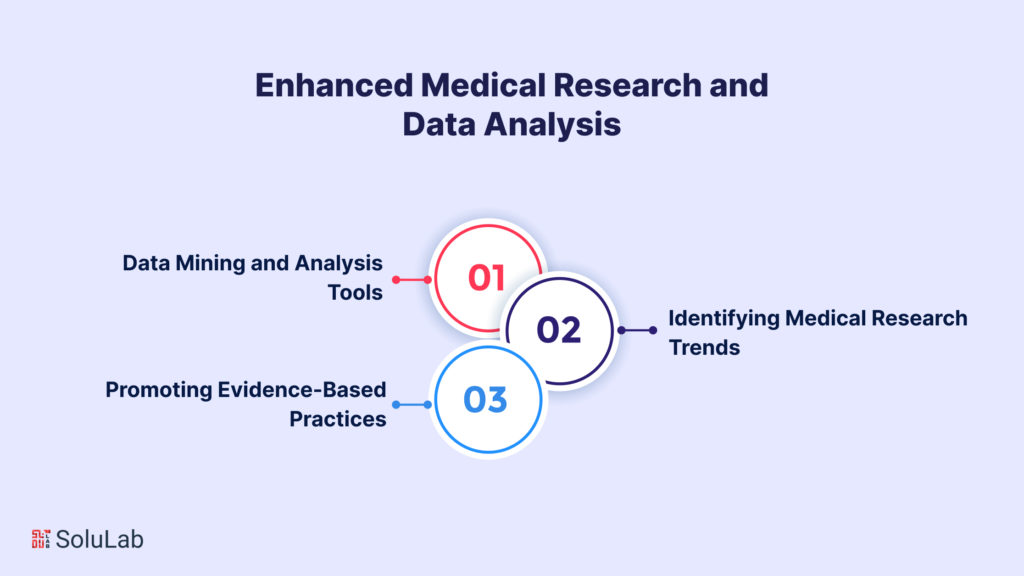
Research runs on data, and there’s now more of it than any team can read. Generative AI helps by mining large datasets, surfacing where the field is heading, and backing evidence-based practice with actual numbers. The value isn’t just speed. It’s depth. These models pull insight out of piles of data that would otherwise sit unexamined, and that feeds better decisions and stronger research.
- Data Mining and Analysis Tools
Consider the mining tools. Point machine learning and predictive analytics at large healthcare datasets and research repositories, and generative models start pulling out hidden patterns, correlations, and trends buried in the noise. That’s the raw material for evidence-based research, clinical studies, and the kind of medical discoveries that move patient care and disease management forward.
- Identifying Medical Research Trends
Where should the money and effort go next? Generative models help answer that. By reading across scientific literature, clinical trials, and published research, they highlight the hot areas: emerging technologies, promising treatment approaches, questions worth funding. For research institutions and medical teams deciding where to point their resources, that’s real strategic direction rather than a guess.
- Promoting Evidence-Based Practices
And it keeps practice honest. By weighing clinical evidence, treatment outcomes, and real-world data, generative models can generate guidelines and best-practice protocols grounded in what’s actually working. That helps clinicians deliver consistent, patient-centered care and keeps treatment standardized across very different clinics and specialties, so a patient gets solid care whether they’re in a big hospital or a small practice.
Streamlined Administrative Processes and Operational Efficiency
Ask any clinician what eats their day, and it usually isn’t medicine. It’s paperwork. Generative AI helps healthcare organizations cut that load by automating workflows and putting resources where they’re actually needed. Smoother operations, less wasted effort, and a stronger focus on keeping patient data secure and compliant while all of it runs.
- Automating Workflow Management
Workflow automation is the obvious starting point. Hand the routine stuff, scheduling, repetitive admin tasks, the paperwork nobody wants, over to generative models, and staff get their time back for work that needs a human. In mental health practices, for example, an AI therapy notes generator enables faster and more structured clinical note-taking without compromising quality. Less busywork, more care.
- Optimizing Resource Allocation
Then there’s the resource math. Generative models read demand, patient needs, and operational load, then help plan around it: staff scheduling, inventory, where to put what. Done well, that means fewer gaps, less waste, and a budget that stretches further. For a sector where margins are tight and staffing is tighter, that efficiency isn’t a nice-to-have. It’s survival.
- Ensuring Data Security and Compliance
None of it works without trust, and trust means data security. Generative AI applications help lock down sensitive health information through strong encryption, data anonymization, and frameworks built to meet the regulations. The point is a system where patient data stays private and intact at every step, from intake to service delivery, and where compliance isn’t an afterthought bolted on later but part of how the thing is built.
Predictive Analytics and Early Disease Detection
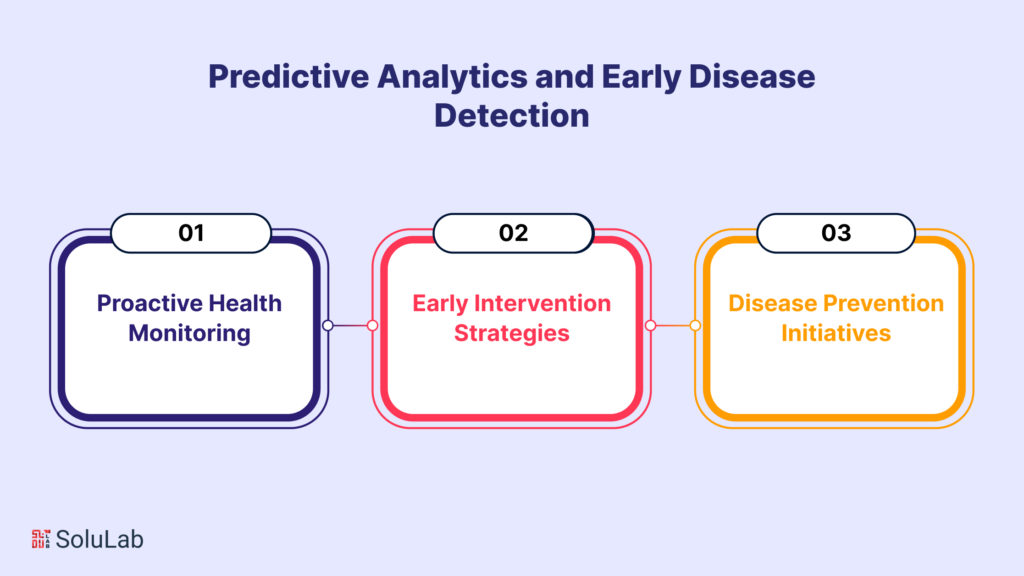
Catch it early, and everything downstream gets easier. That’s the promise of predictive analytics. Generative AI lets providers watch for trouble before it fully lands, so they can step in early instead of reacting to a crisis. Spot the risk, act on it, head off the worst case. When it works, timely intervention beats late heroics every time.
- Proactive Health Monitoring
Monitoring is the front line. By tracking patient data, vital signs, and health metrics over time, generative models can pick up the small shifts, the anomalies that hint something’s changing before a patient even feels it. That opens the door to timely intervention and personalized monitoring plans, the kind of proactive care that catches problems while they’re still small and manageable.
- Early Intervention Strategies
Once you can see risk coming, you can plan for it. Generative models use predictive modeling and risk-assessment algorithms to flag high-risk groups and individuals leaning toward specific conditions. Providers then act on that: targeted interventions, preventive screenings, wellness programs aimed squarely at the people most likely to benefit. It builds a habit of getting ahead of illness rather than chasing it, and it spreads that habit across whole patient communities.
Read the Blog Post: Generative AI and Human-AI Collaboration
- Disease Prevention Initiatives
Zoom out to the population, and prevention scales up. Generative models read epidemiological data, disease patterns, and public-health trends to pinpoint where communities are hurting: the common concerns, the disparities, the challenges specific to a group. From there come the campaigns, education programs, and outreach that raise awareness and nudge people toward healthier lives. Fewer people getting sick in the first place, and communities that end up better off for it.
Robotic Surgery and Precision Procedures
Surgery is where precision stops being abstract. Generative AI now backs robotic and AI-assisted surgical systems, and that changes what’s possible in the operating room. Minimally invasive techniques, tighter control, steadier hands, guided by data. The upshot is safer procedures and cleaner outcomes for patients, and a real shift in how surgical teams approach the work.
- AI-Assisted Surgical Technologies
Under the hood sit robotics, machine learning, and surgical automation working together. Generative models help drive precise, controlled interventions, the complex and intricate procedures that demand a level of steadiness beyond what an unassisted hand can hold. The gain is accuracy and patient safety, and a set of tools that quietly resets the bar for what counts as a difficult operation.
Read Also: Leveraging Generative AI for Data Analysis and Modeling
- Minimally Invasive Surgical Techniques
Smaller incisions, less pain, faster recovery. That’s the case for minimally invasive surgery, and generative AI helps make it routine. With robotic assistance, image-guided navigation, and real-time visualization, surgeons can handle complex and delicate procedures with more precision and control than open surgery usually allows. Patients get gentler options and shorter recoveries, and the standard for what a good surgical outcome looks like keeps climbing.
- Precision Instrumentation and Control
Then there’s the fine-grained control at the tool tip. Generative AI, paired with advanced robotics and real-time feedback loops, sharpens instrument handling: precise manipulation, careful tissue handling, controlled maneuvers where a millimeter matters. That cuts the chance of error and holds accuracy steady through the tense parts of an operation. For a surgeon, it’s the difference between fighting the instrument and trusting it.
Read more : Generative AI for Enterprises
Remote Patient Monitoring and Telemedicine Solutions
Care no longer has to happen inside a building. Generative AI has pushed remote patient monitoring and telemedicine forward fast, from virtual monitoring devices to secure telehealth platforms, all while keeping data transmission private and protected. The result is a system that reaches further: patients can get quality care from home, and providers can keep an eye on them without either party having to be in the same room.
- Virtual Health Monitoring Devices
The devices are the sensors of this new setup. Wearables, sensor tech, and analytics platforms, backed by generative models, let providers track health metrics and vital signs from a distance in real time. A clinician can watch a patient’s data without the patient leaving home, and step in when the numbers say to. Timely interventions, remote consults, care plans that update as the data does, all of it stretching what remote care can actually cover.
- Telehealth Consultation Platforms
Then there are the platforms that carry the actual visit. Generative AI helps build telehealth systems that make remote consults feel less clunky and more like real care. For chronic weight management, Generative AI can triage eligible adults for Doctor-guided weight loss meds, streamline e-prescribing and insurance checks, and coordinate ongoing coaching and monitoring through integrated telehealth workflows. Underneath, video conferencing, secure data channels, and communication tools let clinicians run real-time assessments and offer personalized advice to patients in remote spots. Care gets more convenient and more reachable, and the whole shape of a “visit” quietly changes.
- Secure Data Transmission and Privacy Protection
All of this hinges on one thing: keeping patient data safe as it moves. Generative AI supports secure transmission protocols and privacy measures, encryption, protected storage, controlled sharing, so that sensitive medical information stays confidential during remote consults and telehealth sessions. Providers can honor patient privacy and meet data-protection rules at the same time. Without that trust, none of the convenience matters, because people won’t use a system they don’t believe will guard their information.
Conclusion
So where does that leave us? Across every one of these ten areas, from sharper diagnostics to home-based monitoring, generative AI has quietly reset what good healthcare looks like. It made treatment personal, took a chunk of the admin burden off overworked staff, and gave researchers a way to actually use the data they’d been drowning in. This isn’t a distant promise. It’s already changing how care gets delivered and managed.
SoluLab, as a leading Generative AI development company, is building right in the middle of this shift. Our Generative AI consulting services, AI development work, and the team behind our dedicated developers are all pointed at one thing: putting generative AI to work where it improves real healthcare practice and real patient outcomes.
The revolution isn’t finished, and that’s the interesting part. As these models, tools, and applications keep maturing, healthcare providers get a genuine shot at care that’s personal, data-driven, and built around the patient rather than the paperwork. That future is close, and it’s worth building well. Contact SoluLab today to discover how our expertise can shape this transformative journey.
FAQs
Bhavya is driving growth through data-backed demand generation for AI and Web3 solutions. With 9+ years in digital marketing, he has spearheaded initiatives that led to a 40% increase in qualified inbound leads. Bhavya shares insights on marketing ROI and scaling a digital presence via AI workflows. He is open to connecting with startups and enterprise teams to help them overcome their challenges.