Blockchain started as the plumbing behind Bitcoin. That is not where it stopped. Blockchain technology now touches how companies store data, prove it hasn’t been altered, and share it without a middleman in the loop. Decentralized, hard to tamper with, and open to audit: those three traits turned out to matter well beyond crypto. So this post walks through the top 10 real-world applications of blockchain technology. Some you have heard of. A few might surprise you.
What is Blockchain Technology?
Quick grounding first, because the applications make more sense once you see how the thing works. A blockchain solution is a shared ledger. It records transactions across a whole network of computers, and once something is written, changing it quietly is close to impossible. It runs inside a blockchain ecosystem of protocols, networks, and platforms, and it keeps a tamper-proof record of what got exchanged and when.
Here is the mechanical part. The blockchain network is made of nodes, meaning individual computers, and each one validates and stores transactions on its own. No single node runs the show. Transactions get bundled into blocks, and every new block points back to the one before it, forming a chain. That is literally where the name comes from. And that link-back structure is what gives you the integrity, the security, and the transparency people keep talking about.
Is Blockchain Safe to Use?
Yes, in a few overlapping ways. blockchain technology builds security and trust into how it grows. New blocks only get added in order, one after another, and always onto the end of the chain. Never in the middle.
Want to rewrite what is inside a block after it has been added? Good luck. You would need a large chunk of the network to agree to it. The reason it is so stubborn: each block carries its own hash, plus the hash of the block before it, plus a timestamp.
A hash is just a math function that turns digital information into a string of numbers and letters. Change the data even slightly, and the hash comes out completely different. That single property is what makes blockchain development solutions safe to rely on.
Read Also: Top Blockchain Trends in 2025
How Does it Work?
Transactions on a blockchain are anonymous and secure. Peer to peer, immediate, and out in the open for anyone on the network to verify.
Think about what that replaces. Instead of trusting one powerful middleman, you spread that trust across a global network. The network does the heavy lifting with cooperation, code, and encryption, and the result is a public record of every single transaction that ever ran on it.
A block is one piece of that record, a transaction or a bit of stored data. Once a transaction or storage event wraps up, its block joins the chain and stays there permanently.
When one block fills up, another one opens to hold the next batch of data. Each links to the block before it, in order, and the chain just keeps growing that way.

Benefits of Using Blockchain Technology
Blockchain technology gets talked about as an industry-shifter, and for good reason. Finance, supply chains, and plenty in between all stand to gain something concrete from it. Below are the benefits that actually move the needle when you fold blockchain into how your business runs, and where blockchain development services and skilled blockchain developers earn their keep.
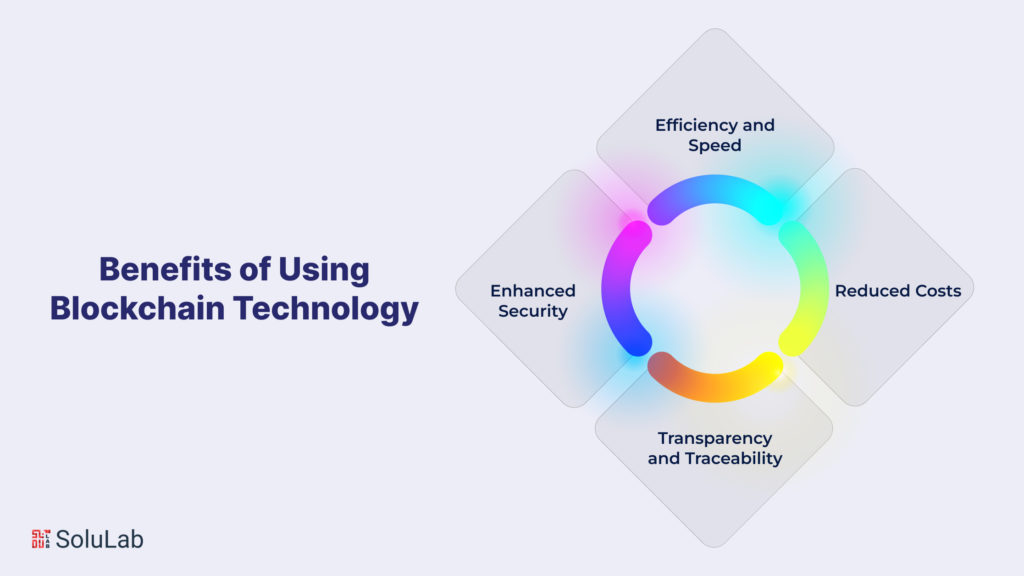
1. Stronger Security: Security is usually the first reason teams look at blockchain technology at all. Data on a chain is cryptographically protected, which makes it very hard to hack or forge. Every block ties to the one before it, so you end up with a chain nobody can quietly break. Blockchain development services put the security protocols in place so sensitive information actually stays that way.
2. Transparency and Traceability: Because the record is open and unchangeable, you can track and audit transactions as they happen. That matters most in supply chains, where you can trace where a product came from and everywhere it has been, which keeps quality and authenticity honest. Blockchain services help businesses stand these systems up without reinventing the wheel.
3. Lower Costs: Cut out the middlemen and a lot of cost goes with them. Blockchain technology tightens up processes that used to need a chain of intermediaries. Smart contracts are the clearest case: they run agreements on their own, so you lean less on lawyers and brokers to close the loop. Blockchain developers can tailor those contracts to whatever your business actually does.
4. Speed: Cross-border payments are the poster child here. Transfers that used to drag on for days, sometimes weeks, can settle in minutes. Sometimes seconds. Blockchain development services do the tuning that keeps networks fast under that kind of load.
Top 10 Real-World Applications of Blockchain Technology
Blockchain technology used to mean one thing to most people: cryptocurrency. Not anymore. Once you have a system that delivers security, transparency, and decentralization at the same time, blockchain platforms starts showing up in places nobody expected. Here are ten real ones, the top applications of blockchain technology worth knowing.
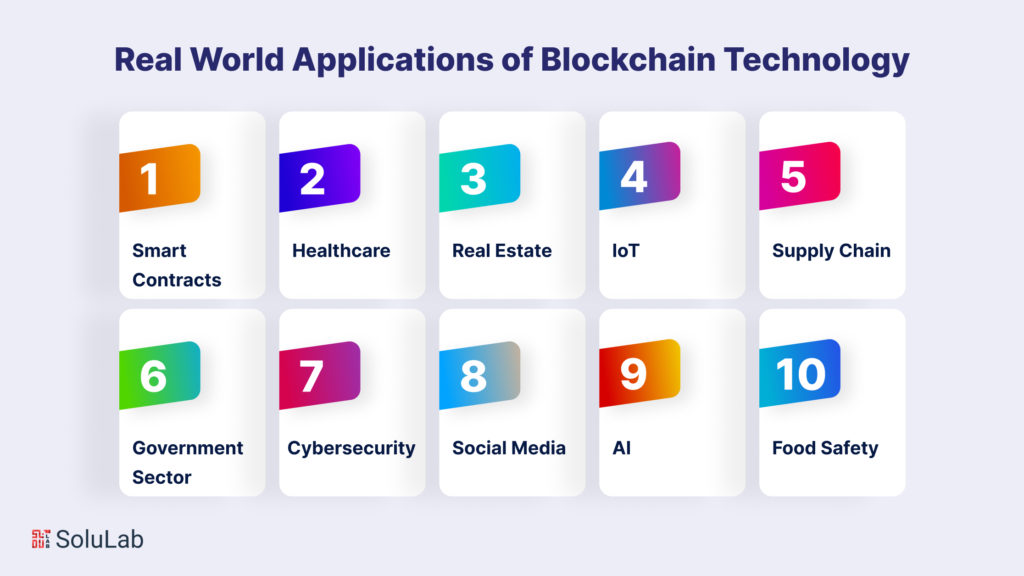
- Smart Contracts
Smart contracts are agreements written in code that run themselves. They enforce the terms without a person or middleman standing in between, which cuts a lot of friction out of legal and financial deals. The blockchain underneath keeps them secure and unchangeable, and that reliability is why you see them everywhere from insurance payouts to property sales.
The trigger is simple: the conditions are met, the contract executes. No waiting, no arguing. Fewer disputes, less room for fraud, and lower costs across a long list of industries.
- Healthcare
Healthcare is one of the most cutthroat industries anywhere, and it is exactly the kind of place blockchain is being pushed hard. Think of it as the next step in how the technology matures. The entire healthcare value chain can sit on a blockchain, which is really a supply chain problem wearing a lab coat.
Blockchain technology applications in healthcare can automate and reshape almost all of it: payments, health records, data collection, analytics. And nearly everyone in the loop wins, from patients and consumers to clinicians, administrators, and the organizations themselves.
- Real Estate
Real estate is ripe for this. Blockchain technology and applications can rework the whole thing. Teams are already building smart contracts that handle property agreements, escrow, and documentation without a title company or an attorney sitting in the middle. Picture buying a house the way you check out of an online store: click, confirm, done.
The blockchain solution handles both sides of that handshake. The buyer gets the title, the seller gets paid in cryptocurrency. How money and paperwork move is going to change, and honestly it already is. Brokers who want to stay relevant will have to learn how smart transactions work and rebuild their model around them.
- IoT
Connected devices leak trust at every hop. Blockchain tightens that up, giving Internet of Things devices more transparency and safety in how they talk to each other. Smart homes are a good example. IoT lets you run your home security from your phone, sure, but the usual centralized way of shipping that device data around falls short on both security and who actually owns the data. Blockchain fixes the security holes and drops the centralized single point of control, which pushes smart homes a real step forward.
Take Telstra, an Australian telecom and media company that sells smart home products. To make sure data from smart devices can’t be tampered with, they pair blockchain with biometric authentication. The chain holds the sensitive stuff, fingerprints, voice prints, facial recognition, and once that data lands on the blockchain it can’t be altered, with access limited to a very small group.
- Supply Chain
Supply chains have gotten complicated. Consumer expectations keep rising, more stakeholders pile in, and companies are hunting for anything that both simplifies management and untangles the many processes underneath. A lot of supply chain operators think blockchain fits, precisely because it bends to so many different uses.
The applications of blockchain in the supply chain in this space run wide. Tightening up supplier payments. Cold chain tracking. RFID-driven contract bids. Capturing a product’s status right at the point of production. Even using smart contracts to sell off surplus power from solar panels. And down the road, one enterprise plans to tokenize the shipping sector on Ethereum.
- Government Sector
Here is the tension. blockchain applications keep chipping away at the need for centralized government bodies, and the standoff between governments and cryptocurrencies looks set to come to a head over the next few years. At the same time, governments see what blockchains can do and keep looking for ways to use blockchain services to modernize and overhaul how they operate. Plenty already have, across a range of purposes.
Venezuela and Russia, for instance, have rolled out their own national cryptocurrencies to push transparency and cut corruption. Blockchains can also power tamper-proof voting systems that make forgery and fraud a non-issue. And they can sharpen identity management and tax administration on top of that.
- Cybersecurity
The more companies run their money and their models on the Internet, the more surface area they hand to attackers. Demand for cybersecurity that actually holds is at an all-time high. So what beats a decentralized structure with no obvious door to kick in? Blockchain development, built on distributed ledger technology, can genuinely raise the floor on cyber protection.
It comes down to a handful of core traits: operating resilience, data encryption, auditability, transparency, and immutability. Together those let blockchain systems block fraudulent activity and catch tampering early. And because a blockchain is distributed, there is no single point of failure to exploit, which makes it sturdier than the usual database-driven transaction systems.
- Social Media
Social media once swallowed everyone’s attention whole. That grip is loosening. Data breaches, users getting little to nothing back for the value they create, one misstep after another, and the shine wears off. Saying social media is losing its edge is not a stretch anymore.
This is where blockchain walks in. Its decentralized, distributed ledger design flips the model: people get more say over how their personal information is protected, and they can even earn something for the viral content they choose to share. Blockchain technology could lift ordinary social media into something genuinely different.
- AI
AI running on top of blockchains gets called an accounting disruptor, and it might turn out to be one of the most powerful, and most dangerous, things we have built. Decentralized Autonomous Organizations (DAOs) could come out of decentralizing AI.
DAOs are organizations that run on their own, decentralized, powered by smart contracts, with no single entity pulling every lever or making every call. Done right, an AI DAO could eventually outdo human design by learning from data and tuning itself far past what people manage by hand. Put blockchains and AI together, a “decentralized AI” if you like, and you open new doors for data security, data monetization, and smarter algorithms.
- Food Safety
Farm to table, tracked the whole way. Blockchain follows food items across every step, which keeps safety and traceability intact. When a contamination outbreak hits, authorities can pinpoint the affected products fast and cut the health risk short. Shoppers get something too: they can check whether that “organic” or “locally sourced” label is real.
The payoff is trust in the food supply chain, less waste through better inventory tracking, and an easier time meeting food safety rules.

Final Words
Blockchain keeps spreading, from powering cryptocurrencies to reworking whole industries. Cleaner supply chain visibility, safer digital identities, and a way of handling data that is decentralized, open, and hard to tamper with, it is changing how businesses actually run. The applications above, across finance, healthcare, logistics, real estate, and more, all point the same direction: more security, more efficiency, more trust, and less cost and complexity along the way.
Getting there is the hard part. Blockchain projects need real expertise and a clear plan, not a bolt-on. That is where an experienced Blockchain Consulting Company like SoluLab comes in. SoluLab runs end-to-end blockchain development services shaped around what your business needs. Tighter processes, safer data, smart contracts: the technical depth and the industry experience are already there to make it real.
When you Hire Blockchain Developer from SoluLab, you get a dedicated team that knows how to build secure, scalable, compliant blockchain applications. They handle the messy parts of implementation so your solution comes out sturdy and ready for what is next. Consultation, development, deployment, maintenance, they stay with you through each stage so the move to blockchain is smooth and actually drives growth.
If you are ready to see what blockchain could do for your business, SoluLab is here to turn the idea into something real.
FAQs
Shipra Garg is a tech-focused content strategist and copywriter specializing in Web3, blockchain, and artificial intelligence. She has worked with startups and enterprise teams to craft high-conversion content that bridges deep tech with business impact. Her work translates complex innovations into clear, credible, and engaging narratives that drive growth and build trust in emerging tech markets.