NFTs are big business. Trading volume on the NFT market has hit $24.9 billion, which is a hard number to ignore. At its core, a non-fungible token is a cryptographic stand-in for a specific digital asset. And it doesn’t stop at digital things: real estate, jewelry, and artwork can all be tokenized the same way.
Plenty of industries are being reshaped by NFTs. Events got there early, though, using them to tie the physical ticket and the digital one together. Think back. Before digital ticketing, people kept their paper stubs in shoeboxes and scrapbooks. Digitization made ticketing faster and more efficient, and that groundwork is exactly why anyone can now pick up an NFT ticket system and trust it.
Still, a bare QR code with no story behind it feels a bit hollow. Nobody treasures a digital ticket, and you can’t really keep one. Paper has its own problems: it gets lost, soaked, torn. It’s also easy to fake, so the security is thin. QR codes fix part of that for organizers. For the person holding the ticket? Not much changes.
NFT ticketing means nobody has to settle, and the tech works in favor of planners and attendees at the same time. Below, we’ll walk through what NFT ticketing actually is, why it helps, where it’s being used, and a fair bit more.

What is NFT Ticketing?
An NFT is a record of ownership and authenticity that lives on a blockchain. Only one person can legally own it at any given moment. It can’t be edited. It can’t be forged.
Paper tickets used to be distinctive objects. Then digital tickets arrived and made the whole system more reliable and efficient, but you lost something along the way, because a digital ticket isn’t something you can hold on to. NFTs close that gap. They make the ticket do more, and they turn it back into a keepsake you can actually collect.
An NFT ticketing system can turn the old model on its head and fix what’s broken in it. Since the tickets sit on the blockchain, fraud gets much harder, and producing them is quick and cheap. Lose your phone or crack the screen? The ticket isn’t gone with it.
What are the Challenges Linked With the Traditional Ticketing System?
Traditional ticketing has a handful of problems that drag it down. Manual processes eat time and invite human error, which means delays and annoyed customers. Physical distribution limits who can get a ticket and turns logistics into a headache. Then there’s scalping and fraud, which never seem to go away and keep chipping at both trust and revenue. For NFT ticketing companies, getting past all this means moving to ticketing that is digital, automated, and secure.
1. Scalping
Scalping, sometimes called black marketing, is the illegal practice of buying tickets cheap at the source and flipping them at a markup. The people doing it often use familiar sites like Viagogo, OLX, and Craigslist. Most studies and reports point to roughly one in five ticket buyers being a reseller, usually male, who buys and sells event tickets as a routine [SOURCE NEEDED].
2. Forgery
A CNBC investigation found that at least one in every 10 event tickets bought in the United States is fake. The bigger the hype around an event, the likelier it is that the tickets floating around are counterfeit. QR-code ticketing does have some verification steps built in. Blockchain gets you closer, though, to actually proving a ticket is real.
Read Our Blog: Metaverse NFT – Foundation Of Next Blockchain Revolution!
3. Protocol for Zero Exchange
Tickets get sold across a patchwork of web platforms that don’t talk to each other. A centralized QR ticketing system has no exchange protocol baked in, nothing to connect those platforms so they can share data with ticket sellers. The result is predictable. Organizers lose track of their customers, and data from some vendors never makes it back to them.
4. Client Trust
Another piece of CNBC research found that two-thirds of event ticket buyers worry about getting scammed, whether that’s buying a fake ticket or falling for some other con. It gets worse when the ticket is expensive and the event is in another city or country. Who wants to fly somewhere and get turned away at the gate? So trust in the old system is always on shaky ground.
5. Expensive Service
The usual QR ticketing setup runs through middlemen, and middlemen charge. A good chunk of what buyers pay isn’t for getting in at all. It’s for the convenience of not having to go to the venue or queue at a box office. That service cost bundles operation fees, delivery charges, risk premiums, and other expenses that sit outside the face value of the ticket.

How Does NFT for Ticketing Work?
NFTs are unique digital tokens stored on a blockchain. Once they’re created there, they can be sold to customers online. Buyers then keep them in a secure wallet they can open on any device.
Using the ticketing system, an event planner mints however many NFT tickets they need on any blockchain platform they like. Pricing is up to them. They can code a fixed price into the NFTs, or run the sale as an auction and let people bid.
Customers buy NFT tickets straight from the ticketing provider. Payment lands, a smart contract kicks off, and the ticketing database hands the buyer an NFT ticket.
Next, the ticketing firm requests that the ticket be uploaded to IPFS. The tickets are stored in the database while IPFS works out the hash. Then the NFT tickets are created and pushed to whichever NFT marketplace was chosen.
Owners can resell their NFT tickets on that marketplace too. The ticket is held inside a smart contract. When someone buys it from the current owner, the contract fires and the seller gets paid automatically. No chasing anyone for money.
What Impact Does NFT Have on the Ticketing Industry?
Oddly enough, an NFT ticketing platform has more in common with the old paper ticket than with a QR code. The tickets are non-fungible, so each one is good for a single event only. They also respect the venue’s capacity. Once the limit is reached, nobody can buy another one.
Compare that with the traditional route, where tickets pass through several distribution channels, each with its own rules. That’s the opening. Resellers, or people working inside those channels, can bump the price and pocket the difference.
Blockchain brings some clarity to the mess. Organizers and buyers alike can see where a ticket stands, whether it’s still available or already sold, and what’s happening on both the primary and secondary markets. Organizers can also confirm their tickets went to the right buyers at the right price.
Smart contracts can go further inside an NFT ticket system, letting organizers cap the resale value of tickets and control the fees attached.
If you want the most out of an NFT ticketing system, give attendees a mobile app that’s easy to use, since most of them will be on their phones anyway. The system itself can run on several strong, decentralized blockchains, with optional hooks into sales and distribution channels like Facebook, Instagram, Amazon, Snapchat, and Stubhub. At big Vegas conventions and hybrid shows, lining up NFT check-ins with on-site AV crews like Audio visual labor Las Vegas keeps scanners, signage, streaming, and stage operations in sync, so entry runs smoother and the crowd stays engaged.
How is the Selling of NFT Tickets Going?
Organizers can mint as many tickets as they want on the blockchain and sell them the normal way, through their own website or app. They can also program pretty much anything into the NFT: the ticket artwork, an ID number, how verification works, even the sales method (fixed price or auction).
Once someone buys an NFT ticket, it sits in their wallet (the same kind people use for Bitcoin or Ethereum tokens). Getting to it on a phone is simple. From that wallet, they can manage the ticket, say by selling or returning it, or show the key at the door.
Under the hood, the flow goes like this:
- The client purchases a ticket and pays the supplier: Payment triggers the smart contract, which either creates and sends a new NFT ticket to the buyer or transfers one that already exists in the database.
- The ticket-supply mechanism prompts the user to upload the ticket to IPFS: The tickets get logged in a database. NFT tickets are then generated and routed to the right NFT marketplace.
- Ticket holders may resell NFT tickets: To do that, they use the matching tool on the NFT platform. It kicks off a smart contract, and that contract is what keeps the transaction secure.
How NFTs Solve Traditional Ticketing Challenges with NFT Ticketing?
NFT ticketing could shake up the traditional industry by fixing what’s inefficient in it and opening doors that weren’t there before.
Fraud Prevention
- Paper tickets and QR codes are easy to counterfeit. That’s a security risk, and it’s a gut punch for the fan who gets turned away. With NFT tickets, every transaction is written to a blockchain ledger, so you can check each ticket’s authenticity and its full ownership history. Fraud drops sharply, and events get safer.
Cost-Efficiency and Speed
- NFT tickets are faster and cheaper to produce than traditional ones, which trims a lot of friction out of the ticketing process. There’s no waiting on printing or shipping. Organizers get more room to move and run their events more efficiently.
Revenue Opportunities
- Here’s the part organizers tend to like most: revenue that keeps coming. Smart contracts inside NFT tickets can pay royalties to artists and organizers automatically. And when a holder resells a ticket on a secondary market, the creator can take a cut of that sale. That gives creators a real reason to adopt NFT ticketing, and it means they get paid fairly for their work.
Risk Mitigation
- Paper tickets get lost or damaged, and that’s a hassle for whoever was holding them. NFT tickets live securely in digital wallets, so that risk mostly disappears. Holders pull up their tickets on a phone whenever they need them. Simple, and dependable.
Put it together and, when you create NFT ticketing, you’re answering the main complaints about traditional systems: better security, more efficiency, new revenue, and less risk.
What are the Benefits of the NFT Ticketing System?
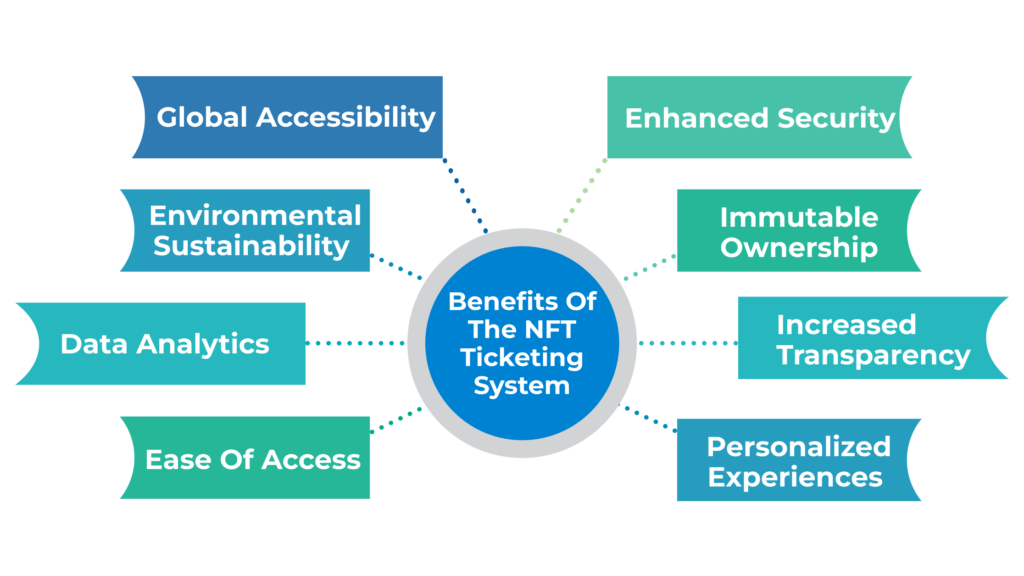
NFTs have changed how people think about ticketing, and both organizers and ticket holders come out ahead. An NFT is a one-of-a-kind digital asset that proves ownership or validity. Apply that to tickets and you get more security, more transparency, and more flexibility, plus a ticketing experience that just works.
These are the main reasons to use an NFT ticket platform:
Enhanced Security
NFTs run on blockchain, which confirms each ticket is genuine and shuts down counterfeiting and other fraud. Because the blockchain is decentralized, the transaction record can’t be tampered with. That protects organizers and ticket holders alike.
Immutable Ownership
Ownership is recorded clearly, so there’s nothing to argue about. Tickets can be transferred or resold on secondary markets safely. A holder can prove the ticket is theirs and pass it on without fuss, and everyone can see the process is above board.
Increased Transparency
With a blockchain-based NFT ticket system, every transaction leaves a visible trail. That makes people accountable and makes scalping or price games much harder to pull off. Since each sale is on the chain, tracking and verifying ticket sales gets a lot easier.
Personalized Experiences
NFT tickets can carry extras: VIP area access, a meet-and-greet, a digital collectible. Small touches like these make the event feel more personal, and they give holders the sense that they’re in on something not everyone gets.
Read Blog: Solana Marketplace NFT: How to build your own NFT Marketplace
Ease of Access
NFT tickets sit in a digital wallet, so they’re right there on your phone. No physical ticket to carry. Less chance of losing or damaging it, and getting through the entrance is simpler for everyone.
Data Analytics
NFT ticket systems hand organizers useful data, like who’s attending and how they buy. Organizers can use it to understand what their audience wants, sharpen their marketing, and plan the next event better.
Environmental Sustainability
NFT ticket systems cut down on physical tickets, and with them the paper and ink it takes to make them. Switching to digital NFT tickets lets organizers shrink their carbon footprint in a meaningful way and do their part for a greener future.
Global Accessibility
NFT ticket systems don’t care where you live. Someone anywhere in the world can buy a ticket and attend. Organizers reach a wider audience, and fans get into events that would otherwise have been out of reach.
Add all of that up and NFT ticket systems look like a strong bet for the ticketing industry: security, convenience, personalization, and a lighter environmental footprint in one package. By building on blockchain technology and digital assets, NFTs are changing how tickets get bought, sold, and experienced, and the whole ticketing chain becomes more efficient and more open to everyone.
NFT Ticketing Use Cases Explored
1. NFT Ticketing for Concerts, Festivals, and Live Events
NFT ticketing platform tools give organizers and artists fresh ways to connect with their audience. They could bundle exclusive photos and videos from the show into the ticket, or hand out invite-only passes. Lifetime passes are on the table too, the kind Kings of Leon and Coachella have offered. NFT tickets can also plug into rewards-based video games and one-off experiences, which builds brand engagement and keeps fans coming back.
2. NFT Ticketing for Sports Events and Games
For sports, the angle is digital passes that update when they’re redeemed. Those tickets can come with extras like free food and drink vouchers, exclusive merchandise, and airdrops of more NFTs. Show up to game after game and the rewards grow, up to personal meet-and-greets and seat upgrades. That’s how you keep fans engaged over a whole season. The NBA, for instance, plans to issue NFT “ticket stubs” to fans who redeem their tickets at the venue, which could bring in passive revenue from later secondary sales.
3. NFT Ticketing for Conferences, Meetups, and Other Events
Conferences and meetups get a lot out of NFT ticketing as well. Take Consensus, the annual blockchain and crypto conference. In 2019 it gave attendees an NFT swag bag with items such as CryptoKitties. Those CryptoKitties rose in value over time, which showed that an NFT swag bag can turn into a collectible that appreciates. The lesson for organizers is simple: an NFT ticket can make the event itself more valuable, pull in more attendees, and keep them engaged well after they leave
What Opportunities Does NFT Ticketing Provide To Guests?
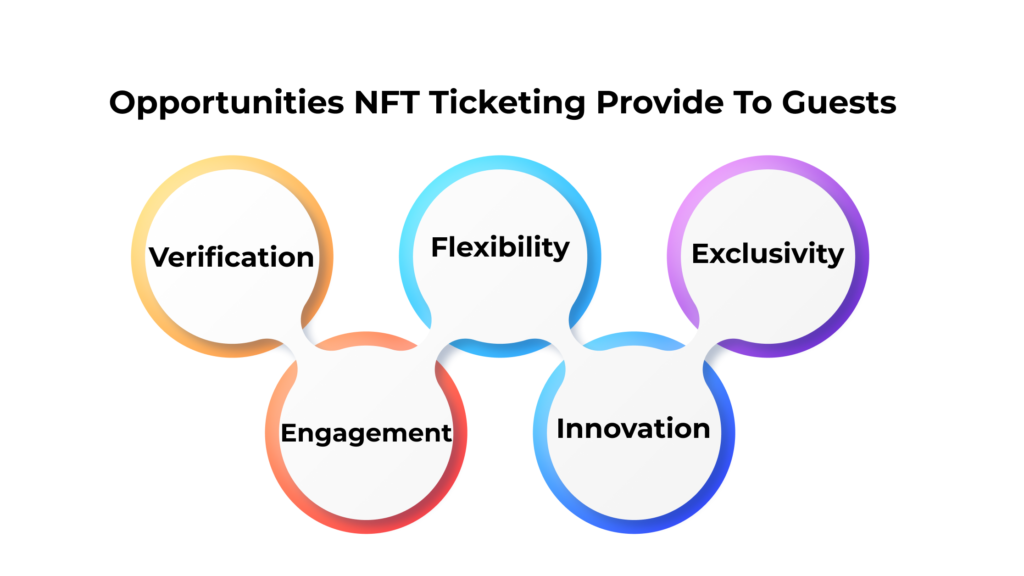
NFT ticketing changes the event experience for guests in a few concrete ways:
- Verification: Guests can check on the blockchain that their ticket is valid and that it’s really theirs. Fewer fake tickets. More peace of mind.
- Flexibility: NFT ticketing lets people pass their tickets on safely and easily, whether that’s gifting one to a friend or family member or reselling it on the secondary market. Plans change. If a guest has to reshuffle or can’t make it, they aren’t stuck.
- Exclusivity: Limited-edition, collectible tickets made just for the event give attendees a feeling of being part of something exclusive. They enjoy the event more, and they walk away with a souvenir that actually means something to them.
- Engagement: Because NFT ticketing lets organizers design personalized tickets that carry the event’s theme or logo, the ticket itself becomes part of the fun. People feel more tied to the occasion, and they tend to enjoy it more while they’re there.
- Innovation: NFT ticketing is a fresh, creative take on event ticketing. It signals that the organizer wants to stay ahead on technology and give attendees something new.
Read Our Blog: The Future of NFTs: More Than a Digital Collectible
For guests, then, an NFT ticket platform means attending events in a way that’s safer, more flexible, more exclusive, more interesting, and more inventive. That tends to make the whole experience better, and people leave happier.
What Opportunities Does NFT Ticketing Provide To Organizers?
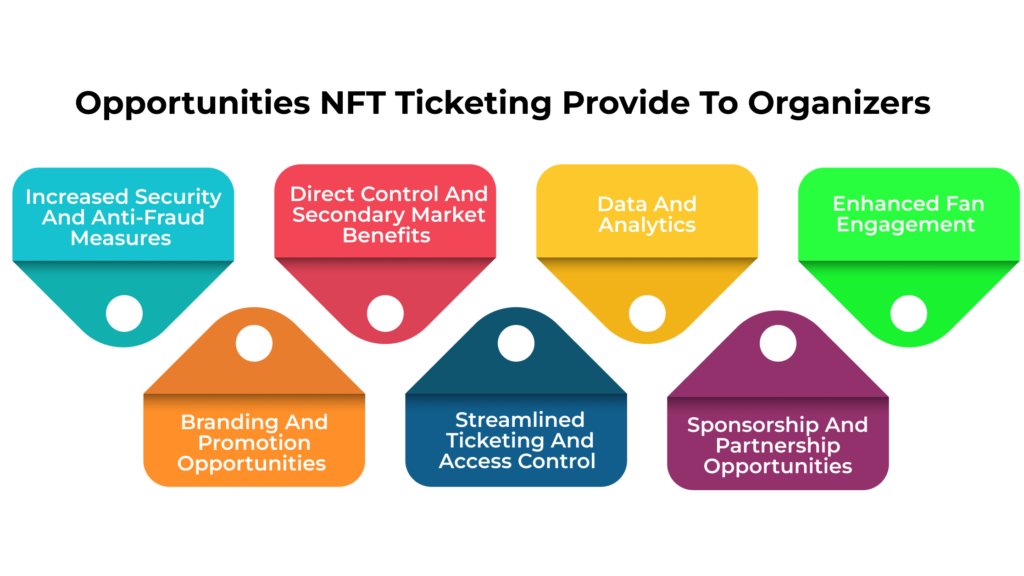
NFT ticketing gives organizers a lot to work with, from running the event to making money to keeping fans engaged. Here’s what NFT ticketing puts in an organizer’s hands:
- Increased Security and Anti-Fraud Measures: NFT tickets run on blockchain, which gives them strong security and takes counterfeits off the table. Organizers are protected from ticket fraud and gatecrashers, and the event keeps its integrity.
- Direct Control and Secondary Market Benefits: With NFTs, organizers control ticket sales, pricing, and distribution directly. They can write the rules for resale and earn royalties on secondary market deals, which is a second revenue stream. Having a grip on the secondary market also helps stop scalping and price manipulation.
- Data and Analytics: NFT ticketing app tools give organizers useful data on ticket sales, who’s attending, and how people engage. That feeds better decisions, sharper marketing, and smarter planning next time around.
- Enhanced Fan Engagement: NFT ticketing lets organizers offer ticket holders perks and experiences nobody else gets. Unique digital collectibles, access to special events or content: these deepen the bond between fans and the event and build real loyalty and enthusiasm.
- Branding and Promotion Opportunities: NFTs give organizers a new way to show off their brand and promote the event. A custom-designed NFT ticket can double as a collectible or limited-edition memorabilia, and that stirs up extra excitement and buzz.
- Streamlined Ticketing and Access Control: NFT ticketing platforms often connect with event management software, which simplifies ticketing and cuts admin work. And because NFT tickets are digital, there’s no physical ticket to print or ship, so the costs and logistics that come with that go away.
- Sponsorship and Partnership Opportunities: NFT ticketing gives organizers new ways to work with sponsors and partners. NFTs can be co-branded or carry sponsored content, which brings in more revenue and opens the door to cross-promotion.
So for organizers, NFT ticketing means unique experiences, smoother operations, and more revenue. It brings new ideas and real transparency to ticketing, and both organizers and attendees benefit.

Conclusion
NFT ticketing uses blockchain to deliver a level of transparency, security, and interaction the ticketing business hasn’t had before. It’s a genuine step forward. As a leading provider of NFT marketplace development services, SoluLab stands out for offering the full set of services: tokenization, smart contract development, NFT consulting, and marketplace support. With SoluLab’s experience behind them, event planners and companies can get the full value out of NFT tickets by building secure, flexible platforms for trading digital assets.
NFT ticketing does more than improve the night itself. It opens up new room for growth and creativity. And the technology is still moving fast, so the teams that start now will set the rules everyone else follows. Working with SoluLab keeps your business ahead of that shift. If you’re ready to start building NFT ticketing and see what it can do for your events, get in touch with SoluLab today.
FAQs
Shipra Garg is a tech-focused content strategist and copywriter specializing in Web3, blockchain, and artificial intelligence. She has worked with startups and enterprise teams to craft high-conversion content that bridges deep tech with business impact. Her work translates complex innovations into clear, credible, and engaging narratives that drive growth and build trust in emerging tech markets.