Non-fungible tokens (NFTs) gave digital artists and creators something they never really had before: a way to show their work and get paid for it on their own terms. Because NFTs live on a blockchain, a creator can prove who owns a piece, that it is the real thing, and how many copies exist. Ownership, authenticity, scarcity. For digital files, that used to be nearly impossible.
Here is what changes when you mint (create) your content as an NFT and sell it. You deal with your audience directly. No gallery, no agent taking a cut in the middle. You keep more of what your work earns and you decide how it is sold. So if you are an artist, a musician, a writer or any other kind of creator, it pays to understand the process of creating an NFT before you jump into a market that is still changing quickly.
This guide walks through how to create my own NFT token in 2026, step by step. We will cover the practical steps, the strategy behind a good launch, and the things people usually learn the hard way. By the end you should know exactly what to do first, and what to skip.
Why Create Your NFT Token?
Creating your own NFT Token in 2026 still makes sense, and the reasons track closely with where digital culture and technology are heading. Why bother this year? A few motivations keep coming up:
1. Asset Portfolio Diversification: NFTs give you a different kind of digital asset to hold. Art, music, virtual real estate and plenty more can all be tokenized, so creators and investors can spread their holdings beyond the usual stocks and savings. For some, that makes the overall investment mix stronger.
2. Monetization Opportunities for Creators: This is the big one for most people. Musicians, artists, game developers and content creators can sell digital work directly and get paid right away. Fewer middlemen. New income streams that simply did not exist a few years back.
3. Gaming Industry Innovation: Gaming took to NFTs early, because they let players truly own what they earn or buy in a game. Players can buy, sell and trade virtual items across different games, and a busy market for digital goods has grown up around it.
4. Virtual Real Estate and Metaverse Advancements: As metaverse ideas grow, NFTs have become the standard way to show who owns a plot of virtual land or a digital property. Minting NFTs tied to virtual real estate lets dedicated developers take part in the metaverse economy, where people spend real time inside digital worlds.
5. Digital Identity and Authentication: An NFT can represent a digital identity or prove a digital asset is genuine, securely and in a way anyone can check. Think certificates, licenses and credentials. The record of ownership or achievement is transparent and very hard to tamper with.
6. Integration with Web3 Technologies: Web3 and decentralized applications (DApps) keep maturing, and NFTs fit naturally inside them. Put the two together and you get more decentralization, more control for users, and better experiences across a wide range of apps and platforms.
7. Community Engagement: Holding a creator’s token often means joining their inner circle. NFTs build a direct line between creators and fans, and holders frequently become core members of a community bound by shared interests and values. What follows is more collaboration, more loyalty, and more backing for the creator’s work.
8. Interoperability and Cross-Platform Integration: Standards like ERC-721 and ERC-1155, both finalised in the Ethereum Improvement Proposals process, let NFTs move between platforms and keep working when they get there. That portability makes NFTs easier to trade and more useful, which is exactly what creators and users want.
Put simply, making NFTs in 2026 is a chance to work in a digital space that is lively and still moving fast. Maybe you want a broader portfolio. Maybe you want to sell your work directly, or build something for the metaverse. Whatever the reason, those who create NFT tokens will keep shaping how digital ownership and interaction work.
How to Prepare for NFT Creation?
Before you mint anything, get a clear picture of the whole process. It saves a lot of wasted gas and second-guessing later. This is how we would approach the early stages:
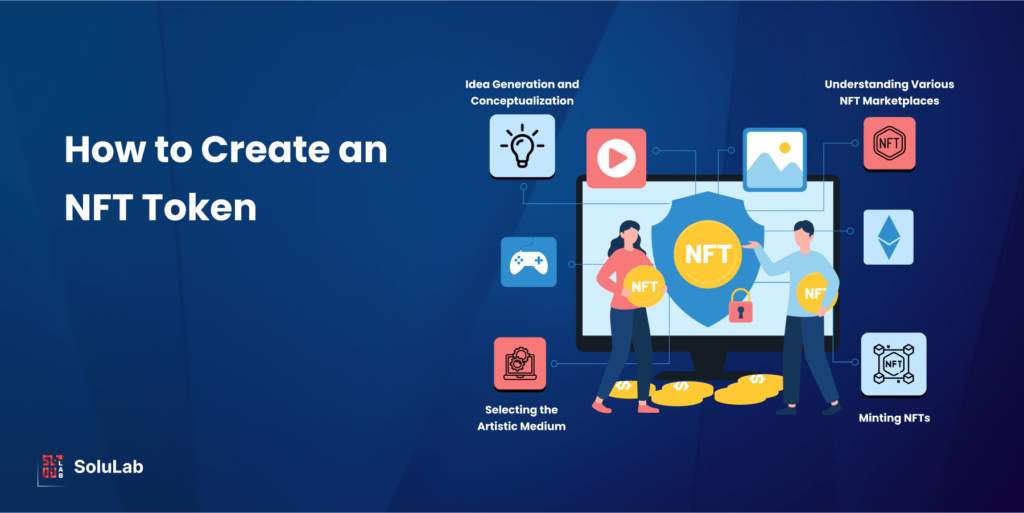
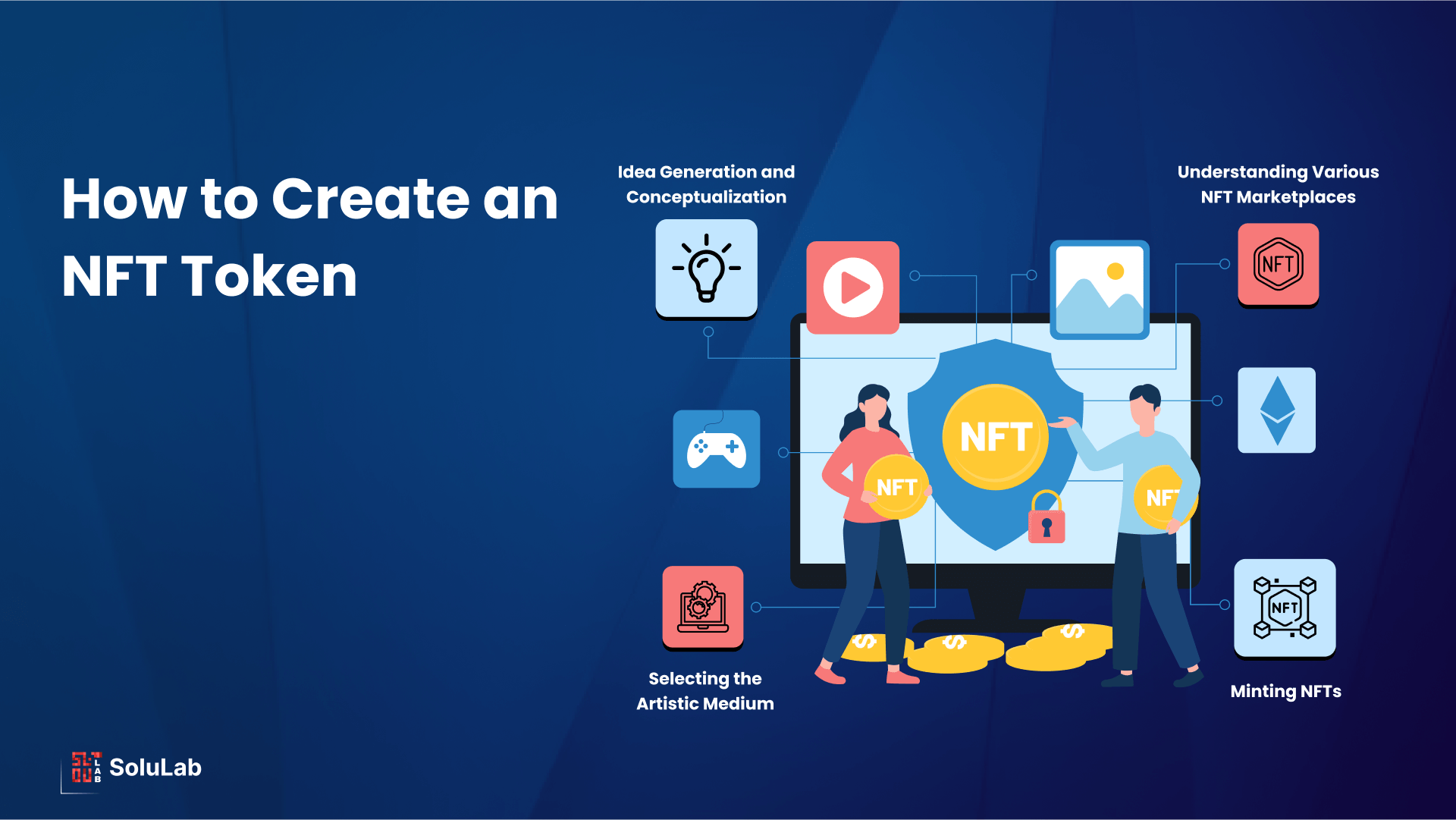
1. Idea Generation and Conceptualization
Everything starts with the idea. A strong, original concept is the foundation, so give brainstorming real time. Ask yourself one blunt question: would a buyer or collector stop scrolling for this?
Originality is what sells. Offer something distinct and worth owning, something that grabs the audience you are aiming for and meets what the market actually wants. Feed your creativity from lots of places. Talk with other artists and creators in the NFT community to swap ideas and hear how they think. Keep up with new trends by following NFT marketplace, social media accounts, and online communities focused on digital art and collectibles.
Spend time browsing NFT art platforms, galleries and marketplaces, and study the projects that worked. What made them popular? Take those lessons and sharpen your own plan with them. The more time you spend around the NFT space, the more ideas you will pick up for your next project.
2. Selecting the Artistic Medium for NFT Creation
Next, pick your medium. Digital art, music and video are the usual options, and the right one is whichever fits your creative vision and your actual skills. Choose the medium that makes your work hit hardest and feel most like you. Comfortable with digital tools? Digital art is probably the natural fit. Good at music production or video editing? Then use that to make something new as an NFT.
Whatever you choose, make it high quality and resolution-independent. People will view your NFT on everything from big monitors to phones, so it has to look sharp and true at every resolution and screen size. If it falls apart on a small screen, it loses value and impact.
Polish the composition, the color palette and the overall presentation. In a crowded market, that finish is what gets your NFTs noticed.
3. Understanding the Various NFT Marketplaces
Where you sell matters as much as what you sell. Each NFT marketplace works a little differently, and you want the one that suits your artwork and your goals. A few of the best known:
- OpenSea: One of the largest and best-known NFT marketplaces, with a huge catalog covering art, collectibles, virtual real estate and more. People like its interface, and minting and listing an NFT is easy. It offers customization and works with several blockchains. The catch? There are so many listings that a new artist can easily get buried.
- Rarible: Built with artists and collectors in mind. Rarible is easy to use and lets you customize NFT attributes, set royalties, and connect with people through a social feed. It puts community governance first. It runs on the Ethereum blockchain, though, so gas fees can be high. And because there is little curation, strong projects can struggle to stand out.
- SuperRare: A curated marketplace for high-quality, single-edition digital art. It is selective on purpose, aiming to give collectors an immersive experience built around scarcity and uniqueness. Exclusive pieces sell through an auction system. The downside for artists is obvious: that tight curation makes it hard to get in.
So how do you choose? Start with your medium, since some platforms specialize in one thing, like digital art or music. Then ask whether the platform reaches the audience you are after.
Look hard at each marketplace’s community. Does it draw collectors and fans who actually care about your kind of work? Compare the features and customization each platform gives you, and read the fine print on fees and revenue sharing so there are no surprises. Favor platforms with a solid track record, good user reviews and a real commitment to artists and creators. Weigh all of that and you will pick a platform that fits your work and your ambitions.
Creating and Minting NFTs: A Step-by-Step Guide
Creating and minting an NFT comes down to a handful of steps that get your content ready to upload and turn into a token. Here they are, in order:
- Creating Content
First, the file itself. Before you mint, your content has to meet the technical requirements and look its best on screen.
Most NFT marketplaces accept the usual image formats: JPEG, PNG or GIF for still images, and MP4, GIF or WEBM for animations and video. Check what your chosen marketplace wants and match it. Work in high resolution, at dimensions that display cleanly on all kinds of devices.
Big files load slowly, and slow loading annoys buyers. Compress the file, but not so much that quality suffers. Keep the original aspect ratio too, so your artwork does not stretch or squash on different devices and platforms.
A watermark is worth considering to protect your work from unauthorized use or copying. To prove it is yours, sign it digitally or build your signature into the piece.
- Choosing the Right Blockchain Network for NFT Minting
This decision shapes almost everything after it. Popular blockchain networks for NFTs include Ethereum, Solana, Binance Smart Chain, and Flow.
Every network has its own character and its own community, so weigh transaction fees, scalability, the size of the user base and how much support the community offers. What it costs to create an NFT can differ a lot from one network to another. Pick one that fits your budget and what you are trying to achieve.
Once you have a network, set up an NFT wallet. There are plenty of NFT-compatible wallets, each suited to different needs. For Ethereum-based NFTs you can use MetaMask or Trust Wallet. For BNB Chain NFTs, Binance Wallet is the official option.
Minting Your NFT: Step-by-Step Process
Ready to mint? Work through these steps:
1. Connect Your Wallet: With your best NFT wallets set up, connect it to the NFT marketplace you picked. On OpenSea and Rarible, hit the Create button, choose your wallet from the list, and follow the prompts.
2. Prepare Metadata and Information: Every NFT listing needs its basic metadata filled in: title, description, tags, plus any extra attributes or properties that belong to that piece.
3. Specify Royalties and Pricing: Decide what royalty you want on each resale of your NFT. Check how the marketplace handles royalties, then set a fair starting price.
4. Decide on the Edition: One of a kind, or part of a limited-edition series? Make the call, and state plainly how many editions exist.
5. Mint: Follow the marketplace’s own rules to create and upload your NFT. Usually that means uploading the artwork, entering the required details and metadata, and confirming the transaction as instructed.
NFT Marketing Strategies for Maximum Impact
Minting is only half the job. If you want your work to stand out in a crowded market, build some buzz and attract buyers, you have to market it well.
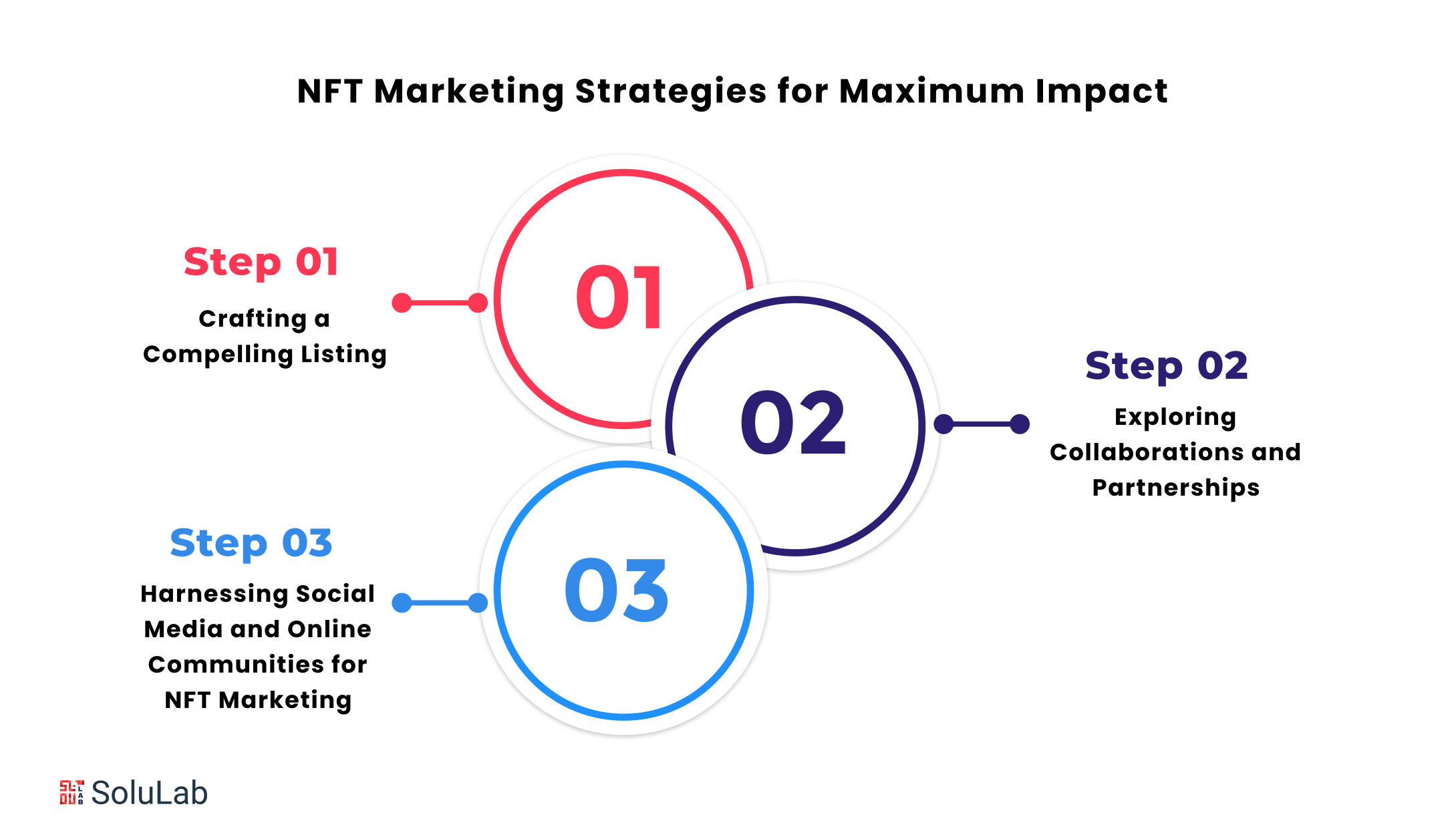
- Crafting a Compelling Listing
A listing that grabs people makes them far more likely to buy or bid. Write a title that catches the eye and still describes the piece honestly. Use vivid, specific language that makes people curious enough to click.
Then tell the story in the description. Where did the idea come from? How did you make it? What makes this NFT worth a second look?
Letting collectors see a bit of your journey as an artist builds a connection, and with it trust and interest. Add high-resolution images from different angles, with close-ups and detail shots, so buyers see the whole piece. A preview video can help as well, bringing the work to life by showing interactive parts, animation or how you made it.
- Exploring Collaborations and Partnerships
Teaming up with other artists and creators in the NFT community has plenty of upside. The biggest one: their collectors start seeing your work too.
Join the conversations in community forums and on social media, and look for artists who share your values, themes or style. Then think about doing a joint NFT project together. That could mean making new work side by side, contributing to a themed collection, or simply backing each other’s drops.
- Harnessing Social Media and Online Communities for NFT Marketing
Promoting your NFT on social media platforms well means showing up in the online communities that matter. Build a real presence on Twitter, Instagram and Discord. Post regular updates on your work, share behind-the-scenes glimpses, and talk with the people who follow you. Use relevant hashtags and tags so new buyers can find you.
Join the NFT communities and forums where artists and collectors hang out. Take part in discussions, show your work, and offer useful thoughts instead of just dropping links. Being active there builds relationships, gets you seen, and brings honest feedback on what you make. Joint giveaways and community events are another good way to raise your profile and get people talking.
Diverse Types of NFTs
NFTs, or non-fungible tokens, have spread into all sorts of industries, and the range of unique digital assets is wide. The popular types cover both creative and practical uses:
1. Profile Pics (PFPs): Profile picture collections such as Bored Apes and CryptoPunks usually feature characters with different traits, like clothing and colors, released in limited editions.
2. Gaming Avatars and Items (Play-to-Earn Games): In play-to-earn (P2E) games like Axie Infinity and The Sandbox, players use NFT avatars and items, such as virtual land or weapons, to play, earn rewards and trade for profit.
3. Artwork: Digital artists sell their work as NFTs. They set its characteristics at upload and create either a single piece (1/1) or multiple editions, each with its own token ID that proves ownership.
4. Generative Art: Made by algorithms or artificial intelligence. Projects like Autoglyphs and Fidenza produce one-off pieces within rules the artist defines.
5. Collectibles: Remember trading cards? NFTs put them online. Collections like NBA Top Shot and Socios.com let fans own and trade officially licensed content.
6. Photography: Photographers list digital or scanned photos on NFT marketplaces. They keep the copyright and collect royalties, while buyers own the NFT.
7. Music Releases: When NFTs are tied to songs, albums or video clips, musicians can release directly, keep their revenue, and earn royalties on both first sales and resales.
8. Event Tickets: NFT tickets, such as Live Stubs from Live Nation, give attendees special experiences and rewards. Organizers get fresh ways to connect with their audience.
9. Membership Passes: An NFT pass gets you into exclusive services and rewards. The blockchain handles verification, and holders get perks nobody else does.
10. Domain Names: Services like Ethereum Name Service (ENS) and Unstoppable Domains turn domain names into NFTs that people can buy, manage and trade. Some of these names have sold for serious money.
Benefits of Creating an NFT Token
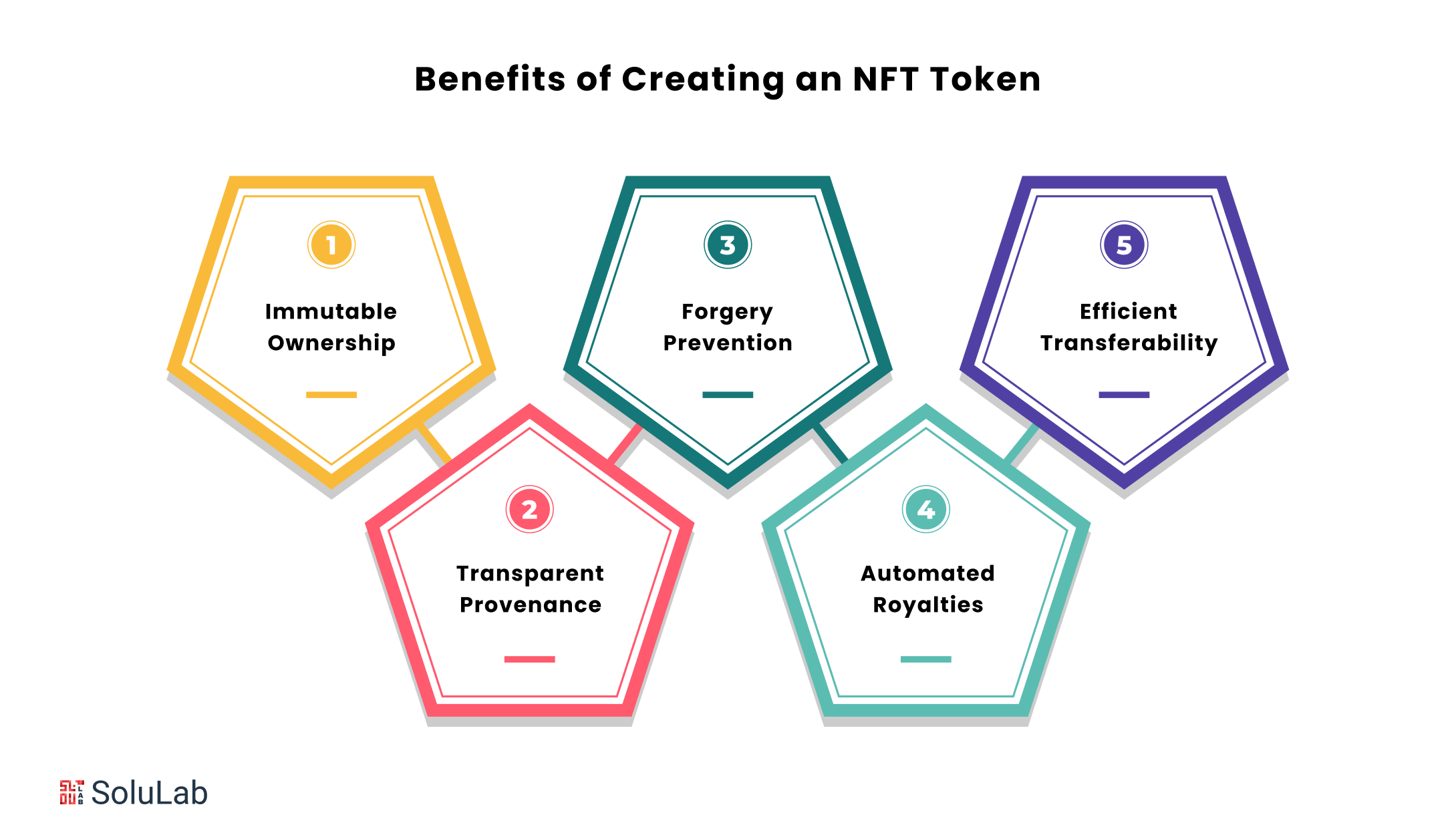
For artists and content creators, an NFT token brings benefits that are hard to get any other way. Clear ownership. A public, traceable history. Royalties paid automatically through smart contracts. Together they change how digital work gets sold, open up new ways to earn, and put creators in front of buyers around the world.
Here is what you actually get when you create an NFT Token:
- Immutable Ownership
Blockchain is what makes NFTs work, and it changes how ownership is proven. A normal digital file can be copied endlessly. An NFT relies on the blockchain’s permanent record, so creators and collectors get proof of ownership nobody can argue with.
- Transparent Provenance
Every NFT carries its own history, open for anyone to read and impossible to rewrite. Each transaction is logged on the blockchain. That trail of ownership adds to the asset’s value, and it reassures collectors that what they are buying is legitimate.
- Forgery Prevention
Fakes have plagued the art world for a long time. NFTs use the blockchain’s properties to block forgery and counterfeiting: each token is distinct, so it cannot be duplicated or altered. The digital asset stays authentic and intact.
- Automated Royalties
This is where NFTs really break from the past. Smart contracts send a royalty to the creator automatically every time the NFT is resold. So if your work gains value and changes hands again and again, you keep earning from it.
- Efficient Transferability
Moving a physical painting or collectible is a hassle. Moving an NFT is not. NFTs trade on many marketplaces and pass between wallets or platforms with very little friction, which means creators can sell to anyone, anywhere, and reach a much bigger market.
Final Words
Once you get past the jargon of how to create NFT tokens in 2026, one thing stands out. These tokens are no longer just assets; they are working tools for creators. Permanent ownership, a traceable history and automatic royalties give artists a new way to earn from digital work, and give collectors something verified and genuinely theirs.
If you are ready to start, a good development partner makes a big difference. SoluLab is a trusted NFT Token development company, with a full set of services to turn your digital idea into a working product. With deep blockchain expertise and a focus on delivering modern NFT development services, SoluLab helps you work through the tricky parts of the NFT industry. Maybe you are an artist minting your first piece. Maybe you are a business looking to put this technology to work. Either way, SoluLab can help turn the idea into something real, so the first token you mint is one you are proud of.
FAQs
Shipra Garg is a tech-focused content strategist and copywriter specializing in Web3, blockchain, and artificial intelligence. She has worked with startups and enterprise teams to craft high-conversion content that bridges deep tech with business impact. Her work translates complex innovations into clear, credible, and engaging narratives that drive growth and build trust in emerging tech markets.