Technology stopped being a background utility a while ago. It now sits in the middle of how work gets planned, priced, and done, and Artificial Intelligence (AI) has moved from a specialist line item to something most operating budgets carry. The result cuts both ways. Some roles shrink. Others appear that had no job title a few years back. This blog walks through what is actually shifting, sector by sector, and what it asks of the people doing the work.
Current Landscape of Work
To see what AI in workplace is really doing, start with the backdrop. Job structures used to be tidy. Defined roles, a hierarchy you could sketch on one page, tasks that repeated in ways everyone could predict. People worked inside those lines and mostly stayed there.
Then computers arrived and the lines blurred. Digital systems connected teams that had never shared a filing cabinet, and information started moving faster than the org chart could absorb. Industry by industry, technology crept into the work itself, and what a job required quietly changed along with it.
Now the pace is something else entirely. The traditional 9-to-5 is one option among several rather than the default, and remote work and flexible schedules have stopped being perks worth advertising. What defines work today is the mix: human expertise on one side, machine capability on the other. AI walked into a room that was already arranged for it.
The pressure to adapt is real, and people feel it in their stomachs. Jobs that looked secure a decade ago are automation candidates now. Demand for new skill sets keeps climbing. The split between rule-based work and work that needs creativity or messy problem-solving grows sharper each year. Some professionals are also turning to newer platforms like the Sprout app to find openings faster, which tells you how far this reaches: technology is changing not just how people work, but how they find work in the first place.
So upskilling and reskilling are no longer optional for anyone who wants to stay relevant. Routine, rule-based tasks sit on one side of that line. Creativity and complex problem-solving sit on the other, and the gap between them keeps widening. How quickly a workforce can cross that line has become one of the better predictors of whether a company, or a career, holds up.
Read the current state of work closely and one thing stands out. The old definition of employment is being rewritten at exactly the point where human capability meets technological capability. That intersection is where the rest of this piece lives.
AI in Specific Industries
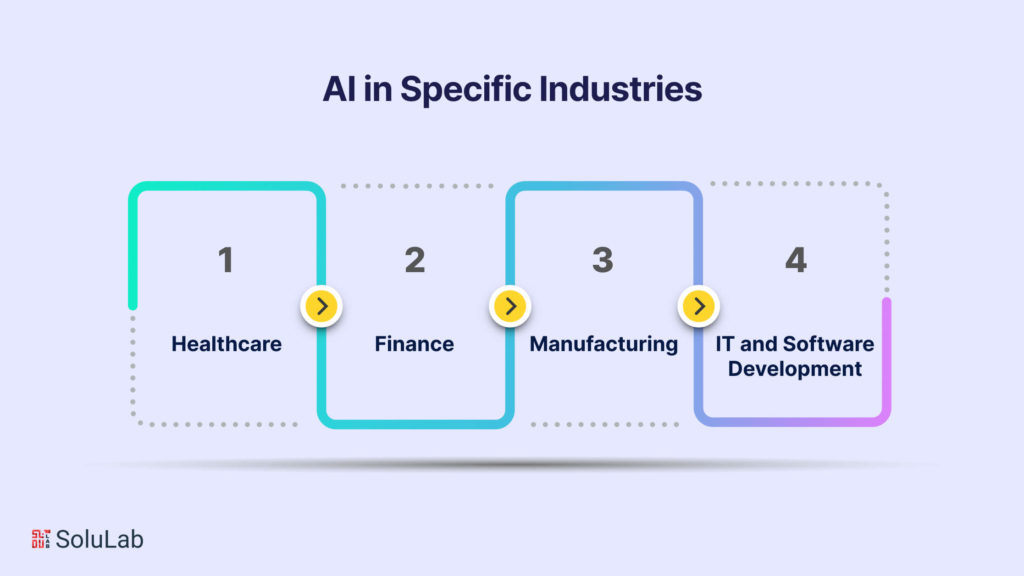
Artificial Intelligence does not touch every industry the same way. It redraws processes, tightens efficiency, and opens options that were not previously on the table, but the shape of that varies enormously by sector. Look closely and the impact of AI turns out to be specific rather than general, contributing something different to healthcare, finance, manufacturing, and IT and software development.
- Healthcare
Among the AI use cases in healthcare, the strongest ones are in diagnosis, treatment, and patient care. Machine learning models work through datasets no clinician could read in a lifetime and surface patterns a human eye would skip. Diagnosis speeds up. Treatment plans get built around the individual patient rather than the average one. And AI-powered robotics are turning up in the operating room, where precision is the entire point.
- Finance
Finance changed early, and it changed hard. Automated systems read enormous datasets at speeds no analyst could match by hand, which feeds both AI in risk management and investment strategy. Chatbots powered by AI have become common in customer service, answering instantly and cutting the back-and-forth out of everyday financial interactions. The predictive side of AI use cases in finance matters just as much, because it sits behind AI in fraud detection and a good deal of cybersecurity work.
- Manufacturing
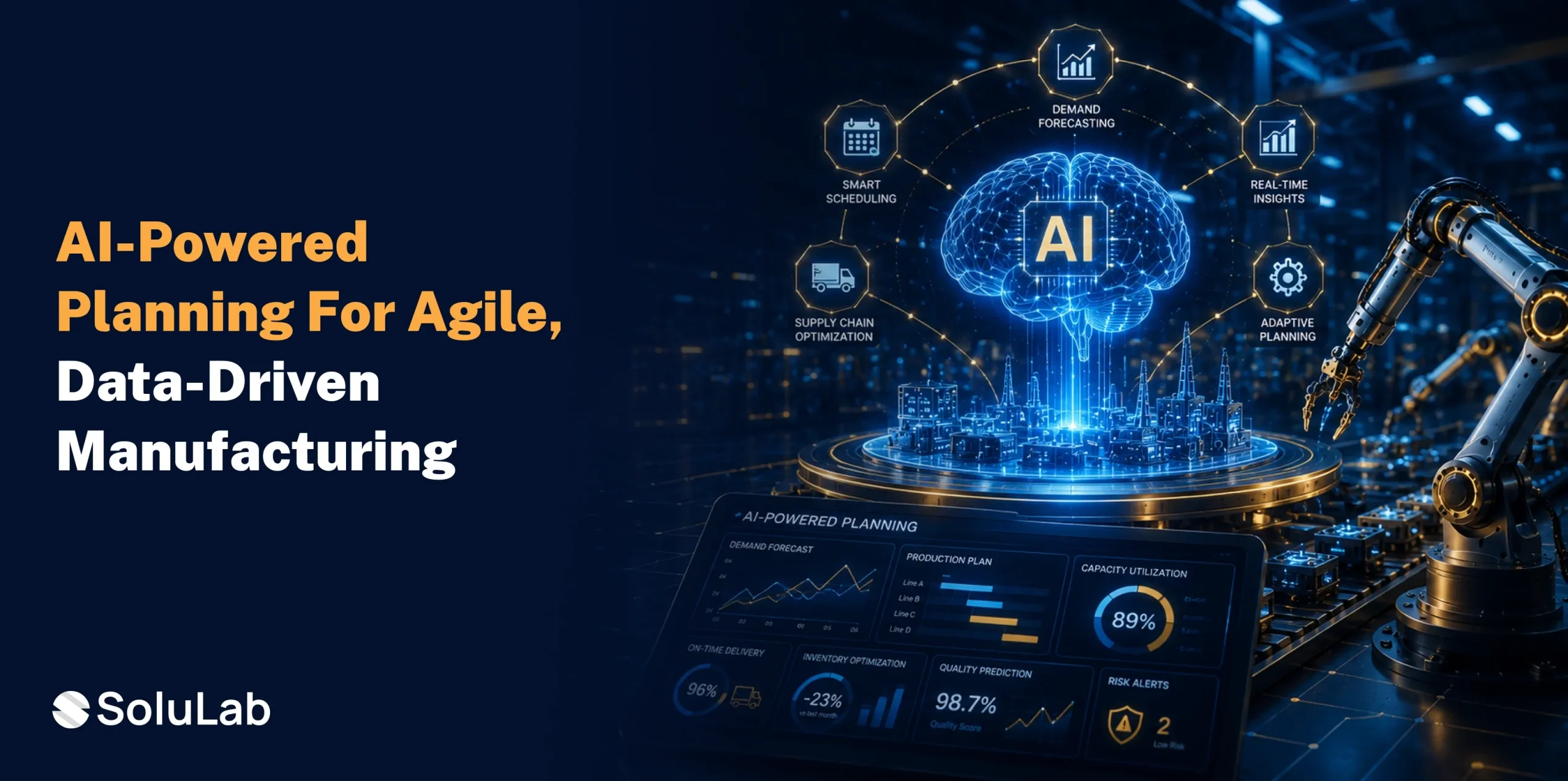
AI-driven robotics rewrote the factory floor. Automation lifts production efficiency, yes, but the quieter win is fewer errors and less waste. Predictive maintenance is the part plant managers actually talk about: algorithms flag a machine before it fails, so servicing happens on a schedule instead of after a breakdown. The point of AI in manufacturing here is not to remove human workers. It is to move them to the parts of the process where judgment pays.
- IT and Software Development
In IT and software development, AI has worked its way into the creative part of the job, not just the grunt work. Tools suggest code, catch bugs, and sometimes propose an approach nobody on the team had considered. Machine learning reads how people actually use a product, which makes the next release less of a guess. Human invention paired with machine speed is where most of the momentum in tech currently sits.
None of this arrives clean, though. Algorithms inherit whatever bias lives in the data they learned from, and data privacy needs real engineering rather than a policy document nobody reads. Getting the benefits of AI in different industries responsibly takes deliberate attention, and in practice that attention is the first thing cut when a deadline tightens.
Changing Skill Sets
Artificial Intelligence changes what employers actually want from people. Adaptability and continuous learning have stopped being pleasant extras on a résumé. Without them, a career stalls.
Some skills climbed fast once AI Automation arrived. Technical fluency with the systems is table stakes at this point. What separates people now is the softer material: critical thinking, problem-solving, creativity, and comfort with situations that have no clean answer. Ambiguity remains a human specialty.
Adaptability means something sharper than it used to. You have to learn, and just as often unlearn, on a cycle that does not slow down for anyone. A fixed skill set, the kind you built once and coasted on for fifteen years, has stopped being a plan. How quickly you pick up the next thing now counts as much as what you already know.
Reskilling and upskilling programs carry a lot of the weight here. Online courses, internal workshops, continuous learning platforms: unglamorous, all of them, and they are still how people stay current with where their industry is headed rather than where it was.
Then there is working alongside the systems, which is becoming a skill in its own right. Human-AI collaboration goes well past knowing which buttons to press. It means using what AI is genuinely good at to sharpen human decisions, and knowing when to overrule it. Teams that get this right move faster than teams treating AI as either a threat or a magic box.
Job descriptions are in motion, and individuals and organizations both have to find footing on ground that keeps shifting. A habit of perpetual learning, plus real openness to change, is what carries people through this.
Treat the shift in skills demanded by AI in industries as an opening rather than a threat. Value both halves, the technical and the human, and you end up building the AI-driven workforce instead of being displaced by it. What follows looks at how these evolving requirements play out across different professions.
The Rise of Artificial Intelligence
Across industries, Artificial Intelligence has changed how tasks are conceived, executed, and managed. It is worth taking that apart sector by sector, because the headline version flattens most of the interesting detail.
AI is not confined to one niche. It runs through many industries at once and leaves a mark on how each of them operates. Automation is the obvious piece: routine, repetitive tasks handed to systems that never get bored or distracted. Efficiency goes up. More usefully, people get their hours back for the parts of the job that actually need a person.
The effect is loudest wherever data analysis and pattern recognition drive the work. Healthcare is one example, where algorithms read huge datasets and surface trends and correlations that feed diagnostics and treatment plans. Finance is another. Rapid processing of enormous data volumes makes risk assessment and investment strategy more accurate than any manual method could manage.
Manufacturing went through its own shift with AI-driven robotics, which tightened production processes and raised precision. Software development picked up AI as a standard piece of equipment for coding assistance, bug detection, and occasionally for generating an approach the team would not have reached on its own.
But automation is only half the story. The other half is augmentation. AI systems add to what people can do, offering insight, suggestions, and support when a decision gets hard. That marks a clear break from the old script about technology taking jobs, and it points somewhere more interesting: higher productivity and more innovation out of the pairing than either side manages alone.
The problems are real too. Bias in algorithms, data privacy, and a long list of ethical questions follow AI into every industry that adopts it. Working through those is what keeps the technology in line with ethical standards and the values people actually hold.
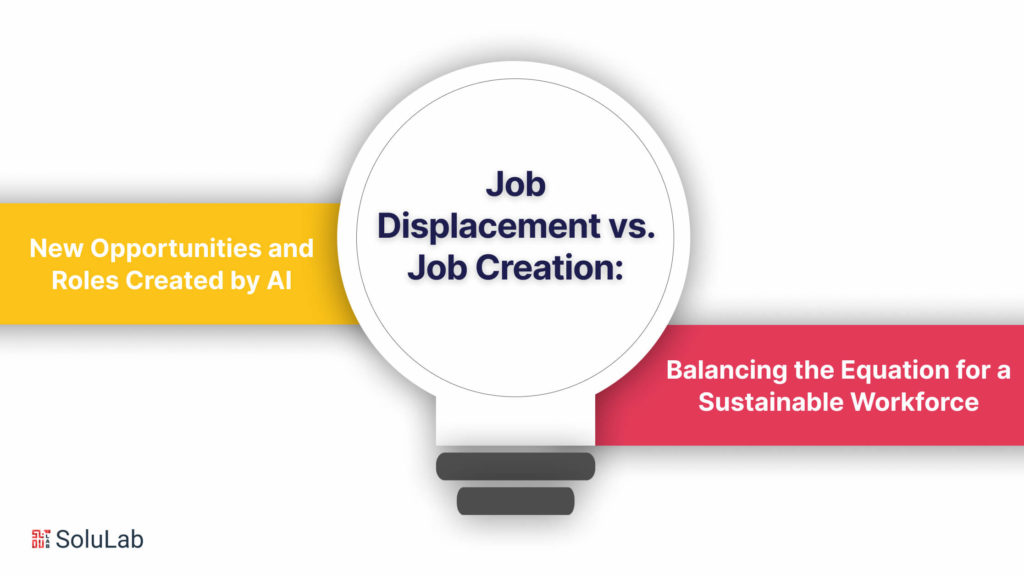
Job Displacement vs. Job Creation
Concerns about job displacement are not paranoia. As automation moves to the center of operations, routine tasks that human workers used to handle are increasingly performed by AI-driven systems, and the people in those roles can see it coming. The worry about shrinking opportunities in traditional roles is a fair one.
It deserves a careful answer, though. Some routine and repetitive tasks will be automated, and that is simply true. It is not the same claim as employment falling overall, and the honest read of the situation is messier than either camp admits. What matters is recognising how job requirements are shifting and getting the workforce ready for what the digital era genuinely demands.
- New Opportunities and Roles Created by AI
The job-loss story leaves out the other column of the ledger. AI has generated a wave of new roles, because these systems need people to build them, maintain them, and watch over them. Demand for expertise in data science, machine learning, and AI ethics has climbed accordingly.
Whole job categories exist now that did not before. Managing and tuning AI systems, keeping AI practice ethical, designing solutions on top of all of it: these are real positions with real budgets behind them. The job market is being rearranged, not diminished.
- Balancing the Equation for a Sustainable Workforce
The hard part is the balance between what AI automates and what it creates. That takes policymakers, businesses, and educational institutions pulling in roughly the same direction. Reskilling and upskilling the workforce already in place matters most of all, because those are the people who feel the change first and have the least room to wait.
Encouraging entrepreneurship helps too, and AI-centric startups add jobs while they add products. Displacement and creation feed each other constantly. Plan for one without the other and you will get a bad answer.
So line educational curricula up with what AI-driven industries actually need. Fund the training programs. Look hard for the places where AI can extend human capability instead of substituting for it. Do those three things and the job market that emerges is both sustainable and open to more people than the one it replaced.
Challenges and Ethical Considerations
Bring Artificial Intelligence into professional life and a set of hard problems comes along with it. Bias inside algorithms is the most common. A model trained on skewed data reproduces that skew quietly and at scale, so existing inequalities get reinforced by something that looks neutral from the outside. Finding and correcting that bias is not optional work if outcomes are meant to be fair across different populations.
Privacy is the other constant. AI applications run on vast amounts of data, much of it personal, which raises direct questions about how that information is secured and who gets to see it. Balancing what the data makes possible against what individuals are owed is still unsolved, and it needs regulatory frameworks with teeth plus ethical guidelines that people actually follow rather than cite.
Ethical development and deployment need oversight that does not lapse. Holding AI technologies to a standard is how you avoid consequences nobody intended. That matters most wherever AI feeds into decision-making, particularly the decisions that touch human lives or carry real societal weight.
The Future Outlook
Look ahead and the relationship between people and AI gets closer, not looser. Over the next decade, expect AI further inside the everyday texture of professional life. The likely shift is from tool to strategic partner: less something you operate, more something that shapes how a decision gets made in the first place.
Adaptability shows up again here, and it will keep showing up. Individuals and businesses that take upskilling and reskilling seriously will get more out of AI than the ones that wait to see how it settles. Lifelong learning has quietly moved from personal virtue to job requirement, in a market that refuses to hold still.
Collaboration gets more precise over time, sorted by what each side is genuinely good at. AI takes the routine and the repetitive. That leaves people on the work needing emotional intelligence, creativity, and tangled problem-solving, which is to say the work that is recognisably human.
Concluding Remarks
The problems AI brings have to be met with solutions and ethical frameworks built before the trouble shows up, not after. The version of the future worth aiming at is one where AI gets used responsibly and the workplace that results is technologically advanced and still built around people. Getting there means accepting change, staying adaptable, and taking an active hand in how this coexistence is shaped.
The vision is coexistence, not competition. Treat the difficulties AI presents as openings: growth, innovation, a chance to redefine what a professional role even consists of. Going forward, collaboration between humans and AI will matter more than either working alone, with each side doing what it does best. Keep adapting. Hold ethical AI practice as a standard rather than a slogan, and take part in building the future of work instead of waiting to see what arrives. Individuals and organizations that do will come through this era with resilience and a point of view. What is coming is not only technological advancement. It is a balance, with AI integrated into professional life on human terms.
SoluLab works with businesses on exactly this problem: the challenges and openings AI creates in the workplace. Through its AI development services, the team builds solutions fitted to what an industry actually needs rather than a generic template dressed up for the occasion. That means better efficiency, routine tasks handed off, and productivity gains in places companies had not thought to look. The ethical side is part of the engagement rather than an afterthought, with AI practices held to standards that match how people expect to be treated. Across AI in different industries, SoluLab’s work spans healthcare, finance, manufacturing, and IT and software development, bringing AI into each sector without breaking what already works there. As industries keep moving, SoluLab stays a strategic partner, supplying the tools and the experience businesses need to do well in an AI-driven market.
FAQs
Bhavya is driving growth through data-backed demand generation for AI and Web3 solutions. With 9+ years in digital marketing, he has spearheaded initiatives that led to a 40% increase in qualified inbound leads. Bhavya shares insights on marketing ROI and scaling a digital presence via AI workflows. He is open to connecting with startups and enterprise teams to help them overcome their challenges.