NFTs keep picking up speed, and picking the right blockchain platforms decides a lot about whether an NFT market actually thrives or just sits there. Avalanche makes a strong case for itself. It scales, it’s cheap to transact on, confirmations land quickly, and it plays well with other chains. Build on those traits and you can give artists, collectors, and traders a marketplace that’s easy to use, affordable, and secure. So why not put Avalanche’s strengths to work and start on your own Avalanche NFT marketplace now? The ceiling is high.
Here’s what this guide covers about avalanche nft.
Understanding Avalanche NFT Marketplace:
Think of an NFT marketplace as a shop floor. Creators and collectors meet there to trade digital assets that carry unique ownership rights. Avalanche is a high-performance blockchain, and it suits this job well: it scales, fees stay low, and transactions confirm fast. What it gives the marketplace is a smooth, quick place where artists, collectors, and traders can buy, sell, and bid on NFTs without friction getting in the way.
Read Also: BSC NFT Marketplace Development: Everything you Need to Know
Key Features and Characteristics of Avalanche NFT:
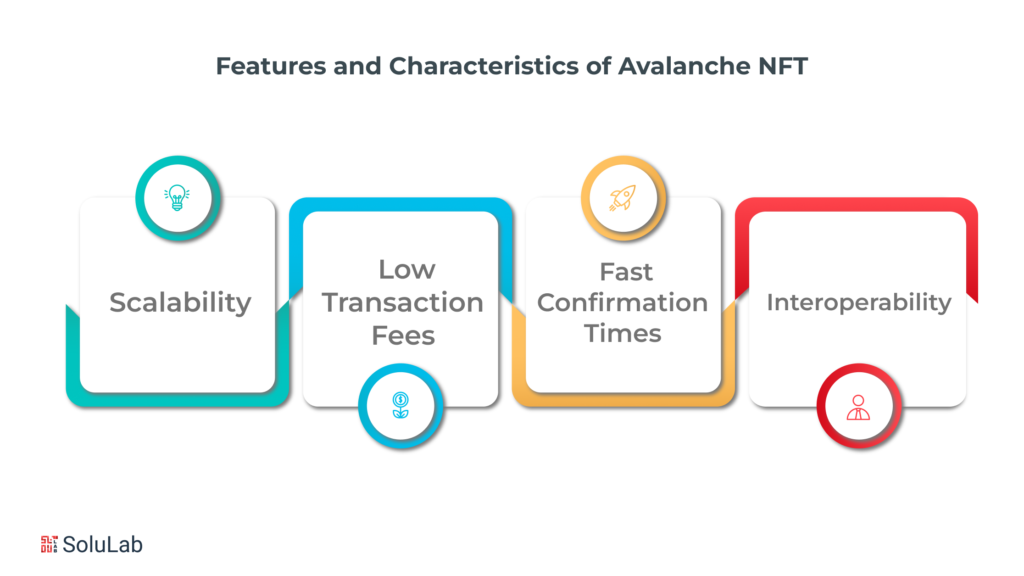
- Scalability:
Avalanche has a reputation for high throughput. It can push through thousands of transactions per second. For you, that means a marketplace built on it can take a heavy wave of traffic, say a hyped drop, and still feel smooth to the people clicking buy.
- Low Transaction Fees:
Avalanche runs its own consensus mechanism, called Avalanche consensus, and it cuts transaction costs a long way compared with many other networks. That matters a lot for NFT marketplaces. Nobody wants to pay a fee bigger than the artwork’s price. Low costs let artists and collectors trade without that sting.
- Fast Confirmation Times:
Transactions on Avalanche confirm in under a second. Settlement feels close to instant. Buyers and sellers spend less time staring at a spinner, and that alone makes the whole thing nicer to use.
- Interoperability:
Avalanche supports the Ethereum Virtual Machine (EVM). In plain terms, NFT contracts and tools written for Ethereum work here too. NFTs can move over without much pain, and the pool of potential users for Avalanche NFT marketplaces gets bigger.
Benefits of Using Avalanche Blockchain for NFT Marketplaces
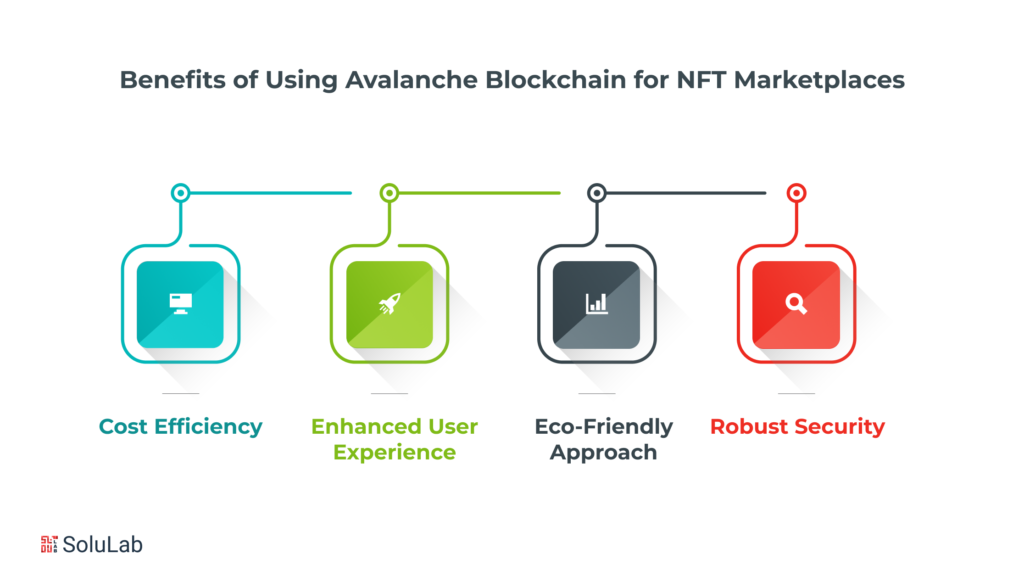
- Cost Efficiency:
Because fees on Avalanche stay low, a marketplace can price NFT trades competitively. Artists list work without doing nervous math about costs first. And when listing is cheap, more artists show up.
- Enhanced User Experience:
Quick confirmations mean people can browse, buy, and sell with no awkward pauses. Less waiting. More clicking around, more coming back, and over time a marketplace that feels busy and alive.
- Eco-Friendly Approach:
Avalanche uses proof-of-stake (PoS), which burns far less energy than proof-of-work (PoW) chains such as Bitcoin. That lines up with something plenty of NFT buyers now care about: sustainability, and not feeling guilty about the carbon cost of a JPEG.
- Robust Security:
Security gets serious attention on Avalanche. The X-Chain and C-Chain split the work of validating transactions and running smart contracts. Put together, these protections keep user funds safe and keep the marketplace honest.
Read More: How to Build an NFT Marketplace from Scratch
Setting up an Avalanche NFT Marketplace: Developing Core Functionalities
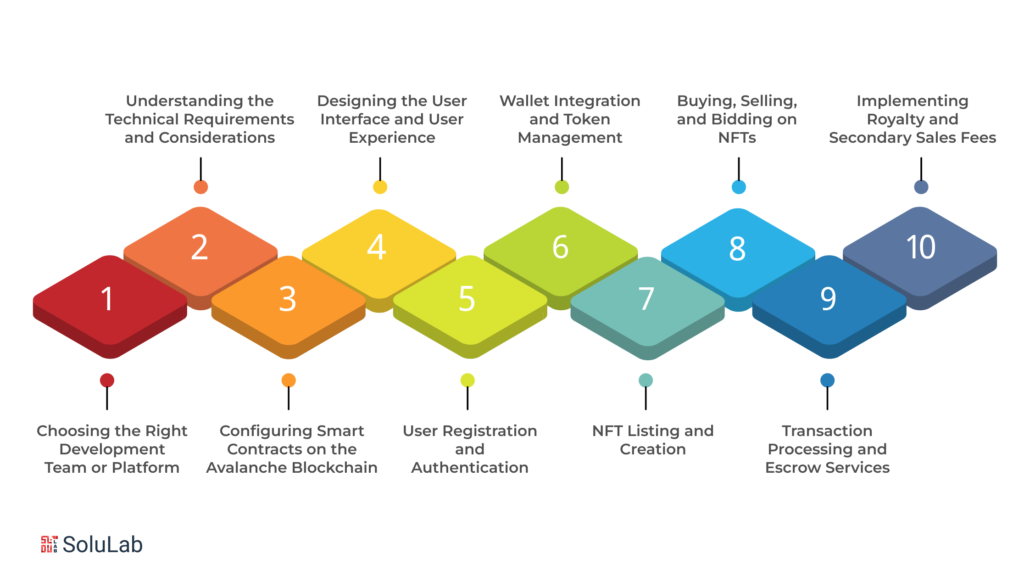
So you’ve settled on building an NFT marketplace on the Avalanche blockchain. Good. Now comes the real work: standing up the platform and building the features people will actually touch. Below are the main steps for setting up an Avalanche NFT marketplace, plus what goes into each core function so the finished product feels smooth and quick. One caveat before we start. Treat this as practical guidance, not a rulebook, because your own requirements and development approach will change how you implement each piece.
1. Choosing the Right Development Team or Platform:
You need people who know blockchain development, smart contracts, and interface design. There are two routes. Put together an experienced team yourself, or use an existing blockchain development platform that supports Avalanche. Either way, check them properly: what they know, what they’ve shipped before, and whether they can really meet what your project demands.
2. Understanding the Technical Requirements and Considerations:
Write the technical requirements down before anyone opens an editor. Where will it be hosted? How will you manage the database? Where does storage live? Then make a bigger call: build everything custom, or lean on existing frameworks and protocols to get to launch faster. In practice, this is the decision teams tend to revisit halfway through, so make it early and on purpose.
3. Configuring Smart Contracts on the Avalanche Blockchain:
Smart contracts carry the whole marketplace. They’re what let NFTs be created, owned, and transferred. You’ll write them in Solidity, the go-to language for Ethereum-based contracts, and they’ll run on Avalanche as well. Set up the essentials: NFT creation, metadata storage, ownership transfer, royalties, and fees.
4. Designing the User Interface and User Experience:
People stick around when the interface makes sense. Design a UI that looks good, is easy to move through, shows NFTs off properly, and lets users browse, buy, sell, and bid without hunting for the button. Add filtering, sorting, and search too. Without them, good work gets buried.
5. User Registration and Authentication:
Artists, collectors, and traders need a way to sign up and get in, so a registration system is a must. Make authentication secure. Email verification and password hashing are the basics here, and they protect user data and keep out anyone who shouldn’t be there.
6. Wallet Integration and Token Management:
Wallets are how NFT transactions happen on Avalanche, so integrate them well. A user should be able to connect a wallet securely, see their NFT balances, and manage what they hold. Metamask and Avalanche Wallet are among the most popular choices.
7. NFT Listing and Creation:
Artists need a place to create and list their NFTs. Give them one. It should let them upload artwork files, set attributes and metadata (title, description, royalties and so on), and decide on price and sale terms. Also check that the whole creation flow follows the standards and guidelines set by the Avalanche blockchain.
8. Buying, Selling, and Bidding on NFTs:
Build in one-click purchasing, auctions, and instant transaction processing. That’s what lets people buy, sell, and bid without friction. You can also plug in escrow services to keep transactions safe for buyers and sellers alike.
9. Transaction Processing and Escrow Services:
Your transaction processing needs to be solid, moving NFTs from one owner to another smoothly and safely. Add an escrow step. It holds the funds until both sides confirm the deal is done, which cuts down the risk of fraud and arguments afterward.
10. Implementing Royalty and Secondary Sales Fees:
Artists should get paid every time their NFT resells on your marketplace. Build that in. Smart contracts can send royalties to the original creator automatically, following whatever terms and percentages were set.
None of this is simple. An Avalanche NFT marketplace asks you to think hard about technical requirements, contract setup, interface design, and every core feature. But work through these steps with experienced developers, or with a development platform you trust, and you end up with a feature-rich marketplace where artists, collectors, and traders can explore, buy, and sell NFTs on Avalanche safely and without hassle.
Read Our Blog: Solana NFT Marketplace: How to build your own NFT Marketplace on Solana
Marketing and Community Building:
Great code won’t fill an empty marketplace. You also have to market it and grow a community, or artists, collectors, and traders will never hear about you. A few things to work on:
- Promoting the Avalanche NFT Marketplace:
Put together a full marketing plan so people know the marketplace exists. Use social media, content marketing, influencer partnerships, and targeted ads to reach the right audience. Talk up what Avalanche does well, like low fees, fast transactions, and interoperability. Those are real reasons to switch.
- Engaging with the NFT Community and Influencers:
Show up where NFT people already hang out. Talk with artists, collectors, and influencers. Join the forums, Discord groups, and social channels that matter, then use them to make connections, hear honest feedback, and build a loyal crowd around your marketplace. Partnering with well-known names in the NFT space can also bring you exposure and credibility fast.
- Implementing Social Features and User Engagement Strategies:
Make the marketplace social. Let users follow favorite artists, talk with them, build collections, and join discussions. Then add some game-like elements, rewards, and incentives. They give people a reason to keep coming back, and a reason to feel part of something.
Check Out Our Latest Press Release: SoluLab Bridging the Gap Between Technology And Innovation
Future Directions for Avalanche NFT:
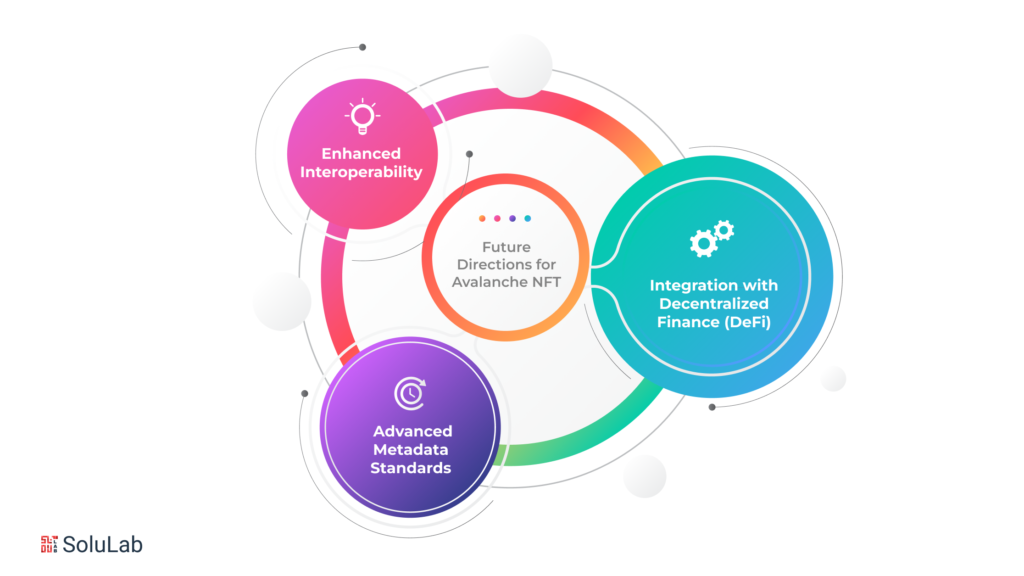
Where is Avalanche crypto NFT headed? A few directions look promising:
Enhanced Interoperability:
Avalanche keeps growing, and better cross-chain interoperability is a likely next step. If NFTs can move freely between different blockchain networks, artists, collectors, and traders get options they simply don’t have today.
Integration with Decentralized Finance (DeFi):
Connect NFTs to DeFi protocols and new financial tools open up: lending, borrowing, fractional ownership. Owners could get liquidity out of assets that normally just sit in a wallet. And Avalanche NFT marketplaces could gain fresh ways to invest and trade.
Advanced Metadata Standards:
Richer metadata standards would make NFTs far more interesting. Picture multimedia, interactive features, and content that changes over time, all living inside the token. That stretches what digital ownership and artistic expression can mean.
Concluding Remarks
Three things decide whether an Avalanche NFT marketplace works: security, scalability, and marketing. Get security right, plan for more users than you have today, and market with intent. Do that and artists, collectors, and traders will come. The road ahead points toward better interoperability, DeFi tie-ins, and smarter metadata standards. If you start building now, you get a say in how digital ownership and creative work take shape on Avalanche.
SoluLab is a leading name in Avalanche NFT Marketplace Development, with a full set of tailored services for businesses working with non-fungible tokens on the Avalanche blockchain. Its experienced team covers Avalanche technology, smart contracts, design, and project management, and delivers Avalanche NFT solutions that are secure and built to scale. What sets SoluLab apart? Intuitive interfaces, standout features, and real community engagement. If you want to grow with an NFT marketplace on Avalanche and get the most out of the chain, SoluLab is a partner you can trust.
FAQs
Shipra Garg is a tech-focused content strategist and copywriter specializing in Web3, blockchain, and artificial intelligence. She has worked with startups and enterprise teams to craft high-conversion content that bridges deep tech with business impact. Her work translates complex innovations into clear, credible, and engaging narratives that drive growth and build trust in emerging tech markets.