QR codes have come a long way from their 1994 origins at Denso Wave, where they were built to track automotive parts on the factory floor. Today they show up on restaurant tables, vaccine cards, product boxes, and payment terminals. That physical-to-digital bridge they provide turns out to be useful almost everywhere.
Two technologies are now reshaping what QR codes can actually do: AI and blockchain. AI makes them smarter, adjusting what a code surfaces based on who is scanning and when. Blockchain makes them harder to fake, anchoring the data behind a scan to a record that cannot be quietly altered. Together, the combination changes QR codes from dumb links into something with memory, logic, and verified identity.
Statista estimates that by 2025, the United States will have 100 million more smartphone users scanning QR codes than the 89 million now.
Static black-and-white squares are not where this is heading. As artificial intelligence and blockchain keep maturing, QR codes are picking up capabilities that were not plausible even a few years ago. This post breaks down what those capabilities look like, where they are already being deployed, and what comes next for teams building on this stack.
Understanding QR Codes
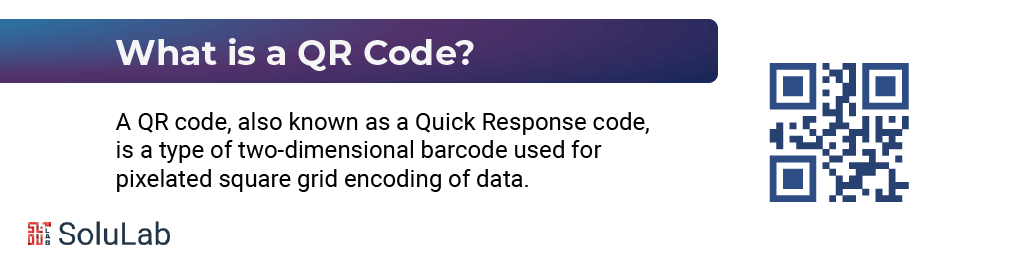
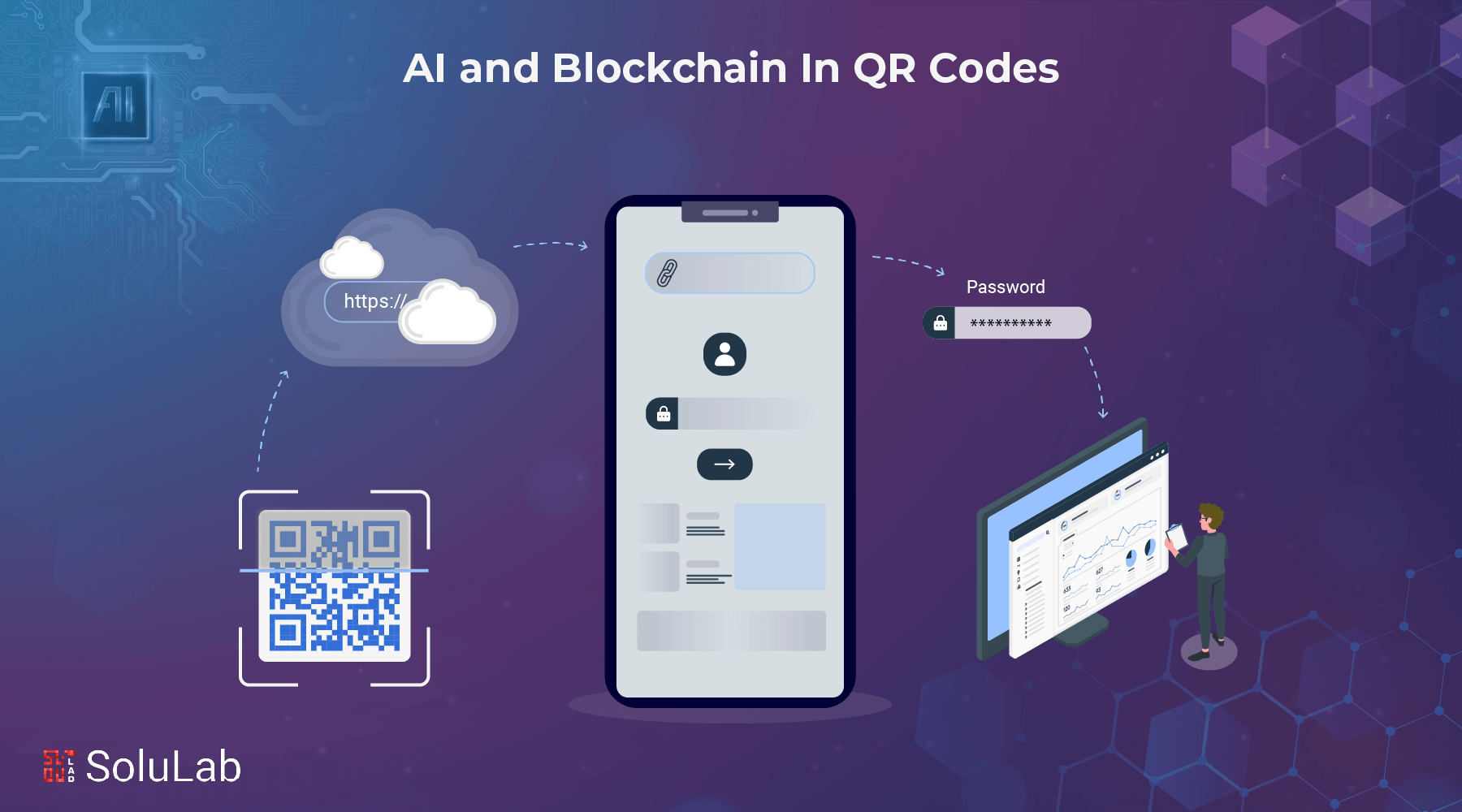
A QR code is a two-dimensional barcode that encodes data in a pixelated square grid. Point a smartphone camera at one and you can create a qr code without typing a URL, opening an app, or punching in a code. That frictionlessness is what made them stick where traditional barcodes required dedicated hardware.
Historically, QR codes were static: one code, one destination, forever. That has changed. Intelligent automation in QR technology now makes it possible for codes to modify their destination dynamically, record scan behavior, and connect to systems like AI and blockchain. The result is a code that does not just point somewhere. It can remember, adapt, and act.
Limitations of Traditional QR Codes
QR codes became popular because they are simple. But that simplicity has a ceiling. Here is where traditional static codes run into trouble:
1. Lack of Personalization
A static QR code sends every scanner to the same place. It does not know if you are a first-time visitor or a returning customer, if you are in London or Los Angeles, or what device you are carrying. AI-driven dynamic QR codes fix that by adapting the destination in real time.
2. Security Risks
Static QR codes are easy to copy or replace. Stick a malicious code over a legitimate one and most users will not notice until they have already been redirected somewhere harmful. There is no built-in verification. A solid GS1 QR code generator can enforce consistent formatting and plug into blockchain-backed verification, but out of the box, static codes offer little protection against substitution attacks.
3. No Tracking or Analytics
Scan a static code and the moment disappears. You get no record of who scanned, when, or from where. For any team trying to measure campaign performance or understand user intent, that is a dead end. You cannot improve what you cannot see.
4. Scanning Challenges in Practical Environments
Dim light, a crumpled sticker, a smudged print: any of these can stop a standard QR code from reading at all. Modern AI pattern-recognition handles degraded inputs far better, decoding codes that older systems would simply reject.
5. Restricted Integration with Automation Tools
A static code does one thing: redirect. It cannot trigger a database update, kick off an identity check, or initiate a transaction on its own. An experienced AI development team can wire QR codes into those workflows so a scan actually does something beyond opening a web page.
Static QR codes are fine for simple use cases. But for anything that requires personalization, security, or automation, they fall short. That gap is precisely where AI-enhanced QR payments and smart codes start to matter.
How is AI Elevating QR Codes?
QR codes have always been a fast way to collect signals from customers. Add AI and that signal collection becomes genuinely useful. You move from raw data to decisions. Here is what that looks like in practice:
- Immediate Data Processing and Pattern Recognition
The moment someone scans an AI-linked QR code and submits a response, the analysis starts. No batch job overnight, no analyst pulling a report on Friday. AI identifies trends and sentiment flags in real time, so teams can act on feedback the same day it arrives instead of the same quarter.
- Customized Feedback Pathways
Not every customer should get the same survey. AI QR code technology makes it possible to route returning customers toward questions about their specific purchase history while sending first-time visitors down a different path. Better questions produce better answers. And customers notice when you are paying attention.
- Advanced Sentiment and Emotion Analysis
Rating scales tell you a number. Sentiment analysis tells you why. AI reads tone across open-ended responses, sorting feedback into positive, negative, or neutral and surfacing the emotional patterns that sit underneath. That depth is what lets you actually fix the customer experience instead of just watching the score.
- Automated Classification and Organization
Sorting hundreds of open-ended comments by hand is slow and inconsistent. Through AI QR code integration, Natural Language Processing (NLP) can automatically tag responses by theme: “delivery time,” “product quality,” “customer support,” and so on. Nothing important gets buried, and no one has to read every submission to find the pattern.
- Predictive Trends and Proactive Improvements
This is where QR code AI gets genuinely interesting. Rather than just reporting what happened, it can flag what is likely coming. If complaints about delivery delays are ticking up week over week, the system can surface that trajectory before customer satisfaction takes the hit. You get ahead of the problem instead of apologizing for it.
- Enhanced Precision and Reliability
AI also cleans the data. Spam responses, duplicates, and noise get filtered out automatically, so the findings you act on actually reflect real customer sentiment. That consistency matters when decisions are downstream.
Put together, AI-generated QR codes turn a feedback scan into a continuous intelligence loop, not a one-time data collection exercise.
How Blockchain Ensures QR Code Security?
As QR codes spread into payments, supply chains, event entry, and product verification, the question of trust becomes unavoidable. A static QR code can be copied, modified, or pointed at a malicious destination without anyone noticing. Blockchain addresses that problem directly.
1. Secure Data Storage
Blockchain’s core property is immutability. Once a record is written, it cannot be changed or deleted quietly. A QR code linked to blockchain-stored data carries that guarantee: any attempt to alter the destination URL, product details, or credentials behind the code produces a detectable discrepancy. Tampering becomes visible instead of invisible.
2. Transparent and Traceable Interactions
Every event tied to a QR code can be logged on-chain. In a supply chain, scanning a product’s code can surface its entire history: manufacturer, transit points, arrival times, each step recorded and accessible. That kind of full traceability is what makes counterfeiting significantly harder, because there is a verifiable chain of custody that cannot be retroactively edited.
3. Real-Time Validation Utilizing Smart Contracts
Pairing QR codes with smart contracts means that access control and verification can be automated. Scan a code at an event venue or on a product warranty card and a smart contract checks the conditions instantly: right location, right time, valid ownership. If everything lines up, access is granted. If not, it is denied. No human in the loop, no room for the usual workarounds.
4. Safeguarded Identity and Data Exchange
QR codes often carry sensitive data: digital IDs, vaccination records, professional certifications. Linking those to blockchain lets users control exactly what they share, presenting only what is needed through an encrypted, verified code. Healthcare, banking, and education are the obvious beneficiaries, but any context where data integrity matters applies.
Building this kind of system is not a weekend project. Working with an experienced blockchain development company gives you the architecture to actually get it right: secure data flows, proper identity layers, smart contract logic that holds up under real conditions, and a user experience that does not make people abandon the scan halfway through.
Real-World Applications of AI & Blockchain QR Codes
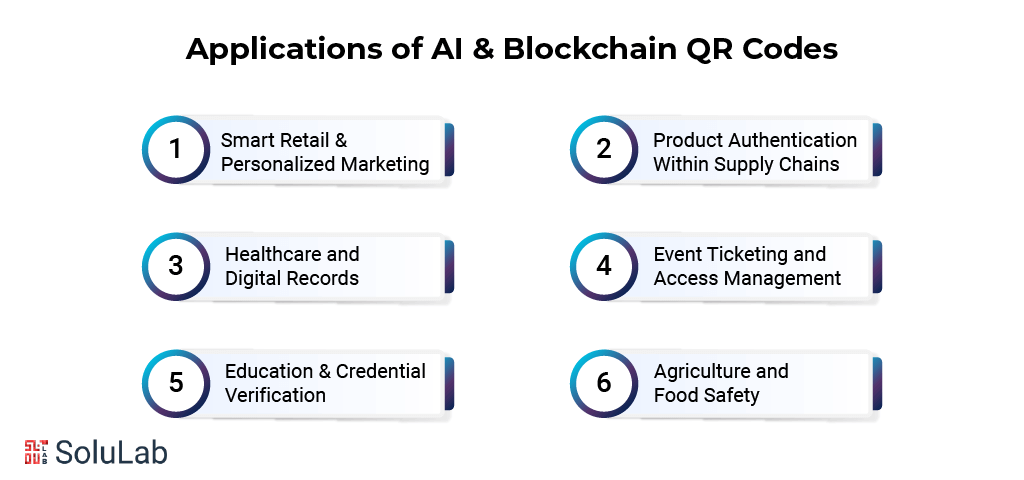
Theory aside, where is this combination actually being used? Quite a few places. Here are the sectors where AI development solutions paired with blockchain are changing what a QR scan can do:
- Smart Retail & Personalized Marketing: Retailers are using AI-enhanced QR codes to surface targeted discounts, recommendations, and promotions based on individual scan history. AI reads purchase behavior and preferences; blockchain secures the loyalty data and coupon logic to cut down on fraud. Customers get relevance, and the retailer gets a feedback loop that actually closes.
- Product Authentication Within Supply Chains: Electronics and pharmaceutical manufacturers are embedding blockchain-enabled QR codes to prove provenance. One scan shows where a product came from, every hand it passed through, and whether the record checks out. AI layers on top of that by monitoring scan activity and flagging counterfeit hotspots before they become a recall problem.
- Healthcare and Digital Records: Providers are issuing AI-generated QR codes for accessing medication records, test results, and vaccination histories. Blockchain keeps the underlying data intact and private. AI reads usage patterns to customize healthcare strategies and guide next steps in care workflows.
- Event Ticketing and Access Management: Events are using dynamic QR codes backed by AI development solutions to verify tickets, catch duplicates, and log attendance in real time. Blockchain makes each ticket traceable and non-duplicable; AI flags unusual scan patterns that might indicate fraud at the gate.
- Education & Credential Verification: Universities and certification bodies are issuing blockchain-secured QR codes embedded in degrees and transcripts. Scan the code and the credential verifies instantly. AI adds value on top, suggesting relevant follow-on courses and analyzing feedback to sharpen learning programs.
- Agriculture and Food Safety: Producers are tagging produce and meat with AI-enhanced QR codes that capture freshness data, temperature logs, and logistics records. Blockchain locks that information for traceability, while AI monitors trends and can alert the right people when something in the cold chain starts going wrong.
The combination of AI solutions with blockchain-based QR codes is showing up across industries precisely because the value proposition is concrete: every scan carries more trust, more context, and more intelligence than it did before.
What is the Future of AI-Blockchain QR Codes?
The direction here is clear. QR codes are becoming interfaces rather than redirects. With blockchain technology maturing alongside AI, smart QR codes in payments will likely move from a niche capability to a default expectation for digital transactions.
What that looks like in practice: real-time fraud detection at the point of scan, dynamic pricing that adjusts based on purchase history or location, personalized checkout flows that do not make users re-enter data they have already given you. Blockchain keeps all of that transaction data verifiable and tamper-resistant, which is what positions these codes as a new floor for digital trust.
Beyond payments, AI applications will push QR codes into smart city infrastructure, health monitoring, and identity verification in ways that feel closer to an API call than a scan. The pattern across all of it is the same: codes that do not just redirect but respond, validate, and carry context forward. Each scan teaches the system something. Over time, that compounds.
Conclusion
QR codes started as a way to encode a URL in a printable square. AI and blockchain have turned them into something with real security, real adaptability, and real analytics behind every scan. That shift is not cosmetic. It changes what QR codes are actually good for.
SoluLab builds on both sides of this. As a recognized AI development company, the team specializes in scalable, secure AI and blockchain systems. The recently launched InfuseNet AI platform project lets organizations pull intelligence from text, images, documents, and APIs, connecting to models like GPT-4, FLAN, and GPT-NeoX. If your use case has specific requirements, the team works through those with you directly.
Want to see what this looks like for your product? Connect with SoluLab today and let’s get into the specifics.
FAQs
Shipra Garg is a tech-focused content strategist and copywriter specializing in Web3, blockchain, and artificial intelligence. She has worked with startups and enterprise teams to craft high-conversion content that bridges deep tech with business impact. Her work translates complex innovations into clear, credible, and engaging narratives that drive growth and build trust in emerging tech markets.