
Transform physical processes with secure, efficient, and cost-effective DePIN solutions. As a leading DePIN development company, we help businesses leverage new opportunities in a decentralized ecosystem. Our solutions enhance resource availability, transparency, resilience, and data ownership while reducing operational costs. Build scalable, future-ready infrastructure with SoluLab’s expertise in DePIN architecture.








SoluLab offers a variety of Decentralized Physical Infrastructure Network (DePIN) services to enable businesses to adopt decentralized solutions successfully. Below are some of our DePIN development services:

Before anything gets built, we pressure-test whether a decentralised network beats a centralised one for your specific resource. That means unit economics per node, hardware cost curves, regulatory exposure by jurisdiction, and a realistic view of how many contributors you need before the network is useful. You get a go or no-go with the reasoning behind it.

We design the layer structure: what runs on-chain, what runs off-chain, which L1 or L2 settles rewards, how device data reaches the chain, and how the network degrades safely when nodes drop offline. Deliverables include the architecture diagram, chain selection rationale, and a scaling plan from pilot to production.

A DePIN network dies when rewards outpace demand. We model emission schedules, contributor rewards, burn mechanics, and demand-side pricing, then stress-test the model against low-adoption and high-churn scenarios before a line of contract code is written.

We write the contracts that register devices, verify contribution proofs, and distribute rewards, plus the node client that contributors actually run. Contracts are gas-optimised and written for audit from the start, not retrofitted for it.

Getting physical devices to produce data a chain will trust is where most DePIN projects stall. We build the device onboarding flow, the telemetry pipeline, oracle integration, and the proof mechanism that separates genuine contribution from spoofed data.

Every deployment gets a contract audit, an adversarial review of the proof mechanism, and penetration testing of the device onboarding path. Post-launch, we set up the monitoring that flags node collusion, reward gaming, and data anomalies.
We offer decentralized physical infrastructure network solutions that enhance connectivity, security, and efficiency across industries. Our services help businesses build scalable decentralized ecosystems for seamless data management and asset utilization.

Contributors supply spare GPU cycles, CPU capacity, or disk space; the network verifies delivery and pays for it. We build the proof-of-storage or proof-of-compute layer, the retrieval and redundancy logic, and the marketplace that matches supply to demand.

Distributed solar, battery, and metering hardware feeding verified generation and consumption data on-chain. We build the telemetry integration, the settlement layer that pays producers on measured output, and the grid or utility interfaces.

Weather stations, air-quality monitors, agricultural and industrial sensors deployed across many sites and owned by many parties. We build device registration, data validation, the anti-spoofing proof mechanism, and the data marketplace that monetises the readings.

Contributor-operated hotspots, small cells, and coverage nodes. We build coverage proof, location verification, contributor rewards weighted by usable coverage rather than raw uptime, and the onboarding flow that keeps deployment practical for non-technical operators.

Vehicles, dashcams, and fleet telematics contributing mapping data, road conditions, and traffic signals. We build the data pipeline, privacy-preserving contribution proofs, and the settlement layer that pays drivers and fleet operators.

Distributed scanners, RFID, and IoT checkpoints across warehouses, ports, and carriers writing custody events on-chain. We build the checkpoint integration, the immutable chain-of-custody record, and the smart contracts that settle against verified physical events.
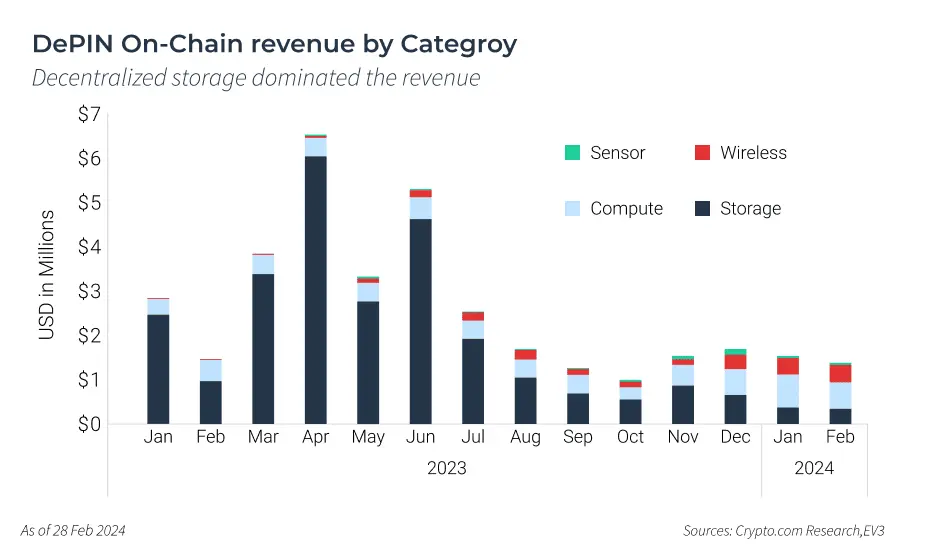
The DePIN industry is experiencing considerable growth as blockchain-based infrastructure services get widespread acceptance.
Projected Market Capitalization: Analysts predict that the DePIN market may exceed $100 billion by 2026, with a compound annual growth rate (CAGR) of 20-30%.
Investment Expansion: Institutional and venture capital interest in DePIN projects has increased by 35% annually, signaling strong confidence in decentralized infrastructure.
Adoption Trends: By 2027, decentralized storage networks are projected to secure 10% of the conventional cloud computing.
CryptoSlate estimates that DePIN tokenization may generate $50 billion in new investment possibilities by 2030.
CoinGecko predicts that prominent DePIN tokens might witness a price increase of 50-80% in 2025, propelled by heightened use and ecosystem development.

Companies leveraging DePIN see 35% lower operational costs compared to traditional models! Build your decentralized physical infrastructure with our latest DePIN solutions.
Book a Free Consultation!By allowing distributed, safe, and efficient infrastructure, DePIN technology is generating new opportunities in many different fields. Being among the top DePIN development companies, our solutions are meant to help enterprises in:
A DePIN network needs three working layers: physical devices producing trustworthy readings, a chain that records those readings without anyone being able to alter them, and settlement logic that pays contributors for verified contribution. SoluLab has shipped all three. Below is what we built, the stack we used, and which DePIN layer each project proves.
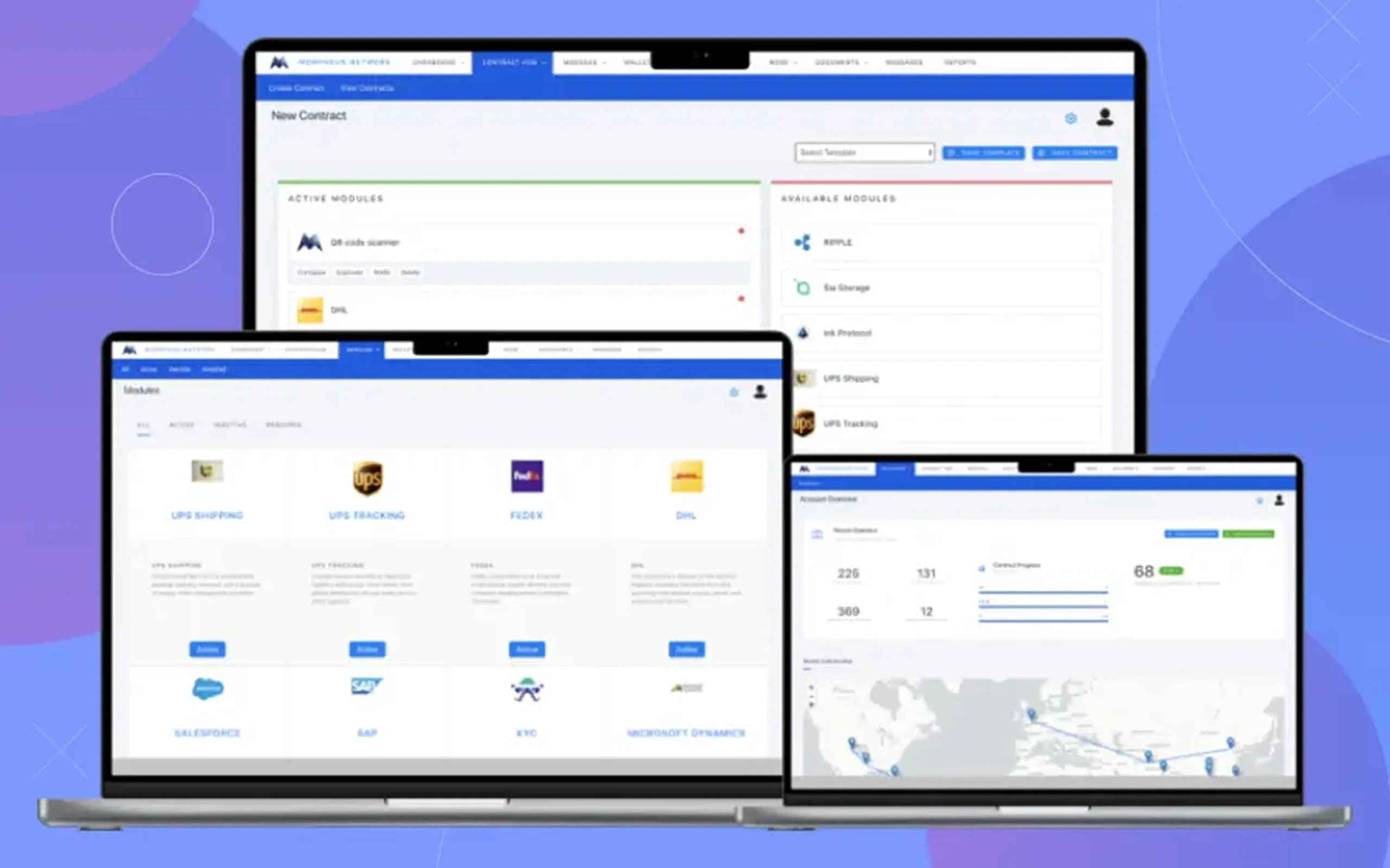
SoluLab built the smart contract layer that lets shippers, customs brokers, carriers and banks transact on one verifiable record, creating, verifying and storing trade documents on a zk-rollup blockchain layer with encryption, hashing and zero-knowledge proofs keeping supply chain data private while remaining provable to every party.

SoluLab engineered a permissioned blockchain application where RFID tags and IoT sensors write shipment data directly to an immutable ledger, so container conditions and custody events become a record no party in the chain can quietly edit, built on Hyperledger Fabric with Composer running across a Kubernetes cluster.
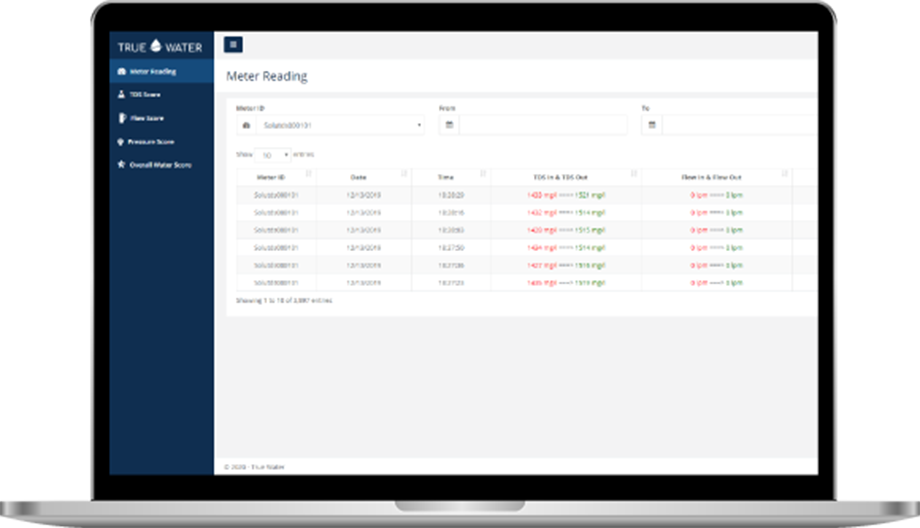
SoluLab designed the hardware and the software, building a sensor-to-app pipeline where custom industrial-design IoT sensors measure water quality and consumption at the point of use and an ESP8266 WiFi board transmits continuous readings through APIs into tabular and graphical reporting.
DePINs (Decentralized Physical Infrastructure Networks) provide a concept that enhances efficiency, security, and accessibility relative to conventional centralized systems. Presented below are some key benefits:
DePINs enable options for participants to get finance outside of conventional banking institutions. Crowdsourced finance and tokenized incentives provide a decentralized method for financing infrastructure projects.
Authority is decentralized among participants, diminishing dependence on a single entity. This mitigates the danger of system failures, censorship, and monopolization often seen in centralized setups.
Data and control are distributed over a decentralized network, reducing vulnerabilities. Blockchain technology guarantees transparency, immutability, and safeguards against unwanted alterations.
Participants may acquire tokens by providing resources, infrastructure, or services to the network. These tokens may be used within the ecosystem, establishing a self-sustaining mechanism for incentive engagement.
Smart contracts autonomously perform predetermined tasks, reducing reliance on middlemen. This optimizes operations, reduces administrative expenses, and improves transaction efficiency.
DePINs eliminate middlemen and enhance resource allocation, hence reducing infrastructure construction and maintenance expenses. Decentralized methods obviate the need for costly centralized management.
 Ethereum
 Solana
 Solidity
 AWS IoT Core
 TensorFlow
 Node JS
 React JS
 Google Cloud
 GraphQL
 Avalanche
 Dune Analytics
 Truffle
SoluLab uses an agile DePIN development methodology to create safe and scalable decentralized infrastructure solutions. We emphasize providing premium solutions to our partners that enable them to excel in this ever-changing environment. The following are the fundamental steps we adhere to
Consultation and Ideation
System Architecture and Design
Development of Smart Contracts
Integration with Physical Infrastructure
Testing and Security Audits
Deployment and Launch
Consultation and Ideation
System Architecture and Design
Development of Smart Contracts
Integration with Physical Infrastructure
Testing and Security Audits
Deployment and Launch
SoluLab specializes in developing safe, scalable, and effective DePIN systems customized for specific industrial requirements. Our team of specialists guarantees a smooth development process, merging decentralized networks with advanced blockchain technology. We focus on providing high-performance solutions that foster creativity and efficiency from conception to implementation.

"Rajat is a blockchain specialist and technophile who has led enterprise engineering teams at Citrix and InfoStretch before co-founding SoluLab."
When I first approached SoluLab, I had a broad idea of what I wanted to achieve with IoT. The team helped turn that idea into a smart water management solution using connected sensors, real-time monitoring, and intelligent data analysis. They went beyond my initial expectations and built a system that gives us much better visibility into water quality, flow, and pressure.

Owner, True Water
The token economy was central to our decentralized infrastructure model, so we needed the incentive mechanism to work alongside the technology rather than as an afterthought. SoluLab helped us structure the tokenization and smart contract components around how resources would actually be contributed and rewarded. That practical approach made the ecosystem much easier to scale.

Co-Founder, Web3 Infrastructure Network
SoluLab understood the complexity of our project from the very beginning. Their team brought strong technical expertise to integrating blockchain, IoT, smart contracts, and decentralized infrastructure into our logistics platform. Their work helped us improve the efficiency and functionality of the platform while creating a more transparent and secure experience for supply chain stakeholders.

Co-Founder & CEO, Morpheus.Network
Our challenge wasn't simply connecting physical devices—it was creating an infrastructure where device data could be collected, trusted, and acted upon in real time. SoluLab helped us bring together IoT, blockchain, cloud infrastructure, and application development into one cohesive system. Their ability to work across both the physical and digital layers made the solution far more practical to deploy.

Head of Digital Infrastructure, Connected Systems Company
DePIN (Decentralized Physical Infrastructure Networks) is a blockchain-based infrastructure framework that allocates control and operations among several parties rather than depending on a single authority. It facilitates safe, transparent, and efficient infrastructure management via decentralized networks.
DePIN solutions are applicable in several sectors, including banking, healthcare, logistics, agriculture, retail, real estate, education, entertainment, and gaming. It improves security, transparency, and operational efficiency in these industries.
DePIN employs blockchain technology to securely and transparently store data in an immutable format. The distribution of records among several nodes eliminates a single point of failure, hence mitigating the risks of fraud and data tampering.
Indeed, DePIN solutions may be engineered to interface with existing systems, enabling organizations to shift to decentralized infrastructure without interrupting their current operations.
Smart contracts facilitate automation by completing predetermined tasks autonomously, devoid of middlemen. This guarantees efficiency, minimizes operating expenses, and fosters confidence among parties.
DePIN systems provide enhanced security, decentralization, economic efficiency, superior scalability, and less reliance on central authority relative to conventional centralized approaches.
DePIN models frequently include token-based incentives, whereby users get tokens for providing resources, computational power, or infrastructural services to the network. These tokens may be utilized within the ecosystem or converted into currency.
The schedule fluctuates according to project complexity, but standard development phases encompass ideation, architectural design, smart contract creation, integration, testing, deployment, and maintenance, which may need several months to finalize.
SoluLab specializes in bespoke DePIN solutions, providing services ranging from initial consulting to deployment and continuous support. Our team provides a safe, scalable, and high-performance decentralized infrastructure customized to your company's requirements.


