EDTECH · CULINARY EDUCATION · WEB · iOS · ANDROID

Mise: The Digital Culinary School for Practical Skills Assessment

A practical learning platform for a professional cooking school, where learners study a technique, practise it, submit evidence of their work and receive instructor critique, across web administration, a learner web app and iOS and Android apps.

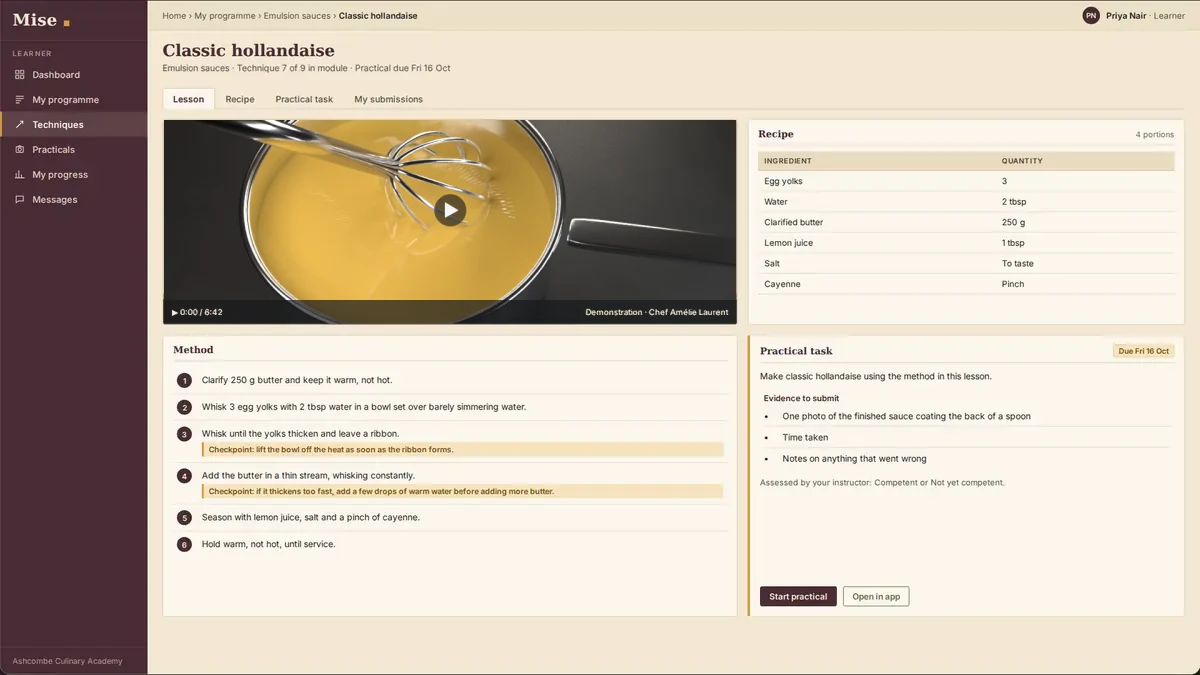
StudyChef demos, recipes and method checkpoints
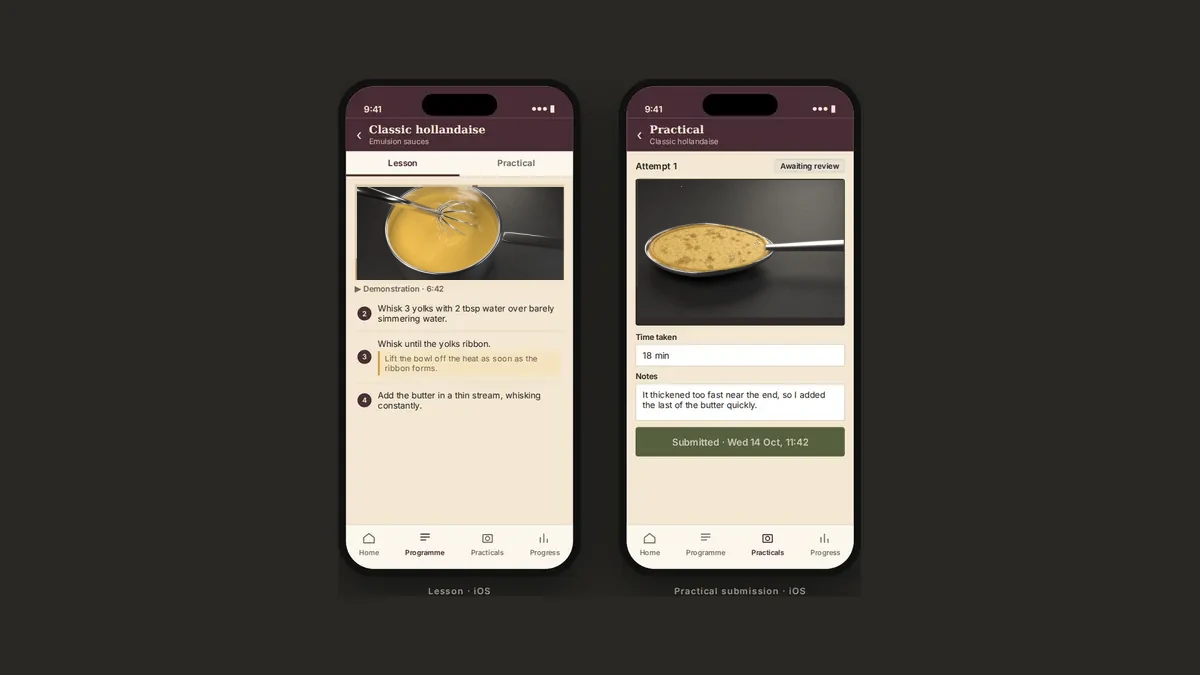
SubmitPhoto, time taken and notes for every practical
CritiqueChef feedback and a clear competent or retry outcome
MobileNative iOS and Android apps built for the kitchen

Project at a Glance

Industry
Education · Culinary Arts
Engagement
Web and Mobile Platform Development
Platform
Web Administration + Learner Web + iOS and Android Apps
Learning Model
Study, Practise, Submit, Critique, Improve
Core Use Case
Practical Submissions and Instructor Critique
Users
Learners, Instructors, Academy Administrators

Challenge and solution

The Business Challenge

A professional cooking school teaches skills that live in the hands. Standard e-learning measures whether a lesson was watched, not whether the learner can do the technique.

  • ✕Course completion says nothing about whether a sauce holds or a knife cut is even.
  • ✕Practice happens in the kitchen, away from a desk and a laptop.
  • ✕Instructors needed a structured way to see each learner's work and respond to it.
  • ✕Feedback given in person or by message was easy to lose between attempts.
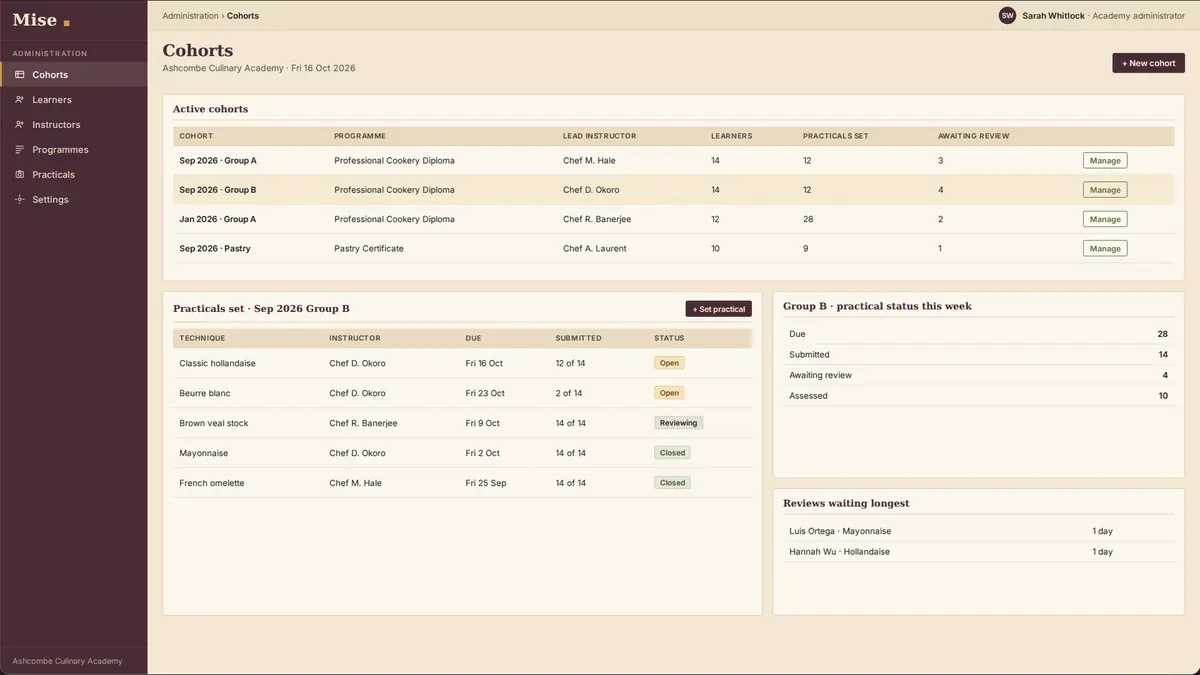
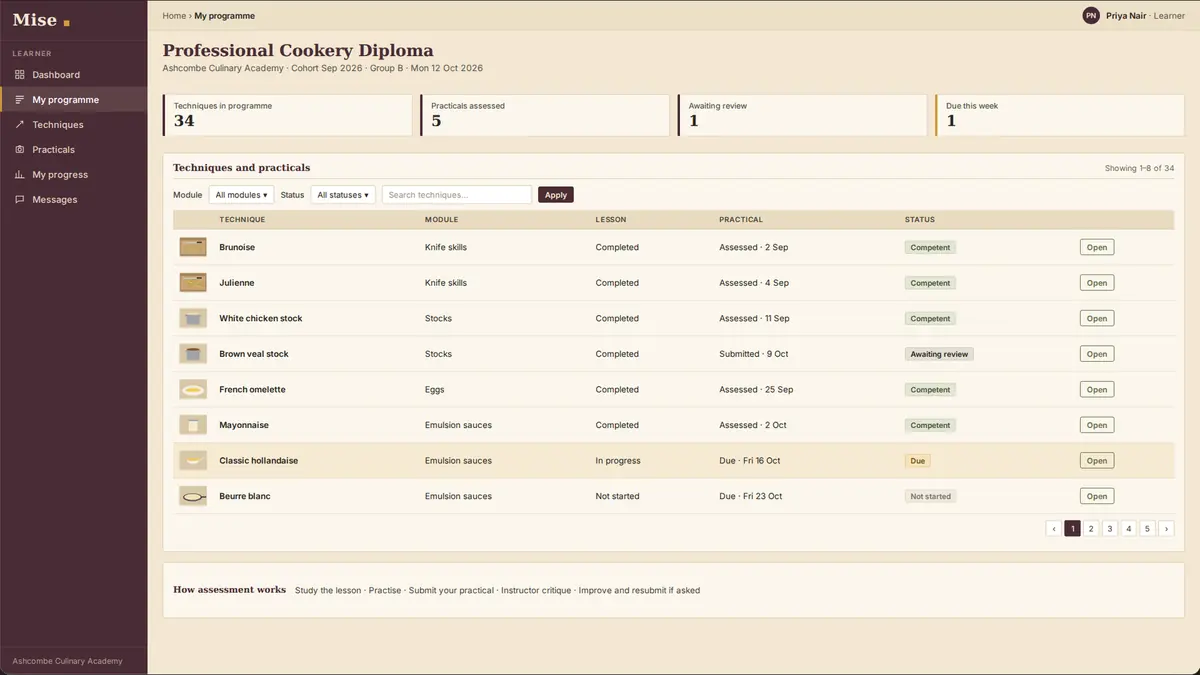
  • ✕Administrators needed to see which practicals were due, submitted and waiting for review across cohorts.
The SoluLab Solution

SoluLab built Mise around the learning loop: study, practise, submit, critique, improve.

  • ✓Technique lessons with chef demonstrations, recipes and step-by-step methods with checkpoints.
  • ✓Practical tasks that state exactly what evidence to submit.
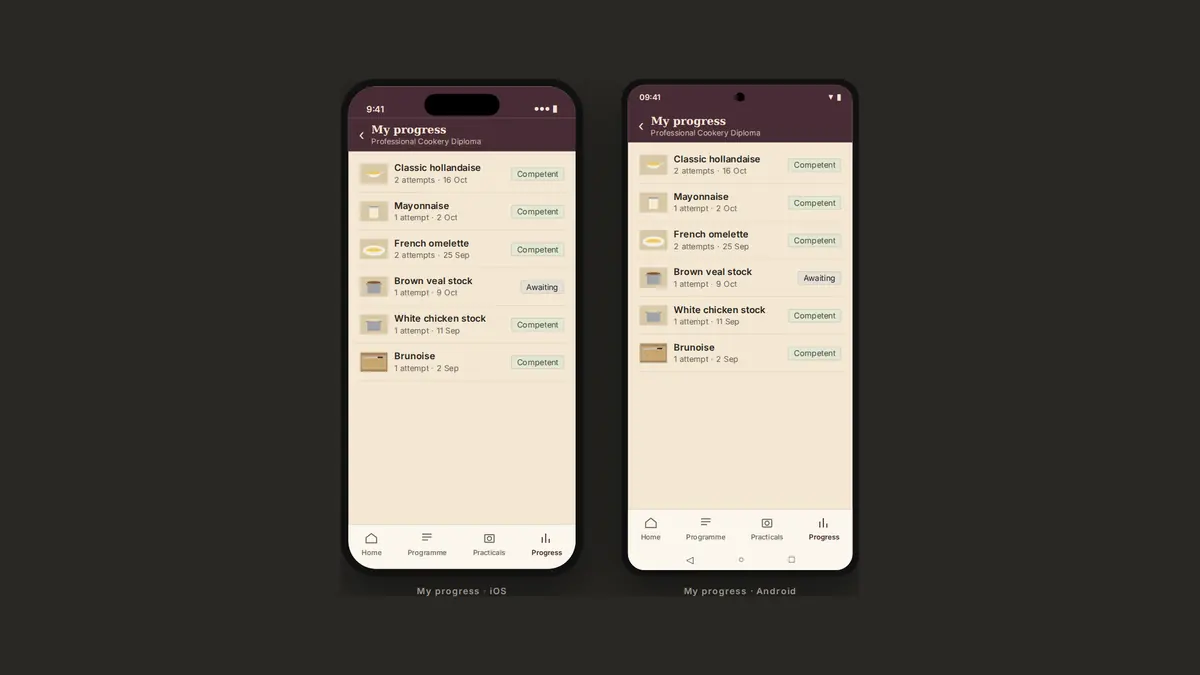
  • ✓iOS and Android apps for following the lesson and capturing the practical in the kitchen.
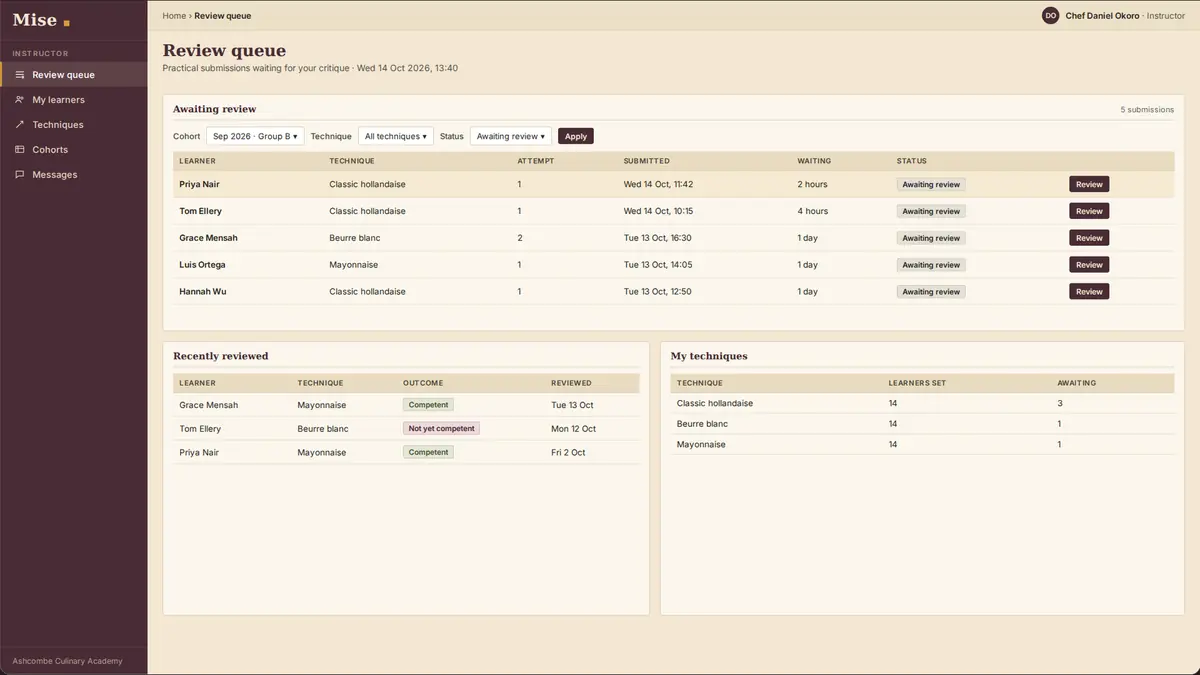
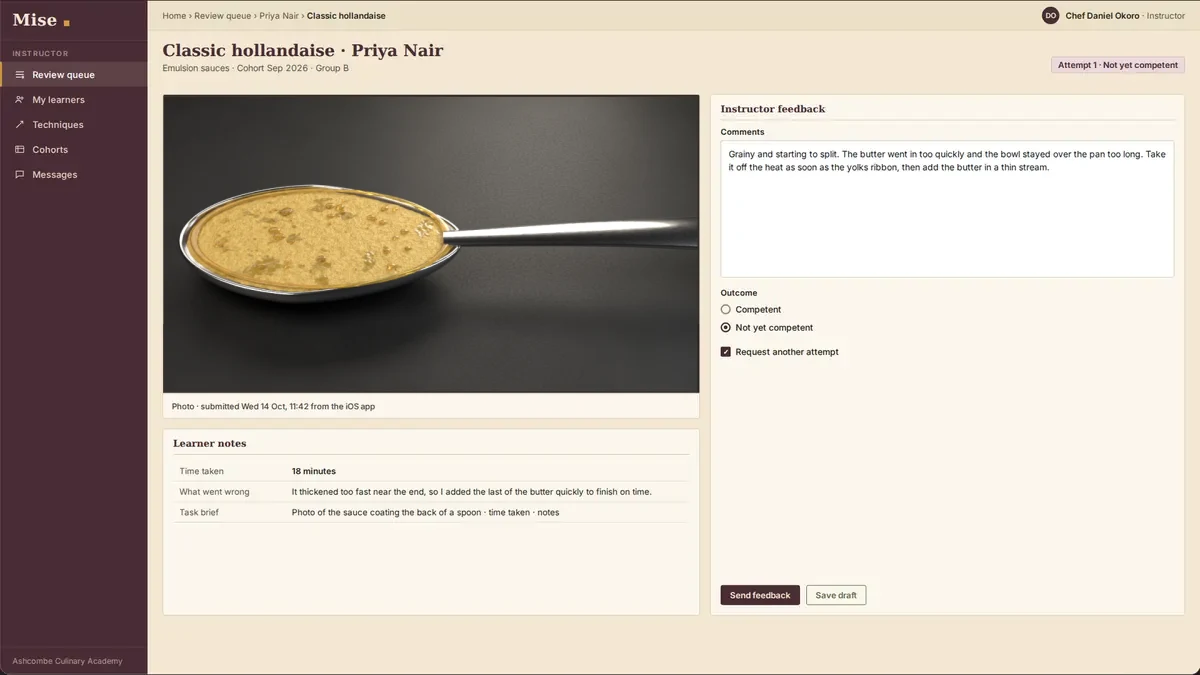
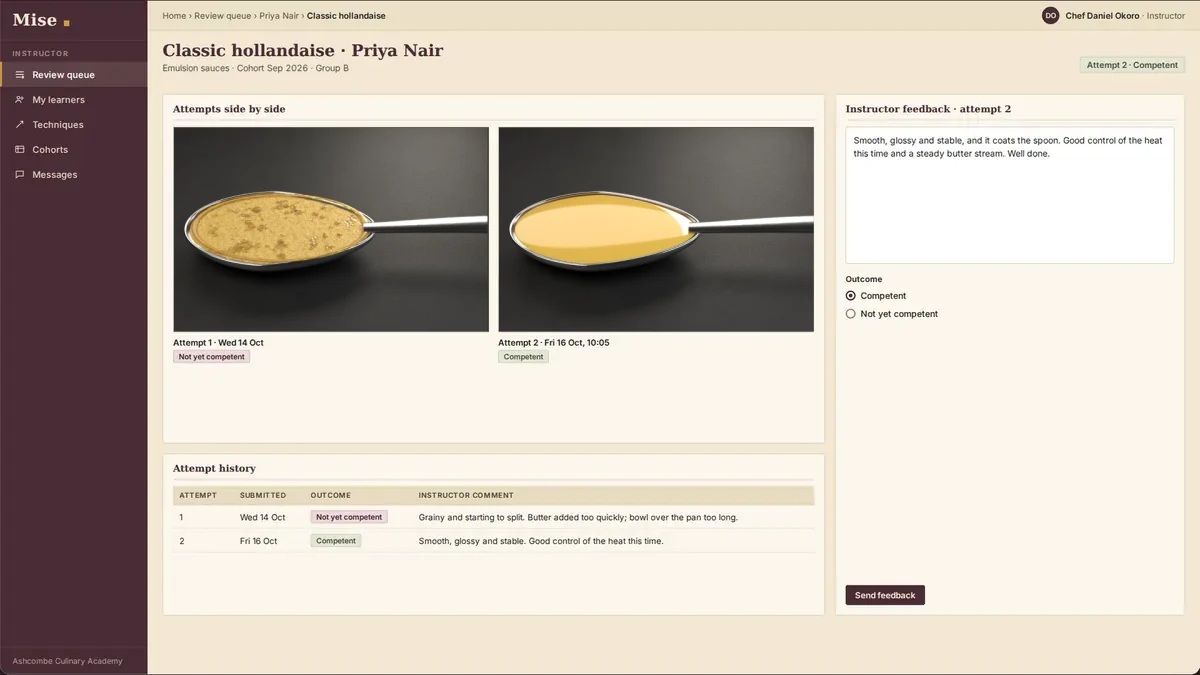
  • ✓Instructor review queue on the web, with photo, notes and brief on one screen.
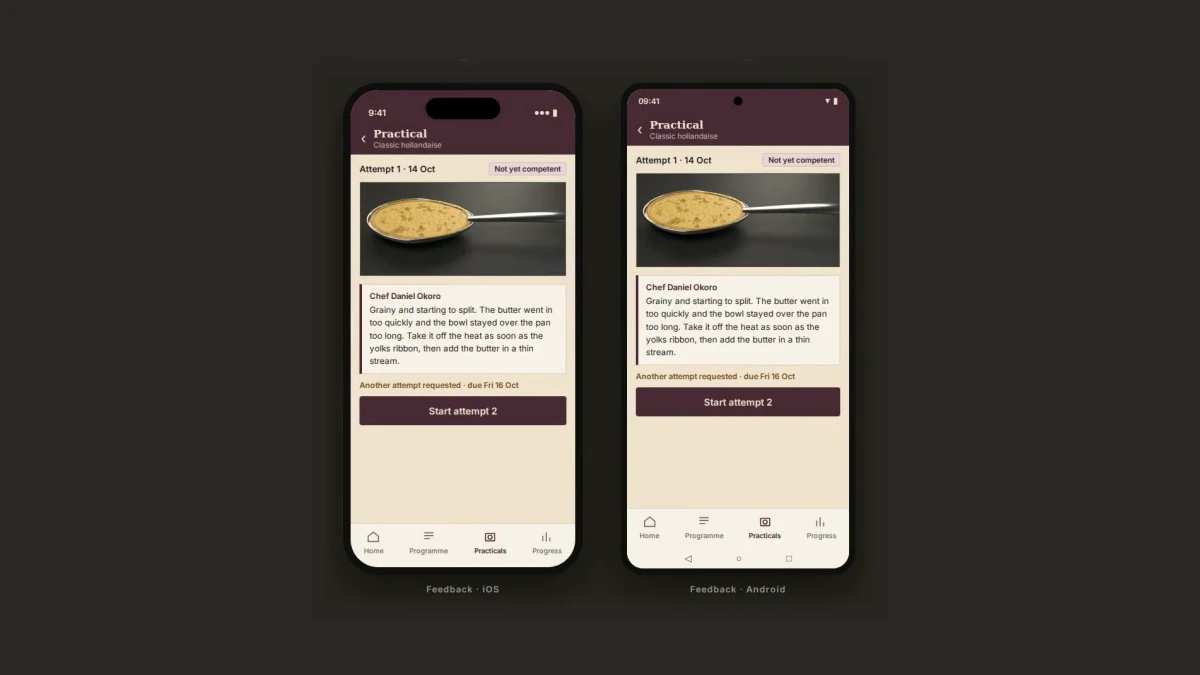
  • ✓Written critique and an outcome for each attempt, sent straight back to the learner.
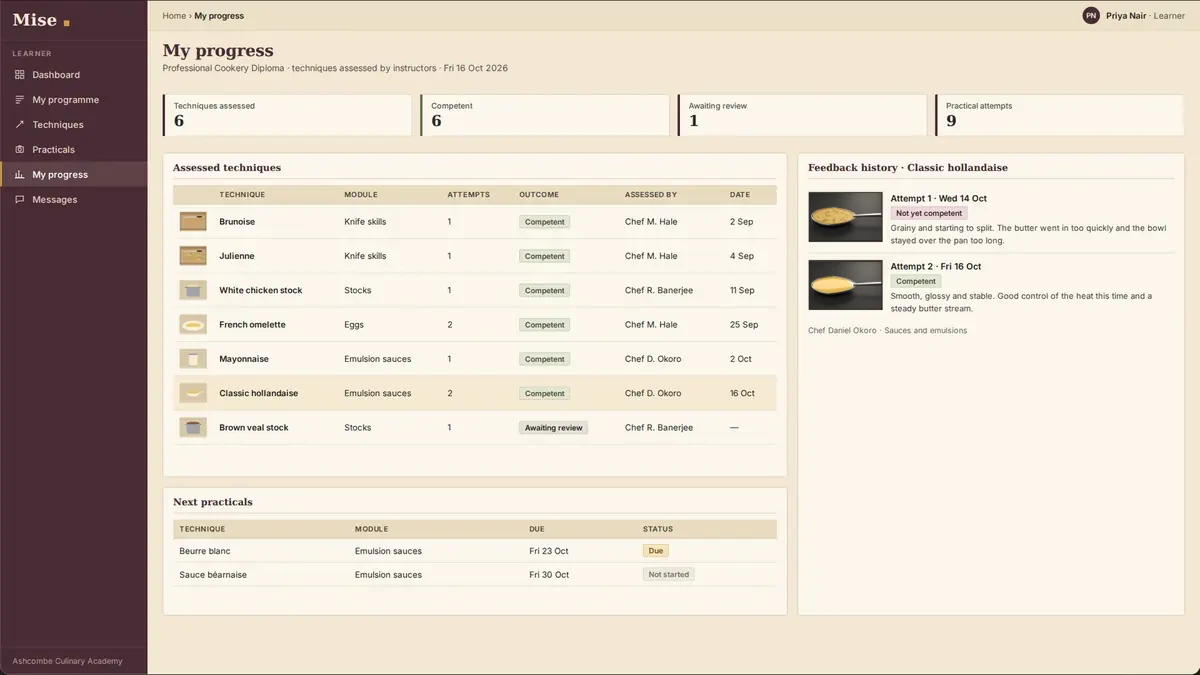
  • ✓Progress based on assessed techniques, with every attempt and piece of feedback kept.
  • ✓Web administration for cohorts, instructors and the practicals set for each group.

Solution Architecture

Why a Practical-First Platform: Our Product Decisions

Practical skills needed a different experience from an ordinary online course. Every design decision in Mise keeps the learner's work, not the video, at the centre.

Evidence over completion

A lesson marked complete is not a skill demonstrated.

Practical task per technique
Each technique ends in a practical that states the evidence required.
Capture in the kitchen
Learners photograph their work from the iOS or Android app, where they practise.
Context with the work
Time taken and the learner's own notes travel with the photo.

Critique inside the loop

Feedback only helps if the learner can act on it next time.

One review screen
Instructors see the photo, notes and brief together, and respond in writing.
An outcome per attempt
Each practical is marked competent or not yet competent, with another attempt requested when needed.
History that stays
Every attempt and critique is kept, so progress shows how a skill developed.

Key product choices

DecisionWhy we made it
Native iOS and Android appsPractice happens at a kitchen station, so lessons and capture had to work on a phone.
Web for review and administrationInstructors and administrators work through queues and tables, which suit a larger screen.
One shared recordA practical's status is the same on every surface, from submission to outcome.
Conventional, compact interfaceTables, tabs and clear statuses suit a mature academy's daily operations.

The result: a platform where progress reflects skills assessed by instructors, not percentages of video watched.

Product Experience

What SoluLab Delivered

WebAdministration for cohorts, instructors and practicals
WebLearner app for lessons, practicals and progress
ReviewInstructor queue, critique and outcomes
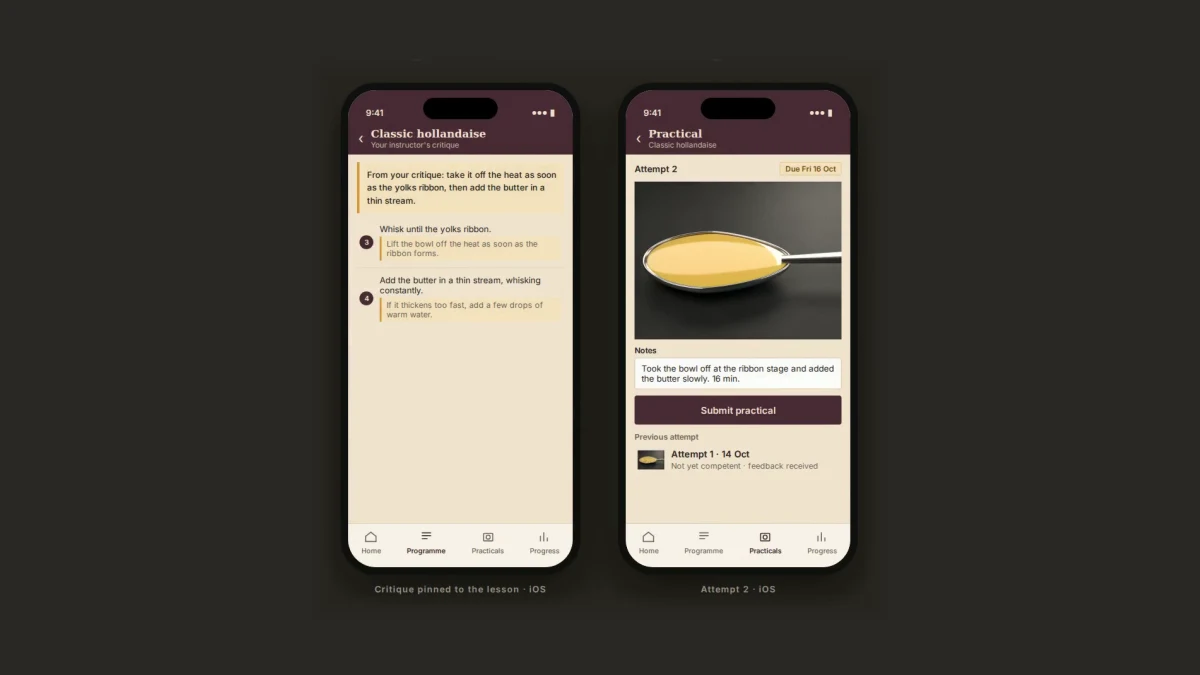
iOSNative app for lessons, capture, feedback and progress
AndroidNative app for lessons, capture, feedback and progress

Technology & Integrations

Web ApplicationWeb AdministrationiOS AppAndroid AppShared REST APIMedia Upload & StorageVideo LessonsPush NotificationsRole-Based Access

Frequently Asked Questions

1. What is Mise?

Mise is a digital culinary school platform for a professional cooking academy. Learners study techniques, practise them, submit evidence of their work and receive instructor critique.

2. How is it different from an ordinary online course?

Progress is based on practicals assessed by instructors, not on lessons watched. Each technique ends in a practical task with defined evidence.

3. What does a technique lesson include?

A chef demonstration, a recipe with quantities, and a step-by-step method with checkpoints that highlight what matters most.

4. How do learners submit a practical?

From the iOS or Android app or the learner web app, they add a photo of their work, the time taken and notes on anything that went wrong.

5. How do instructors give feedback?

Instructors work from a review queue on the web. They see the photo, notes and task brief together, write feedback and record an outcome for the attempt.

6. What happens if a practical is not yet competent?

The instructor can request another attempt. The learner sees the critique in the app and submits again, and both attempts stay in the history.

7. What does learner progress show?

Assessed techniques, the number of attempts, outcomes, who assessed them and the full feedback history for each technique.

8. What can administrators manage?

Cohorts, instructors and the practicals set for each group, with visibility of what is due, submitted and waiting for review.

9. Which platforms were built?

Web administration, a learner web app with instructor review, and native iOS and Android apps.

10. Is learner work kept private?

Submissions are visible to the learner, their instructors and academy administrators through role-based access.