HIGHER EDUCATION · RESEARCH SKILLS · AI · WEB

SourceTrail: Research Learning, With Evidence

A research learning environment where students learn to argue from evidence. Every claim stays connected to the passage that supports it, an AI research guide asks questions instead of giving answers, and instructors review the trail behind the essay.

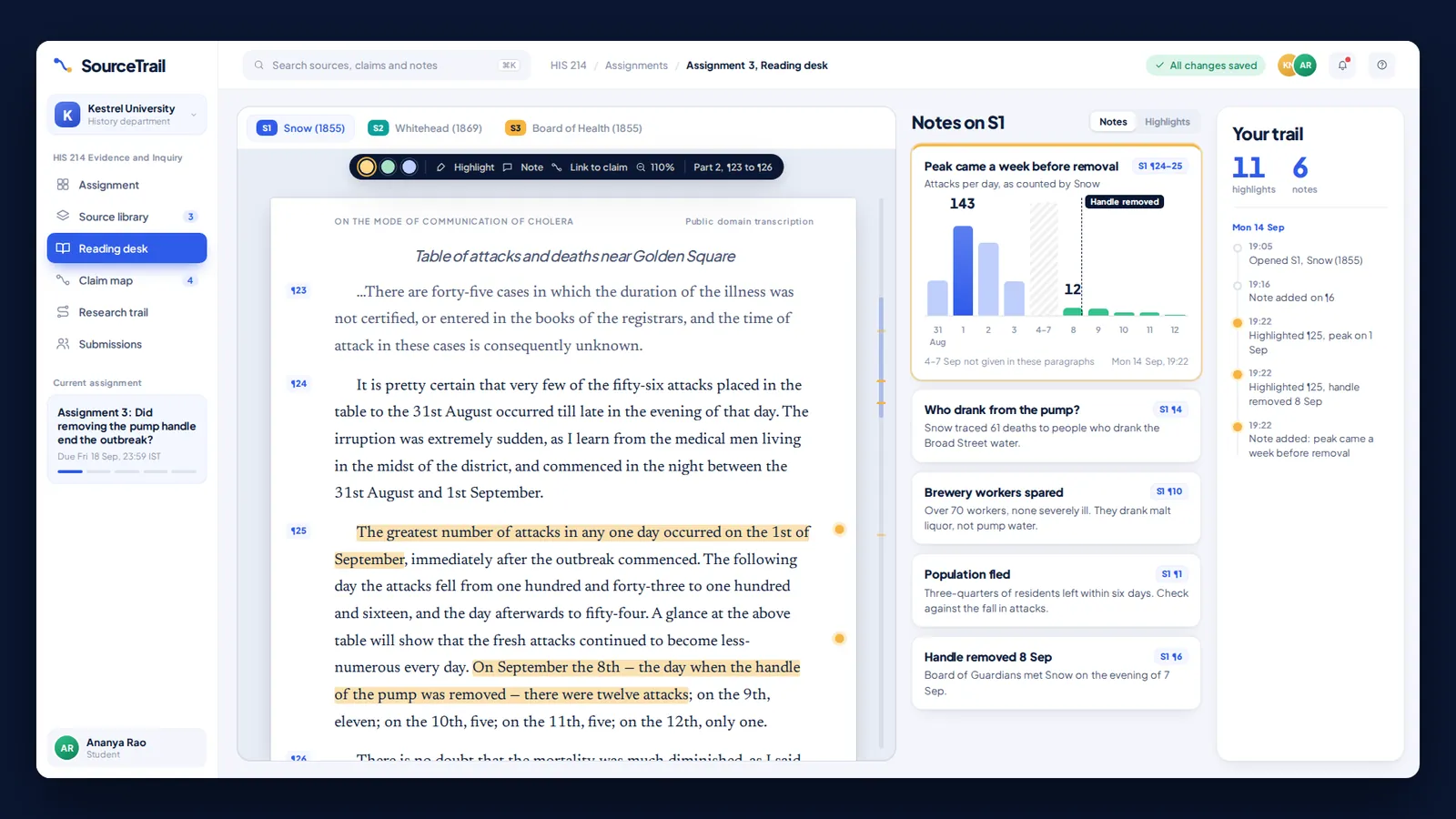
ReadPrimary sources with anchored highlights
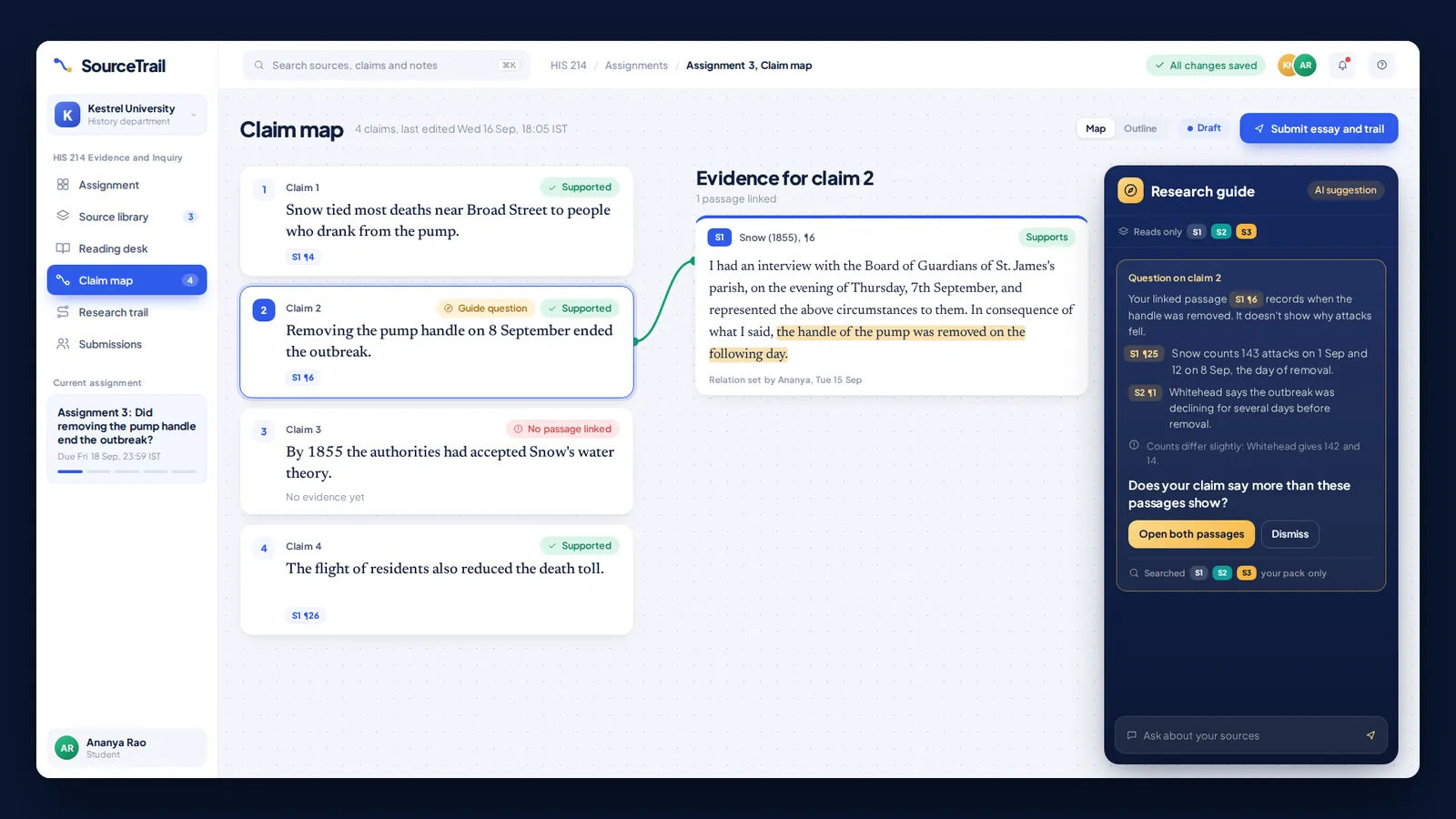
ClaimEvery claim linked to its passage
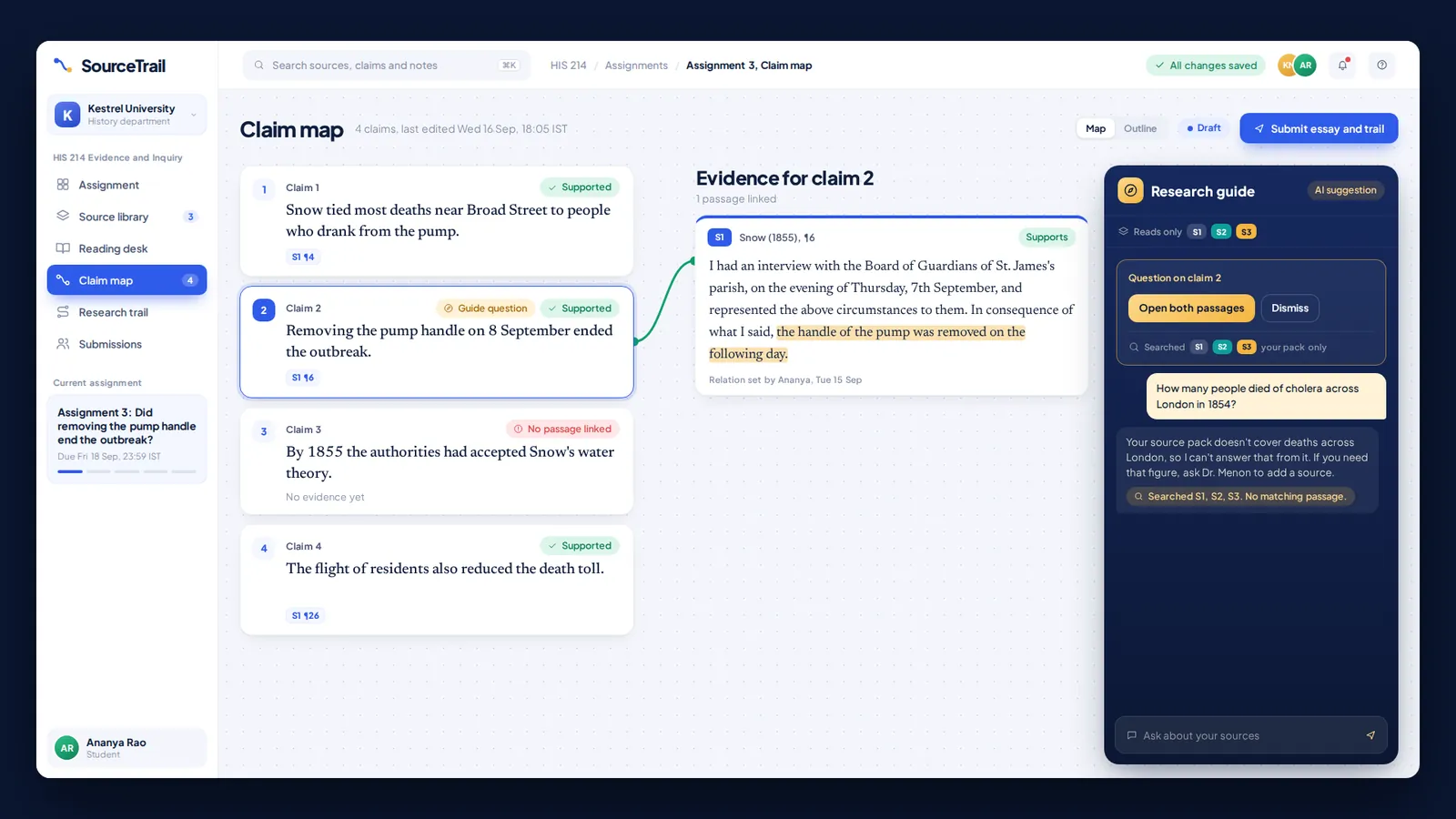
QuestionAI guide grounded in the source pack
ReviewInstructors see the research trail

Project at a Glance

Industry
Higher Education · Research Skills
Engagement
AI-Enabled Research Learning Platform
Platform
Responsive Web: Student Research Desk + Instructor Review
Learning Model
Read, Annotate, Claim, Link, Submit the Trail
Core Use Case
Claims Traceable to Source Passages
Users
Students, Early-Career Researchers, Instructors

Challenge and solution

The Learning Challenge

Students do not lack content. They can find a hundred sources in a minute. What they struggle with is turning sources into claims that someone else can check.

  • ✕Notes, quotes and drafts lived in separate places, so the link between a claim and its source was lost.
  • ✕Students confused timing with cause and wrote claims that went further than their evidence.
  • ✕General AI chat tools gave confident answers from outside the course material, with no way to check them.
  • ✕Instructors saw only the final essay, not how the argument was built.
  • ✕Feedback focused on citation format rather than the reasoning behind each claim.
The SoluLab Solution

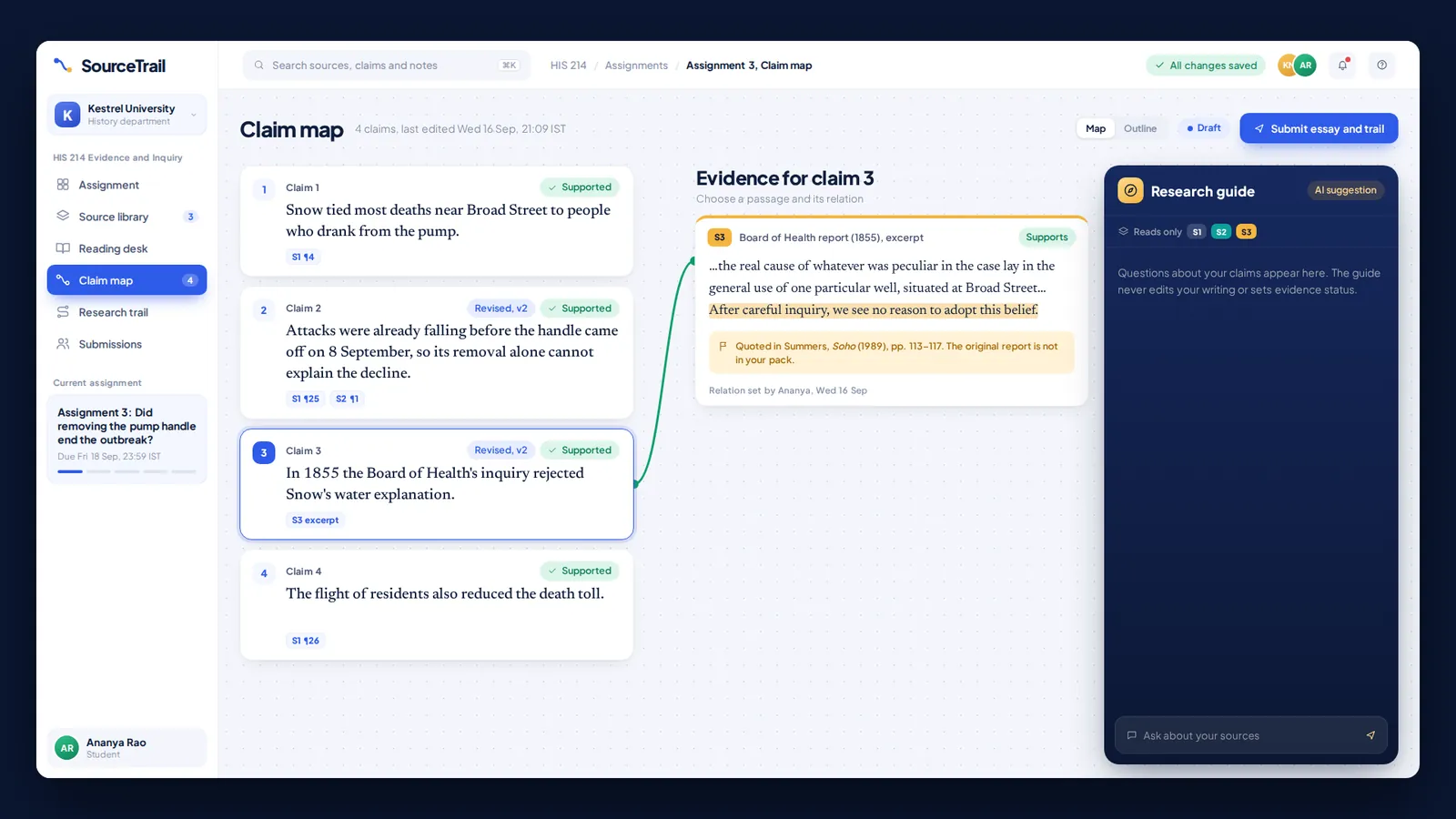
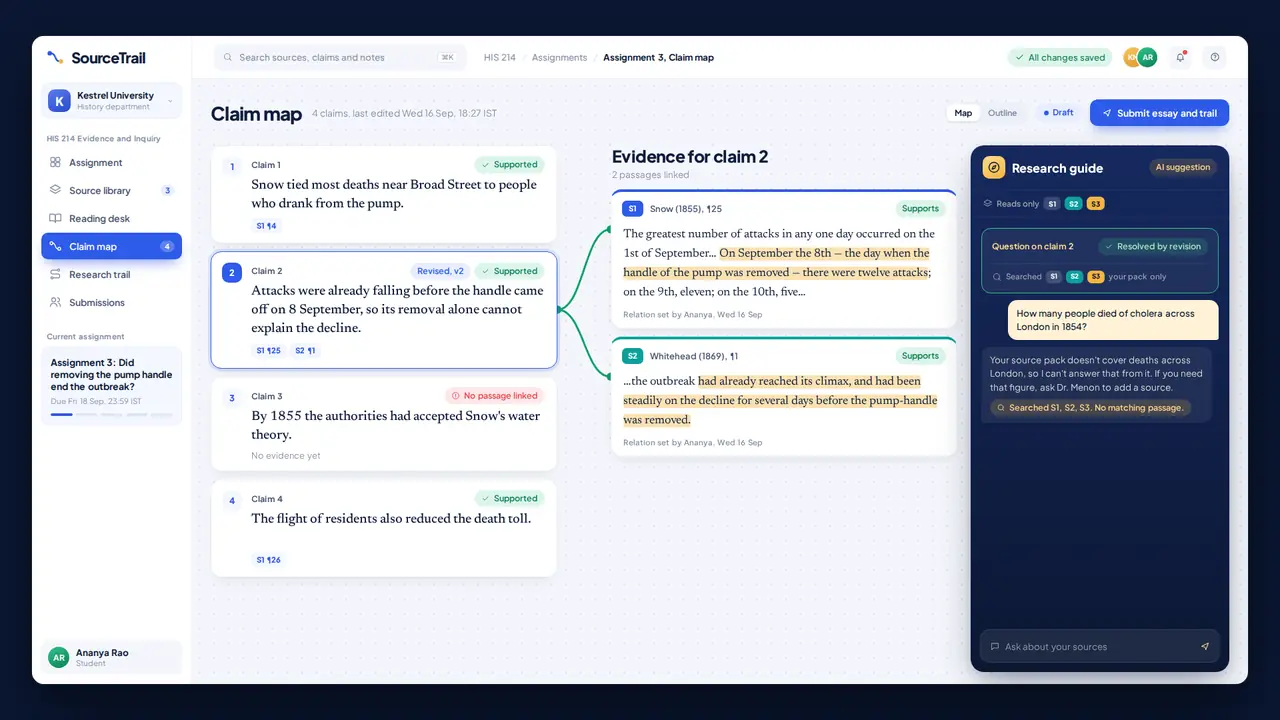
SoluLab built SourceTrail around one signature interaction: select a claim and the passage that supports it opens beside it.

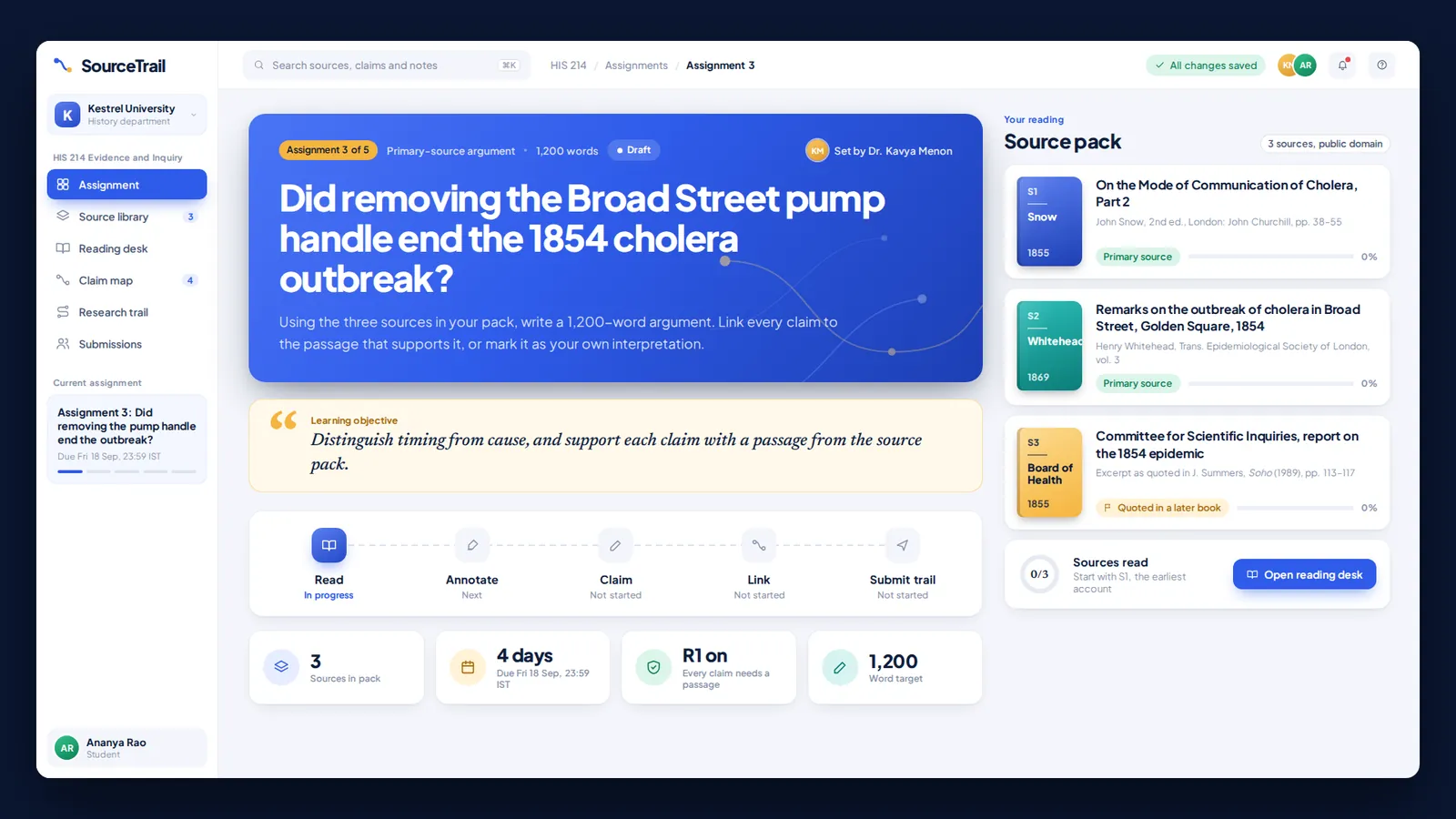
  • ✓Guided research task with a research question, a learning objective and a curated source pack with provenance.
  • ✓Reading desk that keeps the source and the student's notes side by side, with highlights anchored to paragraphs.
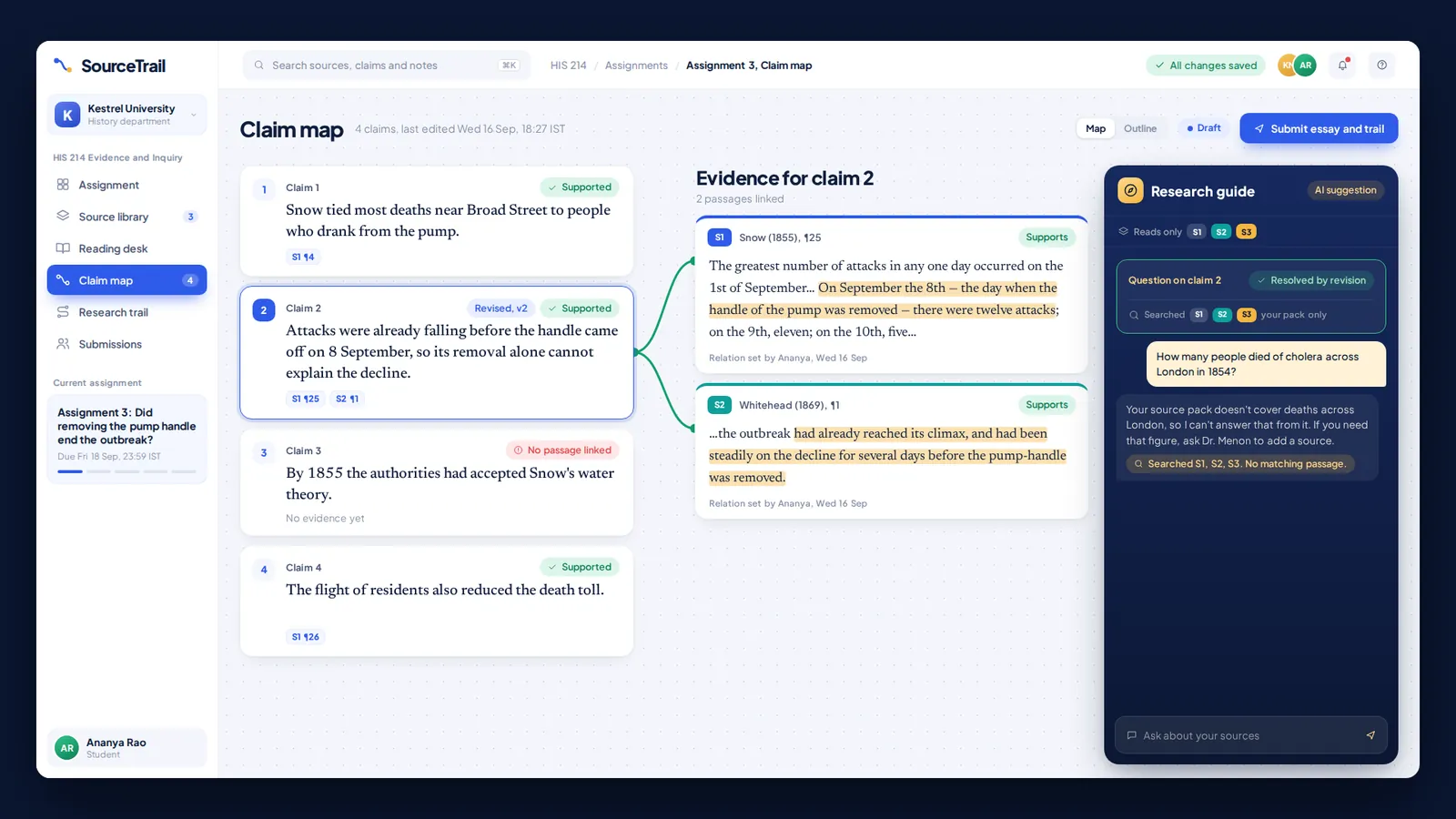
  • ✓Claim map where every claim links to passages as Supports, Qualifies or Contradicts, with full version history.
  • ✓Research guide (AI) that questions a claim, cites passages and reads only the source pack. It never edits claims or marks work.
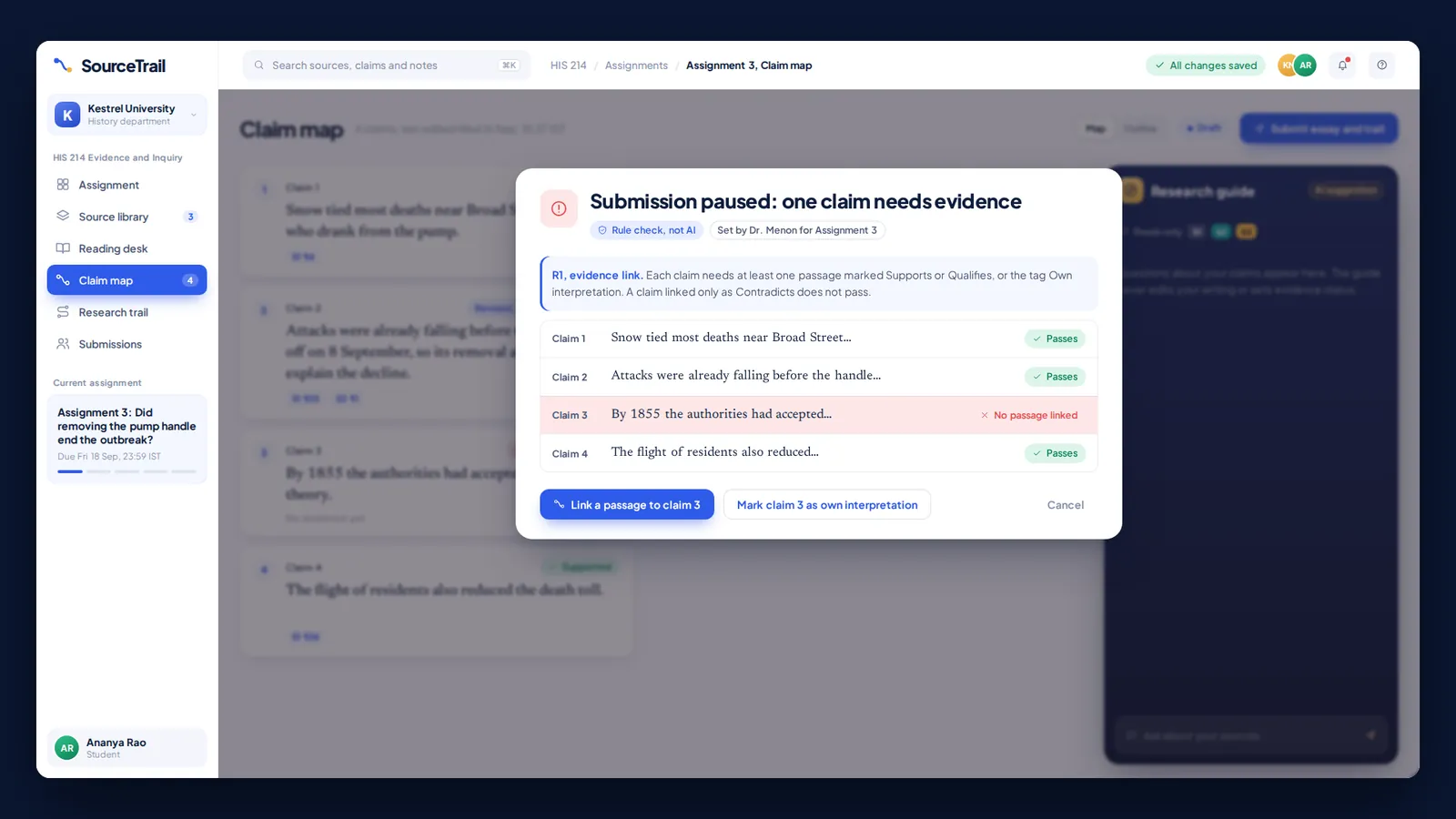
  • ✓Submission check, a fixed instructor-set rule that pauses submission until every claim has supporting evidence.
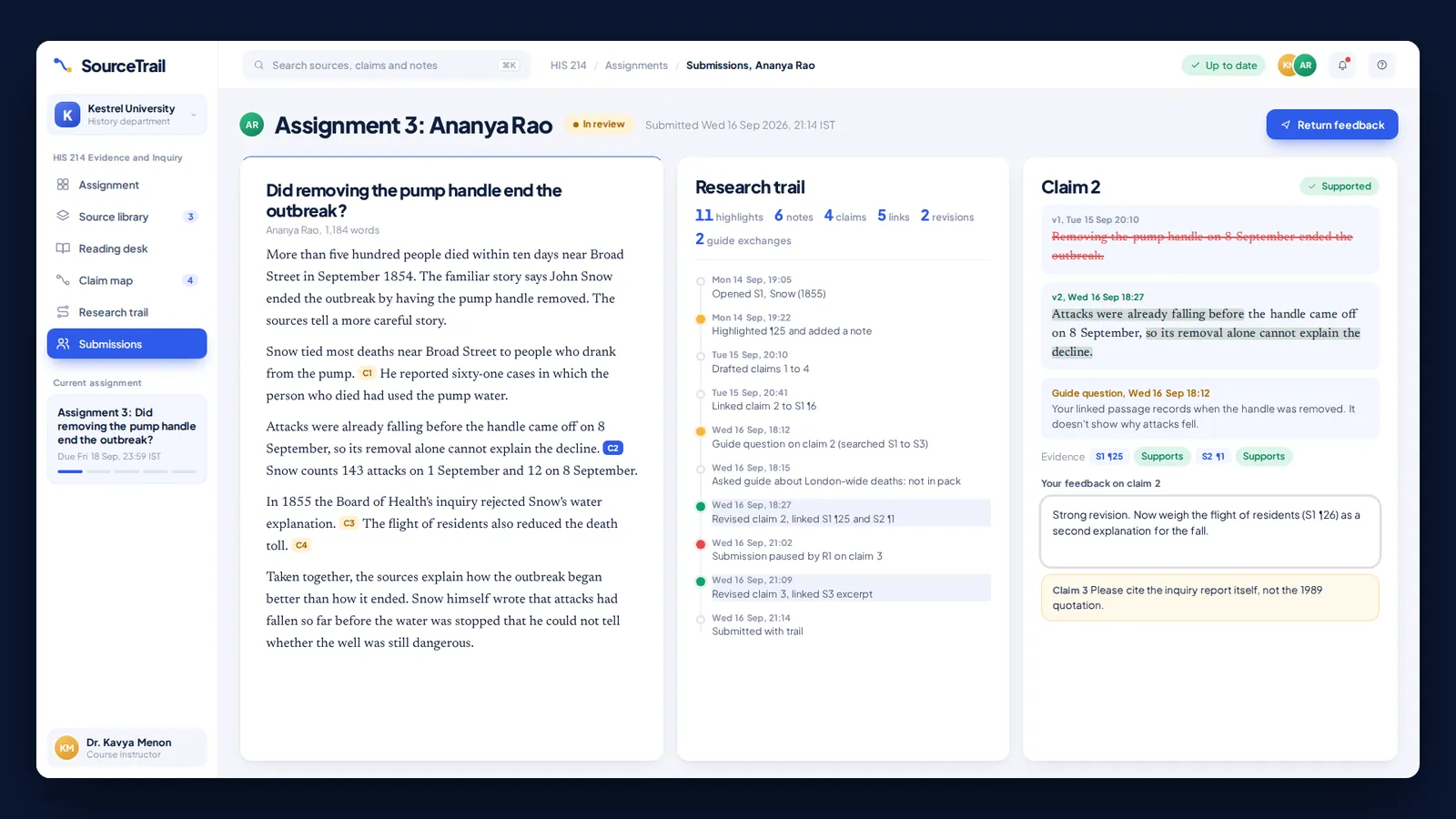
  • ✓Research trail that records every read, link, guide exchange and revision.
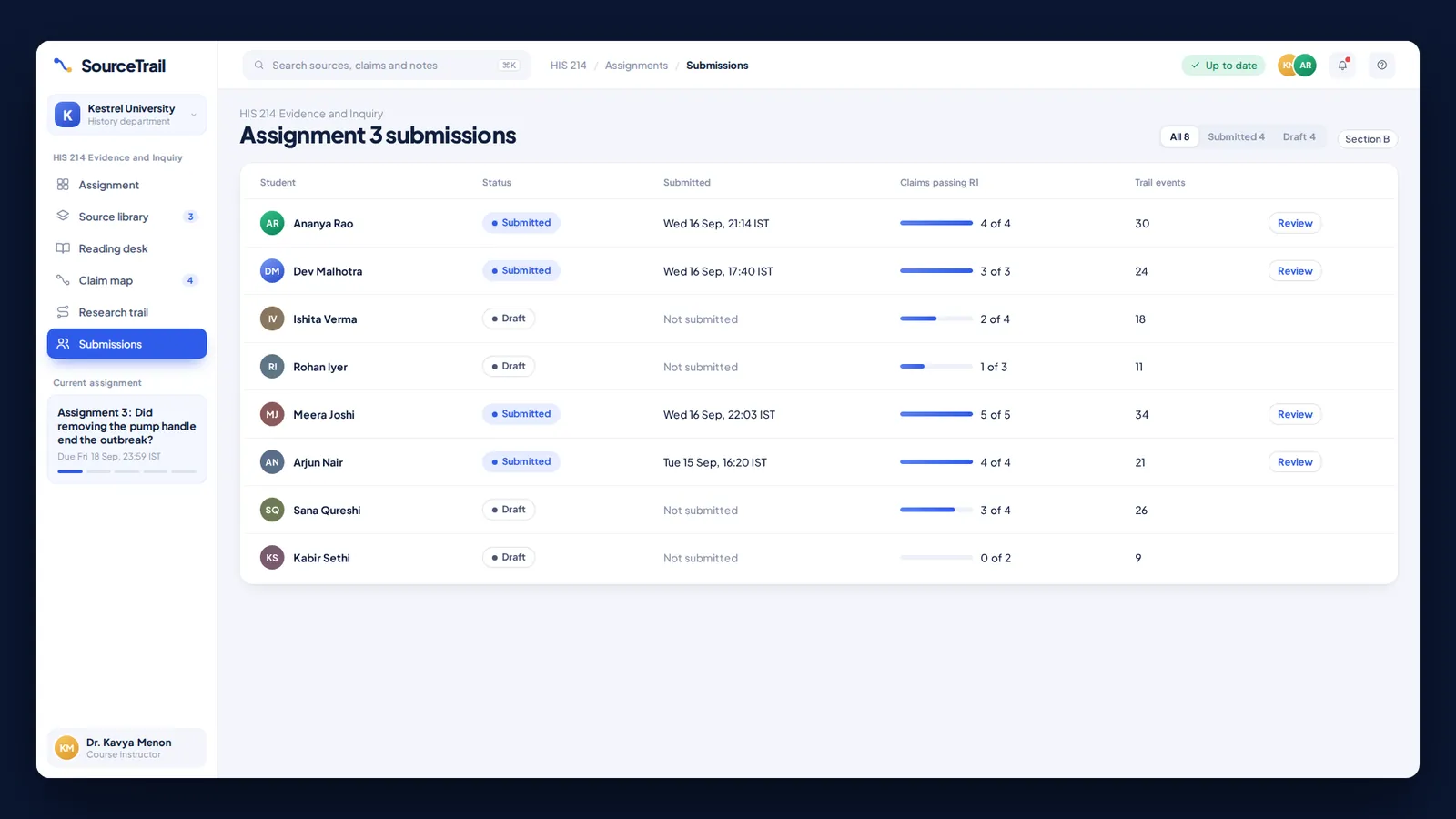
  • ✓Instructor review of the essay beside the trail, with feedback on each claim's reasoning.

Solution Architecture

Why Evidence First, AI Second: Our Product Decisions

A research course needed more than a reading list and a chat box. Every design decision in SourceTrail keeps the evidence visible and the judgement with people.

Traceability you can see

A claim is only as good as the passage behind it.

One click from claim to passage
Selecting a claim opens its linked passages with their paragraph anchors, so nothing hides behind a footnote.
The student names the relation
Each link is marked Supports, Qualifies or Contradicts by the student, so evidence status is their judgement.
Provenance on every source
A source quoted through a later book is flagged, which teaches students to look for the original.

AI that asks, people who decide

The research guide supports inquiry; it does not replace it.

Questions, not answers
When a claim says more than its passage shows, the guide asks a question and cites the passages that bear on it.
Scoped to the source pack
The guide searches only the assignment's sources, shows what it searched and says plainly when something is not covered.
Rules are rules, not AI
Submission checks such as R1 are fixed rules set by the instructor, with a defined outcome for every case.

Key product choices

DecisionWhy we made it
Research desk, not a course catalogueStudents learn by working with documents, so the source sits beside their notes and claims rather than behind a menu.
Guide in a side panel, not a prompt boxThe AI appears in the context of a claim and its evidence, so it supports the work instead of becoming the work.
Every revision keptInstructors can see how a claim changed and what prompted the change, which is where the learning happens.
Clear separation of AI and rulesStudents and instructors always know whether a message came from the guide or from a rule the instructor set.

The result: students practise making claims that can be checked, and instructors can give feedback on the reasoning, not just the final text.

Product Experience

What SoluLab Delivered

AssignResearch brief, learning objective and curated source pack
ReadReading desk with anchored highlights and notes
LinkClaim map tying every claim to its passages
QuestionResearch guide scoped to the source pack
ReviewInstructor review of the essay and its trail

Technology & Integrations

Responsive Web ApplicationDocument ReaderPassage Anchors & HighlightsClaim–Evidence GraphSource-Scoped AI GuideInstructor Rule EngineResearch Trail LogRole-Based AccessShared REST API

Frequently Asked Questions

1. What is SourceTrail?

SourceTrail is a research learning environment where students learn to argue from evidence. Every claim a student writes stays connected to the source passage that supports it, and the instructor can see that trail when reviewing the work.

2. Who uses it?

Students and early-career researchers learning to work with primary sources, and the instructors who set research assignments and review them.

3. What is a source pack?

The set of sources the instructor attaches to an assignment, with provenance shown for each one, including when a source is only available as a quotation in a later book.

4. How does a claim link to evidence?

The student selects a passage and links it to a claim as Supports, Qualifies or Contradicts. The link keeps the paragraph anchor, so anyone can open the exact passage behind the claim.

5. What does the research guide do?

It asks questions about a claim and its evidence, points to passages with their anchors and shows which sources it searched. It reads only the assignment's source pack.

6. What can the research guide not do?

It does not write or edit claims, set evidence status or mark work. When a question falls outside the source pack, it says so instead of answering.

7. What is rule R1?

A fixed rule the instructor sets, not AI. Each claim needs at least one passage marked Supports or Qualifies, or the tag Own interpretation; otherwise submission is paused and the student sees which claim needs evidence.

8. What does the instructor see?

The essay beside the research trail: what the student read, every claim version, the guide's questions and the passages behind each change, with space to give feedback on each claim.

9. Does the trail replace the essay?

No. The essay is still the work being assessed. The trail lets the instructor discuss how the argument was built, not only the final text.

10. What is planned next?

LMS integration and cohort insights for instructors are planned for phase two.